gears of war 2 (****) | action button dot net

https://www.actionbutton.net/?p=483

Let’s get all the important stuff out of the way:

  1. We are not “gay” for Cliffy B — we are merely “correct”.
  2. If you have not played Gears of War yet, you probably should.
  3. You do not need to play Gears of War in order to appreciate Gears of War 2. Really, it’s just a story about meatheads shooting evil meatheads.
  4. If you have not played Gears of War 2 yet, you must.
  5. The back of the box negligently does not caution the player about several dangerous factors regarding the game experience. We will tell you that if you are male, you might want to prepare an icepack to place on your crotch before pressing the Start Button, or risk puncturing your expensive high-definition television.
  6. The ESRB is still, shamefully, unable to rate the content of online interactions. You figure that those guys are so smart that they’d have invented a brain surgery procedure that enables psychic powers by now.
  7. The ESRB also fails to mention the “AO” potential: some players are experiencing an “unintended feature” wherein one real-life article of clothing vanishes from their body for every hour of play. We know a guy who ended up without skin, for example.
  8. Any females accidentally overhearing the in-game dialogue or spying a chainsaw duel might become literally impregnated with Cole Train’s baby. Some male players, in fact, are also experiencing this. We felt a little nauseated this morning, and are now knee-deep in contemplating which tight orifice the infant is going to crawl out of.

That’s about it. Gears of War 2 is here, it’s huge, and it’s great. It’s about as much fun — about as easily and painlessly and relentlessly devourable — for a thirty-year-old man as the “X-Men” Saturday morning cartoon was when we were thirteen. The online deathmatches are tight, the co-op campaign is hilarious, and the horde mode is a shining star of game design, evidence that for once the people making a great game understand that it’s great enough to just sit to jiggle on a silver platter until infinity.

We cannot stress enough how much we like “Horde”. A scan of reviews listed on Metacritic leads us to the brick-wall-like realization that not everyone screams about how great it is, so we will have to scream enough for all. Horde is fantastic. If you don’t know what it is, here’s is a description, courtesy of our friend the bullet point:

  1. Gears of War basic rules: cover-based shooting: take cover, shoot guys, move to strategic locations, gate / bottleneck / suppress coming enemies
  2. Cooperate with (ideally) up to four teammates via voice-chat to optimally secure and hold strategic locations and take down the enemy threat
  3. Kill one wave of enemies, and more come
  4. The setting never changes
  5. The enemies come in 50 waves
  6. You might as well just call it an “endless” mode

If anything about Horde disappoints us, it’s that the break between waves is a tiny bit too long, and that some of the epic firefight venues from the single-player campaign don’t make it in as Horde-only levels. We eagerly await the PC version (if they end up making one) so that we can craft our own levels.

Seriously, one Horde level where the player characters have a distinct territorial advantage (maybe they’re shooting from atop a castle wall, trying to keep enemies from getting in a big gate) couldn’t have hurt.

Either way, Horde is real, it is alive; it is Gears of War meets Tetris; it is game mechanics on a silver platter; it is The Contra Stage Which Never Ends. It is the distilled joy of being with one’s bros and fighting the good fight. It is probably better than sex, both on emotional and physical levels. By the end of a ten-wave, brutally unsuccessful slog, you will know more about your bros on the other end of the Xbox Live headset than you learned about your future wife in six years of dating, whether you’re playing the game seriously or not.

Let’s go ahead and mint a brand new law to be obeyed from here on out by all those seeking citizenship in the kingdom of videogames: if your game isn’t fun enough to be enthralling in the context of an endless mode, nothing else about it means stuff.

The campaign mode, on the other hand, simply put, is not the Horde mode. That is about the same as saying that blueberry pancakes are not strawberry pancakes. They are both fantastic, just in queerly different ways.

We will admit to being a tiny bit disappointed with the campaign the first time we played it. There were entire placid thirty-minute segments when we could have sworn our trigger fingers had contracted poison ivy. Eventually, there’s a part that pays gripping and obvious homage to Contra, R-Type, Abadox, Life Force, and a dozen other 8-bit Japanese video games with undeniable virtuosity. Then there’s a long segment where you wander around a ruined building (shades of BioShock) while listening to a disembodied computer voice (shades of Portal). The gun battles are sporadic; the dangers are mostly environmental. You are sneaking around and flipping switches. What the hell is this? you might exclaim.

Eventually, the game opens back up, and the developers are answering the question-mark-less question re: how much the vehicle segment in Gears of War sucked by giving you a turbo-tank capable of Mega Killing two dozen dudes at a time. Shortly afterward, the Real Game Begins, and the promised football-field-sized battlegrounds stacked with staircases and parapets and catwalks and towers and windows begin. After two years of many games trying to be like Gears and not entirely succeeding, after Uncharted gave us scenes of cover-based shooting punctuated by scenes of us pressing the analog stick in various directions to see which one the game wanted us to jump to, we were stricken with a malaise; we wondered, when would someone make a game that combines Shooting Stuff and Doing Stuff into one experience? Gears 2 is that game; one scene has you trying to cross a wide aqueduct while the enemies on the other side attempt to unscrew the wheel and send the water washing you out. You have to keep your eye on the wheel while also keeping your eye on the guys shooting you. It’s simple, and it’s fascinating. Then there’s the part where you’re on a circular elevator, and the enemies are all around you, and overwhelming, and you can screw the wheel to pull the elevator up so you’ve got the high ground temporarily. Again, fascinating. Then you’ve got a soccer-field-sized mad charge toward a badass brick wall, guys with invincible, scary, unpredictable mortars on the other side, and clockwork bulletproof walls activated by pausing long enough to jerk a switch. How can you not love this? You simply can’t come away from this experience above the impression that level design is everything. Hell, the New Yorker caved in and wrote its first-ever in-depth feature on game design because of Gears of War 2. Though we’re aware it would sound crude it we called you an idiot or a brain-dead hater for doubting Gears of War‘s power at this point, we feel confident and correct when we say that you obviously wear a football helmet to bed every night.

Looking back on the Gears of War 2 campaign after it’s all over and dozens of hours of online deathmatch and Horde play have evaporated, it’s apparent that it really is a perfectly put-together videogame, built with meticulous care and a common-sense knowing love of videogames. It is Videogames: The Videogame.

Gears of War 2 is The Legend of Zelda On Fire. We said before — maybe — that the Zelda series is noteworthy less because of the actual execution of the game and more because of the games’ existence as a genre in and of themselves. They are entertainment vehicles, the closest modern games have yet seen of a “Ben Hur”-worthy event. Gears of War 2 takes the he “Zelda Genre” — as perhaps most clearly expressed (for all the good and bad that entails) in the recent Twilight Princess — and cracks out a game with a big plot, with loud parts and quiet parts, with thrilling parts and stoic parts, with heck-yeah parts and hell-no parts, and storms constantly forward, never once relinquishing its status as a game or as a piece of entertainment.

We can hardly call anything about this game “visionary” or “genius”. It’s about as down-to-earth and honest a multi-million-dollar blockbuster entertainment venture as you’re going to get. The characters are creatine-chugging meatheads because that’s what it takes to avoid tripping Middle America’s Homo Alarm prior to YouTube comment #11. It attempts a “deep” “emotional” moment near the climax of its story because this is part hecking two, and if you’re not stepping up the game in part two, you’re doing something wrong — and also because it can, and more importantly because it absolutely has to.

The game development world between 2006 and today has been a relentless flirt session with the 1990s dream of “interactive cinema”. Who played BioShock and didn’t think of those big moving chairs in those mini-theaters at Block Party, where fans blow in your face as the screen shows a flying first-person view of a shabby 3D volcano? People seem to think that hiding the main character’s face and letting the player imagine that it’s them there in that fantastical, slick, computer-generated world is the key to “immersion”. It’s probably not! Budding game developers, pay heed to the sentence following the colon: most game players are (at least) smart enough to realize that what’s happening inside the TV screen is not real. Don’t try to make them think it is real! Just entertain them. Give them a character with a personality — any personality will do — and a visual presence — any visual presence will do.

Gears of War 2 is the way an “interactive movie” is to be done, right down to its blatantly interactive-movie-like vehicle segments. It is fitting that the Unreal Engine middleware pioneers Epic Megagames were the ones to nail it down once and for all. The Unreal Engine is to the game developer as Microsoft Word (we prefer Google Docs, actually, though we say “Microsoft Word” to maximize familiarity) is to the novelist. Gears of War 2 is to the videogame industry as the established screenplay format is to the filmmaker.

(Or, at least, this is how it would be in a perfect world.)

We will not apologize for the movie analogies. In fact, we will be the negative-first ones to acknowledge that games are not movies. This debate is no fun. If you want to know how much like a movie a game should be, see Gears of War 2. Savor the mercifully short cut-scenes. Savor the big-time fights. Be awestruck in the bootpath of the colossal set-pieces.

Like the first Gears, like the beauty of Out of this World, like Shadow of the Colossus, Gears of War 2 expresses that the true glory of an action videogame comes in providing the player with the bits that would be cut out of an action scene in a film. If Shadow of the Colossus were a film, surely the editor would consider five to ten minutes of clinging for dear life on the hairy back of a stampeding stone statue to be a “tad too long”. Yet those segments are indisputably the most thrilling. As are the moments in Gears of War when you’re crouched behind a low wall, breathing heavily, waiting and listening for your enemy’s clip to run out so you can pop up and try to shoot him in the head. The audience of a film will only tolerate so many sparse seconds of a hero breathing heavily with his back against a brick wall. Gears blew the doors off what was becoming a tired genre — the 3D shooter — by forcing the player to bask in the just-barely-too-long moments of desperation. It’s said that the hook of the original Gears was that it was to be a huge-budget shooting game with a solid campaign and a highly competitive, intimate online component. The core concept of taking cover — “stop and pop” as it would later be called — did not step into the spotlight until well into the level design phase. Someone on the level design team — let’s pretend it was Cliffy B himself — envisioned a staircase with a house at the top and guys shooting down at you. How do you make it fun to get to the top of that staircase? They envisioned fallen-over pillars, piles of debris to hide behind. And then, when you get to the top of that staircase, enemy reinforcements arrive; you shoot them from a ducked position behind a window in the house. Action films are all about what happens at points A point B, with car trips elided, with Indiana Jones’ air travels shooed into a red line drawing itself on a map; Gears spoke to a future of action-based entertainments where getting there, literally, was all of the fun. The game mechanics were born of white-hot necessity.

So Gears of War 2 doesn’t have anything nearly as immediately virtuoso as the staircase sequence. It doesn’t need it. It has giant, Rube-Goldberg-device-like battlefields with interlocking gimmicks and rock-hard opponents. It’s got guys shooting mortars at you — in a game that has trained you to take cover, mortars are scarier than survival horror. You have to get out of that cover and try to kill the mortar guys, or else you’re not going to live to see the next desperate duel.

More than this, Gears 2 plays exceptionally well. Many people complained that the heroes of Gears were a little too tank-like in movement, that the aiming speed was a tiny bit too slow. Gears 2 is a more sensitive and sensible game. The crosshair’s slide speed is delicately refined. The guns feel less like GI Joes and more like Tonka trucks. The enemies are meaner. The tactics work remarkably better. The two-player co-op campaign play is fiercer — levels are more astutely designed to encourage players to communicate. Suppressing a group of enemies while your partner runs parallel to your gun-stream to flank and shotgun (or chainsaw) the cowering foe (or foes) has never been more satisfying.

The tactics of each individual battle are worthy of their own paragraph. This is that paragraph. The first Gears felt like a videogame based on a movie based on John Madden Football ’93 produced by the people behind “Super Mario Bros. The Movie”. In Gears 2, it all comes together. The pacing of every little gun skirmish is sublime: here we have a game with all the minute-to-minute clockwork-like sophistication of, say, The Lost Vikings or Portal, executed so transparently that the player never realizes he’s doing more than holding a gun, pointing a gun, shooting a gun, and killing things. Playing Gears of War 2 well will make you feel like a Nobel Prizewinning physicist — and more than that, like a man.

So let’s get back to what we were saying about the characters being dumb meatheads, and about the game being a template more than anything else. It’s very clear to us that Gears is merely an extension of Epic’s middleware developer’s conscience. It is a call to action. It is them saying, “Hey guys, let’s make more games like this”. We feel like we really shouldn’t have to explain what we mean by this; however, judging by the failure of Scotch-tape-scented cologne to exist already, we realize that maybe the rest of the world isn’t as brilliant as we are, so we’ll spell it out:

Basically, just take Gears and, say, change the heads of the main characters. Square-Enix could get Tetsuya Nomura or (hopefully) Akira Toriyama to design new faces. Slap them on there, and you’ve got yourself another hit game. Change the dialogue a little bit and it’d even feel new.

People put up serious money to see cookie-cutter action movies every year. What we’re saying is, if you’re going to make a game that blatantly rips off another game, for god’s sake, rip off Gears of War 2, not BioShock. We would never dare to say that games need good stories to be good. Though when we stop to think about it, we realize that if Gears of War 2 had a different story and characters, it’d at least feel new, and worth playing again. And what do you know — maybe, eventually, with all the game design decided from the start, someone would end up making a game with a great and actually emotionally affecting story.

Moreover, we notice an incredible and delicious void waiting to be filled: the art-film equivalent of Gears of War. Maybe this is how the producers envisioned Dark Sector, though they must have given up along the line. We’re waiting for the real deal. Maybe it won’t even involve guns. (Gears 2‘s guns are excellent, by the way. Never have guns sounded more delicious as bullets exit their muzzles and slam wetly into alien muscle-flesh.)

How about a medieval fantasy Gears of War? The Boomshield item in Gears of War 2 gets us thinking. Maybe your main character has a shield and a spear. Archers on the opposite end of the battlefield shoot arrows from time to time. You have to stop and hold up the shield. Maybe you could make this class-based and online multiplayer: transplant the aesthetics of an massively multiplayer online role-playing game into a ferociously straightforward campaign-based action game. You could make your own avatar at the beginning of the game, give him whatever armor and weapons you see fit to use from a generous pool of items (swords, spears, longswords, broadswords, throwing daggers). Each item has a plus and a minus. Heavy armor protects you longer, though makes you move more slowly, that sort of thing. One player can be an archer, suppressing enemies while the spear-man flanks and skewers them. You choose your hero’s armament at the beginning of the game; the story doesn’t change. Think of the replay value. We could replace the RPG genre entirely with something like this. Gears is The One Genre — it is the genre of gaming that, for now, we might as well just call “The Entertainment Game”.

If we had to point out any negatives, the most glaring one would be the lack of Xbox Avatar support. They should have future-proofed the game. We would love nothing more than to chainsaw and/or blast our friends’ avatars into bloody piles of pulp. Also, the distinct possibility of seeing Marcus Fenix touch a scarily accurate rendition of our real-life self on the shoulder and implore us to “FIGHT THROUGH THE PAIN!” would allow us the joyous opportunity to die of a sudden blood clot to the prostate.

Another thing — and this is especially painful when playing on Insane difficulty — why must the screen fade out completely and ask us if we want to reload a checkpoint whenever we die in the single-player campaign mode? It’s kind of maddening. If we want to restart the chapter or exit to the main menu, we will consult the in-game pause menu, thank you very much! That the Xbox 360 is still plugged into the wall and drawing delicious, icecap-melting power is testament to our will to fight through the pain and kill these alien bastards. Again, we remember something we said about Call of Duty 4, about the mind-expanding possibility of a shooting game with no “death”, a game that unfolded like a quick-time event, with each “failure” simply slotting the player down a slightly different path. This would, of course, be too much work for any group of humans to perform in today’s two-year development cycle, so we’ll just settle for Looney-Tunes-like instant rebirth.

We’re actually not sure where to end this. We were keeping a running tally of Ridiculous Sentences Uttered During Online Co-op with the intention of mentioning them in one gut-busting paragraph, though most of them aren’t that great without context, and actually kind of puzzle us to look at them.

“Cole, get your HEAD out of my FACE!”

Et cetera.

We could mention some of the incredible glitches we encountered, like how occasionally, in a battle with mortars during single-player, it would just so happen that sometimes both Marcus and Dom would be downed at the same time, crawling around toward each other, for a full thirty seconds. (Usually, mortars were involved.) This was kind of infuriating! If we’d been playing two player co-op, we would have no doubt employed the Greatest Sentences of all-time, as born in Shadowrun: “Dude, my body is still alive.” “Dude, is your body dead?” “Dude, they are going to kill my body.”

Instead — and this is a little jarring — when Dom is knocked out in the single-player campaign, you literally hear his voice actor shout the words “REVIVE ME!” Somehow, “REVIVE ME” is so much more eerily clinical than “My body isn’t dead yet dude; My body is still alive” simply by virtue of the fact that it’s being spoken by the voice actor of a character who actually has a bullet-pointed “Oscar Clip Moment” somewhere in the script. It’s weird to suddenly learn that, in addition to having a wife who has gone missing during an apocalyptic war against genocidal alien mutant freak bastards, this man also learned his military lingo from playing Xbox Live as a thirteen-year-old. These Gears have been fighting this war longer than any of us will ever know.

Kate Beckinsale celebrates her 45th birthday by doing goat yoga

https://www.dailymail.co.uk/tvshowbiz/article-6002575/Kate-Beckinsale-does-yoga-GOATS.html

Kate Beckinsale’s 45th birthday was certainly memorable.

The actress joined her daughter Lily and ex-boyfriend Michael Sheen for a yoga session with a pack of goats.

The animals clambered on and off the trio, as they showed off their form on the yoga mat.

The Love & Friendship star shared videos and photos of the experience on her Instagram account in which she documented the hilarity that ensued.

‘Best birthday ever. We all prayed that the goat’s blessings would happen on Michael’s mat and they did,’ Beckinsale wrote in the caption.

‘Thank you #laughingfrogyoga and #hellocrittercare for such a fun day and also to Billy and Burlap, for knowing instinctively where to friendly fire ❤️❤️❤️.’

During the routine, Kate showed off her fit figure in animal print tights and a gray and white sports bra.

Her hair was put up into a ponytail and of course, she rocked a fresh face throughout the session.

In some of the photos, you can see Sheen practicing a downward dog pose while a goat stands on his back.

The actress’ 19-year-old daughter Lily also had a goat stand directly on her back while striking a pose.

The best part about their fun day had to be when Kate got a lovely birthday kiss.

Not only did the actress enjoy yoga with goats, but she also shared a birthday smooch with one as well.

The beauty shared a clip that showed her putting a treat in between her lips, letting the goat take a nibble.

‘Birthday kisses ,’ Beckinsale wrote in the caption.

Even more hilarious than that, had to be the sweet gift Kate’s daughter gave her.

Lily showed her love for her mother in a cake depicting her mother as ‘Katy B’ — an image taken from Cardi B’s debut album cover for Invasion of Privacy.

‘Help me my kid’s amazing @lily_sheen @cakeandart #katyb,’ the proud mother captioned a picture of the cake.

Kate’s known to be an avid animal lover, sometimes oversharing photos of her two cats on Instagram.

The mother of one shared a photo of her cat Clive wearing a dinosaur outfit in December.

‘Clive woke up in beast mode,’ she wrote in the caption of the photo in which Clive sat still in a cute dinosaur costume.

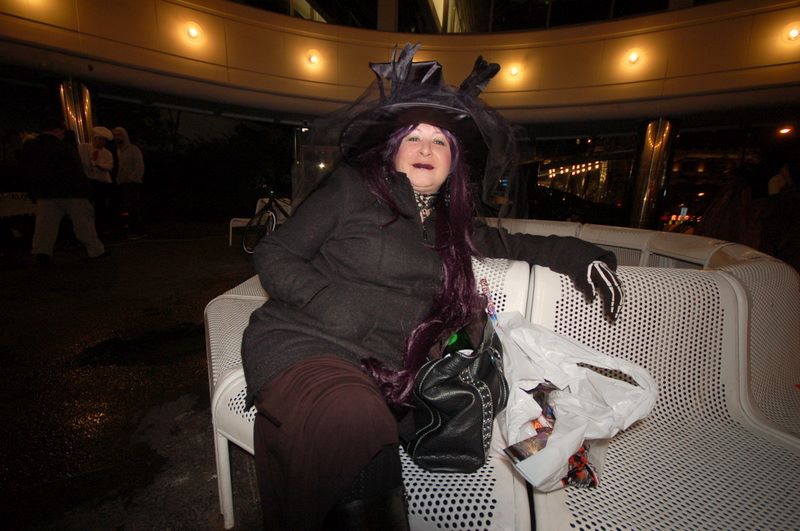
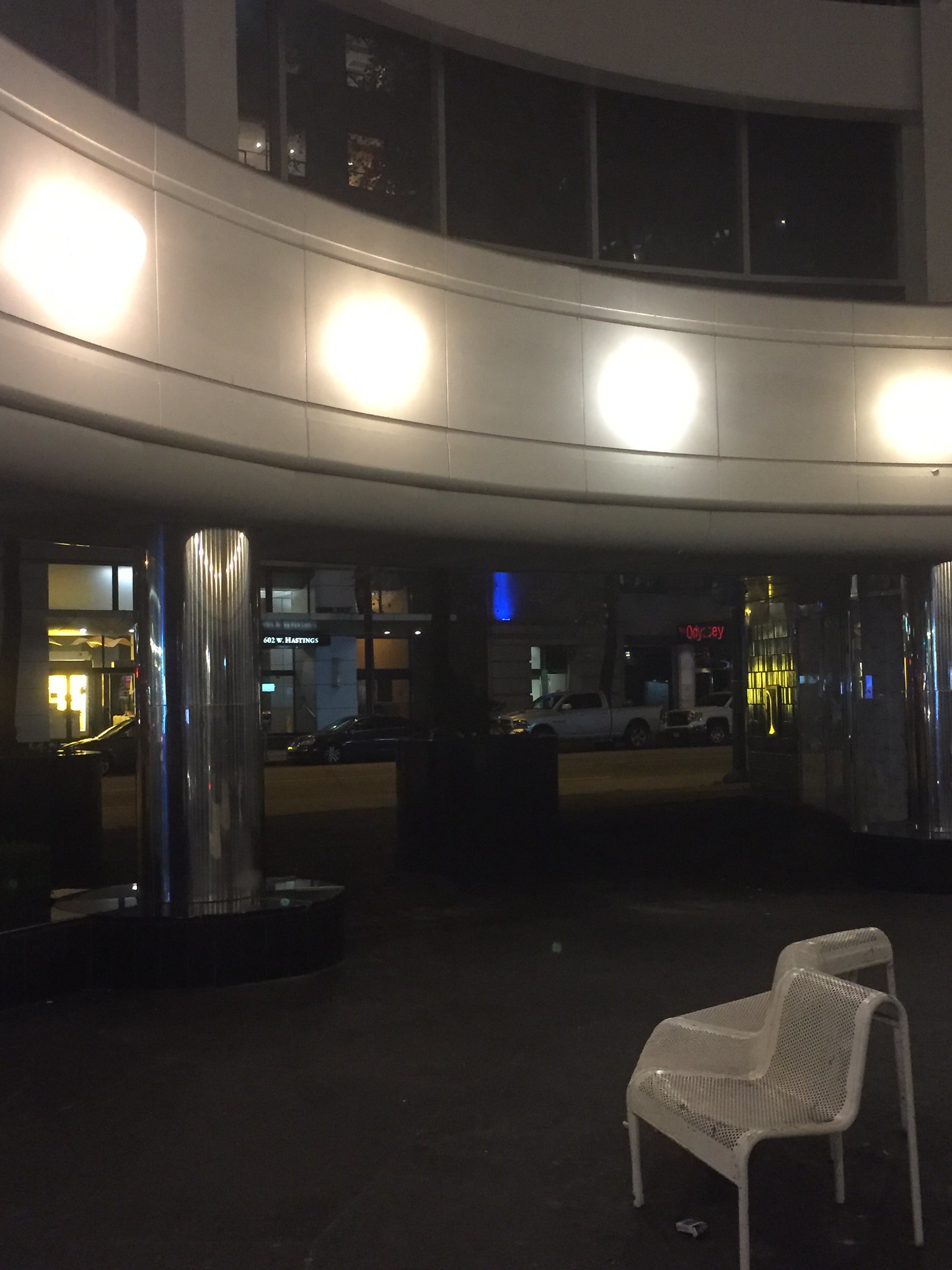
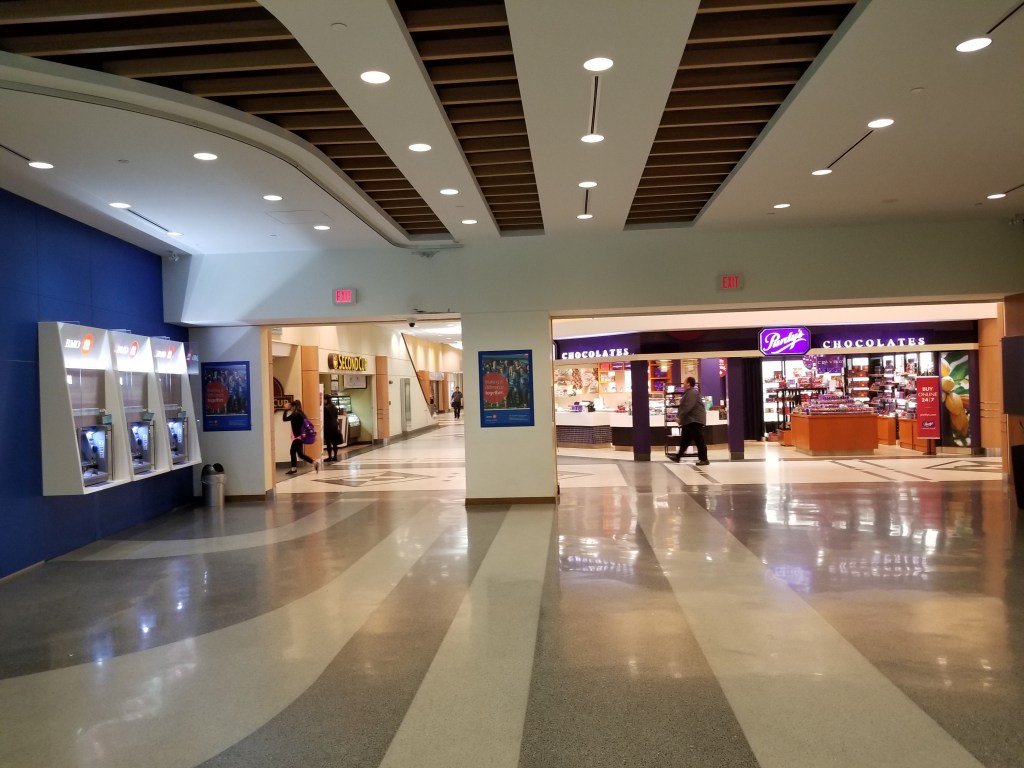
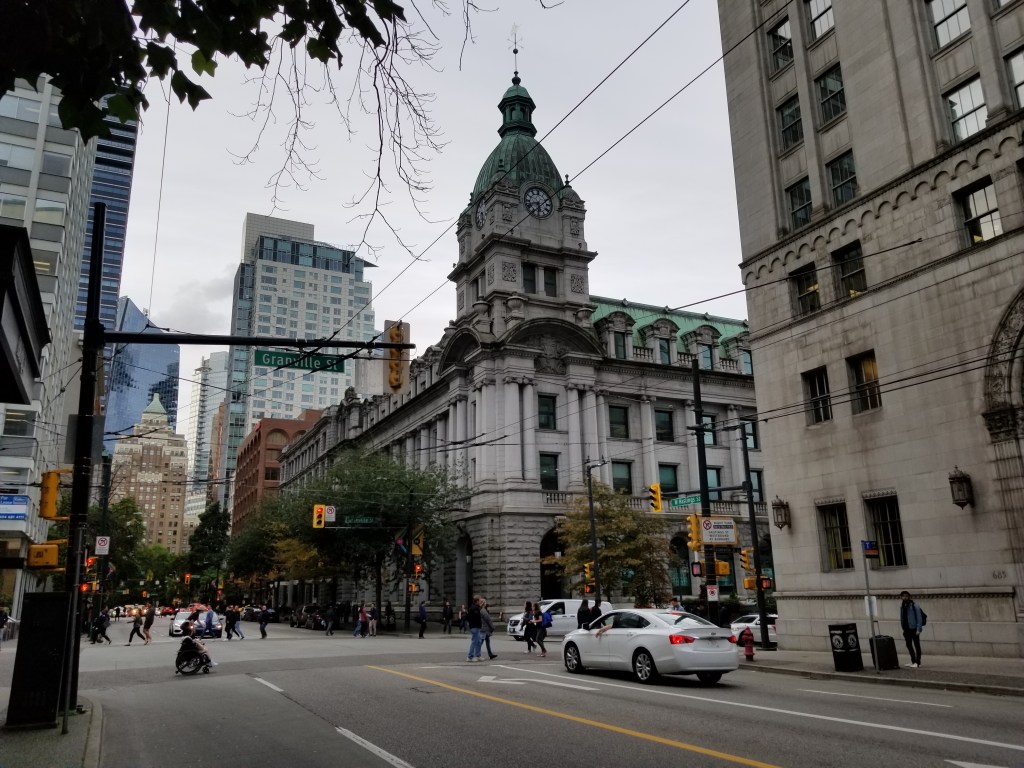
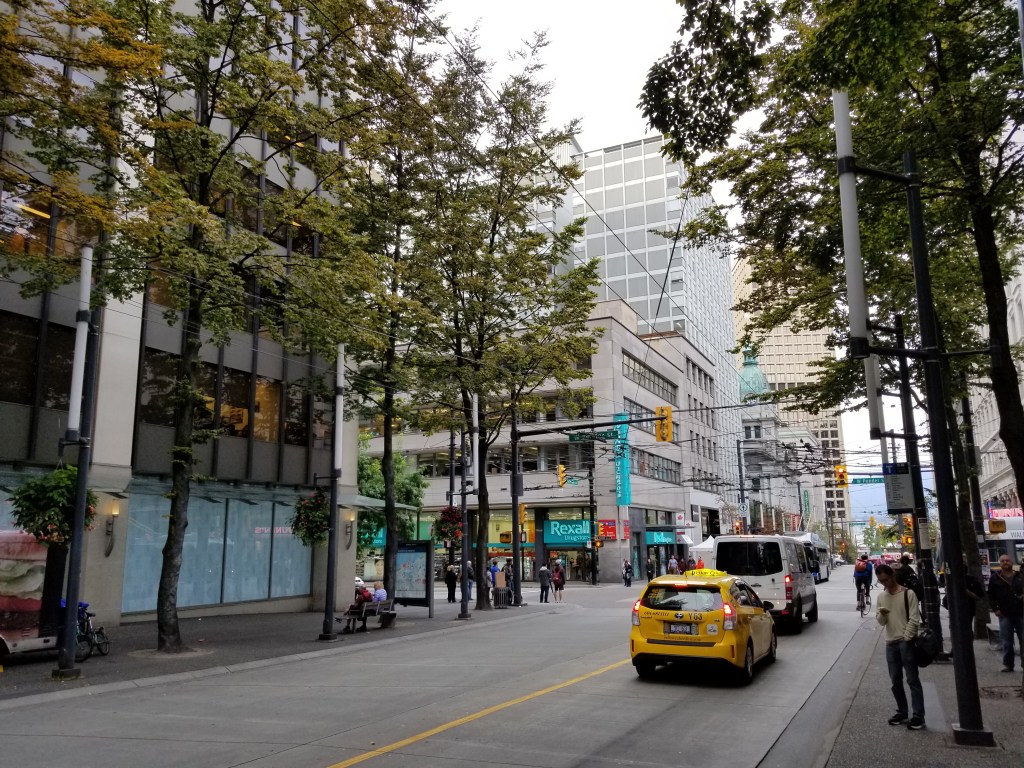
At the Pacific National Exhibition in Vancouver. Summer of 2018.

The Pacific National Exhibition (PNE) is a nonprofit organization that operates an annual 15-day summer fair, a seasonal amusement park, and indoor arenas in Vancouver, British Columbia, Canada. The PNE fair is held at Hastings Park, beginning in mid-to-late August and ending in early September, usually Labour Day.

The organization was established in 1907 as the Vancouver Exhibition Association, and organized its first fair at Hastings Park in 1910. The organization was renamed to the Pacific National Exhibition in 1946. During the mid-20th century, a number of facilities were built on the PNE grounds, including Pacific Coliseum and the PNE Agrodome. In 1993, the amusement park adjacent to the PNE, Playland, became a division of the PNE.

The Vancouver Exhibition Association (VEA), the predecessor to the Pacific National Exhibition organization was first formed in 1907; although the association was not incorporated until 18 June 1908. The VEA had petitioned Vancouver City Council to host a fair at Hastings Park; although faced early opposition from the city council and the local jockey club that used the park for horse races. However, the city council eventually conceded to the VEA’s request and granted the association a 5-year lease to host a fair at Hastings Park in 1909.

The VEA held its first fair at Hastings Park in August 1910. It was opened by then Canadian Prime Minister Sir Wilfrid Laurier as the Vancouver Exhibition. The biggest attractions of the two-week fair are its numerous shops, stalls, performances, a nightly fireworks show, and the exhibition’s Prize Home. From its beginnings, the exhibition was used as a showcase for the region’s agriculture and economy.

In the initial years of the Second World War, the fairgrounds saw an increased military presence. However, the exhibition itself was not cancelled until 1942, after the Canadian declaration of war against Japan was issued. From 1942 to 1946 the exhibition and fair was closed, and like the Canadian National Exhibition in Toronto, served as a military training facility for the duration of World War II. During this time, the exhibition barns that were used to house livestock, were used as processing centres for interned Japanese Canadians from all over British Columbia. The interned Japanese Canadians were later shipped away to other internment camps throughout British Columbia, and Alberta. The Momiji (Japanese word for Maple) Gardens on the PNE’s grounds serves as a memorial for the event. The barns used for the internment of Japanese Canadians are still used to house livestock during the annual fair, and serve as storage area to house some of the PNE’s property the rest of the year.

On 7 February 1946, the Vancouver Exhibition Association changed its name to its current moniker, the Pacific National Exhibition; and later reopened the fair to the public under that name in 1947. The organization was formally reincorporated as the Pacific National Exhibition in 1955.

The highest attendance at the fair was recorded in 1986, with 1.1 million guests visiting the PNE, most likely due to Expo 86 that was occurring at the time. In 1993, the amusement park adjacent to the PNE, Playland, became a division of the PNE organization.

During 1997-1998, the PNE grounds was transformed with the demolition of a number of buildings including the Food Building, Showmart and the Poultry Building. This gave way to the Sanctuary, a parkland setting with a pond. The pond restored part of a stream that once flowed in the park out to the Burrard Inlet. The city restored a large portion of the park. Many old fair buildings have been demolished and replaced by a more natural character. Although land was purchased in Surrey that was to become the fair’s new home, the PNE has since transferred ownership from the province to the City of Vancouver and will remain at Hastings Park. The PNE is a registered charity.

Two attractions at the PNE were named as heritage sites by the City of Vancouver in August 2013. The Pacific Coliseum and the Wooden Roller Coaster were added to the list.

In 2020, the fair went on hiatus due to the COVID-19 pandemic, alongside other agricultural and county fairs across Canada, including the Calgary Stampede, the Canadian National Exhibition, and K-Days.

In the early hours of February 20, 2022, a major fire broke out on PNE grounds, where multiple vehicles, tools and equipment, and buildings were destroyed as a result.

The PNE grounds contains several buildings and exhibition halls. The PNE Forum is a 4,200 square metres (45,000 sq ft) exhibition facility that is used for large displays and trade shows. Rollerland is a 1,840 square metres (19,800 sq ft) exhibition, banquet hall and venue for the Terminal City Roller Derby.

Two buildings on the PNE grounds are indoor arenas. The Pacific Coliseum is multi-purpose arena that holds 15,713 permanent seats, with provisions for 2,000 temporary seats for concerts and certain sports. The PNE Agrodome is a smaller indoor arena with 3,000 permanent seats, with provisions to expand up to 5,000 seats. Entertainment facilities includes the Garden Auditorium, a building that features a built-in stage and dance hall. The PNE grounds also feature amphitheatre with bench-style seating for 4,500 visitors.

Other buildings on the PNE grounds includes the Livestock Barns, a large multi-use facility, and the organization’s administrative offices.

Speculating About the Weather: The Unusual Dry Fog of 1783

https://niche-canada.org/2017/10/02/speculating-about-the-weather-the-unusual-dry-fog-of-1783/

Let’s talk about the weather! In the summer of 1783 individuals in many parts of the northern hemisphere witnessed blood red sunsets and a peculiar, long-lasting dry fog. Speculation in the press was rife as to the cause. Many theories were put forward at the time but it was a century before the fog of ignorance was lifted. But what had caused this unusual weather?

“The summer of the year 1783 was an amazing and portentous one, and full of horrible phænomena; for besides the alarming meteors and tremendous thunder-storms that affrightened and distressed the different countries of this kingdom, the peculiar haze, or smokey fog, that prevailed for many weeks in this island, and in every part of Europe, and even beyond its limits, was a most extraordinary appearance, unlike anything known within the memory of man.”—Gilbert White

As illustrated by Gilbert White in his Natural History of Selborne, in the summer of 1783, Europeans had more than enough reasons to be concerned with the weather. A peculiar dry fog with an odd sulfuric smell cloaked Europe and remained for months, with neither wind nor rain managing to disperse it. The fog was not the only oddity these individuals were facing that summer: The sun had a blood red color when it set and rose; an unusual number of thunderstorms seemed to pass through; meteors were visible over western Europe, earthquakes occurred in Italy, and a new island emerged from the sea off the coast of Iceland. Speculation was rife as to the cause of all this.

Hekla, an Icelandic volcano, known in Europe since medieval times as the gate to hell, was thought to be a potential culprit. When referring to historical maps of Iceland, Hekla is usually pictured as erupting. Famously, Benjamin Franklin suggested that Hekla or Nyey, the newly emerging island, might have caused the dry fog. However, what is often forgotten in this context is that in the same paragraph, Franklin suggested “great burning balls” (meteors) might alternatively have caused it.

At the time a very fashionable explanation was electricity: Lightning was believed to fertilize the soil when it hit the ground. The numerous thunderstorms of the summer quickened the spread of the lightning rod, which had not yet had its breakthrough. The lightning rod was believed to withdraw the beneficial electricity from the atmosphere, which—so the theory went—caused the dry fog, as sulfuric odor had previously been consumed by the “electrical fire.”

There was yet another story making its rounds in the newspapers in July 1783: Not just one but two volcanic eruptions were described within the German territories. The Cottaberg near Dresden as well as the Gleichberg mountains near Hildburghausen were said to have roared to life and to be spitting fire. Both mountains are actually of volcanic origin—however, their last eruptions occurred 25 and 15 million years ago, respectively. The reports were retracted a few weeks later.

The most popular theory of the time suggested that earthquakes in Italy and this dry fog were directly related: people believed the earthquakes had opened a crack in the Earth, which released sulfuric odor from the Earth’s interior into the air. The concept of a subterraneous revolution plausibly explained the sulfuric smell, the fog, the earthquakes, and the newly emerging island.

Many more theories were put forward at the time. The natural sciences were not yet able to reliably identify the cause of the dry fog and the unusual weather of the summer. So, what had actually caused this lingering gas behemoth?

The Laki fissure (Lakagígar), a 27 kilometer long row of approximately 140 craters and vents, located in Iceland’s remote highlands, erupted over the course of eight months from June 1783 to February 1784 and released the largest volume of lava of any eruption in the last millennium. The gases produced by the eruption were transported from Iceland via the jet stream and dispersed over the northern hemisphere, where the gases became visible (as well as smellable) as a dry and sulfuric haze. At the time it took three months for the news about an Icelandic volcanic eruption to reach mainland Europe, during the summer of 1783, and Europeans were left alone to find an explanation.

It took another decade before the Icelandic naturalist and physicist Sveinn Pálsson discovered the Laki fissure in 1794, but his manuscript was not published in its entirety until 1945. The discovery of the volcano did not immediately lead to connecting the dots between the eruption and the dry fog. In 1883, one hundred years after the Laki fissure eruption, Krakatau in Indonesia roared to life. This colossal eruption and the invention of telegraphy made it possible to know about the eruption and simultaneously observe blood red sunsets and sunrises in the western world. It was only in retrospect that the dry fog and the other extraordinary phenomena such as the red skies of 1783 were connected to the Laki fissure eruption.

Many scholars are aware that tropical eruptions, such as the infamous 1815 Tambora eruption, can have far-reaching effects on the globe. High-latitude eruptions, however, can also affect the atmosphere and the weather in different parts of the northern hemisphere. In 2010 an Icelandic volcanic eruption brought international air traffic to its knees and the world (and the humanities) became aware that Iceland is volcanically active. Learning about the not always obvious effects of an Icelandic volcanic eruption can prove useful for European and North American environmental historians to be able to spot similar events in their sources from one of Iceland’s frequent (past or future) volcanic eruptions, or from eruptions originating in Alaska or the Cascades.