


There are many examples of children of foreign nationalities falling by the wayside in Japan, after arriving unable to speak the language and then struggling to fit in at school or in society.
But Sahel Rosa, 34, came to Japan from the chaotic aftermath of the Iran-Iraq War in the 1980s, and went on to become an actor and TV personality. She recently sat down for an interview with the Mainichi Shimbun, and reflected on the difficulties children from abroad can have when starting a new life in Japan, and the help she received which enabled her to succeed.
Mainichi Shimbun: Could you tell us a bit about the circumstances that led to you coming to Japan?
Sahel Rosa: I was born in 1985, in a small town in Iran. From age 4, I was living in an orphanage. A university student who came there are as a volunteer adopted me, and she became my mother. When she decided she would work in Japan, she took me with her, and I came here when I was 7. It was Aug. 13, 1993.
MS: Did you have any concerns then?
SR: I enrolled at Shiki Daisan Elementary School, a public school in Shiki, Saitama Prefecture (north of Tokyo), from the second term of second grade. I came in on a three-month holiday visa, so I was treated as an exchange student. The first thing that surprised me was that there were boys in the classroom. In Iran, where many people are Muslim, boys and girls study in separate schools until they reach university. I was also perplexed about wearing bloomers that showed my legs during P.E. lessons.
There were also differences in the way we communicated in standard situations. TV shows from Japan were shown on Iranian TV, and I watched a few of them. There was Oshin, Captain Tsubasa, Triton of the Sea, and Mito Komon. But they were all dubbed into Farsi, so I just thought everyone in the world spoke Farsi. In Iran, we speak using big hand and mouth movements, and it’s like we’re singing. Japanese people don’t tend to change their facial expressions too much when conversing, so at first I was scared because I thought they were angry.
MS: Did you manage to integrate at school?
SR: My classmates would all gather around my desk, and they’d try to communicate with me using gestures. They’d shout “Sahel” and then give me a thumbs-up and say “Good” in English. But, in Iran, a thumbs-up doesn’t mean good at all; it’s a gesture used to demean another person. Whenever someone would give me a thumbs-up with a smile, I’d think they were being rude to me, and I’d feel low.
But then I also did things that upset everyone. In Iran, when we want to say “Hey” to get someone’s attention, we make a kind a clicking sound with our tongue. When I did it when trying to make friends, the other children would get the impression that I had a bad attitude, or that I wanted a fight, and gradually people kept their distance from me. In class photos from the time, I’m standing on the edge looking down. I didn’t have a place where I felt comfortable. I didn’t understand a thing going on in classes, and at first I felt like I’d been abandoned there.
MS: According to a 1993 survey by the education ministry, the number of children “in need of Japanese language instruction” in elementary, junior high and high schools was reportedly around 10,450. That number is a fifth of today’s figures. With no educational framework in place, who did you learn Japanese from?
SR: My school principal. He was a kind, short teacher with glasses. He couldn’t bear to see me the way I was, and told me to come to his office. There, during the mornings until midday, he would teach me Japanese one-to-one. We didn’t use a textbook. For example, we would turn on a tap and touch the water, and I would mimic his pronunciation of the word for water. Through that method, I learned five new words each day.
The principal treated me as a friend. He would say, “I’m your friend. Wouldn’t it be good if we were able to talk to each other?” I felt like I wanted to speak with him more, too, so I went on absorbing more words. Like with riding a bicycle, being taught how to pedal is important. No matter how many times you fall over, if you know how to pedal you can take off again. As I showed people I was trying to communicate with the words I’d learned, even though I was making mistakes, my classmates started walking home with me after school. After about three months, I wrote about my experience with a jump rope. We had been on a field trip, and what had left an impression on me was when we all enjoyed doing this huge jump rope activity as a class.
MS: If your principal hadn’t taught you Japanese, what do you think would have happened to you?
SR: I don’t think I’d have come to love Japanese people. I wouldn’t have been able to make friends, and I’d have probably gone on misreading things as bullying. With my principal’s lessons, Japanese went from being something I perceived as a scary language to a polite and warm one. Language is a bridge that connects people.
If from the start I hadn’t been able to go to school, my life wouldn’t have turned out the way it has. When we came to Japan, my mother was married, but I didn’t get on well with my stepfather and they divorced. We were chased out of our one-room apartment in the middle of winter, and for two weeks I went to school while living in a park.
A school cook found out about our situation, and invited us to her house and gave us something to eat. She also asked a lawyer to help us apply for a visa that would mean we could stay in Japan, and even found work for my mother. If she hadn’t been there, we wouldn’t have escaped that park, and maybe have become people staying illegally.
When I was going to elementary school, the school got my textbooks, exercise books, notebooks, and pencils together for me. They even got me a school bag. For a foreigner who has just arrived in Japan, prices here are very high. It’s at the level where you have to think about buying a single can of juice. The principal and the others accepted us, and saved us. For that reason, now I feel like I want to give back to them, and as one way of doing that I continue to visit child welfare facilities and support refugees.
MS: It’s been more than 25 years since you entered that school, and in that time the number of foreign children coming to Japan has risen, but more than 10,000 of them are in “unsupported” situations where they don’t get the Japanese language education they need. What kind of support do you think would be best?
SR: If they attend classes while still not understanding the words, they’ll never get the knowledge they’re meant to. First, the important thing is to secure school courses focused on Japanese language teaching. When they go home, there’s no one who can explain their homework to them, and they don’t always have people in the neighborhood looking out for them, so the school needs to provide some kind of comprehensive framework, I think.
MS: Is there anything you want to say to the foreign children living in Japan today?
SR: Living in a country with a different language and culture to your own comes with a lot of struggles. The children working hard in the middle of all that can’t really be open about their worries and pain precisely because they are working hard on it. I was bullied when I was in junior high school, and there were times I thought I wanted to kill myself, but to my mother, who worked morning to night in a factory until she was exhausted, I would just lie and say, “School was fun.”
What I can say from that experience is that you don’t have to pretend to be strong. I learned afterwards, but in truth my mother also had her own concerns about living in Japan. If you really show your parents and the people around you your weakness, then by sharing your troubles, maybe a feeling that you can overcome them together will emerge.
—
Profile: Sahel Rosa
Born in Iran in 1985, she started her entertainment career when she was in high school, and made her radio debut on FM station J-Wave. Her performance in the short film “Cold Feet” won her the Best Lead Actress in a Foreign Language Film award at the 6th Milan International Filmmaker Festival. She is a goodwill ambassador for an international nongovernmental organization which aims to find all children a home, and she works to provide support and outdoor classes for children across the globe.
(Interview by Yuka Narita, City News Department)

Manga Entertainment is an influential, yet controversial, anime distribution/production company. Despite its name, the company distributes anime rather than manga. The company was originally founded in the United Kingdom in 1987 before expanding into the North American market in 1994, after the purchase of the American licensor L.A. Hero, which subsequently became Manga Video USA.
Manga, like many other companies at the time, chose to concentrate on dubbed versions of its licenses instead of subtitling. However, instead of bowdlerizing for mass appeal, Manga embraced the racier and gory aspects of anime. Their dubs gained a reputation to match, thanks to several infamously gratuitous examples of Cluster F Bombs being dropped (in order to get an “18” adults-only rating). They weren’t above the occasional Macekre, either.
Despite this (or perhaps because of it), Manga Entertainment did well, and was flush with investor cash, which was used to co-produce ambitious projects like the original Ghost in the Shell movie. Confusing matters, Manga UK traditionally advertised its anime releases as “manga videos”, and the term apparently took hold for a while.
Manga UK also licenses titles from international companies to release them in the UK market. For example, Manga UK has a licensing agreement with Viz Media that allows them to distribute popular titles such as Bleach, Naruto and Death Note. Manga UK is also the current British distributor for Funimation titles. Many of their earlier releases were licensed from Streamline Pictures (e.g. AKIRA and the animated Fist of the North Star movie).
The company had a close relationship with the US-based Bandai Entertainment, with whom they’ve collaborated numerous times, most notably on Ghost in the Shell: Stand Alone Complex, where it’s difficult to tell which company actually holds the license (Manga does, but sublicensed all production to Bandai). The company also had a presence on American cable television, with the former Ani-Monday block on Syfy consisting of both recent and old Manga Entertainment titles. Manga Entertainment technically had a presence on American television years before that: Manga Entertainment’s titles were the majority (though not all) of the anime shown on Starz Encore Action’s Animidnight block for years; the Encore channels are owned by Starz, which was owned by the same company that owned Manga Entertainment at the time and said company would later sign a distribution deal with Syfy when Ani-Monday started, which is why Manga Entertainment had such a strong presence on both Animidnight and Ani-Mondays, and both blocks shared much of the same programming. For a long time, in the early 2000s, Animidnight was the only place one could consistently catch uncensored anime on American television, and much of it was Manga Entertainment titles, whose 18+ dubs fit well with adult oriented network.
Manga Entertainment started out as a unit of music executive Chris Blackwell’s Island World, which was purchased by PolyGram in December 1994. Following a dispute with PolyGram over attempted Executive Meddling on Robert Altman’s The Gingerbread Man, based on a screenplay by John Grisham, Blackwell left PolyGram in 1997 and took a lot of his Island World assets, including Manga Entertainment, with him, incorporating them into his Palm Pictures venture; PolyGram would continue to distribute until it went bankrupt and was folded into Universal in 1998. Since 2005, the UK division operated independently from the North American division, both of which were owned by Anchor Bay, a subdivision of Starz Media. Manga USA ceased licensing new products after REDLINE in 2011.
In 2015, both Manga UK and Anchor Bay UK were bought from Starz by managing director Colin Lomax. Manga UK currently shares a working relationship with fledgling company Animatsu Entertainment, with the latter company handling production and international rights. Anchor Bay UK became Platform Entertainment and now has exclusive rights to the Manga branding and catalog in the UK and Ireland. Manga UK would later be acquired by Sony via Funimation in 2019. In 2021, Funimation would mostly retire the Manga UK brand, releasing future titles under the Funimation name alone.
As of 2022, the Manga UK is now operating as the UK division of Crunchyroll.
In 2016, Lionsgate acquired Starz and its properties, and merged both Anchor Bay Entertainment and Manga USA into their home entertainment division. Since the acquisition, Manga USA’s website announced plans for a relaunch, which as of 2021 has yet to happen.
Distributors for the American unit over the years included:
The series Manga Entertainment has released include:
Keep Circulating the Tapes: The US division has allowed many licenses to lapse, and while some have been rescued by other companies, some have not, leaving the latter group in this realm.
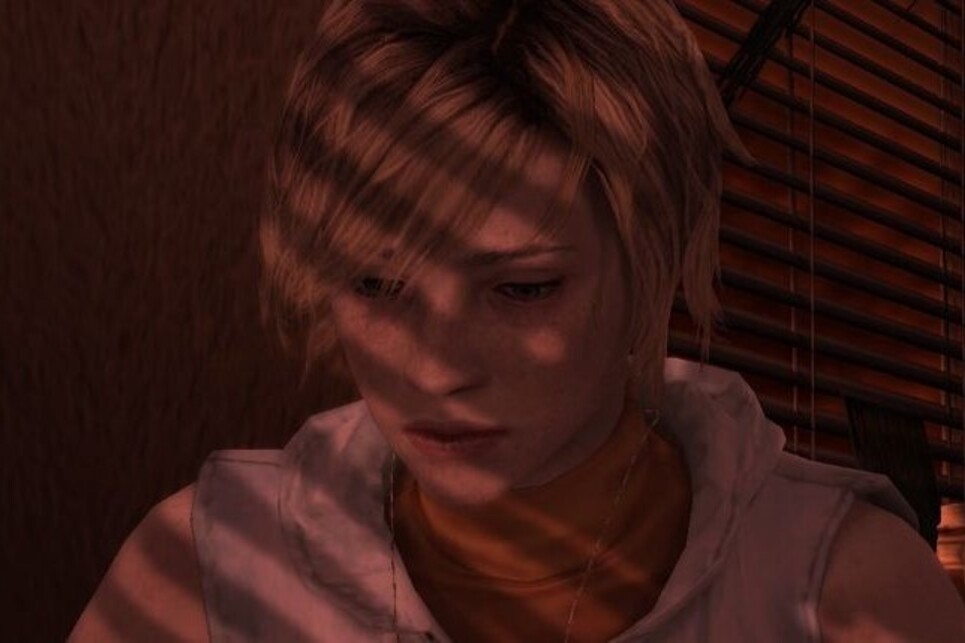
Since I’ve been slowly playing Persona 4 for the third time, I’d like to briefly compare Persona 4 for the PlayStation 2 to Persona 4 Golden for the PlayStation Vita and PC. I got to experience playing Persona 4 for the first time by playing Persona 4 Golden on my PlayStation Vita several years ago. The Vita is the first handheld game console that I bought, and, since Persona 4 Golden is considered by many people to be the best video game on the Vita, I bought a physical copy of the game too. At that time, I hadn’t played any other Persona game before and I didn’t know anything about the Persona franchise. My experience of playing Persona 4 Golden was very good. I must admit that I managed to waste a lot of time at the beginning of the game because I wasn’t familiar with the gameplay. There are usually important and useful things to do every day in the game, in the afternoon and in the evening, but I unknowingly wasted time by skipping activities in order to get to the next main story moment as quickly as possible. Therefore, Persona 4 is a video game that teaches players to effectively manage time. Since Persona 4 Golden is an “enhanced port” of the original PS2 game, and since there are no major gameplay or story changes in the port, Persona 4 Golden became one of my favorite video games. But not long after I finished playing Persona 4 Golden, I began to play the original game, since I own a Slim PlayStation 2, and completed it as soon as I could. Doing this changed my opinion of Persona 4 Golden and reaffirmed my belief that video game remakes and remasters are almost always worse than the originals. I’m not saying that Persona 4 Golden is a terrible video game, but I am saying that it’s inferior to the original. Why do I think so? There are several reasons. First of all, the opening movie in Persona 4 Golden is worse than the opening movie in the original. For some reason, the developers decided to make everything in Persona 4 Golden brighter and more colorful. In addition, the new designs, like the ones in the opening movie, are worse than in the original. They’re both drawn worse and are less fitting to the game. Persona 4 Golden was released four years after the original and perhaps the team that worked on creating Persona 4 Golden was different than the one that worked on the original. I wouldn’t really say that Atlus began to slip by the time Persona 4 Golden began to be developed because Atlus released Persona 5 four years later, in 2016. Persona 5, like the original Persona 4, is a great video game. But I would say that the design choices began to get worse. As much as I like Persona 5, I don’t consider it to be as good as Persona 4. It’s possible, however, that Atlus began to really slip after releasing Persona 5. What I mean is that this company possibly can no longer create great and original games. If the next Persona game turns out to be disappointing or somewhat disappointing, like how Persona 3 Reload was disappointing, I think that it will be possible to say that Atlus is slipping, although one can say the same thing about the entire video game industry now and not just about this one company. Second of all, the added content in Persona 4 Golden makes the game worse and not better. Almost all of this added content makes the game longer, more tedious, and less interesting. It clashes with the original content too. For example, I don’t want to spend more time on catching bugs, on fishing, or on sitting at a cafe. The rewards for these activities are minor at best in Persona 4 Golden. They take time and attention away from what’s important. In the original game, the countryside town of Inaba seemed creepy, mysterious, and even menacing because the designs in the game weren’t bright and colorful all the time. Bad things happen in Persona 4, and the story is a murder mystery. It often rains in Inaba. The TV world is an oppressive place where people can get killed. The original Persona 3 wasn’t a bright and colorful game either. It’s even darker than Persona 4 when it comes to the story and the game’s main dungeon, Tartarus. Like Persona 4, it has excellent designs and artwork. But Persona 4 Golden adds things that make the setting and the story less important, less relevant, and less monumental. In the original game, I often noticed the backgrounds, which actually look interesting and rather beautiful. But in Persona 4 Golden, because of the changes in design and color, the backgrounds look somewhat bland, even if they look very similar to the original backgrounds. So, Persona 4 Golden is actually a downgrade because the design changes and the new content clash with the original content and the story, and they make the game cluttered, less significant, and less appealing. Persona 4 Golden is readily available for purchase, but the superior original can only be bought in used condition now and only for the PS2. The only reason why I’m playing Persona 4 Golden again is because I bought it on Steam for my PC a few years ago when it was on sale. Playing this game on a bigger screen than the one on the Vita made me notice the negative changes to the graphics even faster. Otherwise, I would have been playing Persona 4 for the PS2 again instead. It’s amazing that many other great video games got released for the PS2 too. These games look, play, and sound epic because the people that created them were masterful in their field. I’m now slowly playing Silent Hill 3 (2003) again on my PS2, and to me this game is just another example of how great video games were for the sixth-generation of consoles. Nowadays, I try to use the internet as little as possible because so many websites feature pop-up ads and video ads. Well, even years ago, when I began to use the internet, and especially websites like YouTube, I knew that the authorities would sooner or later place the internet under tight control. This has been achieved thanks to copyright claims, censorship, restrictions, and perhaps even threats. Therefore, I’ve never put a lot of time into developing my YouTube channel, for example. YouTube is a useful website, but, the last time I checked, it was the same as it has been for a long time. There’s a whole lot of propaganda and there are a bunch of reactionaries and conspiracy theorists yelling into the void, accomplishing nothing, and repeating establishment propaganda. It’s really no wonder that the authorities in the USA are trying to ban TikTok, since it’s the only popular website where “the Right” doesn’t dominate. Although I’ve never made provocative or political channels, I must say that a number of my channels on YouTube and on other websites got taken down because of copyright claims and censorship. The managers of a few websites couldn’t even tolerate me posting some history videos on their websites. But even back then I didn’t think that what would finally discourage me from seriously using the internet would be advertisements. I didn’t realize that ads would become so numerous and so annoying that they would make many websites intolerable. This is kind of funny. Anyway, there is a gamer who posts content on YouTube. He may be the most American gamer around because he always curses and calls anything that he doesn’t like communism. But this reactionary gamer admittedly makes entertaining videos and he makes some good points. When it comes to the video game industry, he makes interesting observations from time to time. I didn’t seriously think about the state of the video game industry until I watched some of his videos. He has obviously played many more video games than me, and he has obviously thought about the state of the video game industry a lot more than me. He considers the period from 1993 to 2011 to be the the golden age of gaming. He said, “Games were so f*cking good for so long. They were seen as f*cking toys until of course the normies picked them up. And now that the normies are in, they want to change everything and f*cking ruin it. That’s all you f*ckers know how to do.” He thinks that many disappointing AAA (high-budget) video games began to be released when the eighth generation of consoles came around and that few good AAA video games began to get made. Among these disappointing games, he mentioned Resident Evil 3 (2020), The Last of Us Part II (2020), Fallout 4 (2015), Watch Dogs (2014), Mortal Kombat 11 (2019), Metal Gear Solid V: The Phantom Pain (2015), Cyberpunk 2077 (2020), Batman: Arkham Knight (2015), Deus Ex: Mankind Divided (2016), Mass Effect: Andromeda (2017), Super Mario Odyssey (2017), Middle-earth: Shadow of War (2017), Destiny (2014), and Yooka-Laylee (2017). This sounds about right to me, although I don’t agree with absolutely everything that he says. I haven’t played many of the video games that got made since 2012, especially when it comes to the ones that got made for home consoles, although I have played Persona 4 Golden, which turned out to be a disappointment in comparison to the original. The video game industry today isn’t dominated by only one company. Therefore, one can’t lay the blame on a single culprit. However, what I have noticed is that the companies that made great video games in the 1990s and in the 2000s are no longer capable of making great video games. One example is Square Enix. Another example is Konami. Another example is Capcom. These and other companies try to follow trends. They make sequels, remakes, and remasters. Of course, one of the reasons why these companies engage in such practices is because it usually costs a lot of money to make AAA video games now. If you make an expensive video game, and it doesn’t sell well, you will incur a big loss. Therefore, they try to play it safe. I know that the video games that got made before the PlayStation 4 was released usually had interesting and memorable stories and not only good gameplay. In short, they offered what Hollywood has been failing to deliver since the 1980s and the 1990s. Is this still the case? It seems that this isn’t the case anymore. For example, I can claim that I played The Legend of Zelda: Breath of the Wild (2017) and God of War (2018), which are great games, but I must admit that I wasn’t “blown away” by the stories of these games. By the way, I think that the story of The Legend of Zelda: Breath of the Wild was inspired by the film Nausicaa of the Valley of the Wind (1984). When it comes to places in Breath of the Wild where it’s nice to listen to music and look at the scenery, one of my recent discoveries is the pond near Keh Namut Shrine. Therefore, it’s clear to me now that the video game industry is in worse shape than I had thought, at least when it comes to creativity and originality. Some people have been complaining about the shortage of good AAA titles and console exclusives for the PlayStation 5 and the Xbox Series X, but Nintendo isn’t doing so well either when it comes to good console exclusives. Nintendo has admittedly released many good modern AAA titles on the Nintendo Switch, which aren’t Switch exclusives, and it has released a number of excellent Wii U exclusives too. But Nintendo’s Switch exclusives have been mostly disappointing. The Wii U may have been a commercial failure, but it had a number of excellent exclusives.
In ‘Ancient Mesopotamia: Portrait of a Dead Civilization’ (1964) by Adolf Leo Oppenheim, I have already come across plenty of interesting information, although so far I’ve read only 32% of the text. The society of Mesopotamia had a big influence on many of the societies that surrounded it and on the societies that came after it. The following is a quote from the chapter about economic facts. “In a letter from Ugarit we read in the awkward Akkadian characteristic of these texts one of those revealing sentences that shed more light on the economic life of the time than hundreds of monotonous and lengthy tablets: “Give (in the meantime) the 140 shekels which are still outstanding from your own money but do not charge interest between us – we are both gentlemen!” This curious and unique reference to a status situation mentioned for the purpose of influencing an economic relationship acquires meaning and significance when one connects it with a passage in Deuteronomy, 23:20 (and in Leviticus, 25:36-37), “Unto a stranger thou mayest lend upon usury; but unto thy brother thou shalt not lend upon usury.” We see that both the Ugarit letter and the passage from the Old Testament exhibit the same disinclination to use capital as a commodity. Among the Old Assyrian traders, however, the taking of interest and of compound interest is completely acceptable. Of course, they prefer to pay interest at the rate “one brother charges the other.” It is well known that the biblical attitude toward what we translate as “usury” has had a far-reaching and fateful impact upon the economic history of the West. The prohibition of usury was taken over by the early Church and maintained in force with remarkable inflexibility through the entire medieval period in the face of all the pressure generated by slowly but profoundly changing economic conditions. Only the dislocation of the ideological background of the medieval civilization in Europe – the Reformation – was able to break the stranglehold of the traditional attitude of the Church upon the economic life of Europe. Throughout the long theological discussions in scholastic as well as in popular literature (up to the seventeenth century), “capitalistic” concepts of money were often linked with the name of Babylon, a name representing a city rich and materialistic, and eminently efficient social and economic organization.” Similar information can be found in Paul Carus’s ‘The History of the Devil and the Idea of Evil’ (1899). “It goes without saying that the old biblical legends, far from losing their value by being proved to be much older, gain an additional value; they are now more interesting to us than ever. Formerly the biblical account of the creation was thought to be the very beginning of the religious evolution of man, but now we know that it is merely a milestone on the road. It is neither the beginning nor the end. It is simply the summary of a long history of anxious inquiry and speculation, which would have remained forgotten had we not discovered the Assyrian tablets bearing witness to the aspirations that preceded the composition of the Old Testament. But there is one thing which seems strange: the Chaldean belief in the immortality of the soul found no echo in the literature of the Jews. Did they refuse to incorporate it into the Hebrew world-conception because they disbelieved it; or did they merely ignore it because they were too realistic and would not allow themselves to be carried away by illusions even of the loftiest kind? The civilisation of Assyria and Babylon was more brilliant, more powerful, and more cosmopolitan than the civilisation of Israel. The most characteristic features of the Persian religion after the lifetime of Zoroaster consist in the teaching that a great crisis is near at hand, which will lead to the renovation of the world called frashokereti in the Avesta, and frashakart in Pahlavi. Saviours will come, born of the seed of Zoroaster, and in the end the great Saviour who will bring about the resurrection of the dead. He will be the “son of a virgin” and the “All-conquering.” His name shall be the Victorious (verethrajan), Righteousness-incarnate (astvat-creta), and the Saviour (saoshyant). Then the living shall become immortal, yet their bodies will be transfigured so that they will cast no shadows, and the dead shall rise, “within their lifeless bodies incorporate life shall be restored.” The Persian belief in the advent of a saviour who will make mankind immortal seems to reappear in an intenser form in the days of John the Baptist and Jesus of Nazareth, who preached that the kingdom of heaven is near at hand. St. Paul still believed that the second advent of Christ would take place during his own life-time. The dead who sleep in the Lord will be resurrected, and the bodies of those that are still in the flesh will be transfigured and become immortal. The influence of Zoroaster’s religion upon Judaism and early Christianity cannot be doubted.”











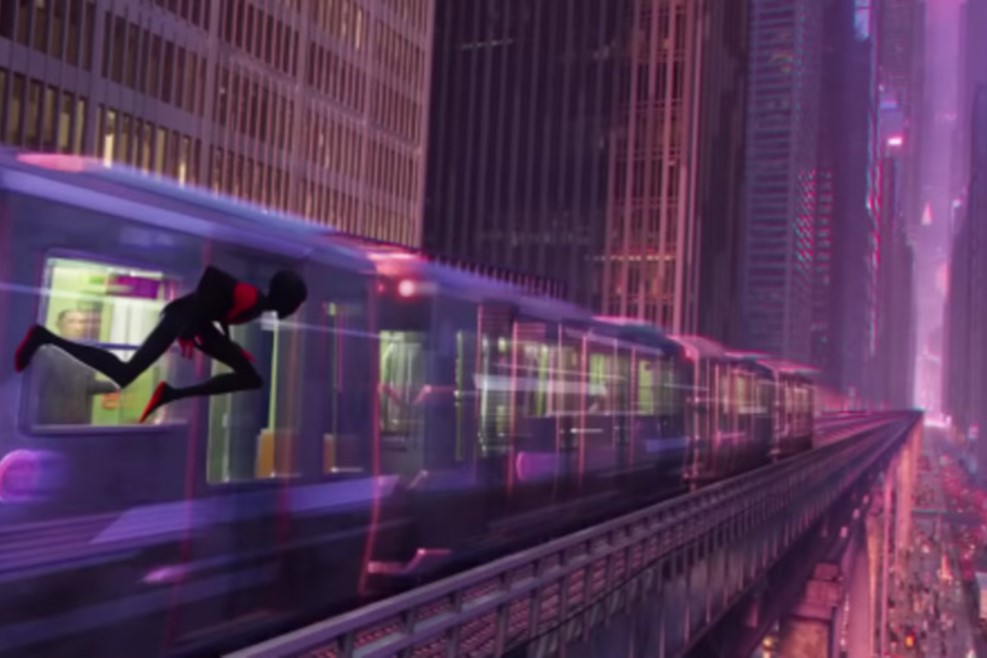
Miles Morales is an artist.We’re introduced to the movie version of Miles (Shameik Moore) as he sits at a drawing table sketching a sword-wielding robot. On his way to school, he slaps custom sticker tags on street signs where he hopes his father, a police officer, won’t find them. When he wants to express the vastness of the shoes he has to fill — the “great expectations” of his elite schooling academy — he ventures underground with his uncle Aaron (Mahershala Ali) and creates ornate graffiti murals. His bedrooms, both at home and at school, are littered with an assortment of creative works, from a Chance the Rapper Coloring Book poster to piles of Spider-Man comics.Spider-Man: Into the Spider-Verse is the world through Miles’ eyes, and it does tremendous justice to the story of creativity at its core. The expectations Miles fall short of soon shift from academia to super-heroics; the film follows suit. In nearly every scene, it layers comic-inspired motion and paneling to tell its story, not only paying stylistic homage to the source material, but framing Miles’ thoughts, feelings and even movements as he navigates coming-of-age.
Action-lines are used to approximate motion in comics. The trick works in all directions across a two-dimensional plane, but it’s especially effective when the movement is towards (or away from) the reader. It often becomes a matter of point-perspective — a technique commonly associated with the Renaissance, though its origins go back further — but rather than mathematical precision, the comic version skews geography, as if to move the reader along with the heroes. It’s a snapshot of motion in a static medium, though when the effect is translated to a moving picture, the result is kinetic.Point perspective is common in cinema too, mastered by the likes of Kubrick, but Into the Spider-Verse employs the technique in a manner that blends both art forms. While present in the film’s imagery throughout, it’s especially potent during key moments when Miles swings into action.
The lines that frame this perspective are sometimes themselves in motion. Whether beams from Wilson Fisk’s supercollider, or simply New York’s trains and taxis, the living environment enhances Miles’ motion either by moving in the same direction as him — allowing him to overtake the lines in question — or by moving in the opposite direction and enhancing the exaggeration.
The action lines even apply to the characters themselves, re-creating the effects of the comics. Some, in the vein of ink-line smears in hand-drawn animation, approximate rapid movement.
Others approximate impact, imitating sharp sounds on the page.
Some approximate the feel of anaglyph 3D — the good old red-and-blue.
And some moments of impact are even punctuated by comic-appropriate onomatopoeia.
Occasionally, the lines aren’t used to punctuate movement at all. The introduction on Peni Parker (Kimiko Glenn), for instance, echoes the stylizations of Japanese anime and manga, as if light itself is being bent around her.
Peni’s movements, along with those of Spider-Ham’s (John Mulaney), are emblematic of the exaggerated styles to which they pay homage. The hyper-expressiveness of anime, and the hyperactivity of old Warner Bros. toons, are each blended seamlessly into a world of more “realistic” motion.
Also worth noting: Spider-Man Noir (Nicolas Cage) on the far right, posed like an old Sandman comic from the 1930s. He’s even textured as such.
The comic flourishes don’t just exist to remind viewers of the source. When Miles first deals with getting his powers, his invasive, paranoid thoughts begin to manifest as comic book paneling. As he moves through physical space, the narration boxes shift into the background — another great use of 3D — and they’re replaced by new ones that are equally impactful.
Transposing these elements to film ends up uniquely transformative. Motion allows the narrations to forego a traditional left-to-right, the western orientation of the page. We don’t need to see the boxes in a familiar pattern, since we track the order in which they first appear and read them accordingly. The final image, when read as a singular panel, is chaos — “IN MY HEAD why is the voice Wait! So LOUD?!” — not unlike Miles’ state of mind at this point.Another example of this effect is Miles moving through his school hallway after an embarrassing encounter with Gwen (Hailee Steinfeld). Rather than narration boxes however, his thoughts are invaded by overlapping panels that exaggerate background details; bits of information of which he’s now hyper-aware thanks to his Spider-sense. A clip of this scene isn’t available online, but to illustrate, the effect also shows up during the film’s backstory recaps.
The characters’ quick-fire origin tales are often told through inter-locking comic panels, some even framed by webs. This allows for multiple stories to be illustrated in quick succession, while also painting a portrait of a full life of Spider-hood that we haven’t seen.
Not only are these montages a fun visual shorthand — Peter (Jake Johnson) stomps on a glass at his wedding; he’s finally Jewish in the text! — but the presence of these origins for each new player helps establish them as experienced Spider-people. Not just through action, mind you, but through the loss they inevitably experience. As even casual fans know, given the character’s omnipresence in popular culture, a death on one’s conscience is an inescapable part of Spider-Man’s mythos.Minor spoilers to follow.Miles, unlike the other heroes, is just starting out — both as a crime fighter, and as someone with lots to lose. Spider-people from various dimensions comfort him after the death of a loved one, and of course, his subsequent guilt. Even if we don’t see every death they reference, mere hints of Peter Parker’s Uncle Ben, Peter B. Parker’s Aunt May and Spider-Gwen’s best friend are enough to make the weight of Peni’s, Spider-Man Noir’s and even Spider-Ham’s respective losses feel tangible.One of the film’s most affecting moments is so ridiculous on paper — an anthropomorphic, Looney Tunes-inspired pig voiced by a stand-up comedian joins in the collective mourning — but it expresses, with devastating clarity, the idea that mortality and death are inescapable facets of even the most escapist fantasy.”You can’t save ’em all.”The divergent animation styles serve to punctuate this coming-together, as if the notions of heroism, guilt and loss connect them beyond universe and style and genre — the very webs that frame each origin stale also appear to physically connect their universes when the dimensions open up. As the Spider-folk commiserate, telling Miles they’re probably “the only ones who do understand,” the emotional heft feels earned.We’ve seen flashes of the lives they’ve lived, and we’ve likely seen a full version of this story on screen at least once. Given the film’s multiversal concept, their tales are variations on a theme that’s now culturally ingrained — a story perfected by Sam Raimi fourteen and sixteen years ago with the first two Spider-Man films.In contrast to our heroes’ collective mourning, however, the villain Wilson Fisk (Liev Schreiber) lacks the same mechanics and support system to deal with loss. This also happens to be the very impetus for his dimension-hopping scheme. His grief is so unmitigated and so un-confronted, forever trapping him in the bargaining phase, that it endangers the entire world. The result of his experiments is a kaleidoscopic mish-mash of crumbling buildings, as if giving physical form to Fisk’s erratic emotional architecture; an ugly embodiment of using great power irresponsibly.
Eventually, once Miles rises to the occasion, his coming-into-Spider-hood is punctuated by him finally getting his own comic. The moment he arrives, all decked out in a sure-to-be-iconic look, the film even tweaks the way it presents him.For the majority of the runtime, our heroes are brought to life in the vein of traditional cel animation, in which frames of characters were often repeated. For instance, two identical character frames for every one frame of moving backdrop.
In technical terms, it’s animating movement “on two’s.”This effect is re-created in Spider-Verse whenever Miles moves through space. The technique isn’t usually employed by CG animation, so its presence helps grant the film a unique visual aesthetic.
Occasionally, even as other Spider-characters move a frame at a time, Miles’ frames still double up — like he’s lagging behind the more seasoned heroes.
However, once when Miles finally takes his leap and harnesses his powers, the film presents him in slow-motion, which necessitates smoother movement. Both Miles and his surroundings begin progress at the same speed, and even when he isn’t slowed down (for instance, his free-fall), his movement is more harmonious, more in tune with the surrounding animation.He feels like he belongs.
What’s especially notable about Miles’ big “arrival” is the form his costume takes. The comic version of Miles — more interesting in concept than execution — has always felt lacking in this department. He gets his red-and-black suit readymade from Nick Fury, rendering it just another standard outfit. In Spider-Verse however, Miles spray-paints over the existing Spider-Man design and makes it his own — as if in tribute to his uncle, and the creativity they shared.It’s the perfect expression of Miles’ artistic spark coming to fruition, not to mention the perfect dramatization of the idea at the film’s core: that “Spider-Man” is about what each unique individual brings to the table. Each Spider-person in the film has their own set of skills; Miles’ talent is expressing himself visually through paint, and his costume being a unique artistic creation speaks volumes about his arc.Miles’ most important moment isn’t that he decides to take action — he’s enthusiastic to help the other Spider-folk from the get-go — but rather, that he’s finally able to do so. His turning point comes not through answering a call to action or through finding some hidden bravery, but rather, through his father Jefferson (Brian Tyree Henry) finally expressing his belief in his son.Miles not only has to overcome lofty expectation, but his father’s disdain for Spider-Man. The young hero arrives at this emotional point shortly after being told by the other Spider-people that he isn’t up to the task. Peter reminds him being ready would require a leap of faith — a lesson he reflects back to Peter to quell his fears about failure — but Miles isn’t ready to take his leap until his father stands outside his bedroom door. Jefferson, who often struggles to connect with his son, uses the language of an out-of-touch parent trying desperately to nurture creative talent:”I see this spark in you. It’s amazing.”Spider-Man: Into the Spider-Verse is a story about art, taking shape as an ode to the very art forms that birthed it. It’s a Spider-Man movie that pays homage to other Spider-Man movies, a Spider-Man cartoon that incorporates elements from Spider-Man cartoons, and a moving, breathing Spider-Man comic that brings to life — in composition, texture and most importantly, theme — the very pages that have made Spider-Man so enduring.Ultimately, it’s a story of why Spider-Man, in concept, will continue to endure, circling all the way back around to Stan Lee and Steve Ditko’s original idea. That anyone can wear the mask, and anyone can be a hero.
During 1935 the palaeontologist Gustav Heinrich Ralph von Koenigswald visited a Chinese apothecary shop in Hong Kong and discovered an unusually large molar, a tooth similar to the large flat ones that you have towards the back of your mouth.
Fossils like this are often found in Traditional Chinese medicine where they are called ‘dragon bones’, but this tooth did not come from a mythical creature, instead study revealed it to have come from some kind of gigantic ape.
When describing it as a new genus the choice of name was obvious and so von Koenigswald created Gigantopithecus with literally translates as ‘giant ape’.
Since this first discovery over one thousand three hundred teeth have been tracked down, many of them from the Traditional Chinese medicine market.
More excitingly however are the discoveries of some lower jaws which have allowed palaeontologists and primatologists to infer a little about what Gigantopithecus might have been like.
Unfortunately this is where the clues stop as so far no other parts of the skeleton or even the skull have so far been found.
The most famous species of Gigantopithecus known is G. blacki which seems to be the largest of the known species.
This was the first species to be named and so far is known from caves in South East Asia and is represented by both teeth and mandibles.
Another species is G. giganteus, but this is something of a misnomer as it actually seems to be only half the size of G. blacki.
This species is however known from India, and the size difference might be down to a different climatic adaptation, even though there is evidence to suggest that it also inhabited parts of China.
Another Indian species is G. bilaspurensis and this species really stands out from the other two because its remains are dated to as far back as the late Miocene period, extending the temporal range of Gigantopithecus for many millions of years between the Miocene and Pleistocene periods.
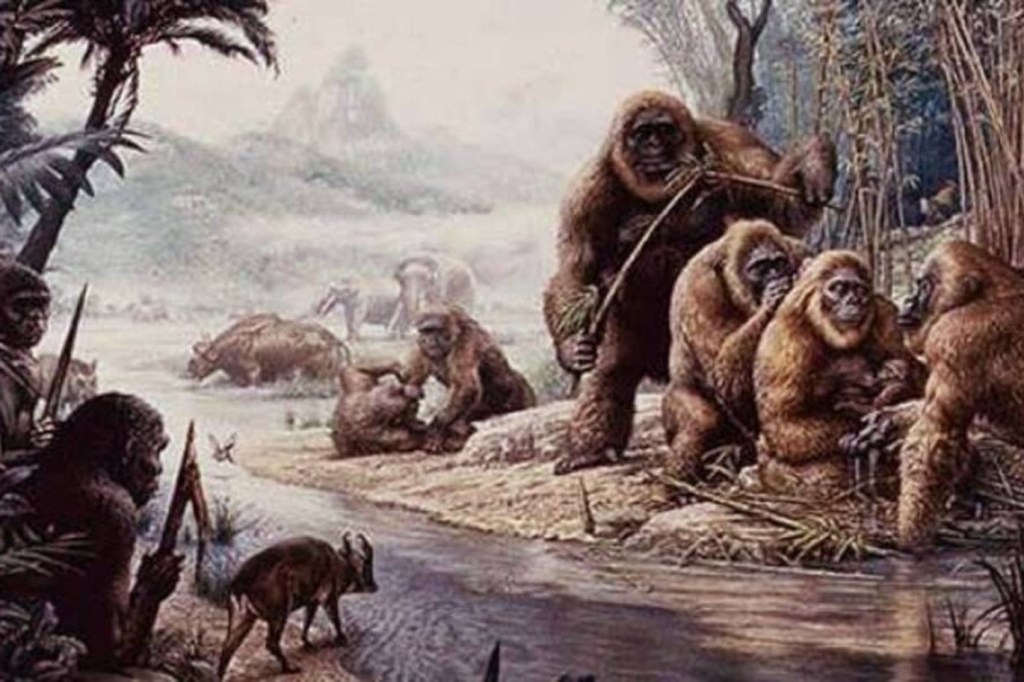
Because no complete or even partially complete skeleton is known, reconstructions of Gigantopithecus are highly speculative, but the parts which are known do reveal a surprising amount of information.
Reconstructions of Gigantopithecus are often of a gorilla like ape because gorillas are the largest apes that we know today, but the lower jaw structure is actually much closer to that of an orangutan.
This is why Gigantopithecus is classified within the Ponginae group of apes along with orangutans (which are actually classed under the genus Pongo). It is also for this reason that what are considered to be more accurate reconstructions give Gigantopithecus a more orangutan-like appearance.
Reconstructions of Gigantopithecus are usually of an individual in an erect upright posture so that the full size of this ape can be more easily appreciated, for example, when you see a bear on all four legs it looks big, but when it stands on its back two it gives the impression of a considerably larger animal.
However the wider consensus amongst researchers is that if Gigantopithecus was like other known great apes (a theory that is supported by current fossil evidence) it would have mostly supported its body with all four limbs in a hunched quadrupedal posture, although bipedal locomotion would be occasionally observed, particularly as part of displays or moving short distances.
Assuming that the rest of the skeleton of Gigantopithecus resembled the skeletons of other great apes, then it simply would not have the skeletal posture or musculature to maintain a bipedal stance without additional effort.
There is one theory that was proposed by the anthropologist Grover Krantz that was made to support the idea that Gigantopithecus was primarily bipedal.
Krantz noted how the known jaws of Gigantopithecus widen towards the rear and proposed that this widening occurred to allow for the housing of a trachea (the ‘windpipe’ that connects the lungs to the mouth opening) when the skull was placed directly in top of the head like a human and not carried forward like a great ape.
It’s possible however that Krantz’s thinking was skewed by his desire to connect Gigantopithecus with ‘bigfoot’ stories from North America when he tried to prove this supposedly bipedal creature’s existence.
Most animal jaws widen as they approach the point of articulation regardless of how the head orients to the neck, which is why the vast majority of researchers consider this to be a flawed theory at best.
It is actually a lot easier to infer what kind of things that Gigantopithecus ate and analysis so far reveals a picture of it being a strict herbivore.
Like with orangutans the lower jaws of Gigantopithecus are very deep and robust which hints that they are built for strength in chewing tough fibrous plants.
The molars of the teeth are also low crowned with very thick enamel, yet also show excessive wear, all further signs of a browser of tough vegetation.
Further in depth analysis of phytoliths (silica deposits from plant cells) has revealed that dietary staple of Gigantopithecus was likely bamboo, a very common plant in areas where Gigantopithecus fossils are known from.
Additionally there also seems to be the remains of fruits such as figs associated with Gigantopithecus fossils suggesting that this ape also ate fruits when it was able to find them.
This might also explain occurrences of cavities in Gigantopithecus teeth which could have been caused by acidic fruit juices wearing away the tooth enamel.
Granted this is a slow process, but a diet that incorporated a regular intake of fruit would allow for the teeth to come into near constant contact with these juices.
Further support for bamboo being one of the main foodstuffs that Gigantopithecus relied upon actually comes from deformities in some of the Gigantopithecus fossils.
These deformities are most likely caused by malnutrition, an inability of the individual to gather the minimum necessary food to maintain a healthy body.
Bamboo forests that can cover vast areas of landscape will periodically go through what is termed a mass ‘die off’ every few decades.
Although the exact timing of this die off is hard to predict with certainty as the time between occurrences can vary considerably, it can be relied upon to happen and when it does it causes a mass shortage of available food for the animals that live on bamboo, today an occurrence most commonly mentioned in studies of wild panda (Ailuropoda melanoleuca).
As large apes it’s presumed that even in the wild that Gigantopithecus would have lived for at least several decades so it is very likely that they would live to see at least one bamboo die off which resulted in the deformities.
Palaeontologists will tell you that what caused an animal to go extinct is probably the most difficult question to answer.
Sometimes you can tie in the disappearance of an animal to an event such as an asteroid hitting the planet, or the arrival of a new species in an ecosystem, but there does not seem to be any one event that could help palaeontologists to get an idea why Gigantopithecus disappeared.
Quite often early humans get the blame for wiping out the worlds megafauna during the Pleistocene but this doesn’t seem to be the case for Gigantopithecus.
Around eight hundred thousand years ago Homo erectus arrived in south East Asia, but Gigantopithecus does not disappear from fossil deposits until three hundred thousand years ago, something which reveals that both Homo erectus and Gigantopithecus co-existed for some five hundred thousand years.
Habitat loss could be a better answer, but there is currently not a lot of evidence to support this beyond the regular die offs that are occasionally observed.
Unless die offs began occurring with greater frequency over the course of several hundred or several thousands of years, this might not be enough to explain the disappearance.
Another and often used fall back theory is that of the emergence of a new strain of disease that proved particularly lethal to Gigantopithecus.
This could have been further exacerbated by a small population that had a limited gene pool that resulted in less genetic diversity for a few to have been resistant.
Counter to this idea of course is the naming of three separate species that would have been genetically different enough to have different forms, so unless a disease was particularly virulent this idea is not all that likely either.
A fairer approach is not to look for just one unique cause in the extinction of Gigantopithecus (or any animal for that matter).
A number of small things are more likely to affect the population numbers of a species and together they can unify to be just as devastating as a single freak event.
For example, the arrival of Homo erectus did not have an immediate effect upon Gigantopithecus, but their presence in the ecosystem meant that there was less food and other resources like sheltered areas to go around other animals.
When food became periodically scarce this would have caused greater competition between the species for what little food was left pushing those that could not compete as well closer to the brink of extinction.
For Gigantopithecus this competition would come from many other kinds of creatures that ate the same food as it did and when these animals finished what little was left of the remaining food, Gigantopithecus would end up starving.
This is also where the large size of Gigantopithecus would have significantly counted against it because such a large body would need significantly more food in order to get the minimum level of calories to survive.
Remember, what little fossil evidence we currently have does suggest that malnutrition was a real problem for these apes.
This is of course all theory, no one person can yet say for certain what happened, but with this in mind extinction could have either been a gradual event where population numbers reduced to the point where the species could no longer be maintained, or that the population grew weaker and smaller to be finished off by a final event such as disease or a significantly bad upset to the ecosystem that sorted itself out after Gigantopithecus vanished.
Despite the lack of fossils in any deposits more recent than three hundred thousand years ago however, there remains a few people who are vocal about their belief that Gigantopithecus is still alive.
The chances are that a lot of people reading this article found it either from a link from another website or doing a web search about the yeti, bigfoot or sasquatch and it’s supposed connection with Gigantopithecus in cryptozoology.
Well this connection is very controversial and most, palaeontologists, anthropologists, primatologists and even many Bigfoot researchers consider it unlikely to impossible.
Supporters of the idea began to make the connection not long after Gigantopithecus was described but first a little history upon just what these other creatures are supposed to be.
Across Asia and North America there are many stories about giant apes that are described either as human-like apes or ape-like humans that are much bigger than people are today with heights being estimated to be anything from around two to two and a half meters, or bigger depending upon the witness.
These creatures occasionally feature in folk stories passed down from generation to generation and the creatures in them have almost as many names as there are variations of the stories from Yeti to Bigfoot to sasquatch to grassman, the list goes on.
Many of these stories are now in the public consciousness and today there have been countless sightings by eyewitnesses, photographs and plaster casts of footprints, possible hair samples, sound recordings to most famous of all the Patterson-Gimlin film that supposedly shows a Bigfoot walking away from a video camera.
The problem with the above body of evidence is that it is not enough to convince ardent sceptics. Eyewitnesses will sometimes be accused of misidentifying something else or rather more unkindly just making things up.
Footprints and sound recordings also get labelled as being fake or misidentified because no one was around to see who or what made them.
Hair samples are usually deemed inconclusive as well and the Patterson-Gimlin film is usually accused of being a guy in a suit because the creature walks like a man and not an ape.
Because this body of evidence cannot conclusively prove one way or the other that bigfoot-like creatures are wandering around, some researchers have tried to ground the stories in scientific fact.
Apes are an obvious choice because they are supposedly the most bigfoot-like creatures that are known without doubt to exist.
The main problem is that they are much smaller than the creatures of legend, but when Gigantopithecus entered the science of palaeontology many researchers immediately started talking about how there was now fossil evidence to prove that Bigfoots existed.
As you can probably already appreciate this is a very reckless way of proving the existence of a creature and when you evaluate the Gigantopithecus fossil evidence and combine that with Bigfoot folklore the two just don’t go together.
Back in the 1950’s theories started to be pieced together that stories of Yeti and Bigfoots were actually descriptions of encounters with relict populations of Gigantopithecus that had survived by isolation from the changing world around them.
Although not given much serious thought at the time, some quite well known anthropologists such as Carleton Coon and Grover Krantz (previously mentioned above) began to push their minds to finding form to the idea.
Krantz in particular is known for dedicating a lot of serious study to proving the existence of Bigfoot, even though initially he was sceptical of claims and evidence.
Krantz proposed that Gigantopithecus had crossed over Beringia (also known as the Bering Land Bridge) from upper Asia into North America.
Krantz also tried to formerly assign Bigfoot to Gigantopithecus blacki in 1985 but was rejected by the ICZN (the body that governs the naming of animals) on the grounds that there were no Bigfoot body parts that could be attributed to the existing G. blacki remains.
Krantz later tried again but this time calling it a new species, ‘Gigantopithecus canadensis‘ (from Canada), but again this was rejected because the plaster casts that he was trying to have treated as holotypes were not considered credible.
As already mentioned above, Krantz was an early proponent of Gigantopithecus being bipedal, but the reasoning behind this was discredited on the basis that the jaw features alone are not a distinguishable enough feature to conclude that Gigantopithecus was a purely bipedal animal.
This is the most obvious problem of the Gigantopithecus-bigfoot connection theory because Bigfoot is supposed to be a bipedal creature with feet similar to a human (but of course a lot bigger) as well as a walking gait similar to a human.
The great apes however have very different feet with elongated opposable big toes that help them to hold things with their feet.
Also while they can and sometimes do walk on two legs, their preferred mode of locomotion is to walk on all fours.
Supporters of a Bigfoot lineage often say that you cannot claim that Gigantopithecus was not bipedal because the feet have never been discovered.
By this very logic however you cannot say that it was either, but additional support against it comes from other known parts.
As mentioned above, the lower jaw of Gigantopithecus is very similar to that of an orangutan to the point that it is classed within the same great ape family.
This means that it is much more likely that Gigantopithecus had the same kind of grasping feet as an orangutan rather than human-like feet.
Not only would this make footprints different to what have been called Bigfoot prints, these feet are not that very well adapted for supporting the body of a creature during bipedal walking, an important part of the reason why great apes will most often walk on all fours.
Another argument against a Gigantopithecus-bigfoot lineage is the huge gap in the fossil record that marks the most recent Gigantopithecus fossils and the present day.
Some supporters of the theory have made claims varying from no one has bothered to look for Gigantopithecus in other areas like North America to even Gigantopithecus being discovered but hidden away by palaeontologists so that they don’t have to change their theories.
To begin with the first matter, palaeontologists cannot find fossils on demand, discovering a fossil is unfortunately not that convenient. The best that palaeontologists can do when looking for a certain kind of animal is to look for a deposit that ticks the right boxes.
For example, if you want to search for Triassic age ichthyosaurs you would first need to identify Triassic age rocks that were formed from a marine environment (Shasta County of California, USA springs to mind here).
This does not guarantee a discovery, but it does maximise your chances for finding something along the lines that you are looking for.
For Gigantopithecus you would need Miocene to Pleistocene age formations, from areas that had dense growths of bamboo during these times.
These deposits are well known from south East Asia where Gigantopithecus fossils are currently only known from, but North America has different deposits.
These deposits are still Miocene to Pleistocene in age, but the habitats are more like grassy plains instead of the bamboo forests of Asia.
For the sake of argument, a Gigantopithecus would have to radically adapt in form and behaviour to move into this new environment to the point where it would not be a Gigantopithecus anymore.
The idea that palaeontologists deliberately hide fossils to protect their teaching is basically laughable.
Theories in palaeontology are changing all the time with new discoveries and ideas that were standard teaching a few decades ago already being challenged by new discoveries today.
Also a palaeontologist that discovered confirmed Bigfoot remains would receive instant fame and recognition for the discovery, so nobody has any reason to hide anything.
It is the likelihood that Gigantopithecus was almost certainly a great ape similar to a large orangutan that leads sceptics and many Bigfoot enthusiasts to the conclusion that Gigantopithecus is not the mysterious Bigfoot, Yeti or whatever from legend.
Should a Bigfoot ever actually be found however and the eyewitness reports and footprints have all been correct, then we’ll probably find that the creature is no more related to Gigantopithecus than what humans are.
 Igor's Blog