Now reading books about Leonardo da Vinci and Albert Einstein

The Virgin And Child With Saint Anne And Saint John The Baptist by Leonardo da Vinci, 1499.

I don’t only play old video games from time to time. I read old video game magazines too. I recently finished reading the April 1999 issue of the Official U.S. PlayStation Magazine. It took more than a year for me to get through it because I read it slowly. This issue features an article about Final Fantasy VIII, which got released in Japan before it got released in North America, and about some RPGs that got released for the PlayStation in 1998 and 1999. It’s stated in the article that Final Fantasy VII played a very big role in popularizing role-playing video games, especially in North America. Another article is about the PocketStation. Although I have no interest in the PocketStation, the article was still an interesting read for me. And there are dozens of reviews of games for the PlayStation in the issue too. What surprised me a little is that Silent Hill (1999) received a rating of 4 out of 5 stars from the magazine. Silent Hill is now considered to be a classic and one of the greatest video games of all time. I played it a few years ago for the first time on my Anbernic RG350m, and I can say that it’s easily one of the best PlayStation games that I’ve played. In fact, it’s one of the most memorable video games that I’ve played. Xenogears (1999), which is another PlayStation classic, also got 4 out of 5 stars from the magazine. I played Xenogears on my PlayStation Vita several years ago. Since Silent Hill is a great video game, this makes me wonder if any of the people that were involved in making this game were autistics. It’s because so many of the greatest video game designers, like so many of the greatest and most original people in any other creative field, are autistics. I can, of course, try to find out, but this would take time. Autistics create what neurotypicals (normal people) admire and try to imitate. Anyway, this issue of PlayStation Magazine also features a Silent Hill guide with maps and walkthroughs. Overall, this issue isn’t bad because it got me interested in some PlayStation games that I didn’t know about before. Most of the pleasure for me came from the fact that I was reading a magazine that got released at a time when many great video games were being made. It was a time when, for example, Square still made good RPGs. If anyone is wondering if I played The Legend Of Zelda: Tears Of The Kingdom (2023) yet, I have to say no. I don’t own a Nintendo Switch, and I don’t plan on buying a Switch. But Tears Of The Kingdom is available only on the Switch. I already pointed out in an earlier post that I stopped buying anything that’s made by Nintendo after I found out that Nintendo has been shutting down ROM websites and suing the owners of these websites and of emulation websites. And Nintendo is continuing this endeavor. Therefore, I won’t be buying Tears Of The Kingdom or anything else made by Nintendo. It’s possible that I won’t buy anything by Nintendo ever again. Although I must admit that Nintendo has managed to make several very good video games since the release of the Switch in 2017, none of them, except for The Legend Of Zelda: Breath Of The Wild, have been on my mind for long. I haven’t been losing sleep from the fact that I haven’t played any of the newer Nintendo games because I own plenty of other games on other consoles. I’m not a child anymore, and, therefore, owning the latest stuff, like the latest video games or consoles, isn’t important to me. For example, I finished playing Silent Hill 3 (2003) for the PlayStation 2 at the end of 2023, although I used the PCSX2 emulator to play it on my laptop. Playing Silent Hill 3 did bring enjoyment to me, and I like this game almost as much as I like Silent Hill and Silent Hill 2. Although the story and the characters aren’t as good as the ones in the first two games, Silent Hill 3 still features a gripping story and plenty of creepy, superb locations. These areas, like the areas in Silent Hill 2, are sixth-generation console graphics at their best and most memorable. These graphics may not be as detailed as the graphics in later video games, but their design and use of light make them better than a lot of what came later. Among the influences on Silent Hill 3 are the film Jacob’s Ladder (1990) and the works of horror novelist Stephen King. Other than Silent Hill 3 and Halo 4, I haven’t yet finished playing the other few video games that I’ve been slowly playing in the last several months. So, even seeing the films Rich Evans: An American Saga and The Stoklasa Paradox didn’t bring me as much fun as playing Silent Hill 3 last year.

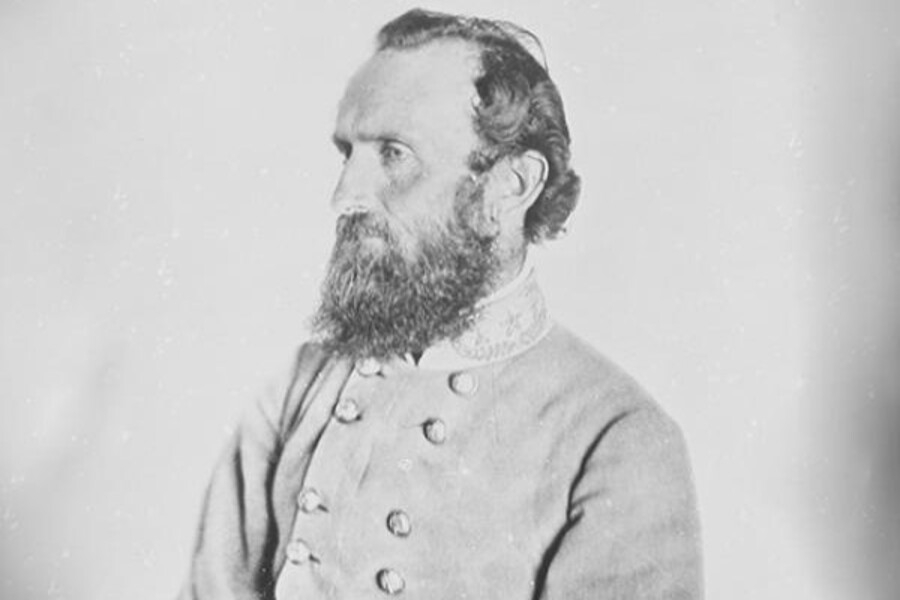
Another thing that I can claim is that I finished reading Caroline Finkel’s book ‘Osman’s Dream: The History of the Ottoman Empire 1300-1923’ (2005) a few months ago. This is one of the books that Andrei Fursov recommended on his webpage. It took several years for me to finish reading Osman’s Dream because I was reading it slowly. The book is thick (about 1,000 pages), and, therefore, finishing to read it felt like quite an accomplishment for me. It’s simply a standard history of the Ottoman Empire. There’s nothing offensive about this book. Since Osman’s Dream is a modern book, the author’s writing is nothing special. In fact, I can even say that the author’s writing style is kind of dull, but that’s to be expected from modern books. So, overall, Osman’s Dream was a fine read for me, and I can definitely recommend it because I did get some new information from it. But I was somewhat familiar with the history of the Ottoman Empire even before I began reading Finkel’s book. Since I got an urge to find out more about Leonardo da Vinci and his works several months ago, one of the books that I bought is ‘Leonardo da Vinci’ (1975) by Maurice Rowdon. This book is old and well-written, but it’s not thick and it features many photographs and all of the paintings by Leonardo in color, which is the big reason why I bought it. I haven’t yet finished reading the book, but the author described Leonardo as follows. “Just as Florence was all that was modern in fifteenth-century Europe. It was what we in our day call a ‘democracy’, namely a society controlled by money-interests rather than military dukes like Milan or an aristocracy whose names were in a Golden Book like Venice or by the Church like Rome (with its satellite towns all over the Romagna) or by hereditary princes like Naples and the Two Sicilies or by clever, often cruel, usurpers like most of the other towns in Italy. The Medici were, in Leonardo’s time, the top political family, with a network of banks all over Europe, the chief function of which was to lend money to other political families. Edward IV of England won his wars, and laid the basis of the English state, on Medici loans. The Holy Roman Emperor, Maximilian, borrowed plentifully, as his wife Margaret did too (between them they broke the Medici bank at Bruges). Yet in Florence the Medici were simply private citizens. He began to intrigue and puzzle the Milanese, and it was no doubt curiosity as much as need that made Ludovico summon him to Court one day. It is said that he received Leonardo standing up (he was, after all, a year younger than Leonardo, apart from being a usurper). And it is also said that of the two Leonardo was the less nervous. That was typical of him. He loved luxury but lived simply; he believed in princes but felt superior to them. But then he felt superior to almost everyone in the matter of intelligence. He was prepared to demean himself for his ideas, but in his style of life never. He had few ardent moral concerns, as Michelangelo had. He was never much worried about whether the Church reformed itself or not. His mind went on working as if society did not exist, but, more than that, as if people did not exist either. Yet he delighted in people. He delighted in his young servant boy whom he picked up in Milan at the age of ten and called ‘Salai’ or ‘little devil’. But it was a strangely uninvolved delight. Ludovico was frightened of the conspirator’s dagger. And Leonardo was safer at the Court of a frightened man than at a settled Court with its fixed intrigues which could cold-shoulder an enigma, as he himself was. He took long walks, of which the reclusive (and enigmatic) landscape of rocks and water in the second Virgin of the Rocks was the result. He went on dissecting at night in Milan’s hospital. In one sense at least he was an ideal friend for a prince – for his extreme reserve was never coldness, his understanding of princely problems was without familiarity, his love of processions and balls and fireworks and melodramas (as the musical plays fashionable at courts came to be called) never tipped over into licence. Solitude always claimed him back. It revealed the future. He predicted the least predictable aspects of the modern world – air travel, space travel (‘many creatures of the earth shall mount up among the stars’), the telephone (‘men from the most remote countries shall speak to one another and shall reply’), nuclear physics. He had no interest in wealth, though he preferred to be surrounded by it. Probably he could have amassed a fortune out of his commissions had he tried. He never bothered so much as to prove himself reliable – and patrons like to know if the work they finance is going to get finished. His delays, especially in Milan, during his most fertile period, were due to an over-full mind: he simply could not prevent ideas rushing pell-mell into it – for scythe-armed chariots, airburst shells, brothels with three entrances to secure anonymity for visitors. The friars of the Immaculate Conception would find him gazing at the half-finished picture from a chair, or walking in the fields, or poring over a book, or drawing something fantastic.” Another book that I’ve been reading slowly is ‘Broca’s Brain: Reflections on the Romance of Science’ (1979) by Carl Sagan. Although I began reading it only recently, and so far I’ve finished reading only 14% of this book, I’m still mentioning it now because Sagan’s brief overview of Albert Einstein’s life in the book struck me a little. Although famous autistics (at least those with Asperger syndrome) are very common, Einstein is usually one of the autistics that are mentioned on internet lists about autism, though I think that these lists, at least the ones that are easy to find, are terrible because they list only several people at most. In this way, such lists give one the impression that famous autistics are rare and that they’re not all around us, which is not true. Einstein is also mentioned in the book ‘Genius Genes: How Asperger Talents Changed the World’ (2007) by Michael Fitzgerald. This is another book that I’m slowly reading now. The other autistics mentioned in Fitzgerald’s book are Thomas Jefferson, Stonewall Jackson, Archimedes, Charles Babbage, Paul Erdos, Norbert Wiener, David Hilbert, Kurt Godel, Bernard Montgomery, Charles de Gaulle, Isaac Newton, Charles Darwin, Nikola Tesla, Henry Cavendish, Gregor Mendel, Gerard Manley Hopkins, H. G. Wells, Charles Lindbergh, John Broadus Watson, and Alfred Kinsey. When it comes to my own observations as of late, I think that the actress Jennifer Jones, the chemist Fritz Haber, the physicist Philip Morrison, the actress Elizabeth Taylor, the physician Avicenna, the actress Greta Garbo, the patron saint Joan of Arc, the musician Kurt Cobain, the film director Alfred Hitchcock, the physicist Marie Curie, the physicist J. Robert Oppenheimer, the industrialist Henry Ford, the engineer Robert H. Goddard, the inventor Thomas Edison, the rocket engineer Sergei Korolev, and the mathematician Srinivasa Ramanujan are famous people that are no longer alive that had autism. The animator Hayao Miyazaki isn’t dead, but I will still mention that he is autistic because he’s easily one of my favorite directors and manga artists. Anyway, Sagan’s description of Einstein impacted me because it revealed that Einstein was very similar to me. Of course, since Einstein also had autism, I expected to have some similarities with this famous theoretical physicist, but I didn’t expect for him to be so similar to me. It turns out that his thoughts, views, opinions, behavior, and actions were very similar to mine. But I can be considered a moderate in comparison to him because his autistic disobedience and his actions were more extreme than mine. I had no interest in Einstein until recently, and, in order to find out more about him, I recently bought the book ‘Einstein: The Life and Times’ (1971) by Ronald William Clark in paperback form when I was at a used book store. When it comes to the issue of whether or not there are more autistic males than autistic females, I think that there is no issue here. I think that there are just as many autistic females as autistic males. When I attended high school, I came across at least a few autistic female students and at least a few autistic male students. A high school is the best place for determining the percentage of autistics in society because it’s the only place where almost every person in society has to go. When it comes to autistic males in my grade, there was me, there was a student from Iran, and there was a Canadian student. It’s possible that there were a few others, like a Chinese-Canadian male student, but I’m not entirely sure about the others. So, there were at least three male students with autism, myself included. When it comes to autistic females, there was a Chinese-Canadian student, there was a student from Iraq, and there was a student from Indonesia. It’s possible that there were a few other autistic female students, but I’m not sure about them. The Chinese-Canadian female with autism was somewhat short and somewhat chubby. She was quiet and she kind of dressed like a boy. She wore the same clothes every day, which consisted of a black cap, a black jacket, a shirt, and black pants. She also wore glasses. It wasn’t easy to speak to her because she spoke quietly, she spoke rarely, and she had trouble engaging in conversations. The girl from Iraq was kind of skinny and of medium height. Many autistic girls have an eating disorder when they’re teenagers. She dressed normally, though she always wore pants or jeans, and she was considerably more sociable than the Chinese-Canadian girl. Still, she was the quiet type of autistic girl. Autistic girls can be quiet or they can be loud. The ones that are loud and that talk a lot often sound like they’re talking nonsense because engaging in socially acceptable conversations isn’t something that comes naturally to them. They can also often be mean and rude. The girl from Iraq usually had her head bent slightly downward. She had an autistic brother who was a year or two older than her and who attended the same school. This brother of hers had plenty of autistic aggression and he was impolite. This girl from Iraq had good manners, but she could be blunt at times, and she actually approached me and tried to form a friendship with me. So, I got to speak to her on several occasions. The autistic girl from Indonesia also tried to form a friendship with me. She too had good manners, she wore glasses, and she was kind of skinny. Perhaps it is true that autistics are attracted to one another, though I must say that normal (neurotypical) girls approached me too. Maybe some girls just find me attractive. There were also two twin girls from Japan in my grade. One was named Satoko and the other was named Ayako. They were both short and skinny, though Ayako was very skinny, almost skin and bones. They were both quiet, and they tried to do well academically. Although I didn’t get to speak to them, I think that they were autistics. Ayako was bullied in gym class. Many autistic girls, like many autistic boys, get bullied and ostracized at school. When it comes to the Chinese-Canadian girl with autism, I actually saw her getting bullied in class once. I can add that at least five of my teachers in high school had autism. So, as it turns out, there were at least several autistics in my grade, and I think that there were more autistic girls than autistic boys. When it comes to society as a whole, it’s possible that a few percent are people with Asperger syndrome, and there are probably just as many autistic women as autistic men.

From Soviets to oligarchs: Inequality and property in Russia, 1905-2016

https://cepr.org/voxeu/columns/soviets-oligarchs-inequality-and-property-russia-1905-2016

Russia has undergone a dramatic economic and political transformation since the fall of the Soviet Union. This unique experience makes Russia an especially compelling case study in inequality research agenda. With such episodes as a failure of Soviet egalitarian ideology, the ‘big bang’ transition to the market economy, or the emergence of the so-called oligarchs (Guriev and Rachinsky 2005), charting Russian inequality patterns may cast additional light on the role of policies, institutions and ideology for understanding inequality dynamics. At the same time, recent inequality development needs to be also considered in the convergence discourse and regarding the possibility of inclusive growth.

In a recent paper, we focus on measuring inequality and explaining how the various existing sources can be combined in order to put Russia’s inequality trajectory in historical and comparative perspective (Novokmet et al. 2017).1 We find that official inequality estimates vastly underestimate the concentration of income in Russia. We also provide the first complete balance sheets for private, public, and national wealth in post-Soviet Russia, including an estimate for offshore wealth. This paper is part of a broader project that attempts to produce distributional statistics that are comparable across countriebs (Alvaredo et al. 2016).

The rise of private property in Russia

The major change that occurred between 1990 and 2015 is of course the transition from communism to capitalism, i.e. from public to private property. The net national wealth amounted to slightly more than 400% of national income in 1990, including about 300% for net public wealth (roughly three quarters) and little more than 100% for net private wealth (one quarter). In 2015, the proportions are basically reversed: net national wealth amounts to 450% of national income, including more than 350% for net private wealth and less than 100% for net public wealth (Figure 1). The dramatic fall in net public wealth happened in a couple of years only, between 1990 and 1995, following the so-called shock therapy and voucher privatisation.

One key finding is the critical role played by housing for the rise of private wealth (see Figure 2). Private housing increased from less than 50% of national income in 1990 to 250% of national income in 2008-2009, and decreased to about 200% of national income by 2015. This rise has been a result of both the volume effect, stemming from the huge housing privatisation transfer, and the price effect induced by the rise of real estate prices.

But what is particularly striking is the very low level of recorded financial assets owned by Russian households. Household financial assets have always been less than 70-80% of national income throughout the 1990-2015 period, and they have often been less than 50% of national income. In effect, it is as if the privatisation of Russian companies did not lead to any significant long-run rise in the value of household financial assets. The initial decline in financial assets was predictable, when Soviet-era savings were literally wiped out by the hyper-inflation of the early 1990s. And more generally, one can argue that in the chaotic monetary and political context of the 1990s it is not too surprising that the market value of household financial assets remained relatively low until the mid to late 1990s. What is more difficult to understand is why such extremely low valuations persisted well after, in particular, in spite of the spectacular Russian stock market boom that occurred between 1998 and 2008.

In our view, the main explanation for this paradox is the fact that a small subset of Russian households own very substantial offshore wealth, i.e. unrecorded financial assets in offshore centres. In particular, there is a large gap between very high trade surpluses during the 1990-2015 period – mostly driven by exports in oil and gas – and relatively limited accumulation of net foreign assets. According to our benchmark estimates, offshore wealth has gradually increased between 1990 and 2015, and represents about 75% of national income by 2015,3 i.e. roughly as much as the recorded financial assets of Russian households. That is, there is as much financial wealth held by rich Russians abroad – in the UK, Switzerland, Cyprus, and similar offshore centres – as is held by the entire Russian population in Russia itself. Moreover, the wealth held offshore by rich Russians is about three times larger than official net foreign reserves.

When considered in international comparison, the evolution of aggregate wealth in Russia – together with that of China and other ex-communist countries – can be viewed as an extreme case of the general trends documented in all developed countries since the 1970s-1980s, notably a general rise of private wealth relative to national income, accompanied by the fall of public property (Piketty and Zucman 2014, Piketty 2014). In Russia, private wealth has increased enormously relative to national income, but the ratio is ‘only’ of the order of 350-400% in 2015, i.e. at a markedly lower level than in China and in Western countries (see Figure 3). We should stress that the gap would be even larger if we did not include our estimates of offshore wealth in Russia’s private wealth. Moreover, the rise of Russian private wealth has been almost exclusively at the expense of public wealth, in the sense that national wealth – the sum of private and public wealth – almost did not increase relative to national income (from 400% in 1990 to 450% by 2015) (Figure 1). In contrast, China’s national wealth reached 700% of national income by 2015.

The rise of income inequality in Russia

We construct new income distribution series by combining national accounts, survey, wealth, and fiscal data. To our knowledge, this is the first attempt to exploit Russian national income tax tabulations to correct official survey-based inequality estimates. We find that surveys vastly under-estimate the rise of inequality since 1990. According to our benchmark estimates, the top 10% income share rose from less than 25% in 1990-1991 to more than 45% by 2015 (as opposed to around 35% suggested by surveys), and the top 1% income share from less than 5% at the outset of the transition to around 20-25% (as opposed to around 10% suggested by surveys). It is also worth pointing out that this enormous rise came together with a massive collapse of the bottom 50% share, which dropped from about 30% of total income in 1990-1991 to less than 10% in mid-1990s, before gradually returning to about 18% by 2015.

If we consider the period 1989-2016 as a whole, average per adult national income has increased by 41% according to our benchmark estimates, i.e. at about 1.3% per year. As noted, the different income groups have enjoyed widely different growth experiences. The bottom 50% earners benefited from very small or negative growth, the middle 40% from positive but relatively modest growth, and the top 10% from very large growth rates (see Figure 4).

In the long run, the evolution of income inequality in Russia appears like an extreme version of the long-run U-shaped pattern observed in the West during the 20th century (Figure 5). Income inequality was high under Tsarist Russia, then dropped to very low levels during the Soviet period, and finally rose back to very high levels after the fall of the Soviet Union. Top income shares are now similar to (or higher than) the levels observed in the US. On the other hand, inequality has increased substantially more in Russia than in China and other ex-communist countries in Eastern Europe.4 Figure 6 shows the marked divergence after the fall of Communism in the top 1% income share in Russia as compared to Poland, Hungary, and the Czech Republic.

In conclusion, our new findings reveal an extreme level of inequality in Russia and a persistent concentration of rent-based resources – which are unlikely to be the best recipes for sustainable development and growth. However, we should stress that the lack of data access and financial transparency makes it very difficult to properly analyse inequality dynamics in Russia. We have done our best to combine the various existing data sources in the most plausible manner, but the quality of raw available data remains highly insufficient. This is an ongoing project, and we have no doubt that the Russian series reported here will be improved in the future, as refined methods are designed and better data sources (hopefully) become available.

Russian sea pollution forms massive moving slick

https://phys.org/news/2020-10-russian-sea-pollution-massive-slick.html

Suspected toxic waste pollution off Russia’s Kamchatka peninsula that caused the mass deaths of marine animals has formed a moving slick stretching 40 kilometres (25 miles) along the Pacific coastline, researchers said Thursday.

The Far Eastern Federal University said in a statement the pollution was between 100 and 300 metres (330-1,000 feet) wide in some places, had a green hue and was creating an unusual foam while floating south along the Russian coast.

The waste was previously thought to be stationary and confined mostly to one beach, but researchers who carried out aerial photography said it was “gradually moving south” towards the contested Kuril Islands “without diminishing in size”.

Kirill Vinnikov, the head of a biology lab at the university, also noted that the pollution was not disintegrating and had clear dimensions.

The statement said researchers collected pollution samples from a helicopter despite difficult weather conditions and an analysis will be carried out in Russia’s far eastern city of Vladivostok.

Locals sounded the alarm in September as surfers experienced stinging eyes after being in the water and sea creatures including seals, octopuses and sea urchins washed up dead.

The Russian branch of Greenpeace has described the situation as an “ecological disaster”.

Russian authorities on Wednesday opened a criminal probe, citing the illegal handling of dangerous substances and “pollution of the marine environment”.

Kamchatka governor Vladimir Solodov previously said the most likely source was the Kozelsky site, 35 kilometres (20 miles) outside the region’s main city Petropavlovsk-Kamchatksy and used since the Soviet era to store poisonous substances deep in the ground.

Several experts suggested that toxic rocket fuel such as heptyl or samin and melange from a nearby military facility could be responsible for the damage.

Solodov on Thursday ruled out that heptyl was behind the incident, saying samples had come back negative.

He said tests indicated the presence of fuel products but not in high enough concentrations to wipe out marine animals in such large numbers.

The governor, who took office several weeks ago, said around 20 people were examined and eight were diagnosed with third-degree corneal burns.

Vinnikov of The Far Eastern Federal University said scientists had found that streams next to the Kozelsky site are “completely ecologically clean.”

“We observed four groups of organisms which can live only in crystal-clear water without any contaminants such as heptyl and other toxic chemicals,” he was quoted as saying.

Conservation group WWF said it was not currently possible to say how many fish died.

“The death of fish and seabed creatures is dangerous for both sea birds and mammals,” WWF said, adding that sea otters that eat urchins and clams could be among the most affected animals.

Stalin at the Movies

https://redphoenixnews.com/2019/02/19/stalin-at-the-movies/

It is strange to say that, considering he was one of the most significant figures in world history, Joseph Stalin has rarely appeared on the silver screen. Certainly, when compared to the number of films portraying individuals as widely diverse as John F. Kennedy and Adolf Hitler, the number of movies where Stalin appears is miniscule.

There were a number of films made in the former Soviet Union, both during his lifetime and afterwards that featured the Soviet leader as a character. But these films, such as The Vow, Unforgettable 1919, and the well-received documentary I was Stalin’s Bodyguard are almost impossible to view outside of Russia; and, with the exception of the latter, may not even exist on tape or DVD. That being the case, I’ll limit my observations to those productions an American or Canadian viewer would be likely to see or can easily find.

The most widely distributed film about Stalin would be the eponymously titled HBO docudrama, Stalin. My own opinion towards the film can perhaps be guessed by the slogan the producers, used to publicize the film here in the United States: “For four decades the Russians had a word for death…Stalin!”

I feel the film not only slanders Stalin, showing him as a thug and a brute, but is one of the most anti-communist films ever made. This should come as no surprise considering that Robert Conquest, former British Intelligence agent and extreme reactionary, was cited as a major consultant in the film’s credits. The film bases itself on the crudest anti-communist stereotypes that are not only offensive, but even rejected by contemporary bourgeois scholars such as Sheila Fitzpatrick and J. Arch Getty.

Interestingly enough, the film totally ignores the period of WWII, jumping from 1941 to 1946. I think there is a very sound reason for this. To wit, the film’s makers wanted to avoid anything that would show Stalin in a positive light. After all, even conservative historians praise Stalin’s heroism and leadership in the anti-fascist war.

Considering the film, purely as a film: I think most of the principles were totally miscast. Robert Duvall looks so little like Stalin that to affect even a slight resemblance, tons of make-up had to be applied to him. The end result is that Duvall’s Stalin goes through 40 years of Russian history with only one expression on his face — a constipated grimace. The actor playing Beria sports a full head of hair, and Maximilian Schell is way too tall and thin to play Lenin.

These may seem like quibbles, but then again, this is a film that purports to show historical truth. More appropriate actors could have been found. For example, Edward James Olmos for the role of Stalin, Patrick Stewart as Lenin, Bob Hoskins or Ed Asner as Beria, etc., etc. The film is visually beautiful, and nicely scored. But these attractions pale before the distortions of historical truth.

2017’s The Death of Stalin is, as the titled implies, not actually based on the life of the Soviet leader; rather, its focus is on the events following his demise. Based on a French graphic novel, the film is a wildly uneven farce whose sole purpose appears to be to depict various Soviet historical figures as malevolent buffoons. There seems to have been no attempt at verisimilitude in the casting; with the casting of thin, lanky American actor Steve Buscemi as Nikita Khrushchev serving as a fitting comment on the rest. The film was praised in the British press, but drew fire from some historians for gross historical inaccuracies, such as creating a fictional massacre of mourners at Stalin’s funeral. The film was banned in Russia and several former-Soviet republics, and never entered into general release in the US.

Most of the other films portraying Stalin, while not as execrable as The Death of Stalin or the HBO TV production, are weak to one extent or another. In The Winds of War, Stalin has but a cameo role, and his purpose is mainly to silence a Russian critic of the hero. The Inner Circle and Europa, Europa both use Stalin as a symbol. In the first film Stalin represents the protagonist’s conflicted relationship with his wife; and in the second Stalin represents the hero’s fears and fantasies about wartime Europe. There was an American TV movie, Meeting at Potsdam where Jose Ferrer did a fairly good job of playing Stalin. But this film is presently unavailable to home viewers.

For my money, the best cinematic portrayal of Comrade Stalin was by the British actor Michael Caine in the mini-series World War II: When Lions Roared. Widely available on video, this movie is unique in that it consists solely of the communiques and meetings between Stalin, Roosevelt and Churchill. The dialog is taken straight from their correspondence and the minutes of meetings. In other words, there is no fictional dialog or scenes — just the straight, accurate, historical truth!

Caine’s Stalin is superb. Comrade Stalin appears as a man of high intelligence. Complex and shrewd, yet also very human. But what comes through most of all, is Stalin as totally dedicated to the Soviet Union and to smashing the fascist hordes. This is the film for anyone seeking a cinematic interpretation of Stalin.

Finally, there is, of course, the film version of Ambassador Joseph E. Davies‘ memoir, Mission to Moscow. This film succeeds in capturing Soviet Russia, as seen through the American ambassador’s eyes, but it’s hard to find and is a bit dated. Made in the 1940s, the wartime propaganda, though understandable, is rather unsubtle and simplistic. Not a bad movie, by any means. But not the best.

So, to my lights, World War II: When Lions Roared, stands as the best film treatment, to date, of Stalin and his era.

Meg Myers’ New Video for “Desire” Is Terrifyingly Beautiful

https://www.vice.com/en/article/6aawb6/meg-myers-desire-video-premiere

I just watched “True Detective” the other night on HBO—shouts to Matthew McConaughey you looked stunning—and it scared the shit out of me. Not that I have any idea what’s even happening in the show but obviously part of it is about some Bible Belt satan worshippers, or something. So, life has been pretty dark as I’ve been thinking a lot about the paranormal.

Anyway, when I watched Meg Myers’ video for “Desire,” it was haunting and pretty relatable—you want someone who’s not there; you desire someone who’s not there, you get the point. But, because I’ve been scaring the shit out of myself by watching paranormal docs, I immediately thought, “out of this world ghost sex.”

Whatever the intention, the video is simply stunning and Meg’s voice embodies so many feelings that it’s clear there’s a lot going on behind this record. “I want to skin you with my tongue/I’m gonna kill you/I’m gonna lay you in the ground,” is just a preview of some of Meg’s lyrics on “Desire.” Watch the video above, and pre-order her upcoming EP Make A Shadow on iTunes right now.