
I discuss my thoughts on Disney’s halfhearted limited theatrical release of the FOURTH SPECIAL EDITION of RETURN OF THE JEDI into a handful of select theaters with all of the quality issues that plague theater presentations nationwide. This is especially frustrating and truly sad given that this is also the 40th anniversary of THX as a program meant for ensuring a cinematic quality standard in all theaters. And of course if that wasn’t enough Disney couldn’t be bothered to release the film on it’s actual anniversary date of May 25th which is the true Star Wars day.
Top 10 Sony PlayStation 3 Games

After dominating the market for over a decade, Sony found themselves in an uphill battle when they released the PlayStation 3. The Xbox 360 appealed to the same core gamers that Sony was after, but Microsoft had a one-year head start over Sony’s machine. At the same time, the Nintendo Wii was a runaway success that picked up the lion’s share of new customers. Using the PlayStation brand as a Trojan horse to push Blu-ray sales ultimately drove up costs, and many consumers rejected the PS3’s $599 launch price. In fairness, the PlayStation 3 helped Sony win their format war against Toshiba’s HD-DVD, and sales of the console picked up after prices leveled off. Many of the system’s biggest third-party games were also available on the Xbox 360, but Sony’s first-party studios were remarkably consistent throughout the entire generation and there were no shortage of fantastic titles that could only be played on the PS3.
- The Last of Us (2013)
The Uncharted series was spectacular in its own right, but The Last of Us was the most highly anticipated first-party game released on the PlayStation 3. Its production values were second-to-none, and the game successfully delivered a cinematic experience without fully crossing the line into “interactive movie” territory. The lighting, animation, camera angles, voice work, and soundtrack were almost unrivaled for its generation, and the obvious technical achievements were supported by brilliant art direction. The gameplay was the perfect fit for a zombie apocalypse setting, and the focus on stealth was a nice change of pace from Uncharted‘s explosive gun battles. Although somewhat cliche and predictable, there was real emotional depth to the story and characters. Because of this, the excitement continued to build as the story unfolded. The pacing was perfect and the environments were stunning, so I was always excited to enter a new area. I found it especially refreshing to visit post-apocalyptic landscapes that were overgrown with foliage instead of being defined entirely by drab colors. The Last of Us was Naughty Dog’s magnum opus on the PS3.
- Red Dead Redemption (2010)
I was waiting for Red Dead Redemption from the moment I first played Grand Theft Auto III. I welcomed the unprecedented freedom that GTA offered, but I always felt that the concept would work better in the Wild West than in the concrete jungle of Liberty City. Neversoft’s Gun and Rockstar’s own Red Dead Revolver failed to live up to their potential, but Red Dead Redemption was an instant classic. Red Dead Redemption hearkens back to a simpler time where people still slept under the stars and caught their own food. At the same time, a lack of oversight and a lawless environment gave way to gunfights and bandits. Saloons and whorehouses were the primary sources of entertainment, but even laborious tasks like herding cattle are entertaining when they’re presented in video game format. One of the best aspects about Red Dead Redemption is a combat system that allows players to mark multiple shooting targets in slow motion. It’s extremely satisfying to casually pick off an entire band of outlaws while riding a horse. Sandbox games sometimes run the risk of sacrificing story in the name of flexibility, but Red Dead Redemption is driven by a tightly-wound story and strong characters.
- Uncharted 2: Among Thieves (2009)
Naughty Dog’s Uncharted series helped define the PS3 generation with its slick production values and carefully-directed action. Uncharted 2 is being singled out because it boasted the most interesting environments and characters in the series, and it generally felt more balanced with respect to its pacing and difficulty. The gameplay in Uncharted 2 is informed by exciting set pieces that are in a constant state of flux. Enemy guards will show up unannounced, platforms will shift unexpectedly beneath your feet, and high rise buildings will crumble around you. Dynamic camera angles frame the action like a Hollywood blockbuster, and the game creates the illusion of accomplishment without necessarily demanding a lot from the player. The scenarios might be scripted, but that doesn’t make things any less exhilarating. Critics insist that the whole game feels like an extended quicktime event, but Uncharted 2 represents the absolute pinnacle of “roller coaster” game design. Sure, it’s linear, but it’s also fun and exciting. It’s basically the video game equivalent of a Jerry Bruckheimer movie, and there’s certainly nothing wrong with a good popcorn flick. Uncharted 2 does exactly what it sets out to do, and it’s the perfect game for anyone who likes action, explosions, and Gilmore Girls-esque banter.
- Portal 2 (2011)
An innovative puzzle game played from a first-person perspective, Portal was the biggest surprise of 2007. Games like Half-Life and Counter-Strike helped cement Valve Corporation’s place in history, but Portal was arguably their most creative effort. The game places players in a research facility and basically treats them like a rat in a maze. In order to escape the test chambers, players have to create portals using a special gun. Momentum is retained through the portals, so its often necessary to position them so that horizontal movement is converted into vertical motion (or vice versa). For example, placing a portal on the floor and jumping into it can allow players to launch themselves out of an exit portal that had been placed elsewhere. As creative as Portal was, the sequel did more with the concept and introduced new environmental elements like tractor beams. The games shared a dark sense of humor and were filled with laugh-out-loud moments, but the puzzles in the sequel were more complex. This was especially apparent in the new two-player cooperative mode. Throwing a second player into the mix gave Valve the opportunity to introduce complicated puzzles that would have otherwise been impossible. Few games promote communication more so than Portal 2, and the ability to crossplay with Steam users was greatly appreciated. Portal 2 is one of those rare games that is guaranteed to be remembered decades after its release.
- Ultra Street Fighter IV (2014)
Fighting games were on life support in 2009, and nearly ten years had passed without a major entry in the Street Fighter franchise. Street Fighter IV revitalized the genre and went on to sell over 8 million copies worldwide. The game stands out immediately thanks to its hand-painted art style that employs brush strokes, ink smudges, and calligraphic swipes to accent the action. The fights are more cinematic than those seen in previous Street Fighter games, but the game itself feels like an updated version of Street Fighter II in many ways. The gameplay is still restricted to two dimensions, and all of the characters from Street Fighter II are featured on the roster. Street Fighter IV was an instant hit, but the Super and Ultra versions introduced new characters and gameplay refinements. Ultra is being singled out here since it has the largest roster and the most balanced gameplay. (It was nice to see Poison finally featured as a playable character too.) It would be easy to criticize Capcom for releasing multiple versions of the same game, but the results speak for themselves. Cash grab or not, Ultra Street Fighter IV was an incredibly polished product and stands tall as the best fighting game of its generation.
- Grand Theft Auto V (2013)
The amount of things to do in Grand Theft Auto V is staggering. When you’re not busy stealing cars or hijacking military aircraft, you can treat yourself to a lap dance at the local stripclub or wind down by scuba diving. You can also become a restate mogul, compete in a triathlon, or put your base-jumping abilities to the test. Random events can appear at any time, and this adds tremendous depth to a game that was already oceanic. The game’s new character-swapping mechanic allows players to switch between the three main characters at any given time. Different characters are better-suited for certain missions, and this allows for better pacing and more variety than earlier GTA games. The game’s a heck of lot less frustrating too, thanks to a refined cover system and smarter mission checkpoints. Grand Theft Auto V is exaggerated and over-the-top, but it also provides a biting look at post-economic crisis America. None of the central characters are especially likable, but you’d have to be pretty dense to miss the game’s tongue-in-cheek approach. Some will argue that its immediate predecessor was a more realistic experience from both a gameplay and storyline perspective, but I’m partial to the over-the-top nature of Grand Theft Auto V since it feels more in line with the spirit of San Andreas and Vice City.
- Borderlands 2 (2012)
The first Borderlands was a surprise hit in 2009, and it stood out for its unique visual style and sardonic sense of humor. The sequel is larger, more diverse, and even more absurd than the original. Equal parts action RPG and first-person shooter, Borderlands 2 boasts hundreds of missions and about a gazillion weapons. As players traverse a savage wasteland in search of loot, they’ll partake in deadly firefights and encounter myriads of aliens, robots, and deranged bandits. It’s essential for players to upgrade their gear, learn new skills, and experiment with different weapon combinations along the way, and the randomly generated treasures keeps things interesting. One of the most notable aspects about the Borderlands series is its multiplayer component. (Any game that supports couch co-op in this day and age automatically earns my respect.) If you want a visually interesting game with a great sense of humor and tremendous replay value, look no further than Borderlands 2. It’s refreshing to play a game that doesn’t take itself too seriously.
- Persona 5 (2016)
Persona 5 is an eleventh hour arrival on this list, but it was well worth the wait. Like previous games in the series, Persona 5 feels like a cross between a traditional RPG and a “choose your waifu” visual novel. The game follows a group of high school kids who can jump into parallel realms born from the distorted desires of humans. By harnessing manifestations of their inner psyche called “Personas,” the group of vigilantes aims to eliminate corrupting influences from various authority figures. When they’re not busy dungeon crawling and battling dark forces in alternate universes, players are free to spend their time as they wish. Most RPGs require players to grind for experience by battling monsters, but Persona 5 lets you increase your stats through regular, everyday activities round Tokyo. After class, you can study at the library, visit batting cages, settle down with a good book, watch DVDs in your bedroom, find time for a workout session, or get a part-time job. The game also encourages players to spend time with other characters. Establishing social links with others will make them more helpful in battle and will open up more extracurricular activities, but the characters are so interesting that you’d probably want to learn more about them even if you weren’t rewarded for doing so. Persona 5 is thematically similar to its immediate predecessor in many ways, but its presentation makes Persona 4 seem almost bland in comparison. There’s always something interesting happening on screen, and everything in the game – from the battle menus to the transition screens to the dialogue boxes – is overflowing with style. Simply put, Persona 5 is the best menu-based RPG to appear on a Sony console since the PS1 era.
- Batman: Arkham Asylum (2009)
Batman: Arkham Asylum is right up there with Batman: The Animated Series and Christopher Nolan’s Dark Knight trilogy as one of the best interpretations of the Caped Crusader. After being tricked by the Joker, Batman finds himself locked inside Arkham Asylum with the very inmates he helped put away. As Batman fights to escape the makeshift prison, he is forced to sneak through air ducts, blast through walls, and find alternate routes. The way the areas of the game are connected gives Arkham Asylum a distinct “Metroidvania” feel, and players are actively encouraged to take their time and explore their surroundings. Batman’s fighting skills are highlighted by a combo-centric combat system, and the stealth sections are a perfect fit for a hero who adopted the shadows. The game features a compelling plot and iconic characters, and voice acting from the likes of Kevin Conroy and Mark Hamill make Arkham Asylum come to life. At the same time, the game keeps players engaged by introducing new moves and gadgets as they progress through the Asylum, so it never feels like you’re just watching a story unfold around you. Arkham Asylum is the game that all superhero video games will forever be compared to.
- Dark Souls (2011)
Praised for its dark fantasy themes and unforgiving difficulty, FromSoftware’s Demon’s Souls was an action RPG that had “cult hit” written all over it when it was released in 2009. Dark Souls was built on the same foundation and helped rewrite the rules of modern gaming. Most AAA games are linear experiences that bombard players with forced tutorials, but Dark Souls is void of obnoxious hand-holding. Players are instead left to figure things out on their own out based on cryptic conversations and subtle environmental clues. The game is notable for being brutally hard, but this ultimately makes the experience rewarding. Dark Souls is designed in a way that forces players to learn from their mistakes, and patience is rewarded with the joy of new discoveries and a high sense of achievement. Players always seem to have their backs against the wall, but there are many ways to approach the game since its semi-open world is filled to the brim with secret areas, hidden weapons, and optional bosses. The Souls games deserve tremendous credit for their creative approach to multiplayer. The ability to see how other players died was especially creative and provided valuable insight on how to proceed. The game won’t appeal to every temperament, but anyone who cut their teeth in the arcades or on 8-bit consoles will appreciate the direction taken by Dark Souls.
why elden ring is such a hard game for women like me (jk this is another rant)
i’m deleted my discord bc god so out of hand have a good day
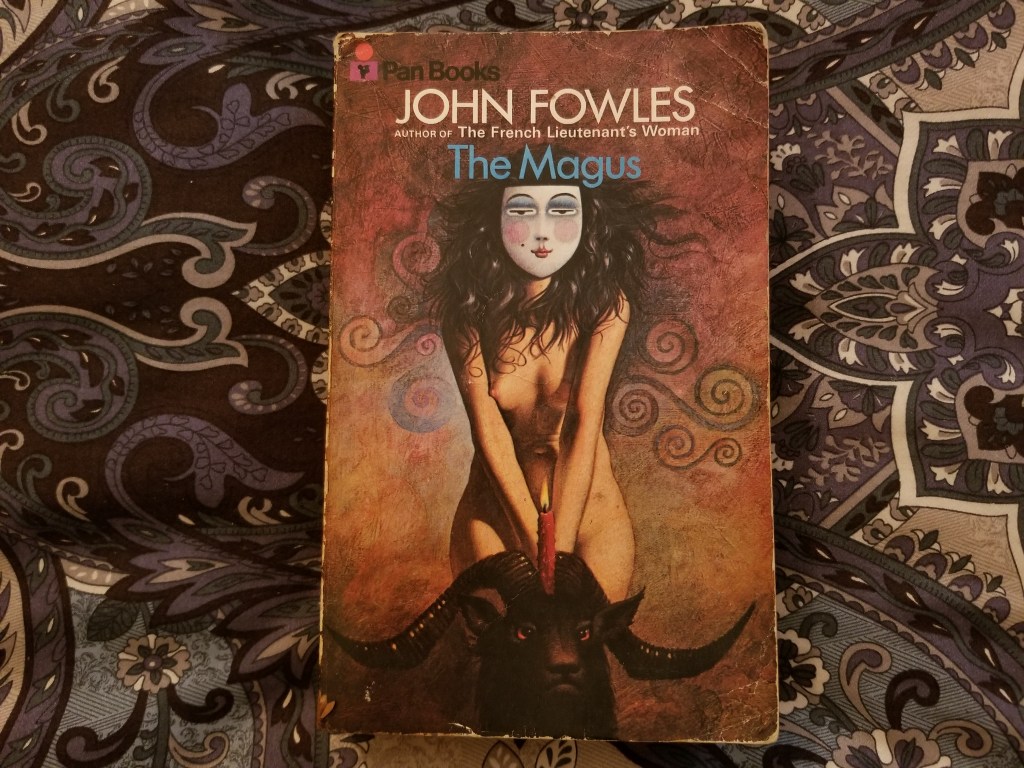
Now reading The Magus by John Fowles…
WATCH: Prince Kicking Kim Kardashian Off Stage and 6 Other Times He Spoke His Mind
Wendy Melvoin: Playing for the Revolution

Prince’s former guitarist discusses the Revolution’s legacy and recent tour—and what it was like to write and trade licks with the High Priest of Pop.
The fire and magic that happens when a charismatic frontperson and a gifted musical foil find symbiosis is truly beguiling. Elvis had Scotty Moore, Bowie had Mick Ronson, and for a few charmed, arguably career-defining years, Prince had Wendy Melvoin.
Melvoin has come a long way since her days sparring with the late icon. She started playing guitar with Prince’s band in 1983, and was a permanent fixture and cowriter on the Revolution’s three seminal albums: Purple Rain (1984), Around the World in a Day (1985), and Parade (1986). After Prince disbanded the Revolution in 1986, Melvoin went on to enjoy success fronting her own pop group, Wendy & Lisa, with keyboardist, Revolution alum, and lifelong musical partner, Lisa Coleman. The Los Angeles-born Melvoin has since morphed into a perpetually in-demand session player, songwriter, producer, and composer, with a resume that reaches far and wide into disparate spheres of the music and film worlds, and includes the likes of John Legend, Seal, Grace Jones, Glen Campbell, Sheryl Crow, and Joni Mitchell.
While Melvoin—the daughter of the legendary Wrecking Crew pianist Mike Melvoin—undoubtedly possessed impressive skills as a rhythm guitarist and hooksmith when she initially caught Prince’s attention at the green age of 19, she makes no bones about the impact her time with the innovative Master from Minneapolis had upon her development as a musician and composer. In fact, she refers to that period of her career as her “Juilliard or Harvard years.” And for anyone who’s taken the time to gaze beyond the mystical purple glare and truly analyze Prince’s Revolution-era output, Melvoin’s contributions as a texture player and rhythm ace should be immediately apparent, particularly on the magnum opus that is Purple Rain, which put forth a cadre of unforgettable singles that all featured heavy doses of Melvoin’s guitar and vocals.
While the band unfortunately never made good on the perennial reunion tour rumors that circled about through the years, Prince’s tragic passing prompted the group to reunite and put together a tour as a means to both grieve the loss of their friend and leader, and to celebrate the tremendous music they forged in his keep.
Melvoin took the time to catch up with Premier Guitar between Revolution tour dates and reflected on her time working and learning with Prince, the craft of pop guitar work, and the healing process that’s come with this tour.
Was it challenging to relearn these tunes after all the time that’s passed, and was there a lot of adjustment required to play parts that weren’t originally yours?
You know, it was really an interesting process just trying to just figure out the best way to be respectful of the material and do justice to those parts that weren’t originally mine, but without being a showboat, which is something I just absolutely have no interest in being. Prince’s soloing was super impassioned, and, of course, he did a lot of calisthenics, but when he would reach for those wild high notes, that was really like an extension of his voice or singing. So that’s kind of where I wanted to be, honoring that side of his playing. I didn’t want to be “the fast machine”—I’m not interested in the athletics, honestly.
When it comes to playing the parts I had been playing, I’m an infinitely better player than I was when I was 19. I’ve been playing for 40 years now, so I’m just a better player and that meant the task at hand itself wasn’t hard, but the emotional aspect and approach to playing those songs was something I really wanted to be mindful of.
As far as calisthenics go, I always felt Prince was one of those rare athletic players who was extremely dexterous, but always made every note count for something. Even when he was playing something tricky, it wasn’t banal.
Yes, it’s true! Sometimes he had moments where I’d look over and he’d be going for it and I’d laugh to myself and say, “You don’t even know what you’re doing right now!” But by the time he passed, he was undoubtedly a true master at the neck of the guitar. He just knew the thing so damn well.
What’s the most important thing you learned from working with Prince as a guitarist and a composer?
Space. Learning the definition, in Prince’s world, of what “space” really meant between five people on a stage, and the discipline it takes to not stray from script in terms of what you’re playing. Don’t start having a musical dialogue with solos, or throwing new notes in where they aren’t expected, when you’re supposed to be doing justice to a song as it was intended.
Our accepted … even honored job, was to give him the space to be the musician he wanted to be onstage. When it came time to do things in the studio, it was a different experience, and there was a lot of give and take with that because he relied on creative ideas coming from me. But as a side guy onstage, I was there to help him be the best he could be.
I always considered Prince to be the greatest black hat chef on the planet, but he has to have the best team in that room to support him, or that meal’s going to turn out like shit. I really believe that and he just built a great team, particularly with the Revolution. I think we all walked away with an incredible amount of discipline; those were my Harvard or Juilliard years, so to speak. It definitely translated into my work ethic. I have an extremely high work ethic to this day and I work every day on my composition skills and getting better at my instrument, and that came directly from those years of strict discipline—of listening, learning, and understanding what the dialogue was between the musicians onstage and how to best function within Prince’s world.
Could you describe the chemistry you had with Prince as his guitar foil?
Well, the thing he liked about me was that I never considered myself a female guitar player—I was simply a guitar player. He really respected that about me, but at the same time, if you look at things like “Computer Blue,” where I was getting on my knees and we did something similar in the onstage theatrics to Ronson and Bowie’s interaction, there was an obvious gender definition happening, but what turned it on its head is that we were very fluid in our gender roles onstage. But I never really considered myself the “chick” guitar player. I know everyone else did, but I didn’t, and so I didn’t define myself that way at all. I relied upon my playing to define myself, and that was something he picked up on.
As a player, I was able to communicate with Prince very well. I knew exactly how he worked as a guitarist—particularly that right hand of his. I knew what he wanted to hear, and I took tremendous pride in being able to sound like a part of him while still sounding like myself. The real magic, to my ears, happened when the mixture of my playing, Prince’s lead guitar, and Lisa Coleman’s keyboards jelled. It was like another language or Shakti, as far as I’m concerned. We wouldn’t have to do much verbal communication at all because the initial seed that came out of us worked so well in that environment. We had a great musical connection. It wasn’t natural, because each one of us had our own singular talents that we brought to the table, and we had to work on it, but it was unreal when it happened. Prince himself could play just about anything, though. However, he never could play like Lisa; that’s the one musician throughout his entire career that he could never play like. She has her own singular thing that even he couldn’t cop, which is a serious distinction.
I, on the other hand, was sort of the great facilitator. I could morph between styles and sounds easily. That’s why I ended up being a sought-after studio musician for such a wide variety of records and musicians. I’ve done everything from Los Lobos to Joni Mitchell to Madonna, etc. But I think my strength is morphing, and that kind of thing worked really well with Prince and I and our musical dialogue. We had the same influences, too, although he was a big Carlos Santana fan and I was not! I was a John McLaughlin fan, though they did do a great record together.
As an insider who undoubtedly saw more of Prince as a guitarist than many, was there anything you found extraordinary about his playing that might not be immediately obvious to an outsider?
If you want to see the real magic in Prince’s playing, it’s not his left hand; his picking hand was everything. You’ve got the blues dudes that use their thumb and finger, or the Albert King dudes that use their fingers to really pluck the hell out of the strings and muscle it, but Prince, when he played rhythm, could go from picking to seamlessly hiding that pick between two fingers and doing this form of almost bass slapping that would bring out these funk parts in a way that sounded like double-speed guitar, and it would always blow my mind. He was really great at that, and rhythm work in general.
He was also just so great at writing a guitar hook. He knew how to craft a guitar hook that would do exactly what was needed.
You’ve always displayed a real gift for weaving together incredibly funky guitar rhythms. Do you have a philosophy to penning those parts?
I don’t really have a philosophy, but it’s just what naturally comes out of me. I can tone it down if need be, but a lot of the time, it’ll be what’s asked of me when I go into a session. I played on a John Legend record last year that Blake Mills was producing—who, by the way, I think is the best up-and-coming guitarist I’ve ever heard—but we sat in a room together and had a musical dialogue, where we played back and forth off of each other on this one track. Because Blake would go more avant-garde with his rhythm playing, I tried to go for the more old-school, straight-ahead Telecaster through the board thing, with a compressed kind of sound, because it made for a great contrast to what Blake was doing. So if there’s an overarching philosophy Ido have, it’s in providing contrast and jelling.
On the other hand, I did a Neil Finn record a few years ago where I played every style imaginable on guitar and bass and it just happened to work really well for his songwriting. The playing I did was focused on putting weird little twists on his songwriting, which happens to be some of the best I’ve ever heard. But my goal on that record was to help his music sway a little more, instead of just being so straightforward. It’s about serving the song and the task at hand.
The main guitar riff on “Computer Blue” is one of my favorites from the whole Prince discography. Could you detail your involvement in the writing of that tune, and also tell us how that doubled-lead lick in the middle that you two play came into being?
Well, the main hook at the beginning, that’s mine. Lisa and I were at rehearsal at a warehouse space and demoing music that would all wind up being Purple Rain stuff, and Prince walked in on that day and it was something that piqued his interest, so “Computer Blue” was based on that hook. We all worked on it together from there.
The triplet guitar solo part is, interestingly enough, my albatross! Every musician has their muscle memory and that lick is just Prince’s on perfect display. It was a part that he played so naturally. My muscle memory just doesn’t have the same freedom as his did, and that was just a part that came to him so easily. So, since I started playing that lick at age 19, to this day when I play it on my own, I’m not doing the part justice. However, I’ve learned to give myself a break on it because it’s just one of those things that my muscle memory won’t allow for. It’s been a real trip trying to study that particular pattern and why it was so effortless for him to play, but for me, I have to be incredibly mindful because my hands just don’t work that form the same way.
Do you recall the signal chain you used to get that giant sound on the main guitar hook on that song?
Sure do! For my guitar, it was a Boss compressor, probably a CS-1, directly into a TC Electronic distortion pedal, into an MXR boost, into a Cry Baby Wah, then my chorus, the brand of which escapes me right now, and then into a volume pedal, all of which fed into a Mesa/Boogie Mark II head on a cab with, I think, a pair of JBL speakers. I was using one of my modified purple Rickenbackers when we recorded it.
Those purple Rickenbackers are pretty iconic in their own right. What were the modifications?
They looked like a Ric, but they really weren’t after we got done with them. They were loaded with G&L pickups, and had the f-holes sealed up, so there was no air moving in them like a stock guitar. Some motherfucker stole them out of my rehearsal studio about 25 years ago. I’m on eBay every day and I’m looking in pawnshops all over the world for those guitars. It’s a massive bummer that they’re gone.
So one of Prince’s things is he wanted me to play big-bodied guitars. For whatever reason, he liked the idea of me holding a big guitar. He had me playing this huge Gibson SJ-200 acoustic and I just hated the thing. I’d be like, “The fucking thing is too big, man!” and he’d be like, “It’s great! You gotta play it! It looks great!” I hated it. I wanted my little Teles and my little Mustangs—that’s what I wanted and that’s what I play now! The only big-bodied guitars I still have and adore are my old 335s; that’s really what I stick to. But back then, he wanted me to play these big guitars.
So we got these Rics, but I didn’t want to sound like Roger McGuinn, so we modified them. This guy at Knut-Koupée Music in Minneapolis did work on Prince’s beautiful Hohner Telecaster and my own guitars. We talked about getting them painted for the Purple Rain tour and film, and installing those G&L pickups so they’d have more sustain, and just things that made sense for the stage setup we were using. We were playing with these massive side fills, like stadium shit, and I’ve actually lost hearing in one of my ears because of those side fills! The point is, I couldn’t have any feedback because of the proximity to those side fills, so we clogged up the guitars, and that’s what they became.
I’ve seen that white Gibson ES-335 in your hands more than any guitar over the course of your career. What’s the story on that one and what do you love about it so much?
Gibson came to rehearsal back in 1985 and presented me with that guitar before we left for the Parade tour. It’s been my jewel. I have a few other 335s from 1967 that are absolutely phenomenal, too, but the white one was made for me and I now play it consistently. I only play it with flatwounds and it’s just been a dream guitar. That guitar was used for the entire Parade tour and our last tour as a band. Actually, Prince called me about 6 months before he passed and goes, “God! Do you still have that white 335?” And indeed I do.
Were you using flatwound strings back in the day as well?
No, I just started using them in the past 10 years. I keep slinky rounds on certain guitars I use in the studio, but for the most part, I really like flats. They have a sound that’s just really great for me.
Looking back, do you have a proudest moment or contribution as a player and composer from your time with the Revolution?
Oh wow. I don’t have a favorite moment, per se. I’m just lucky I had that experience, and I’m so lucky that guy was in my life, and that we did what we did. That’s what I’m proud of: that we did something powerful that was meaningful to all of us in the Revolution, and that it moved people. And that’s more apparent than ever when looking at the audiences for this tour.
From the clips I’ve watched, it seems to me this tour has been such a joyful celebration of the music and the man. I imagine it’s provided some serious closure for you as a confidant and collaborator.
It’s been a beautiful moment. We’re trying to let this awful loss for most people just land and we wanted to be together and we dug being together and that’s been the beauty of reuniting after all these years—unfortunately due to this awful, awful situation. But it has been beautiful for us to be together again with each other and this music.
Purple Rain in particular remains such a massively important work of art as an album. Do you have a favorite contribution to that record?
We spent months in a warehouse in Minneapolis just honing his ideas. He came in with his recipe and basically said, “I need to cook this, what are we going to do?” And that whole time, we all showed up and gave just our absolute best to those recipes and, to me, everything about it was just perfection. So it’s really hard to choose a single moment.
As someone who’s spent much of her career contributing guitar parts to pop music, and also witnessed the decline of guitar use in pop over the past few decades, do you have any advice to offer players interested in applying their guitar work in unexpected places in contemporary pop music?
If I was asked to play guitar on a Katy Perry record or something these days, I’d have to tell the producer that there’s just no room for it. Unless you want big power chords, I can do that, but otherwise, there’s just no room. The way pop songs are written these days, there’s 12 people with computers sitting in a room trying to mimic the latest chart-topping track, but make it just unique enough to get a pass. It’s ridiculous.
Hip-hop is the biggest commodity there is right now, and hip-hop has a better chance for interesting guitar. Anderson Paak does a really lovely job of it, for example. It’s such a vague time right now, I really don’t know. I don’t listen to pop music for guitar work anymore. Everything comes back around, though, so who knows?
On that note, is there anything that’s really turning you on right now as a producer and player in the gear world?
Well, because our tour is skin and bones, I profiled all of my boutique amps with my Kemper Profiling amp and it’s absolutely spectacular. I’m going straight through the board and all of my boutique amps are profiled perfectly. I absolutely love my little Top Hat amps. They’re just beautiful, and I’ve got great old Silvertones, and vintage Fender White Higher Fidelity amps that I use in the studio a lot, and all of them are profiled and good to go in the Kemper. I’m a small amp girl in the studio, and I just truly believe you get better sounds that way.
Your father was a studio musician and a member of the illustrious Wrecking Crew and played on records by Sinatra and a laundry list of other greats. Was he an influence on your path into studio work?
No, my dad didn’t influence me, actually! It was more my mother. My dad was really a worker. He was one of these session dudes that was out of the house from 9 in the morning until 9 at night doing three sessions a day—what they called “triples” back in the day. My mother was this huge music fan that sat me down in front of some speakers when I was kid and opened up the sheet music to things like The Rite of Spring and said stuff like “follow the cello part,” and I did, and it just blew my mind. She was the one that forced me to start guitar, and the only way she could get me to do it was to do the first two months with me, and then I was hooked in. I was six! So it was really more her that got me involved.
As far as other direct influences go, who was important to Wendy the guitarist?
That list is absolutely endless, and veers far away from just guitarists! Bowie, obviously, and the various people he had on guitar, like Mick Ronson, who might be my all-time favorite player. When I bought Mick Ronson’s first solo record and heard that song “Only After Dark,” that’s when I realized glam is funky, and can be so funky. Listen to the tone on that song and the way he played that rhythm part and tell me that guy wasn’t a genius.
Ghostbusters: Frozen Empire Review
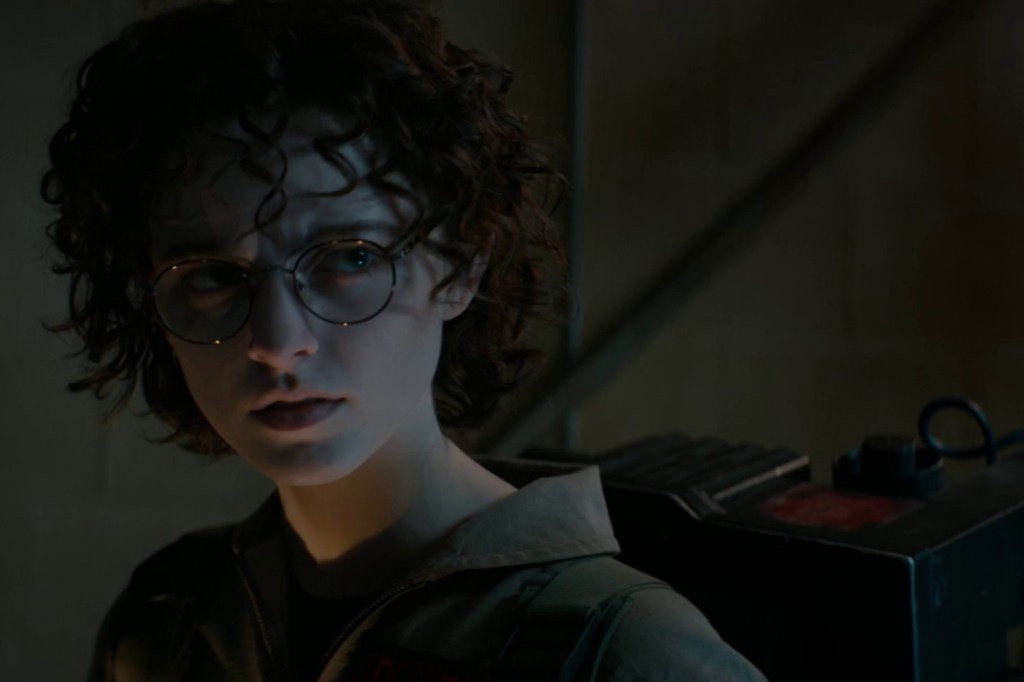
40 years ago, A group of young, established comedians from popular shows like Saturday Night Live and SCTV teamed with a Canadian Director with some cult hits under his belt and created the beginning of a franchise that has transcended film. It became a successful cartoon and a massive merchandise line, and it birthed one of pop culture’s most loyal fandoms. It has also spawned a sequel, a spinoff, and two more films that continue the story, the most recent of which, Ghostbusters: Frozen Empire, could be considered a new beginning for the franchise.
Ghostbuster: Frozen Empire features the return of the core cast, including McKenna Grace (The Handmaid’s Tale, Gifted) as the brilliant teen, Phoebe Spengler, Finn Wolfhard (Stranger Things, It) as her older brother, Trevor, Carrie Coon (Gone Girl, Avengers: Infinity War) as their mother (and daughter of the late Ghostbuster, Egon), Callie, Paul Rudd (Ant-Man, Anchorman) as former science teacher turned Ghostbuster, Gary, Celeste O’Connor (Madame Web, Irreplaceable You) as Lucky and Logan Kim (The Walking Dead: Dead City) as Podcast. Added to the cast are Kumail Nanjiani (The Big Sick, Silicon Valley) as Nadeem, Patton Oswalt (Ratatouille, MODOK) as Dr. Hubert Wartzki and Emily Alyn Lind (Gossip Girl, Doctor Sleep) as Melody.
Also returning to the franchise are the OGs, namely the three surviving Ghostbusters, Dan Aykroyd, Bill Murray and Ernie Hudson, as well as Annie Potts. Also returning from the original film is character actor William Atherton (Die Hard, Real Genius) as EPA Inspector turned Mayor Walter Peck. Ghostbusters: Frozen Empire is Directed by Ghostbusters: Afterlife co-writer Gil Kenan (Monster House, Poltergeist) and is co-written by Kenan and ‘Afterlife’ Director Jason Reitman, both of whom co-produced the film. Ivan Reitman, the original film’s Director and co-producer of Ghostbusters: Afterlife, was given a producer credit despite having passed away in 2022, only a few months after the release of the previous film.
Ghostbusters: Frozen Empire finds its core cast having left Oklahoma for New York, officially busting ghosts out of the iconic headquarters, Hook and Ladder 8, being bankrolled by retired Ghostbuster and Philanthropist Winston Zeddemore (Ernie Hudson). Discovery of an ancient artifact puts the world in paranormal peril, and it brings all of the Ghostbusters, old and new, together to solve the problem before it’s too late.
Ghostbusters: Frozen Empire starts with a cold open (pun intended) that sets a tone that lets you know that, while this is still a Ghostbusters movie, it is going to skew a little darker. Ghostbusters: Frozen Empire does a great job riding that line to give you a scary (but not too scary) ghost picture while maintaining the comedy you expect. They also did a better job at balancing the audience, making it feel a little less of a movie for the young (despite the nostalgia) and creating a movie that can capture any audience.
What’s more, however, is that Ghostbusters: Frozen Empire is a film that has been refocused. Ghostbusters: Afterlife was very much framed as an homage to the recently passed Harold Ramis, and rightfully so, but the franchise could have ended there, and people would have understood. ‘Frozen Empire’ comes at it a little differently. While it does pay tribute to Ivan Reitman both in the credits and a fun little easter egg in the film, its focus is aimed more at laying the foundation to continue the franchise, if not expand it into its own cinematic universe. New characters, more tech and ideas laid out in the film let you know that they are looking to the future.
The actors’ performances across the board were great. They were mainly grounded within an obviously larger-than-life story. Paul Rudd leads the way with his signature comedic sensibility without going too big, Finn Wolfhard was given more opportunity to be comic relief rather than the awkward teen of the previous film and McKenna Grace, the heart of this generation of the franchise, is the MVP with a sympathetic, very real performance, even in the strangest of situations.
Patton Oswalt and Kumail Nanjiani, both self-confessed nerds, focused their love and enthusiasm for the Ghostbusters franchise into perfect supporting performances, which I hope will lead to larger roles should more sequels be greenlit. The original cast members offer more than just a journey back to your childhood, as well.
Dan Aykroyd plays a bit of a mirror to McKenna Grace’s Phoebe, with one being too old to bust ghosts and the other being too young, despite their passion. Bill Murray is Bill Murray. He is a walking home run, and Ernie Hudson’s role as de facto leader of the Ghostbusters (consistent with the lore that continued in other properties) is a fantastic turn for the man who was treated as more or less an afterthought in the original Ghostbusters.
Beyond the quality of Ghostbusters: Frozen Empire is the personal experience that comes with it. I take a little pride that two of my picks to be the new generation of Ghostbusters that I made over 10 years ago, Paul Rudd and Patton Oswalt, are in this film together (Bill Hader and Tracey Morgan were my other picks), but the theatre where I watched this film in IMAX was filled not with reviewers, but with adults in full Ghostbusters attire, including film-accurate proton packs.
This was likely a contingent of the Ontario Ghostbusters, one of many Ghostbusters costuming groups across the world whose loyalty to the film has created a wonderful community that I was thrilled to be amidst for this experience. Add to them the kids in the audience, many of whom may have been having their first Ghostbusters experience, and the shared joy between old and new viewers alike was a clear indicator of how this story has not only survived but thrived for four decades.
Ghostbusters: Frozen Empire releases on March 22 in theatres everywhere and is also available on IMAX and other large format screens. I see this instalment as a true Ghostbusters 3, with Ghostbusters: Afterlife being a part 2.5, establishing the characters and backstories that get us to this latest story presented before us. It is full of nods to its history and teases for a future that I, frankly, am quite excited to see come to fruition.
Joan Of Arc Before King Charles VII Meets The Prelates Who Asks In Chinon by Gillot Saint-Evre, 1832.

Ночь рождения. Мультфильм (1980)
Кукольный мультипликационный фильм для малышей. Сказка о том, как мальчик Тима перестал бояться ночной темноты и научился спать без света. Жил-был на свете мальчик Тима. Он очень любил, чтобы было светло. Пока был день или просто горел свет, Тима играл или рисовал, но как только Тиму звали спать, он сразу вспоминал, что спят в темноте, которую он боялся. И вот однажды к нему в гости явилась Ночь и пригласила Тиму к себе на ночь рождения, а чтобы он не испугался темноты, зажгла звезды и луну…
ТО Экран 1980
Автор сценария – Александр Костинский
Режиссер – Розалия Зельма
Оператор – Евгений Туревич
Композитор – Эдуард Артемьев
Художник – Макс Жеребчевский
Текст читал – Всеволод Шиловский
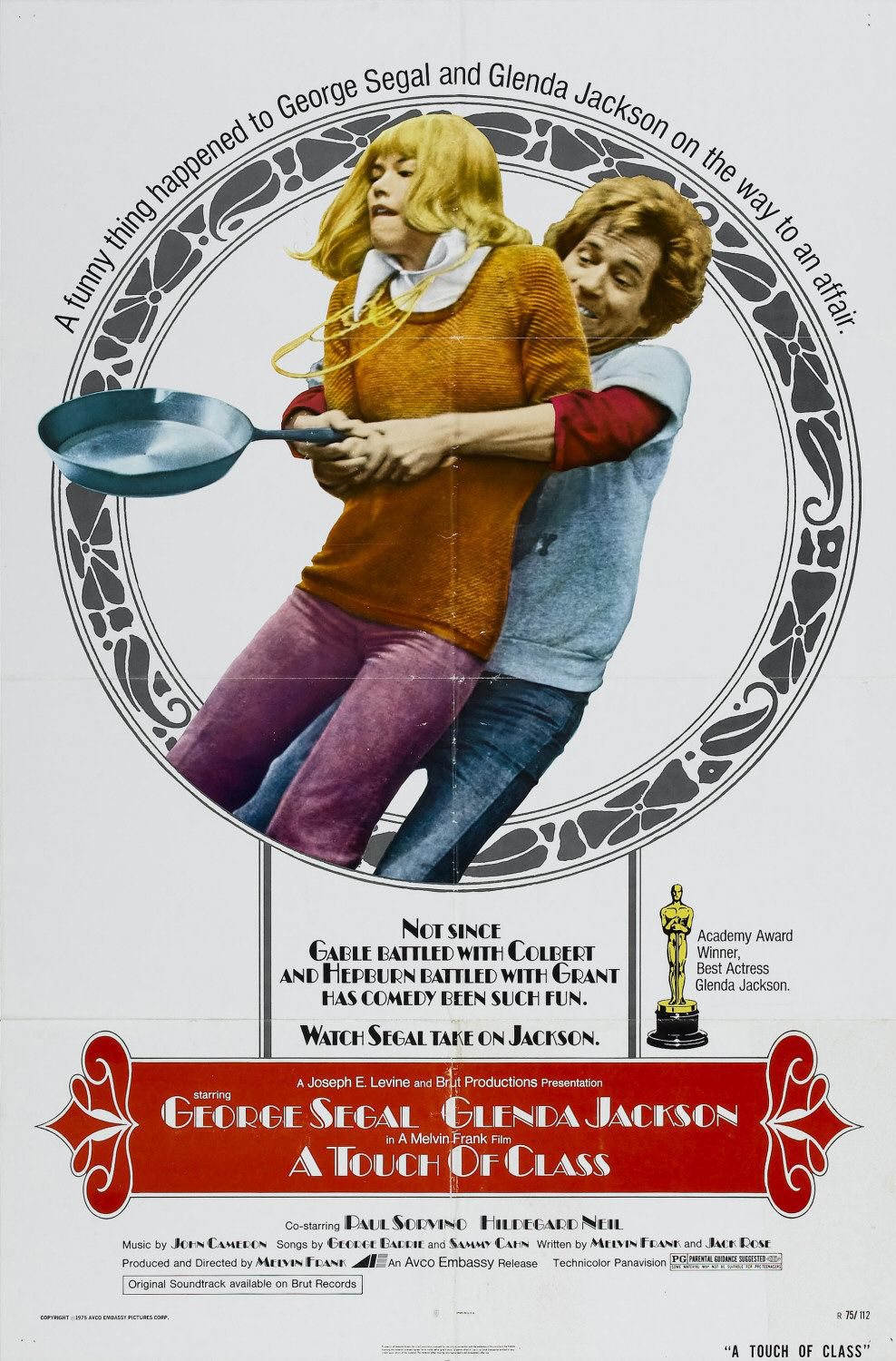
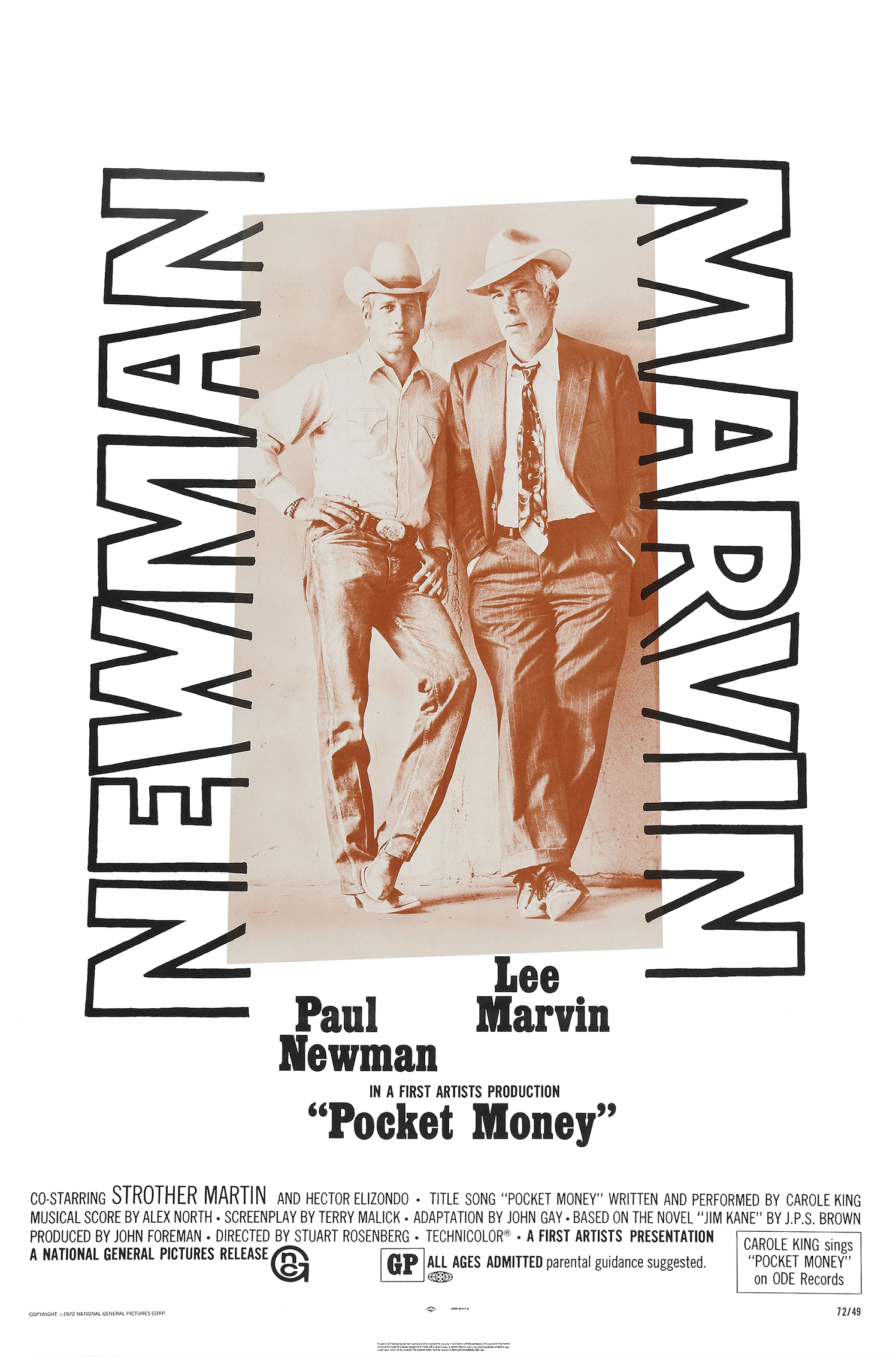
Just finished watching A Touch Of Class (1973) and Pocket Money (1972)…
 Igor's Blog