








Final Fantasy VIII and IX for the Playstation.

Although not listed in the Diagnostic and Statistical Manual of Mental Disorders, autistic burnout is a condition that has recently gotten the attention of providers, researchers, and the autistic community.
Baden Gaeke Franze, 2017 president of the Autistic Self-Advocacy Network of Winnipeg, has written, “On the most basic level, autistic burnout means being exhausted. Our brains and bodies get tired out, and we don’t have the energy to do the things that used to come easily to us.” Essentially, autistic burnout is what happens when an autistic person is no longer able to function as they previously could in the past.
So far, there has been limited research on how autistic burnout is triggered, manifests, and responds to treatment, but members of the autistic community have shared their experiences with burnout.
Research centering autistic voices and experiences has defined autistic burnout as “a highly debilitating condition characterized by exhaustion, withdrawal, executive function problems and generally reduced functioning.” Because burnout makes it more difficult for an autistic person to hide their autistic behaviors, burnout was previously thought of as a form of regression, but the autistic person still has their skills and abilities; burnout just prevents them from using these skills.
Each individual’s experience of burnout will vary, but some hallmark signs reported by autistic people include:
While other mental health conditions can cause an onset of functional impairment, including Major Depressive Disorder, autistic burnout is distinct from any other mental health diagnosis. It is important for providers working with autistic clients to understand and recognize the difference, as preliminary research on autistic burnout has shown that evidence-based treatment for depressive episodes can exacerbate burnout symptoms rather than alleviating them.
If you have a history of mental health issues that manifest as periods of decreased functioning due to exhaustion, executive dysfunction, and withdrawal, and these symptoms have not responded to other treatment approaches, it may be possible that you are experiencing burnout from unidentified or misdiagnosed autism.
Since autistic burnout is not an official diagnosis, it is not something that the provider tests for through a psychological evaluation. However, a provider might notice burnout symptoms developing and talk to you about treatment options.
If you are autistic and notice decreased ability to cope, increased executive dysfunction, exhaustion, or withdrawal from people and activities you once enjoyed, you may be experiencing burnout.
Although existing research on autistic burnout is minimal, the few existing studies and feedback from the autistic community indicate that burnout is caused by the stress caused from long-term efforts by autistic people to conform with neurotypical expectations and standards of behavior.
Many autistic people, especially those labeled as “high-functioning,” learn from an early age that they might be ostracized or punished for autistic behaviors. In an effort to fit in and be accepted, they mask these behaviors and may present as neurotypical. This is exhausting and wears the person down over time until they can no longer force themselves to mask, leading to burnout.
Autistic children in particular are often referred for Applied Behavioral Analysis (ABA), a treatment that involves behavior modification. If a client’s treatment goals in ABA involve making them behave in ways that are not authentic and natural to them as an autistic person, this treatment can lead to burnout. This is why many autistic people describe their experience in ABA as traumatic or abusive.
Essentially, what we know about autistic burnout so far is that it is a response to chronic, ongoing stress. In particular, it is linked to the stress of existing in a world that is not designed for you.
Because burnout is caused by neurotypical expectations, it can be prevented by allowing autistic people to live authentically and embrace neurodiversity-affirming environments. For example, if an autistic person is stimming by flapping their hands, they are often told to stop the behavior. They might be told the behavior is distracting or annoying. Since the behavior is not harming anyone or damaging anything, a neurodiversity-affirming environment would mean the autistic person is allowed to engage in this behavior, and if someone else finds the behavior distracting, they can go to another space.
Allowing autistic people to take space to regulate when needed, create schedules that do not overwork them, and meet their sensory needs also protects against burnout. In addition, providing autistic people with autistic-led education about burnout and meeting sensory needs can allow them to take steps to mitigate burnout symptoms.
Additionally, centering autistic voices in research will lead to developing treatment and supportive services that meet autistic people’s needs rather than forcing them to present as neurotypical. In the long-term, this will prevent burnout in the community as a whole.
Because limited research exists about autistic burnout, there are not presently evidence-based protocols for alleviating burnout. Some treatments for mental health issues in the neurotypical population can exacerbate burnout, so it is important for providers to accurately identify autistic clients and create a neurodiversity-affirming treatment environment.
Surveys of the autistic community suggest effective treatment for burnout can include education about burnout, support from other autistic people who have previously recovered from burnout, and reduced demands that allow the autistic person to recover and preserve their energy.
As future research progresses, evidence-based and neurodiverse-affirming treatments for autistic burnout will hopefully emerge, allowing autistic people to receive support, manage burnout when it arises, and prevent future bouts of burnout.
Introduction to the Great Famine
The Great Famine, which took place from 1315 to 1317, extending in some areas until 1322, marked the beginning of a series of large-scale crises that profoundly impacted Europe in the early 14th century. This catastrophic event affected vast regions, stretching from Poland to the Alps, and signified a dramatic end to a period of growth and prosperity that spanned from the 11th to the 13th centuries.
Causes and Onset of the Famine
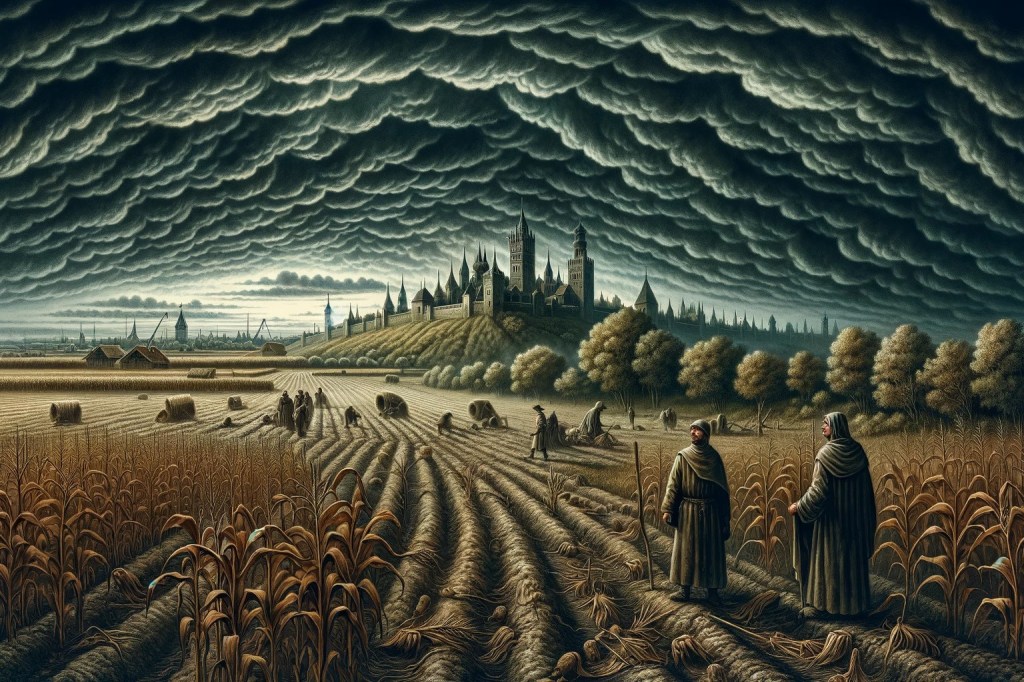
The famine began with adverse weather conditions in the spring of 1315. Unusually heavy rains and cool temperatures prevented crops from maturing, leading to successive harvest failures. The situation persisted through 1316 until the summer harvest of 1317. However, Europe did not fully recover until 1322. Additionally, a severe outbreak of cattle disease drastically reduced livestock populations, notably sheep and cattle, by as much as 80%.
The Famine’s Devastating Impact
During this era, society experienced heightened instances of crime, widespread disease, numerous deaths, and extreme measures like cannibalism and infanticide, underscoring the extreme distress and agony of the populace. The ramifications of the famine extended beyond mere survival, impacting the Church, the governing bodies, and the very structure of European society. This period also established a framework for future disasters that occurred later in the 14th century.
Contemporary accounts of the famine, found in 14th-century chronicles such as those by Jean de Venette and the Annales Gandenses, provide firsthand documentation of the harsh realities of the time. These records detail the catastrophic agricultural failures and the extreme lengths to which people went for survival, including cannibalism and infanticide.
Historical Context: Famines in Medieval Europe
Famines were common in medieval Europe, with France and England experiencing multiple instances, including the Great Famine of 1315–1317. These frequent events illustrate the era’s struggle for survival, often marked by food scarcity.
Impact on Life Expectancy and Health
Historical records, such as those from the English royal family, reveal drastic declines in life expectancy during the 14th Century Crisis. From an average of 35.28 years in 1276, it dropped to 29.84 years during the Great Famine (1301-1325) and further plummeted to 17.33 years during the plague (1348-1375).
Demographic Alterations during Europe’s Dark Years
The plague years, in particular, saw a dramatic population decrease, with an estimated 42% reduction between 1348 and 1375. This highlights the catastrophic effects of the plague and the Great Famine on Europe’s demographic landscape.
The Medieval Warm Period and Its Aftermath
Throughout the Medieval Warm Period, spanning from the 10th to the 13th centuries, Europe experienced a remarkable surge in its population, a growth unprecedented in previous times. This population boom reached levels in some areas that would not be paralleled until the 19th century. Notably, certain rural regions in France today still have lower population densities than what was observed in the early 14th century.
Decline in Agricultural Efficiency and Rising Food Prices
This period also saw a gradual decline in agricultural efficiency, particularly in wheat production. Starting around 1280, the yield ratios of wheat—essentially, the amount of grain harvested for each seed sown—began to fall, concurrently with a rise in food prices. Following a good harvest, the yield ratio could reach as high as 7:1, but this could plummet to as low as 2:1 in years of poor harvests. This meant that for every seed planted, only two seeds were reaped—one for replanting the next year and one for immediate consumption. This is in stark contrast to modern agricultural practices, which can achieve yield ratios of 30:1 or more.
The Onset of the Great Famine and the Little Ice Age
The beginning of the Great Famine coincided with the termination of the Medieval Warm Period. Between 1310 and 1330, Northern Europe was beset by some of the most severe and prolonged bad weather of the Middle Ages, marked by intensely cold winters and wet, cool summers. This climatic downturn, potentially triggered by a volcanic event, occurred during a phase known as the Little Ice Age.
Governmental Challenges and Societal Impacts
The combination of changing weather patterns, the inability of medieval governments to effectively manage such crises, and the population having reached an all-time high created a precarious situation for food production. Any slight misstep or shortcoming in agricultural yields could lead to severe consequences, as was witnessed during the Great Famine. This period serves as a significant example of how climatic shifts and governmental inadequacies, coupled with high population densities, can create a fragile balance between food security and societal stability.
The Spring of 1315: A Turning Point
The spring of 1315 was a critical turning point. Continuous rain and low temperatures across Europe led to widespread crop failures. The inability to cure hay and straw due to wet conditions also meant there was insufficient fodder for livestock. England, for example, saw extensive flooding in Yorkshire and Nottingham, further exacerbating the crisis.
Escalating Crisis and Response
As the situation worsened, food prices soared. In England, prices doubled in just a few months. Salt, essential for preserving meat, became scarce and expensive. The population, already under pressure from increasing numbers, resorted to desperate measures for survival, including consuming wild plants and animals.
Documented Incidents and Military Impacts
The extreme hardships caused by the Great Famine are vividly depicted in numerous historical chronicles and accounts. These sources provide a stark illustration of the widespread suffering and turmoil during this period. One such account involves Edward II of England, who, in a notably rare occurrence for an English monarch, faced significant difficulty in procuring bread during a visit to St Albans in August 1315. This incident, as documented in contemporary chronicles, underscores the depth of the crisis, even affecting the highest echelons of society.
Another aspect of the famine’s far-reaching impact is evidenced in the military sphere. Louis X of France’s military campaign, for instance, was notably disrupted by the Great Famine’s effects. His planned invasion of Flanders in this period was severely hindered by the unrelentingly wet conditions, rendering the terrain impractical for military movements. Chronicles of the time, such as those written by chroniclers in Flanders, detail these struggles, highlighting how the famine’s consequences extended beyond mere starvation and impacted political and military strategies.
These historical accounts, drawn from sources like the chronicles of Jean Froissart and other contemporaneous records, not only provide detailed narratives of specific events but also paint a broader picture of the period. They illustrate a Europe in the grip of a crisis that transcended social and political boundaries, affecting monarchs and peasants alike.
Peak and Aftermath of the Famine
The peak of the Great Famine was reached in the year 1317, a time marked by relentless wet weather. It was only during the summer of that year that climatic conditions began to normalize. However, the population had already been severely weakened by a host of diseases, including pneumonia, bronchitis, and tuberculosis. Furthermore, a significant portion of the seed stock, essential for future harvests, had been consumed out of sheer desperation for food. This dire situation meant that it took until 1325 for the food supply to stabilize at relatively normal levels and for the population to start showing signs of recovery. The human cost of the famine was substantial; historians estimate that between 10 to 25 percent of the population in many cities and towns succumbed to its effects.
The scale of mortality during the Great Famine is a subject of ongoing historical debate. Jean-Pierre Leguay, a notable historian, described the famine as having caused “wholesale slaughter in a world that was already overcrowded, especially in the towns.” Death rates varied across regions, with some areas of southern England experiencing a population decline of about 10 to 15 percent. Northern France, another hard-hit region, saw a reduction of approximately 10 percent in its population.
Geographically, the Great Famine primarily afflicted Northern Europe. Its impact was felt across the British Isles, Northern France, the Low Countries, Scandinavia, Germany, and western Poland. Some of the Baltic states were also affected, though the far eastern Baltic regions experienced only indirect impacts. The southern boundaries of the famine’s reach were marked by the natural barriers of the Alps and the Pyrenees.
While the Black Death of 1347-1351 would eventually claim more lives, it swept through areas relatively quickly, over a matter of months. In contrast, the Great Famine was a protracted crisis, extending over several years and prolonging the suffering and hardship of the European populace. This distinction highlights the unique and devastating nature of the Great Famine in medieval history, leaving a profound and lasting impact on the societies it affected.
Implications on the Roman Catholic Church
During this period, the prevailing belief across many societies was that natural disasters were a form of divine punishment for sins or moral failings. In an era deeply rooted in religious faith, with Roman Catholicism being the predominant and often the sole accepted Christian denomination, such calamities were seen through a theological lens. However, the persistent and widespread suffering caused by the Great Famine led to a growing sense of disillusionment. Despite fervent prayers and religious observances, the famine’s impacts continued unabated, which raised questions about the efficacy of religious intervention in such crises.
This growing skepticism had significant implications for the Roman Catholic Church, which had long held a central role in providing spiritual and, often, temporal guidance. The inability of the church to alleviate the suffering caused by the famine began to erode its institutional authority. People started questioning not only the church’s power but also its moral and doctrinal integrity.
Furthermore, the prolonged hardship of the Great Famine provided fertile ground for the emergence of new religious movements. Many of these movements directly challenged the authority of the papacy and the Roman Catholic Church, accusing them of corruption and doctrinal errors. They argued that the Church’s failure to address the root causes of the famine and its perceived inefficacy in the face of such a disaster was indicative of deeper systemic issues within the Church’s hierarchy and teachings.
These developments during and after the Great Famine played a pivotal role in shaping the religious landscape of Europe. They contributed to a gradual shift in religious attitudes and beliefs, laying the groundwork for various reformist and heretical movements that would emerge in later years. This period marks a significant moment in the history of the Roman Catholic Church, where its unchallenged authority and influence began to be critically examined and contested by the very societies it aimed to shepherd.
Cultural Consequence
In the 14th century, medieval Europe was already rife with social unrest and violence. Compared to modern standards, serious crimes such as rape and murder were alarmingly more prevalent, especially when considered relative to the population size of that era. This heightened level of violence was a stark contrast to contemporary societies, where such acts are far less common and met with stringent legal consequences.
The advent of the Great Famine further exacerbated this trend, leading to a significant surge in criminal activity. The desperation to survive pushed many, including those who would not ordinarily engage in unlawful behavior, to resort to crime. The need to feed oneself and one’s family in the face of widespread hunger and scarcity often outweighed the fear of legal repercussions.
In the ensuing decades following the famine, the social and moral fabric of Europe underwent a profound transformation. The continent became tougher, more hardened, and increasingly violent. This shift was distinctly evident in all strata of society, most notably in warfare. The 14th century, marked by events like the Hundred Years’ War, saw the decline of chivalric ideals that had somewhat tempered warfare in the 12th and 13th centuries. In earlier times, noble combatants were more likely to perish in accidental tournament mishaps than in actual battles. However, the post-famine era witnessed a more brutal form of warfare, devoid of the earlier chivalrous conduct.
The inability of medieval governments to effectively address the myriad crises spawned by the famine also led to widespread disillusionment and eroded public trust in these institutions. This was particularly evident in the case of Edward II of England. His unpopularity as a monarch was exacerbated by the famine, which many perceived as divine punishment for his misrule. This sentiment played a significant role in undermining his authority and contributing to his eventual downfall. The famine, thus, not only brought about immediate suffering but also had lasting political repercussions, reshaping the governance and social dynamics of medieval Europe.
Legacy of the Great Famine
The Great Famine marked a definitive end to a period of population growth, setting the stage for subsequent events like the Black Death. Its extensive impact was felt across Northern Europe, reshaping the course of history.
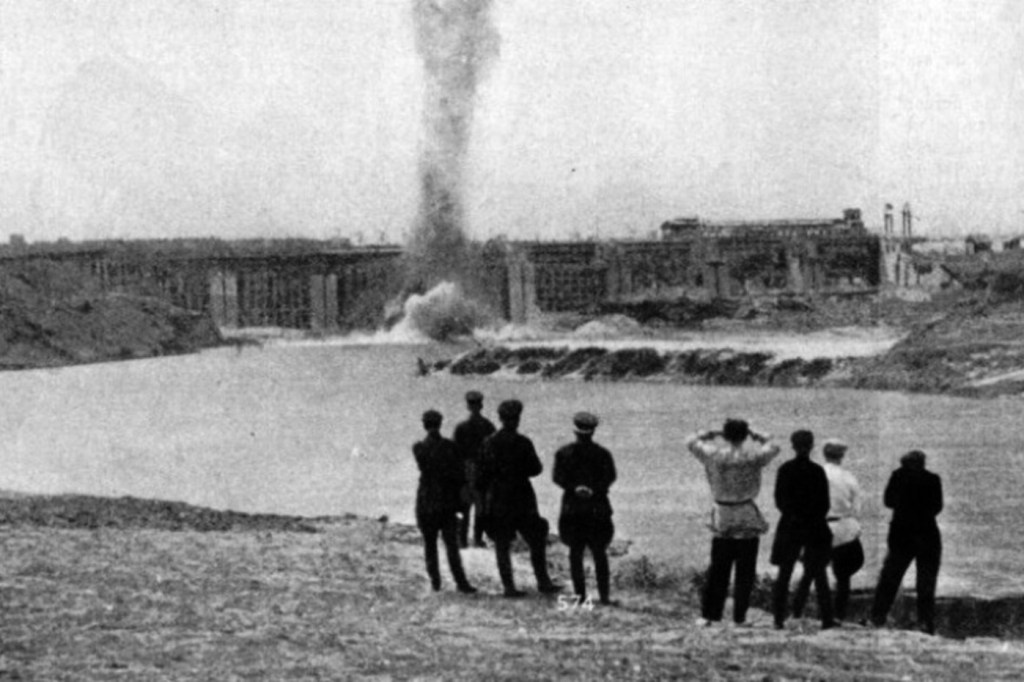
Part of an extensive system of ship canals linking the great waterways of Soviet Russia with the sea, the Moskva-Volga Canal enables vessels to pass from the Volga to the Moskva, the river on which lies the capital city of Moscow.
THE opening to navigation of the Moskva-Volga Canal on May 1, 1937, marked the inauguration of one of the greatest engineering achievements in the Union of Soviet Socialist Republics – generally referred to as Russia by English-speaking people. The canal is one of the major works built under the Second Five-Years Plan.
The canal is about eighty miles long and unites the waters of the Volga with those of the Moskva River, on which lies Moscow, capital of the Soviet Union. Huge reservoirs have been built to add to the water supply and to generate electricity. Elaborate surveys preceded the preparation of the plans, and the machines used in the work of excavation and construction were of the most advanced types. The equipment of the canal is a masterpiece of engineering on a vast scale.
The Moskva-Volga Canal serves a wider range of purposes than a canal designed for seagoing ships or for inland water transport. Special problems had to be surmounted by the engineers in addition to the geographical problem of overcoming the watershed between the two rivers that prevented the building of the canal on one level.
The completion of the canal provided Moscow with a waterway available for vessels of large carrying capacity and with an outlet to the most important water transport route of the Soviet Union – the Volga River and the Volga-Baltic water system. The chief object was to make Moscow a great inland port forming the hub of a system of waterways extending to the Baltic, the White Sea, the Caspian and, on the completion of the Volga-Don Canal, to the Sea of Azov and thence to the Black Sea. A secondary object was to provide Moscow with a greatly increased supply of water for domestic and industrial uses.
Moscow is approximately on the same latitude as Edinburgh. The mighty Volga, the longest river in Europe and navigable for most of its course of about 2,400 miles, flows north of Moscow in an easterly direction and then swings to the south and empties itself into the Caspian Sea.
The Moskva was too shallow for deep-draught vessels to proceed from the capital to the Oka River, which joins the Volga at Gorki (formerly Nizhni-Novgorod), and then to descend the Volga to the Caspian. Such vessels were equally unable to take advantage of the Mariinsk river system and the recently built Baltic-White Sea Canal, to gain the White Sea, nor could they go through the Ladoga Canal and the River Neva to the Baltic. The shoals and sandbanks of the Moskva obstructed regular water transport in summer.
The Moskva-Volga Canal has not only made the city a port for large vessels, but has also considerably shortened the water transport route. It has reduced the distance from Moscow to Gorki by sixty-eight miles. The saving on the route via Leningrad to the White Sea is no less than 1,100 kilometres (about 683 miles). This remarkable reduction is due to the fact that the new canal short-circuits the previous winding route to Rybinsk, where the Mariinsk water system begins.
The Moskva-Volga Canal is the second step in the plan to link up all the seas to which the Soviet Union has access in Europe. The Baltic-White Sea Canal was the first. The Volga-Don Canal will be the third.
The Baltic-White Sea Canal cuts short the route between Baltic and White Sea ports by 2,200 miles, and avoids the journey by sea round the North Cape in Norway. Although the length of this canal is 142 miles, only twenty-five miles had to be excavated and equipped, the remaining distance being lakes and rivers.
The Moskva-Volga Canal is sixty-two miles shorter than the Baltic-White Sea Canal, but about seven times as much earth had to be excavated. It is in effect a continuation of the Baltic-White Sea Canal and, when the Volga-Don Canal is completed, Moscow is likely to become a remarkable inland port. Two harbours are being completed, one at the northern and the other at the southern end of the city.
In addition to its importance as a waterway, the Moskva-Volga Canal is almost equally important as a source of Moscow’s water supply.
The rapid rise in the prosperity of Moscow, the improvements in the conditions of the population and the development of industries led to an increase in the demand for water. But the supply was hampered by the fact that there was not sufficient water in the Moskva from which to draw.
The canal supplies water to Moscow for domestic and industrial needs to the quantity of 250,000,000 vedros a day (one vedro is equal to 2·71 Imperial gallons or 12·3 litres), which more than covers the needs of the capital.
The growth of the consumption of water would, it was recognized, entail a corresponding increase in the quantity of sewage and drainage water. These waters would be discharged into the Moskva. Although the methods of the purification of sewage water are constantly being improved, the pollution of the river would have been considerable as the current was too sluggish to carry the water away swiftly.
The building of the canal has made it possible to use the supplementary water from the Volga to wash the Moskva, and it has improved the condition of the capital. Formerly the shortage of water and the danger of pollution hindered schemes of improvement. In the aggregate the supply of Volga water to the Moskva wras brought up to 883 cubic feet a second.
Of the total length of the canal about thirteen miles are occupied by the water reservoir in the system of the canal, the remaining sixty-seven miles comprising the canal itself.
The route of the canal, from the Volga to the Moskva, begins five miles above the point where the Volga receives the waters of its tributary, the Dubna, which flows into it on the right bank.
Here formerly stood the village of Ivankovo which, in the spring of 1934, was removed and rebuilt on another site. From this point on the Volga to the Moskva the bed of the canal had to be excavated artificially.
Construction was particularly complicated because of the considerable elevation which begins a few miles from the Volga and extends for more than twenty-five miles along the course of the canal. This watershed, which made impossible a level waterway between the two rivers, has been surmounted by locks.
One series of locks, aided by powerful pumping stations, forces the Volga water up this staircase on the northern slope, and vessels are raised in stages in the locks. On the watershed reservoirs and hydro-electric stations have been built. Another set of locks has been arranged on the southern or Moscow side of the watershed.
In its course from the Volga to the Moskva, the canal trends to the southeast for thirty-four miles, when it approaches the town of Dmitrov. Then it turns south and approaches Insha Station, on the Savelovskaya Railway. Then it turns to the south-east, and proceeds in this direction to the village of Pestovo, situated at the confluence of the Rivers Cherna and Vyaz.
After this the canal turns to the south, cutting through the watershed between the two rivers. Then it turns to the west and approaches the village or lvakino, near the Klebnikovo Station on the Savelovskaya Railway. Here the canal takes a southerly direction and enters the Moskva at Shchukino, near the Pokrovskoye-Streshnevo Station on the White Russian-Baltic Railway.
In volume of earthwork and concrete work the Moskva-Volga Canal exceeds famous canals such as the North German Canal, the Central German Canal, the Manchester Ship Canal and the Suez Canal. The Panama Canal, the greatest work of this kind in the world, required a greater volume of excavation, but it is shorter. The total volume of earthwork on the Moskva-Volga Canal comprised 201,900,000 cubic yards; concrete and reinforced concrete work accounted for 4,070,000 cubic yards. On the Panama Canal the corresponding figures are 287,750,000 cubic yards and 3,267,000 cubic yards.
A period of five years was fixed by the Government for the completion of the canal. To carry out the task in this time demanded the application of the most scientific labour-saving methods and machinery, as well as perfect organization. An area of 5,000 square kilometres (1,930 square miles) was mapped from aerial photographs, and this survey was of the greatest assistance to the engineers in making their plans for the project. No fewer than 25,000 buildings which were located in the path of the route had to be removed to new sites; sometimes, as at Nankovo, this entailed moving complete villages. Over 1,500 motor vehicles, 112 locomotives and 147 steam shovels were used. About 450 miles of railway and hundreds of miles of highways and secondary roads were built to deal with the quantities of earth excavated.
Every possible method of mechanization was used according to the individual requirements of each item in the huge scheme. Blasting, hydraulicking with powerful jets of water from monitors, and dredging by floating dredgers aided the steam shovels in the work of excavating.
The total number of the structures is 294. These include eleven locks (ten on the canal route), three concrete and eight earthen barrages, six earthen dams, five pumping stations, eight hydroelectric power stations, seven railway bridges and ten road bridges. Among the major structures are the canal itself, the barrages with their floodgates and sluices, the hydro-electric stations, the pumping stations, and the harbours and wharves with their equipment for loading and discharging vessels. In addition there are numerous auxiliary works including guard and emergency gates, and gates and structures where the roads, railways and the canal intersect.
An example is the four-tracks reinforced concrete arch bridge which spans the canal at Khimki Station, a few miles distant from Moscow on the October Railway. To test the bridge when it had been completed four locomotives were sent across it simultaneously at a speed of forty miles an hour. At Lock No. 8, which is near the village of Shchukino, not far from Moscow, at the point where the canal joins the Moskva River, a double-track railway bridge crosses the lock.
To solve the many technical problems which had to be worked out before construction began, large research laboratories were built and equipped. Every aspect of the problems was investigated and the material of the canal bed was studied. All building and engineering material was tested and examined.
The Government took every step to encourage new ideas not only from experts but also from the men working on the canal in any capacity, however humble. Every man was afforded facilities for developing any idea he had for improving upon any method of work upon which he was engaged. If he had an idea for a new method his plan was examined. The most intricate and important structures on the canal are the eleven locks. Seven of them are in the canal proper, one is in the Volga, and two are in the Moskva. There is also a small lock in the Pererva River. The ten locks on the traffic route are of identical dimensions. Each is 951 ft. 6 in. long, 98 ft. 6 in. wide and 18 ft. 4½ in. deep. The small Pererva Lock, which is intended for the passage of smaller craft, is 180 ft. 6 in. long, 49 ft. 3 in. wide and 8 ft. 2 in. Deep.
In the direction from the Volga to Moscow, Lock No. 1 is at the entrance to the canal. Then comes a stretch of ten miles, beyond which is the first of the series of five locks forming the northern stairway. No. 2 Lock raises the water of the Volga 19 ft. 8 in. Beyond a level stretch of twenty-seven and a half miles is Lock No. 3. This and Locks Nos. 4, 5 and 6 carry the Volga waters up a further aggregate of 105 feet, each of these four locks raising the waters 26¼ feet.
On the top of the watershed the canal proceeds for thirty-one miles to Locks Nos. 7 and 8, which are a pair of twin chamber locks forming the southern stairway and leading the waters into the Moskva. Lock No. 8 is at the end of the canal proper and at a distance of eighty miles from Lock No. 1.
Locks Nos. 7 and 8 lower the water 53 ft. 6 in. and 64 ft. 7 in. Respectively – a total of 118 ft. 1 in., which is 6 ft. 7 in. above the level of the water of the Volga. Of the two locks in the Moskva, either of which lowers the waters 19 ft. 8 in., No. 9 is the Karamyshevo and No. 10 the Pererva Lock, not to be confused with the small lock in the Pererva River.
The locks are built to pass vessels up to a length of 613 ft. 6 in. and a beam of 88 ft. 7 in. They are large enough to lock through huge oil-carrying barges which have a displacement of 18,000 tons on a draught of 14 ft. 9 in.
One of the most important features of the locks is the method of filling them. The huge single- and double-chamber locks require to be filled with water in not longer than thirteen minutes. After extensive experiments had been made with models it was decided to fill the chambers through the head without using longitudinal galleries. In the upper head of the lock a descending gate of cement was built. The gallery through which the chamber is emptied is built in the lower head of the lock. Each chamber is built of reinforced concrete. The bottom is 13 ft. 1 in. thick; the width of the walls at the foundation is 16 ft. 4 in., and 3 ft. 3 in. at the top. Vessels are passed through the locks with the minimum of human labour, each lock having centralized automatic control. Any operation can be carried out by the pressing of a button. When a particular operation is completed, the machinery is stopped automatically by the terminal switch. If desired, any operation can be stopped at any stage by pressing the stop button.
A single dispatcher point is being built on the canal with distant control of all the pumping stations, and it will be able to start or to stop the pumps of any station. The control system was worked out in the control laboratories and experimental workshops of the Moscow Power Trust. By using the automatic system the dispatcher is able to dispense with the telephone.
He can follow the movements of ships and the processes of loading. He can also make a graph of the movements of the vessels, carry out the passing of the ships’ documents, keep account of the stopping places, and so forth. The level of the water in the canal is indicated automatically. At the dispatcher point are models of the locks on which are shown the level of the water and the positions of the lock gates.
The supply of automatic and other new apparatus is one of the most important factors in the rebuilding and development of the enormous water transport system of the Soviet Union. Automatic machinery makes it possible to cut down expenditure considerably. Moreover, it minimizes the risk of accidents by eliminating as far as possible the factor of human error.
Signals, lighthouses and buoys are lighted by electricity; and the lights on the buoys are switched on at dusk and off at dawn by an automatic device sensitive to daylight.
At the great Ivankovo Barrage the sluices are raised in pairs by two 150-tons cranes. This structure pens the Volga waters at the entrance to the canal and raises the level by 59 feet. The barrage simplified the work of raising the water up to the watershed. When the dams were completed and the water filled the great reservoir, the crossdams were blasted and the Volga flowed into the canal along its new course towards Moscow. Another huge dam, the Karamyshevskaya Dam, is situated at Karamyshevo, near Moscow.
The rivers in the Soviet Union afford much greater facilities for transport than those in Western Europe, and are, in extent, comparable to the great rivers of North America. Transport is prevented in winter by ice, as in North America. In the last few years the tonnage of goods and raw materials has steadily increased. Attention has been devoted also to speeding up the passenger services. Fast vessels, each carrying 150 passengers, are being placed in service; these vessels were specially designed for service on the Moskva-Volga Canal.



 Igor's Blog