To be completely honest, I was never a huge fan of Stephen King’s breakout novel, Carrie. Today I can admit that I have no explanation for that, it seemed a mere misfire on some unidentified level. These days, I have no trouble absorbing Carrie like a Sunny summer sky’s warming ultraviolet rays.
Carrie is a tightly knit piece of work that captures the essence of youth in rather convincing fashion. I wouldn’t say King nails teenage life with the same faithfulness he managed in Christine, but this is close. Kids can be serious assholes, and Stephen does a wonderful job of reminding us that with this piece of work. He also effectively explores a vast gamut of emotions experienced during the transition from child to adult. He hammers home anger, ingrains shame and ignites a fuse that forces rage to shimmer and undulate behind the mask of the burning fuse.
I don’t need to possess telekinetic abilities to relate to Carrie’s horrid experience with life.
There isn’t much need for me to delve into every last intricacy of this story. If you’re a fan of Stephen King’s work, you’ve read the novel. If you’re a horror buff, or a fan of classic cinema in general, you’ve seen the movie. Surprisingly, what you see on screen in Brian De Palma’s 1976 shocker is quite faithful to King’s source material. That said, I’ll give you a quick rundown: Carrie White lives with her deranged religious fanatic of a mother, Margaret White. Margaret surpasses abusive by a country mile, and her focal target, her own daughter, is about to turn the tides. See, Carrie is telekinetic, fed up with her mother’s extremist ways, and about to be turned into the laughing stock of a high school filled with enough douche bags to cause a mature individuals cranium to implode. It all makes for a bloody and… fiery conclusion.
What strikes me as special about this particular work is the pronounced measure of melancholy that King sprinkles throughout the story. The man never lets up in reminding us that Carrie’s existence is severely bleak. Sad in every sense of every letter… almost to the point of utter hopelessness. What’s also stirring is the fact that as a reader, it’s almost easy to feel as though Carrie’s place is better somewhere other than earth. She’s one of the most sympathetic creatures ever created, and her presence conjures emotional sensations that are difficult to deal with.
Carrie’s quickly climbed into the upper-tier of my favorite King books. The novel has always had my respect, but it now has my heart, as does the tragedy of Carrie White’s complete existence.
Media in India is now broadcasting segments about how the ‘Canadian dream’ is nightmare.
As Canada maintains immigration at rates unseen in its history, an increasingly large share of those newcomers are finding that they hate it here, feel hoodwinked by the Canadian government and want to go home.
Amid statistics showing higher rates of outmigration and newcomer dissatisfaction, social media and immigrant forums are increasingly filled with warnings for foreigners to stay away.
This week, the website BlogTO published a series of interviews with recent immigrants who are desperate to leave.
“There is no living in this country; it’s just surviving,” said 39-year-old Raghunath Poshala. A Mexican immigrant told them he no longer sees Canada as a developed country. “I realized that Canada is a very poor country, too; it’s just that everyone is in debt,” he said.
Late last year, Bloomberg News interviewed a Ukrainian refugee who fled Russian shelling and missile attacks — only to find a Canada that was practically unliveable. “I’m tired all the time now,” said Oleksii Martynenko, 44.
Around the same time, CTV interviewed Indian immigrant Emilson Jose. “No matter how much you make, your take home pay is not even keeping up the expense. Families barely keep their head above water,” said Jose. “After 10 years of hardship, I am now a proud Canadian citizen who doesn’t want to live in Canada anymore.”
Last year, the Conference Board of Canada published The Leaky Bucket, a report finding that the rates of recent immigrants deciding to leave Canada were on the rise. It “suggests immigrants may not be seeing the benefits of moving to Canada,” the report says.
The reason for the dissatisfaction is simple: Amid spiking prices and shortages in everything from housing to health care, it’s immigrants that are being hit hardest.
Average rents in Canada have hit an all-time high, with a two-bedroom purpose-built rental now going for $1,359 per month.
But asking rents — the advertised rents that would be faced by a newcomer looking for shelter — are significantly higher. According to the latest survey of asking rents by Rentals.ca, the average two-bedroom now costs more than $2,300 per month — with that figure rising above $3,000 in markets like Vancouver or Toronto.
And while much of the recent immigration influx was driven by stated fears of a labour shortage, newcomers are often encountering a job market that is utterly overwhelmed by applicants.
It’s now a semi-regular phenomenon across Southern Ontario that a routine job fair for entry-level positions will attract blocks-long lines of prospective applicants. In December, a job fair at the Save Max Sports Centre in Brampton drew so many job-seekers that videos posted to Instagram showed the entire plaza in front of the building filled with queues.
There exists an entire online ecosystem of bloggers, TikTokers and YouTubers providing advice for new Canadians or prospective immigrants. Of late, many of them are telling their audience not to come — or at least warning that it’s not what it seems.
Febby Lyan, a Singaporean immigrant to Canada, garnered nearly 400,000 views on a recent video about “why people are leaving Canada.” Over 20 minutes, she detailed rising homelessness, rising crime, limited job opportunities, worsening affordability and even a few qualms with the political situation. Lyan noted that the recently passed Online News Act meant that Canadians couldn’t access news through Facebook.
The YouTuber “Angry Canadian Immigrant” wrote an entire e-book accusing Canada of running an immigration system designed to “scam” newcomers.
“After three years in Canada I see it as one of the most overrated countries in the world; very high taxes, enormous cost of life, very few well-paying jobs with insane competition for them … no access to health care whatsoever,” he says in one of his most popular videos, Top 5 reasons not to move to Canada.
The notion of Canada as an “immigrant trap” has even started to make the foreign press.
The Indian news channel WION broadcast a segment in mid-February titled Canada: The Dream that Became a Nightmare.
“Today, youngsters that immigrate to Canada are struggling to find jobs that match their skill sets and also pay them well,” said host Molly Gambhir.
The comments below a video of the segment are replete with viewers expressing their desire to leave. “As an immigrant who came here in 2019 to fulfil my Canadian dream, I am moving back to India next month. The situation is getting worse every passing day,” reads the top comment.
All of this has actually happened before. The last time Canada dialled up immigration to record-breaking levels, it was similarly accompanied by an undercurrent of disappointment and outmigration.
In the years before the First World War, Canada took in as many as 400,000 immigrants annually in a frantic bid to homestead the prairies. Often, these newcomers had been lured by rosy advertised images of Canada as a temperate land of plenty.
At the peak of the boom, outmigration was often as high as immigration. And even a cursory look at immigrant diaries from that era reveal accounts of despair and horror.
“The women and children raised such lamentations as defies description,” reads the 1899 account of Ukrainian immigrant Maria Adamowska, who said panic began to rise among her fellow immigrants as their train ride west revealed the harshness of the Canadian landscape.
In 1913, a Montreal-based German consul even penned a report home urging his countrymen to avoid immigration to Canada. “The Canadian prairie with its long winters and impermanent rectangular houses conveys something indescribably sad and depressing,” he wrote.
A still from Ghost Story (1981), directed by John Irvin
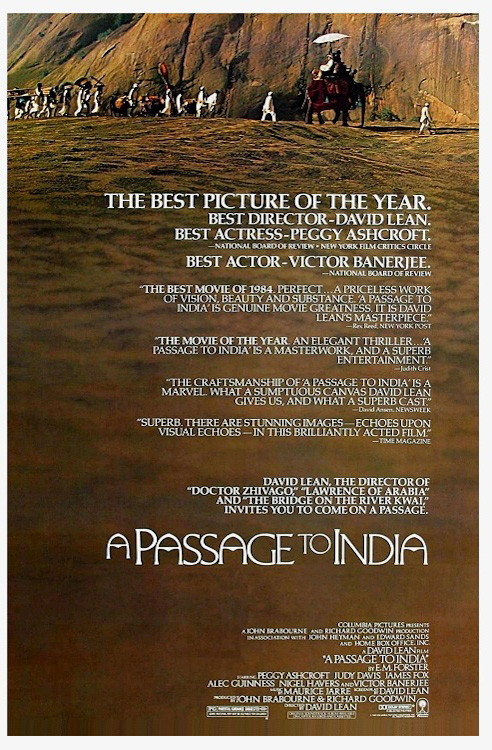
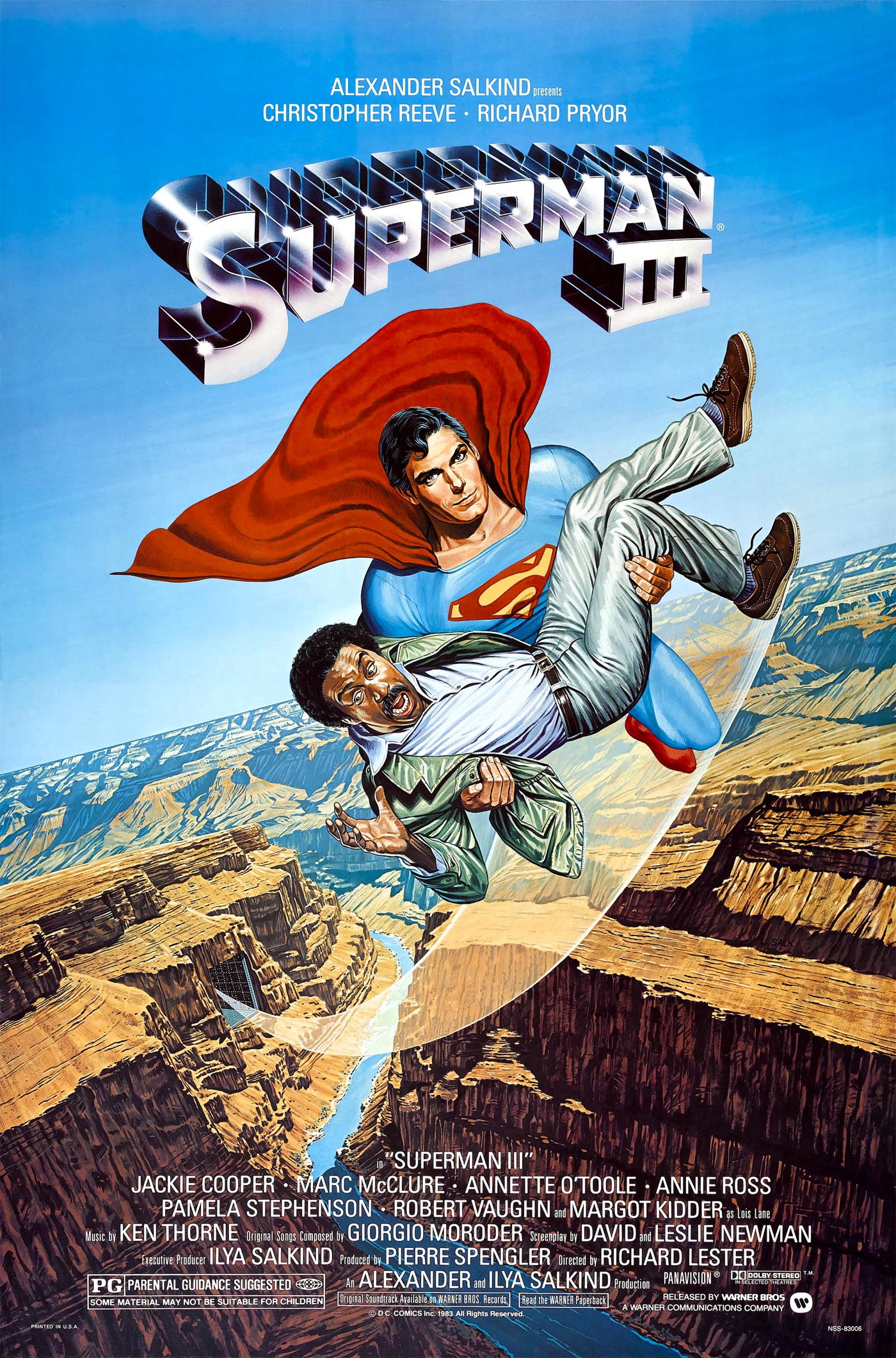
One of the reasons why I’m making this post is because I’ve recently enjoyed listening to a few film critics complain about how disappointing modern films are. I think that I should point out that the job of the overwhelming majority of film critics in the USA, and in the rest of the West, is to support the film industry and to repeat establishment propaganda. This isn’t really anything new. This has always been the case. Even many of the film critics that appear to be independent aren’t really independent because they know that if they oppose the establishment line completely they won’t have opportunities to get ahead and to get their works released for wide distribution. Therefore, even the critics that seem to dislike modern Hollywood cinema still kind of support it by telling people to go and see some films in theaters. Is being a film critic one of the worst jobs now? Seeing one bland film after another for a whole year, year after year, and then having to review such films must take a toll. Well, I doubt that this kind of existence leads film critics to thoughts of suicide, but it still reflects in their reviews sometimes. I can bring up Roger Ebert as an example. Ebert was criticized by some people later in his career because he began to often award films with high ratings exactly when Hollywood cinema began to go into a creative slump, in the 1990s and in the 2000s. Early in his career, he was much harder on films, including on films that are now considered to be classics. Ebert did criticize modern Hollywood cinema in more than one book, but I think that he still awarded perfect ratings to many modern films that didn’t deserve them, such as Argo (2012). I’m not calling Ebert a bad or dishonest critic. I think rather highly of him. I enjoyed reading his reviews and books. For example, when I sent him a message about the film Come And See (1985), he watched it and then included it on his list of the great movies. That was nice of him. But it’s worth pointing out that he sometimes got political in his reviews, and, because of his status as a famous critic, he had to support the film industry by continuing to praise some Hollywood films even though they didn’t really deserve praise. Anyway, I don’t much care for what film critics have to say because of a number of reasons. This doesn’t mean that I completely ignore the writings of film critics because even the bought and paid for film critics have something interesting to say from time to time, but their opinions aren’t like mantra for me. It’s worth noting that when I was in my late-teens and early-twenties I was more willing to see new films and to read the opinions of film critics, mostly because I wasn’t as knowledgeable back then as I am now. With all of this in mind, I have to say that I don’t have a hatred of modern Hollywood. I’ve already pointed out a few times on my blog that modern cinema in the West is bland and that it lacks quality, but, when I say that I don’t want to see a film again, this doesn’t mean that I hate it. This simply means that it doesn’t have replay value for me. Numerous films that got made before the 2000s arrived have replay value for me. In these films, the music, the cinematography, the acting, the direction, and other aspects mixed into a very appealing whole. Even the black & white films that got made before the 1960s arrived have cinematography that looks lovely. Nowadays, films with beautiful cinematography are a rarity, and, if it is present, it’s present almost exclusively in animated films. So, it seems that people that make animated films in the USA are more passionate and more skilled than people that make live-action films. American animation studios still manage to deliver good films almost every year. Anyway, I have to say that almost none of the films that got released in 2022 and 2023 disappointed me. But it’s also worth mentioning that almost none of them have replay value for me. I know that I criticized Top Gun: Maverick (2022) a little in one of my posts, but this doesn’t mean that I hate this film. I already explained why it doesn’t appeal to me as much as Top Gun (1986). Top Gun: Maverick is obviously one of the best films of 2022, and there’s plenty to like about it. It’s worth mentioning that Mission: Impossible – Dead Reckoning Part One (2023), which is another film that Tom Cruise starred in, is one of the best films of 2023. As I’ve already pointed out in an earlier post, the summer of 2023 was crammed with enjoyable films from Hollywood, although the only new film from that period that has replay value for me is Spider-Man: Across The Spider-Verse. Avatar: The Way Of Water, which I got to see several months after it was released in theaters, turned out to be surprisingly good, although I must say that I didn’t like a few aspects of this film. I understand why the director James Cameron bragged about the special effects of this film because they are indeed excellent. Avatar: The Way Of Water is an entertaining film, and, even with its running time of over 3 hours, the time went by very quickly for me. All in all, Avatar: The Way Of Water is one of the best films of 2022, but I think that it doesn’t appeal to me as much as Avatar (2009) because there are some issues with the characters, the script, and the plot. Avatar: The Way Of Water can also be considered to be a return to form for Cameron because he hasn’t made a film this entertaining and this action-packed since Terminator 2: Judgment Day (1991). So, I got to see more than a dozen films from 2022, and most of them are critically-acclaimed. But do any of them have replay value for me? I would say no. It seems that 2023 was a somewhat better year for cinema because at least two of the films that I got to see have replay value for me. These two films are Spider-Man: Across The Spider-Verse and The Hunger Games: The Ballad Of Songbirds & Snakes. I must say, however, that I didn’t see every critically-acclaimed film from 2023. Perhaps I will spend some time in the future in order to see more films from 2023. But, again, 2023 wasn’t some great year for cinema. It was just another typical year for modern Hollywood. I kind of enjoyed seeing almost every film that I got to see, but spending my time on doing something else, like seeing old films and television shows, would have been a lot better. I had no interest whatsoever in the Barbenheimer cultural phenomenon, which turned both Barbie and Oppenheimer into some of the highest-grossing films of 2023. Perhaps if J. Robert Oppenheimer had lived long enough to see this phenomenon, he really would have wanted to blow up the world. So, thanks to the term Barbenheimer, and to all of the talk that developed around it, two average films got a major boost in 2023. I’ve already seen Oppenheimer, but I haven’t yet finished watching Barbie, and I’m in no hurry to do so. I must say that Oppenheimer wasn’t really a disappointing viewing experience for me, but it also wasn’t something that impressed me. When it comes to Christopher Nolan’s filmmaking, my opinion is neutral. There are aspects of his filmmaking that I like and there are aspects that I don’t like. Oppenheimer is a rather dull-looking biographical thriller. The cinematography of this film doesn’t really appeal to me. It seems like no attempt was made in order to make the early 20th century, which is the time when the story of the film takes place, look interesting or even somewhat glamorous. For example, I just finished watching A Passage To India (1984), which is a historical film too, and I can say that it looks much better than Oppenheimer, even though the story takes place mostly in India. The presence of several famous modern actors in Oppenheimer distracted me. I think that Cillian Murphy is good in the main role, but I can’t say the same about the performances of the other actors. After one viewing of this film, I can say that their performances are fine, I suppose. Nolan did succeed in making Oppenheimer an entertaining film. This effort is reflected in the poster of the film, which makes a theoretical physicist and a bomb look thrilling. Well, J. Robert Oppenheimer himself was an interesting personality. Although I have some complaints when it comes to Oppenheimer, I can say that it’s easily one of the best films of 2023, but I don’t have an urge to see it again. My favorite scene in the film is the one in which Oppenheimer talks to Harry S. Truman, who’s played by Gary Oldman. I should point out that one of the big reasons why I usually don’t look forward to going to a theater is the unpleasant experience of going to a theater nowadays. The center of Vancouver, which is the area where it’s most convenient for me to go to a theater, has become a repellent place in the last several years. The center of Vancouver is now an overcrowded and filthy place that’s full of homeless people and facilities that don’t work. There are mentally ill or mentally unstable people wandering about. Prices have risen for everything that’s sold in stores. Some of my favorite stores have closed down in the last decade. Well, Vancouver isn’t as bad as Detroit or Neo-Tokyo yet, but, nowadays, I keep on thinking if getting attacked by a pack of unemployed Canadian hockey players (or by any other pack of neurotypicals) is a possibility or not while I’m in the city. These are actually some of the signs that Canada and other states in the West are in a crisis. When a state or an empire is in crisis or in decline, overcrowding, deterioration, and cultural degradation take place. I’m currently reading ‘The Mind Alive Encyclopedia: Early Civilization’ by Jane Brown. This book has already become one of my favorites in my book collection. In the chapter about Harappa, it’s written, “The end of the cities was abrupt and violent, but they had been falling away for some time from their earlier standards. There are smaller houses and even pottery kilns encroaching on the streets, and everywhere there are signs of overcrowding and deterioration. But Mohenjo-daro was apparently sacked and burnt in a final overwhelming attack. Men, women and children were massacred in the streets and houses and were left lying – a fairly sure sign that the city was at least temporarily abandoned. In one lane are nine skeletons, including five children, and in another place several people were apparently climbing steps from a well-room to the street when they were knocked over backwards and fell dead at the bottom of the steps. The weight and probability suggests that these invaders were the first wave of Aryans, whose onslaughts on the cities of the aborigines are celebrated in the Vedas. If so, then the peak of the Harappan civilization may be placed between 2500 and 1500 BC and its destruction at about 1500. We must hope that one day the decipherment of its script will tell us more about this enigmatic civilization.” In contrast, in a chapter about Rome, it’s written, “Augustus brought dignity to Rome’s public life. He rebuilt and beautified the city, claiming in later life that he had found it a city of brick and left it a city of marble. He encouraged the arts and patronized writers like Virgil, Livy and Horace, who glorified the destiny of Rome. Under Augustus, Rome’s population grew to more than a million. Its citizens enjoyed a water supply, clean streets, and amenities that were not to be equalled for another 1,500 years. Augustus left Rome with an empire that covered most of the Western world. An army of 300,000 men kept peace and order throughout every province, and good roads promoted the prosperity of the Empire. Later, men called the reign of Augustus the golden age of the Roman Empire. After his death Augustus was regarded as a god, and later emperors, following the custom of the East, became gods while they still lived.” Anyway, what’s also worth adding is that the number of theaters in the center of the city has shrunk in the last two decades. Empire Theatres, which was a movie theater chain in Canada, no longer exists. One of its theaters, Empire Granville 7 Cinemas, closed in 2012. This theater was my favorite in Vancouver, and, after it closed for good, the experience of going to see a film in a theater has become less appealing to me. The quality of management at the theaters that still exist has clearly deteriorated in the last several years. Well, at least the washrooms in these theaters are still working like before, at least most of the time. I must say, however, that besides a few very good films that got released in 2023, there was another bright spot in 2023. This bright spot consisted of the several films that got made by DC Studios. Since Marvel Studios failed to deliver at least a few enjoyable films in 2023, what DC Studios put out brought some fun to me in theaters last year. That is, in 2023, DC Studios managed to do what Marvel Studios did very well in earlier years, which is to release at least a few enjoyable films in theaters in one year. Sure, what DC Studios managed to pump out in 2023 isn’t as good as the best that Marvel Studios has to offer, but I still enjoyed seeing every DC Studios film last year. When it comes to Marvel Studios, there were two very good releases (Guardians Of The Galaxy Vol. 3 and Loki season 2) and three disappointing releases (Ant-Man And The Wasp: Quantumania, The Marvels, and Secret Invasion). I think that season 2 of Loki is the best TV show that Marvel has made so far. I didn’t expect for it to be as good as it is. Unfortunately, when it comes to films, Marvel continues to disappoint. While the TV shows that Marvel has been making have almost all been good, the films are another matter. The people that got assigned to make Thor: Love And Thunder, Ant-Man And The Wasp: Quantumania, and The Marvels really dropped the ball, and I must say that these films left a bad taste in my mouth. Well, at least Ant-Man And The Wasp: Quantumania features a good music score by Christophe Beck. So, 2023 was the worst year yet for Marvel Studios. Of course, I never expected Marvel Studios to continue to deliver one enjoyable product after another. All good things come to an end eventually. The films of The Infinity Saga have made Marvel Studios so successful and so popular that now every amateur film critic and every jackass on the internet yaps about what Marvel puts out. Contrary to what some people say, however, there wasn’t some Marvel apocalypse in 2023 because Marvel Studios still released a very good film and a very good TV show in that year. Since I’m not some amateur internet film critic that tries to earn as much money as possible on YouTube by making provocative videos, and since I’m not some nerd that goes to a movie theater every other day or every week, all of the talk about the fall of Marvel doesn’t interest me. Even if Marvel Studios doesn’t repeat its past success, I won’t be heartbroken because there are plenty of other films and TV shows to watch. Perhaps the biggest reason why I wanted to make this post was to point out that I had a good deal of fun when I watched some old films that I’ve seen before. These films brought a lot more enjoyment to me than any of the films that I got to see in theaters lately, for obvious reasons. Ghost Story (1981) is the film that I enjoyed watching the most because of its cinematography and because it has a number of inspired scenes, like when Edward Wanderley sees a female apparition during a snowstorm and falls to his death. I enjoyed watching The Changeling (1980) almost as much because it too has no shortage of memorable scenes, like the one when John Russell holds a seance and overhears the voice of a spirit on audio equipment. Another film that came alive for me when I watched it again recently is Flashdance (1983). It has charming cinematography, and Donald Peterman was nominated for an Academy Award because of his work on Flashdance. I think that one of the reasons why Flashdance became very successful is because it’s an inspirational film. Jennifer Beals appealed very much to me this time in the role of Alex Owens. I got to see The Exorcist (1973) in a theater several months ago, and I realized that it’s now one of those films that I can watch again and again, just like Predator (1987) and A Nightmare On Elm Street (1984).
When it comes to living your best life, Albert Einstein — notorious as the greatest physicist and genius of his time, and possibly of all-time — probably isn’t the first name you think of in terms of life advice. You most likely know of Einstein as a pioneer in revolutionizing how we perceive the Universe, having given us advances such as:
the constancy of the speed of light,
the fact that distances and times are not absolute, but relative for each and every observer,
his most famous equation, E = mc²,
the photoelectric effect,
the theory of gravity, general relativity, that overthrew Newtonian gravity,
and Einstein-Rosen bridges, or as they’re better known, wormholes.
But Einstein was more than just a famous physicist: he was a pacifist, a political activist, an active anti-racist, and one of the most iconic and celebrated figures in all of history.
He was also known for his unconventional behavior in a variety of ways that flouted social norms, including his unkempt hair, his witty humor, and his unrelenting hatred of socks. But less well-known is Einstein’s freely-given life advice to many of his friends, acquaintances, and contemporaries, which are perhaps even more relevant today, in the 21st century, than when he initially doled out his words of wisdom and compassion. Taken from the book The Einstein Effect, written by the official social media manager of the Einstein estate, Benyamin Cohen, these rules for a better life go far beyond physics and are relevant to us all. Here are, perhaps, the best and most universally applicable lessons from Einstein himself.
Rule #1: Expend your efforts on the things that matter.
When you think of Einstein’s appearance, the word “disheveled” may come to mind. His overgrown, uncombed hair, his ratty, worn-out, often smelly clothing, his shoes without socks, etc., all were notoriously slovenly. But none of that bothered Einstein, who in his later years wore what could be considered almost a uniform: a signature grey suit, sans the traditional sport coat, with a leather jacket in its place. (And, of course, with shoes and no socks.)
This idea, of wearing simple but functional clothing that puts the wearer at ease with themselves, has been made famous in recent years by tech entrepreneurs who have their own signature style:
Steve Jobs and his infamous blue jeans and black turtlenecks (a style copied by Elizabeth Holmes),
Jeff Bezos, who wears blue jeans with short-sleeve, monochrome, collared shirts,
Mark Zuckerberg, who prefers blue jeans and T-shirts,
Satya Nadella, who typically wears slacks, polo shirts, and Lanvin shoes,
and Jack Dorsey, whose all-black outfits often include a hat, hoodie, or jacket,
It is prized for one reason above all others: efficiency.
If you have a lot of decisions to make each day, or a lot of work that requires mental effort in any sense, cutting down on your overall mental load is of paramount importance if you want to avoid what’s known as decision fatigue: where our ability to make good decisions degrades as we become more tired from relentlessly having to make choices.
As fashion journalist Elyssa Goodman wrote, “Uniform dressing has roots in not just physical but mental efficiency. People who have to make immense decisions every day will sometimes choose a consistent ensemble because it allows them to avoid decision fatigue, where making too many unrelated decisions can actually cause one’s productivity to fall off.”
It’s a way to economize your efforts: to put them where they’re most needed, at the expense of not wasting them on spurious or unimportant matters. In other words, choosing not to put effort into the things that are superfluous to what’s actually important to you is a way to become more mentally efficient, which frees up your mind to focus on what actually matters most to you. Einstein’s lack of effort into his personal presentation extended to his disdain for going to the barber, as well as his often nearly-illegible penmanship. But the rewards, of focusing his mind on what was truly important to him, led him to a rich, fulfilling life.
Rule #2: Do things you love, even if you’re terrible at them.
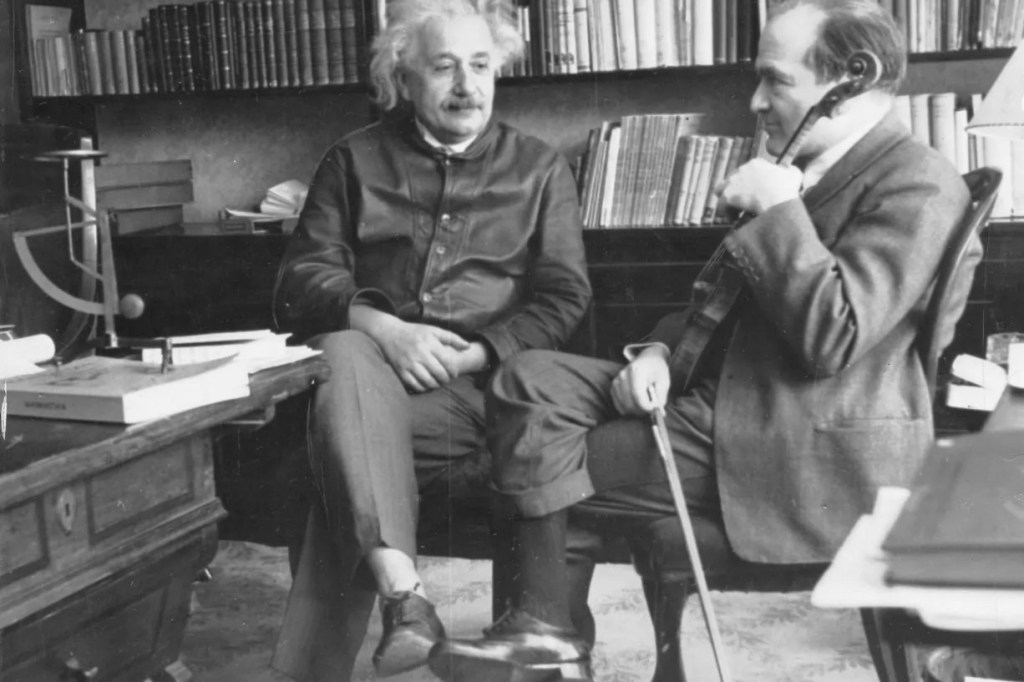
While many of Einstein’s passions extended far beyond physics — including a love of baked goods and a penchant for playing the violin — perhaps the one he enjoyed the most was sailing. As Einstein wrote, “A cruise in the sea is an excellent opportunity for maximum calm and reflection on ideas from a different perspective.” His second wife (and cousin), Elsa, added that “There is no other place where my husband is so relaxed, sweet, serene, and detached from routine distractions; the ship carries him far away.” By focusing on something mundane, Einstein’s mind was free to wander, frequently leading him to exciting new ideas.
Einstein, however, was completely inept at sailing, and was at best a wildly inattentive sailor. He would frequently lose his direction, run his boat aground, or have his mast fall. Other sailing vessels frequently had to beware of Einstein’s ship, as he was a hazard to himself and others, refusing to wear a life vest despite being unable to swim. Boaters and even children routinely rescued him, and having his boat towed back to shore was a frequent occurrence. But the serenity Einstein experienced while sailing was unparalleled, giving him a mental freedom that we should all aspire to for ourselves.
Rule #3: Have a puzzle mindset.
Think about the problems that we face, both as individuals and collectively, as a civilization. These could be financial, environmental, health-related, or political, for example, as those arenas affect us all. Do you view these problems as crises? If you do, you probably feel despair at them, as there’s very little that’s empowering about facing a crisis. But if you view them as a puzzle, you might be inclined to think about a fresh approach to solving them. In this regard, Einstein was pretty much the prototype individual for someone who viewed every difficulty he faced as a puzzle to be solved: in physics and beyond.
Consider his oft-misunderstood but most famous quote, “Imagination is more important than knowledge.” While many people had looked at the puzzle of objects moving near the speed of light before — including other geniuses like FitzGerald, Maxwell, Lorentz, and Poincaré — it was Einstein’s unique perspective that allowed him to approach that problem in a way that led him to the revolution of special relativity. With a flexible, non-rigid worldview, Einstein would easily challenge assumptions that others couldn’t move past, allowing him to conceive of ideas that others would unceremoniously reject out-of-hand.
Einstein was no stranger to having strongly held convictions about both life and physical reality, but each of his opinions, even those he was most certain of, were no more sacred to him than a mundane hypothesis. When one has a hypothesis, or idea, the goal isn’t simply to find out whether that hypothesis is right or wrong; in some sense, that’s the least interesting part of the endeavor. The search for the answers, including figuring out how to perform the critical test and interrogate the Universe itself in an effective manner, was what truly got Einstein excited.
His thought-experiments were among the most creative approaches ever taken by physicists, and that line of thought has been adopted by a great many scientists ever since who wish to avoid what’s known as cognitive entrenchment. What would a light-wave look like if you could follow it by traveling at the same speed it traveled at? How would the light from a distant star be deflected by the Sun’s gravity during a total solar eclipse? What experiments could one perform to determine whether our quantum reality is pre-determined by variables we cannot observe directly? Unlike a preacher who claims to be infallible, a prosecutor who wants to convince you of their perspective, or a politician who just wants to win your approval, having a puzzle mindset — i.e., the mind of a scientist — is the only one that can lead you to novel discoveries, including quite unexpected ones.
Rule #4: Think deeply, both long and hard, about things that truly fascinate you.
Over the course of his long life, Einstein received many letters: from those who knew him well to perfect strangers. When one such letter arrived on Einstein’s desk in 1946, asking the genius what they should do with their life, the response was as astute as it was compassionate. “The main thing is this. If you have come across a question that interests you deeply, stick to it for years and do never try to content yourself with the solution of superficial problems promising relatively easy success.”
And if you fail to arrive at the solution you’ve been chasing, don’t despair. As Einstein wrote to his friend David Bohm, “You should not be depressed by the enormity of the problem. If God has created the world, his primary worry was certainly not to make its understanding easy for us.” Although Einstein was most famous for the problems he did solve, there were plenty whose solutions eluded him all his life: from finding a deterministic explanation for the observed quantum behavior to the attempt to unify all of physics (including gravity and the other forces) into one overarching framework.
Although many have tried-and-failed (and continue to try-and-fail) to solve these and other puzzles, the greatest joy and fulfillment is often to be found in the struggle itself.
Rule #5: Don’t let politics fill you with either rage or despair.
Einstein kept up with many friends and members of the public, but also with his extended family. In correspondence with his cousin Lina Einstein, he offered a lesson that many of us would do well to heed. “About politics to be sure, I still get dutifully angry, but I do not bat my wings anymore, I only ruffle my feathers.”
How many of us have seen a friend, acquaintance, or even total stranger make a statement that filled us with outrage, and flew off the handle, filled with righteous indignation, and launched into a tirade as a result? While that might fulfill some primitive need in us to speak our mind and challenge what we see as an unacceptable narrative, how often was such a response actually effective in achieving any of our goals?
Sometimes, it truly is important to intervene and go all-out: what Einstein refers to as “batting our wings.” But at other times, in a lesson that King Bumi from Avatar: The Last Airbender would heartily approve of, sometimes the best response is to sit back, observe, think, and wait for the opportune, strategic moment to take action down the road: “ruffling our feathers” for the time being.
Rule #6: Blind obedience to authority is the greatest enemy of the truth.
Many of us, upon hearing something that we are certain is either absurd, flawed, or hopelessly corrupt, immediately and vociferously make up our minds to oppose them, regardless of what the full suite of evidence actually indicates. Once we abandon our critical thinking faculties because we are certain we know the answer, we tend to simply go along with those who agree with us and oppose those who espouse anything different. To Einstein, this represented the death of the rational mind, which he called “collective insanity” or a “herd mind.” Today, we would likely call it groupthink, and Einstein noted that it was often driven by a prominent figure spouting propaganda.
Scientists, including formerly reputable ones like Johannes Stark (Nobel Laureate and founder of the Stark effect), formed an anti-relativity society that discredited Einstein and his theory. Fueled by nationalism and anti-semitism, Einstein and his ideas became a target, with one line of attack claiming relativity was wrong and dangerous, and another line claiming it was brilliant but that Einstein stole the idea from “real” (non-Jewish) scientists. It was this course of action that eventually led to Einstein having a bounty placed on his head, leading to him fleeing Germany for the United States. While Einstein initially thought these machinations were silly, ridiculous, and harmless, he later concluded that “Blind obedience to authority is the greatest enemy of the truth.” In the era of fake news, this lesson is more important to assimilate than ever.
Rule #7: Science, truth, and education are for everyone, not just the privileged few.
Einstein was often very critical of the United States Government, even after emigrating in the 1930s and gaining his citizenship in 1940. The history of slavery and ongoing segregation and racism, in particular, resonated with him the same way that anti-Semitism did: as fundamentally dehumanizing as it was baseless. The FBI began a file on Einstein in 1932, and it had burgeoned to more than 1400 pages by the time Einstein died in 1955, and Einstein’s anti-racist actions were deemed fundamentally un-American by many (including Senator Joseph McCarthy), but Einstein would not be deterred.
In 1937, Einstein invited black opera star Marion Anderson to stay at his house when she was refused lodging at the local (segregated) hotel in Princeton. In 1946, Einstein took the revolutionary action of simply visiting Lincoln University — the first degree-granting black college in the United States — and lectured, speaking with students and answering questions. Delivering an address to the student body, Einstein said:
“My trip to this institution was on behalf of a worthwhile cause. There is a separation of colored people from white people in the United States. That separation is not a disease of colored people. It’s a disease of white people.”
In 1953, Einstein defended the academic freedom of William Frauenglass, a teacher who taught about easing interracial tensions, in a letter published by The New York Times. The following year, he further pushed for “the right to search for truth and to publish and teach what one holds to be true.” In this day and age, we can be certain that Einstein would have pushed for science, truth, and education to be available to everyone. While certain physical properties may be relative, like space and time, the joys, knowledge, and truths uncovered by science belong to no one race, nation, or faction, but rather to all of humanity.



















 Igor's Blog