Israel’s bombardment and ground offensive in Gaza since October 7 has killed over 12,000 people so far, including 5,000 children, according to officials in Gaza.
Gaza’s government media office said on Friday there are also more than 30,000 injuries, 75 percent of which are women and children.
There are 3,750 missing persons, including 1,800 children who are still under the rubble, it said as the official death toll in Gaza had not been updated for days due to the collapse of the its health system.
The media office said at least 200 doctors, nurses, and paramedics have been killed, as well as at least 22 civil defense team members.
Also, at least 51 journalists and media representatives have been killed, the media office said.
Meanwhile, there was no sign of any let-up despite international calls for a ceasefire or at least for humanitarian pauses.
Israel’s military, which has concentrated its assault on northern Gaza, said its troops and warplanes were keeping up pressure on Friday.
Media reports say fierce confrontations continue in northern Gaza, with the Israeli military trying to push from the western side of Gaza City towards the neighborhoods of Shujaiya and Zeitoun.
The health ministry in Gaza said that 24 patients have died in the past two days at Al-Shifa hospital due to power cuts, as Israeli forces keep blockading the medical facility.
“Twenty-four patients in different departments have died over the last 48 hours as vital medical equipment has stopped functioning because of the power outage,” said ministry spokesman Ashraf al-Qudra.
Israel attacked the hospital earlier this week, claiming Hamas has used the hospital and its area as a command center.
Hamas denies using hospitals for military purposes. It says some hostages have received treatment at medical centers but they have not been held inside them.
‘Starvation imminent in Gaza’
Israel has bombed much of Gaza to rubble, ordered the depopulation of the entire northern half of the strip and made around two-thirds of Gazans homeless.
The UN Office for the Coordination of Humanitarian Affairs (OCHA), quoting Palestinian data, said Israeli attacks had destroyed or damaged at least 45% of Gaza’s housing units.
International officials say a humanitarian crisis for the 2.3 million residents of Gaza is entering a new, more dire phase as the Israeli war continues.
A Palestinian UN official said on Friday people in Gaza were facing war on two fronts, one “with bombs and bullets” and the other “through the siege” on the Palestinian territory.
One of the wars is “The siege is killing people every hour. It has killed hundreds these last few days. It will kill thousands in the next few days,” Majed Bamya, the deputy permanent observer for the State of Palestine at the UN, said on social media.
“It is a criminal tool used to kill and displace and pressure in cold blood. It is inhumane, brutal, barbaric. Israel is holding 2.3 million Palestinians hostage. The only options it is giving them is leave this earth or leave this country.”
UN aid deliveries to Gaza were suspended on Friday due to shortages of fuel and a communications shutdown, deepening the misery of thousands of hungry and homeless Palestinians.
Friday marked the second consecutive day that no aid trucks arrived in Gaza due to a lack of fuel for distributing relief.
The United Nations’ World Food Programme (WFP) said civilians faced the “immediate possibility of starvation” due to the lack of food supplies.
Nearly the entire Gazan population is in desperate need of food assistance, said WFP Executive Director Cindy McCain.
“With winter fast approaching, unsafe and overcrowded shelters, and the lack of clean water, civilians are facing the immediate possibility of starvation,” she said in a statement.
A UN human rights official said Israel must allow water and fuel into Gaza to restart the water supply network otherwise people would die of thirst and disease. Israel’s actions were a breach of international law, Pedro Arrojo-Agudo said.
The World Health Organization said it feared the spread of disease, including respiratory infections and diarrhea.
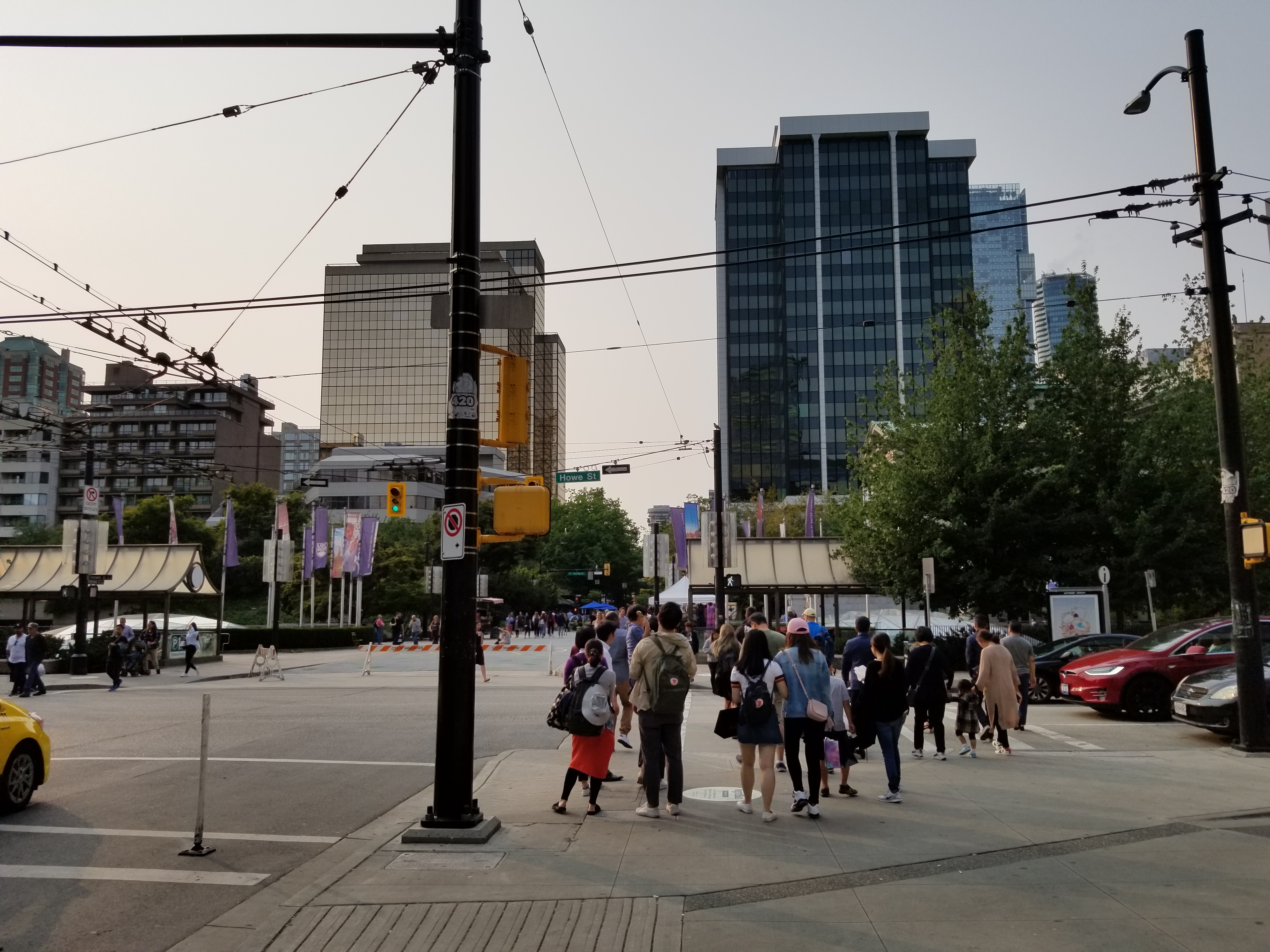
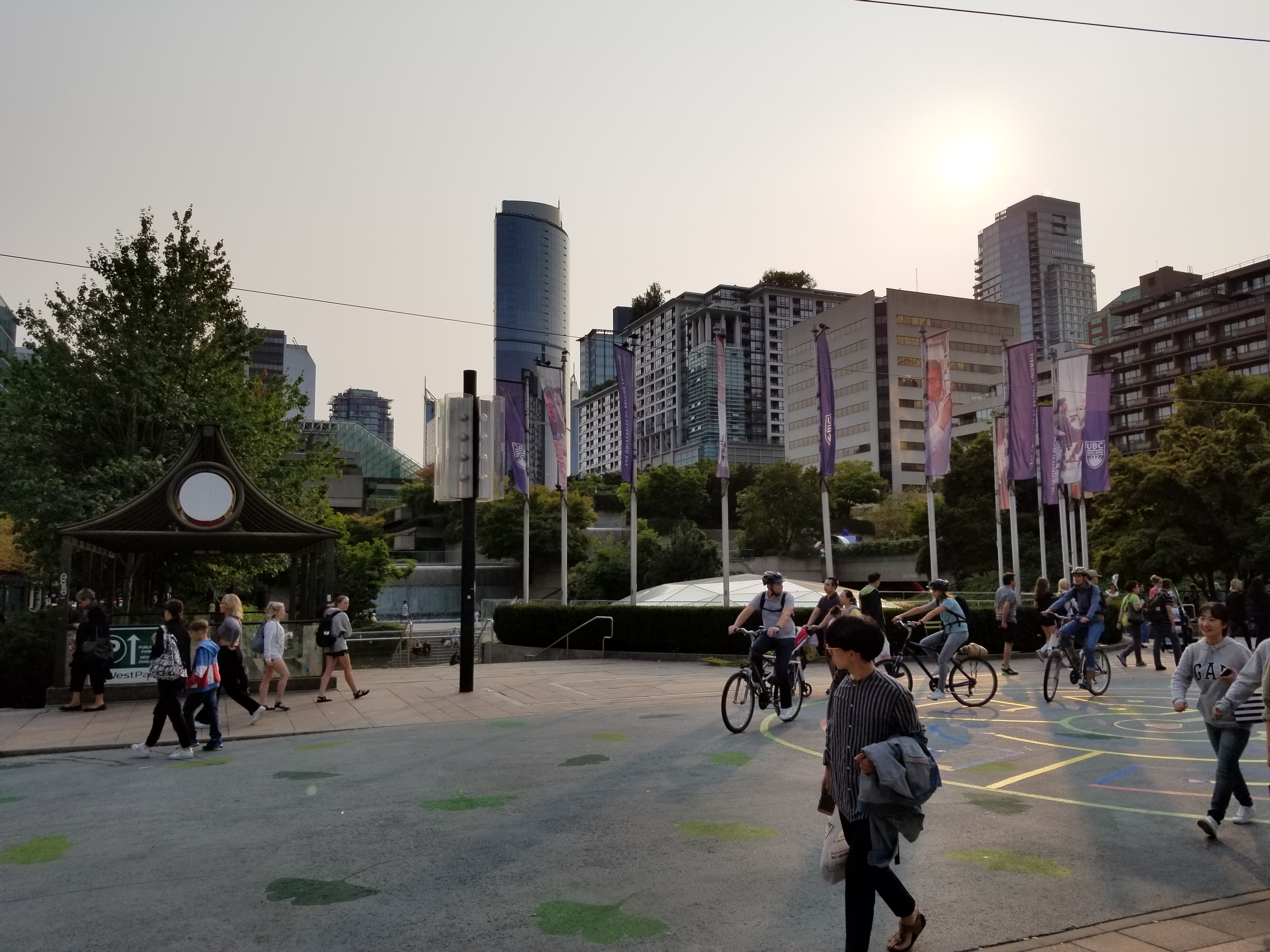
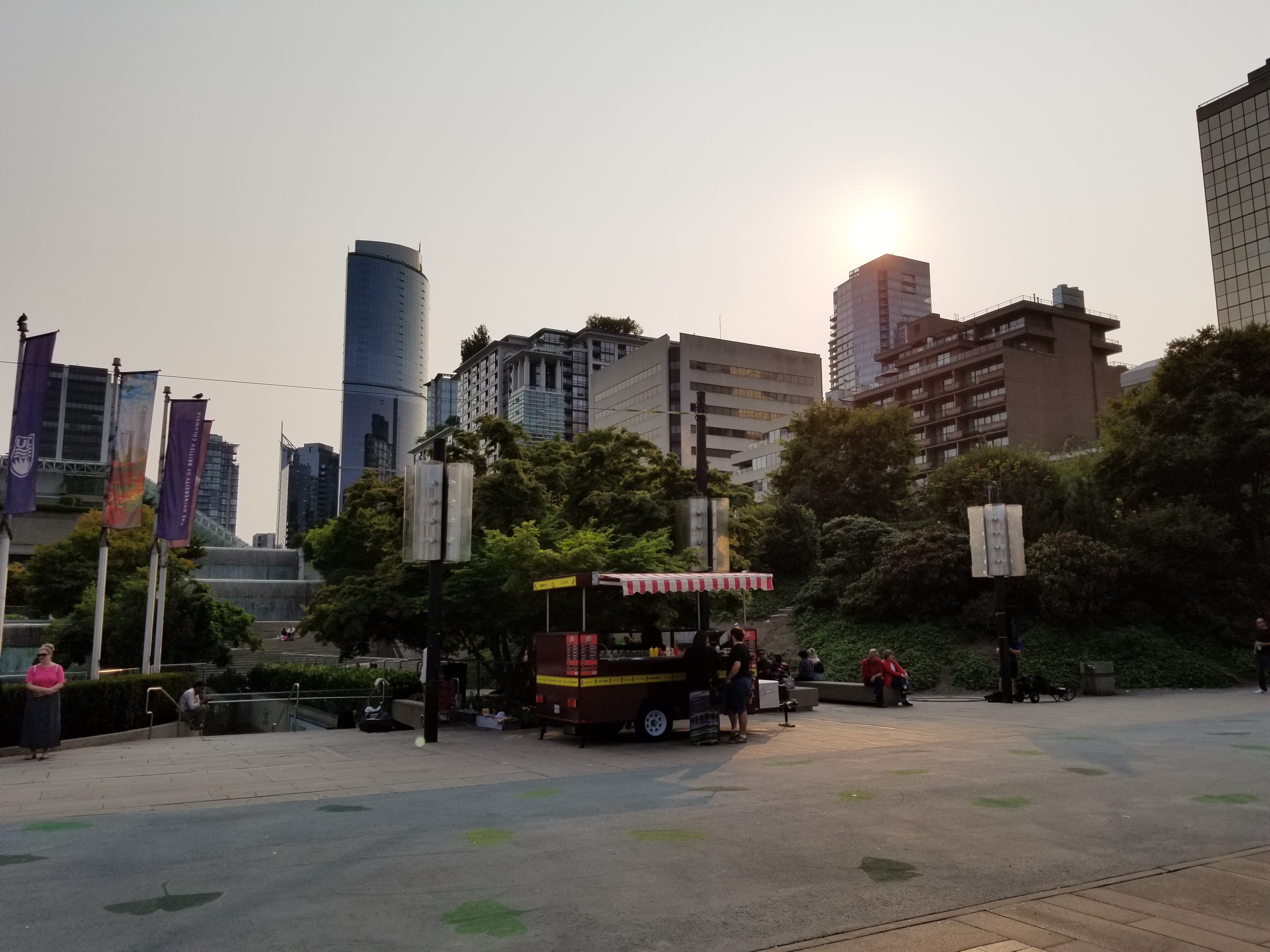
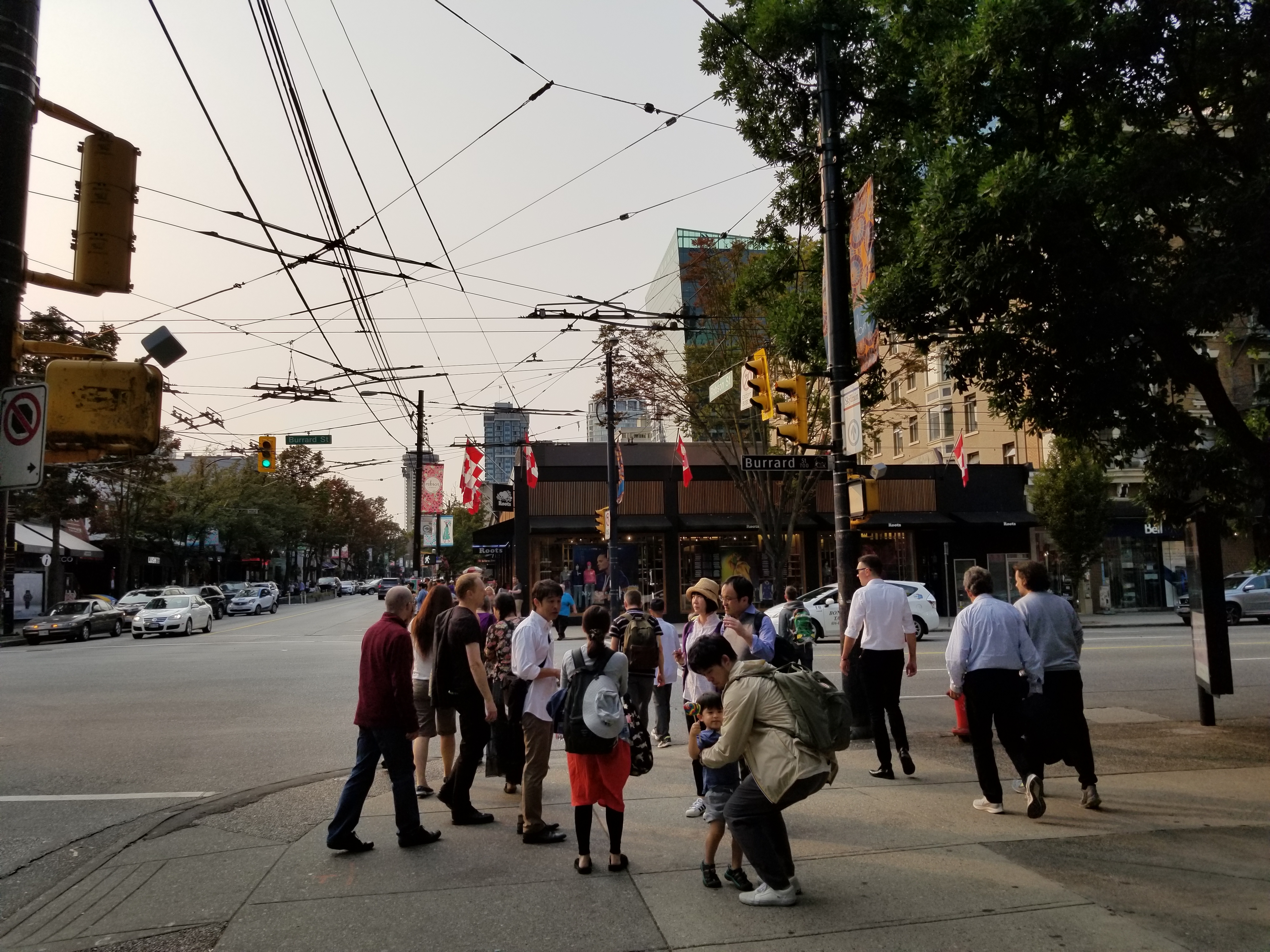
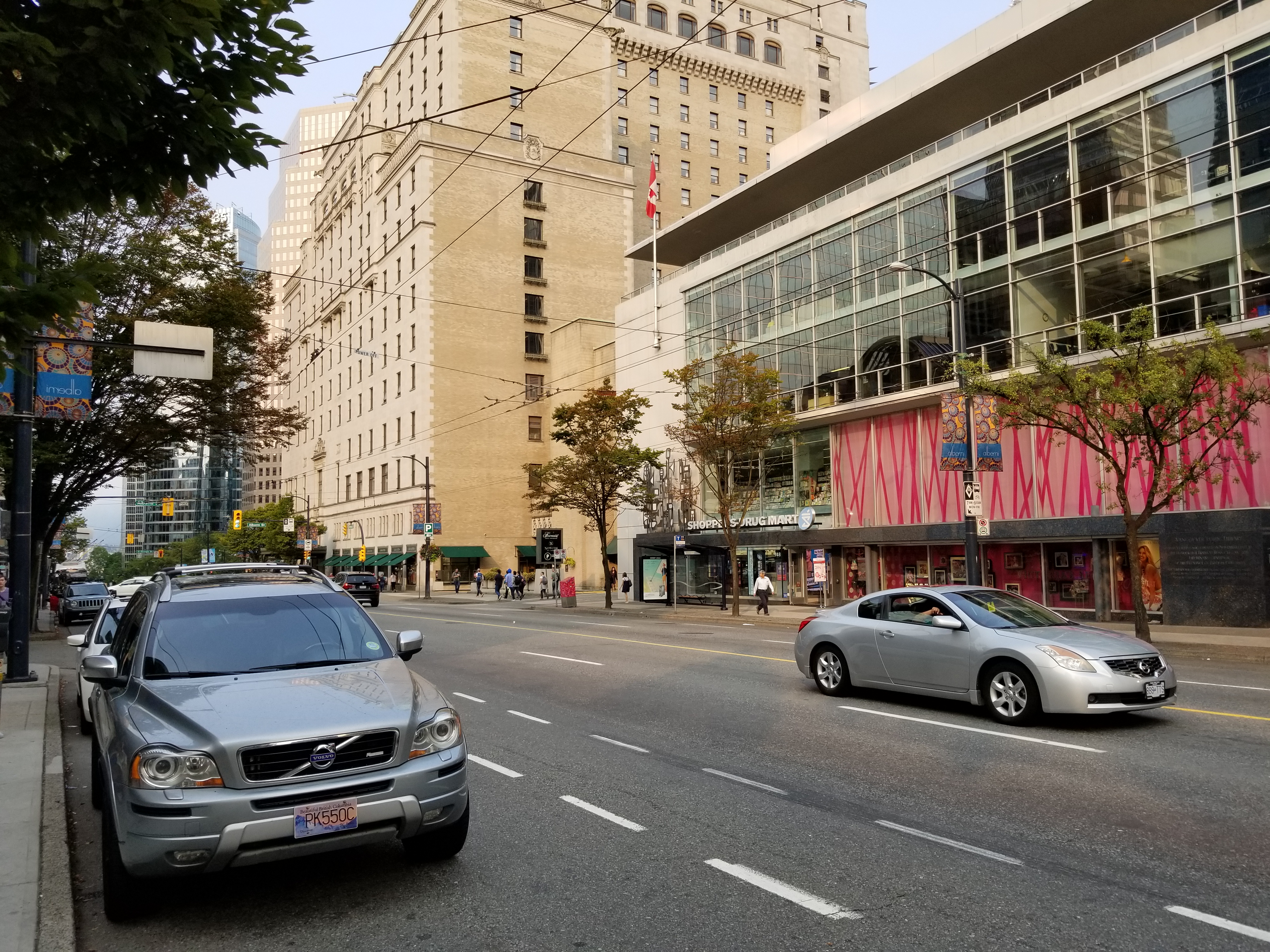
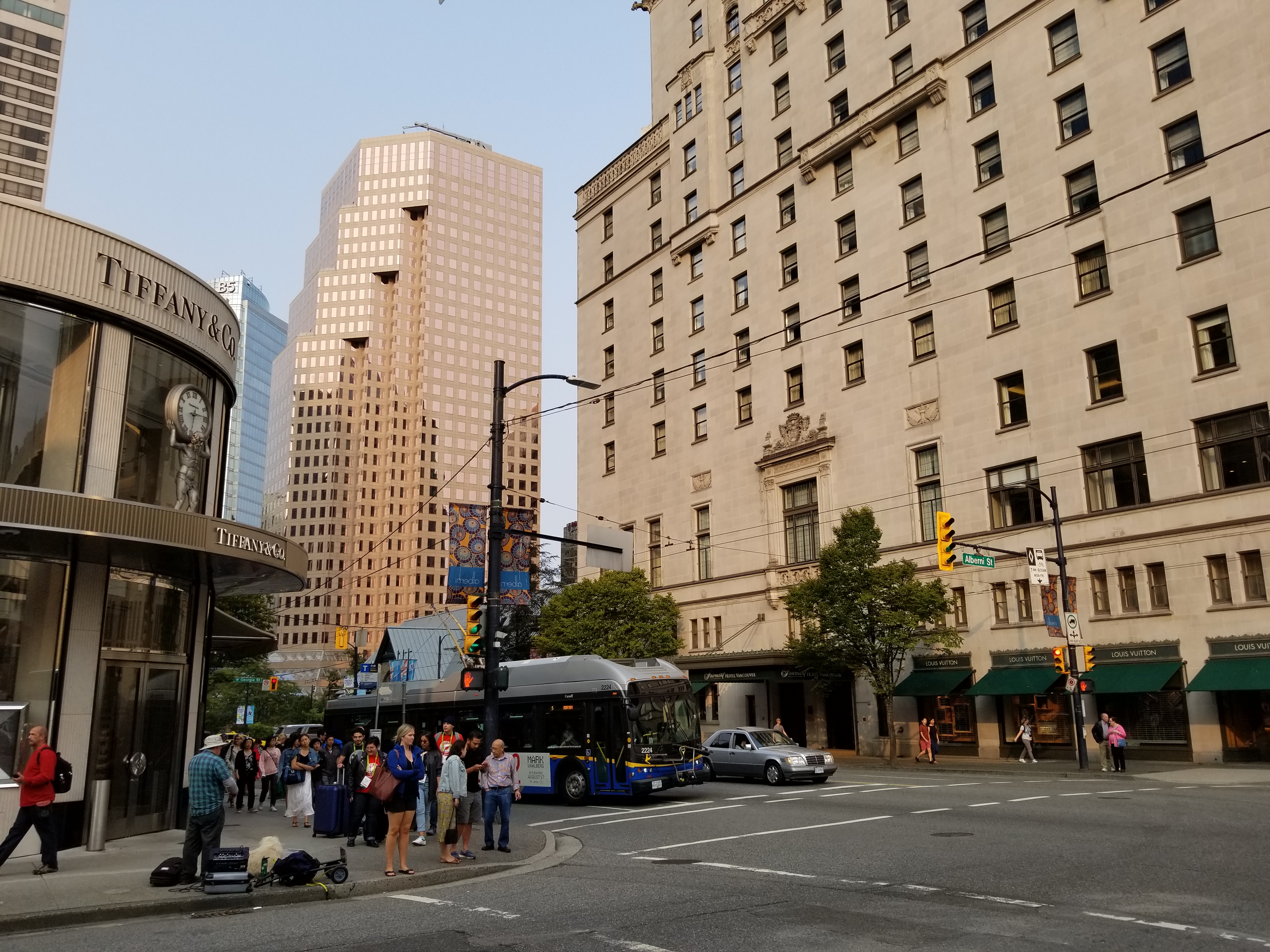
Robson Street is a major southeast-northwest thoroughfare in downtown and West End of Vancouver, British Columbia, Canada. Its core commercial blocks from Burrard Street to Jervis were also known as Robsonstrasse. Its name honours John Robson, a major figure in British Columbia’s entry into the Canadian Confederation, and Premier of the province from 1889 to 1892. Robson Street starts at BC Place Stadium near the north shore of False Creek, then runs northwest past Vancouver Library Square, Robson Square and the Vancouver Art Gallery, coming to an end at Lost Lagoon in Stanley Park.
As of 2006, the city of Vancouver overall had the fifth most expensive retail rental rates in the world, averaging US$135 per square foot per year, citywide. Robson Street tops Vancouver with its most expensive locations renting for up to US$200 per square foot per year. In 2006, both Robson Street and the Mink Mile on Bloor Street in Toronto were the 22nd most expensive streets in the world, with rents of $208 per square feet. In 2007, the Mink Mile and Robson slipped to 25th in the world with an average of $198 per square feet. The price of each continues to grow with Vancouver being Burberry’s first Canadian location and Toronto’s Yorkville neighbourhood (which is bounded on the south side by Bloor) now commanding rents of $300 per square foot.
In 1895, train tracks were laid down the street, supporting a concentration of shops and restaurants. From the early to middle-late 20th century, and especially after significant immigration from postwar Germany, the northwest end of Robson Street was known as a centre of German culture and commerce in Vancouver, earning the nickname Robsonstrasse, even among non-Germans (this name lives on in the Robsonstrasse Hotel on the street). At one time, the city had placed streetsigns reading “Robsonstrasse” though these were placed after the German presence in the area had largely vanished.
Robson Street was featured on an old edition of the Canadian Monopoly board as one of the two most expensive properties.
Growing up not knowing why you are different, is difficult and hard. I have so many stories about navigating the world as an undiagnosed neurodivergent person, and how i’m trying to learn about myself as a now 28 year old person. if you have any questions, or want to know anything, just ask!
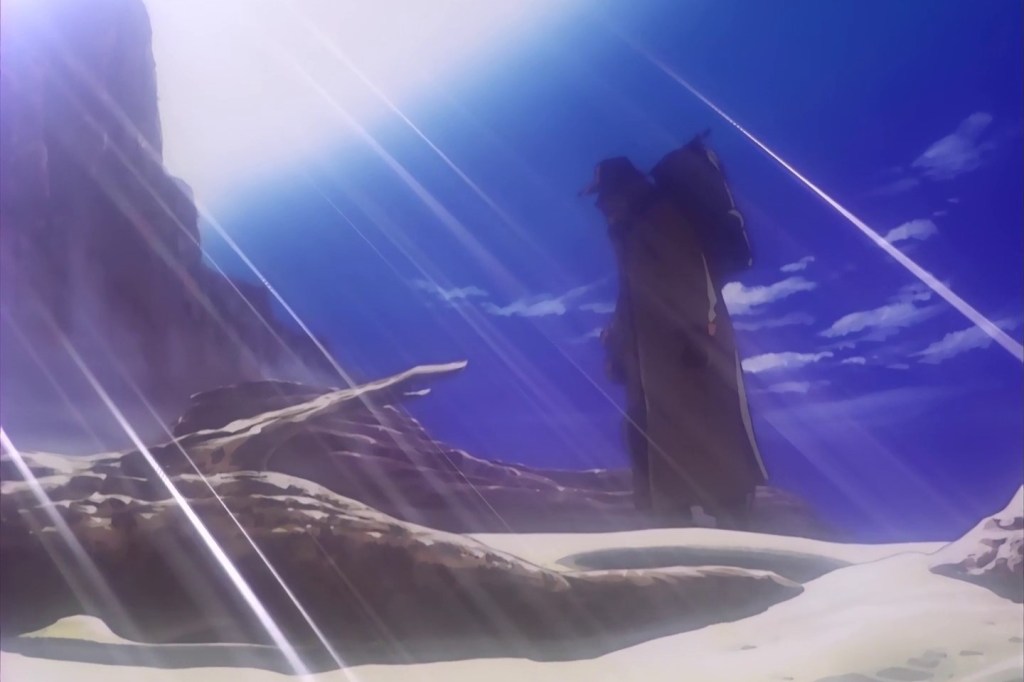
A still from the Vision of Escaflowne (1996), directed by Kazuki Akane
Since I finally finished watching Cowboy Bebop again recently, I’m going to provide my opinion about how well this TV series, a neo-noir space Western, still holds up for me. Before watching Cowboy Bebop, I finished watching The Vision Of Escaflowne and Neon Genesis Evangelion, which are some of my favorite anime series too. Out of these three shows, Evangelion is my most favorite one. I think that it’s also the best out of these three shows. Evangelion begins with two good episodes, Angel Attack and Unfamiliar Ceilings, but then suffers from a dip in quality from episode 3 to episode 11. The eight episodes before episode 11 aren’t total letdowns because we get to find out more about the world of Evangelion and because important characters get introduced, but it almost seems like the director Hideaki Anno and the staff at Gainax were on autopilot when they were making these early episodes. I would say that Evangelion becomes considerably more interesting again in episode 11 and it becomes fantastic in episode 16. In episode 16, an angel, Leliel, contacts Shinji’s mind for the first time. The animation obviously gets better, the angel attacks become more epic and interesting, the characterization improves, and Anno finally gets to demonstrate yet again that he’s an excellent director, which is something that he already got to do in Nadia: The Secret Of Blue Water and Gunbuster. Although what happens in the world of Evangelion, such as the angel attacks, is very interesting and exciting, I would say that the main characters, who are well realized and developed, are the biggest strength of the show. They are like real people. They have strengths and they have flaws. The characterization in Evangelion is what puts it above Cowboy Bebop and Escaflowne for me. My three most favorite episodes from Evangelion are Tears, A Man’s Battle, and The Sickness Unto Death And Then. I should also add that I’m not at all a fan of the Rebuild of Evangelion, which is the animated film series that retells the story of the original TV series with some changes. Anno was involved in the making of these films, but his involvement doesn’t automatically make them good because, in my opinion, Anno hasn’t made anything great since Kare Kano in 1999. Hayao Miyazaki, who’s another great anime director, also hasn’t made anything great since Howl’s Moving Castle (2004). I think that the anime industry in Japan began going into a slump in the early-2000s, and this slump is still continuing. So, I would say that little or nothing great has been made by any of the younger anime directors, and older directors like Anno or Miyazaki haven’t been able to produce anything great too. This is why, for example, I don’t look forward to seeing The Boy And The Heron (2023). Fortunately, my thirst for good anime was satiated several months ago by Robot Carnival (1987), which is another film from the golden age of anime. If I had seen it earlier, it’s possible that I would have included this anthology of nine rather different shorts on my list of the top ten anime films. The Rebuild of Evangelion films aren’t terrible, but there’s nothing great about them either. They’re simply the usual bland modern anime films that have been getting made since the mid-2000s. So, for example, the main characters, who are so interesting in the original TV series, are not at all interesting in the Rebuild of Evangelion. I would even say that some of the main characters are revolting in these films. Cowboy Bebop has some of the same flaws as Evangelion. The first several episodes aren’t all that interesting, though they’re still very good. For example, they feature some beautiful and detailed background animation. This aspect, the detailed backgrounds, is present in almost every show from the golden age of anime. I would say that episode 14 is where Cowboy Bebop becomes truly good because Shinichiro Watanabe’s direction gets better and the animation gets better too, though it’s good in the preceding episodes too. Episode 14 is also the episode where the world-building in Cowboy Bebop becomes more interesting. For example, we get to find out more about the Astral Gate. The characterization in Cowboy Bebop isn’t very good, in my opinion. Sure, the characters are appealing and somewhat interesting, but they’re more like fictional heroes than like real people. It’s no secret that many of the characters in the show are heavily influenced by characters from various American and Hong Kong films. Spike, Jet, Faye, and Edward get to do many unusual and superhuman things in the course of the show, and, because of this, they’re like the superhuman heroes in many Western films, action films, martial arts films, or even noir films. Therefore, they’re characters that a person can be inspired by, but they’re not characters that a person can relate to. Much has been said by people about the “coolness” of the show because it features blues and jazz music by Yoko Kanno and the Seatbelts, gunfights, swordfights, martial arts fights, and characters that wouldn’t look out of place in a Western or in an action movie. While these things may be important to an average bloke, “coolness” is not what I look for in a show. Fortunately, coolness isn’t the only thing that Cowboy Bebop has to offer. It also offers an interesting future world and good animation, which have received plenty of praise from people too. My three most favorite episodes are Speak Like A Child, Boogie Woogie Feng Shui, and Cowboy Funk. The story of the film, Cowboy Bebop: The Movie (2001), is set between episode 22 and episode 23 of the TV series. I consider it to be another one of the last great anime films. As for The Vision Of Escaflowne, I would say that it’s my second favorite out of the three shows, behind Evangelion and ahead of Cowboy Bebop. Escaflowne is the most consistent out of the three shows when it comes to quality. It starts out well and it remains good until the end, but I must say that some of the early episodes are my least favorite episodes of the show. There isn’t a noticeable dip in the quality of animation or storytelling after the first few episodes. The reason why Escaflowne isn’t ahead of Evangelion for me is because it doesn’t quite reach the same heights as Evangelion. The characters in Escaflowne are appealing, but they’re not as interesting as the characters in Evangelion. What’s also worth mentioning is that the creators of the show clearly wanted it to appeal to girls and not only to boys. The main character, Hitomi Kanzaki, is a school-girl. There isn’t a shortage of scenes of her and the other female characters talking about their feelings for male characters and trying to get together with male characters. I must say that these scenes bored me. Escaflowne features impressive mecha designs and action scenes, but it has fewer memorable action scenes than Evangelion. However, the story of Escaflowne may be just as interesting as the story of Evangelion, perhaps more so. Evangelion is ultimately a story featuring aliens and about how these same aliens created mankind. Escaflowne is ultimately a story featuring Atlantis, a civilization of legend and lore that thrived 12,000 years ago on Earth, and about how the Atlanteans created Gaea. So, anyway, my three most favorite episodes are The Guided Ones, The Edge Of The World, and The Girl From The Mystic Moon. Although Evangelion is my most favorite one out of the three shows, I have to say that watching Escaflowne moved me the most this time. It’s because there are things in the show that I didn’t realize before and because I got to see some of the episodes in a new light. When it comes to characterization, Escaflowne manages to reach some of the heights of Evangelion. Some of the scenes in Escaflowne are simply incredible, like when Allen’s father briefly meets Hitomi’s grandmother in the Mystic Valley. What’s also worth adding is that I watched all three of the shows this time with English subtitles. I didn’t turn on the English dubs. English dubs for anime are almost always disappointing because they’re lower in quality than the original Japanese language and sound tracks and because sometimes even the meaning of what is said gets changed. This is obvious, for example, in an OVA like Rurouni Kenshin: Trust & Betrayal, where, in some scenes, the excellent dialogue got changed completely. I was a bit stunned when I found out that the people that made the English dub for this OVA completely changed some of the dialogue for the dub. Some people praise the English dub that got made for Cowboy Bebop, but I think that it’s not really good. I don’t like that some of the words got changed for the dub, and I don’t really like some of the performances. I think that Escaflowne has the best English dub out of the three shows, although this dub too isn’t worth praising much, in my opinion. It’s kind of funny that now that I’m done watching the three shows again, I feel a little sad that they’re over. There’s so much to like about the three shows, and I can watch them over and over again. I appreciate them now even more than I did when I watched them for the first time, partly because I now realize that good anime shows like these just don’t get made anymore. I can obviously watch these shows whenever I like because I own them on video, but I can’t simply spend all of my time watching anime. I have to do other things too, though I probably won’t wait another several years before watching them again. What’s also impressive is that all three of the shows are original creations. They weren’t adapted from manga. However, manga based on these shows did get released. I’ve only read the Evangelion manga, which was written and illustrated by Yoshiyuki Sadamoto. This manga series isn’t bad, but it’s clearly not better than the TV series. It’s obviously nowhere near as good as classic manga like Nausicaa Of The Valley Of The Wind by Hayao Miyazaki or Akira by Katsuhiro Otomo. I began reading the Evangelion manga years ago, but I stopped reading it because I lost interest in it after reading the first 11 volumes. Sadamoto’s artwork is obviously impressive, and it’s perhaps the only reason to own this manga series, but the story and the characterization are somewhat disappointing. Finally, last year, I read the last two volumes in the summer simply to have a feeling of completion. I finished reading the last volume on my Samsung Galaxy Tab S 10.5 when I was at a Tim Hortons cafe, in the afternoon. I went there mostly to use the washroom. Finishing to read this manga felt kind of special because I began reading it more than a decade ago but I finished reading it only last year. The manga itself isn’t really special. What felt special is the fact that it took more than a decade before I was able to get through it. I began reading this manga when my life was different, when things were different for me, and when I knew a lot less about the world than I do now. I must admit that realizing this when I finished reading the manga at the cafe made the moment somewhat special and memorable for me. It was as if I was going through the end of an era.
When it comes to what I finished reading recently, I can say that I finished reading Michelangelo (1974) by Howard Hibbard. Since this isn’t really a thick book (315 pages), and since I had an urge to finish reading it as soon as possible, I read it quite quickly. This is something that’s unusual for me nowadays because I don’t read one book at a time. I’m in a process of slowly reading dozens of books in my free time. I don’t feel like I need to read only one book at a time and that I have to finish reading it before picking up another book. This is almost certainly because I have attention deficit hyperactivity disorder. Therefore, Hibbard’s book, which interested me a fair amount, is the first book that I’ve read in this way since I read Carl Sagan’s ‘The Dragons of Eden’ (1977) several years ago. ‘The Dragons of Eden’ is one of the books that Andrei Fursov recommended on his webpage, and I’m glad that I picked it up because it got me interested in Sagan’s other books, such as ‘Cosmos’ (1980) and ‘Contact’ (1985). The book also features some superb black & white photographs. My mother once told me that biographies can be some of the most useful books that one can read. I’ve got to agree with her. I didn’t only learn a lot about Michelangelo when reading Hibbard’s book. I also learned about some of what happened in Europe when Michelangelo was alive, and, obviously, I learned a lot about Michelangelo’s art. Before reading this book, I didn’t know about the Sack of Rome of 1527. Hibbard described it as follows. “The Medici Chapel and the Biblioteca Laurenziana were interrupted by a political crisis. Pope Clement VII had fallen out with the new Emperor, Charles V, in the mid-1520s, whereupon Charles instigated a Roman uprising against the Pope in September 1526. Imperial troops, unrestrained by any merciful leader, rampaged through Italy the following year, and on 6 May 1527 entered Rome. The defenders of the city were cut to pieces; orphans and invalids were thrown into the Tiber. No method of torture was left untried by the ingenious Spanish soldiers, but the favorite was simply to tie up the victim and let him starve. The German landsknechts, many of them new Lutherans, amused themselves with even less refined activities. Every church was plundered, tombs ransacked, altars desecrated, palaces burnt. Churches were turned into stables, as was Clement’s unfinished suburban palace, the Villa Madama. It was reported that ‘some soldiers clothed an ass in bishop’s vestments, led him into a church, and tried to force a priest to… offer him the Sacred Host. The priest, on refusing, was cut in pieces.’ Nuns were raped and sold into prostitution. Even the Emperor’s own agent was so ill-treated that he died in the street from hunger and exhaustion. ‘All the Romans are prisoners,’ a Venetian wrote, ‘and if a man does not pay his ransom he is killed.’ Clement VII and some of his retinue escaped to the relative safety of the Castel Sant’ Angelo (Cellini gives a memorably boastful description of the fighting). After peace was declared, Clement escaped to Orvieto, a broken man, dragging with him the remnants of a seriously damaged authority. The exuberant Renaissance papacy was finished.” It turns out that I did get to see one sculpture by Michelangelo, although I haven’t been to Italy. This sculpture is called Crouching Boy, which is located at the Hermitage Museum in Saint Petersburg. I must say that when I was at the museum, I wasn’t really interested much in seeing Michelangelo’s sculpture or many of the other famous artworks there. I was most excited to see some of the Ancient Egyptian mummies that are there. When I was at the Egyptian Museum in Cairo, the large collection of Ancient Egyptian mummies there was also what I was most interested in seeing. But, obviously, I also got to see the Mask of Tutankhamun there, for example. I know quite a lot about Ancient Egypt, but I’ve been most interested in finding out more about Islamic Civilization (500 AD – 1940 AD), Chinese Civilization (400 AD – 1930 AD), and even Japanese Civilization (100 BC – 1950 AD) in the last several years. Still, the only Islamic country that I’ve been to is Egypt. Well, that’s not really correct because I’ve also been to Morocco and Palestine, where I got to see the Western Wall, the Dome of the Rock, and the Church of the Holy Sepulchre. And the history books that I’ve received as gifts are also almost all about Ancient Egypt. It’s as if people think that Ancient Egypt is the only thing that I’m interested in. Well, I’m not really complaining because I own several gorgeous old books about Ancient Egypt because of this. One of the books that was gifted to me by my mother is ‘Monuments Of Civilization: Egypt’ (1970) by Claudio Barocas, and I finished reading it several months ago. This gorgeous book, with its many photographs, made me want to buy the other eight books from the series. I ordered them in very good condition from England. They are about Ancient Cambodia, the Middle East, the Maya, Rome, Greece, India, Japan, and Islam.








 Igor's Blog