I like Pokémon as much as the next person! In fact I am currently waiting for my copy of Pikachu: Let’s Go to appear in the mail, looking out my door every few minutes. I’ve been watching Pokémon on Netflix since hearing about the release of this Nintendo Switch game. And I have been enjoying the world around these creatures and the — not-so-great at catching — Pokémon trainer Ash.
But, I’ll admit, I have not seen a Pokémon movie in a while. After everyone on my Twitter timeline started freaking out about Detective Pikachu, I started craving the animated versions of my hero Ash. Coincidentally, I was invited to the press screening of Pokémon: The Power of Us.
This animated movie felt, to me, much like an episode as opposed to an epic movie, and that was perfectly fine with me.
The movie started up with Risa — a young athlete who isn’t actually a Pokémon trainer. This theme continued to follow within the story; many of the characters and individuals weren’t actually trainers, but instead were normal people living within the world of Pokémon. Risa’s younger brother had broken his leg — rendering him unable to catch Pokémon or explore during the city’s Wind Festival in honor of the legendary Lugia, which is going on very soon. As he is out of action, Risa is tasked with catching a specific, unknown to us, Pokémon that will be somewhere around the festival.
Risa isn’t the only character who doesn’t have much interest in becoming a pokemon trainer; Callahan, a middle-aged man who is only pretending to be a trainer to impress his niece appears soon, as well as the mayor’s young daughter Kelly, a girl too young to have Pokémon, but with a big heart for them. There also is Harriet, an old woman who doesn’t like Pokémon at all and Toren — a researcher with tons of anxiety towards public speaking and talking to other individuals.
Harriet, out of these newly introduced characters is by far my favorite. Living in a world surrounded by creatures she hates, for seemingly no reason, provides for some very funny interactions as the Pokémon around her are celebrated and roam freely. Callahan, on the other side of the spectrum, was my least favorite character to follow. He seemed to only care about his appearance to others, often lying and misleading people to keep up his appearance. He does change over time within the movie, however, I feel that as an adult, he should have known better than to trick children all along.
And of course, there is Ash — our beloved trainer who comes into the festival to see what it’s all about. Despite all of these characters being very different in their likes, hobbies, and opinion of Pokémon — when the town needs them, they come together.
Pokémon: The Power of Us spends quite some time setting up the backstories of all of these characters and allowing them to subtly interact with one and other. Everyone seems to have their own problems and fears to overcome, and they each almost seem like main characters of the same story — all with different angles to view it at.
The legendary Pokémon Zeraora is what brings these individuals together, despite not being the biggest fan of humans to begin with. It is worth noting that as opposed to having some bad person to fight against, this movie brought everyone together through a random disaster that occurred. Instead of battling against each other, everyone, no matter what their background or love of Pokémon, needed to work together to save each other.
The movie had a clear ending message, much like a fairytale would. Also, everyone starts suddenly saying ‘Poké Power’ towards the end, which is really quite strange. It was a delightful watch with so many different people — all fleshed out with their stories well integrated with one and other. I quite enjoyed the screening.
Tickets are now available for screens of Pokémon: The Power of Us which is coming to the UK & Ireland on November 24th and December 1st.
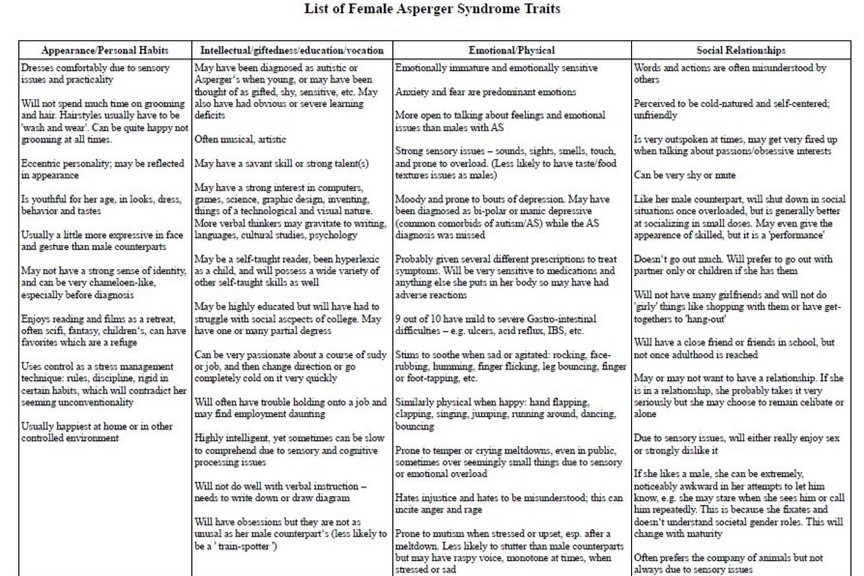
Since it has been more than a month since I found out that I have autism, I think that it’s time for an update. I have a better understanding of my autism now. I’ve already read dozens of articles about autism and about autistic people, and I’ve had some time to observe and to think about my autistic traits. In about three or four weeks, I learned just about everything that I needed to know about autism, and, to be honest, autism turned out to be one of the most interesting topics that I’ve read about in the last few years. It’s really amazing in how many peculiar ways autistic people are different from normal people. I’ve included a chart that I stumbled upon on the internet in this post that lists the Asperger syndrome traits of females. There wasn’t a chart for males, but I can say that males have many of the same traits. In addition, I’ve been posting articles about autism on my blog that I found to be of most use to me. It’s clear to me now that the condition that I have is the so-called Asperger syndrome. Apparently, it’s a mild form of autism. People with more severe autism usually have slightly deformed facial features and crooked teeth. Some of them can’t even speak, and their intelligence is below normal. But Asperger syndrome is the form of autism that produces autistic geniuses. So, the reason why I have the looks of a normal person is because I have Asperger syndrome. I think that I don’t even have the odd look in my eyes that some people with Asperger syndrome have. So, the big reason why I haven’t been diagnosed with autism and why no one has told me that I have autism is because I have normal looks and because my autism isn’t severe. I also haven’t been involved in anything weird. Moreover, if I make enough effort, I can usually act like a normal person. This is something that I don’t even have to think about because I’ve always been doing this. I have developed a relaxed way of moving, walking, and of doing things, to the extent that I’ve been told by a few people at work that I’m relaxed while they’re nervous. But life isn’t a cakewalk for people with Asperger syndrome. It’s still difficult. From what I’ve read about autism, I found out that even a large percentage of people with Asperger syndrome end up unemployed, homeless, dead, or in prison after they become adults. Most people with Asperger syndrome seem to have average lives. But a large percentage still become famous or get recognized as so-called geniuses or savants. According to some researchers, a much larger percentage of people in the autistic population become geniuses than in the normal population. Autism isn’t at all common. Only about 1% of people are autistic, and only about 0.5% of people have Asperger syndrome. This means that there are at least a few thousand intelligent autistics in every big city, but most of them don’t know that they’re autistic. As far as I know, I was the only autistic person at the elementary school and at the high school that I attended. If there were other autistics there at the same time, I didn’t know about them. There’s a large amount of useful information about autism on the internet. I didn’t even have to look for a good book about autism because of this. There’s also not a shortage of lists on the internet that list famous living or dead people that are believed to have had autism. Some of the names that are usually mentioned on such lists are Hans Christian Andersen, Lewis Carroll, Wolfgang Amadeus Mozart, Ludwig Wittgenstein, Michelangelo, Stanley Kubrick, Nikola Tesla, Albert Einstein, Bill Gates, Emily Dickinson, Michael Jackson, Steve Jobs, Mark Zuckerberg, Ludwig van Beethoven, Vincent van Gogh, and, um, Jesus Christ. Some people think that state leaders like Napoleon Bonaparte, Adolf Hitler, Catherine the Great, and Thomas Jefferson were autistics. Well, knowing what I know about myself and about other autistics, I think that this is certainly possible. All of this information is new to me, however. Before July of this year, I didn’t know anything about autism, and I didn’t know that I’m autistic. I mean, last year, I read Mark Haddon’s book ‘The Curious Incident of the Dog in the Night-Time’ (2003), which is about an autistic person, and I still didn’t find out anything about autism. A girlfriend of mine sort of recommended this book to me, and I finally got around to reading it in 2022. I would say that things would have been better for me if I had known that I’m autistic as early as possible. I would have known how to better adapt my behavior, why I have trouble socializing, where I should channel my energies, and where some of my most important problems are coming from. Like most other people with autism, I was bullied a lot when I was growing up. There were even times when teachers mocked or insulted me. Well, my own parents often ridiculed, mocked, or insulted me when I was growing up, and they made me do things that I didn’t want to do, even when I was having meltdowns. The story is the same for many other autistics. In the modern West, the experiences of autistic females are somewhat different from the experiences of autistic males when they’re growing up. Since autistic females are somewhat better at socializing and communicating than autistic males, they tend to get involved in some subculture, usually the goth subculture, when they’re in high school, and they engage in some in and out action with one or more dudes in that subculture before they graduate from high school. But they still often feel depressed, and they tend to develop one or more insecurities. Autistic males, on the other hand, tend spend a lot of their time on reading or doing something with things like computers. They tend not to get depressed. Obviously, it’s not as easy for them to get in bed with someone as it is for autistic females, and many autistic males continue to live with their parents after they graduate from high school. Many autistic females and males crack after they graduate from high school because they can’t cope with the new demands and responsibilities. Since their physical and mental endurance is lower than that of normal people, since it’s difficult for them to socialize, and since it’s difficult for them to get out of their routines and narrow interests, they find it hard to keep a job or to graduate from college. Didn’t I mention that I’ve read a lot about autistic people in the last several weeks? It’s clear to me now that being around people and interacting with people are somewhat exhausting and stressful experiences for me, although I generally like to go outside and to be around people. The reason for this is because I can’t usually be myself when I’m around people. I have to act and usually be on guard in order to appear like a normal person, to avoid trouble, and to avoid attacks or criticism from others. So, anxiety is something that I’ve always lived with, and this is actually typical for people with autism. Apparently, in order to feel better, I have to rest and to be by myself for some time after being around people. If I don’t do this, I feel exhausted, I can’t think well, my productivity goes down, and I can’t speak well. Well, now I understand why I like to spend a considerable amount of time on reading, watching films or television, or even playing video games. While doing these activities, I get to rest and to be by myself. One thing that I have been able to escape is depression. For some reason, I’m an optimistic person. Therefore, I’m very rarely depressed, and I’ve never thought about committing suicide. According to the articles that I’ve read, many autistics do get depressed and many of them commit suicide. I suppose that I do have to give some credit for my good behavior, my good traits, and my politeness to my family. Growing up as an autistic person was often difficult, but at least I had a fine upbringing, almost entirely thanks to my mother, and I had a sibling with whom I sometimes interacted. By the way, if people want to know what I’m like in person, they can just look at Elon Musk. I… am… not… kidding. Of course, you’d have to look at footage of him when he was much younger, before he began getting plastic surgery, because I’m obviously not as old as him. I had no interest in Musk whatsoever until a few months ago, and I still don’t know much about him, but, when I looked at footage of him and at photographs of him when he was a child, a teenager, and a young man, I was amazed. He is almost a copy of me when it comes to looks and behavior. It’s actually kind of shocking how similar to me he is in appearance, behavior, and character. When I was a teenager, I had the same haircut as him, similar clothes, the same pale face with slightly swollen lips, and the same or similar interests and activities. But there are obviously small differences between me and him. I mean, I’m not his twin. The reason why I’m so similar to him is because I have the same condition, which is Asperger syndrome, and, because of this, I’m a person that can say that I know why Musk acts the way he does. When it comes to differences, I would say that I’m considerably more handsome than he is, that I can speak and interact with people slightly better (I know two languages), and that I’m better at joking and behaving properly. And, apparently, I’m also somewhat better at playing video games than him. His character build in the video game Elden Ring was criticized by many people and even called “the worst build ever”. Anyway, I probably won’t be making any more posts about my autism since I’ve found out pretty much everything that I need to know about it already, and I don’t think that I’ll be getting a diagnosis because I don’t see any benefits in it at this time. Since very few people know something about autism, and since normal people don’t know how autistic people feel and think, being labeled as autistic isn’t really an advantageous thing in society. I’ve gone through my entire life so far without knowing that I’m autistic and that there’s actually a label for my condition. There are people on the internet that post videos and articles about autism and about their experiences since childhood, but I’m not running an autism blog here. It is interesting, however, that so many of the things that define me, such as my attention to detail, the “stimming” that I frequently do (usually with my fingers), and my fondness of the color white, are simply products of my autism.
One thing that I have noticed very recently is that Katniss Everdeen, the protagonist of The Hunger Games trilogy, seems to have a number of autistic traits. Thinking about The Hunger Games again took me back to a somewhat different time. I’m not really a reader of young adult fiction, but, after watching Catching Fire (2013) in a theater, I read the trilogy of books by Suzanne Collins. The books and the films became somewhat of a sensation in the early-2010s, and I must admit that even I became a little obsessed with them. Although I got to see all four of the films in theaters, it was the second film, Catching Fire, that made me interested in the film series and in the book series. I got to see Catching Fire several times in theaters. After seeing this film, I soon read the trilogy of books. I must admit that the novels are surprisingly good, especially for young adult fiction. I still remember some parts of the novels very well, although I read them about a decade ago, and the novels got adapted into good films. So, I was reminded of the novels and the films after watching a few movie clips from the films on YouTube. And what struck me is how autistic Katniss Everdeen is in the films and in the books. I’m not the only one who noticed this because there isn’t a shortage of videos and webpages on the internet that explain why Katniss might be autistic. In the films and in the novels, there are many times when Katniss displays the behavior of an autistic person. This makes me wonder if this was intentional or not. I’d be a little surprised if this wasn’t intentional. The problem is that the author, Suzanne Collins, has never denied or confirmed that Katniss is autistic. Of course, if the author had admitted that Katniss, who is the protagonist of the trilogy and who has become a very well known character, is autistic, there would have been controversy. First of all, Katniss can obviously be described as an anti-social person, though this doesn’t automatically mean that she’s autistic. Many autistic people would like to be social, but they can’t be because they can’t interact and communicate with people well. Katniss doesn’t have friends, she sometimes runs away, she doesn’t talk much, she has meltdowns, and she likes to spend time alone. She’s not good in social situations, and, when she’s around people, she often acts and makes decisions like an autistic person. People have claimed that she displays stimming behavior, such as jiggling her legs, in the novels and in the films. Stimming is one of the most obvious autistic traits. Katniss gets anxious, stressed, and overwhelmed by her new responsibilities and challenges after winning her first Hunger Games. What’s most interesting is how Jennifer Lawrence played Katniss in The Hunger Games films. Katniss obviously comes off as an anti-social, quiet, reserved, but still often irritated and confrontational person in the films. Jennifer Lawrence stares or has a blank facial expression in many scenes, and this makes Katniss seem even more autistic than she already is. Many autistic people are exceptional at some single activity. This is because they spend a lot of time and effort on doing whatever it is that they’re doing or on whatever it is that they like doing. In the case of Katniss, this activity is obviously archery. She is superb with a bow, and this seems to be the only thing that she’s very good at. Katniss has a number of other traits that make her seem autistic, but I won’t get into them in this post. I’ve got to say that after being reminded of The Hunger Games again, I now have an urge to read the novels and see the films again because I haven’t thought of The Hunger Games in years. I’ve learned a lot since I read the novels about a decade ago, and I’d like to see if I’ll notice something new and interesting in them. I should mention that autistic characters aren’t a rarity in fiction, but they’re rarely protagonists. There’s even a list on Wikipedia that lists characters in fiction that are definitely autistic. Some people have even pointed out that Sherlock Holmes seems very much like an autistic character. Perhaps this is one of the big reasons why I like the Sherlock Holmes stories. Holmes solves crimes by using his brilliant and unusual methods. One book that I have already acquired recently is Howard Hibbard’s ‘Michelangelo’ (1974). Since I was good in art class when I was going to high school, and since I recently remembered how a few of my teachers talked about Michelangelo’s art, I became interested in learning about this Italian sculptor, painter, architect, and poet of the High Renaissance. There are obviously many books about Michelangelo and his art and about other Italian artists of his time. But the book that I decided to read first is Hibbard’s book. It’s because the book was published in the 1970s, which was a time when Americans could still write good books. The description on the back of the book is as follows. “In this masterly work, Professor Hibbard relates Michelangelo’s art to his life and to the times in which he lived, relying on the earliest biographies and the latest scholarly research as well as on Michelangelo’s own letters and poems. What emerges is both a perceptive appraisal of his work and a revealing life-history of the man who was arguably the greatest artist of all time.”
On 23 July 1998, acclaimed author JK Rowling sat down with ITN in Nicolson’s Café in Edinburgh to talk about the enormous success of the Harry Potter series. Weeks before, the second of what was to be a seven-book series had been released, and Rowling was working on the third. The Philiosopher’s Stone and its sequel, the Chamber of Secrets, had been enormously successful in the UK and the US and major production companies were jockeying for the rights to make the Harry Potter series into a film franchise. The rest is history.
It was announced on 12 April 2023 that HBO Max were to make a TV series of the Harry Potter books with Rowling as Executive Producer.
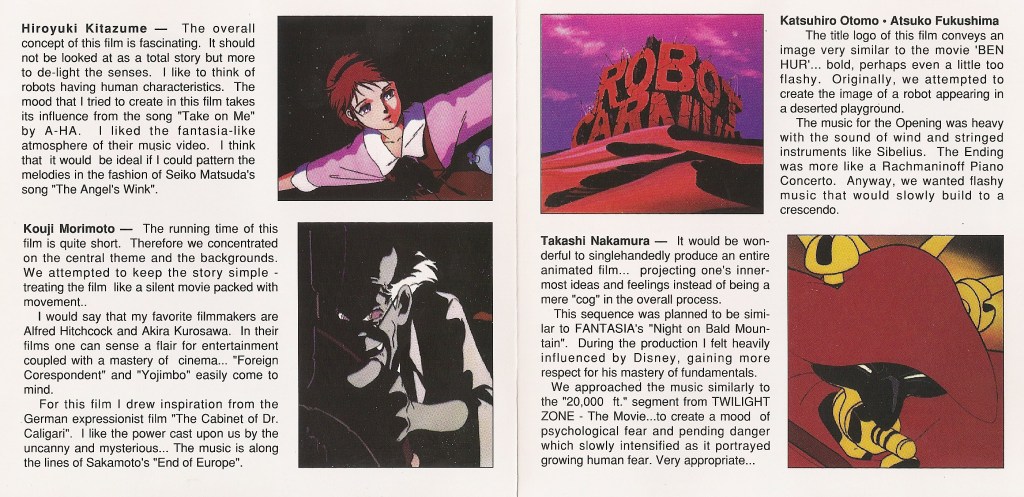
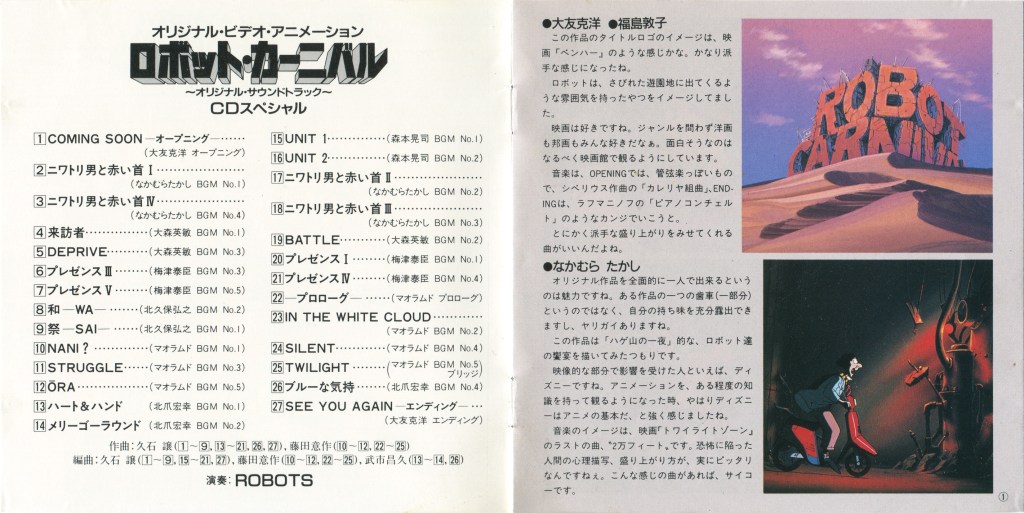
The original soundtrack of the last animation project by Katsuhiro Otomo that collects short films by some of the best animators in Japan. The music was composed by Joe Hisaishi (久石 譲), Isaku Fujita and Masahisa Takeichi (武市 昌久). Cover illustration by Katsuhiro Otomo.
Product developed based on creating a Walkman roughly the size of a cassette case. This model featured one AA battery, head, pinch roller, and headphone jack arranged in a row, with the cassette placed horizontally alongside this structure. From this point forward, the Walkman was established as a modern necessity, easily carried in a handbag or pocket.
Manufacturer: Sony Model: WM-20 Gang: Stretchy Together: 5 6 Year: 1983 Made in Japan Initial price: 27000 ¥ Today 237 $ Battery: 1AA Colors: black blue (dark) gray pink Dimensions: 6711018 mm (133 cm³) Weight: 190 gr Window: yes Expandable: yes Drive: BSL Tape selector: Manual switch Waterproof: no Speaker: no DC in: yes Record by input: no Record by int mic: no Hotline mode: no Cue: no Balance (L/R): no Phone type: 2 Equalizer: no Auto volume: no Auto reverse: no AMS: no Blank skip: no Logic control: no Hold lock: no Bass: no Noise reduction: Dolby B NR Radio: no Remote control: no Wireless headphone: no Indicator: led
Conventional thinking suggests autism mainly affects boys. But more and more girls – and adult women – are being diagnosed with the condition. Up to 100,000 girls with autism could be still undiagnosed. Keme Nzerem has been to visit the only school in the UK that’s exclusively for autistic girls.








 Igor's Blog