Granville Square is a prominent tower located at 200 Granville Street in Downtown Vancouver’s Financial District. Completed in 1973, it stands at 142 m or 30 storeys high, making it one of the tallest buildings in the city. The tower and its plaza are located atop the tracks of the Canadian Pacific Railway, and adjacent to Waterfront Station (formerly the CPR station).
Originally built by Marathon Realty to house the headquarters of Canadian Pacific, the building was occupied by The Vancouver Sun and The Province on the ground floor and some upper floors until 2017 (it is now located at 2985 Virtual Way at Broadway Tech Centre in Vancouver); while Vision Critical occupies the mezzanine. On top of the building is the Vancouver Harbour Control Tower for the float planes landing and taking off on the Burrard Inlet. This control tower is the tallest in the world.
The tower was the only completed part of the original, Project 200, which got its name from the 200 million dollar investment needed from the federal government. The project included a forest of office, hotel, and residential towers, laid over the CP train tracks. But its best known for its “Waterfront Freeway” a proposed freeway with ramps leading to parking garages under the office buildings, before the freeway heads under the “Brockton Point tunnel to the North Shore.
The project didn’t go ahead because of lack of funding, and grassroots opposition
Colliers International occupies four floors and is located in the building since 1973. The current owner of the building is Cadillac Fairview.
YouTube stands accused of censorship, following the company’s decision to bar former Congressman Ron Paul and his online news program from receiving advertising revenue for a number of videos which Paul recently posted.
No detective can solve a crime without carefully and objectively studying the evidence. Likewise, no one can know what actually occurred in history without studying, in an objective manner, the relevant primary sources – the evidence. I have spent decades in studying the primary sources concerning many specific events of the Stalin period. Mark Tauger has studied the primary sources on Soviet agriculture for more than 25 years.
Louis Proyect has not done this. Consequently he has no chance of discovering the truth, or of recognizing it when he sees it. He is inevitably doomed to “believe” whatever fits his preconceived ideological bias, and to reject everything else. This is fatal to any attempt to learn what really happened.
Louis Proyect’s attack on me and on Mark Tauger (“What Caused the Holodomor?” Cp March 24, 1971) is ideology masquerading as history. It is replete with falsehoods. I’ll concentrate on the lies Proyect tells about me and my research. I hope that Mark Tauger will respond to Proyect’s ignorant accusations against his research.
Proyect begins his article by stating: “Furr’s political life revolves around celebrating Stalin’s greatest achievements—such as they were.” This is false. My goal is not to “celebrate” Stalin, or anyone or anything. In my research I aim to discover the truth about Soviet history of the 1930s, using the best primary-source evidence and maintaining scrupulous objectivity.
I agree with historian Geoffrey Roberts when he says:
In the last 15 years or so an enormous amount of new material on Stalin … has become available from Russian archives. I should make clear that as a historian I have a strong orientation to telling the truth about the past, no matter how uncomfortable or unpalatable the conclusions may be. … I don’t think there is a dilemma: you just tell the truth as you see it.
The common or “mainstream” view of Stalin as a bloodthirsty tyrant is a product of two sources: Trotsky’s writings of the 1930s and Nikita Khrushchev’s “Secret Speech” to the XX Party Congress in February, 1956. This canonical history of the Stalin period – the version we have all learned — is completely false. We can see this now thanks mainly to two sets of archival discoveries: the gradual publication of thousands of archival documents from formerly secret Soviet archives since the end of the USSR in 1991; and the opening of the Leon Trotsky Archive at Harvard in 1980 and, secondarily, of the Trotsky Archive at the Hoover Institution (from where I have just returned).
Khrushchev Lied
In its impact on world history Khrushchev’s “Secret Speech” is the most influential speech of the 20th century. In it Khrushchev painted Stalin as a bloodthirsty tyrant guilty of a reign of terror lasting more than two decades.
After the 22nd Party Congress of 1961, where Khrushchev and his men attacked Stalin with even more venom, many Soviet historians elaborated Khrushchev’s lies. These falsehoods were repeated by Cold War anticommunists like Robert Conquest. They also entered “left” discourse through the works of Trotskyists and anarchists and of “pro-Moscow” communists.
Khrushchev’s lies were amplified during Mikhail Gorbachev’s and Boris Eltsin’s time by professional Soviet, then Russian, historians. Gorbachev orchestrated an avalanche of anticommunist falsehoods that provided the ideological smokescreen for the return to exploitative practices within the USSR and ultimately for the abandonment of socialist reforms and a return to predatory capitalism.
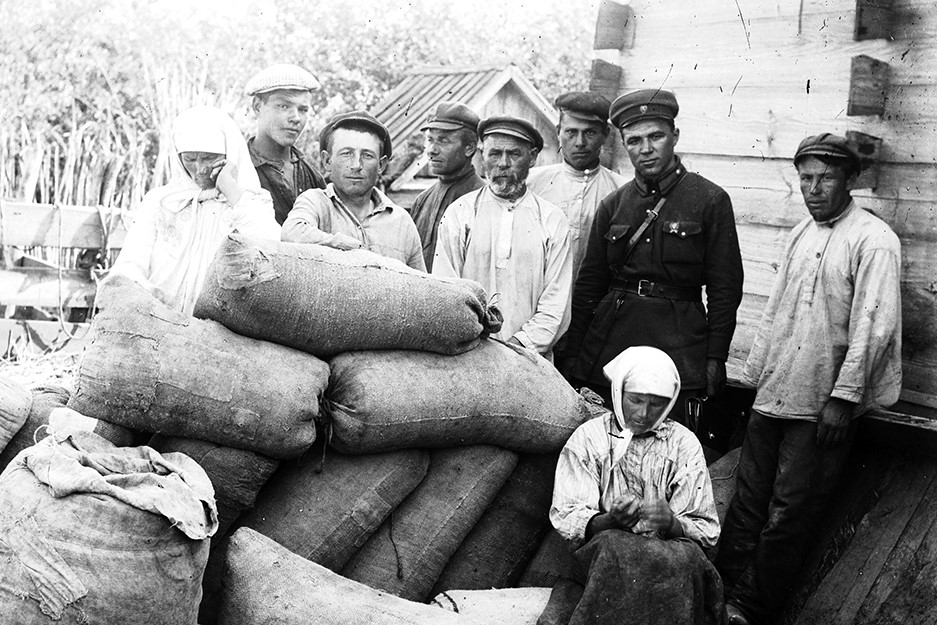
During 2005-2006 I researched and wrote the book Khrushchev Lied. In my book I identify 61 accusations that Khrushchev made against either Stalin or, in a few cases, Beria. I then studied each one of them in the light of evidence available from former Soviet archives. To my own surprise I found that 60 of the 61 accusations are provably, demonstrably false.
The fact that Khrushchev could falsify everything and get away with it for over 50 years suggests that we should look carefully at other supposed “crimes” of Stalin and of the USSR during his time.
Trotsky’s ‘Amalgams’
From 1980 till the early 1990s Pierre Broué, the foremost Trotskyist historian of his day, and Arch Getty, a prominent American expert in Soviet history, discovered that Trotsky had lied, repeatedly and about many issues, in his public statements and writings in the 1930s. In my book Trotsky’s ‘Amalgams’ (2015) I discussed the implications of these lies by Trotsky and of some additional lies of his that I discovered myself. They completely invalidate the “Dewey Commission,” to whom Trotsky lied shamelessly and repeatedly, as well as Trotsky’s denials in the Red Book and elsewhere of the charges leveled against him in the First and Second Moscow Trials.
Challenging the “Anti-Stalin Paradigm”
I have not reached these conclusions out of any desire to “apologize” for – let alone “celebrate” — the policies of Stalin or the Soviet government. I believe these to be the only objective conclusions possible based on the available evidence.
The conclusions I have reached about the history of the Soviet Union during the Stalin period are unacceptable to people who, like Proyect, are motivated by prior ideological commitments rather than by a determination to discover the truth “and let the chips fall where they will.”
The “anti-Stalin paradigm” is hegemonic in the field of Soviet history, where it is literally “taboo” to question, let alone disprove as I do, the Trotsky-Khrushchev-Cold War falsehoods about Stalin and the Stalin period. Those in this field who do not cut their research to fit the Procrustean bed of the “anti-Stalin paradigm” will find it hard if not impossible to publish in “mainstream” journals and by academic publishers. I am fortunate: I teach English literature and do not need to publish in these “authoritative” but ideologically compromised vehicles.
Those who, like Proyect, are motivated not to discover the truth but to shore up their ideological prejudices think that everybody must be doing likewise. Therefore Proyect argues not from evidence, but by guilt by association, name-dropping, insult, and lies.
A few examples:
Guilt by association: Proyect claims that I am “like” Roland Boer, Roger Annis, and Sigizmund Mironin.
Name-dropping: Davies and Wheatcroft are well-known and disagree with Tauger, so – somehow – they are “the most authoritative,” “right” while Tauger is “wrong.”
Insult: Tauger is complicit in “turning a victim into a criminal.”
Proyect: “…it seems reasonable that Stalin was forced to unleash a brutal repression in the early 30s to prevent Hitler from invading Russia—or something like that.” In reality neither I nor Tauger say anything of the kind.
Lies: Proyect quotes a passage from Tauger’s research about the Irish potato famine and then accuses Tauger of wanting to exculpate the British:
“The British government responsible? No, we can’t have that.”
But the very next sentence in Tauger’s article reads:
“Without denying that the British government mishandled the crisis…”
Proyect is a prisoner of the historical paradigm that controls his view of Soviet history. A few examples:
Proyect persists in using the term “Holodomor.” He does not inform Cp readers that Davies and Wheatcroft, whose work he recommends, reject both the term “Holodomor” and the concept in the very book Proyect recommends!
Proyect: “…no matter that Lenin called for his [Stalin’s] removal from party leadership from his death-bed.”
But, thanks to careful research by Valentin Sakharov of Moscow State University, even “mainstream” researchers know that this note, like “Lenin’s Testament,” is probably a forgery:
There is no stenographic original of the “Ilich letter about the [general] secretary.” In the journal of Lenin’s activities kept by the secretarial staff there is no mention of any such “Ilich letter.” … not a single source corroborates the content of the January 4 dictation. Also curious is the fact that Zinoviev had not been made privy to the “Ilich letter about the [general] secretary” in late May, along with the evaluations of six regime personnel. The new typescript emerged only in June. (Stephen Kotkin, Stalin 505)
Proyect: “Largely because of his bureaucratic control and the rapid influx of self-seeking elements into the party, Stalin could crush the opposition…”
However, in his 1973 work Bukharin and the Bolshevik Revolution Stephen Cohen wrote:
But machine politics alone did not account for Stalin’s triumph. … within this select oligarchy, Stalin’s bureaucratic power was considerably less imposing…. By April 1929, these influentials had chosen Stalin and formed his essential majority in the high leadership. They did so, it seems clear, less because of his bureaucratic power than because they preferred his leadership and politics. (327)
Proyect: “Stalin’s forced march did not discriminate between rich and poor peasants.”
But in 1983 James Mace, a champion of the Ukrainian Nationalist fascist collaborators, wrote about the role of “committees of poor peasants,” komitety nezamozhnykh selian, in supporting collectivization. There is much other evidence of peasant support for collectivization.
Conclusion
Correctly understood, history is the attempt to use well-known methods of primary-source research in an objective manner, in order to arrive at accurate – truthful — statements about the past. Very often the result is disillusioning to those who cling to false ideological constructs, even when those constructs constitute the “mainstream” of politicized historiography.
No one who does not try to discover the truth and then tell it without fear or favor, is worthy to be called a historian, regardless of how famous, honored, or “authoritative” he or she may appear to be.
Distortions and lies about Soviet history of the Stalin period predominate everywhere, including Ukraine, Russia, and in the West. These lies mainly consist in repeating Trotskyist and Khrushchevite lies, in defiance or in willful ignorance of the primary-source evidence now available.
The newly-available evidence from archival sources necessitates a complete rewriting of Soviet history of the Stalin period and a complete revision of Stalin’s own role. This exciting yet demanding prospect is of great importance to all who wish to learn from the errors, as well as from the successes, of the Bolsheviks, the pioneers of the communist movement of the 20th century.
Americans are justifiably proud of Robert H. Goddard, the Massachusetts professor who built and flew the world’s first liquid-fuel rocket in 1926. Goddard spent his entire life perfecting the invention he knew could one day be made to fly into space and even reach the Moon. Although he didn’t live long enough to see that dream come true (he died in 1945), German development of the liquid-fueled V-2 rocket during World War II—using the same principles—led directly to the giant Saturn V that launched NASA’s Apollo astronauts. Chronologically, anyway, Goddard can be said to have led the way to spaceflight.
But after examining this premise closely over the past few years in the course of doing research for a book on Goddard’s technical accomplishments, I’ve come to a different conclusion. Because Goddard was an exceptionally secretive man, his work had less of an impact than a timeline of milestones in rocketry would suggest.
How secretive was he? Not only did Goddard make his handyman helpers sign oaths that they would never, on risk of being fired, reveal details of the work they did for him, he kept the facts of his first liquid-fuel flight from the public for a full decade. It was only in his second rocket publication, “Liquid-Propellant Rocket Development,” published by the Smithsonian in 1936, that he mentioned this flight. His first publication in 1919, “A Method of Reaching Extreme Altitudes,” dealt only with solid-fuel rockets, although he did dare to include the description of a hypothetical, unmanned, multi-stage rocket that might be able to go to the Moon. The worldwide publicity surrounding this idea, with many critics poking fun at Goddard and calling him the “Moon professor,” only made him more guarded in his work. (Russian scientist Konstantin Tsiolkovsky had written about the possibilities of spaceflight earlier, in 1903, but due to language and other problems, his ideas were not known in the West until the mid-1920s.)
In the same year “Liquid-Propellant Rocket Development” was published (which, incidentally, provided no engineering details), the German army’s sprawling rocket research center at Peenemünde opened. Under the technical direction of a young Wernher von Braun, the center went on to develop what later became known as the V-2 missile, but originally was designated the A-4. That weapon first saw action in September 1944, primarily against London. The following March, a few months before he died, Goddard was able to examine captured V-2 parts. From then on, he strongly suggested that the Germans had stolen his ideas.
Careful study of the V-2 shows, however, that the German and American rockets could not have been more different. Goddard’s largest rocket was meant only to travel vertically into the upper atmosphere, and was built to be as light as possible. The V-2 was designed for horizontal flight over long distances, and was meant to deliver its ton of explosives as a super weapon. Unlike Goddard’s small projects, the creation of the V-2 required hundreds if not thousands of scientists, engineers, and technicians, representing all kinds of disciplines, from aerodynamics to materials science and thermodynamics. The creators of the V-2 also worked in utmost secrecy. And at no point did they need to copy anything from Goddard.
In fact, the German army project had started in 1929, first with solid-fuel rockets, then, by 1931, with potentially far more powerful—and controllable—liquid-fuel rockets. By the time the Smithsonian published Goddard’s monograph in 1936, the Germans already had attained a great deal of experience with liquid-fuel rockets. Two years earlier, the experimental A-2 had already eclipsed Goddard’s inventions in terms of both thrust and altitude. The A-2 had a thrust of about 600 pounds and was able to reach 2.3 miles altitude on its second flight in 1936. As of 1934, Goddard’s highest flight (four years earlier) had reached just 2,000 feet.
We now know that Goddard’s 1930s rockets—as remarkable as they were for being built by one man with a few helpers—were no match for the German army’s accomplishments. His highest thrust ever was 985 pounds, reached in January 1941, while his highest altitude was some 9,000 ft (up to 1.7 miles) set in March 1937. By 1941, the German A-5 (an interim model for testing aerodynamics, guidance and other technology for the A-4), had a thrust of 3,305 pounds and reached 7.5 miles altitude. The A-4 (V-2) itself was powered by an engine that produced about 55,000 pounds of thrust, and had a range of 200 to 225 miles.
Aside from these impressive numbers, the A-4’s mission was quite different from that of Goddard’s rockets. Its complex, three-axis gyro guidance system was designed to steer the missile toward its long-range target, whereas in Goddard’s rockets, the gyro system was built strictly to stabilize the rocket during vertical research flights.
Finally, it’s now clear that Goddard and the German team both worked in Top Secret, completely independent of each other. So it’s more than a stretch to say that Goddard’s work led to the NASA Moon landings. After the war, U.S. rocket technology evolved from Germany’s work on the V-2, not from the New England professor’s experiments. As brilliant as Goddard’s achievements were, his rocketry had no real impact, during the war or afterward, on his field. His greatest influence may have been in helping introduce to the public the idea of the “space rocket” more than two decades earlier.













 Igor's Blog