
Greatest Siskel & Ebert show of all-time? Their heated debate over Kubrick’s Full Metal Jacket gets even hotter when Roger endorses Benji The Hunted a short time later. Plus: Spaceballs and Roxanne.
Month: October 2021
In David Lam Park in Yaletown. Spring of 2020.










“The most beautiful woman in the world” becomes a kindergarten teacher representing the Philippines! “Miss International World Congress” Photo Report | Daily SPA!

The “2016 Miss International World Tournament”, which decides the most beautiful woman in the world, was held in Tokyo on the 27th, and Kylie Verzosa (24), a kindergarten teacher and model from the Philippines, won the “Miss International”. This is the sixth time that the Philippine national team has reached the top for the first time in three years. Junna Yamagata, the representative of Japan, did not win the prize.
The contest was born in 1960 as one of the world’s three major beauty pageants alongside Miss World and Miss Universe. It not only competes for beauty in appearance, but also aims to contribute to the international community around the world. The purpose is to gather together as “goodwill ambassadors for peace and beauty” and deepen mutual exchanges.
In the past, Toshie Suda won the 4th place in 1970, and Hana Urushijima won the 3rd place in 2002. In 2012, Ikumi Yoshimatsu was selected as Japan’s first “Miss International”. At this year’s 56th World Championship, 69 mistakes from each country and region appeared, and the contest proceeded with the national costumes of the first screening, the swimwear of the second screening, and the dress screening of the third screening. After being selected by judges such as actor Tetsuya Bessho and designer Junko Koshino, the finalists were narrowed down to 15 finalists. At the end, in addition to the Grand Prix, the best 5 and special awards were announced in a one-minute speech examination that conveys the finalist’s own words.
Kylie, who was finally called, covered her mouth with her hands and looked surprised. She wept when she was blessed by the mistakes of each country. At first, I called out in Japanese, “Thank you very much, Japan”, and when the biggest tiara was given, “I still can’t believe this moment. I’m excited and happy. I’m grateful to my family. It’s really like a dream to stand here with your help, “she said with joy.
Ms. Versosa is 174 cm tall, has a bust of 84 cm, a waist of 54 cm, and a hip of 90 cm. Her toned body and cute face are attractive, and she says that she emphasizes “beauty is what is in herself” and her spirituality and relationships with people. From now on, she will be the representative of Miss International. I want to carry out charity activities as well. I also want to focus on mental health activities. “
Australia’s Alexandra Britton (23) is second, Indonesia’s Felicia Huang (24) is third, Nicaragua’s Briany Chamorro (22) is fourth, and America’s Katriana is fifth. Ms. Reinbach (18). In addition, Moldova national team Arina Kirchiu (20) was selected as the “Miss Perfect Body” given to the representative who fascinated the audience most in the swimsuit examination, and the dress dress and behavior were the most splendid and attractive representative. Ms. Huang, the representative of Indonesia in 3rd place, will give the “Miss Best Dresser”, and Ms. Chamorro, the representative of Nicaragua, will give the “Miss National Costume” to the representative who showed the most attractive national costumes of her country. Awarded.
Here, we want you to enjoy the appearance of beautiful women who are active at the world level, focusing on the examination of national costumes and swimwear.
Full Metal Jacket (1987) – The Jelly Donut Scene (3/10) | Movieclips
Stanley Kubrick’s take on the Vietnam War follows smart-aleck Private Davis (Matthew Modine), quickly christened “Joker” by his foul-mouthed drill sergeant (R. Lee Ermey), and pudgy Private Lawrence (Vincent D’Onofrio), nicknamed “Gomer Pyle,” as they endure the rigors of basic training. Though Pyle takes a frightening detour, Joker graduates to the Marine Corps and is sent to Vietnam as a journalist, covering — and eventually participating in — the bloody Battle of Hué.
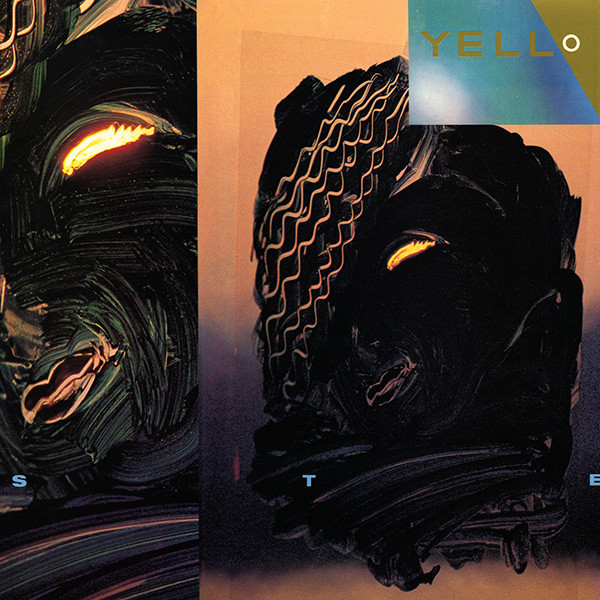
Now listening to A Night To Remember by Cyndi Lauper and Stella by Yello…

Full Metal Jacket (1987) – Private Pyle Fails Scene (2/10) | Movieclips
Stanley Kubrick’s take on the Vietnam War follows smart-aleck Private Davis (Matthew Modine), quickly christened “Joker” by his foul-mouthed drill sergeant (R. Lee Ermey), and pudgy Private Lawrence (Vincent D’Onofrio), nicknamed “Gomer Pyle,” as they endure the rigors of basic training. Though Pyle takes a frightening detour, Joker graduates to the Marine Corps and is sent to Vietnam as a journalist, covering — and eventually participating in — the bloody Battle of Hué.
“Make us whole again.” Explaining the Markers from Dead Space

There’s a lot of mystery surrounding the monolithic structures called “Markers” but I think there’s enough information in the various sources of Dead Space media that hint at, at least, some of what is going on.
Who or what created the Markers?
The original source of the Markers is not known and may never be revealed. There is no information in the series that gives us any clues as to the nature of the originators of the Markers or why they created them in the first place.
Many different people and groups within the Dead Space universe have their own views of where the Markers came from, who created them and their purpose, but these views aren’t actually based on any solid evidence.
What we do know is that the Markers are a form of technology and that they serve some sort of purpose that may have either gone horribly wrong… or horribly right. I know, that’s not much of an answer, but that’s the most truthful answer you’re going to get about the Markers.
The only thing we can be certain of is that an unknown alien race, a very long time ago, began a process that created Markers and everything else that comes with it.
What is the purpose of the Markers?
According to the Church of Unitology, the Markers are a divine gift given to us to rebirth the human race and raise us to a higher plane of existence.
EarthGov, and the government organisations that came before them, believed that the Markers could be used as a power source of some kind since it seemed to be generating it out of nowhere.
The Markers are a form of technology designed to do… SOMETHING. To be perfectly honest, we don’t know what the true intention was behind the creation of the Markers or even if the spawning of Necromorphs is what they’re meant to be doing in the first place… or if this all started with a Marker to begin with.
Whoever or whatever created this technology are long gone and despite whatever intentions the original creators had, the process that occurs repeats every time they are discovered by an intelligent species in the universe that leads to the creation of more Markers and Necromorphs.
Some even argue that the Black Marker that impacted Earth, causing the extinction of the dinosaurs, had a hand in accelerating and guiding human evolution into its current form. Though, this is all conjecture at best.
When a Marker is first discovered by an intelligent species, it begins to influence that species to create more Markers. People who are affected by the Marker’s strange signal start to lose their sense of reality and begin to hallucinate. The average person will soon devolve to madness while more intelligent individuals will start to perceive patterns in the signal and interpret these patterns as instructions to create more Markers.
Depending on the kind of species the Marker is influencing with its signal, this process can take time and may even fail.
It’s been shown that, for the majority of humans, the Marker signal is overwhelming and can drive them to madness, suicide and murder far too easily. The signal then acts in a different fashion for dead tissue, leading to the creation of what is known as a “Necromorph”, a form of reanimated life created from the dead.
For a species like the alien race found on Tau Volantis, the signal could be overcome long enough to allow that species to create many markers before succumbing to their own Necromorph outbreak. Though, it should be noted that humanity did eventually created a large number of their own Markers in secret and found ways to contain them for a time.
Necromorphs come in various forms depending on the subject that is infected. For example, most adult humans turn into a variant of Necromorph that grow large blades capable of slicing into victims while infant humans and dogs turn into Necromorphs that use their deformed intestines to fire barbs at their victims. Some larger and more grotesque forms of Necromorphs are formed from multiple subjects and there are even cases of excess tissue being turned into an unusual biomass that coats areas that are heavy with Necromorph activity.
Once a Necromorph outbreak starts, the resulting chaos leads to the deaths of many more victims and the creation of more Necromorphs. As more people die, more complex Necromorphs are created such as The Hive Mind and The Nexus creatures that act as a neural hub to control lesser Necromorphs.
During this stage, the Marker creates an invisible field around itself that prevents Necromorphs from coming within reach of the Marker. This is to stop a premature Convergence event that could lead in the failure of the entire process.
Once enough Necromorphs are created, the field that prevents Necromorphs from approaching the Marker disappears allowing all the Necromorphs to gather at the base of the Marker to initiate the convergence event. When convergence begins, an unknown force produced by the Marker itself hurls the Necromorphs above it where they’re combined into a large mass that will eventually form a organic moon-like creature.
During the final stages of convergence, for reasons unknown, the individual or individuals who have the most knowledge of how to create markers within their brains are needed to be killed off in some special manner. This is something that the Marker tried to do at the end of Dead Space 2, however, the exact purpose of this is unclear.
In the end, what we are left with is a single Necromorph entity created from the mass of individual Necromorphs. The size of the resulting moon depends on the size of the population affected by the convergence event. In an ideal scenario, the population of an entire planet would be used to birth this new entity known as one of the Brethren Moon.
What are the Brethren Moons?
The Brethren Moon is what is created once Convergence has been successful. From what little information you find out about the Brethren Moons in Dead Space 3, it seems as though they are part of a type of a network of moon-sized neural cells that create a galaxy-spanning brain of sorts.
In fact, the signal that the Markers produce comes from them. Each one of these moons are connected via this signal as well as the Markers which are produced by a harvested species to infect more civilisations to create more Markers, initiate a Necromorph outbreak which becomes a convergence and then spawns another Brethren Moon.
From what I can gather, the entire process is simply used to create more of these galaxy-spanning neural cells (the Brethren Moons) in order to add onto this cosmic level intelligence that is far beyond us in every way. The scary thing is that all the propaganda material that The Church of Unitology is so convinced of is pretty accurate to what has been created… just in a much more horrifying way.
All the species that became victims of the Markers were, in one way, being re-birthed into a higher form of existence (as The Church of Unitology would put it), but in another way, they were being harvested to become usable bio-matter to expand a cosmic brain’s neural network.
What’s the deal with that incomplete Necromorph Moon in orbit of Tau Volantis?
This is where things get interesting, because that incomplete Necromorph Moon is actually the original nightmare that plagued Isaac during his mission to the USG Ishimura in Dead Space 1. It is also the cause of humanities discovery of Marker technology through the “original” Black Marker.
It all started with the original Black Marker that crashed on Earth some 65 million years ago, wiping out the dinosaurs and laying in wait until it was finally discovered 300 years prior to the events of the first Dead Space game.
During the discovery of that first Marker, a common line was spoken to the people who started hallucinating and hearing voices in their heads… “Make us whole.” It’s something that is repeated over and over in the Dead Space series and for people within the Dead Space universe and outside in the real world have come to understand this phrase to mean many things.
“Isaac… make us whole again.”
It became the mantra of Unitology, a religion created around the discovery of the Marker and it’s also been a nightmare plaguing Isaac since the moment he set foot on the USG Ishimura as well as many others who have come into contact with a Marker. While everyone has their own interpretation of what that phrase may mean, the true meaning becomes clear at the end of Dead Space 3, once we discover the existence of the incomplete Necromorph Moon in orbit of Tau Volantis.
Essentially, the phrase “make us whole” is a kind of distress signal the Tau Volantis Necromorph Moon was sending out to any Markers within range. At the time of its discovery, the Black Marker signalled humanity to create more Markers, but the signal was of two voices, one seemed to be fighting against the other in some way. But why?
Let’s compare the two most prominent Markers found in Dead Space 1 and 2, the signal being produced by those Markers seemed to make Isaac do different things. The Red Marker found on Aegis VII wanted Isaac to restore it back in the approximate location as to where it was found while the Gold Marker on The Sprawl wanted to initiate the convergence event.
The Gold Marker found on The Sprawl was doing what it was “suppose” to do, just like all other Markers before it. It instructed an intelligent species to construct more Markers and then used their dead to create Necromorphs in order to initiate a convergence event that would lead to the birth of a new Brethren Moon. Thankfully, the final step of the process was stopped by Isaac Clarke, but despite the failure at the most crucial moment, the Gold Marker was doing EXACTLY what it was designed to do.
On the other hand, the Red Marker found on Aegis VII was used as a triangulation device. From information that you get throughout the series, we find out that humanity has been making Markers for a very long time now and that the governing organisation that predates EarthGov, the Sovereign Colonies, used the signals from these various Marker sites and triangulated them back to a lone planet called Tau Volantis.
The failed Brethren Moon orbiting Tau Volantis was trying to lure humans to the planet in order to turn off the alien device that was holding it in stasis for all this time. Once the device was turned off, the convergence process would resume and the Brethren Moon would finally become complete thus ending the many hundreds of years of crying out, “Make us whole again.”
And yes, after this entire entry, I know that the whole mystery has already been solved a long time ago and this is probably now common knowledge. But just remember, this entry was originally started by me a month after Dead Space 3 came out and I had already finished the entire game by that point and had put a lot of thought into everything written here.
I think I did pretty well with all of that information back then.
Full Metal Jacket (1987) – Let Me See Your War Face Scene (1/10) | Movieclips
Stanley Kubrick’s take on the Vietnam War follows smart-aleck Private Davis (Matthew Modine), quickly christened “Joker” by his foul-mouthed drill sergeant (R. Lee Ermey), and pudgy Private Lawrence (Vincent D’Onofrio), nicknamed “Gomer Pyle,” as they endure the rigors of basic training. Though Pyle takes a frightening detour, Joker graduates to the Marine Corps and is sent to Vietnam as a journalist, covering — and eventually participating in — the bloody Battle of Hué.
Star Trek (2009) – Movie Review

Do you love lens flares?
Really, do you just love lens flares a lot?
Because you know who absolutely gets the world’s biggest hard-on from lens flares, is J.J. Abrams.
I don’t know that it’s fair to start up with Abrams’s Star Trek, a massive rejiggering of the megalithic sci-fi franchise, by bitching about lens flares, of all things, but here’s the deal: I don’t love lens flares one goddamn bit, and if the script underlying the film was like Shakespeare’s love child by Ibsen, given elocution lessons by George Bernard Shaw, I really wouldn’t care if it were hidden behind an iron curtain of flippin’ lens flares.
For those who have no idea what the hell I’m talking about, lens flares occur when a light source appears within a camera frame, and the light is reflected and refracted on the surface of the camera lens. It looks like a line of circles radiating out from the light source, or a mirror “copy” of the light that hovers above the image. They’re a little bit trendy right now, and like any cinematic trick, they can be extremely well-used, although it’s my experience that they’re usually not. And Star Trek is lousy with them.
It’s the wrong choice for a film that already has some of the busiest visuals of anything you’re apt to see in a theater this year, but then, J.J. Abrams is a good director for making wrong choices. He’s a television veteran, the creator of Felicity and Alias and Lost, and his aesthetic sensibilities are clearly mired in the small screen paradigm. It’s not quite as bad in this respect as his 2006 feature debut Mission: Impossible III, but Star Trek is clearly the product of a mind that doesn’t comprehend that movie screens are, at a minimum, a couple of dozen feet wide, and that you don’t actually need to make every single shot a close-up. For all its gigantic budget, and the tremendously big CGI effects that all that money purchased – and fair is fair, the visual effects in Star Trek are absolutely spectacular, the best stuff to come out since The Lord of the Rings – it is wildly evident that Abrams does not understand how to direct a motion picture. Star Trek feels like the most expensive made for TV movie in history, with all the claustrophobic framing and erratic pacing that implies.
Here’s the thing about that, though: upon rewatching the ten other Star Trek films in recent weeks, I was startled to realise how very few of them were all that well-made, either. Of the seven (now eight) men who have directed one of the films in the franchise, only Robert Wise and Nicholas Meyer ever showed a clear talent for anything but the most basic filmmaking skills – and Meyer only in his second go-round, Star Trek VI: The Undiscovered Country (while Wise, the poor bastard, had to live with the ignominy of directing Star Trek: The Motion Picture, which even in its most kinetic cut is still devoured by its mirthless sobriety). So when I bitch and moan about Abrams and the TV aesthetic of Star Trek, I’m only really saying that he’s keeping the spirit of the series alive.
And that is the one thing that really and truly surprised me about the new film: it does not, in fact, piss all over the legacy of the franchise it’s trying to reboot. Now, in no small part, this is because the film almost doesn’t feel like it’s taking place in the Star Trek universe at all: God knows it doesn’t look like the Star Trek universe. Abrams and his crew (including cinematographer Dan Mindel and production designer Scott Chambliss) have made a shiny, glossy world that is just wickedly busy with little beeping things and fantastically advanced computer screens and bright white plastic surfaces, and that looks in hardly any respect like the four television series or ten movies that preceded it. And the plot, which manages to have its cake and eat it by working a complete do-over of the series canon while giving it a perfectly comprehensible (for Star Trek) in-continuity explanation.
I kind of wish he’d just gone for a complete reboot, and to hell with the previous material. It’s the urgent need to cater to everybody that results in some of the biggest problems in Star Trek beginning with its frankly stupid time travel plot. Not that frankly stupid plots – particularly those involving time travel – are alien to the series, but this might well be the most hackish storyline in any of the films. Which, hey, it was written by two hacks: Roberto Orci & Alex Kurtzman, who also gave the world The Island, M:i:III and, most importantly for our present needs, Transformers. Like that rancid Michael Bay misfire, Star Trek largely eschews niceties like character or story in favor of motivating as many explosion-heavy action scenes as can possibly be arranged. The only thing that saves the writers in this case is that they have a nice package set of characters already created, so all they have to do is plug them into their soulless effects demo without fucking them up.
Largely, they don’t fuck it up. The only exception, and it is massively damaging exception, is the central figure of James T. Kirk, the greatest delivery system in history for that thick slab of Canadian ham William Shatner, here played as a twentysomething by Chris Pine, an untalented but pretty young man. Now, in the original, Kirk was a charming rake-hell, ingenious and thoughtful, but still a cowboy at heart. In the restart, Kirk is a goddamn asshole. This is most easily displayed in a scene that dramatises the famous Kobayashi Maru incident much beloved in Star Trek lore. The story goes that Kirk won an unwinnable scenario at Starfleet Academy by reprogramming it. When we hear this story for the first time, it gives us the image of young Kirk as a thoughtful, driven young man, clever and creative. When we see it in Abrams’s Star Trek, it’s after Kirk has already gamed the program, and he chews noisily on an apple insulting those around him and the very notion of academia as he mugs like the giant, pustulous dick that he is.
Kirk as a dick doesn’t just harm the movie as a Star Trek property; it hurts it as a movie, because it makes the heroic protagonist as unendurable as he could possibly be (but then, Abrams has a thing for making awful men heroic protagonists; see also Lost’s Jack Shepherd, one of the most horrid jackasses in television history). Fortunately, most of the other characters are much more interesting: the famous half-human, half-Vulcan Spock, torn between emotion and cold reason, is here played by Zachary Quinto in a forthright impersonation of Leonard Nimoy, and is perhaps the only character who is exactly like he was in the original series. This is actually something of a misstep, as he stands apart from the rest of the cast for that reason; but when you have someone as interesting as Spock, you don’t fuck with it. Karl Urban, as cynical doctor Leonard “Bones” McCoy, and Simon Pegg as the enthusiastic engineer Montgomery “Scotty” Scott, both play variations on the original characters that drift neither into parody nor slavish imitation, and are probably the finest creations of both writing and acting on the film. Everyone else, as they always were, are boring and given nothing to do, although I was really put off by the cartoon version of Ensign Chekov, played for once by an actual Russina, Anton Yelchin, whose character is nothing but one long dialogue joke, and whom, if this were a different sci-fi reboot, would be a favorite candidate for getting shoved out an airlock by Mary McDonnell.
So much for the characters. As for the movie that contains them, it’s pretty much par for the summer course, although not quite as much so as last week’s exceedingly bland X-Men Origins: Wolverine. And this is where I get myself into trouble. Being literate and connected to the internet, I am aware of the massive consensus that this is a tremendously fun summer action epic, and I do not understand whatsoever how anyone has arrived at this conclusion (then again, I didn’t understand in 2007 how anyone could think that Transformers was anything else than a platter of suck). Where other people see a great thrill-ride adventure that doesn’t let up, I see visually messy battle sequences that are, like the ones in every other goddamn tentpole movie, far too loud for anyone’s possible good, unengaging characters that are mostly interesting because they remind me characters from this pulpy TV show I love being forced through a plot hardly worthy of the name, and a magazine-slick aesthetic that looks snazzy in a way that reflects not at all on the other content of the picture. It is, in other words, a summer movie comme une autre, although one with tremendously high-quality effects. And after The Two Towers, I stopped grading films on a curve because of their effects. Whatever the case, I find its allegedly thrilling thrills to be completely routine, and only the relative absence of high-profile space adventures in recent years – the last one I can recall offhand is Serenity, from all the way back in 2005 (a film that, incidentally, betters Abrams’s Star Trek in nearly every single respect I can think of) – makes this seem any more exciting than a slice of white bread with a pat of margarine. Just because a film is noisy, colorful and fast does not ipso facto mean that it is also a rollicking entertainment, and I’m especially peeved at those critics who praise this film for shedding the admittedly naïve philosophical posturing that has always been a franchise trademark. Sure, Gene Roddenberry’s childlike humanism might have played it a bit silly from time to time, but I’d much rather have a movie that fails to be smart than a movie that revels in being stupid.
Of course, it’s hardly the worst Star Trek film, a title that will remain wholly uncontested as long as copies of The Final Frontier still exist. It’s squarely in the middle of the eleven films; not so wholly useless as Insurrection, the direction not as outrageously crude as in Generations, and it has far more life than the arid The Motion Picture. Hell, even though it takes place in an alternate universe to the rest of the series, it still doesn’t do such outrageous things to continuity as Nemesis.
But then again, it’s hardly a Star Trek film at all; for Star Trek films are never this slick and rarely this shallow. Take out the character names and the behavior of the pointy-eared fella in the blue shirt, and you have a science fiction film that nobody would ever recognise. It might have been the better for it, it’s hard to say. Certainly, anything that kept J.J. Abrams from developing an interest in sitting in the director’s chair would have been for the absolute benefit of the final product.
Look, I am perfectly aware that I am pissing in the wind. Star Trek is a for-real critical smash by now, and it’s certain to be the summer movie that everybody absolutely loves. And there are, yes, things I responded to the way I was supposed to: Urban and Pegg’s performances are perfect, it’s absolutely swell to see that old-school ’60s/’70s “in the future, everything will be white plastic” aesthetic back on the big screen, Michael Giacchino’s score is typically excellent, though not as creative as his best work. But I am not so easily pleased by flashing lights and moving shapes that I’m willing to call a movie “thrilling” just because it is kinetic. The non-stop pyrotechnics in Star Trek honestly bored me a little bit. Not The Search for Spock boring, but frankly, once you’ve seen one digitally-animated spaceship blow another one to hell, you’ve pretty much seen them all.
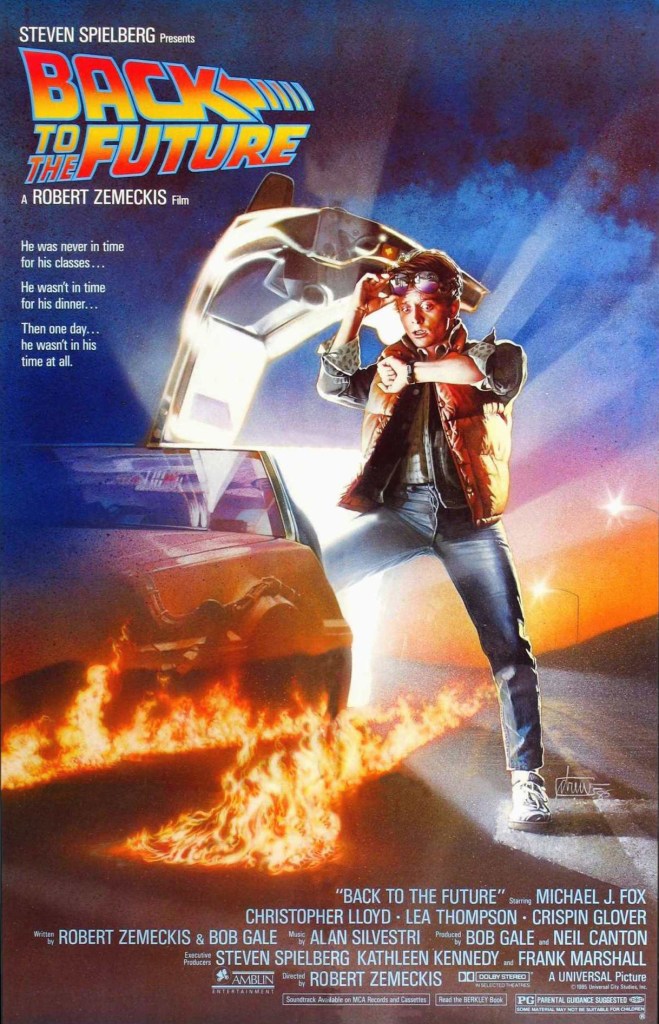
Just finished watching Back To The Future (1985) and Back To The Future Part II (1989)…

 Igor's Blog