

Under The Apricot Trees by Martiros Saryan, 1954.
Hello there! This video has been recommended to me forever and I never bothered to watch it because I could’ve guessed what he was going to say. Nonsense about freedom, disingenuous comparisons, references to Germany, maybe an Orwell quote or two. Turns out, I wasn’t far from the truth. Hope you enjoy it.

Luzhniki (Russian: Лужники) is a Moscow toponym associated with several localities and settlements; currently designates the southwestern part of the Khamovniki district, which became part of Moscow in 1917. As part of the Konyushenny order there were horse settlements: Big Luzhniki and Small Luzhniki. The area, which is now called Luzhniki, was formerly called Luzhniki Small Novodevichi, and at the first mention, in 1638, the settlement Small Luzhniki under the Novodevichy Convent. In 1654, the inhabitants of Luzhniki began to build the wooden church of St. John Chrysostom near the shore and built it “up to the upper platform; and by the will of God there was a pestilence”, the unfinished church “was taken to the Kuznetsk settlement”. In the same place in 1701, the Church of the Tikhvin Icon of the Mother of God was built. In 1955, all buildings between the Okruzhnaya railway and the river were demolished for the construction of a sports complex.
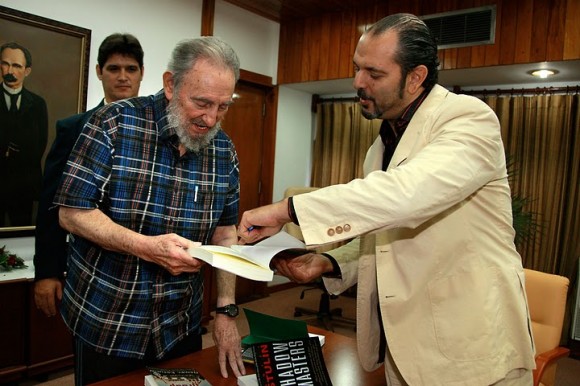
The Bilderberg Group is an annual meeting of corporate executives and government officials from around the world. Until recently, most people probably did not know it existed. In the past week, the group and theories about its real purpose have been featured prominently in the news.
The main cause of this unprecedented surge in interest was the visit of author Daniel Estulin to Cuba on Aug. 26. Estulin has written two books about the Bilderberg Group. When in Cuba, Estulin met with revolutionary leader Fidel Castro, who had just written several articles citing Estulin’s work. The meeting and Estulin’s writings have been given extensive coverage in the Cuban press. This coverage has, in turn, been picked up by media outlets worldwide.
The Party for Socialism and Liberation stands fully in solidarity with the great Cuban Revolution. The revolution freed Cuba from U.S. domination and exploitation and brought into being the “first free territory of the Americas.” Cuba’s determined struggle and internationalism, under the leadership of Fidel and the Cuban Communist Party, have been an inspiration to those struggling for liberation everywhere.
We are concerned, however, that the publicity given to Estulin and his ideas could have a disorienting effect on some in the world socialist and progressive movements. We view Estulin’s writings as anti-Marxist and rooted in right-wing conspiracy “theories” that lack factual support.
Since shortly after its founding in 1954, numerous extreme right-wingers, starting with the John Birch Society and Phyllis Schlafly, have theorized that the Bilderberg Group is really a conspiracy to take over the world, some saying that it already has.
Among them is Estulin, a virulent anti-communist who describes himself as “a Russian expatriate who was kicked out of the Soviet Union in 1980,” and claims that his grandfather “was a colonel in the KGB and the counter-intelligence in the 1950s so I am privileged somewhat to get a lot of the information from secret service which are our best sources.” (Infowars.com, May 27, 2005.) The accuracy of this or anything else that Estulin says about himself or the world is open to question, given his seemingly limitless capacity for fabrication.
Passing fiction for reality
According to Estulin, the “Bilderbergers,” as he calls them, are responsible for an extraordinary range of things he does not like, from the 1917 Bolshevik Revolution to the popularity of the Beatles. In his 2007 book, “The true story of the Bilderberg Group,” Estulin asserts that the group has “become a shadow world government.”
Along with other bizarre conspiracy “theories,” the “Bilderberger” version totally rejects class analysis in favor of the notion that a small, supra-national band of men is pulling the global strings, creating everything from flu epidemics, to the housing collapse, to the wars in Afghanistan and Iraq.
Rather than seeing imperialism and capitalism—led by the United States—as the enemy of the world’s workers and oppressed peoples, Estulin and his co-thinkers (including the notorious Lyndon LaRouche) propagate the fiction that a secret, all-powerful cabal has been running the world since before the dawn of the capitalist era.
In an interview with a blogger in Barcelona, Spain, Estulin said of the Bilderberg Group:
“It is essentially a private criminal enterprise which stretches across the globe, operating through a network of government agencies, private institutions and both publicly owned and private corporations and financial institutions. Now this extended network, which is called the fondi, stretches all the way back to the Middle Ages. Again the fondi is the combined wealth of these oligarchical families. … At the heart of the fondi system, you have the powerful merchant private banks such as the Rothschild banks. And even more powerful than Rothschild is the Lazard bank. One of the reasons that the Bilderbergers have never been able to discredit me is that historically I can show you that what today is called the Bilderberg Club can be traced back in time to the Venetian Black Nobility, 500 years ago.” (Lishman’s Diary, Feb. 2, 2008.)
Estulin links the Bilderberg Group to the Trilateral Commission, and claims that both seek to suppress imperialist nationalisms in favor of a secret “New World Order.” Here is more from “The true story of the Bilderberg Group”:
“Without a doubt, the Bilderberg Group is the premier occult forum operating in the shadows of power, but a little understood entity—the Trilateral Commission (TC)—also plays a vital role in the New World Order’s scheme to use wealth, concentrated in the hands of the few, to exert world control.”
Estulin continues, “The powerful individuals who belong to the Trilateral Commission all share the same anti-nationalist philosophy, and try to prevent the national forces within their respective countries from exerting influence on policy. The Trilateral Commission was established in 1973. Its founder and primary mover was international financier David Rockefeller, longtime chairman of the Rockefeller family-controlled Chase Manhattan Bank.”
Turning history on its head
In his 2006 book “Secrets of the Bilderberg Club,” Estulin, like his fellow reactionary LaRouche (who is heavily referenced by Estulin) puts forward the anti-materialist thesis that the British are in control of the United States, the most powerful empire in history.
In Estulin’s fantasy world the “Bilderbergers” organized and financed the Bolshevik Revolution in 1917 and “controlled” the leaders of the revolution. All of this, 37 years before the Bilderberg Group even came into existence! “Once again, it would be the networks of British military intelligence which would be the initiators, with CIA help via its ex-director William Casey and its contacts with Sefton Delmer of MI6, whose contact Bruce Lockhart was the MI6 controller of Lenin and Trotsky during the Bolshevik Revolution,” asserts Estulin in the “Secrets of the Bilderberg Club.”
In the real world, Robert H. Bruce Lockhart, the British ambassador to Moscow, was arrested in 1918 and nearly executed for his part in a plot to assassinate Lenin and overthrow the new Soviet state before being freed in a prisoner exchange. The British government was the main coordinator of counterrevolution in Soviet Russia from 1918-20, when armies of 14 imperialist countries joined the “White” forces against the Bolsheviks. The counterrevolutionaries were ultimately defeated in their attempt to “strangle the Bolshevik baby in its cradle,” as Winston Churchill had urged.
A half-century later, the nefarious British “Bilderbergers” were still at work, alleges Estulin in comic-ominous tones. This time, they used music to corrupt the youth of the United States and control their minds. Estulin’s “Secrets of the Bilderberg Club” continues, “For an unprecedented two Sundays in a row, on the Ed Sullivan Show, over 75 million Americans watched the Beatles shake their heads and sway their bodies in a ritual which was soon to be replicated by hundreds of future rock groups.”
He then attempts to link—without the thinnest strand of actual evidence—the Beatles and rock music to Nazi propaganda. Referring to the wave of British groups that came to the United States in the following years, Estulin states, again with no supporting facts, that “it was demonstrated that this ‘English invasion’ had been well-planned and coordinated.”
For Estulin and his co-conspiracy “theorists,” nothing is ever as it seems, and all major world developments are the work of the hidden “Bilderberger” hand. Here is a clear example of his worldview from “The true story of the Bilderberg Group”: “The Watergate crisis is a case of mistaken identity and a travesty of justice. The truth behind Watergate has never been revealed, but those who orchestrated the overthrow of the Shah, the war in the Falklands, the death of Aldo Moro and the downfall of Margaret Thatcher are again implicated.”
The bombings of the Oklahoma City Federal Building in 1995, the World Trade Center in 2001 and a nightclub in Bali in 2002 were all mini-nuclear attacks carried out in the interests of the “Bilderbergers,” according to Estulin. He does not seem to care that none of the bombings emitted any radiation—the main characteristic of a nuclear explosion.
Conspiracy “theories” like those put forward by Estulin, LaRouche and others produce false consciousness and cultism. They have a generally disorienting and demoralizing effect on people’s consciousness and movements for change.
Marxism rejects conspiracy ‘theories’
Conspiracy “theories” lead to a dead end. If taken at face value, people must believe that there is no hope for change; there is no opportunity to struggle and make things better for the mass of humanity who suffers. After all, how could anyone fight against a hidden, all-powerful enemy that controls every event of significance in the world? The sense of powerlessness that logically flows from conspiracy “theories” often leaves those who buy into them looking for a lone “savior,” a role the same conspiracy proponents are more than prepared to fulfill.
Conspiracy “theories” lack any true analysis of the systemic class forces at work that oppress billions of people each day. They do not point to imperialism and capitalism as the main problems, instead ascribing society’s ills to a few leaders from imperialist countries that are somehow above the class systems under which we live. Such “theories” are not only false, anti-Marxist and truly reductive of history—they are dangerous diversions that keep people from aiming their anger and hatred toward the system that actually causes oppression throughout the world.
Of course, we understand that actual conspiracies and intrigue do exist. They are used by the ruling classes to set people up, as pretexts to start conflicts or overthrow governments, and in myriad ways to serve the interests of capitalism. But actual conspiracies are much different than presenting crudely assembled facts as representative of broad social and political trends.
Revolutionary Marxism rejects such false conspiracy “theories.” Marxism not only has a radically different understanding of the causes of crises in contemporary capitalist society, it offers a real basis for optimism and solutions as well.
Marxism’s class-based analysis of history offers an explanation of war and other crises rooted in reality, not fiction.
War has a particular cause in the modern epoch. Major wars are not conspiracies launched by a handful of people, but result from the constant search by capitalists to open up and dominate new markets to exploit for profits. Sometimes capitalist competition for these markets is the cause. Wars also result from the attempt by capitalists to destroy countries and peoples who seek to liberate themselves from imperialist domination and market exploitation.
Let’s be clear: the struggle against war and exploitation is a struggle against the very system that breeds war—capitalism. It is not the struggle against the Bilderberg Group or some shadowy world government. In fact, no such world government exists.
The conspiracy “theories” espoused by Estulin offer no solutions. There is no light at the end of the conspiracy tunnel—just thousands of discreet facts jumbled together to create a rather incoherent reality that has little to do with the real world.
The real solution is something Estulin and other conspiracy writers would never advocate or contemplate: socialism. Humanity’s struggle is to put an end to the destructive and dehumanizing capitalist system that rules in most of the world’s countries today and replace it with a system based on meeting the needs of the people.
The first socialist revolutions in Russia, China, Cuba and other countries show that this hope is not a pipedream. Up until now, those revolutions have taken place in poorer countries, which posed huge obstacles to the workers’ governments. The ever-present threat of imperialist attack has also made development difficult. Nevertheless, each country was able to make great, sometimes incredible, advances while building socialism.
Cuba’s outstanding health and education systems and its renowned internationalism would have been unthinkable without a socialist revolution. Cuba has resisted counterrevolution and worked to construct socialism for over 50 years. Its ongoing revolutionary process has not been sanctioned by any capitalist government or by the Bilderberg Group. That is not why revolutionary Cuba exists today.
Cuba’s people have been able to withstand the greatest economic hardships and imperialist threats because the system under which they live benefits the people, and seeks to end exploitation. They have had the invaluable, revolutionary leadership of the Communist Party.
The promotion of Estulin’s ideas in Cuba does not diminish one iota the PSL’s defense of the Cuban Revolution and its incredible ongoing achievements. It is our opinion, however, that Estulin’s worldview is incompatible with revolutionary Marxism.

Zamoskvorechye District (Russian: райо́н Замоскворе́чье) is a district of Central Administrative Okrug of the federal city of Moscow, Russia. The district contains the eastern half of historical Zamoskvorechye area (its western half is administered by Yakimanka District), and the territories of Zatsepa Street and Paveletsky Rail Terminal south of the Garden Ring. The boundary between Yakimanka and Zamoskvorechye districts follows Balchug Street and Bolshaya Ordynka Street (north of Garden Ring), Korovy Val and Mytnaya streets (south of Garden Ring).

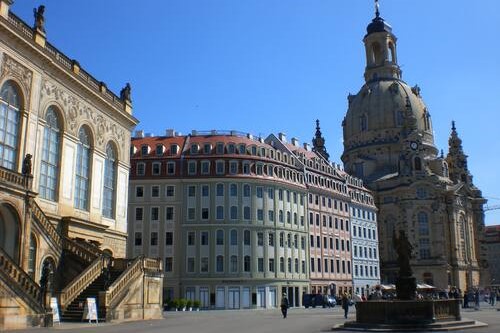
The 18th- and 19th-century cultural landscape of Dresden Elbe Valley extends some 18 km along the river from Übigau Palace and Ostragehege fields in the north-west to the Pillnitz Palace and the Elbe River Island in the south-east. It features low meadows, and is crowned by the Pillnitz Palace and the centre of Dresden with its numerous monuments and parks from the 16th to 20th centuries. The landscape also features 19th- and 20th-century suburban villas and gardens and valuable natural features. Some terraced slopes along the river are still used for viticulture and some old villages have retained their historic structure and elements from the industrial revolution, notably the 147-m Blue Wonder steel bridge (1891–93), the single-rail suspension cable railway (1898–1901), and the funicular (1894–95). The passenger steamships (the oldest from 1879) and shipyard (c. 1900) are still in use.
Justification for Inscription
Criterion (ii): The Dresden Elbe Valley has been the crossroads in Europe, in culture, science and technology. Its art collections, architecture, gardens, and landscape features have been an important reference for Central European developments in the 18th and 19th centuries.
Criterion (iii): The Dresden Elbe Valley contains exceptional testimonies of court architecture and festivities, as well as renowned examples of middle-class architecture and industrial heritage representing European urban development into the modern industrial era.
Criterion (iv): The Dresden Elbe Valley is an outstanding cultural landscape, an ensemble that integrates the celebrated baroque setting and suburban garden city into an artistic whole within the river valley.
Criterion (v): The Dresden Elbe Valley is an outstanding example of land use, representing an exceptional development of a major Central-European city. The value of this cultural landscape has long been recognized, but it is now under new pressures for change.
Final Fantasy Tactics and Vagrant Story for the PS1, Tactics Advance for the GBA, and Final Fantasy XII for the PS2.

By far my most favourite post-apocalyptic novel, Emergence was written in 1981 and follows the life of Candidia Maria Smith-Foster, an eleven-year-old girl, who is unaware that she’s a Homo post hominem, mankind’s next evolutionary step. Hominems have higher IQs, they’re stronger, faster, more resistant to illness and trauma, and have quicker reflexes. Their eyesight, hearing, and sense of smell are superior as well.
By the time the narrative opens, Candy has acquired a high school education, some college, and learned karate, having achieved her Fifth Degree Black Belt from her neighbor, 73-year-old Soo Kim McDivott, who she is led to believe is merely a retired schoolteacher. McDivott, whom she calls “Teacher”, is actually the discoverer of the H. post hominem species, and has identified and continues to mentor and lead a group of them, the AAs. As part of her karate training, she has learned to release her hysterical strength, which permits brief bursts of nearly superhuman activity.
Emergence relies on epistolary retelling, unrealistically detailed at times, and pronoun/article deficient (shorthand). The style might annoy some readers, but you get used to it, and, actually, that cut away fat provides an ideal landing pad for Candy’s punchlines. Simple language = comedy gold.
Sentence structure throughout will have English teachers spinning in graves (those fortunate to have one)… English 60 percent flab, null symbols, waste. Suspect massive inefficiency stems from subconsciously recognized need to stall, give inferior intellects chance to collect thoughts into semblance of coherence (usually without success)… (p. 3).
Also, like good Hard SF, Palmer thinks of everything. Everything! And he manages the technical information in intense bursts, keeping it interesting without sacrificing character, and I loved the fact that the girl was really pro-active about her situation and did not dilly-dally about her surroundings like Ish from Earth Abides.
Started to go on way; stopped—had thought. Returned, bled air tanks as had seen Big Olly do. Had explained: Compression, expansion of air in tanks “made water” through condensation; accumulation bad for equipment. Found was starting to think terms of preserving everything potentially useful against future need. (Hope doesn’t develop into full-blown neurosis; maintaining whole world could cramp schedule.) (p. 29.)
Most Heinleinian is the way Emergence embraces controversy that sometimes feels disgusting, especially when the plucky eleven-year-old girl is regularly propositioned for sex. (Who are these men who can’t seem to keep it in their pants around a little girl just a few months after the apocalypse?) But more often, the controversy is subtle, insidious, until the end, when you realize you are essentially rooting for the extinction of humanity.
The book continues with Candy’s search for other humans, a potential mate that she could be with and when she finds a boy, she is happy but also put off by his insistence to be with her as man and woman. She does like him though, and he is a mechanical genius who is able to convert her car into a train/car in order to use the train tracks to travel as the roads would more than likely be closed off with cars.
Candy and her parrot develop a sort of a telepathic link which is awesome, considering that she goes missing shortly after getting a message of a space base. The rest of the super smarties are gathered together to build a rocket that will go into space to destroy a Russian bomb which is set to go off if no Russian agent enters the code. Having most of the Earth de-populated by the killer virus, there are no agents left and the bomb is slowly descending into the Earth’s atmosphere set to kill the Americans. (Yey!)
Candy gets to them in time and volunteers to be a pilot as she is small enough to fit in the bomb’s cokpit and de-activate it. As a surprise turn of events, one of their co-pilots was a Russian double-agent and he manages to almost destroy their mission. Candy is brave, Candy is a martial arts expert, Candy is a ruthless killer. I loved the ending and I was left wanting for more.
I was happy today when I found out that a sequel to Emergence, Tracking, was serialized in three parts, beginning in the July/August 2008 issue of Analog. Tracking was continued in the September issue and concluded in the October issue of the magazine.
I will find it and I will read it.


 Igor's Blog