Bolshaya Nikitskaya Street (Herzen Street from 1920 to 1993) is a street in the Central Administrative District of Moscow. It passes from Manezhnaya Square to Kudrinskaya Square, and lies between Tverskaya Street and Vozdvizhenka, parallel to them. The numbering of houses begins from Manezhnaya Square. In 1920, in connection with the 50th anniversary of the death of the writer and revolutionary democrat Alexander Herzen, it was renamed as Herzen Street. In 1993, the historical name was returned to the street. In 1997, the main part of the buildings of the street from the Nikitsky Gate Square to the Garden Ring was included in the Povarskaya-Bolshaya Nikitskaya protected area.
Grover Carr Furr III (born April 3, 1944) is an American professor of Medieval English literature at Montclair State University, best known for his books on Joseph Stalin and the Soviet Union. He has published many books on this subject.
The death of Mikhail Gorbachev has led to a great unfolding of information in the international press. In several headlines he is highlighted as the last Soviet leader; strictly speaking, he was not, since he led the final stage of capitalist restoration in the former USSR, an aspect totally contrary to Sovietism.
Gorbachev assumed the functions of General Secretary of the Communist Party of the Soviet Union, CPSU, in March 1985 and shortly thereafter was named President of the USSR. It was a time when economic, political, social and moral problems took on great dimensions in that country. In the 1970s, the growth rate of national income fell by more than 50% and in the early 1980s it almost reached zero. Corruption could not be stopped; there was talk of a “second economy” to designate what is known as the “black market,” in which officials at the highest level of the State and leaders of the party were involved. The health system was practically in ruins; housing was overcrowded; the rates of alcoholism in the population were high; people’s life expectancy was reduced and mortality was on the rise. There were many more problems.
The bases of capitalism resurfaced in the former USSR with the coup d’état carried out by Nikita Khrushchev and his clique in 1956, after the death of Joseph Stalin (1953). Over the years, the successes achieved by socialism in all fields while Lenin and Stalin were at the head of the state were undermined and capitalist laws and forms of production were imposed. So much so that Leonid Brezhnev (who succeeded Khrushchev) said that “no one lives on their salary alone,” referring to the existence of the “black market” and the social strata that depended on private economic activity for their income.
Gorbachev, when he assumed the leadership of the party and state, obviously did not present himself as an open promoter of capitalist re-establishment; he said that his purpose was to establish an “efficient, productive and democratic socialism,” and thus led to the disintegration of the USSR.
The economic and political reforms that brought the anti-socialist process initiated by revisionism four decades earlier to the highest point, were made official in July 1987. A year earlier they were approved at a Party congress, but as early as 1984, in a speech to the ideological working group of the Central Committee of the Party, Gorbachev raised the need for an information opening (glasnost) and the restructuring of the economic system (perestroika).
Gorbachev’s plan sought to establish a capitalist market economy, eliminate control over state enterprises, which could now determine what to produce, how much to produce and the prices in the market based on consumer demands; a new law on cooperatives restored private ownership to companies in services, manufactures and sectors linked to foreign trade; foreign trade was liberalized. This led to deindustrialization and the privatization of state-owned enterprises. In 1994, when the USSR no longer existed, 70% of the assets in Russia came from the private sector.
Hand in hand with the pro-capitalist reforms was glasnost (transparency), which supposedly had the purpose of democratizing information, but in reality it was a means to open the floodgates to an open and furious anti-communist propaganda, driven by the most degenerate and pro-restoration sectors. The historical distortion of the process of building socialism in the USSR was one of the targets and, particularly, the unfounded attacks against Stalin were accentuated.
Gorbachev defined perestroika as a revolution within the revolution, aimed at achieving more socialism and more democracy; in reality it was a counter-revolution within the counter-revolution. The economic and social problems deepened, the USSR fell into political chaos, the demands of the workers and the people were lit up on all sides, and some Soviet republics demanded to secede.
On December 25, 1991, Mikhail Gorbachev broadcast a live message on television, announcing his resignation from the presidency of the Republic. It was a formality; in fact he had no control over the situation in the country; days earlier the Washington Post called him the leader of a kingdom in the air.
The international bourgeoisie loudly applauded what Gorbachev did. None other than George Bush Sr. said that “the revolutionary transformation of a totalitarian dictatorship and the liberation of its people from its suffocating embrace” had taken place. If the most powerful imperialist head of state on the planet said that, it is because Gorbachev’s services to world capitalism were enormous.
Yesterday (Friday Jan. 6th 2017) around 1pm, the Department of National Intelligence released their declassified report (PDF) on the Russian hacking story or the Russian “influence” story that has been taking shape here in the States surrounding Hillary Clinton’s crash and burn presidential campaign of 2016.
At about the same time, a man got off a plane in Florida and took a gun from his checked bag and opened fire on people in the baggage claim area of an airport, emptying 3 clips before lying down on the ground and waiting to be arrested. That man claimed earlier that the CIA had been trying to force him to watch “ISIS” videos.
Each and every page of the declassified report contains in the top header an official disclaimer of sorts which reads:
“This report is a declassified version of a highly classified assessment; its conclusions are identical to those in the highly classified assessment but this version does not include the full supporting information on key elements of the influence campaign.”
Key here is the fact that the report contains no facts. None. Zip. Zilch. No evidence reported in the report whatsoever.
Also key is the word “assessment” and in the beginning of the declassified report, they take the time to explain that term:
“When Intelligence Community analysts use words such as “we assess” or “we judge,” they are conveying an analytic assessment or judgment. Some analytic judgments are based directly on collected information; others rest on previous judgments, which serve as building blocks in rigorous analysis“
“(O)thers rest on previous judgments”. Got that? No evidence reported in this report and they tell you right off the bat that in all likelihood, this “assessment” is based on “previous” assessment, which as we all know, were bullshit. “Grizzly steppe” anyone?
Buried deep in various articles about the release we find a little rational thought on this release. That of course is buried under tons of regurgitated, unsubstantiated accusations leveled at Vladamir Putin, Guccifer 2.0 and DCLeaks.
The report contains scant information on attribution That may not be enough for some critics, who have been publicly calling on the intelligence community to release more information explaining how it linked hacking operations to Russia” The Verge
“Some critics” may not find their baseless accusations to be “enough” to jump on the New McCarthyism bandwagon. How unfortunate. But apparently the Verge doesn’t mind Megaphoning Mockingbird fake news:
“The report also publicly names Guccifer 2.0 and DCLeaks.com, two sources of stolen information released to the public, as Russian operatives working on behalf of the country’s military intelligence unit, the GRU.” The Verge
This “intelligence” report is not a report. If you produced something like this in high school for your final essay in your political science class, you would be given an “F” because it is baseless and throws around completely unsubstantiated, antagonist accusations without a single shred of evidence to support any of it.
Not only that, but it’s apparent foundation is the lies and deception that has come before it. Talk about building a castle in a swamp.
Yet, the media is out there right now, on both sides of the artificial divide, reporting on this bloated Red Scare propaganda effort as if it is the gold standard in U.S. intelligence efforts.
Unfortunately, it is. And that says a lot about our “intel” services today.
Hillary Clinton lost to the most unpopular presidential candidate in U.S. history because she was a corrupt war-mongering fake leftist running on a base of fear-mongering and lies. Her career of corruption lost her the election, not Vladamir Putin.
She stole the nomination from Bernie Sanders, a FACT that was exposed by the DNC LEAK (not “hack”)
She had the general election won after that ridiculous video of Trump talking about “grabbing women by the pussy” came out and yet she still managed to lose when the Director of the FBI announced they had found a laptop in the possession of Anthony Weiner that had all her erased emails still on it. That’s when she finally lost.
Are we to believe James Comey is also a Russian agent?
The reality is, this disinformation campaign is being run for two reasons: to keep the new cold war of the New McCarthyism alive and well and … to exonerate the establishment’s candidate, Hillary Clinton, of the crimes she committed which were exposed during her campaign.
In all likelihood, the original emails released by Guccifer and published by Wikileaks came from our own intelligence services. Wikileaks is, after all, a psyop conducted by them.
And in case anyone forgot, the slow drip, drip, drip of emails released during the entirety of the general election process were coming from the FBI… not Guccifer 2.0, not DCLeaks and not Vladamir Putin.
Are we to assume the FBI is also an agent for the Kremlin?
This is the most ridiculous historical rewrite I have witnessed from our government in quite sometime and I have to wonder about the shooting down here in Florida that just happened to take place an hour before the release of this baseless drivel being spoon fed to willing apologists in the corporate media.
Not only was it released on a Friday afternoon in order to kill it in the news cycle… but it also just HAPPENED to coincide with YET ANOTHER mass casualty event featuring a guy with ABSOLUTELY NO MOTIVE and one this time who says he had been receiving messages from the CIA to watch “ISIS” propaganda videos.
CIA? Mentioned in his story? And the CIA “intelligence” report… all on the same day?
Makes you think, doesn’t it? Or… does it? It’s pretty damn obvious and takes a highly “educated” form of journalist to miss it.
Desembarco del Granma National Park, with its uplifted marine terraces and associated ongoing development of karst topography and features, represents a globally significant example of geomorphologic and physiographic features and ongoing geological processes. The area, which is situated in and around Cabo Cruz in south-east Cuba, includes spectacular terraces and cliffs, as well as some of the most pristine and impressive coastal cliffs bordering the western Atlantic.
Brief Synthesis
Desembarco del Granma National Park (DGNP) is situated in the Southwestern tip of Cuba, and more specifically in the municipalities of Niquero and Pilon in Granma Province. The property lies within the tectonically active zone between the Caribbean and the North American Plate and conserves the limestone terraces of Cabo Cruz at the western end of the Sierra Maestra Mountains. A series of these elevated terraces extends from 180 meters below to 360 meters above sea level. The total surface area is 32,576 ha, of which 26,180 ha are terrestrial and 6,396 ha marine area, respectively, with a terrestrial buffer zone of 9,287 ha.
The marine limestone terraces were formed by tectonic uplift and sea level fluctuations triggered by past climate change. Their number and height is as remarkable as their good conservation status. The little-disturbed landscape – and seascape – offers a wide spectrum of karst phenomena, such as giant sinkholes, cliffs, canyons and caves.
Criterion (vii): The terraces of Cabo Cruz form a singular coastal landscape in Cuba and are the world’s largest and best preserved coastal limestone terrace system. The imposing and nearly pristine coastal cliffs bordering the Western Atlantic are both a remarkable natural phenomenon and a stunningly beautiful sight. Jointly with the diverse, mostly native vegetation, the cliffs form an extraordinary visual ensemble of forms, contours, color and texture within a spectacular coastal setting.
Criterion (viii): The uplifted marine terraces of DGNP, and the continuing development of karst topography and features, are a globally significant illustration of geomorphologic and physiographic features and ongoing geological processes. DGNP displays a rare relief formed by the combination of tectonic movements in the still active contact zone between two tectonic plates and the effects of past sea level change in response to climate fluctuations. The karst forms include escarpments, cliffs, cave systems, river canyons and large sinkholes known as dolines in most diverse sizes and shapes.
Integrity
The boundaries of DGNP encompass the intact limestone terraces system both on land and in the sea. The property thereby contains a full array of associated geological phenomena and features. It also provides for the conservation of valuable plant and animal species, both terrestrial and marine, some of which are restricted to the property in their global distribution. The design of the marine and coastal portion comprises the coral reef of Cabo Cruz, as well as sea grass beds and mangroves. The legislative framework assures a prominent position for national parks in Cuba and a high degree of protection.
Despite the overall naturalness of the property there are localized impacts of past logging in the semi-deciduous forests north of the highest terraces, which occurred between around 1940 and 1980. These areas have since left to recover naturally. An old forest road, quarries used prior to inscription and small abandoned agricultural plots are all likewise in the process of recovery.
While recognized on the World Heritage List primarily for its landscape beauty and geology, DGNP also hosts noteworthy biodiversity values. More than 500 plant species have been recorded in what may still be an incomplete inventory. Around sixty percent of the known plants are endemic. Twelve species are only to be found within the DGNP making the property one of the centres of floral endemism within Cuba. The documentation of terrestrial fauna includes 13 mammals, 110 birds, 44 reptiles and seven amphibians. The degree of endemism for reptiles and amphibians is in the range of a remarkable 90 %. The marine areas are home to coral formations while mangrove stands are found along the shores.
Within DGNP there are noteworthy archaeological sites, including ceremonial caves and squares of the original indigenous inhabitants. Numerous sites containing petroglyphs, pictographs and artifacts left by Taina potters, and even pre-agrarian, pre-pottery making cultures, are spread across the property. In the more recent history, in 1956, the ship “Granma” embarked here after its journey from Mexico, starting a chain of events which changed the history of the country. The ship gave the province, the property and the national park its name.
The very existence of the national park, explicitly designed to exclude any man-made changes to the terraces and the landscape, is a sound basis for the maintenance of the geological and aesthetic values of DGNP. The biodiversity values, however, require active attention in the face of anticipated climate change, existing and possible further introductions of alien invasive species, feral animals and possible future pressure from visitation. In the case of the relatively small marine area it is clear that the integrity of the reefs and seegrass beds and its associated species will also depend on the management of fisheries and waste management outside of the property.
Protection and management requirements
DGNP is a unit of the National Protected Areas System of the Republic of Cuba. Building upon much earlier conservation efforts going back at least into the 1970s, DGNP was granted the status of National Park in 1986 by Ministerial Resolution. It became the first national park in Cuba’s conservation history. Originally covering a smaller area, it was later extended to encompass what is today the World Heritage property. For as long as the strong conservation status remains in place the most significant threats to the site, including inhabitants and staff, may well be natural disasters, such as hurricanes and sea floods.
The entire property is owned by the government, represented by the Ministry of Science, Technology and Environment (CITMA). DGNP is managed by the National Enterprise for Flora and Fauna Protection (ENPFF), which operates under the auspices of the CITMA and is administered by the Ministry of Agriculture (MINAGRI). Besides applicable protected areas legislation, the Law on Environment, the Decree-Law on Forest Heritage and Wild Fauna and specific stipulations related to Environmental Impact Assessments form the crucial legislative framework.
Since the establishment of the national park management is based on periodic five-year plans, which are implemented through annual operating plans. The latter define operational programmes and projects. The main objectives are the conservation of the maintenance of the integrity of DGNP, cooperation with communities adjacent to and within the property, and the promotion of responsible forms of tourism allowing visitation, recreation and education without compromising the conservation values.
In order to enforce applicable legislation and to achieve the conservation objectives, DGNP has trained technical, administrative and ranger staff. There is one head office located in Belic and four secondary centres distributed across the park, as well as a boat for marine patrolling. Funding needs to be ensured permanently to secure positions and to cover operational costs.
The focus of management is put on conservation, public use and ecosystem restoration in forested areas which have been affected by past logging and agriculture. Local resource use within the property occurs mostly in the marine areas, in particular by residents of the fishing community of Cabo Cruz, which is situated within DGNP. Fishing and extraction of other marine resources by local and external users requires monitoring to keep harvesting levels in line with productivity.
Alien invasive species pose a particular threat, as is well-known from island settings. Some woody species are reported to be an obstacle to natural regeneration of degraded forest areas. While management addresses this through an active nursery and reforestation program, eventually the reduction and, if possible, eradication should be sought. In terms of invasive animal species, including specimen of feral livestock, the situation appears to be manageable due to the extreme environmental conditions, the rugged relief and the property’s and naturalness all of which jointly discourage colonization by invasives. Still, invasive species require monitoring and, if needed, management responses.
There is little doubt that the tourism potential of DGNP exceeds the current use. While this constitutes an opportunity for future funding it also implies very real risks to DGNP, for example in terms of infrastructure, disturbance and waste management.
I love this moment! 🤣 In fact, this was from around 6 months BEFORE the film came out, but the reaction of Rich Evans is very telling! particularly given how the film turned out. I’ve not even seen Batman Versus Superman: Dawn of Justice, nor The Justice League, but obviously the prior works of Chris Terrio sent shock waves through the Red Letter Media camp! 🙃
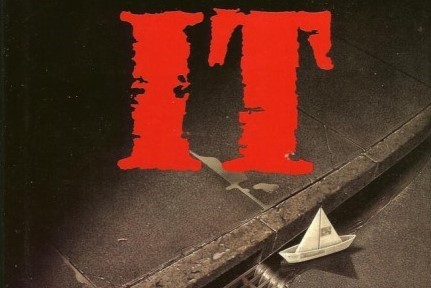
‘It’ tells a story of seven eleven-year-olds who face an ancient evil entity they call ‘It.’ Along with their daily social and family problems, the Losers club defeats It sending him to sleep. Twenty-seven years later, It awakens, and the group of once children fight the monster in one last attempt to kill it for good. Stephen King’s ‘It’ showed that there is always a triumph of good over evil.
In my view, many parts of Stephen King’s ‘It’ showed the transcendence of each member of the Losers as they left childhood into adulthood. For most people, the depiction of the members of the Losers club having an orgy marked the point they lost their innocence.
However, other events come to life that showed each member losing the elements of childhood in a specific way. For one, each member had a different fear as an adult. This, in itself, showed that they had gone beyond the point of being scared as little children. Another worthy event that marked members of the Losers club losing their innocence was their thinking. Bill felt the selfish thoughts of him using the rest of the club to get revenge was something only adults thought. One could say Bill had lost his innocence at that point.
Another feature noticed in the book is the victory of good over evil. One may think that the only problems the Losers club faced were ‘It’ and the Bowers gang, but the fact stands that the members of the Losers club had family and personal problems.
Throughout the story, each member of the Losers club faced hardship, and those hardships made them stronger. For Bill, him having to watch his parents become a shadow of themselves after they lost George was a cross he had to bear. For Beverly, it was having to withstand being abused by her father and husband. For Ben, being mocked for his obesity was a burden on him. For Eddie, it was facing his controlling mother, who didn’t want him to have anything to do with his friends. In the end, the suffering and hardships each member of the Losers club faced gave them the strength to triumph over evil.
‘It’ is a book that has a heavy impact on its reader. The book shows a town in a post-WWII era where bleakness and death reign. The horror of Derry is synonymous with the problems of society today. According to Christopher Lehman-Haupt of The New York Times.
It concerns the evil that has haunted America from time to time in the forms of crime, racial and religious bigotry, economic hardship, labor strife, and industrial pollution.
Though ‘It’ is a lengthy book with over a thousand pages, reading the book ignites curiosity to know what happens next. Stephen King’s innate detailed writing and events expression makes a reader engrossed in the book. It becomes as if one were in the same place at the same time with each character, one can feel the fear of the characters as each action is detailed. In my opinion ‘It’ is an excellent book worth the time.