

A group of films, ranging from art-house gems to big blockbusters, that deserve a fresh look.
Moviegoing is at a strange, tenuous moment. With pandemic fears still circulating, and many studios still delaying their films’ release dates, not everyone is comfortable going back to theaters yet. But this is also a time of extraordinary at-home accessibility for cinema, with many thousands of titles available to stream, or digitally rent and buy, every day. So I’ve returned to a topic that sustained me during 2020’s most isolated moments: celebrating underrated and unique movies in need of wider appreciation. The following 26 films cross every genre and range from art-house to blockbuster. They were all unappreciated by critics or audiences on release and deserve a fresh look.
Used Cars (1980, directed by Robert Zemeckis)
Not long before he hit it big with the blockbusters Romancing the Stone and Back to the Future, Robert Zemeckis made this anarchic black comedy about the cutthroat world of used-car sales, starring Kurt Russell as a dealer trying to stay one step ahead of catastrophe. It also features a wonderful dual performance by Jack Warden, who plays both the kindly owner of one dealership and his evil archrival across town. The film was a flop on release, probably because its mix of bleak humor and Looney Tunes–style madcap action was too caustic for audiences. Zemeckis later found the right balance in hits such as Who Framed Roger Rabbit, but his brilliant, high-speed style of storytelling is already on display here.
Halloween III: Season of the Witch (1982, directed by Tommy Lee Wallace)
This entry in the never-ending Halloween horror series took a chance by not featuring the popular serial-killer antagonist Michael Myers, who had anchored previous films. The movie was intended to turn the franchise into an anthology of sorts, an ambitious idea that unfortunately didn’t pan out. Though its box-office underperformance led to Myers’s return in Halloween IV, this installment shouldn’t be overlooked. Season of the Witch is a weird ’80s gem, a mix of folktale and high-tech horror about a company selling haunted children’s masks. Written and directed by Tommy Lee Wallace (a longtime collaborator of Halloween director John Carpenter), the film’s scares touch on ancient witchcraft and computer chips made out of Stonehenge fragments. The movie also takes some trenchant digs at TV advertising and emphasizes an odd and foreboding atmosphere over cheap shocks.
Dune (1984, directed by David Lynch)
Before Denis Villeneuve’s adaptation of Frank Herbert’s classic sci-fi novel arrives in theaters this fall, David Lynch’s attempt at the material is worth revisiting, even though it was a critical and box-office calamity. Lynch’s failures are clear: He packed far too much material into one feature, struggled to match the broad scope of Herbert’s world building, and made sometimes baffling narrative leaps to abridge his plot. (Villeneuve has apparently addressed this issue in his version by covering only the first half of the book.) But the 1984 version also has bold and exciting design choices, a hypnotic score by Toto, and brassy performances by a wild ensemble that includes Kyle MacLachlan, Patrick Stewart, and Sting. Lynch has practically disowned the film, but some images in Dune are as unforgettable as those in his best-regarded works.
Ishtar (1987, directed by Elaine May)
Elaine May’s most recent film as a director was such a colossal flop that its name became synonymous with bad movies. Gary Larson, the Far Side cartoonist, once joked that it would be the only option at “Hell’s Video Store.” The criticism was largely undeserved. Ishtar is a complicated, messy work, but it was tarred by bad press about its reportedly egotistical stars, Warren Beatty and Dustin Hoffman, and its inflated budget. Even Larson later confessed that he’d been entertained by the film. Sure, the latter half gets lost in the convoluted details of the dramatic political caper involving a power struggle in a fictional Middle Eastern country that Chuck (Hoffman) and Lyle (Beatty) are wrapped up in. But the first half, chronicling their travails as an unpopular singing duo in New York, is shaggy comic gold.
Poetic Justice (1993, directed by John Singleton)
After his Oscar-nominated debut Boyz n the Hood, the wunderkind director Singleton had immense hype to live up to. In his follow-up, he tried to tell a softer, less polemical tale of life in his neighborhood in South Central Los Angeles. Whereas Boyz n the Hood followed the lives of three men, Poetic Justice’s protagonist is a woman, Justice (Janet Jackson). Recovering from the tragic death of her boyfriend, she embarks on a spur-of-the-moment road trip with the flirty postal clerk Lucky (Tupac Shakur). Poetic Justice was a solid box-office performer, but critics mostly dismissed it at the time. Still, it’s a worthy entry in Singleton’s oeuvre. The movie has a romantic twist and offers a loving but critical meditation on Black masculinity in the early ’90s from a female perspective.
Clifford (1994, directed by Paul Flaherty)
Released as a star vehicle for the comedian Martin Short, Clifford was widely derided in 1994—not because it’s unfunny, but because it’s so deeply weird. Short, who was in his 40s at the time, plays Clifford, a 10-year-old boy with a penchant for mischief and an intense fixation on a fictional theme park named “Dinosaur World.” Dumped by his exhausted parents on his uncle, Martin (Charles Grodin), for a weekend, Clifford proceeds to ruin his caretaker’s life in an effort to get to Dinosaur World, gleefully sabotaging his career and his love life, and getting him arrested. Short’s performance is wonderfully peculiar, never quite acknowledging the strangeness of his casting. Grodin, a master of playing frustration on-screen, is a perfect foil.
The Glass Shield (1994, directed by Charles Burnett)
The film that should have launched Burnett to wider success, The Glass Shield is a melodrama about police corruption that feels years ahead of its time, full of incisive observations about institutional rot in the Los Angeles Sheriff’s Department. Burnett is best known for brilliant independent works such as Killer of Sheep (a landmark art film of the 1970s) and To Sleep With Anger (an incredible dark fable of Black family life). Though The Glass Shield was mostly ignored on release, it deserves revisiting. Michael Boatman plays the first Black recruit at the LASD, who finds allyship with the only female deputy (Lori Petty) but struggles to balance his commitment to the job with the racism he witnesses. With clear eyes, Burnett renders the verdict that changing a broken system from within is practically impossible.
Dead Presidents (1995, directed by Albert and Allen Hughes)
One of the few films to touch on the experiences of Black servicemen in the Vietnam War, the Hughes brothers’ follow-up to their shocking debut, Menace II Society, is an unfairly unheralded work. It follows Anthony Curtis (Larenz Tate), a high-school graduate who enlists in the Marines to avoid college. After tours marked by death and atrocities, he returns to the Bronx unable to readjust to normal life and gets embroiled in a plot to rob a bank truck. The Hughes brothers are unflinching storytellers, and the material in Dead Presidents is often graphic and unsettling, but it’s in service of a pointed tale of people left behind by their own country, and the drastic measures they take in response.
Trouble Every Day (2001, directed by Claire Denis)
A bloody, outré work from one of France’s finest auteurs, Trouble Every Day was greeted with revulsion by critics on release, especially because it followed Denis’s highly acclaimed Beau Travail. The only entry in her filmography that explicitly belongs to the horror genre, Trouble Every Day follows a man (Vincent Gallo) who travels to Paris seeking out a doctor (Alex Descas) who is guarding a dark secret—his wife (Béatrice Dalle) is a cannibal. Denis is concerned with how people’s suppressed sexual impulses connect to acts of violence—an idea present in many vampire or werewolf movies—but her film is also deeply human, filled with tender characterization alongside shocking gore.
Psycho (1998, directed by Gus Van Sant)
Van Sant’s big-budget follow-up to the Oscar-winning Good Will Hunting completely baffled critics and audiences: a shot-for-shot remake of one of the most famous films of all time, Alfred Hitchcock’s Psycho. Given that sequences from the original masterpiece of horror—the shower scene, the attack on the stairs—are burned into the brain of any cinema fan, it was hard to understand Van Sant’s decision to redo the film, in color, with a new cast including Vince Vaughn as the disturbed motel owner Norman Bates and Anne Heche as the doomed Marion Crane. But the weird magic of the film is in the tiny changes Van Sant makes to certain sequences, the strange visual interpolations he weaves in, and the way he reconceives unforgettable images. It’s a blockbuster art project of sorts, a true Hollywood rarity.
Forces of Nature (1999, directed by Bronwen Hughes)
From a decade defined by romantic comedies and A-list actresses such as Julia Roberts, Meg Ryan, and Drew Barrymore, Forces of Nature is an odd outlier, a comedy presented as a whirlwind romance that transforms into something quite different. It features Sandra Bullock, who was often drawn to rom-coms with an edge (such as While You Were Sleeping or Practical Magic), and Ben Affleck, who was enjoying his newfound stardom post-Armageddon. But this movie is all about flirtation and temptation, throwing the tempestuous Sarah (Bullock) and the soon-to-be-married Ben (Affleck) together on an impromptu road trip after their flight is canceled. The visual aesthetic is busy and washed-out, straight out of MTV, but the storytelling is mature, taking Sarah and Ben’s relationship in unexpected directions as they wind across the country wondering whether fate is trying to tell them to get together.
But I’m a Cheerleader (1999, directed by Jamie Babbit)
Something of a cult classic now, But I’m a Cheerleader was unfairly jeered on release as a John Waters knockoff. Babbit’s coming-of-age lesbian comedy combines Waters’s kitsch aesthetic with her own ’90s style, telling a knowing and witty story of the 17-year-old Megan (Natasha Lyonne) being sent to a conversion-therapy camp. There isn’t much subtext to But I’m a Cheerleader—the counselors and fellow campers Megan encounters all wear their insecurities openly—but the screenplay crackles with surreality, Babbit’s colorful visual approach is memorable, and Lyonne’s central performance is one of the best of her career.
Jason X (2001, directed by Jim Isaac)
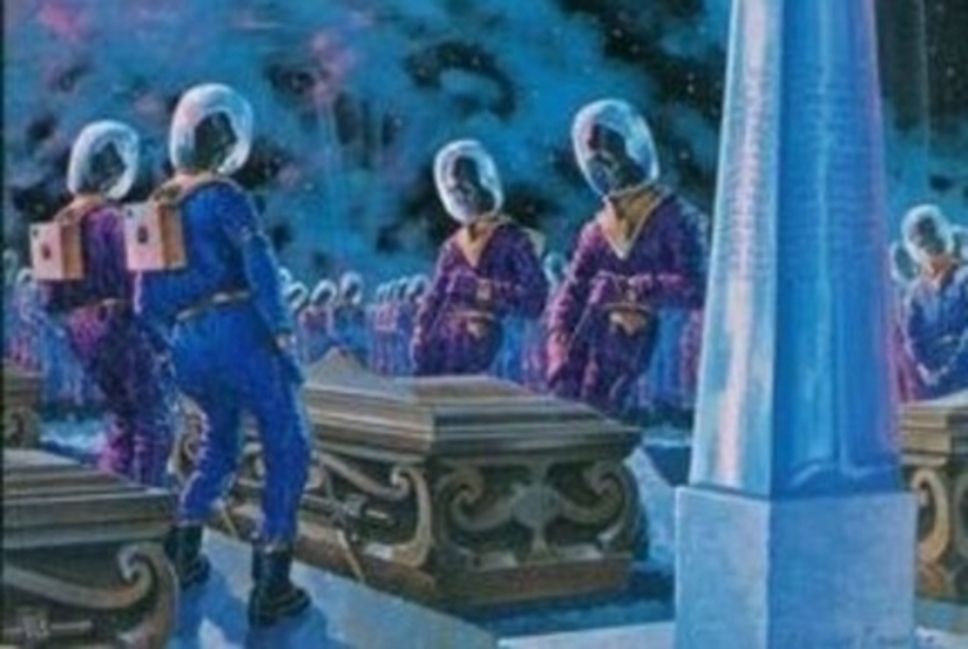
By the 2000s, the major slasher franchises—Halloween, A Nightmare on Elm Street, and Friday the 13th—had long passed their commercial apex, and some were embarking on reboots and remakes to try to recharge their brand. But Friday the 13th went in a different, far sillier direction with Jason X, the 10th installment in the series revolving around the lumbering killer Jason Voorhees. Although most Friday the 13th movies are set at summer camp, Jason X takes place in the far future, where a cryogenically frozen Jason is awoken to rampage on a spaceship. It’s a goofy yet self-aware film, a quasi-comedy that revels in how far it has strayed from the formula but is filled with nerdy nods for superfans, including an over-the-top cameo from the master filmmaker David Cronenberg.
Blood Work (2002, directed by Clint Eastwood)
In between his Best Picture–winning classics Unforgiven and Million Dollar Baby, Clint Eastwood churned out eight solid-to-great films—all mid-budget dramas, and all but two based on best-selling novels. One of the least loved is Blood Work, a fun, gritty thriller adapted from a Michael Connelly book. It stars Eastwood as a retired FBI agent recovering from a heart transplant who tries to solve the murder of the woman whose heart he received. It’s an appreciably silly metaphor for Eastwood to sink his teeth into; he was 72 when the film came out, and it’s very much a tale of an over-the-hill legend trying to cling to his fading days of glory. The grandest irony is that Eastwood would go on to make films for another two decades—and has shown no signs of stopping yet.
In Her Shoes (2005, directed by Curtis Hanson)
A terrific sibling dramedy starring Toni Collette, Cameron Diaz, and Shirley MacLaine, In Her Shoes is that Hollywood anomaly—a major film mostly focused on the relationships between well-drawn female characters. Directed by Hanson, who was coming off a major-hit streak with L.A. Confidential, Wonder Boys, and 8 Mile, In Her Shoes is a lightweight that isn’t too concerned with wringing laughs out of the audience, which is why it stuck out on release (as cinemas were still dominated by fratty, gross humor). Collette and Diaz give fantastic performances as sisters with little in common, struggling to heal a rift that opens near the beginning of the film; Hanson and screenwriter Susannah Grant chart their path to reconciliation with care and grace.
The Skeleton Key (2005, directed by Iain Softley)
My favorite kind of horror movie is one that derives most of its scares from the atmosphere of an unusual location. The Skeleton Key, a supernatural thriller starring Kate Hudson and Gena Rowlands, is set on an isolated plantation home in southern Louisiana, and so much of the fun is the detail put into its creepy production design, which evokes a place laden with dark secrets. Hudson plays a former hospice aide who takes a job at the plantation caring for its aging owners, but as she explores their crumbling abode, she discovers its evil history, and Softley builds out a clever mystery with pointed themes that unsettles without resorting to cheap jump scares.
Aeon Flux (2005, directed by Karyn Kusama)
Undoubtedly one of the oddest blockbusters ever produced by a major studio, Kusama’s adaptation of the cult ’90s MTV series was critically derided and somewhat disowned by its director, who said it had been reedited for commercial appeal. If that’s the case, her cut must have been unimaginably bizarre, because the final version is a visually giddy, borderline-incomprehensible sci-fi actioner loaded with intriguing ideas of how our utopian future could go awry. Charlize Theron stars as the raven-haired, ultra-athletic warrior fighting to take down her future government; she eventually uncovers a conspiracy that helps explain both the cloistered world she lives in and the hazy dreams she has of another life in the distant past. Kusama has made better movies, such as Girlfight and The Invitation, but even her biggest flop is overflowing with more cool ideas than most summer tentpole releases.
Déjà Vu (2006, directed by Tony Scott)
In his career, the high-octane master Tony Scott made five terrific thrillers with Denzel Washington. Initially Déjà Vu seems like a fairly routine collaboration, following the ATF agent Douglas Carlin, who’s trying to unravel the mystery of a bomb attack on a New Orleans ferry. Washington is playing the kind of dogged blue-collar character he often inhabits, but Déjà Vu takes a surprising sci-fi turn when he’s introduced to an FBI team that, through magical surveillance technology, has opened a window into the past. As Carlin uses this technology to try to solve the crime, the film becomes a sort of high-tech Vertigo in which Carlin is haunted by the sight of a tragedy he can’t undo. Given that the movie is directed by Scott, it’s also filled with great car chases and explosive action.
Morning Glory (2010, directed by Roger Michell)
The workplace-comedy genre is mostly confined to television at this point, but Michell’s Morning Glory is a recent, overlooked cinematic example that’s filled with stars and propelled by peppy humor. Rachel McAdams plays a harried young producer named Becky Fuller who’s asked to turn around a network’s low-rated morning show; she conspires to hire the grizzled newscaster Mike Pomeroy (Harrison Ford), pairing him with the long-suffering morning host Colleen Peck (Diane Keaton). Though the film sprinkles in romance and zany jokes, it’s focused on the relationship between Fuller and Pomeroy, whose distrust for each other evolves into mutual respect. Ford’s epically grumpy performance makes that eventual connection feel triumphant.
Killing Them Softly (2012, directed by Andrew Dominik)
One of few movies to have gotten an “F” CinemaScore from audiences, Killing Them Softly is a grim adult drama based on the crime novel Cogan’s Trade by George V. Higgins. Although the film was billed as a thriller about an assassin (Brad Pitt), it spends the most time with criminals who are much less cool. The absence of glitzy thrills may not appeal to as wide of an audience, but the movie’s grittiness makes for a standout viewing experience. Ben Mendelsohn and Scoot McNairy play disheveled lowlifes who rob the wrong poker game, Pitt and James Gandolfini are the dispassionate hit men sent in to clean up the mess, and Ray Liotta is incredible as a nervy Mafia middleman. Set during the 2008 financial crisis and presidential election, Killing Them Softly brilliantly highlights the corruption in both America’s economic system and its criminal enterprises.
Lockout (2012, directed by Stephen Saint Leger and James Mather)
A delightful piece of sci-fi trash from the French production company EuropaCorp, Lockout is essentially Escape From New York set on a space station. In fact, the plot is similar enough that the latter film’s director, John Carpenter, successfully sued for plagiarism in a French court. Still, Saint Leger and Mather’s take on the story is worth watching. The fun, cheap thriller follows an ex-CIA operative (Guy Pearce) trying to rescue the president’s daughter (Maggie Grace) from a space prison in exchange for his freedom, after being jailed for a crime he didn’t commit. Pearce has a joyous time as the wisecracking, cigarette-smoking antihero, and Joe Gilgun gives a great villainous performance as the frightening inmate holding the president’s daughter hostage.
Hotel Transylvania (2012, directed by Genndy Tartakovsky)
In this gag-heavy, horror-themed film, the director Tartakovsky’s skill in rendering physical comedy and its lead actor Adam Sandler’s love for Borscht Belt humor combine to spectacular effect. The Hotel Transylvania franchise has largely been ignored by critics, perhaps because they underestimated its star, Sandler (who plays Count Dracula as a magnanimous hotel owner), and his crew of collaborators, including Kevin James, David Spade, and Andy Samberg. But the series’s first three movies, directed by one of animation’s modern geniuses, bear the same deftness that make Tartakovsky’s other efforts, such as Dexter’s Laboratory and Samurai Jack, so strong. The third, cruise-ship-centric entry is my favorite.
By the Sea (2015, directed by Angelina Jolie)
A seemingly autobiographical project written, directed by, and starring Jolie, By the Sea centers on a couple vacationing in France whose marriage is on the rocks. (She has said that it was not based on real life.) The movie, which co-stars Jolie’s husband at the time (Brad Pitt), was initially dismissed as a vanity project. But after Pitt and Jolie’s separation (which they announced just a year after the movie’s release), the film’s tone takes on a new weightiness. Jolie is borrowing from ’60s and ’70s European art cinema—particularly Éric Rohmer—but the sad, angry undercurrent between the characters gives the entire work a fascinating edge.
Teen Titans Go! To the Movies (2018, directed by Aaron Horvath and Peter Rida Michail)
I decided to watch Teen Titans Go! To the Movies on a whim while bored on a plane. I had never seen the children’s cartoon series that it’s inspired by—I really didn’t know much about the Teen Titans at all. It doesn’t matter. The film is the most effective cinematic spoof of the never-ending superhero trend I’ve ever seen. It’s a raucous, in-joke-laden satire of the movie business that makes time for plenty of witty musical numbers and action sequences. The plot follows Batman’s sidekick, Robin, and his teenage hero friends as they try to persuade Hollywood to make a movie about them, but it’s really a sharp critique of how the film world revolves around comic books now. The movie actually got solid reviews on release—but it deserves to be seen as more than just kids’ entertainment.
Plus One (2019, directed by Jeff Chan and Andrew Rhymer)
One of the best romantic comedies in a decade that saw the genre flounder in theaters, Plus One is just waiting to be discovered by a bigger audience. The setup is clean: Longtime friends Alice (Maya Erskine) and Ben (Jack Quaid) agree to be each other’s dates to every single wedding they’re invited to, as a cure for their loneliness. Romance ensues, and then hurt feelings, and complicated conversations, and finally more romance in a winning, acerbic script that carries out every turn with ease. Quaid is a charming cad, but Erskine is the real star, never letting Alice become an easy stereotype of the 20-something sad sack looking to have it all.
The Empty Man (2020, directed by David Prior)
Released at the height of the COVID-19 pandemic, The Empty Man was essentially dumped by its distributor into vacant theaters. Still, the quiet horror film eventually found an audience—a testament to its quality. The superb opening sequence, which could function as a short film in its own right, sets out the spooky particulars of the unseen “Empty Man,” which possesses its victims. Then the movie shifts into a conspiracy thriller, following a former detective whose efforts to unravel a bizarre set of deaths lead him to a cult that calls to mind many of today’s toxic online groups. Prior’s debut film is wild, woolly, and daring, and deserves all the attention it’s received from a small but vocal group of fans.