
Category: Uncategorized
Dead Space 2 Review

Does this sequel adhere to the spooky spirit of the original, or take one liberty too many in trying to improve itself? Read to find out! The first Dead Space set a new standard for sci-fi horror in video games, taking classic rules of terror and twisting them into a new dimension of fear. Dead Space 2 sought to continue the franchise, putting players back in the boots of space engineer Isaac Clarke and pitting him against the Necromorph menace once more.
Introduction
Of all the games in the Dead Space franchise, the second, Dead Space 2, is widely held as the best of the bunch. Developed by the newborn Visceral Games, the second entry in the series took the lessons of the first game and improved on them on a scale that few sequels ever accomplish. It’s no Mass Effect 2, but that’s an unfair comparison to make in any case, given the different themes Dead Space runs with. Regardless, it’s a vast improvement, and despite being almost seven years old at the time of this writing, it remains a fun, exciting and spooky experience. You can pick it up on Steam for $19.99, where it comes bundled with a bunch of integrated extra material that was originally only available as paid downloadable content, such as extra RIGs, weapon variants and more! Of course, a lot of other DLC isn’t available or supported for the PC version, but having looked into it myself, I can safely say you’re not missing anything by getting this edition. The scares are just as scary and the combat is just as gory, so don’t listen to anyone who says it’s better on consoles.
Story
For those new to the universe of Dead Space, a handy synopsis of the original’s plot is immediately available from the main menu, and provides a rapid means of catching up for those who need it. Isaac Clarke, protagonist of the first game, is once again the hero, with opening scene placing him in a government-run mental ward, where he has been kept for the past three years, wracked with guilt over the death of his girlfriend Nicole on the Ishimura and haunted by the lasting mental scars of his contact with the mysterious Red Marker. Of course, it’s not Dead Space without Necromorphs, and this time the game skips most of the build-up, with Isaac’s unlucky rescuer getting skewered and infected right before Isaac’s eyes seconds into the plot. The initial chase scene as Isaac flees the ward, with Slashers bursting out of cells and other creatures lunging out of side passages while he struggles with his straight-jacket is heart-pounding, and is an excellent example of what sets the second Dead Space apart from the first. Where the original relied on dread, a heavy, oppressive atmosphere and a somewhat slower pacing, Dead Space 2 is like the second half of Pitch Black, where horror is still present, but takes on a more ‘thriller’ vibe. The game’s no less scary of course, and while the action is more intense, it retains a uniquely Dead Space vibe that no amount of shooting sequences can detract from.
The whole plot of Dead Space 2 ties very heavily into Isaac’s decaying grip on sanity.The first quarter of the game places you at the mercy of two unreliable narrators; Stross, a mental patient from the same lab Isaac was held in, and Daina, partner of Isaac’s unlucky would-be rescuer, who seems trustworthy, but quickly begins to project the sense that she has a hidden agenda. This battle of trust is overlaid on the fact that the Marker pattern in Isaac’s brain is taunting him with hallucinations of his dead girlfriend who mocks and degrades him for his guilt over his self-perceived involvement in her demise on the Ishimura. A heavy emphasis on eye imagery also helps set up the player for one of the most knee-knocking and nail-biting end sequences I have ever seen. On top of that, Isaac has to fight to stay alive in the midst of a massive Necromorph outbreak while at the same time being hunted by the forces of EarthGov. This layer cake of lunacy is delicious, and makes for a rich, engrossing experience.
Of course, there are some things that could’ve been done better. The involvement of the followers of Unitology (an in-universe religion rooted in the worship of the alien Markers) only lasts for a small portion of the game, and the game’s primary antagonist seems cartoonishly two-dimensional at times. It’s not until the last few minutes of the game that he gets any kind of real characterization, which is unfortunate, given how hard he seems to be trying to kill Isaac. Despite this, all the actors make stunning performances, including Isaac himself, who now has a voice despite being mute for the entirety of the first game. Normally when a silent protagonist gets a voice, it doesn’t go well, but Isaac is an exception, and comes across as a genuine human character with problems you can relate to. His voice actor does a great job of conveying the sense that he’s an everyman hero, an engineer caught in the midst of extraordinary events. It’s a great performance that only adds to some already-great writing. Overall, the whole plot works well to retain the sense of Lovecraftian mystery of Isaac’s situation while balancing it on top of a heavier diet of action than his previous adventure. Its human and sci-fi aspects still stand strong even today.
Gameplay
Dead Space 2 retains much of the play-style of its predecessor, with all the old weapons making a comeback, though many now have new alternate fire-modes that make them less situational and more versatile than in the previous game. This is refreshing, since while Dead Space had a creative and brutal arsenal, only the Plasma Cutter ever seemed to remain usable throughout the campaign. New weapons make an appearance as well, with my personal favorite being the viscerally-satisfying Javelin Gun, which when fully upgraded shoots yard-long spikes that can then be triggered to electrify and explode impaled enemies. Furthermore, as if it wasn’t enough fun nailing thing to other things with a high-tech nailgun, the game vastly improves on Isaac’s Kinesis power, letting him grab and toss all sorts of environmental objects to stun or kill attackers. This includes ripping the bone blades off of slain Necromorph Slashers, which can then by launched like a spear. There’s nothing quite as satisfying as turning the enemy’s weapons against them, especially when that weapon is part of their own body.
The game also introduces new enemies, which mix with the old roster in a remarkably well-crafted system of encounters that strive to test your tactical flexibility. Chief among these are Stalkers, crafty, almost alien-looking creatures that, as their name implies, take a stealthy approach to fighting you. They hide behind crates and attack in a hit-and-run fashion, working to unnerve you with their whale-like vocalizations while peeking out occasional to confirm your location. Another is the Pack, which is among the more controversial of the game’s already gruesome creature designs. These nasty critters are made from the adolescent and pubescent humans that fell to the Necromorphs, and charge at you in large numbers with bald, child-like faces set on lanky pale bodies with razor-sharp claws. They serve to occupy and distract you from the more heavy-hitting enemies, weighing you down in a frenzied dog-pile of death whole a Slasher or Leaper winds up for another attack.
Dead Space 2 also introduces a multiplayer component known as Outbreak Mode, where two teams of four human players compete against a third team of Necromorphs and each other in a race to complete objectives before time runs out. The mode contains much of what you’d expect to see from many modern multiplayer modes, with outfits, weapons and boosts to existing abilities locked behind a level-progression system which awards players for completing objectives and killing enemies in matches. It’s mostly defunct now, having never been hugely popular to start with, but it does make an interesting addition to a game that is chiefly action-horror. It’s not without its own element of terror either. As a Necromorph, players can use vent-access to ambush other players, making matches a tense affair, with environments seeming overtly hostile at every turn. Again, it’s not going to win any awards, and it never did, but it is an interesting experiment in trying to expand the series’ repertoire from a single-player focus.
Sound & Design
Dead Space 2’s art design is probably one of the best things about it. Despite being five years old at the time of this writing, it looks better than many other triple-A games, with its careful application of lighting, its butter-smooth frame-rate and its jaw-dropping scenery all well up to spec. Its a testament to what good environmental design can do for a game over the long term. Furthermore, the environment itself again feels like a living character, even moreso than the Ishimura of the first Dead Space. The game takes place on Titan Station, otherwise known as ‘the Sprawl’, a veritable city in space made from the ruins of Saturn’s titular moon. Text, audio and video logs all lend a bit to fleshing out the lore and helping with puzzles, but most of the character of the world comes from the visual and auditory storytelling you experience as you progress.
An excellent example is the segment after Isaac’s harrowing escape from the secure government wing of the station’s hospital at the game’s opening. Once outside the facility, he ends up in the Cassini Towers apartment complex, where he bears witness to the full-scale madness of the Necromorph outbreak sweeping the station. Panicking crowds flee from the swarm of the risen dead, while others lock themselves in their homes in fear. The sounds emanating from the sealed apartment units are like a window to the apocalypse. A man threatens to shoot anyone who tries to remove him from his home, while across the way, an abandoned infant screams and cries for a mother who isn’t there. Overlaid on this is an unusual amount of ominous Unitology imagery, with bloody alien writing that was established as the Church’s calling card in the original Dead Space scrawled all over the place in blood, hinting that the area might be thick with members of the pseudo-religious order.
This kind of artful design is a thing to be cherished, as it so rarely appears in games these days. Like the first game, Dead Space 2 is heavy with metaphors. It even continues the series’ tradition of spelling out a message in an acronym composed of the first letter of each of the game’s chapter titles. The sound and voice acting also shine, with the Necromorphs providing suitably creepy and disgusting audio cues. It also features one of the earliest forms of dynamic musical cues, with the various creatures all having signal sounds and themes equipped with dynamic triggers to help synchronize the soundtrack with the scares. It’s simply amazing, and deserves to be appreciated since many developers today still use the same techniques.
Final Verdict
Dead Space 2 is to Dead Space what the later Resident Evil titles are to the first (though without the silly over-the-top convoluted plot). It’s a take on a similar scenario but compensates for the lack of that special first-time scare you get from something original and terrifying with an increase in the action. While it can’t truly capture the spine-tingling terror of that first time on the Ishimura, it still handles itself well, with a dread-filled atmosphere, a rip-roaring pacing and plenty of gruesome action in between. It also plays off the last game in a novel and heart-breaking manner, with Isaac’s emotional struggle serving to make him a very human and fragile character despite his swearing and zombie-stomping abilities. I actually feel it outdoes the first game in many areas, and for that reason, I highly recommend it, both for fans of horror and action. It’s rare a sequel does so much to improve while staying original. It deserves appreciation; your appreciation. So what are you waiting for? Put on your RIG…and m̲͔̮A̞̝̰̺̘̖͔k̵̬͍͈̳͉̻̬e͇̦̠͕̙̹̮ ̼̼͖ͅu̪̠S͙̼̬͝ ̡͍̠͓̙̣w̹̗̝̭͠H͚̹̖̦̖O̧̰̹͙͇̪̤͖l̝e̬͖!
Siskel & Ebert Classics – 6/17/87 – Full Metal Jacket, Benji The Hunted
Greatest Siskel & Ebert show of all-time? Their heated debate over Kubrick’s Full Metal Jacket gets even hotter when Roger endorses Benji The Hunted a short time later. Plus: Spaceballs and Roxanne.
In David Lam Park in Yaletown. Spring of 2020.










“The most beautiful woman in the world” becomes a kindergarten teacher representing the Philippines! “Miss International World Congress” Photo Report | Daily SPA!

The “2016 Miss International World Tournament”, which decides the most beautiful woman in the world, was held in Tokyo on the 27th, and Kylie Verzosa (24), a kindergarten teacher and model from the Philippines, won the “Miss International”. This is the sixth time that the Philippine national team has reached the top for the first time in three years. Junna Yamagata, the representative of Japan, did not win the prize.
The contest was born in 1960 as one of the world’s three major beauty pageants alongside Miss World and Miss Universe. It not only competes for beauty in appearance, but also aims to contribute to the international community around the world. The purpose is to gather together as “goodwill ambassadors for peace and beauty” and deepen mutual exchanges.
In the past, Toshie Suda won the 4th place in 1970, and Hana Urushijima won the 3rd place in 2002. In 2012, Ikumi Yoshimatsu was selected as Japan’s first “Miss International”. At this year’s 56th World Championship, 69 mistakes from each country and region appeared, and the contest proceeded with the national costumes of the first screening, the swimwear of the second screening, and the dress screening of the third screening. After being selected by judges such as actor Tetsuya Bessho and designer Junko Koshino, the finalists were narrowed down to 15 finalists. At the end, in addition to the Grand Prix, the best 5 and special awards were announced in a one-minute speech examination that conveys the finalist’s own words.
Kylie, who was finally called, covered her mouth with her hands and looked surprised. She wept when she was blessed by the mistakes of each country. At first, I called out in Japanese, “Thank you very much, Japan”, and when the biggest tiara was given, “I still can’t believe this moment. I’m excited and happy. I’m grateful to my family. It’s really like a dream to stand here with your help, “she said with joy.
Ms. Versosa is 174 cm tall, has a bust of 84 cm, a waist of 54 cm, and a hip of 90 cm. Her toned body and cute face are attractive, and she says that she emphasizes “beauty is what is in herself” and her spirituality and relationships with people. From now on, she will be the representative of Miss International. I want to carry out charity activities as well. I also want to focus on mental health activities. “
Australia’s Alexandra Britton (23) is second, Indonesia’s Felicia Huang (24) is third, Nicaragua’s Briany Chamorro (22) is fourth, and America’s Katriana is fifth. Ms. Reinbach (18). In addition, Moldova national team Arina Kirchiu (20) was selected as the “Miss Perfect Body” given to the representative who fascinated the audience most in the swimsuit examination, and the dress dress and behavior were the most splendid and attractive representative. Ms. Huang, the representative of Indonesia in 3rd place, will give the “Miss Best Dresser”, and Ms. Chamorro, the representative of Nicaragua, will give the “Miss National Costume” to the representative who showed the most attractive national costumes of her country. Awarded.
Here, we want you to enjoy the appearance of beautiful women who are active at the world level, focusing on the examination of national costumes and swimwear.
Full Metal Jacket (1987) – The Jelly Donut Scene (3/10) | Movieclips
Stanley Kubrick’s take on the Vietnam War follows smart-aleck Private Davis (Matthew Modine), quickly christened “Joker” by his foul-mouthed drill sergeant (R. Lee Ermey), and pudgy Private Lawrence (Vincent D’Onofrio), nicknamed “Gomer Pyle,” as they endure the rigors of basic training. Though Pyle takes a frightening detour, Joker graduates to the Marine Corps and is sent to Vietnam as a journalist, covering — and eventually participating in — the bloody Battle of Hué.
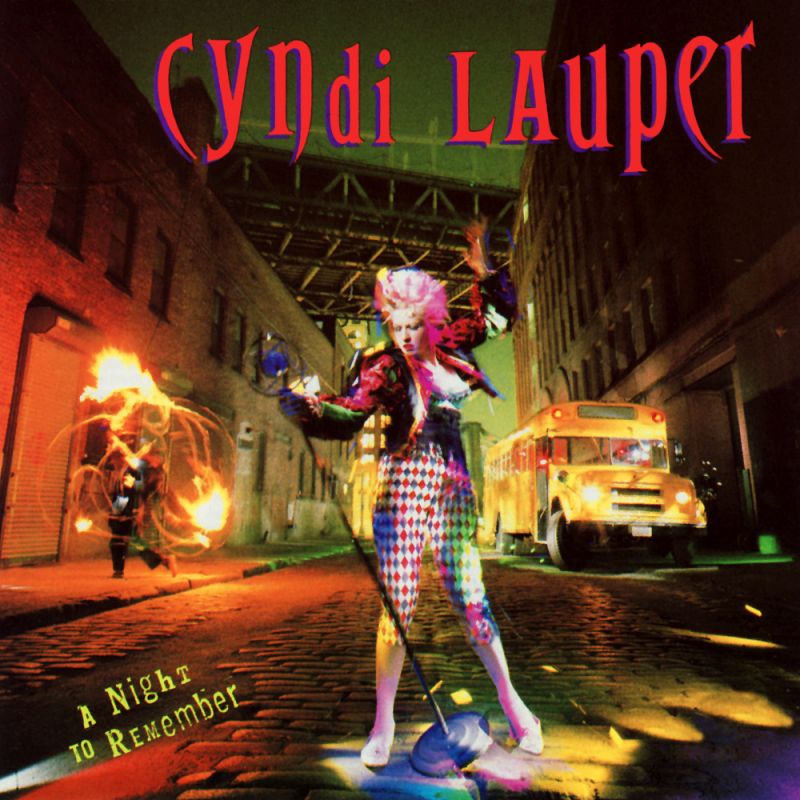
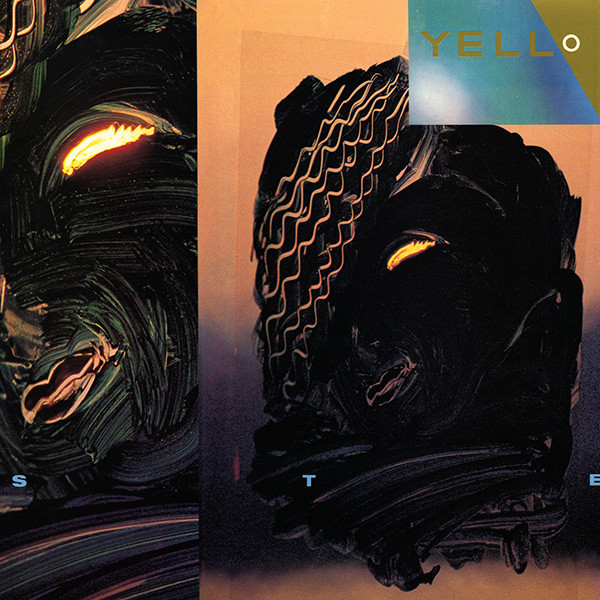
Now listening to A Night To Remember by Cyndi Lauper and Stella by Yello…
Full Metal Jacket (1987) – Private Pyle Fails Scene (2/10) | Movieclips
Stanley Kubrick’s take on the Vietnam War follows smart-aleck Private Davis (Matthew Modine), quickly christened “Joker” by his foul-mouthed drill sergeant (R. Lee Ermey), and pudgy Private Lawrence (Vincent D’Onofrio), nicknamed “Gomer Pyle,” as they endure the rigors of basic training. Though Pyle takes a frightening detour, Joker graduates to the Marine Corps and is sent to Vietnam as a journalist, covering — and eventually participating in — the bloody Battle of Hué.
“Make us whole again.” Explaining the Markers from Dead Space

There’s a lot of mystery surrounding the monolithic structures called “Markers” but I think there’s enough information in the various sources of Dead Space media that hint at, at least, some of what is going on.
Who or what created the Markers?
The original source of the Markers is not known and may never be revealed. There is no information in the series that gives us any clues as to the nature of the originators of the Markers or why they created them in the first place.
Many different people and groups within the Dead Space universe have their own views of where the Markers came from, who created them and their purpose, but these views aren’t actually based on any solid evidence.
What we do know is that the Markers are a form of technology and that they serve some sort of purpose that may have either gone horribly wrong… or horribly right. I know, that’s not much of an answer, but that’s the most truthful answer you’re going to get about the Markers.
The only thing we can be certain of is that an unknown alien race, a very long time ago, began a process that created Markers and everything else that comes with it.
What is the purpose of the Markers?
According to the Church of Unitology, the Markers are a divine gift given to us to rebirth the human race and raise us to a higher plane of existence.
EarthGov, and the government organisations that came before them, believed that the Markers could be used as a power source of some kind since it seemed to be generating it out of nowhere.
The Markers are a form of technology designed to do… SOMETHING. To be perfectly honest, we don’t know what the true intention was behind the creation of the Markers or even if the spawning of Necromorphs is what they’re meant to be doing in the first place… or if this all started with a Marker to begin with.
Whoever or whatever created this technology are long gone and despite whatever intentions the original creators had, the process that occurs repeats every time they are discovered by an intelligent species in the universe that leads to the creation of more Markers and Necromorphs.
Some even argue that the Black Marker that impacted Earth, causing the extinction of the dinosaurs, had a hand in accelerating and guiding human evolution into its current form. Though, this is all conjecture at best.
When a Marker is first discovered by an intelligent species, it begins to influence that species to create more Markers. People who are affected by the Marker’s strange signal start to lose their sense of reality and begin to hallucinate. The average person will soon devolve to madness while more intelligent individuals will start to perceive patterns in the signal and interpret these patterns as instructions to create more Markers.
Depending on the kind of species the Marker is influencing with its signal, this process can take time and may even fail.
It’s been shown that, for the majority of humans, the Marker signal is overwhelming and can drive them to madness, suicide and murder far too easily. The signal then acts in a different fashion for dead tissue, leading to the creation of what is known as a “Necromorph”, a form of reanimated life created from the dead.
For a species like the alien race found on Tau Volantis, the signal could be overcome long enough to allow that species to create many markers before succumbing to their own Necromorph outbreak. Though, it should be noted that humanity did eventually created a large number of their own Markers in secret and found ways to contain them for a time.
Necromorphs come in various forms depending on the subject that is infected. For example, most adult humans turn into a variant of Necromorph that grow large blades capable of slicing into victims while infant humans and dogs turn into Necromorphs that use their deformed intestines to fire barbs at their victims. Some larger and more grotesque forms of Necromorphs are formed from multiple subjects and there are even cases of excess tissue being turned into an unusual biomass that coats areas that are heavy with Necromorph activity.
Once a Necromorph outbreak starts, the resulting chaos leads to the deaths of many more victims and the creation of more Necromorphs. As more people die, more complex Necromorphs are created such as The Hive Mind and The Nexus creatures that act as a neural hub to control lesser Necromorphs.
During this stage, the Marker creates an invisible field around itself that prevents Necromorphs from coming within reach of the Marker. This is to stop a premature Convergence event that could lead in the failure of the entire process.
Once enough Necromorphs are created, the field that prevents Necromorphs from approaching the Marker disappears allowing all the Necromorphs to gather at the base of the Marker to initiate the convergence event. When convergence begins, an unknown force produced by the Marker itself hurls the Necromorphs above it where they’re combined into a large mass that will eventually form a organic moon-like creature.
During the final stages of convergence, for reasons unknown, the individual or individuals who have the most knowledge of how to create markers within their brains are needed to be killed off in some special manner. This is something that the Marker tried to do at the end of Dead Space 2, however, the exact purpose of this is unclear.
In the end, what we are left with is a single Necromorph entity created from the mass of individual Necromorphs. The size of the resulting moon depends on the size of the population affected by the convergence event. In an ideal scenario, the population of an entire planet would be used to birth this new entity known as one of the Brethren Moon.
What are the Brethren Moons?
The Brethren Moon is what is created once Convergence has been successful. From what little information you find out about the Brethren Moons in Dead Space 3, it seems as though they are part of a type of a network of moon-sized neural cells that create a galaxy-spanning brain of sorts.
In fact, the signal that the Markers produce comes from them. Each one of these moons are connected via this signal as well as the Markers which are produced by a harvested species to infect more civilisations to create more Markers, initiate a Necromorph outbreak which becomes a convergence and then spawns another Brethren Moon.
From what I can gather, the entire process is simply used to create more of these galaxy-spanning neural cells (the Brethren Moons) in order to add onto this cosmic level intelligence that is far beyond us in every way. The scary thing is that all the propaganda material that The Church of Unitology is so convinced of is pretty accurate to what has been created… just in a much more horrifying way.
All the species that became victims of the Markers were, in one way, being re-birthed into a higher form of existence (as The Church of Unitology would put it), but in another way, they were being harvested to become usable bio-matter to expand a cosmic brain’s neural network.
What’s the deal with that incomplete Necromorph Moon in orbit of Tau Volantis?
This is where things get interesting, because that incomplete Necromorph Moon is actually the original nightmare that plagued Isaac during his mission to the USG Ishimura in Dead Space 1. It is also the cause of humanities discovery of Marker technology through the “original” Black Marker.
It all started with the original Black Marker that crashed on Earth some 65 million years ago, wiping out the dinosaurs and laying in wait until it was finally discovered 300 years prior to the events of the first Dead Space game.
During the discovery of that first Marker, a common line was spoken to the people who started hallucinating and hearing voices in their heads… “Make us whole.” It’s something that is repeated over and over in the Dead Space series and for people within the Dead Space universe and outside in the real world have come to understand this phrase to mean many things.
“Isaac… make us whole again.”
It became the mantra of Unitology, a religion created around the discovery of the Marker and it’s also been a nightmare plaguing Isaac since the moment he set foot on the USG Ishimura as well as many others who have come into contact with a Marker. While everyone has their own interpretation of what that phrase may mean, the true meaning becomes clear at the end of Dead Space 3, once we discover the existence of the incomplete Necromorph Moon in orbit of Tau Volantis.
Essentially, the phrase “make us whole” is a kind of distress signal the Tau Volantis Necromorph Moon was sending out to any Markers within range. At the time of its discovery, the Black Marker signalled humanity to create more Markers, but the signal was of two voices, one seemed to be fighting against the other in some way. But why?
Let’s compare the two most prominent Markers found in Dead Space 1 and 2, the signal being produced by those Markers seemed to make Isaac do different things. The Red Marker found on Aegis VII wanted Isaac to restore it back in the approximate location as to where it was found while the Gold Marker on The Sprawl wanted to initiate the convergence event.
The Gold Marker found on The Sprawl was doing what it was “suppose” to do, just like all other Markers before it. It instructed an intelligent species to construct more Markers and then used their dead to create Necromorphs in order to initiate a convergence event that would lead to the birth of a new Brethren Moon. Thankfully, the final step of the process was stopped by Isaac Clarke, but despite the failure at the most crucial moment, the Gold Marker was doing EXACTLY what it was designed to do.
On the other hand, the Red Marker found on Aegis VII was used as a triangulation device. From information that you get throughout the series, we find out that humanity has been making Markers for a very long time now and that the governing organisation that predates EarthGov, the Sovereign Colonies, used the signals from these various Marker sites and triangulated them back to a lone planet called Tau Volantis.
The failed Brethren Moon orbiting Tau Volantis was trying to lure humans to the planet in order to turn off the alien device that was holding it in stasis for all this time. Once the device was turned off, the convergence process would resume and the Brethren Moon would finally become complete thus ending the many hundreds of years of crying out, “Make us whole again.”
And yes, after this entire entry, I know that the whole mystery has already been solved a long time ago and this is probably now common knowledge. But just remember, this entry was originally started by me a month after Dead Space 3 came out and I had already finished the entire game by that point and had put a lot of thought into everything written here.
I think I did pretty well with all of that information back then.
Full Metal Jacket (1987) – Let Me See Your War Face Scene (1/10) | Movieclips
Stanley Kubrick’s take on the Vietnam War follows smart-aleck Private Davis (Matthew Modine), quickly christened “Joker” by his foul-mouthed drill sergeant (R. Lee Ermey), and pudgy Private Lawrence (Vincent D’Onofrio), nicknamed “Gomer Pyle,” as they endure the rigors of basic training. Though Pyle takes a frightening detour, Joker graduates to the Marine Corps and is sent to Vietnam as a journalist, covering — and eventually participating in — the bloody Battle of Hué.

