The original Resident Evil trilogy on PlayStation were classic survival-horror games. The genre itself was rooted in the conventions of adventure games. The franchise was not intended to be an action game series.
Players would find themselves scrounging for whatever limited resources possible and always looking for obscure keys. Other times you may find yourself having to figure out cryptic puzzles or where to use some mystifying object to open a way forward. This was a key pillar in Resident Evil games as a whole.
Since Resident Evil 2 was such an enormous hit, Capcom was eager to quickly follow up on it. The next generation consoles were looming on the horizon so orders were passed to make a sequel. Resident Evil: Code Veronica lost its numerical designation and the gaiden game, Resident Evil: Last Escape, became Resident Evil 3: Nemesis.
Resident Evil 3: Nemesis, like many 90s survival-horror games on PlayStation, used pre-rendered backgrounds and tank-controls. This staple served a purpose for the genre and it was for the sake of friction. This creates tension while navigating, while also maintaining consistent control between the 2D backdrops.
The picturesque backdrops lend a significant cinematic flair to the franchise, and Resident Evil 3: Nemesis was no different. As far as the PlayStation trilogy goes, this entry proved to have the most detailed and sophisticated environments of them all.
The tank-controls are necessary in a game like this where the camera cuts to various angles. Holding up on the d-pad means that Jill will always move forward, regardless of the perspective.
Some people may struggle with this control configuration but Resident Evil 3: Nemesis wouldn’t work without it. It is not about landing shots since enemies have generous hit-boxes- it is about Jill’s placement.
Unlike its predecessors, Resident Evil 3: Nemesis aims to be different, and embraces situations where players get to be trigger happy and “make zombie go boom”. This means having to stand in one spot and deplete ammo on upwards to seven undead in a room.
Since the environments are laid out in long narrow passages, it is not viable to kite some brain eaters and to John Elway your way past them. The dodge mechanic is just not a reliable means to avoid damage, and how it works is incredibly vague and inconsistent.
It can feel totally random to pull off successful dodges, especially when throwing down with everyone’s favorite beefy boy. While it is optional to fight Nemesis, you ultimately will want to. Putting him in his place means crucial weapon part upgrades.
Resident Evil 3: Nemesis does not mess around with its difficulty. You are either going in with a strawberry daiquiri, or you’ll be a man and down the whole bottle of rum. There is no normal: only a virgin easy mode, or the chad hard mode.
This matters because you won’t get to enjoy all that Resident Evil 3: Nemesis has to offer. You must pick hard, and never look back. On hard, Nemesis lives up to his name and is unbelievable cruel in a fight.
Unlike Resident Evil 3 (2020), Resident Evil 3: Nemesis actually has the main antagonist in the title. The reason is because Nemesis is strongly featured through out, unlike the remake. This is where Capcom’s miscalculation on the gameplay show’s, it is just too difficult to fight this leather clad freak and not take several rams to Jill’s baby-maker.
No matter how effective you may get at dodging, it rarely guarantees that you can pull it off every time due to some of the camera angles, and just how fast Nemesis can move. It is a war of attrition regardless because there is no demand for accuracy, since Jill only has to be facing the beast to give him a face full of bullet bukkake.
In the older Resident Evil games, battles were sometimes puzzles or would require to exploit some kind of weakness. Other times you were able to run and quickly land a few shots and run away again. Resident Evil’s strengths and appeal was adventure gaming flourishes; action didn’t become a pillar until Resident Evil 4.
Resident Evil 3: Nemesis comes with several interesting puzzle designs. The ones that make the most sense involve getting equipment for city utilities to advance. The stupid ones make no sense in the logic of a downtown city area, and come off as arbitrary Resident Evil puzzle no. 18.
The absolute most egregious example is the ridiculous stone book Jill would have to lug around, to place into a statue, to open a compartment for another absurd stone object, which will lead to a battery, to turn on a lift. The sequence is not inherently bad; the context needed to be rethought out to make sense in a run-of-the-mill American city.
A major departure in Resident Evil 3: Nemesis from its predecessors is the lack of themed keys. While exploring, Jill is more likely to find a few one time use key item that needs to be used in the right area. Rarely will Jill need to put too much thought into her route, since so much of the game is straight forward outside of a few choices.
Unlike Resident Evil 2 or Resident Evil: Code Veronica, Jill’s story is a footnote in the grand scope of the Resident Evil universe. At best, it is a background event of the much more integral predecessor.
The one thing that can be gleamed from Nemesis, is that not all Umbrella goons are totally evil. Carlos and Mikail prove to be some of the more likable characters in the series’ canon. These boys ultimately prove themselves to be resourceful for Jill when the situation gets intensely bleak.
The plot is spartan, with the most basic outline of Jill just trying to get out of Raccoon City alive. There are no revelations or plot twists; just high stakes, and the looming threat of Nemesis and the impending nukes.
Some of the most impressive aspects of Resident Evil 3: Nemesis, is how far it pushed details in the 2D backdrops, and how far the low polygon modeling had come. Jill’s model is especially impressive for a PlayStation game, with lot of curves and a wide range of very natural looking motions.
Enemies get the same level of attention of detail, and when playing the GameCube version the jaggies get smoothed out nicely. Impressive touches include the city backgrounds depicting a gradual degradation. As you progress further, you might notice street lights not working anymore, or fire hydrants running dry.
The cold stillness of the pre-rendered imagery truly adds an eeriness, that the full 3D RE Engine renders just cannot capture. It is as if time has stopped, and everything is just dead. There is no need for sophisticated lighting or shaders; it simply is spooky and uncanny.
The sheer size of how much area Jill gets to explore in Resident Evil 3: Nemesis is impressive. Even the remake did not allow players to have this much access to Raccoon City. Some areas are optional, and some may get locked out if you go to another.
Subsequent playthroughs will feature altered cutscenes to keep you on your toes, and item placement may vary depending on what you have picked up. This is one of the reasons why Resident Evil 3: Nemesis is still such a highly revered entry despite its shortcomings; it has incredibly high replay value.
Resident Evil 3: Nemesis was the first time Mercenary Mode made its appearance. This amusing post-game diversion functions as a arcade like action game that takes pages from the movie, The Running Man.
The Mercenaries: Operation Mad Jackal is not that dissimilar to the 4th Survivor mode in Resident Evil 2, but with some added depth. Every enemy is worth a certain amount of cash, and has a specified time bonus attached. On top of this, you could combo bonuses if you are a fast enough killer.
This mode has you playing as the swarthy Carlos, dastardly Nicholai, or Mikail who reeks of vodka. Each one has a unique play style, but if you are truly clutch, you’re going to use Nicholai’s knife since if it earns a huge time bonus. The other two boys come with standard load outs.
The combat may not be best suited for this style of play, but it is worth playing it for the cash to buy unlockable content. Super weapons like infinite rocket launcher or the many sexy costumes for Jill add new life into the story mode.
There is much to appreciate about Resident Evil 3: Nemesis despite its shortcomings. The visuals were the tops out of the original trilogy, and the music is utterly suspenseful. It is a complete package with lots to do and see.
Acquiring a copy of Resident Evil 3: Nemesis is not terribly difficult. There are many versions across multiple consoles that are plentiful to obtain. The best way to play it is on either a Dreamcast or Gamecube for smoothest image quality.
The most accessible and cost effective way to play Resident Evil 3: Nemesis is on PlayStation 3 via a download off of PlayStation Network. It supports cross play with PSP and the PS Vita as well, because sometimes a guy just really wants to be chased by a beefy boy in leather while he is away from his consoles.
Studio Ghibli has consistently created the most compelling animated films I have ever seen, in part due to their immersive realism. Despite the fantasy and magic, Ghibli’s films consistently feel tactile and realistic. In this video essay, we explore how Studio Ghibli consistently achieves immersive realism in their films.
“I’d like to harness their youthful energy with a strap.”–Concerning student demonstrations in California, 1966
“The entire graduated income tax structure was created by Karl Marx. It has no justification in getting government revenue.”–During the 1966 gubernatorial campaign in California
Ronald Reagan was the 40th President of the United States, ruling from 1981-1989. The American media portrays him as a great leader and hero who single-handedly won the Cold War, fixed the economy and gave new spirit to the United States. Liberals and conservatives alike line up to sing his praises endlessly, worshipping him as some sort of God of Americanism. Conservatives try their best to imitate his campaign policies and invoke his name, spinning tales about how great the theory of “Reaganomics” worked. We are told over and over that he was the greatest President and world leader to ever walk the halls of the White House. It’s time to separate truth from myth regarding Reagan’s legacy—in this article we will examine Ronald Reagan’s presidency and give our readers the story that few ever hear from the corporate media.
The Reality of Reaganism
“We should declare war on North Vietnam. We could pave the whole country and put parking stripes on it, and still be home by Christmas.”–1966
“Welfare recipients are a faceless mass waiting for a handout.”–1966
During the Reagan era, wages stagnated, worker benefits declined, working hours increased and employers were allowed to crack down violently on labor unions as well as ignore labor laws entirely. Contrary to the preachings of neo-liberals, Reagan’s “trickle-down economics” enriched the few and the privileged. The wealth trickled up and not down. Reagan’s vision of American democracy was that of the true capitalist—a twisted version of “democratic” society run by a small elite stratum of oligarchs over the working classes, women, the poor, the youth and the non-white. Reagan reinforced this dictatorship of the blackest reaction with the most violent foreign and domestic policy seen for decades in US history—Reagan did not hesitate to ally himself with vicious armies of fascist butchers to eliminate his enemies and maintain US hegemony worldwide. At home, his policy was much the same, overseeing massive debt and poverty, police crackdowns and a swell in the prison population. Mindless patriotism, support for the military, surges in religious extremism, 1980s decadence and yuppie culture, rigid reinforcement of traditional gender roles (including chauvinistic and homophobic policies) and “get rich” capitalist culture of the most blatant, dog-eat-dog and cutthroat-to-the-bone variety were promoted.
Ronald Reagan brought the world to the brink of nuclear war in his ceaseless expansion of US Empire, focusing on aggressive expansion by use of force. Reagan’s policies slashed all progressive social programs while at the same time ushering in the new age of the United States military-industrial machine by setting a yearly 1.5 trillion dollar military budget, a number unprecedented in world history. Anything that was opposed to the most merciless free market policies, anything that opposed the domination of the United States, anything that was progressive or even vaguely humanitarian or liberal became a target for the Reaganites. Homelessness, national debt, inflation, unemployment and foreclosures skyrocketed, the brunt of it being born by poor people, Latinos and African-Americans.
Ronald Reagan remains perhaps the most famous “Cold Warrior” for his brutal global policies, which put weapons in the hands of anyone who opposed the Soviet Union. To this end, Reagan recruited vicious legions of right-wing death squads, fascists, drug-running kingpins, killers, religious fanatics and CIA puppets to his cause. Augusto Pinochet, Mobutu Sese Seko, P.W. Botha of apartheid South Africa, Ferdinand Marcos, the Nicaraguan Contras and many other unsavory characters became “champions of democracy” and “freedom fighters.”
Ronald Reagan unleashed armies of genocideres, dictators, gangsters, torturers and spies abroad and had them trained and funded in a manner unforeseen. His Administration targeted countries like Nicaragua, Vietnam, Cuba, Libya, Iran, Cambodia, Angola, Laos, Ethiopia and Afghanistan for military intervention and takeover, regardless of the popularity of democratic or leftist governments or the wishes of the people of those countries.
Strong popular movements of peasants and workers that rose in the Third World in response to massive preventable death from malnutrition, disease such as malaria and lack of human services in their countries were denounced as “communist” and put down with violence. Civilian and military targets alike were annihilated by Reagan’s cronies. In response to strikes in places like the farming plantations in El Salvador where the workers demanded an extra 40 cents a day, or the Coca-Cola plant in Guatemala where they called for a minimum wage, right-wing militias supported by the Reagan Administration would crush these attempts at reform.
In the Court of the Nuclear-Armed Warlord
“The time has come to stop being our brother’s keeper.”–Concerning welfare budget cuts in California, 1967
“If it’s a bloodbath they want, let’s get it over with.”–Concerning student demonstrations, 1970
To this day, the mentality of the Reagan era, of the predatory, corrupt culture of greed and heartless accumulation, of the psychotic faith in the absolute virtue of the free market, continues to poison the globe. Human compassion was cast aside for animal hungers and naked self-interest; ruthless colonialist ambition became the hallmark of American foreign policy. Reagan was a mouthpiece for the wealthy, the lucky, the elite and the power-hungry, an intentionally banal and wise-cracking speaker with a “folksy” crudity and passion for sound bites that managed to pass for logical arguments and sound philosophy. Understanding Reagan’s savagery is important for understanding the nature of the imperial capitalist system we live in.
US Presidents Lyndon Johnson and Richard Nixon had left the White House in disgrace, the former for escalating mass murder in Vietnam and the latter for the same activities, plus illegal wiretapping. Both were subjected to the wrath of protesting Americans in the 60s and 70s. Reagan, however, would oversee the end of all that. Reagan was a known to purposefully instigate violent conflicts with student movements who opposed his policies—on May 15, 1969, Reagan sent in police to crush protests in Berkeley Park in a confrontation known as “Bloody Thursday.” 2,200 National Guard troops then occupied the city of Berkeley for two weeks on Reagan’s orders.
Reagan signed NSD 52, authorizing the Federal Emergency Management Agency (FEMA) and the National Guard to round up hundreds of thousands of people and place them into military concentration camps. With help from Marine Lieutenant Colonel Oliver North, who would later become infamous due to the Iran-Contra Scandal, Reagan organized an operation entitled “Rex 84 Bravo.” This contingency plan contained blueprints and authorization for the federal government to declare martial law in the United States, abolish the Constitution, place the military in charge of state and local governments and give them unlimited power to move and execute citizens and imprison Americans viewed as security threats. When the air traffic controllers’ labor union, known as Professional Air Traffic Controllers Organization (PATCO), organized a strike in 1981, Reagan ordered the 11,345 striking controllers fired. For years after the first cases of AIDS were documented, Reagan refused to use state resources or social mobilization to help contain the virus which primarily affected homosexuals. By the time he acknowledged its existence, 30,000 people had died of the disease, the epidemic of which still plagues the United States.
Due to draconian cuts in social programs, a proposed directive by the United States Department of Agriculture in Reagan’s Administration tried to have ketchup reclassified as a vegetable, which would have allowed public schools to cut out servings of vegetables for school lunches. The Office of Management and Budget reported eliminating nutritional requirements for subsidized meals for low-income students netted a potential $1 billion a year.
Some statistics regarding the era of Ronald Reagan are also relevant for analyzing his policies:
– The top one percent’s share of household wealth had dropped from 1929 to 1981 from 44% to 27%. By 1998 it was back up to 39%.
– “The Congressional Budget Office says the income gap in the United States is now the widest in 75 years. While the richest one percent of the U.S. population saw its financial wealth grow 109 percent from 1983 to 2001, the bottom two-fifths watched as its wealth fell 46 percent” – CBS
– Meanwhile, for households of all ages, between 1983 and 1998 the average household net worth of the poorest 40% in the U.S. declined 76%.
– “The biggest indicator of a healthy society – average life expectancy – dropped. People in the U.S. now don’t live even as long as people in Costa Rica. Meanwhile the U.S. infant mortality rate has risen […]” – CBS
– In 1983, 50 corporations controlled most of the news media in America. By 2002, six corporations did.
– The number of Americans without health insurance climbed 33 percent during the 1990’s, according to the U.S. Census Bureau.
– Farmers in 1999 were getting 36% less for their products in real dollars than in 1984.
– In 1980 there were less than 500,000 people in prison in the U.S. By 2000 there were two million. In 1980, 8% of the prisoners were there for drug offenses; by 1998, 28% were.
– Ninety percent of young white male workers are now doing worse than they would have 20 years ago. Adjusted for inflation, the income of a recent male high school graduate declined 28% between 1973 and 1997.
– Wages for the bottom 10% of all wage earners fell by 9.3% between 1979 and 1999
– Median student-loan debt, 1977: $2,000. 1997: $15,000
– Ratio of executive pay to that of a factory worker in 1980: 42 to 1. Ratio of executive pay to that of a factory worker in 1998: 419 to 1. Annual pay of a factory worker if it had kept pace with executive salaries: $110,000
– In 1977, the disclosed wealth of the top ten senators was $133 million. In 2001 it was $1.83 billion.
– In 1982, U.S. foreign debt was less than 5% of GDP; by 2002 it was almost 25%
– Between 1973 and 2001, the incomes of the poorest 20% went up 14%, that of the 20% in the middle went up 19%, but the richest 5% went up 87%.
– The real value of the minimum wage peaked in 1969 at over $7 an hour. Its real value is now at $5 an hour.
– Eighty-six percent of stock market gains between 1989 and 1997 flowed to the top ten percent of households while 42 percent went to the most well-to-do one percent.
– In 1998 the top-earning one percent had as much income as the 100 million Americans with the lowest earnings.
– Two-thirds of American households headed by a person between the ages of 47 and 64 in 1998 had the same pension wealth or less in real dollars than they did in 1983. Almost 20% of all near-retiree households could expect to retire in poverty.
– By the turn of the century poor black families were working 190 hours more a year – and poor white families 22 hours more — than in 1979 for roughly the same pay.
Since Ronald Reagan:
– The two richest men in America — Bill Gates and Warren Buffet — own more assets than the bottom 45% of the country.
– Anti-trust laws, once considered the great mediator of commercial excess, have been steadily eroded.
– Organized labor has become a mere shadow of its former self […].
– Between 1980 and 2000, the U.S. per capita spending on schools increased 32%. The per capita spending on prisons grew 189%
– California built 21 prisons between 1980 and 1998; it built just one college.
– From the inauguration of a full-scale war on drugs in 1985 to 1998, the number of deaths per 100,000 for drug-induced causes almost doubled. In other words, having a drug war proved twice as deadly as not having one.
– There has been a massive shift towards the language of capitalism in all aspects of our conversation and speech, making our words more clichéd, less meaningful, less enjoyable, and less human. To an extraordinary degree we now speak to each as salesmen rather than as fellow citizens. This makes for a pretty seedy culture, full of insincerity and deceit while short on cooperation, individual creativity and shared goals.
– The age of Social Security coverage is rising as the public is being taught not to expect that either Social Security or Medicare will continue to serve as they do at present.
– There has been a dramatic increase in homelessness.
– Efforts to control individual rebellions against the banal and life-draining culture of extreme capitalism have produced increasingly authoritarian, militaristic and punitive tactics such as the war on drugs, zero tolerance, and the conversion of public schools into quasi-detention centers […].
– Advertising has invaded every aspect of our life, making existence increasingly one long commercial.
– Our environment has steadily and dangerously deteriorated […].
– Medicine has been converted from a public service to a corporate exploitive enterprise.
– [The United States] increasingly use corporatized prisons without adequate public supervision and prison slave labor to serve corporate interests.
– [V]oting turnout has declined.
– Corruption, both corporate and political, has increased to the point that it is no longer deviation but an assumed part of our culture. We all live in a Mafia neighborhood now.
A Dark Legacy
“Unemployment insurance is a pre-paid vacation for freeloaders.”–California Governor Ronald Reagan, in the Sacramento Bee, April 28, 1966
“It’s just too bad we can’t have an epidemic of botulism.”–In response to the Hearst family’s free food giveaway to the poor as partial ransom for their daughter Patricia (kidnapped by the SLA) 1974
The “Reagan Doctrine” was akin to the “Bush Doctrine” in saying that Washington had the right to attack and destroy any state, government or movement that interfered with US corporate or state interests. In the 1980s, the United States under Reagan supported forces and governments that committed widespread atrocities.
The most famous example were the Contras in Nicaragua, who fought against the leftist policies of the Sandinistas. The Contras murdered, tortured, and terrorized the population. Human Rights groups reported “murder, rape, torture, maiming children, cutting off arms, cutting out tongues, gouging out eyes, castration, bayoneting pregnant women in the stomach, and amputating genitals.” The CIA provided the Contras with a manual instructing them how to perform sabotage and terrorism. Tens of thousands of civilians died, many of them elderly and children. The Contras routinely raped women before executing them. These actions were widely reported by human rights organizations, church groups, Latin American scholars and many others.
Reagan’s administration claimed the Nicaraguan Sandinistas wanted to conquer the world because they once used the phrase “revolution without borders.” What Nicaragua really wanted was to inspire other countries with their accomplishments. Since that was against US hegemony, they had to go. The World Court and many members of the international community condemned the crimes Reagan was committing in Nicaragua, but he ignored this. When Nicaragua took its case to the World Court, the Court ruled against the US and condemned its use of international terrorism. They said the Reagan administration’s actions were illegal.
Under Reagan, the CIA used the funds from global drug trafficking for arms purchases, flying United States planes full of cocaine from Central America into military bases on the mainland and flying back with arms. The spreading of cocaine helped to create the epidemic of crack-cocaine in the ghettos of America. This if course, happened while Reagan’s wife pushed her “Just Say No!” campaign and the expression “War On Drugs” began to be a household phrase.
In 1981, Reagan sent a United States aircraft carrier into waters in oil-rich Libya’s territory where they shot down two Libyan planes, an open declaration of war. Later, in 1986, Reagan would bomb the home of Libya’s leader Colonel Muammar Qaddafi in an attempt to assassinate him in his bed. The attempt on Qaddafi’s life failed, but claimed the lives of 30 people, including Qaddafi’s infant daughter.
In 1982, Reagan supported the Israeli invasion and occupation of Lebanon, which killed over 20,000 Lebanese and Palestinian people. It was during this war that the Israeli massacres and mass rapes in the Sabra and Shatila refugee camps were committed. Reagan unleashed “Operation Urgent Fury” against Grenada, occupying the country with 2,000 troops. In the Persian Gulf, Reagan backed the government of Saddam Hussein, funneling billions in funds, arms and chemical weapons.
Conclusion
Now Reagan is finally dead. For a monster with the blood of so many on his hands, Reagan, like Francisco Franco in Spain, would die safely in his bed many years later, unpunished for his innumerable crimes. The tragedy of history is that he is remembered a hero and not the tyrant he truly was.
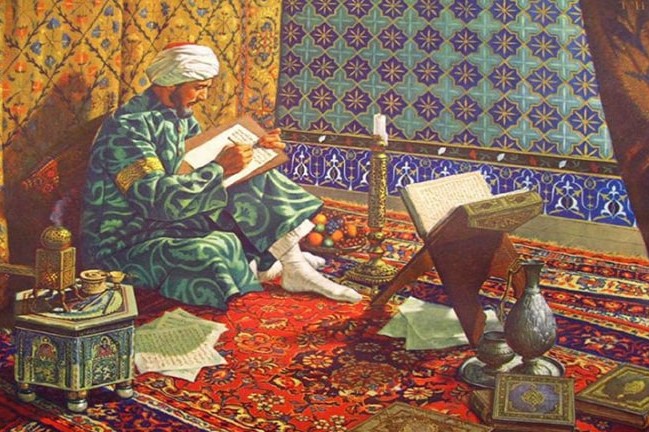
Ibn Sina, Abu- ‘Ali- al-Husayn ibn ‘Abd Alla-h ibn Si-na- (Persian language|Persian Abu Ali Sinaابوعلى سينا or arabisized: أبو علي الحسين بن عبد الله بن سينا), (980-1037 C.E.), often referred to by his Latinized name Avicenna, was a Persian physician, philosopher, and scientist. He was one of the major Islamic philosophers and his philosophical writings had a profound impact on Islamic philosophy and on medieval European scholasticism. Avicenna integrated the ideas and methodologies of Aristotle, Neoplatonism, and other Greek philosophy with the monotheistic tradition of Islam. Avicenna adopted Neoplatonism’s theory of emanation, but he made a distinction between God and the Creation in order to avoid the Neoplatonist tendency towards pantheism. He was one of the first to apply philosophical logic to Islamic theology, and his writing provoked a strong reaction from later Islamic theologians. Nevertheless his works became standard textbooks in the madrasa (schools of the Islamic world).
Avicenna is also well known for his medical work, The Canon of Medicine, also known as the Qanun (full title: al-qanun fil-tibb), which was translated into Latin in the twelfth century, and was used for several centuries in medieval Europe and the Arab world as a major medical textbook. He was the author of 450 books on a wide range of subjects. He wrote three encyclopedias of philosophy, the most famous of which is al-Shifa’ (The Cure).
Biography
Extensive biographical materials are available on Avicenna’s life; some of the information may be exaggerated, both because he later became a legendary figure in the Islamic world, and because his own autobiography may have been intended as an illustration of his theories of learning and knowledge. The autobiography covers the first 30 years of his life, and the later years are documented by his secretary and disciple, Juzjani.
Avicenna was born in 370 AH /980 C.E. in Kharmaithen near Bukhara, now in Uzbekistan (then Persia). His father, a respected Ismaili scholar, was from Balkh of Khorasan, now part of Afghanistan (then also Persia) and was at the time of his son’s birth the governor of a village in one of Nuh ibn Mansur’s estates. He had his son very carefully educated at Bukhara. Avicenna was put under the charge of a tutor, and he displayed an exceptional intellect, memorizing the Qu’ran and Persian poetry by the age of seven. He learned arithmetic from a grocer, and studied medicine with a wandering scholar whose livelihood was curing the sick and teaching the young. By the age of 14, Avicenna had learned all that he could from his teachers, who were influenced by the Ismaili branch of Islam.
Avicenna had an inquiring mind and was troubled by metaphysical problems and in particular the works of Aristotle. For the next year and a half, he studied philosophy, in which he encountered numerous difficulties. At such moments, he would leave his books, perform the requisite ablutions, then go to the mosque, and continue in prayer until understanding came to him. Deep into the night he would continue his studies, stimulating his senses by occasional cups of goats’ milk, and even in his dreams problems would pursue him and work out their solution. It is said that he read through the Metaphysics of Aristotle 40 times, but its meaning was hopelessly obscure to him, until one day he bought a little commentary by al Farabi at a bookstall for the small sum of three dirhems. So great was his joy at this discovery, that he hastened to return thanks to God, and bestowed alms upon the poor.
He turned to medicine at 16, and not only learned medical theory, but by attendance on the sick, according to his own account, he discovered new methods of treatment. The teenager achieved full status as a physician at age 18 and found that “Medicine is no hard and thorny science, like mathematics and metaphysics, so I soon made great progress; I became an excellent doctor and began to treat patients, using approved remedies.” The youthful physician’s fame spread quickly, and he often treated patients without asking for payment.
Avicenna’s first appointment was that of physician to the emir, whom he helped in his recovery from a dangerous illness (997 C.E.). Avicenna’s chief reward for this service was access to the royal library of the Samanids, well-known patrons of scholarship and scholars. When the library was destroyed by fire not long after, the enemies of Avicenna accused him of burning it, in order to forever conceal the sources of his knowledge. He continued to assist his father with financial matters, and began to write some of his earliest works.
When Avicenna was 22 years old, he lost his father. The Samanid dynasty came to its end in December 1004. Avicenna appears to have declined offers of employment from Mahmud of Ghazni, and proceeded westwards to Urgench in the modern Uzbekistan, where the vizier, regarded as a friend of scholars, gave him a small monthly stipend. The salary was inadequate, however, so Avicenna wandered from place to place, through the districts of Nishapur and Merv to the borders of Khorasan, seeking an opening for his talents. Here he met his disciple and scribe, Juzjani. Shams al-Ma’äli Qäbtis, the generous ruler of Dailam, himself a poet and a scholar, with whom Avicenna had expected to find asylum, was starved to death by his own rebellious troops, and Avicenna himself was stricken by a severe illness. Finally, at Gorgan, near the Caspian Sea, Avicenna met with a friend, who bought a dwelling near his own house, in which Avicenna lectured on logic and astronomy. Several of Avicenna’s treatises were written for this patron; and the commencement of his Canon of Medicine also dates from his stay in Hyrcania.
Avicenna subsequently settled at Rai, Iran, in the vicinity of modern Tehran, (present day capital of Iran), the home town of Rhazes; where Majd Addaula, a son of the last emir, was nominal ruler under the regency of his mother (Seyyedeh Khatun). Thirty of Avicenna’s shorter works are said to have been composed at Rai. The constant feuds between the regent and her second son, Amir Shamsud-Dawala, however, compelled him to leave the place. After a brief sojourn at Qazvin he passed southwards to Hamadãn, where the emir had established himself. Avicenna first entered into the service of a high-born lady; but the emir, hearing of his arrival, called him in as medical attendant, rewarded him with gifts and even appointed him to the office of vizier. Then, for some reason, the emir banished him from the country. Avicenna remained hidden for 40 days in a sheikh’s house, until the emir again fell ill and restored him to his post. During this difficult time, Avicenna persevered with his studies and teaching. Every evening, he dictated extracts from his great works, the Canon and the Sanatio, to his pupils and gave commentaries. Upon the death of the emir, Avicenna ceased to be vizier and hid himself in the house of an apothecary, where he continued the composition of his works.
He had written to Abu Ya’far, the prefect of the dynamic city of Isfahan, offering his services. The new emir of Hamadan heard of this correspondence, discovered Avicenna’s hiding place, and incarcerated him in a fortress. There was an ongoing war between the rulers of Isfahan and Hamadãn; in 1024 the former captured Hamadan and its towns, expelling the Turkish mercenaries. When the storm had passed, Avicenna returned with the emir to Hamadan, and carried on his literary labors. Later, however, accompanied by his brother, a favorite pupil, and two slaves, Avicenna escaped from the city in the dress of a Sufi ascetic. After a perilous journey, they reached Isfahan, and received an honorable welcome from the prince.
The remaining ten or twelve years of Avicenna’s life were spent in the service of Abu Ya’far ‘Ala Addaula, whom he accompanied on numerous campaigns as physician and general literary and scientific adviser. During these years he began to study literature and philology, apparently because of criticisms of his style of writing. A severe colic, which seized him during the march of the army against Hamadãn, was checked by remedies so violent that Avicenna could scarcely stand. When the disease returned, he refused to keep up the regimen imposed and resigned himself to his fate. His friends advised him to take life moderately, but he rejected their advice, saying, “I prefer a short life with width to a narrow one with length.” He is said to have enjoyed wine and his slave girls. On his deathbed remorse seized him; he bestowed his goods on the poor, restored unjust gains, freed his slaves, and every third day till his death listened to the reading of the Qur’an. He died in June 1037, in his fifty-eighth year, and was buried in Hamedan, Persia.
Works
Al-Qifti states that Avicenna completed 21 major and 24 minor works on philosophy, medicine, theology, geometry, astronomy and the like. Another source (Brockelmann) attributes 99 books to Avicenna comprising 16 on medicine, 68 on theology and metaphysics 11 on astronomy and four on verse.
Avicenna’s two earliest works, written under the influence of al-Farabi, are Compendium on the Soul (Maqala fi’l-nafs), a short treatise on the intellect, and Philosophy for the Prosodist (al-Hikma al-‘Arudiya), his first book on Aristotelian philosophy. He later wrote three encyclopedias of philosophy. Written at the request of his students, al-Shifa’ (The Cure) (completed in 1027), was modeled on the works of Aristotle. Its Latin translation was widely read by medieval European scholars. Two later encyclopedias were written for Avicenna’s patron, Abu Ya’far ‘Ala Addaula. Danishnama-yi ‘Ala’i (The Book of Knowledge for ‘Ala’ al-Dawla), written in Persian, is intended as an introduction to philosophy and became the basis for Goals of the Philosophers, by the later Islamic theologian, al-Ghazali. The other, al-Isharat wa’l-Tanbihat (Pointers and Reminders) discusses logic and metaphysics. Two other works, al-Insaf (The Judgement) and The Easterners (al-Mashriqiyun) or The Eastern Philosophy (al-Hikma al-Mashriqiya) , written at the end of the 1020s, were said to have articulated radical philosophical ideas but the original texts have mostly been lost.
Avicenna wrote at least sixteen works on medicine. His fourteen-volume Qanun (The Canon of Medicine) and portions of the encyclopedias were translated into Latin as early as the twelfth century, by Gerard of Cremona, Dominicus Gundissalinus, and John Avendeath; they were published at Venice, 1493-95. The complete Arabic texts are said to be in the manuscript in the Bodleian Library. An Arabic text of the “Canon” and the “Nadja” was published in Rome, 1593, and a Hebrew version at Naples in 1491. Of the Latin version there were about thirty editions, founded on the original translation by Gerard of Cremona. In the 15th century a commentary on the text of the Canon was composed. Other medical works translated into Latin are the Medicamenta Cordialia, Canticum de Medicina, and the Tractatus de Syrupo Acetoso. The Canon was used as a standard medical text in Western Europe for several centuries.
Philosophy
Avicenna is one of the foremost Islamic philosophers and one of the first to attempt a correlation between philosophy and religion. He expounded the Neoplatonic concept of emanation, but rejected other Neoplatonic ideas such as the pre-existence of the soul, and used Aristotelian logic to develop his arguments.
Essence and Existence
Avicenna rejected the classical Islamic theological doctrine of creation ex nihilo, and instead developed the Neoplatonic idea of emanation. He argued that cosmos has no temporal beginning but is a natural logical product of the divine One. By His very nature, the divine One produces an ordered and good cosmos that does not succeed Him in time, only in logical order and in existence.
Avicenna worked out a logical proof of the existence of God: we know from our phenomenal experience of the world that things exist; no entity can exist without a cause; the chain of causality cannot be infinite but must ultimately arrive at a First Cause, which is God.
Being was divided into three classes: the necessary, the possible and the impossible. The First Cause is by its own nature, necessary, and the characteristics of the first cause endow all contingent entities with necessities of their own, in a descending hierarchy of necessity which culminates in all sublunary things.
Avicenna made a distinction between essence (what something is) and existence (the fact that something exists). For an essence to be realized within time (as an existence), the existence must be rendered necessary by the essence itself. This particular relationship of cause and effect is due to an inherent property of the essence, that it is non-contingent.
Logic and Knowledge
Avicenna employed logic in the service of metaphysics, as a means of understanding Islamic religious doctrine and even interpreting the Qur’an. Logic was a standard for judging concepts acquired through the four faculties of reason: sense perception (al-hiss al-mushtarak), retention (al-khayal), imagination (al-mutakhayyila) and estimation (wahm). Among these, imagination was the key, since it could compare and relate new phenomena to existing concepts. Logic could also be used to make deductions and acquire new knowledge, and to judge the validity of arguments. Gaining knowledge was essential to training and perfecting the intellect in order to attain salvation. Logic was also a means of communicating knowledge to others.
Avicenna’s epistemology is based on a theory of soul that is independent of the body. His Fi’-Nafs/De Anima (Treatise on the Soul) begins with the so-called “flying man” argument: if a person were created in a state of perfection, but blind and unable to perceive anything through his senses, and suspended in the air, would he know that he existed? He could not doubt his existence, because he was thinking, but he would not be able to confirm the existence of his physical body. This argument is used to affirm the soul’s existence and capability to be aware of itself independent of the body.
The Ten Intellects and the human mind
In Avicenna’s account of creation (largely derived from Al-Farabi), the creation of the world proceeds from the First Cause (or First Intellect). The First Intellect, in contemplating the necessity of its existence, gives rise to the Second Intellect. In contemplating its emanation from God, it then gives rise to the First Spirit, which animates the Sphere of Spheres (the universe). In contemplating itself as a self-caused essence (that is, as something that could potentially exist), it gives rise to the matter that fills the universe and forms the Sphere of the Planets (the First Heaven in al-Farabi).
This triple-contemplation establishes the first stages of existence. It continues, giving rise consequential intellects which create between them two celestial hierarchies: the Superior Hierarchy of Cherubim (Kerubim) and the Inferior Hierarchy, called by Avicenna “Angels of Magnificence.” These angels animate the heavens; they are deprived of all sensory perception, but have imagination which allows them to desire the intellect from which they came. Their vain quest to rejoin this intellect causes an eternal movement in heaven. They also cause prophetic visions in humans.
The angels created by each of the next seven Intellects are associated with a different body in the Sphere of the Planets. These are: Saturn, Jupiter, Mars, the Sun, Venus, Mercury and the Moon. The last of these is of particular importance, since its association is with the Angel Gabriel (“The Angel”).
This Ninth Intellect occurs at a step so removed from the First Intellect that the emanation that then arises from it explodes into fragments, creating not a further celestial entity, but instead creating human souls, which have the sensory functions lacked by the Angels of Magnificence.
For Avicenna, human minds were not in themselves formed for abstract thought. Humans have only the potential for intellect, and only illumination by the “Angel” confers upon them the ability to actualize this potential. This human intellect is the Tenth Intellect. The degree to which minds are illuminated by the Angel varies. Prophet/Prophets are illuminated to the point that they posses not only rational intellect, but also an imagination and ability which allows them to pass on their superior wisdom to others. Some receive less, but enough to write, teach, pass laws, and contribute to the distribution of knowledge. Others receive enough for their own personal realization, and still others receive less.
According to this view, all humanity shares a single agent intellect, a collective consciousness. The final stage of human life, according to Avicenna, is reunion with the emanation of the Angel. Thus, the Angel confers upon those imbued with its intellect the certainty of life after death. For Avicenna, the immortality of the soul is a consequence of its nature, and not a purpose for it to fulfill.
Medicine
The most important of Avicenna’s 16 medical works, the 14-volume Qanun (The Canon of Medicine), contains over one million words and is divided into five books. The first gives general principles of medicine; the second is an alphabetical listing of simple drugs; the third deals with diseases of particular organs and parts of the body; the fourth with diseases which spread throughout the body from an initial starting point, such as fevers; and the fifth with compound medicines. The work classified and described diseases; outlined their assumed causes; and covered hygiene, simple and complex medicines, and functions of parts of the body. It asserted that tuberculosis was contagious, and described the symptoms and complications of diabetes.
The “Canon” was translated into Latin in the twelfth century and remained a major textbook for medical students in Europe for several centuries.
In the museum at Bukhara, there are displays showing many of his writings, surgical instruments from the period and paintings of patients undergoing treatment.
Avicenna was interested in the effect of the mind on the body, and wrote a great deal on psychology, likely influencing Ibn Tufayl and Ibn Bajjah.
Along with Rhazes, Ibn Nafis, Al-Zahra and Al-Ibadi, he is considered an important compiler of early Muslim medicine.
Poetry
Almost half of Avicenna’s works are versified, and his poems appear in both Arabic and Persian. His most celebrated Arabic poem describes the descent of Soul into the Body from the Higher Sphere. Edward Granville Browne claims that the following verses are incorrectly attributed to Omar Khayyám, but were originally written by Avicenna:
از قعر گل سیاه تا اوج زحل, Up from Earth’s Centre through the Seventh Gate
کردم همه مشکلات گیتی را حل, I rose, and on the Throne of Saturn sate,
بیرون جستم زقید هر مکر و حیل, And many Knots unravel’d by the Road;
هر بند گشاده شد مگر بند اجل. But not the Master-Knot of Human Fate.
Influence
Avicenna’s major work, al-Shifa’ (The Cure), was translated into Latin in twelfth and thirteenth century Spain (Toledo and Burgos). His ideas, particularly on the nature of the soul and the difference between existence and essence, had an important impact on medieval scholastic philosophy. These raised considerable debate in the Roman Catholic world, and Avicennism was proscribed in Paris in 1210. The work of Thomas Aquinas was influenced by Avicenna’s metaphysics; and William of Auvergne and Albertus Magnus by his psychology and theory of knowledge.
In the Islamic world, where he also generated extensive debate and argument, Avicenna set forth a sound philosophical system rooted in Islamic theology. Decades after his death, two Islamic theologians al-Ghazali (d. 1111) and al-Shahrastani (d. 1153) attacked him as a representative of philosophy. Both al-Shifa’ (The Cure) and al-Isharat wa’l-Tanbihat (Pointers and Reminders) became standard philosophy texts in Islamic schools. Suhrawardi Maqtul (c. 1155 – 1191), the Sufi mystic who later founded illuminationist philosophy, used much of Avicenna’s work as his foundation. In later Iranian tradition, commentators added mystical insight to his ideas and he came to be regarded as a mystical thinker.
In Iran, Avicenna is considered a national icon, and is regarded as one of the greatest Persians to have ever lived. Many portraits and statues remain in Iran today. An impressive monument to the life and works of the man who is known as the ‘doctor of doctors’ still stands outside the Bukhara museum and his portrait hangs in the Hall of the Faculty of Medicine in the University of Paris.
There is also a crater on the moon named Avicenna.
Hyrcanian forests form a unique forested massif that stretches 850 km along the southern coast of the Caspian Sea. The history of these broad-leaved forests dates back 25 to 50 million years, when they covered most of this Northern Temperate region. These ancient forest areas retreated during the Quaternary glaciations and then expanded again as the climate became milder. Their floristic biodiversity is remarkable: 44% of the vascular plants known in Iran are found in the Hyrcanian region, which only covers 7% of the country. To date, 180 species of birds typical of broad-leaved temperate forests and 58 mammal species have been recorded, including the iconic Persian Leopard (Panthera pardus tulliana).
Brief synthesis
The Hyrcanian Forests form a green arc of forest, separated from the Caucasus to the west and from semi-desert areas to the east: a unique forested massif that extends from south-eastern Azerbaijan eastwards to the Golestan Province, in Iran. The Hyrcanian Forests World Heritage property is situated in Iran, within the Caspian Hyrcanian mixed forests ecoregion. It stretches 850 km along the southern coast of the Caspian Sea and covers around 7 % of the remaining Hyrcanian forests in Iran.
The property is a serial site with 15 component parts shared across three Provinces (Gilan, Mazandaran and Golestan) and represents examples of the various stages and features of Hyrcanian forest ecosystems. Most of the ecological characteristics which characterize the Caspian Hyrcanian mixed forests are represented in the property. A considerable part of the property is in inaccessible steep terrain. The property contains exceptional and ancient broad-leaved forests which were formerly much more extensive however, retreated during periods of glaciation and later expanded under milder climatic conditions. Due to this isolation, the property hosts many relict, endangered, and regionally and locally endemic species of flora, contributing to the high ecological value of the property and the Hyrcanian region in general.
Criterion (ix): The property represents a remarkable series of sites conserving the natural forest ecosystems of the Hyrcanian Region. Its component parts contain exceptional broad-leaved forests with a history dating back 25 – 50 million years ago, when such forests covered most parts of the Northern Temperate region. These huge ancient forest areas retreated during Quaternary glaciations and later, during milder climate periods, expanded again from these refugia. The property covers most environmental features and ecological values of the Hyrcanian region and represents the most important and key environmental processes illustrating the genesis of those forests, including succession, evolution and speciation.
The floristic biodiversity of the Hyrcanian region is remarkable at the global level with over 3,200 vascular plants documented. Due to its isolation, the property hosts many relict, endangered, and regionally and locally endemic plant species, contributing to the ecological significance of the property, and the Hyrcanian region in general. Approximately 280 taxa are endemic and sub-endemic for the Hyrcanian region and about 500 plant species are Iranian endemics.
The ecosystems of the property support populations of many forest birds and mammals of the Hyrcanian region which are significant on national, regional and global scales. To date, 180 species of birds typical of broadleaved temperate forests have been recorded in the Hyrcanian region including Steppe Eagle, European Turtle Dove, Eastern Imperial Eagle, European Roller, Semicollared Flycatcher and Caspian Tit. Some 58 mammal species have been recorded across the region, including the iconic Persian Leopard and the threatened Wild Goat.
Integrity
The component parts of the property are functionally linked through the shared evolutionary history of the Caspian Hyrcanian mixed forest ecoregion and most have good ecological connectivity through the almost continuous forest belt in the whole Hyrcanian forest region. Khoshk-e-Daran, is the only component that is isolated, however it still benefits from a high level of intactness and contributes to the overall value of the series. Each component part contributes distinctively to the property’s Outstanding Universal Value and the components together sustain the long-term viability of the key species and ecosystems represented across the Hyrcanian region, as well as the evolutionary processes which continue to shape these forests over time.
Several component parts have suffered in the past from lack of legal protection, and continue to be negatively impacted to some extent by seasonal grazing and wood collection. The sustainable management of these uses is a critical issue for the long-term preservation of the site’s integrity and it will require strong ongoing attention by the State Party.
Protection and management requirements
All component parts of the property are state owned and strictly protected by national legislation. In the case of protected areas through the Nature Conservation Law and for areas outside of the protected areas by Iran’s Heritage Law. It will be important to align the boundaries of the existing protected areas to those of the property following inscription on the World Heritage List so as to harmonize and streamline the management and protection regime across the site as a whole.
The management of the property’s components is under the responsibility of three national agencies, the Iranian Forests, Range, Watershed and Management Organization (FRWO), Department of Environment (DoE) and the Cultural Heritage, Handicrafts and Tourism Organization (ICHHTO). A National Steering Committee is in place to ensure coordination across the series as a whole. This mechanism will need to be maintained in order to guarantee comprehensive management of the site into the future, based on a common vision and supported by adequate funding. Each component part has a management plan however, a “Master Management Plan” for the whole property is also a long term requirement. The national and component specific plans should be maintained, developed and updated regularly together by the responsible management institutions, in cooperation with ministries, universities and NGOs.
Public access and use of the area is legally regulated and logging, grazing, hunting and most other uses that may potentially impact the property are strictly prohibited within all component parts. Vehicle access and other uses and activities that may potentially impact the property are also either forbidden or strictly regulated. However, enforcement of access and use regulations is not always effective and requires strengthening. Particular attention is required to maintain and enhance where possible, ecological connectivity between components and to ensure effective regulation of seasonal grazing and wood collection.
From Octubre, Organ of the Communist Party of Spain (ML), January 2019.
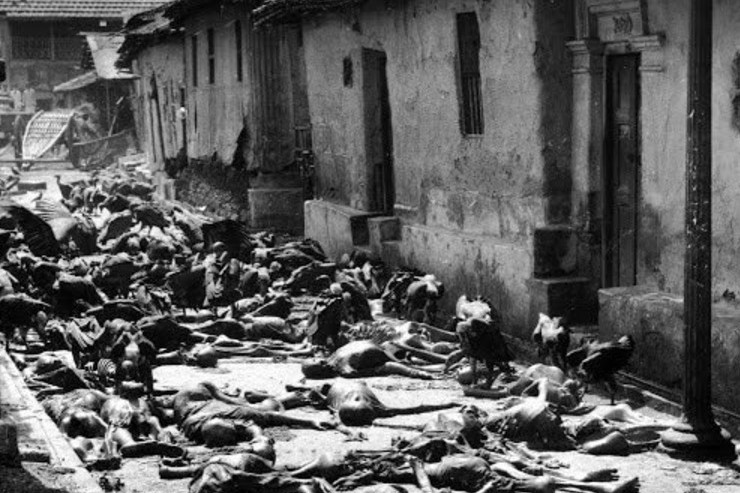
If we do not investigate history strictly, we could speculate that Winston Churchill, Prime Minister of Great Britain in two periods (1940-45 and 1951-55), was a jovial man, a great leader and a man of much charisma. . However, history tells us that behind this bright facade lies an obscure truth: Churchill carried out an economic and military strategy in Bengal, India, during the Second World War, which caused a famine that ended up killing millions of people. This theme is not taken up in the history books, nor is it remembered as a controversial fact. However, it is worth examining it to make known one of the cruelest and most deplorable events in world history.
Very few people today know about the genocide in Bengal, let alone how Churchill planned it. Churchill’s hatred of the Indian people led several million people to die during the Bengal “famine” of 1943. “I hate Indians. They are a bestial people with a bestial religion,” he said.
The 1943 famine in Bengal was one of several famines in Bengal, an administrative division of British India that was under the British Crown. It is estimated that around 2 million people died of malnutrition in that period. Much of the consequences were due to the decisions of British Prime Minister Winston Churchill, as he feared that the Japanese would advance through Burma and attack the eastern border of Bengal. As a preventive measure, a scorched earth initiative was launched in two parts, eastern and coastal Bengal. The impact of the policies on the development of the famine was decisive. At the end of March 1942, Governor Herbert, acting under the direct orders of Winston Churchill, issued a directive requiring that surplus stocks of rice and other food be removed or destroyed throughout Bengal.
That year Bengal had a better than normal harvest, despite the state of war that extended to the Asian colony. The British army took millions of tons of rice from the hungry people to send to the Middle East, where it was not even needed. When the hungry people of Bengal asked for food, Churchill said that the “famine” was caused by the Bengalis “multiplying like rabbits.” The viceroy of India declared that “Churchill’s attitude toward India and the famine as negligent, hostile and contemptuous.” Even the right-wing imperialist Leo Amery, who was the British Secretary of State in India, said he “did not see much difference between his [Churchill’s] and Hitler’s outlook.” Churchill rejected all offers of aid to send rice to Bengal; Canada offered 10,000 tons. Meanwhile, several million men, women and children died of hunger in Bengal.
The British tried to limit the dramatic situation by attributing it to the bad times that India had had in that period. However, as noted by economist and Nobel Prize winner Amartya Sen, there was no overall shortage of rice in Bengal in 1943: its availability was somewhat greater than in 1941, when there was no hunger. In part, this was what led to the slow official response to the disaster, as there had been no crop loss and, therefore, hunger was unexpected. One of its root causes, says Sen, was the rumors of the shortage that caused hoarding and price inflation. This was caused by the rapid demand in wartime that made rice consignments an excellent investment (prices had already doubled over the previous year). In Sen’s interpretation, while the peasants owners of the land where the rice grew and the workers in industries in urban areas and on the docks saw their salaries rise, it led to a disastrous change in the situation of groups such as landless peasants, fisherfolk, barbers, hullers of rice and other groups who found that the real value of their salaries had been cut by two-thirds since 1940. Churchill prevented the alleviation of the burden on India, and on the contrary increased it. The Indian industries were converted to help in the manufacture of weapons and uniforms for the troops in Africa and those near Japan. This left the large Indian cities without industries for basic necessities that, together with an increase in grain shipments, caused the collapse. When the factories were occupied with arms manufacture, goods such as agricultural and livestock tools were in short supply. This led to a decrease in agricultural production and an inability to deliver the amount of grain that the British required to be produced; Indian landowners delivered the grain to local food warehouses. Having less grain available for trade, the price doubled while with the war effort salaries were frozen for 5 years. This led to 2 million people dying in 1943 in the worst famine in India in the 20th century. In short, although there was enough rice and other grain in Bengal to feed people, they did not have enough money to buy it.
As stated above, more than 2 million people died in Bengal due to this terrible situation. It is one of the most terrible and dishonest crimes against humanity that is known.
The Cold War is back. Or at least, some version of it has returned, with Russian troops on the move across the Crimean Peninsula with the oddsmakers predicting it will once again be Russian territory.
For critics of President Barack Obama, this is a prime opportunity to demonstrate how poorly he stacks up compared with the man who did all he could to topple the Soviet Union, President Ronald Reagan.
Reagan’s son, Michael Reagan, offered this advice for Obama on the Townhall.com website:
“I suggest that President Obama might want to study how Ronald Reagan defeated the Soviet Union.
“He did it without firing a shot, as we know, but he had a super weapon — oil.
“Oil was the only thing the Soviets had in the 1980s that anyone in the rest of the world wanted to buy, besides ICBMs and H-bombs, and they weren’t for sale.
“Since selling oil was the source of the Kremlin’s wealth, my father got the Saudis to flood the market with cheap oil.
“Lower oil prices devalued the ruble, causing the USSR to go bankrupt, which led to perestroika and Mikhail Gorbachev and the collapse of the Soviet Empire.”
It seems like a reasonable narrative, but as we’ll see in this fact-check, the record isn’t quite as robust as Reagan fils might like.
We made several efforts to reach Reagan for official records that would back up his claim, and we did not hear back.
The basic oil market numbers
We can see what happened with oil markets during Reagan’s time in office by looking at volume — how much was pumped out of the ground — and price. The U.S. Energy Information Administration provides the production numbers, and what we see partly backs up Reagan’s point and partly does not.
For the first five years of Reagan’s administration, Saudi production fell steeply. Then in 1986 it popped up, followed by a dip the next year, and ending with another rise.
The Energy Information Administration also provides pricing data and it too both supports and undercuts Reagan’s statement. Prices fall in 1986, then recover in 1987 followed by a decline in 1988. Prices remained below what they had been in 1985.
By several estimates, the drop in prices cost the USSR $20 billion a year. If the plan was to hurt the Soviet Union, it succeeded.
What is unclear is whether the Saudis ramped up production at Reagan’s request. We look at what the record shows on that front.
The evidence in support of Reagan intervention
Paul Kengor is a Reagan biographer who believes the Gipper has not received the credit he is due for waging economic warfare against the USSR. Kengor told PunditFact that Michael Reagan is correct when he says his father was behind the Saudi’s decision.
“They did this strictly to help us hurt the Soviets and as payback for us helping them in the past,” Kengor said. “It was a big risk for them.”
Kengor pointed us to the book Victory: The Reagan administration’s secret strategy that hastened the collapse of the Soviet Union, by Peter Schweizer. In that book, Schweizer describes a 1981 meeting between CIA director William Casey and his Saudi counterpart. At that meeting, Casey shared CIA reports on Soviet oil production.
“By raising the issues of oil prices and the U.S.-Saudi Arabia security relationship in the same conversation,” Casey was in effect saying the two were related,” Schweizer wrote.
Schweizer cites an unnamed U.S. official for this information. A former National Security Council official referred to Casey’s contacts with Saudi Arabia during a recent panel discussion but in less detail than in Schweizer’s book.
But move forward to 1985, when the Saudis actually made their production hike, and Schweizer wrote, “What factor lay most heavily on the mind of the Saudis when they made this decision is anybody’s guess.”
We asked Kengor for the best documentation they could find to support the claim of Reagan’s direct intervention. We have yet to receive that.
However, there is an ample public record on the factors within OPEC, the Organization of the Petroleum Exporting Countries, that shaped the Saudi Arabian production strategy. Plus, the Reagan administration made efforts to push prices back up. We turn now to the information that tends to undermine Reagan’s assertion.
The evidence against
James Williams is an Arkansas-based consulting economist in the oil and gas industry who worked with producers in West Texas in the 1980s. Williams told us that in the first half of the decade, OPEC had an agreement to keep prices high through a system of production quotas. Members promised to limit the number of barrels they would pump. With less supply, prices would be higher.
“The Saudi Arabians were dropping production faster than the rest of OPEC,” Williams said. “They bore a disproportionate share of the effort to prop up prices.”
The problem was, not every member followed the rules. There are many references in the public record of Saudi resentment. Economist Darwin Hall at the California State University at Long Beach described it in a 1992 article in Energy Policy.
“At the OPEC meetings in Geneva during the period from 1982 to 1985, Sheikh Yamani, the oil minister of Saudi Arabia at the time, repeatedly threatened to expand output unless Iraq and Iran stopped cheating on their agreed quotas,” Hall wrote. (Iran and Iraq were at war and needed foreign currency to finance their militaries.)
While OPEC wielded considerable clout on world energy markets, internally, it had no way to enforce the terms among its signatories. Philip Verlager, an energy consultant, said Saudi Arabia had more oil capacity than anyone and so had more power.
“From 1981 to the end of 1985, Saudi Arabia took on the swing producer role in OPEC,” Verleger told PunditFact. “Then in 1986, they threw in the towel and prices collapsed.”
In six months, the spot price for oil was cut in half.
Verleger said Michael Reagan “is wrong.” He and many other writers say the Saudis boosted production to send a message to other OPEC members.
Another bit of information from Saudi Arabia also undercuts the Reagan claim. Dick Combs, a foreign service officer and author of Inside the Soviet Alternate Universe, noted that Saudi King Fahd was not a strong supporter of the shift in 1986. He fired his oil minister and cut back “domestic oil production to enhance Saudi revenues.”
If the Reagan doctrine was to keep prices as low as possible, U.S. actions weren’t always consistent with that goal. As prices fell, the U.S. oil industry collapsed.
“In April 1986, Reagan sent (Vice President George H.W.) Bush to Saudi Arabia to get the Saudis to cut production to bring prices up,” Verlager said.
According to newspapers at the time, Bush told King Fahd that the United States saw the hit on the domestic oil market as “a threat to national security.”
Our ruling
Michael Reagan said his father got Saudi Arabia to flood the market with oil in order to drive down prices and undermine the Soviet economy. The numbers on production and pricing show that Saudi production rose, then fell, and then rose again. In the middle of 1987, prices were close to what they had been at the beginning of 1986, although they fell again and never went as high as they had been in 1985.
The pattern of production and prices do not fit neatly with Reagan’s statement. We have no public documents to confirm that Reagan asked the Saudis to use oil as an economic weapon against the USSR.
On the other hand, we have an extensive public record that Saudi Arabia was fighting with its OPEC partners and had warned them for years that it would raise production to make them pay a price for cheating on their quotas. We also see that Saudi Arabia charted its own course in setting oil prices and the consensus view among oil experts is OPEC, not Reagan, shaped their production decisions.
Finally, we have Bush calling on the Saudis to help send prices back up. This is exactly counter to the Reagan strategy in the statement.
There might be an element of truth in the claim, but the public record strongly points the other way. We rate the statement Mostly False.