
When you think back to Microsoft’s earlier gaming endeavors, you might remember the original Xbox console: the first home of Halo and the launch platform for Xbox Live. Or you may remember the Xbox 360, which brought us the Gears of War franchise and one of the longest console lifespans in recent memory. Speaking of lifespans, it also introduced us to a certain dreaded Red Ring…
Category: Uncategorized
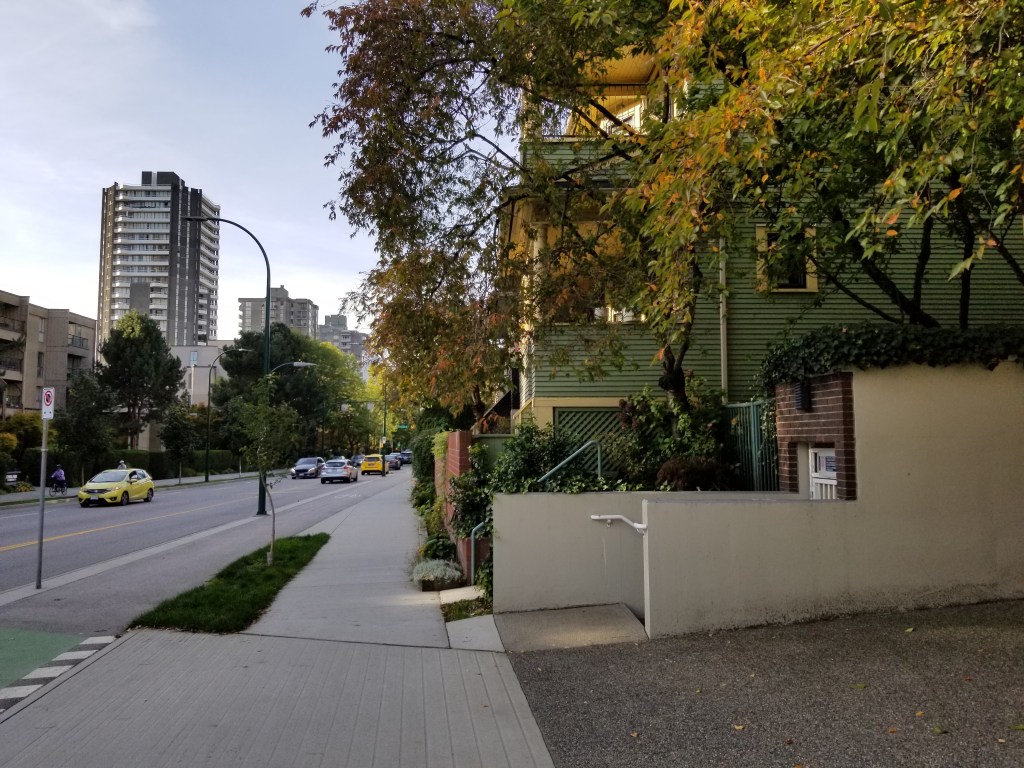
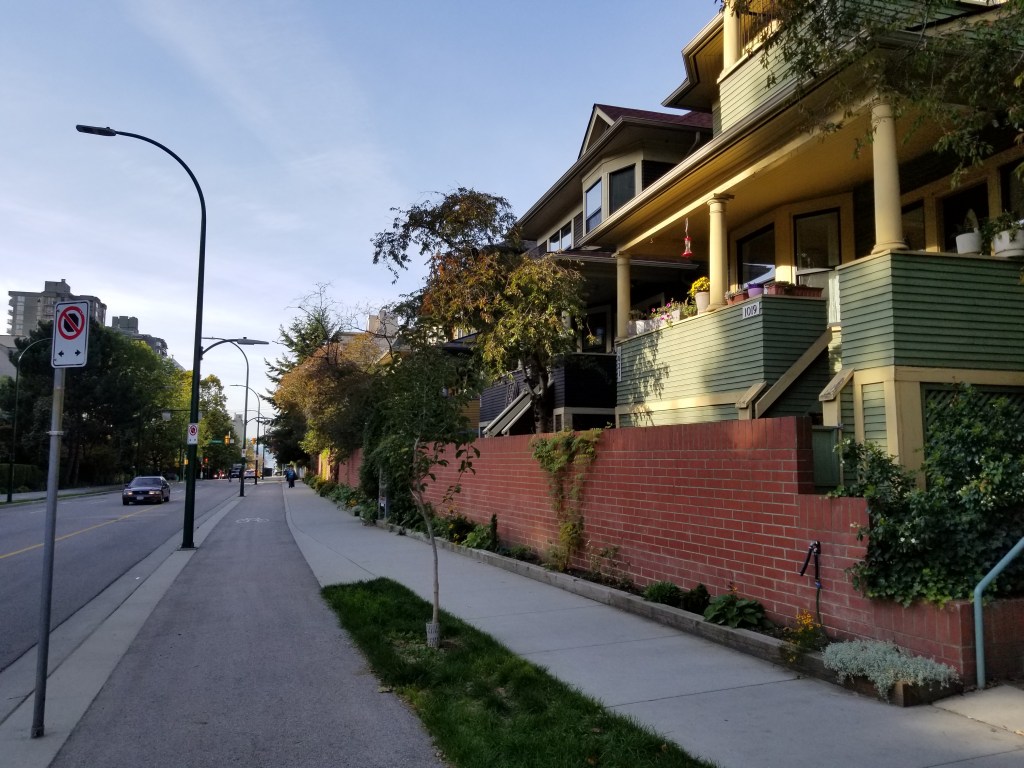
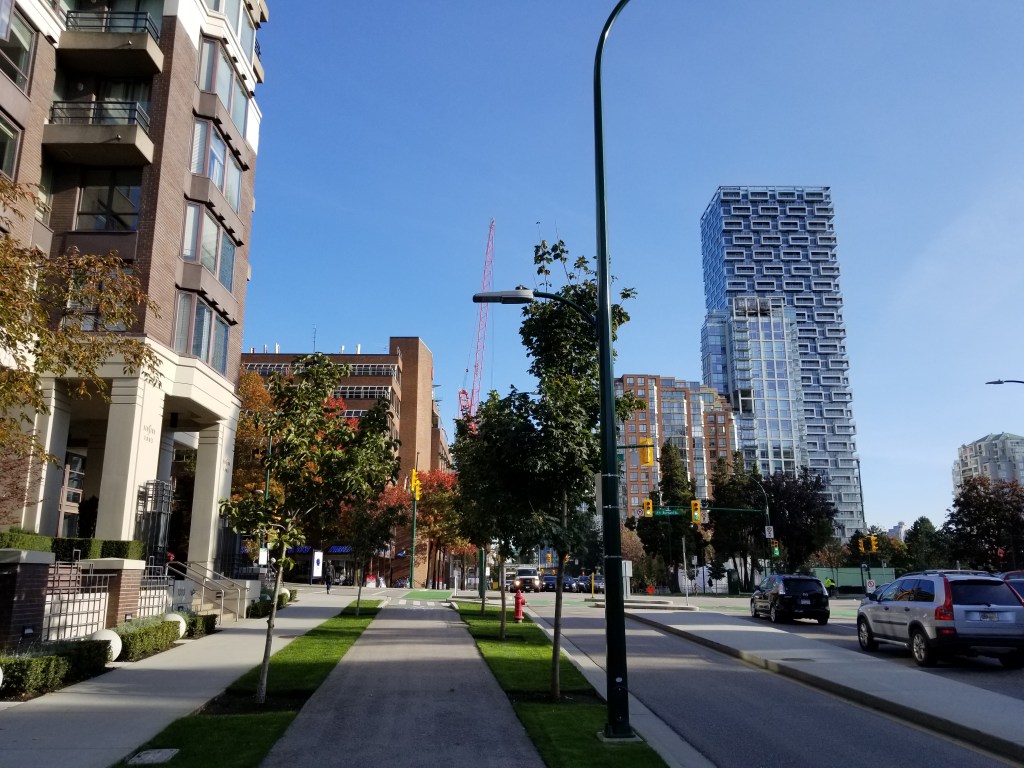
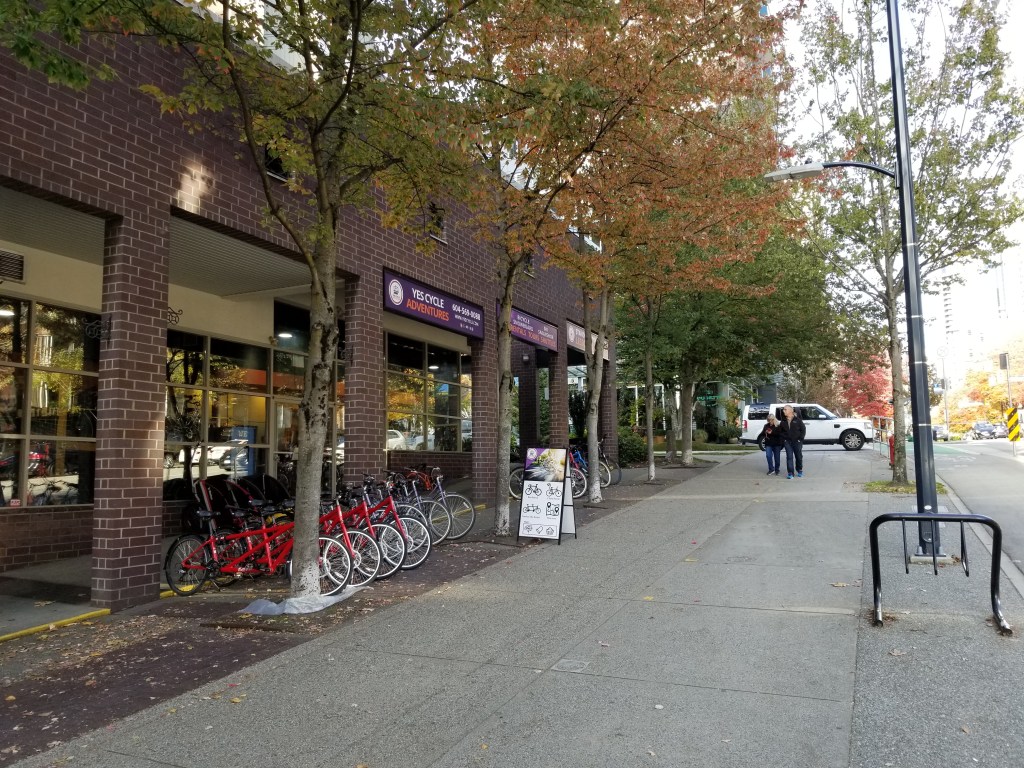
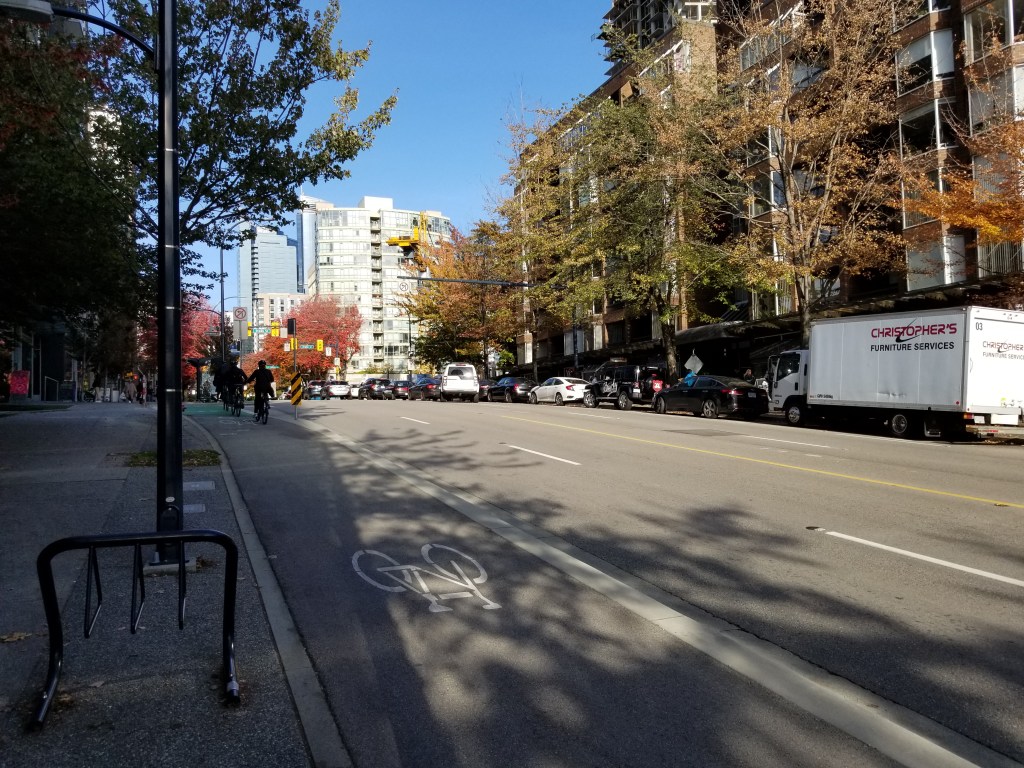
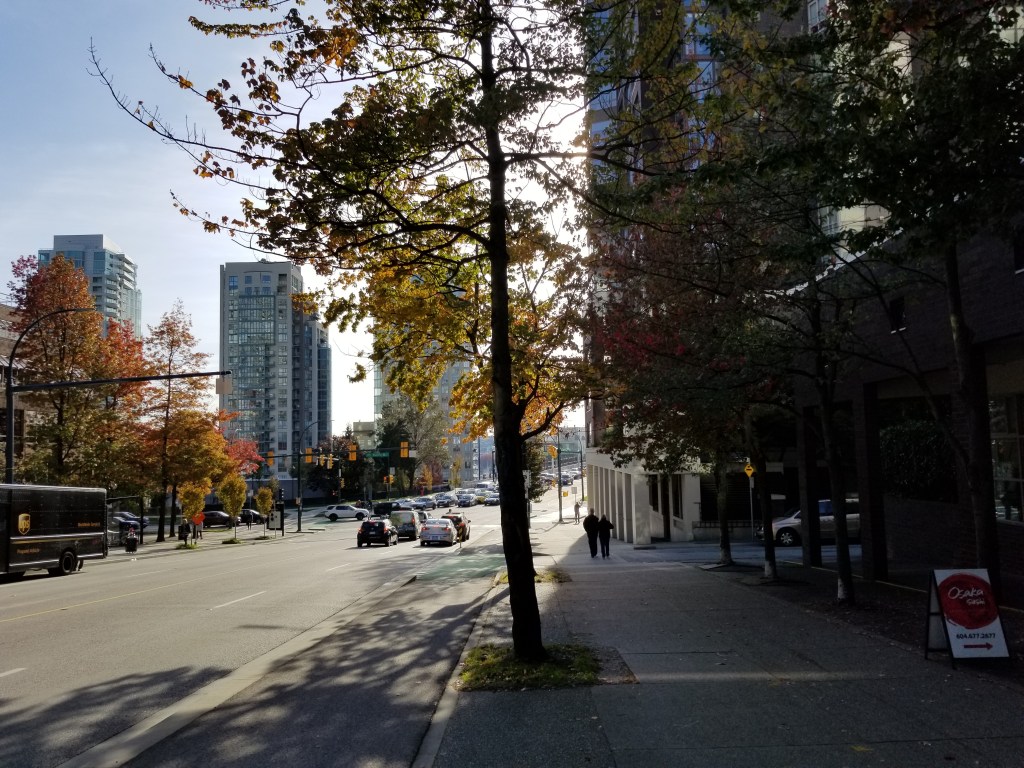
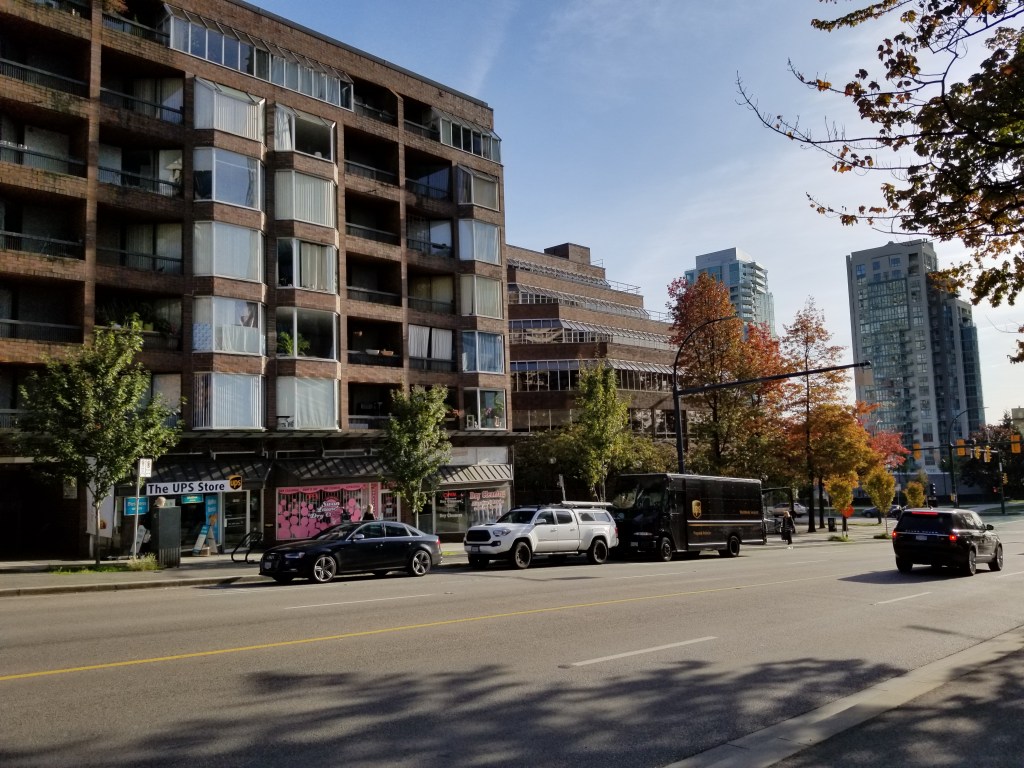
On Beach Avenue in Downtown Vancouver. Autumn of 2019.
Glenn Beck mocks Alex Jones
Just finished watching The Matrix Reloaded (2003) and Paper Marriage (1988)…


Correcting RedandBlackRevoltuionary on History
The Development of the Soviet Economy
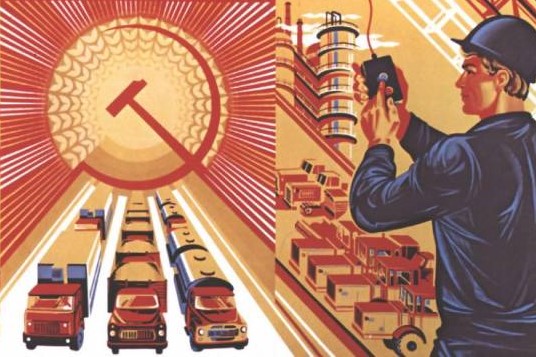
SPEAKER–Dr. Carroll Quigley, Professor of History,
25 March 1953
The Marxist ideology you are probably familiar with. I merely want to run through certain items in it. These were in the minds of the Bolsheviks when they came to power. First, the Marxist ideology assumes what they call dialectic materialism.
That is, they assume that what happens is the result of conflict, dialectic conflict, and you get an outcome from that conflict. The materialism side of that indicates that the basic struggle is on the material level, and what happens on that material level determines what the structure of society will be like on other levels, such as the religious, political, the ideological, literature, science, and so forth. So they have, then, dialectic materialism.
The second factor that they had in their minds was class struggle. “All history is the history of class struggle,” said Marx. Third, they believed that the state is a class organization of power, for all history is the history of class struggle. They said that the history of the state has always been the history of an upper class dominating and exploiting a lower class. So the state, then, is a class organization.
Fourth, they believed that there would be an inevitable revolution, that, as a result of the class struggle, the rich, as Marx said, would get richer and richer, and fewer and fewer in numbers, while the exploited proletariat would become more and more numerous, and poorer and poorer; and that if this continued, inevitably they would reach a point where there would be very few rich and a very large number of the exploited, and it would be very simple for the exploited to take over from the few rich; so there inevitably would be a revolution.
The fifth assumption of the Marxist ideology is that this would be followed by a dictatorship of the proletariat; namely, the proletariat as the result of the inevitable revolution having taken over the control of the economic system and of the instruments of production of the state, they would have to have a period of dictatorship in which they would change the other levels of society to correspond with the new Communist economic structure. So they would have to get, then, a Communist political system, a Communist school system, a Communist religious system, a communist ideological system, and so forth; and that, would require a dictatorship.
Lastly, when they finally had the whole thing set up so that in all levels of society they had a Communist society, there would no longer be any need of a state. This is the sixth aspect of this Marxist ideology, that the ultimate outcome would be the Communist society, a Communist society in which there were no groups exploiting anyone else and, accordingly, there would be no need of a state—a kind of glorified Garden of Eden anarchy.
This Marxist ideology was in the minds of the Bolsheviks when they took over.
The second factor which influenced what happened was the past history of Russia itself. Here I am going to sum that up in three words, which means it is very much falsified. First, the economy of Russia was “backward”; second, it was “exploitative”; and third, it was “state-dominated”, in 1917 and for a long period before 1917. When I say that the economy of Russia was “backward” when the Bolsheviks arrived on the scene, I mean that it was very largely agricultural, and that it was a poor agriculture, not a productive or advanced agriculture.
The Bolsheviks had commerce, but it was not so dominant as it is in an advanced society, and they had relatively very little industry. Their agriculture was extensive rather than intensive. For example, they still used a three—field system in which one—third of the land that was being cultivated was left fallow each year. The peasants in some places still had scattered strips. They had to spend a good deal of time walking from one strip to another. There was a great lack of livestock, which meant there was a lack of manure. There was a lack of nitrogen. This indicated a lack of leguminous plants which would restore the nitrogen content to the soil. There was only a small portion of the land cultivated; only 25 percent of the land of Russia was cultivated at the beginning of the century, compared with 40 percent in the rest of Europe.
The unit yields per acre were much smaller in Russia than in other places, places in the West. For example, they were about one—quarter of the unit yields of England and of Denmark, and about one—third of the unit yields of Eastern Germany; and one—half of the unit yields of France and other places.
There was a lack of equipment and the equipment they had was quite primitive. For instance, half of Russia’s peasants at the beginning of the century still used wooden plows; they still engaged in hand sowing; they still harvested with a sickle, and threshed with a flail by beating out the grain—very primitive methods. Many of the peasants had inadequate areas. One-sixth of the peasants had less than 10 acres, and that meant that one-sixth of the peasants had only about 4 percent of the land; and these peasants who had inadequate land had to find work else-where.
As a result of this there was a great deal of rural underemployment—I wouldn’t say rural unemployment—they were busy part of the time—but there was a good part of the time when most of the Russian peasants were not doing very much.
There was a great population pressure on the land. For example, the number of persons per square mile was about twice what it was in the United States at the beginning of this century. The are of the land cultivated per person on the land was about 3 acres for each person—3 acres, compared to 13 in the United States, and 8 in Denmark.
That agricultural system obviously was primitive. It has been estimated that the number of underemployed and unemployed people in rural areas in Russia must be counted in millions at the beginning of the century. Estimates ran them over a long range sometimes from 5 million up.
Commercial relationships at the beginning of the century were poor. They had very poor roads and a poor road system. The roads we dusty, first tracks for much of the year, and completely impassable for certain periods of the year. For instance, in the spring they were just mud holes—you couldn’t get through at all. The river system was very helpful, but most of it was frozen up for a good part of the year; and the rest of it led to places to which no one really wanted to go. For instance, all the Asiatic rivers led to the Artic Ocean.
The railroads had been built only after 1890—there had been a few before. These railroads were designed to take crops from the agricultural areas and export them; so they ran to the seaports, and to a certain extent they ran to the northwestern part of Russia, where the big cities were; but they were designed to drain food from the countryside.
Industry was inadequate at the beginning of this century, as you know. It was very largely based upon the railroads. Thus, it was to be found in metals, coal, and petroleum; but because it had come into Russia so late, the Russian industry was very large scale. Five percent of all the factories had more than 50 percent of all the workers in industry. But, while the factories were large, they were not what we can call modern, because the amount of power available to a worker in such a factory was very inadequate. The horsepower in Russian industry was 1.6 horsepower per hundred workers, compared with 24 in England at the beginning of the century, or 13 in Germany.
So the Russian past history, economically, was backward. It was also exploitative. That is to say, the food, as I have indicated, was drained from the rural areas and exported, or was used to support a rather small upper class. There is no objection to a small exploitative economy—don’t think I am appealing for social justice; I am not. An exploitative economy is necessary, and is justified only if the surplus gathered together is being used for some productive purpose, notably, for capital investment. But this was being done in prerevolutionary Russia to a rather low degree. There was a low standard of living, generally: excess export of consumers’ goods; top-heavy consumption, in the sense that a very small group at the top consumed a rather large portion of the total consumption; a top-heavy state bureaucracy, and a large number of Russians living abroad in leisure.
The drain resulted, of course, from unequitable ownership; from legal claims; from differential taxes which were designed to reduce the consumption of the lower classes; from differential freight rates and price differentials. For example, the grain which traveled large distances to the seaports traveled at a lower freight rate than short-run rates which would take food, for instance, to the next town. As a result, much of the materials which we would expect to have been used in Russia were exported.
Russia had 19.5 pounds of sugar per capita per year as its consumption in 1900, compared with 92 pounds per person per year in England—you have 19.5 to 92 between Russia and England. One-fourth of Russia’s sugar crop was exported and it was sold in London. The Russian sugar was sold in London at 40 percent less than the price for which it was sold in Russia. Similarly with cotton consumption—about five pounds of cotton per capita in Russia; 39 pounds in England; but note, a very considerable part of the Russian cotton crop was exported, mostly to China and India.
Russia produced almost half of the world’s petroleum in 1900 and exported much of it. The consumption in Russia of kerosene, which the Russians needed, was very low; 60 percent of their kerosene was exported. The consumption of petroleum in Russia was 12 pounds per person in 1900, compared with 42 pounds per person in Germany.
Of the exports in Russia, 50 to 75 percent were rural products; 40 percent were cereal grains; which shows quite clearly that it was a drain from the countryside and was being exported. As a result of this, the official investigation in 1895 in 46 provinces of European Russia showed that more than half the peasants lacked a minimum of bread and only 20 percent of them had what was regarded by the government at that time as an adequate supply of bread.
That is the second point in the past history of Russia. The first was that it was backward; the second was that it was exploitative. The third I will merely give a sentence on—it was dominated. To give you an example: Railroads were built largely at state expense; 74 percent of its capital was owned by the state. All the land in Siberia, with minor exceptions, was owned by the state. People who worked on it or lived on it were living on it with use only, not with ownership.
The third factor which influenced what happened afterwards was economic realities. I will not say much about that. You know you must have resources, materials, knowledge, labor, power, and you must have organization of these if you are going to produce anything. Naturally, the Bolsheviks discovered that after they came in.
The fourth factor which influenced their behavior was what I call external pressures, real or imaginary, that gave rise to a need for defense. Inevitably such a need for defense drew resources from capital investments and from consumption. This threefold appeal for the resources of Russia such as manpower, materials, energy, knowledge, and so forth—whether those resources should be used for consumption, capital investment, or defense, that has been the basic problem of the Bolshevik economy from the beginning and remains so today.
Now, those four factors gave certain results over the period after 1917, and those results I am going to divide into four periods. The first period, relatively brief, covers from November 1917 to June 1918. I will call that “consolidating power.” The second period is called “the period of war communism”—from June 1918 to March 1921. The third period is called “the period of the new economic policy” (the NEP), and that ran approximately from March 1921 to October 1928. The fourth period is “the plan era.” That is the period of the five Five-Year Plans, and that ran from October 1928 to the present. We are now in the third year of the fifth Five-Year plan.
I am going to discuss those four periods in order, beginning with the first—consolidating power. The Czarist government fell from power early in 1917 because of external pressures and not because of internal pressures. It was destroyed by the German attach and the success of the German attack. As you know, when it fell from power, it was succeeded by what was supposed to be a parliamentary government, a coalition government of diverse parties of the more or less moderately left the Kerensky government as it was called. That Kerensky government attempted to continue certain policies of the Czarist government. For example, they attempted to continue with the war against Germany, and second, they attempted to continue with the existing agrarian structure; that is, land owned and the products of the land distributed approximately as they had been before.
Making use of these two tactical errors of the Kerensky government, the small minority of Bolsheviks were able to come to power in November 1917. They did it by offering peach and land—peach with Germany, ending the war, which most people wanted, and land to the peasants. Since many of the soldiers were peasants, this offer of peace and land created a tremendous appeal for the Bolshevists, an appeal that was not based on the Marxist ideology, was not based on the hope of a future Communist state at all, but merely upon this immediate aim—peace and land.
Accordingly, the Bolsheviks came to power and they came to power in a situation for which their ideology did not equip them. The Marxist ideology had said that there would be an inevitable revolution when the rich got fewer and fewer in numbers and the poor got more and more numerous and that it would occur at a very late stage in a fully industrialized society. Here was Russia with a Bolshevik government presumably in control, which did not have a fully industrialized society, and as a result it did not have a proletariat on which to base its support, and it did not have a highly industrialized capital equipment that would make it a powerful state and a productive state. Accordingly, as the Bolsheviks came to power, they were faced with what seemed to them an almost insoluble problem: Howe were they going to get the fully industrialized state which alone could permit a Communist society to function?
The solution to that, according to Lenin, would be a long period of state capitalism. What he envisioned apparently was a proletariat dictatorship of Bolsheviks, that, since the proletariat were not yet there, the Bolsheviks would take over and would more or less hold control of the state during an extended period in which capitalism would be allowed to develop and would build up the industrialized society which they expected and, of course, which they needed. During that period the small group at the top, which was merely holding the wheel, so to speak, until they were ready to start steering, would do what it could to promote state capitalism and to develop and industrialize society, and would prevent any actions which ultimately would prevent establishing a really Communist state.
Now, before any of this could be done, it seemed clear to Lenin that he had to get support. Since he didn’t have proletariat support, where would he get it? The answer was, from the peasants, and accordingly he brought forth the idea that there must be a close alliance between the peasants and the workers. The soldiers presumably were made up of workers and peasants. Political control was the real issue of the first eight or nine months of the regime, from November 1917 to June 1918—consolidation of power, without any attention, really, to ultimate communism or ultimate Communist conditions, and with little attention indeed to ultimate economic power.
In order to obtain the alliance which they needed, they continued to repeat the peach and land slogans which had brought them to power. By a land decree of November 1917, the government and local governmental units took over the ownership of all land—presumably to be used by the peasants. The gran trade was nationalized. Peace was made in March 1918 with Germany, on very severe terms, but at least it gave peace. Progressive labor legislation was installed to win the workers, with an eight-hour day, no work for anyone under 16 years of age, no night work for females, paid vacations, sickness and unemployment insurance. It looked marvelous. The only trouble was they didn’t have an economic system to support any such legislation and practically none of it went into effect.
But the workers took time off and relaxed and, as a result of this, and as a result of sabotage from the management, and as a result of a whole lot of different things, there was a tremendous fall in production. The undisciplined of the workers, sabotage by the owners, and finally, foreign invasion, brought an acute crisis.
It is quite clear in that early period that the chief aim was merely to get power and somehow hold it; and that in their attempts to get that aim and to achieve it they sacrificed a great deal of economic realities, and as a result destroyed economic production. The crisis to which I have referred, caused by the undisciplined of the workers, sabotage by the owners, and above all by the civil war and the invasion of foreign countries, led to the next state, stage two: the period of war communism which lasted from June 1918 to March 1921.
In June 1918 a decree of general nationalization was passed. It took over all enterprises with over a 400,000-dollar capital in industry; 37,000 firms were taken over in this way; all private trade was forbidden; presumably everything that was produced was to go to the state and the state would distribute products where it would be necessary.
In 1920 all factories with more than 5 workers using power, and all factories with more than 10 workers not using power, were nationalized. Compulsory requisitioning of agricultural products was established; that is, the government seized from the producers, the peasants and the farmers, all except a fixed minimum. This grain was then bartered for industrial products. The grain was taken and distributed to the factories; their goods were taken and distributed to the farmers. Rationing and price fixing were established. This is the period of war communism.
The results of the period were approximately as follows: In the first place, there was tremendous dissatisfaction due to the civil war. A very considerable fraction of productive resources, especially agricultural resources, were destroyed. The railroads were largely destroyed. The number of locomotives on hand fell from 14,500 at the end of 1917 to 4,000 at the beginning of 1920; that is in approximately two years they fell 10,500. Industrial production fell by 1920 to one-seventh of the industrial production of 1913. Starvation and disease were everywhere. People fled from the towns. Most towns lost between one-quarter and one-third of their population. Moscow lost one-half of its population. The peasants went on strike. Since all that they produced above a fixed minimum was being taken by the government, they were quite prepared to follow their production to fall to that minimum. Great areas went out of cultivation. In 1920 only half as much land was sown as had been sown in 1913. In certain areas as in the Volga and the Caucasus, only one-quarter as much was planted in 1920 as had been planted seven years previous, in 1913. The total harvest of 1920 was probably less than 40 percent of the prewar harvest.
Now, in order to collect the grain which the government was demanding, soldiers had to be sent out. There were armed classes between soldiers and peasants. Government agents who went out to supervise this were murdered in the night. There was a 100-percent inflation in prices in three years. There was a bureaucratic breakdown. No one knew who was doing what. Generally, there were seven people delegated not to do each job. It is estimated that by July 1920 one-quarter of the population of Petrograd—Leningrad now—were bureaucrats—officials of the government. That sounds familiar, doesn’t it?
The government clearly was losing the support of the peasants and even of some of the workers, because the workers also were starving. It became quite clear that a change must be made. But such a change could be made only after the civil war was more or less finished and after the foreign invaders had withdrawn. That was accomplished at the beginning of 1921.
The new policy which was adopted is the famous NEP, the new economic policy. This new economic policy was established at the Tenth Party Congress in March 1921. The purpose of the NEP was both political and economic. Politically, it sought to restore the alliance between the peasants and the workers. Economically it sought to restore production. The method by which this was done was to restore very largely a free economy. Agriculture was freed almost completely. This was done by reversing the demands upon the farmer. Prior to this they had given a minimum t the farmer and all above that was to go to the state. Now they established a fixed amount to go to the state and all above that would go to the farmer.
There was a tax in kind in place of the previous requisitioning. This tax in kind was to yield about one-half of the previous requisitions, and it was estimated this would provide a minimum food allotment for the army and for the workers in the most essential industries. All the surplus above that tax was left to the peasant and he could trade it as he wished. This would encourage more sowing and better production, that is, in agriculture.
Practically all commerce was free. Rationing, of course, had to be continued. As a result of this there grew up a character who was known in Russian history as the NEP man. The NEP men were those who every morning hastily got out with a large bag and went out into the country with some things they could get from the city—industrial items or tools, or almost anything they could lay their hands on. They went out in the country and swapped these items with the peasants for various kinds of food which they brought back into the city.
Banking was not free. Banking and finance were left in government hands. However, inflation was curtailed by devaluating the paper ruble to one million, so that one million of the old rubles equaled one of the new rubles, and this new ruble was stabilized in 1924.
Agriculture was thus freed, commerce was almost entirely free, banking and finance were not free at all. Industry was missed. First, heavy industry was left under state control, on the state budget. Second, all other industry was organized into about 500 cartels which were called trusts. These were financially autonomous. It was expected they would buy in the market and sell in the market, pay their own way and, by their sales, hope to cover their costs. These cartels were made legal persons in law.
The managers of the factories that made up the cartels had freedom in regard to the production in their own factory, but they had no control over buying and selling. That was done by the cartel to which they belonged.
The third portion of industry was small units which were left completely free. So they had state ownership which continued for heavy industry; an autonomous monopolized structure for most industry; and then freedom for the smaller, less important industry. The result of this—the NEP men. This private trade handled about one-half of all retail trade and about one-fourth of the wholesale trade; but these fractions declined steadily during the period 1923 to 1928. Another result was the recovery from the terrible crisis, the two famines of 1921 and 1922.
Because they now had a competitive agricultural system and a cartelized monopolistic industrial system, they had the problem of price parities, which we have heard so much about in this country. That is to say, agricultural prices fluctuated much more widely than did the monopolistic industrial prices. This had two stages in it—the first state, early in 1922 and early in 1923, is called the sales crisis; the second stage, in 1923 and after, is called the scissors.
The sales crisis arose when the monopolized new trusts which controlled industry tried to get working capital by liquidating the products they had at hand as rapidly as possible, that is, by selling. They sold the products they had at had to get cash and capital for working purposes. This meant that they were competing with each other. It meant they were selling at any price so they could get the money; the prices of industrial products fell drastically. This was economically completely unjustified. The shortage of industrial products would not have warranted falling prices. This meant the peasants were in an advantageous position. Agricultural prices, because of the shortage of food, were high; industrial prices were temporarily very low. That is called the sales crisis.
As soon as the system got organized in the following year—1923, the scissors took over and the situation reversed. That meant that as agricultural production increased, agricultural prices tended to fall, since they were competitive; but the industries, having a monopolistic system, as soon as they got the cash they wanted, were able to function arbitrarily, and they raised their prices in order to recapture some of the losses they had made in the preceding sales crisis. This gave rise to a parity problem and, once again, discontent of the peasants.
The new economic policy lasted for many years. During those years they were facing certain basic problems, the real basic problem being a political one, which was that: Is it possible over a long-term period to build up a Communist system in one country. The left Communist, led by Trotsky, said it wasn’t. They said, “We must have a world revolution. If we do we won’t have to worry about defense; we will have a lot of people on our side. We won’t have to worry about industrial capital; we will have the German industrial system to supply us with machinery and capital.”
The other group, the group that ultimately triumphed, led by Stalin, said “Socialism in one country is necessary.” It became clear that they could not get a Communist regime in Germany, which was the turning point. If they couldn’t have the world revolution, they would have to have socialism in a single country. If you have socialism in a single country, it means you must get labor and capital internally—this meant from peasants. People had to be drawn in from the country, and the peasants once again had to be exploited by having a considerable fraction of what they produced take away and used to build up industrial machinery or to feed the laborers in the city. This meant that the worker-peasants alliance once again inevitably had to be broken. If they imported machinery, the same position would be faced. They would have to draw food or other goods from the country and export them to pay for the machinery; so the problem remained the same.
The decision which was ultimately made was to exploit the peasants and build up a heavy industrial system. The decision was made to emphasize heavy industry rather than light industry, because heavy industry would give them future production rather than immediate consumption, because heavy machinery would make them stronger in the future, because they admired the American methods, and above all, because heavy industry would strengthen them for defense.
Now we will follow a sequence. First, the failure of the German revolution made socialism in one country inevitable. This made an acute need for defense. This made an emphasis on heavy industry rather than on light industry which might have been used to raise conditions and the standards of living. Emphasis on heavy industry made by any immediate returns to the peasants for their food and manpower impossible both the food and the manpower had to be sucked into the towns. This gave rise to the danger of a peasants’ production strike such as had occurred previously. This danger of a peasants’ production strike made it necessary to destroy the freedom of the peasants to strike or to reduce their production.
This made necessary a ruthless dictatorship, the end of all pretense of democracy, the establishment of a one-party system which exploited both peasants and workers alike. Accordingly, the first step toward this end was the Five-Year Plan–the first Five-Year Plan, 1928. Now, incidentally, it is not worthwhile, because the time is running so short, to give you the details of those Five-Year Plans, except to say there were five of them and the first began in 1928. The first one, however, was finished in four years and two months; so that took it to December 1932. Since then they have run in calendar years. So the second Five-Year Plan was January 1933 to December 1937. The third Five-Year Plan was interrupted by the war; the fourth Five-Year Plan began in 1945; and the fifth Five-Year Plan began in 1951.
The first step in the first Five-Year Plan thus was to reduce the peasants. Accordingly, 20 million farms were ruthlessly forced to join together to form about 250,000 large-scale units. Of those, more than 200,000 were collective farms run on a cooperative basis, and paying large portions of their production of the state. The other 50,000 or less were run directly by the state.
These efforts to collectivize agriculture led to an acute famine. The reason was that when the peasants were forced into the collective units, rather than take their goods and, above all, their livestock and hand them over to a collective unit, they killed them and ate them. So the livestock were killed off by the peasants. In retaliation for this and to be disciplined, the peasants were ruthlessly starved to death. The goods they had produced and had reserved were taken away from them and were taken to the towns. The result was the tremendous famine of 1932 in which perhaps a million starved.
In order to continue this exploitation of the peasants, price differentials were established for different kinds of goods and a very substantial sales tax was put on goods. It has been estimated by one student that from 1927 to 1948 consumer prices were allowed to go up thirtyfold–the prices of consumers’ goods went up thirtyfold, so they had to pay to get them. Wages went up elevenfold. Those together would reduce consumption. Capital goods, producers’ goods, and armaments went up in all about twofold or threefold. Thus, the government would take agricultural products from the farmer at low prices, sell them at high prices, take the difference and use it to industrialize–use it to pay for the building up of factories and armaments. Moreover, a sales tax was put on most goods that were purchased and that sales tax varied between 50 and 80 percent–it was generally about 60 percent. This also kept down consumption, because people’s incomes were used up. Rationing for most goods continued for the early part of the Five-Year Plans. In fact rationing was continued, except from 1936 to 1941, and since December 1947, when rationing was about at a minimum.
In addition to this, people who didn’t believe they had enough could go and buy extra, but they had to buy in commercial stores, where prices were many times higher. This again used up purchasing power.
Now, that is the essence of the plan system. You will be more or less studying what the plan system produced in the rest of this course.
Let me sum up the four factors that determined what happened: The ideology from Marx, which certainly didn’t fit the situation at all; the past history of Russia–it was so backward; the realities of economic existence; and the external pressures–the necessity for defense.
Those four factors, playing against each other in different proportions at different times, gave rise to four successive periods: The first period, in which they were doing anything to get in power that lasted for about eight months; the second period of war communism, which lasted for about three years and which ended when the civil war ended, in 1921; the third period of the new economic policy, or the period, if you wish, of state capitalism, which lasted for about seven years; and then the last period, which has lasted since October 1928, the plan era, in which there has been a ruthless exploitation of the peasants and a very considerable exploitation of industrial labor in order to build up both capital equipment in industry and armaments for defense.
I thank you, gentlemen.
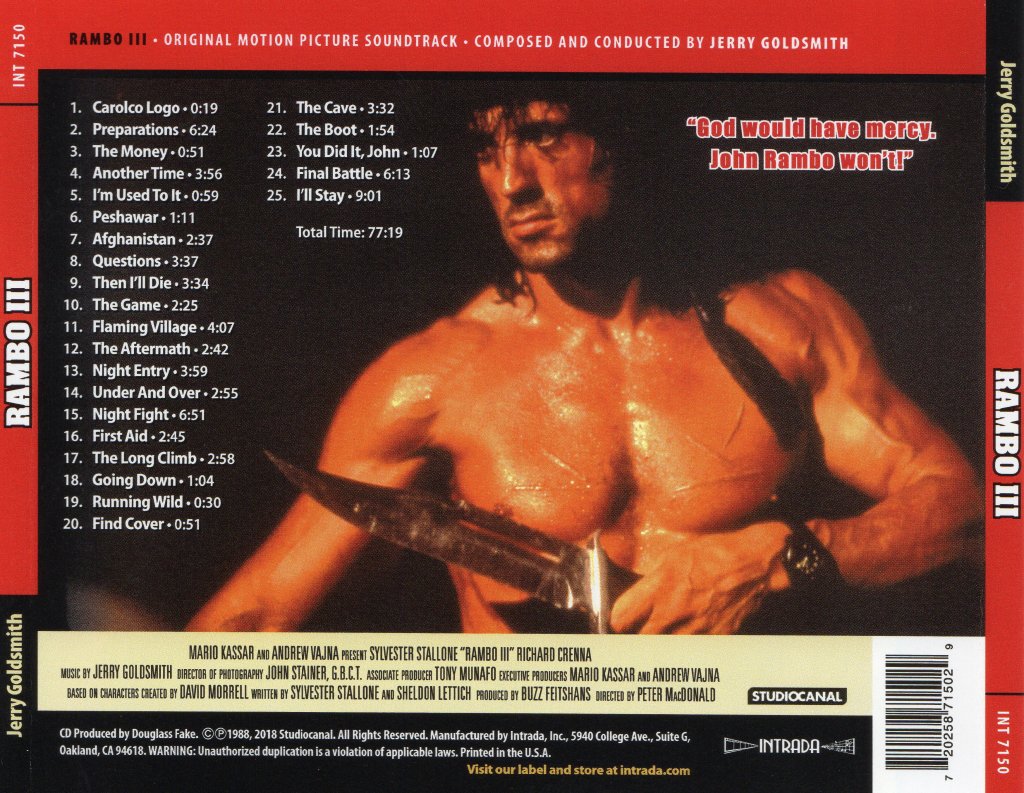
RAMBO III (RE-MASTERED)
http://store.intrada.com/s.nl/it.A/id.11455/.f
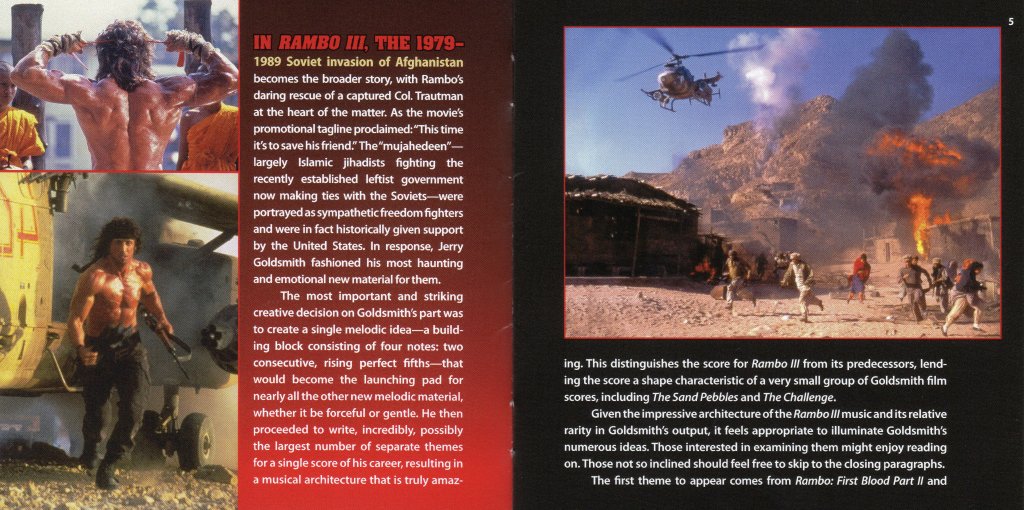
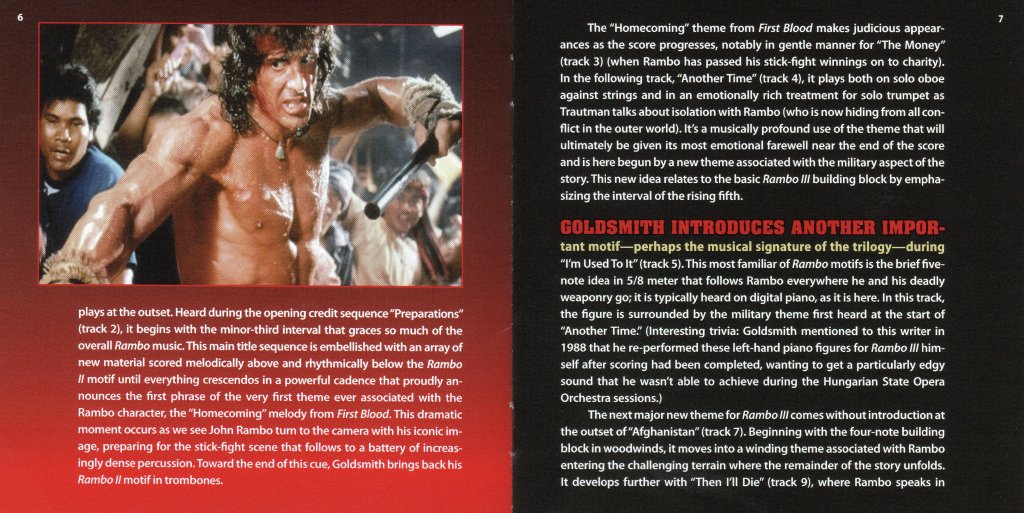
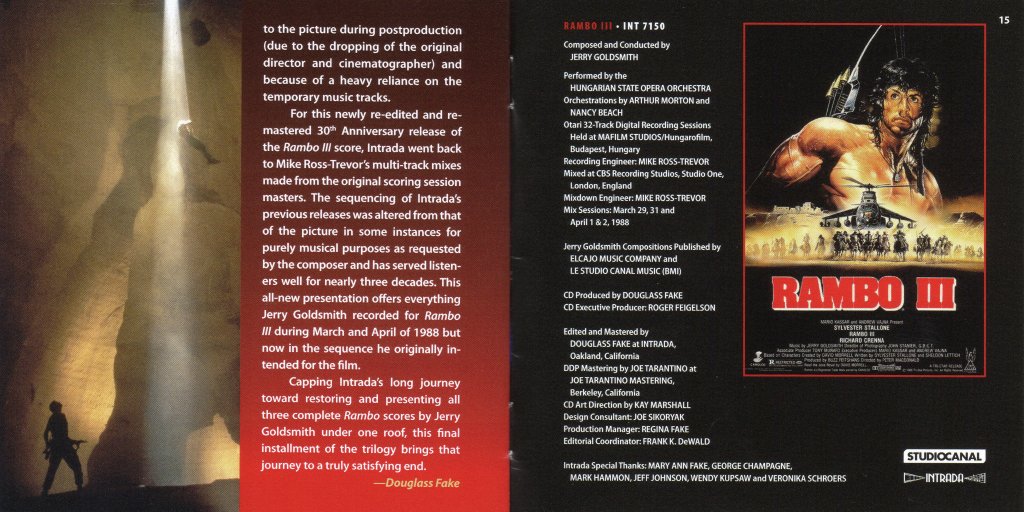
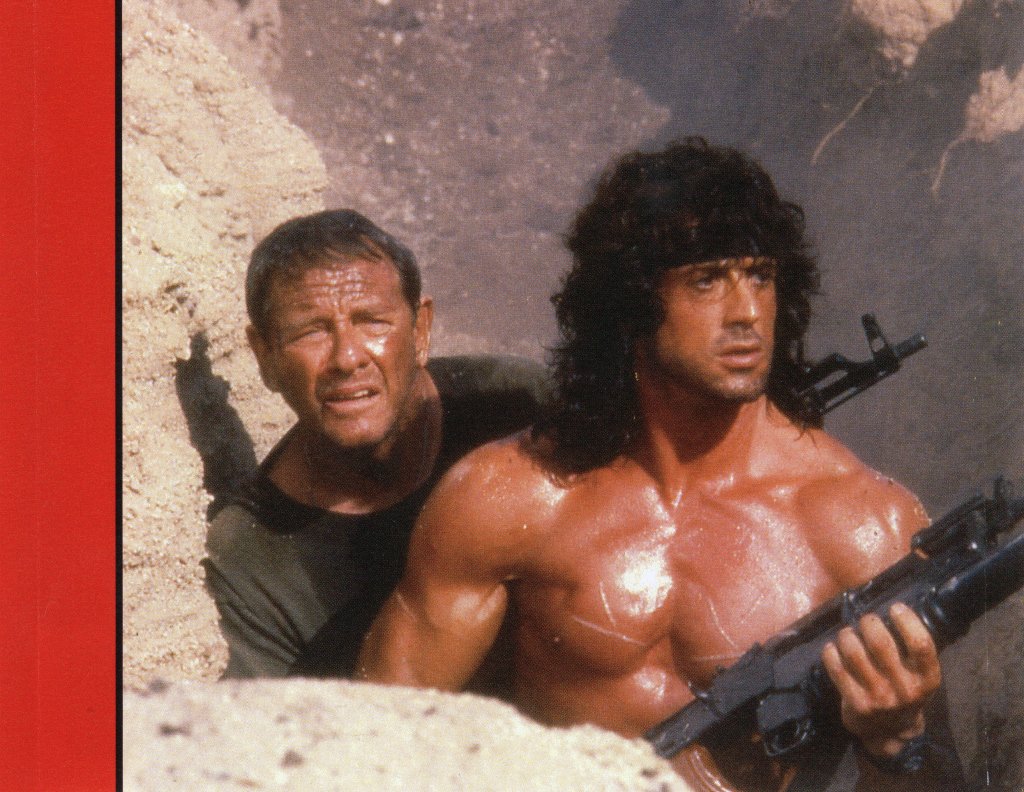
Rambo III re-sequenced, re-mastered, re-packaged! After lengthy delay, third and final score by Jerry Goldsmith in initial Rambo trilogy finally brings Intrada CD series under one roof at the same time. John Rambo takes on Russians in Afghanistan in effort to rescue captured Colonel Trainman. Sylvester Stallone, Richard Crenna star, John Stainier photographs, Stallone & Sheldon Lettich script, Buzz Feitshans produces, Peter MacDonald directs. Jerry Goldsmith writes his longest Rambo score, infuses it with the largest number of thematic ideas as well. Melodies from first two films do appear but this time Goldsmith emphasizes all-new Rambo-in-action material with new rhythmic foundations as well. Also of note: Architectural device of new four-note building block that launches new theme. Motif not only anchors new Rambo theme but also opens other new material including music for Afghanistan locale plus beautiful minor-key theme underlining Rambo’s loyalty to new friends helping him in his cause. Capturing center stage none-the-less is dynamic action music wherein four-note motif in brass over familiar mixed-meter rhythms in left-hand digital piano literally propel Rambo into action. Goldsmith himself dubbed forte performance of piano overlays during mixing to create unusually commanding timbre. Post-production editing of the film created necessity to truncate numerous cues, replace others with tracks from second film. As such, CD for Rambo III features music not heard in final film. Highlights of score are numerous but standing tall is powerful ending sequence when Rambo parts with new friends, rides off in Jeep with Trautman. Here, Goldsmith returns to his very first “Homecoming” theme from movie that launched series, First Blood. As solo trumpet gives way to strings, entire orchestra crescendoes in powerful fortissimo farewell to this most emotional of Goldsmith themes. Entire following end credit music heard in same cue (“I’ll Stay”) offers magnificent medley of new action theme with haunting minor-key theme, culminating in stirring coda that melds both second and third film’s themes in single muscular flourish. Great finale to the trilogy! Intrada presents entire score from first generation three-track masters mixed by Mike Ross-Trevor from his original Otari 32-track digital scoring session elements. Previous releases were produced from two-track session DATs. New mastering adds weight, clarity. Score also now presented for the first time in film sequence. New liner notes focusing on thematic ideas plus revised packaging from Kay Marshall complete this definitive look at a genuine Goldsmith action classic! “The first time was for himself. The second was for his country. This time is for his friend.” Arthur Morton, Nancy Beach orchestrate, Jerry Goldsmith composes, conducts Hungarian State Opera Orchestra.




Nintendo Switch Lite SUCKS
Nintendo thinks giving us a dumbed- down version of the Nintendo Switch is what we needed. But honestly I think the Nintendo Switch Lite sucks. And in this video, Dark Luke explains why.
Archaeologists Photographed Unearthing Giant
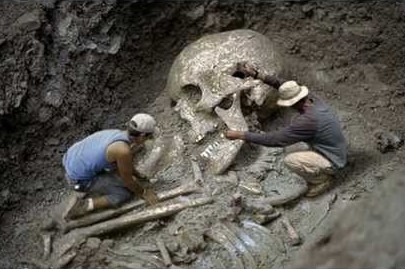
Far as I can tell, this photograph showing archaeologists working on the skeleton of a giant started to circulate on the internet in 2012. The most common claim is that it is one of several pictures of giant skeletons found in Sumeria.
Photoshop has become too easy to use, and people are — as ever — too willing to accept evidence that supports their beliefs. In this case the main people who put the image forward as evidence of giants either have books and websites devoted to the idea that giants once existed, or they are people who see it as confirmation of the phrase from the Bible that claims there were “giants in the earth.”
But, yes, this is a photoshopped image. The original image of the skeleton is that of one found by archaeologist David Billoin in Echenoz-le-Meline, France, on June 11, 2008, as part of a Merovingian necropolis that dates to the 6th century after Christ. As you can see in the images below, from the Getty Images website, the head shot is undoubtedly the one used for the image above… and the longer distance shot of the full body makes it clear it is not the scale of a giant.
Grover Furr on the great myths about the Soviet Union
American professor Grover Furr talks about his book BLOOD LIES: The Evidence that Every Accusation against Joseph Stalin and the Soviet Union in Timothy Snyder’s Bloodlands Is False. Plus: What Really Happened in: the Famine of 1932-33; the “Polish Operation”; the “Great Terror”; the Molotov-Ribbentrop Pact; the “Soviet invasion of Poland”; the“Katyn Massacre”; the Warsaw Uprising; and “Stalin’s Anti-Semitism”.
Grover Carr Furr III (born April 3, 1944) is an American professor of Medieval English literature at Montclair State University, best known for his books on Joseph Stalin and the Soviet Union. He has published many books on this subject.

