A quarter of all Russian men die before they reach their mid-fifties and their passion for alcohol – particularly vodka – is largely to blame, according to research published on Friday.
A study of more than 150,000 people found extraordinarily high premature death rates among male Russians, some of whom reported drinking three or more bottles a week of the potent clear spirit.
Perhaps unsurprisingly, deaths among heavy drinkers were mainly due to alcohol poisoning, accidents, violence and suicide, as well as diseases such as throat and liver cancer, tuberculosis, pneumonia, pancreatitis and liver disease.
“Russian death rates have fluctuated wildly over the past 30 years as alcohol restrictions and social stability varied under presidents Gorbachev, Yeltsin and Putin, and the main thing driving these wild fluctuations..was vodka,” said Richard Peto of Britain’s Oxford University, who worked on the study.
The researchers, including David Zaridze from the Russian Cancer Research Centre in Moscow, noted that whereas British death rates between age 15 and 54 have been falling steadily since 1980, mainly because so many people there have stopped smoking, Russian death rates in this age range have fluctuated sharply – often approximately in line with alcohol consumption.
Under Mikhail Gorbachev’s 1985 alcohol restrictions, alcohol consumption fell by around 25 percent – and so did the death rates, they said. And when communism in Russia collapsed, alcohol consumption went up steeply, as did death rates.
More recently, since Russian alcohol policy reforms were introduced in 2006, consumption of spirits has fallen by about a third and so has the risk of death before age 55, the researchers said – although that risk is “still substantial”.
For this study, published in the Lancet medical journal, researchers asked 151,000 people how much vodka they drank, and whether they smoked, then monitored them for up to a decade.
Around 8,000 of them died during that time, and the results showed much higher risks of death in men who smoked and who also drank three or more half-litre bottles of vodka a week than in men who smoked and drank less than one bottle a week.
Zaridze described the relationship between vodka and deaths as a “health crisis” for Russia, but stressed it could also be turned around if people were to drink more moderately.
“The significant decline in Russian mortality rates following the introduction of moderate alcohol controls in 2006 demonstrates the reversibility,” he said.
“People who drink spirits in hazardous ways greatly reduce their risk of premature death as soon as they stop.”
I finished Contact by Carl Sagan earlier this week. It was surprisingly beautiful and exciting.
We have a tiny little library in Bay City. They have a limited selection, but the atmosphere is cozy and welcoming. I try to take the kids there once a week – whether they want to go or not. While my TBR pile is a few hundred books high, I’m always drawn to hang out in a building dedicated to books.
Hanging out on the floor, looking through the sci-fi and fantasy section, I came across Contact by Carl Sagan. I watched the Jodi Foster movie back in the ’90s. And as a lover of space, I knew the name Carl Sagan but didn’t realize he had written the book the movie was based on.
It was a hefty hardbound book. I opened it up to read the first page. This is how I determine if I want to read a book. If the first page doesn’t hook me, I’m out. This one grabbed me, and it left with me, safe and snug in my library bag.
At 480 pages long, it took me two weeks to read. I read it before bed, during lunch, and while riding my stationary bike. Sagan had a knack for dumbing down physics enough for the layperson to understand. This book has a whole lot of science in it, but it’s easy to comprehend.
I have not watched the movie since it came out on video. I couldn’t remember much of what happened in the movie – what I read was fresh and thrilling.
The book took a long time to wind up. There was a whole lot of backstory on the main character. That being said, the pacing was good until the middle of the book. I almost skipped a few pages but managed to resist.
While reading this, it was as if I was reading Sagan’s personal beliefs versus reading a fictional story. I imagined his faith. His trust in something more. A lifelong search for answers to his questions on what space held, and why we were here. With every page, his deep respect for the cosmos is apparent.
At times the fact that a scientist wrote a work of fiction was obvious. The main character Ellie was often emotionless. Contact seems to break all of the rules of a story while following others to the T. Overall, I enjoyed the book and would read it again.
I like the message I took from it – that was, we may not be alone, and we don’t have all the answers. What we need to be is open minded and humble in our lives. We need to more open to change and different opinions. People rarely get good things from pushing their opinions or beliefs on others.
Have you read the book or watched the movie? What did you think?
We step into the review ring with the puzzles, muscles, and tussles of Guacamelee to find that Metroidvania meets Mexico is a charming recipe for success.
The Red Tent depicts Gen. Nubile’s North Pole expedition by adirigible which resulted in crash landing.
The Red Tent is a true story depicting the North Pole expedition by a dirigible led by Italian Gen. Nubile in 1928, which resulted in crash landing at somewhere in the vicinity of the North Pole. One more thing making this event famous is, the world famous Norwegian explorer Roald Amundsen was also lost in an attempt to rescue the survivors of this unfortunate accident. Peter Finch plays Gen. Nubile, and Sean Connery plays Amundsen. I consider their performances are quite excellent, especially watching Sean Connery play a role other than James Bond at that time is quite refreshing. And Peter Finch seems to be always reliable and acting persuasively. That’s true even when he played a demented TV announcer in the movie “Network”(1976), after the completion of which he died and got the Oscar posthumously. I also remember that he played an important part in the similar kind of movie titled “The Flight of the Phoenix” in 1965, though it was about desperate persons stranded right in the middle of the Sahara desert instead of freezing arctic ocean and was a fiction completely (incidentally, German born actor Hardy Kruger also appears in both movies). Although I think that it would be very interesting to compare these two movies, because, as one is European made and the other is American, there seems to be several significant differences between them in spite of both handling similar situations, I don’t have any intention to explicate it in this review, because there are other intersting points I want to mention about The Red Tent.
Unfortunately, this film lacks serious drama aspect, and also the excessive use of flash-forward technique is marring the movie itself.
Several critiques seem to have been brought against this film on the ground that there are so many awkward flash-back scenes (or rather should be called flash-forward scenes) in it to the extent that they almost destroy the integrity of the movie itself. I’m afraid I must agree to this remark. Had it not been for these unnecessary scenes and, instead, had it been spiced up by more appropriate drama aspects such as struggles for survival, which “The Flight of the Phoenix” seems to succeeded in conveying, the film could have been one of the best movies of this kind, and surely I would have given the film a five stars without any hesitation. Nevertheless, I consider the film is entitled to be referred as an excellent movie.
The Red Tent is by far the most beautiful movie ever made.
One reason for it is, “The Red Tent” is by far the most beautiful movie ever made. The scenary of arctic ocean is quite marvelous, though I don’t know exactly where the film was shot. Furthermore, the simple score composed by famous Italian screen music composer Ennio Morricone (He is also famous in the field of classical area. In that area, he composes such kind of music like music-concrete or something like that, which is definetely not for ordinary audiences. Sometimes I wonder he might be composing very beautiful screen music in order to compensate it.) is surely augmenting the beautiful atmosphere. The scene of icebergs crushing into arctic ocean is literally breathtaking and awe-inspiring, and I assure you will be able to easily feel the resistance of nature refusing the trespass of human race by watching these scenes. Even it shouldn’t be referred by the word “resistance”, for resistance is the activity a fragile creature like human being trys to conduct. Nature is always beyond human being’s imagination, and, you, for example, would never be able to fully understand the meaning of glaring eyes of a tiger that was about to eat you at his lunch time. Anyway, by this point alone, I can recommend you to watch this movie at least once.
Internationality is the key word of this movie, and it is essential for our future world.
Another reason is concerning this film’s characteristic of international nature. By saying so, I am not only referring to the famous international players participating in this movie, but also referring to the nationality actually involved in this accident in 1928. The expedition itself is composed of Italian personnel. The person firstly picking up the SOS signals from the abandoned survivors is a Russian, though I don’t know whether it is historically accurate or not. The first contact with the survivors is made by a Swedish pilot (played by Hardy Kruger), and, of course, aforementioned Amundsen is a Norwegian. Although I guess that there must have been serious struggles among these countries as to which country would be the first one to reach the Sauth Pole and the North Pole, they seem to work cooperatively and heroically beyond their nationalities once something bad has happened. Considering the fact the age was between two world wars, national interest must have been prioritized over everything else. Nontheless, they conduct rescue tasks together, if it wouldn’t be called remarkably cohesive. Probably facing something far bigger than human interest, i.e. nature itself as I mentioned before, they might have been compelled to do so. Or rather they might have acted heroically because of their intention to show the bravery of their own country. But, whatever is the reason, this kind of cooperative works organized beyond nationality was, and, is, and, will be the most important element to achieve world level objectives. And it is especially true in the age when all the world is connected by the nexus like the Internet, even if it only means the connection in an information area alone for now. So whenever I watch this film, I cannot help feeling the freshness, the freshness that would not be attainable by the elements only limited to one country’s local interest and propaganda, and I never feel any dreariness from this film usually accompanying this kind of stories. Finally thanks to the gorgeous internatinal casting of this film, which has certainly succeeded in augmenting international feel of this film. There are British players (Peter Finch, Sean Connery), Italian (Claudia Caldinale among others), German (my favorite Hardy Kruger), and also Russians (judging by the name, director must be a Russian).
A still from Okami (2006), directed by Hideki Kamiya
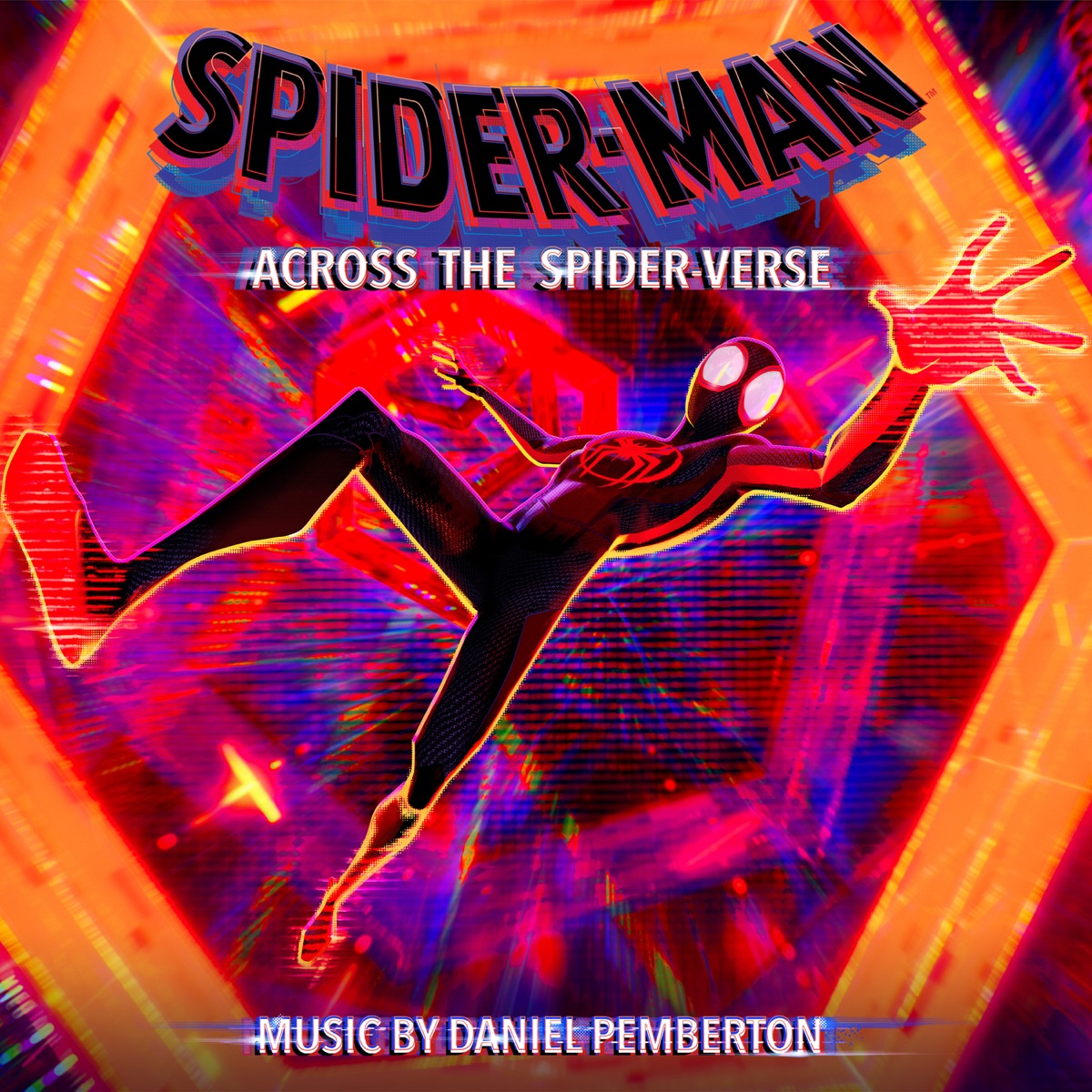
Although I didn’t really want to make a new post so soon after my last post, I do feel like writing about a few things at this time. First of all, The Legend Of Zelda: Tears Of The Kingdom got released on May 12 of this year. This video game has already had impressive sales figures. But this isn’t really surprising because The Legend Of Zelda: Breath Of The Wild (2017) was a big success in terms of sales too, having sold more than 30 million copies already. It was also a big critical success. So, video game reviewers and many other people have been playing Tears Of The Kingdom and talking about it since its release. Some people have already uploaded their analysis videos of this video game on YouTube. Some of these videos are an hour or more in length. Even Leo Tolstoy’s great novel War and Peace (1869) doesn’t receive this much affection and reflection from young people nowadays. When it comes to me, however, I have to say that I haven’t been participating in this latest The Legend Of Zelda phenomenon. I haven’t yet bought Tears Of The Kingdom, and I still don’t own a Nintendo Switch video game console. The reason for this is something that I have already gone over in an earlier post. Basically, I don’t like that Nintendo has been, or had been, going after ROM websites and suing the owners of these websites. There’s also the fact that I don’t have an urge to play Switch games. Even the release of Tears Of The Kingdom, which is definitely a game that I want to play, hasn’t yet caused me to run out and buy a Switch. There are people that have criticized Nintendo because of its policies and lawsuits and that have vowed not to buy a Switch. But, after some time had passed, these gamers had forgotten about their vows and have bought one or more Switch consoles for themselves anyway because they claim that it’s THE console to own now. It seems like they’re not good at keeping vows. I’ve never vowed to do any such thing, but I still don’t own a Switch. It seems that I’m better at following my principles than these other people. Anyway, playing the latest video games is not what I live for. Tears Of The Kingdom did somehow get leaked online several days before its release. Because of this, I was able to watch a little of the gameplay footage on Twitch, particularly by the user “tearsofnintendo”, before Nintendo began issuing threats. Although I haven’t yet been able to enjoy playing Tears Of The Kingdom, the last month hasn’t been a drag for me. It’s now summer in Vancouver, and I’ve been going outside a lot lately. One of the things that I’ve been able to do in the last month is finish playing Okami. This is a video game that I began playing several months ago. It’s one of the games that’s on my favorite list of the best video games ever, which is the one on Wikipedia (https://en.wikipedia.org/wiki/List_of_video_games_considered_the_best). Since Okami has been one of the most highly acclaimed video games ever since its release in 2006, I bought a PlayStation 2 copy of this game already a decade or more ago. But I didn’t begin playing it until several months ago. What’s also worth mentioning is that I played Okami by using the PCSX2 emulator on my laptop. So, I didn’t play this game on my Slim PlayStation 2. It’s obviously more convenient to play PS2 games on a laptop because a laptop doesn’t have to be connected to a monitor or to a television set. Moreover, the PCSX2 emulator has a quick save option. A quick save option is, in my opinion, the best thing about any emulator that has it because you can save your game at any time and anywhere you want to and you don’t have to spend time on getting to a save point in a video game in order to save your progress. This is one of the reasons why I’m fond of emulators. Good PS1 and PS2 emulators have existed for quite some time already, but a good PlayStation 3 emulator still doesn’t exist. I’m very disappointed by this fact because the PS3 is my favorite console and it features some of my favorite video games. Anyway, I must admit that for the first several hours I wasn’t really enjoying playing Okami very much. But such is the case with almost any video game. At first, you have to learn the rules of a game and how to play it. In Okami, you play as Amaterasu, the goddess of the sun, in the form of a white wolf. The most unique game mechanic in Okami is obviously the Celestial Brush, which is used to draw on the screen. Amaterasu acquires certain abilities in the course of the game, but they can be used only if you successfully draw certain shapes by using the Celestial Brush. So, after the first several hours of gameplay had passed, and after I got used to the gameplay of Okami, the game became enjoyable for me. The designs in Okami and the game’s woodcut, watercolor style, cel-shaded environment are fantastic. But every aspect of the game is worth praising. Okami features enjoyable gameplay, including enjoyable combat and platforming, a rich and memorable music score, and a story with a number of surprises. You go from defending a small Japanese village at the beginning of the game to fighting Yami, a big machine-esque demon, aboard a spaceship at the end of the game. The director of Okami, Hideki Kamiya, has worked on creating a number of other great video games too, like Resident Evil 2, Devil May Cry, Viewtiful Joe, Bayonetta, and The Wonderful 101. It takes several dozen hours to finish playing Okami. This is a long game, and I didn’t expect for it to be this long when I began to play it. But, when you’re done playing it, you feel like you’ve accomplished something special. It’s an effect that any other great video game creates. Therefore, Okami is up there among the best PS2 games that I’ve played. These video games include Silent Hill 2, Persona 3, Metal Gear Solid 2: Sons Of Liberty, Shadow Of The Colossus, Persona 4, Metal Gear Solid 3: Snake Eater, Resident Evil 4, God Of War II, Final Fantasy X, God Of War, and Final Fantasy XII. Of course, there’s also the fact that these are almost all of the PS2 games that I’ve been able to play so far. When I was growing up, I didn’t get to own video game consoles and video games. If I remember correctly, the only video games that I got to complete when I was a teenager are Warcraft II: Tides Of Darkness, Diablo II, and Pokemon Red & Blue. And these video games were already old by the time I played them. I didn’t even have a computer of my own when I was growing up. Therefore, I can’t really relate to the many people that grew up with a console made by Nintendo, Microsoft, or Sony. So, what did I do when I was growing up? Well, now that I think about this, I can say that I often rode on my bicycle. There was a time when I went skiing on the Cypress Mountain Ski Area almost every week. I got to swim in the ocean and in a creek quite a lot. I listened to music, and I already had a somewhat large collection of CDs when I was a teenager. I began to work when I was in the 10th grade of high school. I often rented movies at video rental stores. I often checked out movies and other videos at my local library. I had a small television set of my own on which I could watch a few local channels in black & white because my TV had an antenna. Because of this, I got to see many films with English subtitles from Hong Kong on one of the channels. Let’s not forget that there’s a very large Chinese community in Vancouver, and Vancouver has a large Chinatown neighbourhood in the Downtown area. I had a DVD player and even a VHS player linked to my TV so that I could watch videos in color. In addition, I didn’t have cable television. When I was going to high school, calling someone gay was still considered to be an insult. I didn’t go around calling people gay, but other students did. For example, in order to insult someone, a student could say, “You are so gay.” And, in order to ridicule some activity or some thing, a student could say, “That is so gay.” Of course, how can I forget one conversation that I had with one student from Iran? I asked him, “Where would you like to live, in Yemen or in Oman?” He replied, “In Oman.” I asked, “Why not in Yemen?” He answered, “Too many men.” Another one of my activities when I was growing up was reading books. For example, I already read The Count of Monte Cristo (1844) by Alexandre Dumas when I was a teenager, and this thick novel is still one of my favorite books. I read this novel after I watched The Count of Monte Cristo (2002) by director Kevin Reynolds on video. Although I’ve read this classic and other classics, I haven’t yet read the other novels by Dumas. This is a little strange. I should definitely read The Three Musketeers (1844), Twenty Years After (1845), and The Vicomte of Bragelonne: Ten Years Later (1847). When it comes to the books that I recently finished reading, I can say that I finally finished reading ‘How the Scots Invented the Modern World: The True Story of How Western Europe’s Poorest Nation Created Our World & Everything in It’ (2001) by Arthur L. Herman. I bought it because it’s one of the books that Andrei Fursov recommended on his webpage. However, I wasn’t eager to finish reading this book after I began reading it. This is why I was slowly reading it for 2 or 3 years before I was able to get through it. In the case of this book, Wikipedia actually has a good page about it. ‘How the Scots Invented the Modern World’ is pretty much a standard modern Western history book that contains a little modern day propaganda. So, for example, the author praises capitalism on several occasions in the book. The author’s writing style, as to be expected, isn’t fancy or exceptional in any way, but the book is still quite well-written and informative. Basically, if you want to find out about the Scottish Enlightenment, you can read this book. I learned quite a lot from it because I wasn’t familiar with the Scottish Enlightenment before reading it. Another memorable book that I finished reading some time ago is Beyond Apollo (1972) by Barry N. Malzberg. This odd science fiction novel left quite an impression on me, similar to how Do Androids Dream of Electric Sheep? (1968) by Philip K. Dick and Icehenge (1984) by Kim Stanley Robinson did. So, although Beyond Apollo isn’t a standard science fiction story, it’s still one of the most memorable sci-fi novels that I’ve read. The following is an excerpt from the novel. “The moon is the single satellite of our planet, approximately one quarter of our space and volume, which led both ancient and modern astronomers to many interesting speculations. With the possible exception of Triton, lone moon of Neptune, no other single satellite exists in our system; but most new research indicates that Pluto is not a planet but also a moon of Neptune, thereby leaving our moon alone as a single satellite. Since all of the other moons are also in much less proportion to their planets than our moon to earth, theories have been advanced that we do not have a satellite system at all but a dual planet: one dead, one alive; one possibly captured by the orbit of the other inconceivable eons ago in an enormous nuclear disaster. Despite the hopes held out by the manned expeditions to the moon, now abandoned, no firm data were ever uncovered to either confirm or destroy this theory.” Besides Okami, there’s another cultural product that left an impression on me in May of this year. It’s the film Spider-Man: Across The Spider-Verse, which got released on May 30. I briefly reviewed Spider-Man: Into The Spider-Verse (2018) in one of my posts soon after it was released in theaters, and it seems to me that some people got the idea that I don’t like this film. This is not the case. I went to see this film 2 or 3 times when it was playing in theaters. I own it on video. I even have the soundtrack. It’s just that I like Incredibles 2 (2018), which was released in the same year, slightly more than Into The Spider-Verse, and I don’t think that Into The Spider-Verse is the best Spider-Man movie or the best superhero movie ever. I think that Spider-Man 2 (2004) is still the best Spider-Man movie ever. I would say that both Into The Spider-Verse and Incredibles 2 have replay value. This is something that I can’t say about many films that got made in the last two or even three decades. When I watched Into The Spider-Verse for the first time, I felt that something is not quite right with it, although I already realized that it’s a special film. Into The Spider-Verse features a number of inspired scenes, appealing and detailed animation, a rather epic story, some good characterization, and many neat details. Still, perhaps the only main character that appealed to me back then is Peter B. Parker because I could relate to this character in a few ways and because he knew what he was doing. Miles Morales, who’s the main main character in the film, didn’t appeal to me in any way. I didn’t even know about Miles Morales before I watched the film. For most of the film, Miles plays the role of comedic relief, and only at the very end does he get to do anything heroic by himself. There’s also the fact that Into The Spider-Verse is a very kinetic film, in which almost everything happens fast. Therefore, it has to be seen more than once in order for the viewer to understand and to notice everything that happens in it. So, not only was seeing Into The Spider-Verse for the first time a new and somewhat odd experience for me, I didn’t really find any of the main characters truly appealing. However, seeing Across The Spider-Verse in a theater made me like Into The Spider-Verse even more than I already did. First of all, both Miles Morales and Gwen Stacy get more character development in Across The Spider-Verse, thus turning them into more appealing characters. Second of all, many people (especially young men) have already been expressing their sweet hard love for Across The Spider-Verse, and especially for Gwen Stacy, on the internet. A few of them have been calling Across The Spider-Verse the best thing ever. Good for you, guys. But I don’t share your euphoria. Perhaps it’s because I’m a little more knowledgeable. Therefore, my reviews don’t come down to phrases like “Best movie ever!” or “F*ck this movie!”. Third of all, the animation style of Across The Spider-Verse is somewhat different from the animation style of Into The Spider-Verse. In some scenes, the animation of Into The Spider-Verse is almost photorealistic. But the animation of Across The Spider-Verse is often almost impressionistic. Both films feature some beautiful and detailed backgrounds. Fourth of all, I wouldn’t go so far as to say that Across The Spider-Verse is a better film than Into The Spider-Verse. I think that they’re equally impressive, though Across The Spider-Verse is perhaps a more exciting film. Fifth of all, all of the people in the auditorium where I got to see this animated film were adults. Most of them were in their late-twenties, thirties, or early-fourties. Some of them were old people. All of them were enjoying seeing the film a lot. What is going on here? I had a similar peculiar experience when I watched Titanic (1997) in a theater in February of this year. Most of the people in the auditorium were women, mostly young women, and some of them were truly excited and were even crying by the time the film came to an end. When the credits began to roll, these members of the fair sex all began to talk excitedly about the film. All I can say is that James Cameron knows how to make films that appeal to both men and women. No wonder his films bring in so much cash. Sixth of all, seeing Across The Spider-Verse later made me spend half a day on watching Into The Spider-Verse again on video. I watched some scenes several times, and I often paused the movie in order to look at the backgrounds and the character designs. It’s true that Gwen Stacy sometimes moves like a ballet dancer in this film too. Before watching Across The Spider-Verse, I barely knew anything about Phil Lord and Christopher Miller because I had no interest in what these filmmakers have done. But, after taking a look at their filmography, it turned out that they worked on several films that I like quite a lot, and I got to see most of their films in theaters.