



New direction brings refinements to Dark Souls II, but meanwhile weakens past strengths.
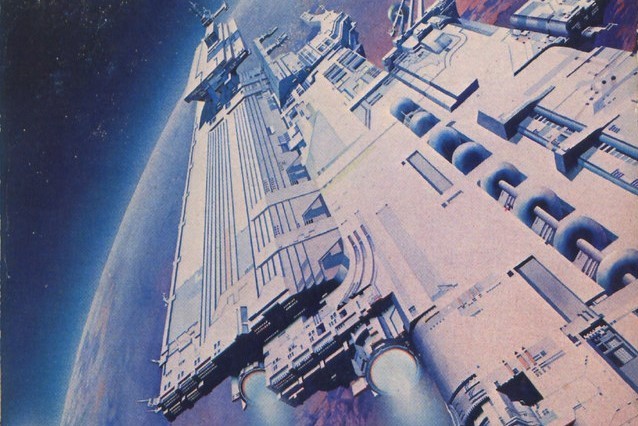
I decided to sign up for the 2012 Grand Master Reading Challenge, organized by World Without End. The goal is to read and review a work by a different Damon Knight Memorial Grand Master Award winner every month. I decided to start with Poul Anderson, who was honoured with the award in 1998. Tau Zero (1970) is one of his better known works. It was nominated for the Hugo Award in 1971 but lost to Larry Niven’s Ringworld. It is a very good example of hard science fiction, written in a time when the direction of the genre was being drastically changed by the arrival of new age authors. The novel is an expansion of the short story To Outlive Eternity which was first published in Galaxy Science Fiction in 1967. I’m not going to hold back on spoilers in this review, the title of the short story gives is one already anyway. You have been warned.
Fifty men and women are sent on the spaceship Leonora Christine to explore and, if possible, colonize a planet more than thirty light years away. To make the trip in a reasonable span of time, the spaceship has to approach the speed of light and make use of the time dilation effects that become appreciable at such speeds. Before deceleration can be set in, the engines needed to slow down the ship are severely damaged. Repairing them would mean shutting the acceleration engines off as well, which would result in a quick death from intense radiation. The ship’s speeds keeps increasing, hurling the crew ever faster through space and time. Unless they can find a way to slow down the crew is doomed to live out their life on board the space ship.
Tau Zero is science fiction so hard it cuts diamonds. A physics lesson and a novel rolled into one. The publisher kindly provided the formula for the time contraction factor Tau, which equals the square root of 1 minus v squared divided c squared, where v stand for velocity and the constant c is the speed of light. In other words Tau equals zero when v equals c (everybody still with me?). In a more practical sense, the closer the speed of the ship gets to the speed of light, the larger the difference between time passing for the crew and time passing outside the ship. I understand that Anderson’s use of Tau is a bit unorthodox but for narrative purposes it serves very well.
In a way, Anderson uses Tau to show us just how large the universe really is, something he is rather fond of doing in his other science fiction novels as well. As the velocity of the ship approaches the speed of light, minutes, hours, days, years and eventually aeons pass for every second of ship time. Galaxies are crossed, then clusters and super clusters to the point where time and distance becomes meaningless. In the end, Anderson takes us to the death of the universe itself and there a bit of speculation seeps in. The debate about the eventual fate of the universe is still raging, Anderson assumes the universe is cyclic and will eventually contract into a new singularity and expand again after a big bang. Although science has not come up with the proof for this yet, in literature the death and rebirth of the universe does make for a wonderful theme.
That’s quite a lot of physics and cosmology for the reader to take in. The more experience science fiction reader will have come across these elements before. Alastair Reynolds for instance, include much more exotic science into his works. Anderson explains the physics clearly, even the more counter intuitive elements of relativity, but spares us quantum mechanics. Personally, I enjoyed the scientific passages a lot. That is my personal taste however, it will no doubt put some readers to sleep in a few pages. This novel requires some interest in physics and cosmology to really appreciate.
One might think that this would be enough science for a single novel but Anderson also throws in quite a lot of detail about the Bussard engine of the spaceship. This theoretical way of propelling a ship was first proposed in 1960 and has appeared in a number of science fiction novels by such authors as Larry Niven and Carl Sagan. It is basically a fusion engine which uses the minute quantities of free hydrogen in space to propel the ship. There has been a lot of debate about whether or not a ship powered in such a way would actually be able to reach relativistic speeds, but it’s an ingenious idea anyway. Again Anderson explains the design of the engine and its limitations, which play a large part in the efforts to slow the ship down, very clearly. I thought the engineering was a bit less interesting than the cosmology but it is central to the plot and Anderson makes sure not to overdo it.
Hard science fiction has a reputation of paying less attention to character and character development. For Tau Zero that is definitely true. I guess you could consider the two people we meet in the opening chapter, the compassionate Ingrid Lindgren and the brusque Charles Reymont to be the main characters. They appear to be the people who keep the crew together and sane as Earth becomes an ever more distant memory. They are mostly people dealing with problems of the crew’s morale and organizing efforts to solve their technical problems. Although towards the end of the book things get a bit more philosophical (the death and rebirth theme does have an effect on them), there is very little in the way of development in their characters.
Most of the novel is set in space so the future history of Earth is not all that important. We do get a glimpse of a society where Sweden has become the centre of power in the world after a nuclear war that almost doomed the planet. IKEA everywhere, surely this must count as a dystopia. Anderson, American of Danish descent, also weaves in some reverences to Scandinavian mythology, something that returns in many of his novel. It’s a bit of an odd contrast really, the cyclic nature of the universe as described in this novel, reminded me more of Hindu mythology.
According to the blurb on the cover, James Blish considers this book the ultimate hard science fiction novel. There is something to be said for that. I have rarely read a novel with such rigorous scientific underpinnings. Anderson had a degree in physics and in other novels it is quite clear that he thought about the properties of fictional planets he created. In Tau Zero he takes it way beyond that and makes physics the main character. The scope of the novel, in time and space is almost beyond comprehension (something the author points out several times in the text). Anderson takes hard science fiction as far as it will go, in that sense it is the ultimate novel in this particular sub-genre. That being said, it does not escape the shortcomings generally associated with the sub-genre. I’d say it is a must read for fans of hard science fiction only.
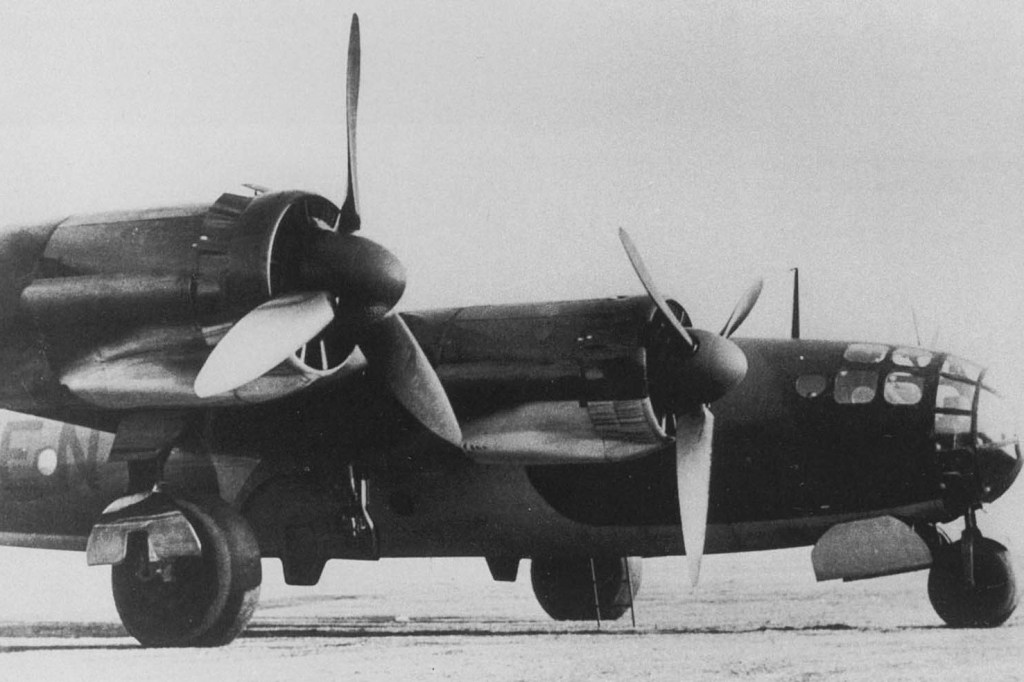
The Me 264 was designed from the beginning as part of the “Amerika Bomber” project. Its goal was to be able to carry a small load to the United States but also to support U-boat operations far into the Atlantic.
The Amerika Bomber was a project to obtain a long-range strategic bomber for the Luftwaffe that would be capable of striking the contiguous United States from Germany, a distance of about 5,800 km (3,600 mi).
The concept was raised as early as 1938, but advanced, cogent plans for such a long-range strategic bomber design did not begin to appear in Hermann Goering’s offices until the spring of 1942. The strategic bomber would be capable of attacking New York City from bases in France or the Azores.
The first ME 264 prototype flew in December 1942, but soon allied pressure forced Messerschmitt to slow development. The Me 264 V1 had a very “clean”, all-metal fuselage with a circular cross-section throughout.
Just behind the extensively glazed nose and the cockpit was a galley, crew rest area, and walkway to the rear of the plane above the lower, enclosed bomb bay. The wings were shoulder-mounted, slightly swept back, and tapered.
They contained a single main spar and one auxiliary spar, with the wing loads being transferred through the main spar and two auxiliary bulkheads into the fuselage. The entire fuel supply was stored in the large wings.
All control surfaces were conventional, including split flaps on the inner wing. The tailplane, with its twin fins and rudders, was electrically adjustable during flight.
In total 3 prototypes were built. This first prototype was not fitted with weapons or armor, but of the following two prototypes, the Me 264 V2 had armor for the engines, crew, and gun positions.
Late in 1943, the second prototype, Me 264 V2, was destroyed in a bombing attack. On 18 July 1944, the first prototype, which had entered service with Transportstaffel 5, was damaged during an Allied bombing raid and was not repaired. The third prototype, which had not been fully completed, was destroyed during the same raid.
Me-264 – Cruise speed: 217 mph (350 km/h), Service ceiling: 26,000 ft (8,000 m), Range: 9,500 mi (15,000 km), 3,000 kg (6,614 lb) bombload in internal bomb bay, Max takeoff weight: 123,000 lb (56,000 kg).
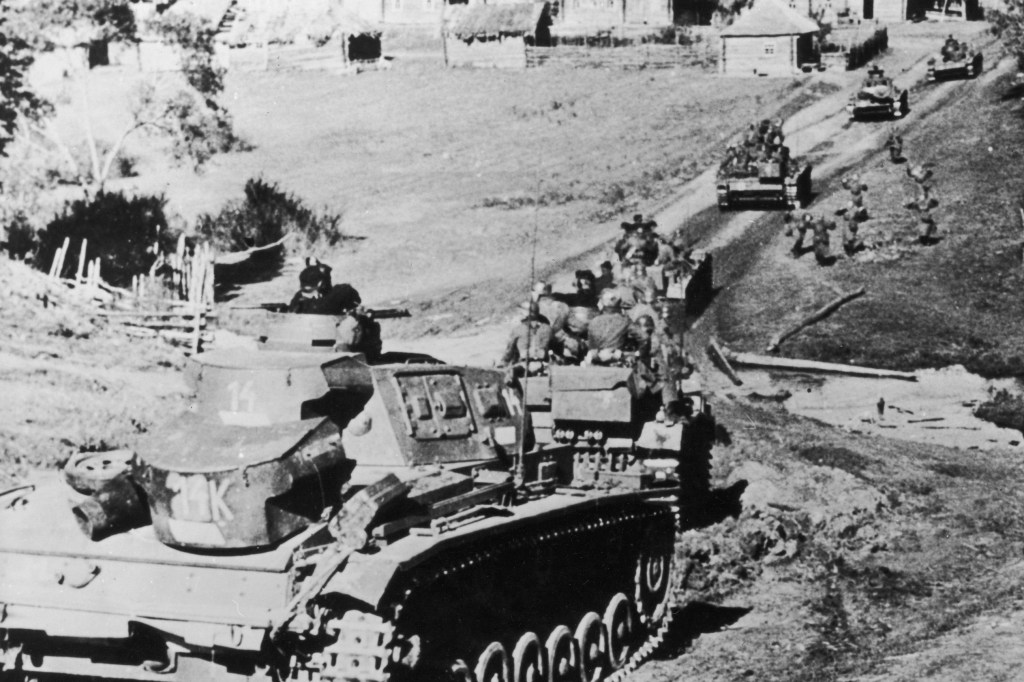
Operation Barbarossa (German: Unternehmen Barbarossa) was the codename for Nazi Germany’s invasion of the Soviet Union during World War II that commenced on June 22, 1941. Over 4.5 million troops of the Axis powers invaded the USSR along an 1,800 mile front. The operation was named after the Emperor Frederick Barbarossa of the Holy Roman Empire, a leader of the Third Crusade in the 12th century. Barbarossa was the major part of the war on the Eastern Front. The planning for Operation Barbarossa started on December 18, 1940; the clandestine preparations and the military operation itself lasted almost a year, from the spring of 1941, through the winter of 1941.
The operational goal of Barbarossa was the rapid conquest of the European part of the Soviet Union west of a line connecting the cities of Arkhangelsk and Astrakhan, often referred to as the A-A line (see the translation of Hitler’s directive for details). At its conclusion in December 1941, the Red Army had repelled the strongest blow of the Wehrmacht. Hitler had not achieved the victory he had expected, but the situation of the Soviet Union remained critical. Tactically, the Germans had won some resounding victories and occupied some of the most important economic areas of the country, most notably in Ukraine. Despite these successes, the Germans were pushed back from Moscow and were never able to mount an offensive simultaneously along the entire strategic Soviet-German front again.
The ultimate failure of Operation Barbarossa would prove a death knell to the Nazi ambition to dominate Europe and the world and lead to the defeat of the Axis powers during World War II, resulting in the triumph of the democratic forces.
German plans
German propaganda made claims that the Red Army was preparing to attack them, and their own invasion was thus presented as a pre-emptive strike. However, in 1925-1926, Hitler’s Mein Kampf (“My Struggle”) made clear his intent to invade the Soviet Union, based on his belief that the German people needed Lebensraum (“living space,” i.e. land and raw materials), and that it should be found in the east. It was the stated policy of the Nazis to kill, deport, or enslave the Russian and other Slavic populations, whom they considered inferior, and to repopulate the land with Germanic peoples. This policy was called the New Order and was laid out in detail in Goering’s Green Folder. The entire urban population was to be eradicated through starvation, thus creating an agricultural surplus to feed Germany and allowing their replacement by a German upper class. The German Nazi-ideologist Alfred Rosenberg suggested that conquered Soviet territory should be administered in the following Reichskommissariates:
Nazi policy aimed to destroy the Soviet Union as a political entity in accordance with the geopolitical Lebensraum idea (“Drang nach Osten”) for the benefit of future “Aryan” generations in the centuries to come. The Führer anticipated additional benefits, including cheap labor, the agricultural bounty of Ukraine and access to the oil of the Baku Oilfields.
Operation Barbarossa represented a northern assault towards Leningrad, a symbolic capturing of Moscow, and an economic strategy of seizing oil fields in the south, towards Ukraine. Hitler and his generals disagreed on where Germany should focus its energies, and so Barbarossa was largely a compromise of these views. Hitler considered himself a political and military genius. In the course of planning Barbarossa during 1940 and 1941, in many discussions with his generals, Hitler repeated his order: “Leningrad first, the Donetsk Basin second, Moscow third.” Hitler was impatient to get on with his long-desired invasion of the east. He was convinced that Great Britain would sue for peace, once the Germans triumphed in the Soviet Union, the real area of Germany’s interests. General Franz Halder noted in his diaries that, by destroying the Soviet Union, Germany would destroy Britain’s hope of defeating Germany.
Hitler was also over-confident, due to his rapid success in Western Europe, as well as the Red Army’s ineptitude in the Winter War against Finland in 1939–1940. He expected victory within a few months and therefore did not prepare for a war lasting into the winter; his troops therefore lacked adequate warm clothing and preparations for a longer campaign when they began their attack. The assumption that the Soviet Union would quickly capitulate would prove to be his undoing.
German preparations
In preparation for the attack, Hitler moved 3.5 million German soldiers and about one million Axis soldiers to the Soviet border, launched many aerial surveillance missions over Soviet territory, and stockpiled materiel in the East. The Soviets were still taken by surprise, mostly due to Stalin’s belief that the Third Reich was unlikely to attack only two years after signing the Molotov-Ribbentrop Pact. The Soviet leader also believed that the Nazis would likely finish their war with Britain before opening a new front. He refused to believe repeated warnings from his intelligence services on the Nazi buildup, fearing the reports to be British misinformation designed to spark a war between the Nazis and the Communists. The spy Dr. Richard Sorge gave Stalin the exact German launch date; Swedish cryptanalysts led by Arne Beurling also knew the date beforehand.
The Germans set up deception operations, from April 1941, to add substance to their claims that Britain was the real target: Operations Haifisch and Harpune. These simulated preparations in Norway, the Channel coast and Britain. There were supporting activities such as ship concentrations, reconnaissance flights and training exercises. Invasion plans were developed and some details were allowed to leak.
Hitler and his generals also researched Napoleon’s failed invasion of Russia. At Hitler’s insistence, the German High Command (OKW) began to develop a strategy to avoid repeating these mistakes.
The strategy Hitler and his generals agreed upon involved three separate army groups assigned to capture specific regions and cities of the Soviet Union. The main German thrusts were conducted along historical invasion routes. Army Group North was assigned to march through the Baltics, into northern Russia, and either take or destroy the city of Leningrad (now Saint Petersburg). Army Group Center would advance to Smolensk and then Moscow, marching through what is now Belarus and the west-central regions of Russia proper. Army Group South was to strike the heavily populated and agricultural heartland of Ukraine, taking Kiev before continuing eastward over the steppes of southern Russia all the way to the Volga and the oil-rich Caucasus.
Hitler, the OKW and the various high commands disagreed about what the main objectives should be. In the preparation for Barbarossa, most of the OKW argued for a straight thrust to Moscow, whereas Hitler kept asserting his intention to seize the resource-rich Ukraine and Baltics before concentrating on Moscow. An initial delay, which postponed the start of Barbarossa from mid-May to the end of June 1941, may have been insignificant, especially since the Russian muddy season came late that year. However, more time was lost at various critical moments as Hitler and the OKW suspended operations in order to argue about strategic objectives.
Along with the strategic objectives, the Germans also decided to bring rear forces into the conquered territories to counter any partisan activity which they knew would erupt in the areas they controlled. This included units of the Waffen-SS and the Gestapo who specialized in crushing dissent and capturing and killing opponents.
Soviet preparations
Despite the estimation by Hitler and others in the German high command, the Soviet Union was by no means a weak country. Rapid industrialization in the 1930s had resulted in industrial output second only to that of the United States, and equal to that of Germany. Production of military equipment grew steadily, and in the pre-war years the economy became progressively more oriented toward military production. In the early 1930s, a very modern operational doctrine for the Red Army was developed and promulgated in the 1936 field regulations.
In 1941, the Soviet armed forces in the western districts were outnumbered by their German counterparts, 2.6 million Soviet soldiers vs. 4.5 million for the Axis. The overall size of the Soviet armed forces in early July 1941, though, amounted to a little more than 5 million men, 2.6 million in the west, 1.8 million in the far east, with the rest deployed or training elsewhere. Moreover, on mobilization, as the war went on, the Red Army gained steadily in strength. While the strength of both sides varied, in general it is accurate to say that the 1941 campaign was fought with the Axis having slight numerical superiority in manpower at the front.
The Russian war effort in the first phase of the Eastern front war was severely hampered by a shortage of modern aircraft. The Soviet fighter force was equipped with large numbers of obsolete aircraft, such as the I-15 biplane and the I-16. In 1941, the MiG-3, LaGG-3 and Yak-1 were just starting to roll off the production lines, but were far inferior in all-round performance to the Messerschmitt Bf 109 or later, the Fw 190, when it entered operations in September 1941. Few aircraft had radios and those that were available were unencrypted and did not work reliably. The poor performance of VVS (Voenno-Vozdushnye Sily, Soviet Air Force) during the Winter War with Finland had increased the Luftwaffe’s confidence that the Soviets could be mastered. The standard of flight training had been accelerated in preparation for a German attack that was expected to come in 1942 or later. But Russian pilot training was extremely poor. Order No 0362 of the People’s Commissar of Defense, dated December 22, 1940, ordered flight training to be accelerated and shortened. Incredibly, while the Soviets had 201 MiG-3s and 37 MiG-1s combat ready on June 22, 1941, only four pilots had been trained to handle these machines.
The Red Army was dispersed and unprepared, and units were often separated and without transportation to concentrate prior to combat. Although the Red Army had numerous, well-designed artillery pieces, some of the guns had no ammunition. Artillery units often lacked transportation to move their guns. Tank units were rarely well-equipped, and also lacked training and logistical support. Maintenance standards were very poor. Units were sent into combat with no arrangements for refueling, ammunition resupply, or personnel replacement. Often, after a single engagement, units were destroyed or rendered ineffective. The army was in the midst of reorganizing the armor units into large tank corps, adding to the disorganization.
As a result, although on paper, the Red Army in 1941 seemed at least the equal of the German army, the reality in the field was far different; incompetent officers, as well as partial lack of equipment, insufficient motorized logistical support, and poor training placed the Red Army at a severe disadvantage. For example, throughout the early part of the campaign, the Red Army lost about six tanks for every German tank lost.
In the spring of 1941, Stalin’s own intelligence services made regular and repeated warnings of an impending German attack. However, Stalin chose to ignore these warnings. Enormous Soviet forces were massed behind the western border in case the Germans did attack. However, these forces were very vulnerable due to changes in the tactical doctrine of the Red Army. In 1938 it had adopted, on the instigation of General Pavlov, a standard linear defense tactic on a line with other nations. Infantry divisions, reinforced by an organic tank component, would be dug in to form heavily fortified zones. Then came the shock of the Fall of France. The French Army was defeated in a mere six weeks. Soviet analysis of events, based on incomplete information, concluded that the collapse of the French was caused by a reliance on linear defense and a lack of armored reserves.
The Soviets decided not to repeat these mistakes. Instead of digging in for linear defense, the infantry divisions would henceforth be concentrated in large formations.
Opening phase (June 22, 1941 – July 3, 1941)
At 3:15 A.M. on Sunday, June 22, 1941, the Axis attacked. It is difficult to precisely pinpoint the strength of the opposing sides in this initial phase, as most German figures include reserves slated for the East but not yet committed, as well as several other issues of comparability between the German and USSR’s figures. A reasonable estimate is that roughly three million Wehrmacht troops went into action on June 22, and that they were facing slightly fewer Soviet troops in the border Military Districts. The contribution of the German allies would generally only begin to make itself felt later in the campaign. The surprise was complete: though the Stavka, alarmed by reports that Wehrmacht units approached the border in battle deployment, had at 00:30 A.M. ordered that the border troops be warned that war was imminent, only a small number of units were alerted in time.
The shock stemmed less from the timing of the attack than from the sheer number of Axis troops who struck into Soviet territory simultaneously. Aside from the roughly 3.2 million German land forces engaged in, or earmarked for the Eastern Campaign, about 500,000 Romanian, Hungarian, Slovakian, Croatian, and Italian troops eventually accompanied the German forces, while the Army of Finland made a major contribution in the north. The 250th Spanish “Blue” Infantry Division was an odd unit, representing neither an Axis nor a Waffen-SS volunteer formation, but that of Spanish Falangists and Nazi sympathizers.
Reconnaissance units of the Luftwaffe worked at a frantic pace to plot troop concentration, supply dumps, and airfields, and mark them for destruction. The task of the Luftwaffe was to neutralize the Soviet Air Force. This was not achieved in the first days of operations, despite the Soviets having concentrated aircraft in huge groups on the permanent airfields rather than dispersing them on field landing strips, making them ideal targets. The Luftwaffe claimed to have destroyed 1,489 aircraft on the first day of operations. Hermann Göring, Chief of the Luftwaffe distrusted the reports and ordered the figure checked. Picking through the wreckages of Soviet airfields, the Luftwaffe’s figures proved conservative, as over 2000 destroyed Soviet aircraft were found.The Germans claimed to have destroyed only 3,100 Soviet aircraft in the first three days. In fact the Soviet losses were far higher, some 3,922 Soviet machines had been lost (according to Russian historian Viktor Kulikov). The Luftwaffe had achieved air superiority over all three sectors of the front, and would maintain it until the close of the year, largely due to the need by the Red Army Air Forces to maneuver in support of retreating ground troops. The Luftwaffe would now be able to devote large numbers of its Geschwader (See Luftwaffe Organization) to support the ground forces.
Army Group North
Opposite Heersgruppe Nord were two Soviet armies. The Wehrmacht OKH thrust the 4th Panzer Group, with a strength of 600 tanks, at the junction of the two Soviet armies in that sector. The 4th Panzer Group’s objective was to cross the rivers Neman and Daugava (Dvina) which were the two largest obstacles in the direction of advance towards Leningrad. On the first day, the tanks crossed the River Neman and penetrated 50 miles (80 km). Near Raseiniai, the tanks were counterattacked by 300 Soviet tanks. It took four days for the Germans to encircle and destroy the Soviet armor. The Panzer Groups then crossed the Daugava near Daugavpils. The Germans were now within striking distance of Leningrad. However, due to their deteriorated supply situation, Hitler ordered the Panzer Groups to hold their position while the infantry formations caught up. The orders to hold would last over a week, giving time for the Soviets to build up a defense around Leningrad and along the bank of River Luga. Further complicating the Soviet position, on June 22 the anti-Soviet June Uprising in Lithuania began, and on the next day an independent Lithuania was proclaimed. An estimated 30,000 Lithuanian rebels engaged Soviet forces, joined by ethnic Lithuanians from the Red Army. As the Germans reached further north, armed resistance against the Soviets broke out in Estonia as well. The “Battle of Estonia” ended on 7 August, when the 18.Armee reached the coast at Kunda.
Army Group Center
Opposite Heersgruppe Mitte were four Soviet armies: the 3rd, 4th, 10th and 11th Armies. The Soviet Armies occupied a salient which jutted into German occupied Polish territory with the Soviet salient’s center at Bialystok. Beyond Bialystok was Minsk, both the capital of Belorussia and a key railway junction. The goals of the AG Center’s two Panzer Groups was to meet at Minsk, denying an escape route to the Red Army from the salient. The 3rd Panzer Group broke through the junction of two Soviet Fronts in the North of the salient, and crossed the River Neman while the 2nd Panzer Group crossed the Western Bug river in the South. While the Panzer Groups attacked, the Wehrmacht Army Group Center infantry Armies struck at the salient, eventually encircling Soviet troops at Bialystok.
Moscow at first failed to grasp the dimensions of the catastrophe that had befallen the USSR. Marshall Timoshenko ordered all Soviet forces to launch a general counter-offensive, but with supply and ammunition dumps destroyed, and a complete collapse of communication, the uncoordinated attacks failed. Zhukov signed the infamous Directive of People’s Commissariat of Defense No. 3 (he later claimed under pressure from Stalin), which demanded that the Red Army start an offensive: he commanded the troops “to encircle and destroy the enemy grouping near Suwałki and to seize the Suwałki region by the evening of June 26″ and “to encircle and destroy the enemy grouping invading in Vladimir-Volynia and Brody direction” and even “to seize the Lublin region by the evening of 24.6” This maneuver failed and disorganized Red Army units, which were soon destroyed by the Wehrmacht forces.
On June 27, 2nd and 3rd Panzer Groups met up at Minsk advancing 200 miles (300 km) into Soviet territory and a third of the way to Moscow. In the vast pocket between Minsk and the Polish border, the remnants of 32 Soviet Rifle, eight tank, and motorized, cavalry and artillery divisions were encircled.
Army Group South
Opposite Heersgruppe Süd in Ukraine Soviet commanders had reacted quickly to the German attack. From the start, the invaders faced a determined resistance. Opposite the Germans in Ukraine were three Soviet armies, the 5th, 6th and 26th. The German infantry Armies struck at the junctions of these armies while the 1st Panzer Group drove its armored spearhead of 600 tanks right through the Soviet 6th Army with the objective of capturing Brody. On June 26 five Soviet mechanized corps with over 1000 tanks mounted a massive counter-attack on the 1st Panzer Group. The battle was among the fiercest of the invasion, lasting over four days; in the end the Germans prevailed, though the Soviets inflicted heavy losses on the 1st Panzer Group.
With the failure of the Soviet counter-offensives, the last substantial Soviet tank forces in Western Ukraine had been committed, and the Red Army assumed a defensive posture, focusing on conducting a strategic withdrawal under severe pressure. By the end of the first week, all three German Army Groups had achieved major campaign objectives. However, in the vast pocket around Minsk and Bialystok, the Soviets were still fighting; reducing the pocket was causing high German casualties and many Red Army troops were also managing to escape. The usual estimated casualties of the Red Army amount to 600,000 killed, missing, captured or wounded. The Soviet air arm, the VVS, lost 1,561 aircraft over Kiev. The battle was a huge tactical (Hitler thought strategic) victory, but it had succeeded in drawing German forces, away from an early offensive against Moscow, and had delayed further German progress by 11 weeks. General Kurt Von Tippleskirch noted, “The Russians had indeed lost a battle, but they won the campaign”.
Middle phase (July 3, 1941 – October 2, 1941)
On July 3, Hitler finally gave the go-ahead for the Panzers to resume their drive east after the infantry divisions had caught up. However, a rainstorm typical of Russian summers slowed their progress and Russian defenses also stiffened. The delays gave the Soviets time to organize for a massive counterattack against Army Group Center. The ultimate objective of Army Group Center was the city of Smolensk, which commanded the road to Moscow. Facing the Germans was an old Soviet defensive line held by six armies. On July 6, the Soviets launched an attack with 700 tanks against the 3rd Panzer Army. The Germans defeated this counterattack using their overwhelming air superiority. The 2nd Panzer Army crossed the River Dnieper and closed on Smolensk from the south while the 3rd Panzer Army, after defeating the Soviet counter attack, closed in Smolensk from the north. Trapped between their pincers were three Soviet armies. On July 26, the Panzer Groups closed the gap and 180,000 Red Army troops were captured.
Four weeks into the campaign, the Germans realized they had grossly underestimated the strength of the Soviets. The German troops had run out of their initial supplies but still not attained the expected strategic freedom of movement. Operations were now slowed down to allow for a resupply; the delay was to be used to adapt the strategy to the new situation. Hitler had lost faith in battles of encirclement as large numbers of Soviet soldiers had continued to escape them and now believed he could defeat the Soviets by inflicting severe economic damage, depriving them from the industrial capacity to continue the war. That meant the seizure of the industrial center of Kharkov, the Donets Basin and the oil fields of the Caucasus in the south and a speedy capture of Leningrad, a major center of military production, in the north. He also wanted to link up with the Finns to the north.
The German generals vehemently argued instead for continuing the all-out drive toward Moscow. Besides the psychological importance of capturing the enemy’s capital, the generals pointed out that Moscow was a major center of arms production and the center of the Soviet communications and transportation system. More importantly, intelligence reports indicated that the bulk of the Red Army was deployed near Moscow under Semyon Timoshenko for an all-out defense of the capital. However, Hitler was adamant, and issued an order to send Army Group Center’s tanks to the north and south, temporarily halting the drive to Moscow. By mid-July below the Pinsk Marshes, the Germans had come within a few miles of Kiev. The 1st Panzer Army then went south while the German 17th Army struck east and in between the Germans trapped three Soviet armies near Uman. As the Germans eliminated the pocket, the tanks turned north and crossed the Dnieper. Meanwhile, the 2nd Panzer Army, diverted from Army Group Center, had crossed the River Desna with 2nd Army on its right flank. The two Panzer armies now trapped four Soviet armies and parts of two others.
For its final attack on Leningrad, the 4th Panzer Army was reinforced by tanks from Army Group Center. On August 8 the Panzers broke through the Soviet defenses; the German 16th Army attacked to the northeast, the 18th Army cleared Estonia and advanced to Lake Peipus. By the end of August, 4th Panzer Army had penetrated to within 30 miles (50 km) of Leningrad. The Finns had pushed southeast on both sides of Lake Ladoga reaching the old Finnish-Soviet frontier.
At this stage Hitler ordered the final destruction of Leningrad with no prisoners taken, and on September 9 Army Group North began the final push which within ten days brought it within 7 miles (10 km) of the city. However, the pace of advance over the last ten kilometers proved very slow and the casualties mounted. At this stage Hitler lost patience and ordered that Leningrad should not be stormed but starved into submission. He needed the tanks of Army Group North transferred to Army Group Center for an all-out drive to Moscow.
Before the attack on Moscow could begin, operations in Kiev needed to be finished. Half of Army Group Centre had swung to the south in the back of the Kiev position, while Army Group South moved to the north from its Dniepr bridgehead. The encirclement of Soviet Forces in Kiev was achieved on September 16th. The encircled Soviets did not give up easily, and a savage battle ensued in which the Soviets were hammered with tanks, artillery, and aerial bombardment. In the end, after ten days of vicious fighting, the Germans claimed over 600,000 Soviet soldiers captured (but that was false, the German did capture 600,000 males between the ages of 15-70 but only 480,000 were soldiers, out of which 180,000 broke out, netting the Axis 300,000 Prisoners of war).
Final phase (October 2, 1941 – January 7, 1942)
After Kiev, the Red Army no longer outnumbered the Germans and there were no more directly available trained reserves. To defend Moscow, Stalin could field 800,000 men in 83 divisions, but no more than 25 divisions were fully effective. Operation Typhoon, the drive to Moscow, began on October 2nd. In front of Army Group Center was a series of elaborate defense lines, the first centered on Vyazma and the second on Mozhaisk.
The first blow took the Soviets completely by surprise as 2nd Panzer Army returning from the south took Orel which was 75 miles (121 km) south of the Soviet first main defense line. Three days later the Panzers pushed on Bryansk while 2nd Army attacked from the west. Three Soviet armies were now encircled. To the north, the 3rd and 4th Panzer Armies attacked Vyazma, trapping another five Soviet armies. Moscow’s first line of defense had been shattered. The pocket yielded 663,000 Soviet prisoners, bringing the tally since the start of the invasion to three million Soviet soldiers captured. The Soviets had only 90,000 men and 150 tanks left for the defense of Moscow.
On October 13 3rd Panzer Army penetrated to within 90 miles (140 km) of the capital. Martial law was declared in Moscow. Almost from the beginning of Operation Typhoon the weather had deteriorated. Temperatures fell while there was a continued rainfall, turning the unmetalled road network into mud and steadily slowing the German advance on Moscow to as little as 2 miles (3 km) a day. The supply situation rapidly deteriorated. On October 31 the Germany Army High Command ordered a halt to Operation Typhoon while the armies were re-organized. The pause gave the Soviets (who were in a far better supply situation due to the use of their rail network) time to reinforce, and in little over a month the Soviets organized eleven new armies which included 30 divisions of Siberian troops. These had been freed from the Soviet far east as Soviet intelligence had assured Stalin there was no longer a threat from the Japanese. With the Siberian forces would come over 1000 tanks and 1000 aircraft.
The Germans were nearing exhaustion, they also began to recall Napoleon’s invasion of Russia. General Günther Blumentritt noted in his diary:
They remembered what happened to Napoleon’s Army. Most of them began to re-read Caulaincourt’s grim account of 1812. That had a weighty influence at this critical time in 1941. I can still see Von Kluge trudging through the mud from his sleeping quarters to his office and standing before the map with Caulaincourt’s book in his hand.
On November 15 with the ground hardening due to the cold weather, the Germans once again began the attack on Moscow. Although the troops themselves were now able to advance again, there had been no delay allowed to improve the supply situation. Facing the Germans were six Soviet armies. The Germans intended to let 3rd and 4th Panzer Armies cross the Moscow Canal and envelop Moscow from the northeast. 2nd Panzer Army would attack Tula and then close in on Moscow from the south. As the Soviets reacted to the flanks, 4th Army would attack the center. In two weeks of desperate fighting, lacking sufficient fuel and ammunition, the Germans slowly crept towards Moscow. However, in the south, 2nd Panzer Army was being blocked. On November 22 Soviet Siberian units attacked the 2nd Panzer Army and inflicted a defeat on the Germans. However, 4th Panzer Army succeeded in crossing the Moscow canal and began the encirclement.
On December 2 the 4th Panzer Army had penetrated to within 15 miles (24 km) of Moscow, but by then the first blizzards of the winter began. The Wehrmacht was not equipped for winter warfare. Frostbite and disease caused more casualties than combat, and dead and wounded had already reached 155,000 in three weeks. Some divisions were now at 50 percent strength. The bitter cold also caused severe problems for their guns and equipment, and weather conditions grounded the Luftwaffe. Newly built up Soviet units near Moscow now numbered over 500,000 men and on December 5 they launched a massive counterattack which pushed the Germans back over 200 miles. The invasion of the USSR would cost the German Army over 250,000 dead and 500,000 wounded, the majority of whom became casualties after October 1 and an unknown number of Axis casualties such as Hungarians, Romanians and Waffen SS troops as well as co-belligerent Finns.
Causes of initial Soviet defeats
The Red army and air force were so badly defeated in 1941 chiefly because they were ill-prepared for the surprise attack by the armed forces of the Axis, which by 1941 were the most experienced and best-trained in the world. The Axis had a doctrine of mobility and annihilation, excellent communications, and the confidence that comes from repeated low-cost victories. The Soviet armed forces, by contrast, lacked leadership, training, and readiness. Much of Soviet planning assumed that no war would take place before 1942: thus the Axis attack came at a time when new organizations and promising, but untested, weapons were just beginning to trickle into operational units. And much of the Soviet Army in Europe was concentrated along the new western border of the Soviet Union, in former Polish territory which lacked significant defenses, allowing many Soviet military units to be overrun and destroyed in the first weeks of war.
Initially, many Soviet units were also hampered by Semyon Timoshenko’s and Georgy Zhukov’s prewar orders (demanded by Stalin) not to engage or to respond to provocations (followed by a similarly damaging first reaction from Moscow, an order to stand and fight, then counterattack; this left those military units vulnerable to German encirclements), by a lack of experienced officers, and by bureaucratic inertia.
The initial tactical errors of the Soviets in the first few weeks of the Axis offensive proved catastrophic. Initially, the Red Army was fooled by a complete overestimation of its own capabilities. Instead of intercepting German armor, Soviet mechanized corps were ambushed and destroyed after Luftwaffe dive bombers inflicted heavy losses. Soviet tanks, poorly maintained and manned by inexperienced crews, suffered from an appalling rate of breakdowns. Lacks of spare parts and of trucks ensured a logistical collapse. The decision not to dig in the infantry divisions proved disastrous. Without tanks or sufficient motorization, Soviet troops were incapable of waging mobile warfare against the Germans and their allies.
Stalin’s orders to his troops not to retreat or surrender resulted in a return to static linear positions which German tanks easily breached, again quickly cutting supply lines and surrounding whole Soviet armies. Only later did Stalin allow his troops to retreat to the rear wherever possible and regroup, to mount a defense in depth or to counterattack. More than 2.4 million Soviet troops had been taken prisoner by December, 1941, by which time German and Soviet forces were fighting almost in the suburbs of Moscow. Most of these captured Soviet troops were to die from exposure, starvation, disease, or willful mistreatment by the German regime.
Despite the failure of the Axis to achieve Barbarossa’s initial goals, the huge Soviet losses caused a shift in Soviet propaganda. Before the onset of hostilities against Germany, the Soviet government had stated that its army was very strong. But, by the autumn of 1941, the Soviet line was that the Red Army had been weak, that there had not been enough time to prepare for war, and that the German attack had come as a surprise.
Outcome
The climax of Operation Barbarossa came when Army Group Center, already short on supplies because of the October mud, was ordered to advance on Moscow; forward units came within sight of the spires of the Kremlin in early December 1941. Soviet troops, well supplied and reinforced by fresh divisions from Siberia, defended Moscow in the Battle of Moscow, and drove the Germans back as the winter advanced. The bulk of the counter-offensive was directed at Army Group Center, which was closest to Moscow.
With no shelter, few supplies, inadequate winter clothing, chronic food shortages, and nowhere to go, German troops had no choice but to wait out the winter in the frozen wasteland. The Germans managed to avoid being routed by Soviet counterattacks but suffered heavy casualties from battle and exposure.
At the time, the seizure of Moscow was considered the key to victory for Germany. Historians currently debate whether or not loss of the Soviet capital would have caused the collapse of the Soviet Union, but Operation Barbarossa failed to achieve that goal. In December 1941, Nazi Germany joined Japan in declaring war against the United States. Within six months from the start of Operation Barbarossa, the strategic position of Germany had become desperate, since German military industries were unprepared for a long war.
The outcome of Operation Barbarossa was at least as detrimental to the Soviets as it was to the Germans, however. Although the Germans had failed to take Moscow outright, they held huge areas of the western Soviet Union, including the entire regions of what are now Belarus, Ukraine, and the Baltic states, plus parts of Russia proper west of Moscow. The Germans held up to 500,000 square miles (1,300,000 km²) of territory with over 75 million people at the end of 1941, and would go on to seize another 250,000 square miles (650,000 km²) before being forced to retreat after defeats at Stalingrad and Kursk. However, the occupied areas were not always properly controlled by the Germans and underground activity rapidly escalated. Wehrmacht occupation had been brutal from the start, due to directives issued by Hitler himself at the start of the operation, according to which Slavic peoples were considered an inferior race of untermenschen. This attitude immediately alienated much of the population from the Nazis, while in some areas at least (for example, Ukraine) it seems that some local people had been ready to consider the Germans as liberators helping them to get rid of Stalin.
Causes of the failure of Operation Barbarossa
The grave situation in which the beleaguered German army found itself towards the end of 1941 was due to the increasing strength of the Red Army, compounded by a number of factors which in the short run severely restricted the effectiveness of the German forces. Chief among these were their overstretched deployment, a serious transport crisis affecting supply and movement and the eroded strength of most divisions. The infantry deficit that appeared by September 1, 1941 was never made good. For the rest of the war in the Soviet Union, the Wehrmacht would be short of infantry and support services.
Parallels have been drawn with Napoleon’s invasion of Russia.
German war planners grossly underestimated the mobilization potential of the Red Army: its primary mobilization size (i.e. the total of already trained units that could be put on a war-footing in short time) was about twice as large as they had expected. By early August, new armies had taken the place of the destroyed ones. This fact alone implied the failure of Operation Barbarossa, for the Germans now had to limit their operations for a month to bring up new supplies, leaving only six weeks to complete the battle before the start of the mud season, an impossible task. On the other hand, the Red Army proved capable of replacing its huge losses in a timely fashion, and was not destroyed as a coherent force. When the divisions consisting of conscripts trained before the war were destroyed, they were replaced by new ones, on average about half a million men being drafted each month for the duration of the war. The Soviets also proved very skilled in raising and training many new armies from the different ethnic populations of the far flung republics. It was this Soviet ability to mobilize vast (if often badly trained and equipped) forces within a short time and on a continual basis which allowed the Soviet Union to survive the critical first six months of the war, and the grave underestimation of this capacity which rendered German planning unrealistic.
In addition, data collected by Soviet intelligence excluded the possibility of a war with Japan, which allowed the Soviets to transfer forces from the Far East to the European theater.
The German High Command grossly underestimated the effective control the central Soviet government exercised. The German High Command incorrectly believed the Soviet government was ineffective. The Germans based their hopes of quick victory on the belief the Soviet communist system was like a rotten structure which would collapse from a hard blow. In fact, the Soviet system proved resilient and surprisingly adaptable. In the face of early crushing defeats, the Soviets managed to dismantle entire industries threatened by the German advance. These critical factories, along with their skilled workers, were transported by rail to secure locations beyond the reach of the German army. Despite the loss of raw materials and the chaos of an invasion, the Soviets managed to build new factories in sufficient numbers to allow the mass production of needed war machines. The Soviet government was never in danger of collapse and remained at all times in tight control of the Soviet war effort.
The start of the war, in the dry summer, was the most favorable for the Germans, as they took the Soviets by surprise and destroyed a large part of the Soviet army in the first weeks. When favorable weather conditions gave way to the harsh conditions of the fall and winter and the Soviet Army recovered, the German offensive began to falter. The German army could not be sufficiently supplied for prolonged combat; indeed there was simply not enough fuel available to let the whole of the army reach its intended objectives.
This was well understood by the German supply units even before the operation, but their warnings were disregarded. The entire German plan was based on the premise that within five weeks the German troops would have attained full strategic freedom due to a complete collapse of the Red Army. Only then would it have been possible to divert necessary logistic support to the fuel requirements of the few mobile units needed to occupy the defeated state.
German infantry and tanks stormed 300 miles (500 km) ahead in the first week, but their supply lines struggled to keep up. Russian railroads could at first not be used due to a difference in railway gauges, until a sufficient supply of trains was seized. The railroad tracks and convoys of slow-moving vehicles were also favorite targets of Soviet partisans, although partisan activity was still low in 1941. Lack of supplies significantly slowed down the blitzkrieg.
The German logistical planning also seriously overestimated the condition of the Soviet transportation network. The road and railway network of former Eastern Poland was well known, but beyond that information was limited. Roads that looked impressive on maps turned out to be just mere dust roads or were only in the planning stages.
The German forces were not prepared to deal with harsh weather and the poor road network of the USSR. In autumn, the terrain slowed the Wehrmacht’s progress. Few roads were paved. The ground in the USSR was very loose sand in the summer, sticky muck in the autumn, and heavy snow during the winter. The German tanks had narrow treads with little traction and poor flotation in mud. In contrast, the new generation of Soviet tanks such as the T-34 and KV had wider tracks and were far more mobile in these conditions. The 600,000 large western European horses the Germans used for supply and artillery movement did not cope well with this weather. The small ponies used by the Red Army were much better adapted to this climate and could even scrape the icy ground with their hooves to dig up the weeds beneath.
German troops were mostly unprepared for the harsh weather changes in the autumn and winter of 1941. Equipment had been prepared for such winter conditions, but the ability to move it up front over the severely overstrained transport network did not exist. Consequently, the troops were not equipped with adequate cold-weather gear, and some soldiers had to pack newspapers into their jackets to stay warm while temperatures dropped to record levels of at least -30 °C (-22 °F). To operate furnaces and heaters, the Germans also burned precious fuel that was difficult to re-supply. Soviet soldiers often had warm, quilted uniforms, felt-lined boots, and fur hats.
Some German weapons malfunctioned in the cold. Lubricating oils were unsuitable for extreme cold, resulting in engine malfunction and misfiring weapons. To load shells into a tank’s main gun, frozen grease had to be chipped off with a knife. Soviet units faced less severe problems due to their experience with cold weather. Aircraft were supplied with insulating blankets to keep their engines warm while parked. Lighter-weight oil was used.
A common myth is that the combination of deep mud, followed by snow, stopped all military movement in the harsh Russian winter. In fact, military operations were slowed by these factors, but much more so on the German side than on the Soviet side. The Soviet December 1941 counteroffensive advanced up to 100 miles (160 km) in some sectors, demonstrating that mobile warfare was still possible under winter conditions.
When the severe winter began, Hitler became fearful of a repeat of Napoleon’s disastrous retreat from Moscow, and quickly ordered the German forces to hold their ground defiantly wherever possible in the face of Soviet counterattacks. This became known as the “stand or die” order. This prevented the Germans from being routed, but resulted in heavy casualties from battle and cold.
Aftermath
Stalin deported German POWs to labor camps. Ethnic groups were also deported en masse to the east. Examples include: in September 1941, 439,000 Volga Germans (as well as more than 300,000 other Germans from various locations) were deported mainly to Kazakhstan as their autonomous republic was abolished by Stalin’s decree; in May 1944, 182,000 Crimean Tatars were deported from the Crimea to Uzbekistan; and the complete deportation of Chechens (393,000) and Ingushs (91,000) to Kazakhstan took place in 1944 (see Population transfer in the Soviet Union).
Germany’s inability to achieve victory over the Soviet Union in Operation Barbarossa opened up the possibility for Soviet counterattacks to retake lost land and attack further into Germany proper. Starting in mid-1944, the overwhelming success in Operation Bagration and the quick victory in the Lvov-Sandomierz Offensive led to an unbroken string of Soviet gains and unsupportable losses for the German forces. Germany would never again mount a successful attack on the Soviet Union. Operation Barbarossa’s failure paved the way for Soviet forces to fight all the way to Berlin, helping to cement the Allied victory and the ultimate fall of Nazism and Germany’s defeat in World War II.
The failure of Barbarossa resulted in Hitler’s demands for additional operations inside Russia, all of which eventually failed, such as continuation of the Siege of Leningrad, Operation Nordlicht, and Battle of Stalingrad, among other battles on the occupied Russian territory.
Operation Barbarossa remains the largest military operation—in manpower, area traversed, and casualties—in human history. The failure of Operation Barbarossa resulted in the eventual defeat of Nazi Germany and is considered a turning point for the Third Reich. Most importantly, Operation Barbarossa opened up the Eastern Front, which ultimately became the biggest theater of war in world history. Operation Barbarossa and the areas which fell under it became the site of some of the largest and most brutal battles, deadliest atrocities, terrible loss of life, and horrific conditions for Soviets and Germans alike–all of which influenced the course of both World War II and twentieth century history.
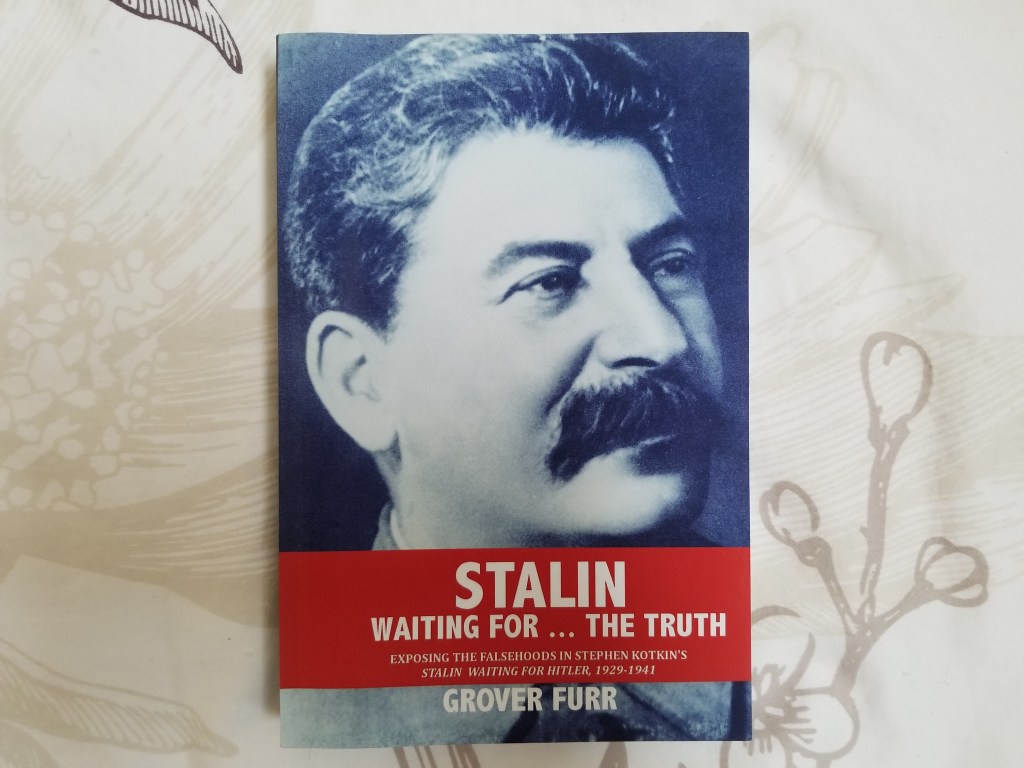

I have read Crusade Against the Grail by Otto Rahn. It was first published in 1933 as Kreuzzug gegen den Gral. Since I already read Rahn’s second book, Lucifer’s Court (review here, I recommend you to read that first), I thought it was reasonable to read his first book as well.
Just as I noted in my review of Lucifer’s Court, Crusade Against the Grail should not necessarily be read as a historically accurate description of the cultures and events of Southern France during the Middle Ages. That being said, the book is beautifully written. Even translated into English and read almost a century after its release, it still evokes appealing images of the sun-drenched Occitan country-side.
An interesting fact is the following: after releasing Crusade Against the Grail, Rahn was offered 1000 Reichsmark per month by Heinrich Himmler to write a sequel. This is interesting because of the way Rahn portrays the Cathars. Rahn juxtaposes the Occitan (Cathar) religious tolerance against the intolerance and brutality of the Catholic Church. As noted in my previous article, Rahn eventually grew disillusioned by what he saw as an increased intolerance in Germany. It is clear that he greatly valued the tolerant attitudes of the Cathars.
The God Amor
In my review of Lucifer’s Court, and in a recent Fizeek Friday post, I included an inspiring quote describing a god. That god appears in a passage here as well:
An elegant and strong knight approached on horseback. Blond hair fell on his bronzed face, and his clear eyes glistened. The smile of his mouth revealed mother-of-pearl teeth. […]
“Piere Vidal,” said the knight, “you should know that I am Amor, and my Lady is called Grace. Her lady-in-waiting and my servant are Modesty and Loyalty.”
In Lucifer’s Court, this god is Lucifer himself, and Loyalty is his paladin. Since having a paladin named Loyalty is more epic than having a servant, I will keep the Lucifer’s Court version in mind. Peire Vidal was a renowned Occitan troubadour and poet.
A Golden Renaissance
In the Translator’s Foreword chapter of the book, Christopher Jones points out that Rahn yearned for a golden renaissance of traditional values based on the unity of France and Germany under neo-Cathar beliefs. I, Marcus, also yearn for a golden renaissance and a closer unity between France and Germany. And, as I discussed in Podcast Episode 7. Europa, a closer unity between all European countries. In contrast to Rahn, however, I am not a proponent of Catharism.
The Pure Ones
The Cathar Pure Ones promised to dedicate themselves to God and His Gospel, never to lie, never to take an oath, never to have any contact with a woman, never to kill an animal, never to eat any meat, and to feed themselves only with fruits. In fact, during the twelfth and thirteenth centuries any Christian that abstained from meat was suspected of Cathar heresy.
Even if Rahn succeeds in presenting the Cathars in a favourable light, it becomes clear that their teachings are not to be recommended.
Moreover, the Cathars viewed the celestial Minne as the original love, and that it had nothing to do with the Earthly love that procreates human beings. Another aspect of Cathar belief was the longing for the next life, and the view of this world as Hell. Both of these attitudes go against the original European Pagan life-affirming attitude to intimacy and the world.
The Pathway of the Pure Ones
The Pathway of the Pure Ones starts out from Olmés, borders Montségur, and passes over the summit of the Tabor. Finally, it reaches the caves of Sabarthés, the last home of the Cathars. Once there, so far from the world, they meditated upon the supreme Minne in a trance-like state.
That sounds like an excellent travel destination for any esoterically minded modern knight. Minne (not to be confused with the Scandinavian word for memory) is another word for the notion of Medieval courtly love. Minne, like chivalry, was a large part of the troubadour culture.
The Crusade Against the Cathars
It must be stated that the crusades against the Cathars were, in no uncertain terms, a horrific affair, as was the persecution of the Cathars. There is a satisfying passage in the book, where Rahn retells the story of how a group of Occitan knights ambushed and killed a group of inquisitors.
The title of the book itself, The Crusade Against the Grail, refers to the grail as a sacred symbol of the Cathars. Rahn also believed that the Cathars hid the grail in the mountains of Southern France during the crusade. He believed that he could find the grail by using Wolfram von Eschenbach’s Parzival as a guide, just as German archaeologist Heinrich Schliemann had located ancient Troy using the Iliad. Rahn’s search for the grail is a main theme of Lucifer’s Court.
On a somewhat related note, when reading about the brutality of the Albigensian Crusade (Cathar Crusade), it becomes easier to understand that the Bosnian Bogomils (another Christian heresy) were inclined to convert to Islam to gain the protection of the powerful Ottomans against the Catholic Church. That being said, today’s Bosnia would be better served by renouncing Islam in favour of another religion. It is the only way they can be closer to their European neighbours (I will talk more about Bosnia in a coming Podcast episode).


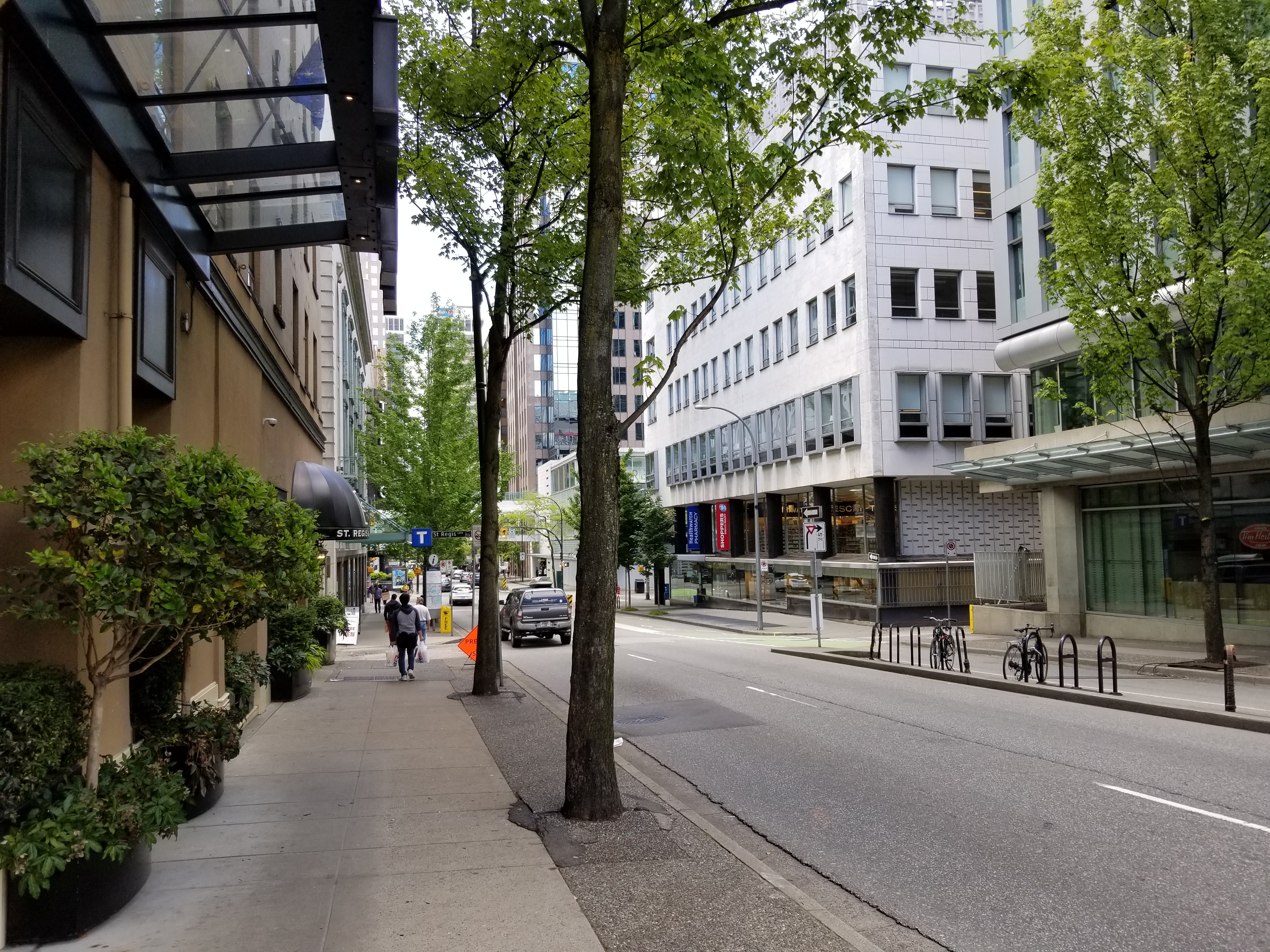







Hastings Street is one of the most important east-west traffic corridors in the cities of Vancouver and Burnaby, British Columbia, Canada, and used to be a part of the decommissioned Highway 7A. In the central business district of Downtown Vancouver, it is known as West Hastings Street; at Carrall Street it becomes East Hastings Street and runs eastwards through East Vancouver and Burnaby. In Burnaby, there is no east-west designation. The street ends in Westridge, a neighbourhood at the foot of Burnaby Mountain where it joins the recently built Burnaby Mountain Parkway and diverges from the continuation of the former Highway 7A as the Barnet Highway, to Port Moody, British Columbia.
Formally named in 1885 for Rear-Admiral George Fowler Hastings of the Royal Navy, the street runs past such well-known Vancouver landmarks as the Marine Building, the Vancouver Club, Sinclair Centre, Harbour Centre (once Spencer’s, Eaton’s, then Sears and now the downtown campus of Simon Fraser University), Dominion Building and Victory Square (the location of the city’s original courthouse) and the Woodward’s Building; located in the old Dunn’s Tailors building at Homer and West Hastings is the campus of the Vancouver Film School, while on the corner of Cambie is the Carter-Cotton Building, the former headquarters of the Vancouver Province newspaper. East of Woodward’s, the street forms the heart of Vancouver’s historic original downtown, once known as the Great White Way because of its neon displays, and which is today the Downtown Eastside. Through the East End, after a stretch of warehouse-type commercial and wholesale businesses, the street forms one of the commercial cores for Vancouver’s Italian community in a mixed-ethnicity retail area in the area of Nanaimo Street, just east of which the Pacific National Exhibition and Playland are on the city of Vancouver’s eastern fringe. After leaving Vancouver, Hastings forms the core of a Burnaby retail neighbourhood known as the Heights and then traverses Capitol Hill to the Lochdale and Westridge areas.

With a fifth movie featuring Harrison Ford’s iconic hero in the works, it’s time to look closer look at the irreverent adventurer.
After years of rumours, it’s now official! The Disney studio recently announced that the next Indiana Jones film is in the making, and will be released in 2019.
The entire saga began on a beach in Hawaii in 1977 with a conversation between George Lucas and Steven Spielberg. Lucas apparently asked Spielberg what he planned to do next. Spielberg replied that what he really wanted to do was to direct a James Bond movie, but that the producers had turned him down, twice.
That conversation eventually ended up with the creation of the bull whip-wielding, leather-jacketed archaeologist Indiana Jones and the film franchise that owes more than a little to James Bond. In fact, Indiana Jones was listed by the American Film Institute as the second-greatest hero in cinema history (after Atticus Finch, the lawyer hero of To Kill a Mockingbird but, ironically, ahead of Bond himself at #3).
Indiana Jones is a character with whom archaeologists have a love-hate relationship. On the one hand Indy, with his tough-guy persona, exotic adventures and cynical wisecracks, has probably done more to popularise archaeology as a career than any other single factor. In fact, John Rhys-Davies, one of the regular Indiana Jones crew, claims that he must have met over a hundred young archaeologists who confessed to him that one key reason for their career choice was the fact that they had watched an Indiana Jones movie in their childhood.
On the other hand, archaeologists are embarrassed by Indy’s knuckle-dusting heroics, his lack of scholarship and – most of all – the fact that today he would be described as a “tomb robber” rather than an archaeologist. As an archaeologist once observed about the opening scene of Raiders of the Lost Ark: There is Indiana Jones, surrounded by all the engineering marvels of an ancient civilisation, and all he can think of is how he can get his hands on that golden idol. For a proper archaeologist, it would be the least interesting thing around; but for a tomb-robber like him, of course, it was the most important.
So who was the real Indiana Jones? And was he based on any real-life archeologist?
George Lucas and Steven Spielberg say no. According to them, the inspiration for Indy came from a variety of explorers in the action movies of their childhood. But members of their scriptwriting teams have admitted that they researched some real-life personalities and blended their elements into the final Indiana Jones mix – some of the names mentioned being Otto Wilhelm Rahn and paleontologist Roy Chapman Andrews. In fact, these are just two of the dozen-odd historical models who are believed to have been the real-life Indiana Jones.
Otto Wilhelm Rahn was a German medieval scholar of the 1930s who searched for the Holy Grail – the mythical cup that was used to hold Jesus’s blood when he died – based on cues he had discovered in medieval texts. When Heinrich Himmler, the Nazi leader, read about his quest, he funded Rahn’s expeditions to bring back the Holy Grail, with its occult powers for himself (shades of Raiders of the Lost Ark and The Last Crusade). But Rahn’s quest didn’t lead him anywhere. Persecuted by the vengeful Himmler, he committed suicide.
Roy Chapman Andrews was not an archaeologist, but a paleontologist (or, loosely, a “dinosaur hunter”). He was, like Indiana Jones, not just a college professor, but a rugged, two-fisted adventurer. In the 1930s, he went on expeditions to remote corners of the planet, including Mongolia and the Gobi Desert, where he discovered the first-known fossil dinosaur eggs. Andrews, like Indiana Jones, habitually carried a gun, which he used to hunt for food as well as to protect his party from bandits. And, interestingly, like Indy, he also habitually wore a broad-brimmed fedora hat.
While both the men might have contributed to the colourful amalgam that is Indiana Jones, a more likely historical model is believed to be the swashbuckling archaeologist Hiram Bingham III. Leading a Yale University expedition to Peru in 1911, Bingham discovered the lost Inca city of Machu Pichu and became an overnight celebrity, returning home with a hoard of 40,000 priceless Inca relics, and writing a best-selling book about his adventures. (And he too, like Indy, habitually wore a broad-brimmed fedora hat.)
The more convincing piece of evidence connecting Bingham with Indiana Jones, however, is the 1954 film Lost City of the Incas, based on Bingham’s adventures and featuring Charlton Heston in the lead role. It’s interesting to note that, when preparing for Raiders of the Lost Ark, Spielberg’s team studied Lost City of the Incas very carefully, and “borrowed” various important elements, including Indy’s costume (down to that hat). But, more than that, they lifted from the Jerry Hopper movie the entire iconic scene of the scale model of the lost city, where Indy uses an ancient reflector to catch the beam of sunlight and thereby reveal the location of the Biblical treasure (the only difference between the two films being that in the 1954 original, the scene is set in South America instead of Egypt).
In recent times, Hiram Bingham III’s reputation has been tarnished: he has been accused by the Peruvian government of looting its treasures, which Peru is trying to recover from the US. And so that is perhaps another similarity between him and Indy: they were both, at the end of the day, just “tomb-robbers”.
So does all this mean that today the romance has gone out of archaeology and that today’s archaeologists are just a bunch of dry-as-dust academics? Not really. One contemporary archaeologist whose adventures have been in the Indiana Jones tradition (well, almost) is Ivan Sprajc, who has made a career of finding ancient Mayan cities lost in the jungles of Mexico, doing Indy kind of things like hacking his way through the dense foliage with a machete and dealing with poisonous snakes, jaguars and local bandits. According to his photographs, he even dresses like Indy, in khaki safari gear, leather boots and, yes, that good old broad-brimmed fedora hat.
Yet, as somebody once succinctly put it, the Indiana Jones theme music gives the game away: instead of the existing adrenaline-pumping brass-and-percussion march, a slow, introspective cello piece would have been much more appropriate to the world of archaeology. The rule of thumb for an archaeologist, after all, being that for every hour of on-site excavation, you spend four hours in the lab analysing and documenting your finds.
All this brings us back to the new Indiana Jones movie, tentatively referred to as Indy 5. All we know for sure about it so far is that Harrison Ford will star, Steven Spielberg will direct, David Koepp will write the script, Janusz Kaminski will be the cinematographer, and the film will be released in July 2019.
But there’s obviously a great deal of speculation. First of all, this will clearly be Ford’s last Indiana Jones movie (he’ll be 77 when it’s released). So how will the series be kept alive after his departure?
Who knows? Perhaps the film will begin with Ford, and then go into a flashback of a fresh new star who will play a younger version of Indiana Jones for now, and the future.
And if there is to be a new star, who will it be?
The names that are being mentioned are Chris Pratt, Bradley Cooper and Robert Pattinson. River Phoenix, Sean Patrick Flanery and Corey Carrier have also played younger versions of Indy in the past.
Well, just as long as it’s not Shia LeBoeuf, who played Indy’s son in the supremely awful Indiana Jones and the Kingdom of the Crystal Skull, it should be okay.
As fascist far-right nationalist groups regularly parade through the country demanding “Ukraine for Ukrainians,” Ukraine faces a massive depopulation crisis. Millions of people of all ethnicities are leaving the country, fleeing poverty and war.
Since the restoration of capitalism in 1991, the overall population of Ukraine has declined from just over 52 million to approximately 42 million today, a decrease of nearly 20 percent. If the separatist-controlled provinces of the Donbass region and Crimea are excluded, it is estimated that just 35 million people now live in the area controlled by the government of Petro Porosehnko.
Ukrainian governments, including the current one, have been loath to carry out an official census, as it is widely believed that the population estimates reported by the country’s State Statistics Service (SSS) are inflated by including deceased individuals. One aim of this is to rig elections. An official country-wide census has not been held since 2001. In late 2015, the Poroshenko government postponed the 2016 census until 2020.
Despite the lack of reliable official numbers, all independent reports point to a sharp reduction in the population. According to Ukraine’s Institute of Demography at the Academy of Sciences, by 2050 only 32 million people will live in the country. The World Health Organization has estimated that the population of the country will drop even further, to just 30 million people.
Ukraine’s SSS has acknowledged that so far this year, the population has already decreased by 122,000.
Such data are a testament to the monumental failure of capitalism to provide a standard of living that matches, much less exceeds, that which existed during the Soviet period over 25 years ago.
While the country’s low birth rate of approximately 1 birth for 1.5 deaths is a contributing factor to the country’s depopulation, emigration is by far the biggest factor.
Between 2002 and 2017, an estimated 6.3 million Ukrainians emigrated with no plans to return.
Facing poor employment prospects, deteriorating social and medical services, marauding far-right gangs, and the ever-present prospect of a full-scale war with Russia, Ukrainian workers are fleeing the country in great numbers, either permanently or as temporary labor migrants.
According to a report from the Center for Economic Strategy (CES), almost 4 million people, or up to 16% of the working-age population, are labor migrants. Despite having Ukrainian citizenship and still technically living in Ukraine, they actually reside and work elsewhere. Ukraine’s Ministry of Foreign Affairs has put the number of Ukrainian migrant workers even higher, at 5 million.
Through 2015 and 2017, as a result of the ongoing war in the Donbass region and the plunging value of the Ukrainian hryvnia, migration increased notably: 507,000 people went to Poland; 147,000 to Italy; 122,000 to the Czech Republic; 23,000 to the United States; and 365,000 to Russia or Belarus.
The easing of visa-free travel by the European Union (EU) in September 2017 only increased the flow of Ukrainians to countries such as Poland, which is facing its own demographic crisis and in need of workers. In 2018 alone, more than 3 million Ukrainians applied for passports that would allow them to work in Poland. Poland is the only EU country that allows Ukrainians to obtain seasonal work visas with just a passport. Ukrainians have received 81.7% of all work visas issued in Poland this year.
Between 1 and 2 million Ukrainian workers now reside in Poland, where they are often forced to take jobs “under the table,” are easily exploited by employers, and work in dangerous conditions. Many Ukrainian laborers are recruited to Poland by scam offers of employment, only to then find themselves stranded and forced to work for whatever wage they can get.
While migrant workers in Poland are constantly subjected to anti-immigrant rhetoric from the right-wing PiS government in Warsaw, the Polish state classifies Ukrainian laborers as “refugees” in order to comply with EU quotas and reject refugees from Syria and elsewhere.
According to polls of Ukrainian migrants in Poland, over half are planning to move to Germany if the labor market there is ever open to them.
While Russia is constantly demonized in the Ukrainian and Western press as the eternal enemy of Ukraine, 2 million Ukrainian citizens now live or work in Russia. According to Olga Kirilova, between 2014 and 2017, 312,000 Ukrainians were granted Russian citizenship and Ukrainians make up the vast majority of immigrants to Russia.
The dearth of a working-age population in Ukraine is putting further strain on an already struggling pension system. According to Ukraine’s SSS, as a result of widespread labor migration, only 17.8 million out of 42 million Ukrainians are economically active and paying into the pension system.
The migration of Ukrainian workers abroad has reached such a level that remittances from migrants now constitute 3 to 4 percent of the country’s GDP. They exceed the amount of foreign investment in Ukraine. Nonetheless, such transfers are not nearly enough to make up for the negative impact of the currency’s falling value, inflation, and the disappearance of skilled workers.
The Ukrainian ruling class acknowledges that the country is in serious trouble. “One of the main risks of the current scenario is the continuation of the outflow of labor from Ukraine, which will create a further increase in the imbalance between demand and supply in the labor market,” noted a report from the country’s national bank.
However, the government can do nothing to slow the mass emigration, as it is thoroughly under the control of international finance capital and committed to implementing the austerity programs demanded by Western states and banks.
Despite assurances from the Poroshenko regime that the economy will improve, the emigration and emptying of the country shows no signs of slowing.

