















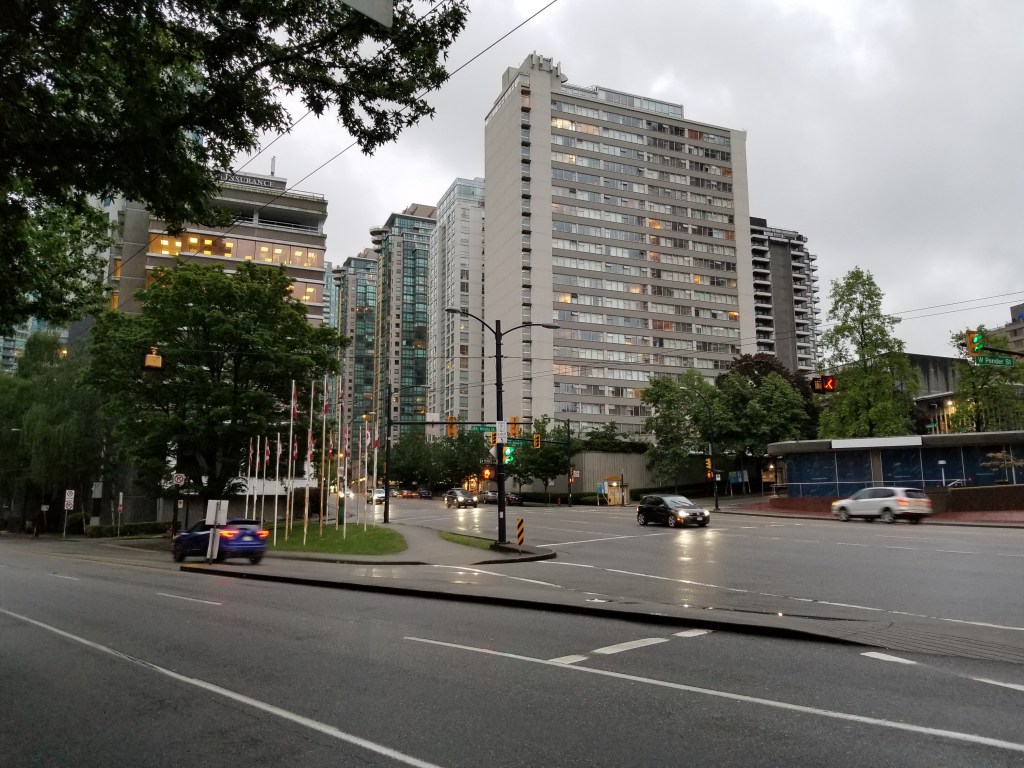

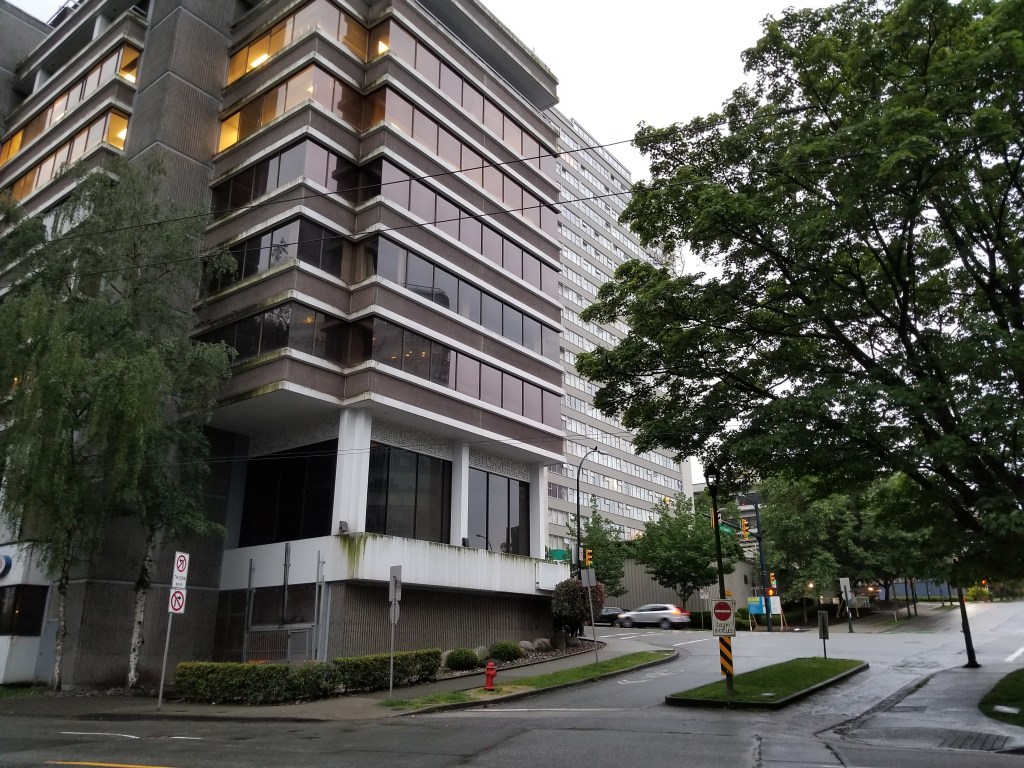

West Pender Street is a key artery in Downtown Vancouver, running parallel to East Pender Street but situated closer to the central business district. It’s a hub for commerce, education, and historical architecture, blending Vancouver’s modern growth with its rich past.
West Pender Street stretches through the heart of Downtown Vancouver, west of Main Street, where East Pender Street transitions into Chinatown. It runs roughly east-west, connecting key areas of the city’s financial and cultural districts.
West Pender Street is near major landmarks like the Vancouver Lookout (at 555 West Hastings Street, just a block south), Gastown to the northeast, and the waterfront along Burrard Inlet to the north. It’s also close to transit hubs like Waterfront Station, making it highly accessible.
One of the standout features on West Pender Street is the London Building, located at 626 West Pender Street. This heritage structure, built in 1912 during Vancouver’s pre-Great War building boom, is a fine example of Edwardian-style commercial architecture. Designed by the architectural firm Somervell & Putnam, the building features an embellished cornice, decorative coursing, medallions at the upper levels, and a richly ornamented iron storefront at street level. Constructed for the London and British North American Company, it reflects Vancouver’s early 20th-century growth as a commercial hub. The building is 113 years old as of 2025, blending historical charm with modern amenities. Today, the London Building houses the West Pender Campus of University Canada West (UCW), a private university offering business and technology-focused programs.
West Pender Street is dotted with other historic buildings, such as The Permanent (at 330 West Pender Street), a former bank turned event space built in 1907. These structures highlight the area’s role in Vancouver’s early development as a financial center.
University Canada West’s West Pender Campus is located in the London Building. This campus is strategically positioned for students. Many of the world’s biggest companies have offices within walking distance, providing students with access to a network of prospective employers in Vancouver’s financial district. The campus offers an inspiring setting, combining the historic ambiance of the London Building with modern facilities for education.
West Pender Street is part of Vancouver’s central business district, with numerous office buildings, including 905 West Pender Street. This reflects the street’s role as a commercial hub, attracting businesses, law firms, and tech companies.
West Pender Street balances historical architecture with modern development. While buildings like the London Building evoke the past, the area is bustling with contemporary office towers, cafes, and restaurants catering to professionals and students. The street is close to cultural attractions. The Permanent is a heritage event space that hosts private events, weddings, and cultural gatherings, adding a social vibrancy to the area. A short walk from West Pender Street takes you to Gastown (known for its cobblestone streets and Victorian buildings), the Vancouver Lookout, and the waterfront at Canada Place. West Pender Street is highly walkable, with wide sidewalks and proximity to public transit options like the SkyTrain (Waterfront Station) and bus routes. It’s also bike-friendly, aligning with Vancouver’s emphasis on sustainable transport.
The street’s central location means it’s often on the route for parades, festivals, and markets, such as the Vancouver Christmas Market or Pride Parade, which pass through nearby areas. Given its proximity to corporate offices, West Pender Street is a hotspot for professional events, networking meetups, and industry conferences. West Pender Street is generally safe, being in the bustling financial district. However, as with any urban area, it’s wise to stay aware, especially in the evenings, given its proximity to the Downtown Eastside, which faces social challenges.

Darwinia, Wilson’s latest novel, demonstrates that Wilson is one of the best science fiction writers. At least, according to my criteria of excellence for the genre: his writing style is perfectly balanced between literary concerns and the needs of the narrative, and the content of the book is also balanced superbly between plot mechanics and character development. In addition to this kind of accolade, I would like to say that Darwinia is an odd book, giving the reader almost no possibility at predicting which way the story will turn. Wilson does not fit comfortably into any of the subgenre pigeonholes, like hard science fiction or literary science fiction, simply because he follows his own vision so strikingly. Darwinia also features some particularly gorgeous cover art by Jim Burns, making the entire package even more attractive.
The story begins in March of 1912, when the entire continent of Europe is replaced. Yes, replaced, and covered by some kind of alien wilderness, with inimical life-forms and vegetation revealing no traces of the former civilization. Guilford Law is a young teenager at the time of the Miracle of 1912, and in 1920, when the main action of the novel starts, he is a scientist on his way to the European continent as part of an expedition. Science is in disrepute, and it seems as if the main theme of the book has already been laid out in the Prologue: “The Hearst papers, following the national religious revival, sometimes jokingly called the new continent ‘Darwinia,’ implying that the miracle had discredited natural history. But it hadn’t. Guilford believed that quite firmly, though he didn’t dare say so aloud. Not a miracle, he thought, but a mystery. Unexplainable, but maybe not intrinsically unexplainable” (22-3). But the scientific expedition only fills the first half of the book, and the second half goes somewhere else entirely. Our first clue to that shift comes in Chapter Four, with the introduction of Elias Vale, a rather shifty, disturbed man, who seems to be in touch with supernatural powers. Wilson takes the reader along on a wild journey through a kind of nitty-gritty realism — he captures the feel of his alternate 1920’s superbly in the small details (as with the mention of Hearst papers and their role), and he does the same for the peculiar moments later on.
Guilford Law is a well-rounded character — our sympathies are firmly with him, even though he has his own share of quirks and bad moments. The relationship with his wife and young daughter in the early sections of the book are well-written, and Wilson shows how Guilford’s obsession comes at a price. At arriving in London, here is the family response: “Caroline buried her head against Guildford’s shoulder. ‘God help us,’ she whispered. ‘We’ve arrived in Hell.’ Lily demanded to know if that was true. Guilford assured her that it wasn’t; this was only London, new London in the new world — though it was an easy mistake to make, perhaps, with the gaudy sunset, the clanking harbor, the river monster and all” (46). I admired the way Wilson used the evolution of the Law family, especially with Lily’s role later in the book. Elias Vale, one of the human villains of Darwinia, has an interesting role, especially in his spiritualist milieu. That kind of eccentric function is exchanged for something much more sinister as we learn the nature of his revelations.
Wilson’s style is literate and non-utilitarian, despite how closely it follows the necessities of typical science fiction exposition at certain points. In the more normal passages, Wilson has a quiet splendour to his writing, but he can transform almost anything with his keen pen. Here is a quotation from the first Interlude: “Elsewhere in the universe the voices of galactic noospheres grew faint, as they resigned themselves to dissolution or furiously constructed epigalactic redoubts, fortresses that would withstand both the siren song of the black holes and thermal cooling of the universe” (123). The Interludes contain the explanation for the events of Darwinia, and the book’s structure makes nice use of these sections (along with other things, like Law’s expedition diary, a nice pseudo-Victorian touch). As I’ve already mentioned, Wilson’s style lets us get on with the business of suspension of disbelief all the more rapidly.
Darwinia does have one flaw, perhaps inherent in the strange way the story changes its angle. I was ready for an extended discussion of religion vs. science, in an alternate history battleground where some of the basic assumptions have been changed. Wilson lets that dwindle to nothing as it becomes clear that Guilford’s mystery is no miracle. Perhaps Wilson is saying that such kinds of simplistic binaries are useless. Perhaps, but once I reached past my expectations of where the novel was supposed to go, I could enjoy the book on its own terms. A step that was certainly worthwhile.
Donald Trump recruits Rambo to end the war in Iran, imagined with AI.





Brain fog and chronic fatigue often occur together, leaving many people feeling physically exhausted and mentally drained. Brain fog is not a medical diagnosis but a term used to describe cognitive symptoms such as difficulty concentrating, forgetfulness, slow thinking, and trouble finding the right words. These symptoms frequently appear alongside persistent fatigue and sleep disturbances.
In conditions like Myalgic Encephalomyelitis/Chronic Fatigue Syndrome (ME/CFS), cognitive impairment—commonly referred to as brain fog—is one of the hallmark symptoms. People with ME/CFS may struggle with attention, memory, and mental clarity even after adequate rest.
Researchers believe that inflammation, immune system dysfunction, poor sleep quality, and metabolic abnormalities may all contribute to both chronic fatigue and cognitive difficulties. Understanding the relationship between these symptoms is essential for identifying the underlying cause and finding effective treatment.
At Patients Medical, physicians take an integrative approach to evaluating fatigue and cognitive symptoms, helping patients uncover the root causes and restore both physical energy and mental clarity.
What Is Brain Fog?
Brain fog is a commonly used term to describe a group of cognitive symptoms that affect mental clarity and thinking ability. Although it is not a formal medical diagnosis, it is a real and often frustrating experience for many individuals.
People with brain fog may experience:
These symptoms can make everyday activities such as working, studying, or managing daily responsibilities more challenging. Brain fog often becomes more noticeable when it occurs alongside chronic fatigue.
What Is Chronic Fatigue?
Chronic fatigue is a persistent and overwhelming sense of exhaustion that does not improve with rest or sleep. Unlike ordinary tiredness, chronic fatigue can last for months and interfere with normal daily activities.
In many cases, chronic fatigue is associated with Myalgic Encephalomyelitis/Chronic Fatigue Syndrome (ME/CFS), a complex condition characterized by long-lasting fatigue, unrefreshing sleep, and worsening symptoms after physical or mental exertion.
Other symptoms commonly seen in chronic fatigue include:
Many individuals with chronic fatigue also report cognitive symptoms such as brain fog.
Why Brain Fog Often Occurs With Chronic Fatigue
Brain fog and chronic fatigue are closely linked because they share several underlying biological mechanisms.
The brain requires large amounts of energy to function properly. When the body’s energy systems are disrupted—such as in chronic fatigue syndrome—brain cells may not receive sufficient energy to maintain normal cognitive performance.
This can lead to slower thinking, poor concentration, and mental exhaustion.
Sleep plays a critical role in restoring both physical and cognitive function. Many people with chronic fatigue experience unrefreshing sleep, meaning they wake up feeling just as tired as when they went to bed.
Poor sleep can impair memory, attention, and mental clarity, contributing to brain fog.
Inflammation in the nervous system is believed to play a role in many chronic fatigue cases. When inflammation affects the brain, it can interfere with neurotransmitter activity and cognitive processing.
This may explain why some individuals experience persistent mental fog along with fatigue.
People with chronic fatigue syndrome often experience post-exertional malaise, a worsening of symptoms after even minor physical or mental activity.
This can cause both physical exhaustion and cognitive fatigue, making brain fog more severe after exertion.
Chronic stress can disrupt cortisol and other hormones that regulate energy, mood, and concentration. Hormonal imbalances may worsen both fatigue and cognitive symptoms.
Common Causes of Brain Fog and Chronic Fatigue
Several health conditions and lifestyle factors can contribute to both fatigue and cognitive dysfunction.
Nutritional Deficiencies
Deficiencies in nutrients such as vitamin B12, iron, vitamin D, and magnesium can impair brain function and energy production.
Hormonal Imbalances
Thyroid disorders, adrenal dysfunction, and hormonal changes can affect metabolism and mental clarity.
Chronic Infections
Post-viral conditions and infections may lead to persistent fatigue and brain fog that lasts for months.
Autoimmune and Inflammatory Disorders
Conditions such as lupus, rheumatoid arthritis, and fibromyalgia can cause both fatigue and cognitive difficulties.
Lifestyle Factors
Poor diet, dehydration, excessive stress, and lack of physical activity can gradually contribute to brain fog and fatigue.
Symptoms That Often Occur With Brain Fog and Fatigue
People experiencing both symptoms may notice a variety of physical and cognitive changes.
Common symptoms include:
In many cases, the combination of fatigue and brain fog can significantly affect work productivity and daily functioning.
How Doctors Diagnose the Underlying Cause
Because brain fog and chronic fatigue can have many causes, diagnosis usually involves a comprehensive medical evaluation.
Healthcare providers may perform:
Doctors often rule out other conditions before diagnosing chronic fatigue syndrome.
Treatment Approaches for Brain Fog and Chronic Fatigue
Treatment typically focuses on identifying and addressing the root causes of symptoms.
Nutritional Therapy
Correcting vitamin and mineral deficiencies can help improve both cognitive function and energy levels.
Sleep Optimization
Improving sleep quality can significantly reduce fatigue and enhance mental clarity.
Stress Management
Mindfulness, relaxation techniques, and therapy may help regulate stress hormones and support cognitive health.
Lifestyle Modifications
Balanced nutrition, hydration, and gentle physical activity can support energy production and brain function.
Integrative Medical Care
A personalized approach that addresses metabolic, hormonal, and immune factors may provide the most effective long-term results.
At Patients Medical, physicians use advanced diagnostic testing and integrative therapies to help patients address the root causes of brain fog and chronic fatigue.
When to Seek Medical Help
Occasional mental fatigue can happen to anyone. However, you should consult a healthcare professional if:
Early diagnosis and treatment can help prevent symptoms from worsening.
Frequently Asked Questions
Q. Is brain fog a symptom of chronic fatigue syndrome?
Ans. Yes. Many people with chronic fatigue syndrome experience cognitive difficulties such as poor concentration, memory issues, and slowed thinking, commonly referred to as brain fog.
Q. Why does chronic fatigue cause brain fog?
Ans. Chronic fatigue may affect brain energy metabolism, sleep quality, and inflammation levels, all of which can impair cognitive function.
Q. Can brain fog be treated?
Ans. Yes. Treatment depends on the underlying cause and may include nutritional therapy, stress management, sleep improvement, and integrative medical care.
Q. How long can brain fog last?
Ans. Brain fog may last days, weeks, or months depending on its underlying cause. Chronic conditions may require medical treatment.
Q. When should I see a doctor for brain fog and fatigue?
Ans. If symptoms persist for several weeks, worsen over time, or interfere with daily life, it is important to seek medical evaluation.
Restore Your Energy and Mental Clarity
Living with chronic fatigue and brain fog can be frustrating, but effective treatment is possible when the underlying causes are identified. A comprehensive evaluation can help uncover hidden health issues and create a personalized path to recovery.
At Patients Medical, our experienced physicians specialize in diagnosing and treating chronic fatigue, brain fog, and related conditions through integrative medicine and advanced diagnostic testing.
Call: (212) 794-8800
Email: info@patientsmedical.com
Schedule your consultation today and take the first step toward restoring your energy, mental clarity, and overall well-being.

