Robson Street is a major southeast-northwest thoroughfare in downtown and West End of Vancouver, British Columbia, Canada. Its core commercial blocks from Burrard Street to Jervis were also known as Robsonstrasse. Its name honours John Robson, a major figure in British Columbia’s entry into the Canadian Confederation, and Premier of the province from 1889 to 1892. Robson Street starts at BC Place Stadium near the north shore of False Creek, then runs northwest past Vancouver Library Square, Robson Square and the Vancouver Art Gallery, coming to an end at Lost Lagoon in Stanley Park.
As of 2006, the city of Vancouver overall had the fifth most expensive retail rental rates in the world, averaging US$135 per square foot per year, citywide. Robson Street tops Vancouver with its most expensive locations renting for up to US$200 per square foot per year. In 2006, both Robson Street and the Mink Mile on Bloor Street in Toronto were the 22nd most expensive streets in the world, with rents of $208 per square feet. In 2007, the Mink Mile and Robson slipped to 25th in the world with an average of $198 per square feet. The price of each continues to grow with Vancouver being Burberry’s first Canadian location and Toronto’s Yorkville neighbourhood (which is bounded on the south side by Bloor) now commanding rents of $300 per square foot.
In 1895, train tracks were laid down the street, supporting a concentration of shops and restaurants. From the early to middle-late 20th century, and especially after significant immigration from postwar Germany, the northwest end of Robson Street was known as a centre of German culture and commerce in Vancouver, earning the nickname Robsonstrasse, even among non-Germans (this name lives on in the Robsonstrasse Hotel on the street). At one time, the city had placed streetsigns reading “Robsonstrasse” though these were placed after the German presence in the area had largely vanished.
Robson Street was featured on an old edition of the Canadian Monopoly board as one of the two most expensive properties.
Ravil Maganov, the chairman of an oil company that criticized Russia’s invasion of Ukraine, reportedly died on Thursday after falling from a hospital window.
Although the cause of his death has not yet been confirmed, he is the latest in a series of prominent Russians who have died in seemingly similar circumstances.
Lukoil, Russia’s second-largest oil producer confirmed Maganov’s death, saying it came after “a serious illness.”
However, Russian media reported that he had been found dead by medical personnel after falling out a sixth-floor window of a Moscow hospital.
This follows a number of cases of prominent Russians dying after falls from windows.
In December 2021, Yegor Prosvirnin—the founder of nationalist website Sputnik and Pogrom—died after falling out of a window of a residential building in the center of Moscow.
He allegedly threw a knife and gas canister out of the window before the fall, BBC News reported.
Prosvirnin had supported Russia’s annexation of Crimea in 2014 but later began to predict a civil war and the collapse of the Russian Federation.
On October 19, 2021 a Russian diplomat was found dead after a fall from a window of the Russian embassy in Berlin, Der Spiegel reported.
The man was a second secretary at the embassy, but German intelligence sources told the newspaper they suspected he was an undercover officer with Russia’s Federal Security Service (FSB).
Investigative outlet Bellingcat said it used open-source data to identify the deceased man as Kirill Zhalo, the son of General Alexey Zhalo, deputy director of the FSB’s Second Service.
In late December 2020, Alexander “Sasha” Kagansky, a top Russian scientist reportedly working on a COVID-19 vaccine at the time, was found dead with a stab wound after falling from his high-rise apartment in St. Petersburg.
According to Russian outlet Fontanka, the suspect, a childhood friend of Kagansky, told police that Kagansky stabbed himself then jumped to his death.
There were also reports of health care workers falling out of hospital windows—some to their deaths—in Russia during the COVID-19 pandemic.
Two Russian doctors died and another was seriously injured after falls from hospital widows over a two-week period between April and May 2020. Reports said two of the doctors had protested working conditions and the third was being blamed after her colleagues contracted the virus.
And in July, Dan Rapoport, a 52-year-old Latvian-American investment banker and outspoken Putin critic, died after a fall from a luxury apartment building in Washington, D.C.
Police say they didn’t suspect foul play, Politico reported, but the case remains under investigation.
Rapoport’s friends fear he was assassinated, with one telling The Daily Beast that the circumstances of his death are “highly suspicious.” Rapoport had made a fortune working in Moscow before falling out of favor with the Russian government, according to reports.
Rapoport’s former business partner, Sergei Tkachenko, fell to his death from a Moscow apartment building in 2017.
Consumer reports says 15% of Americans still watch VHS tapes and there’s plenty of evidence that Gen-Z and millennials are actively seeking them out as they yearn for physical media. NBC’s Joe Fryer reports for TODAY.
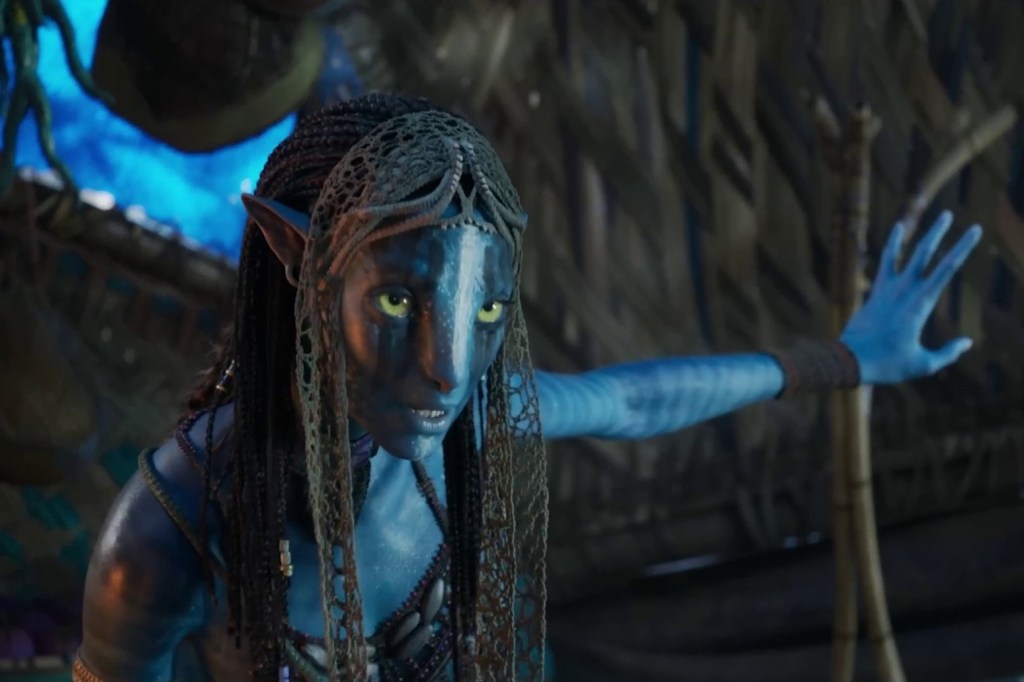
A still from Avatar: Fire And Ash (2025), directed by James Cameron
This post won’t be about how President Donald Trump is in the process of grabbing the enemies and friends of the USA by the p*ssy. Iran is just the latest country that Trump has grabbed by the p*ssy. Trump’s p*ssy-grabbing has been rather epic in his second term as president. Of course, Canada is just one of the countries that Trump grabbed by p*ssy recently. Since Trump is an American business man, he has knowledge of how to deal with people and how to get what he wants. I don’t remember when was the last time when I made a post about the films that I got to see recently. It was probably about two years ago. Well, since there are some films that are worth mentioning now, I’ll make a post about them at this time. A new release that I enjoyed watching the most recently is Avatar: Fire And Ash (2025). When Avatar: The Way Of Water (2022) was released in theaters, I wasn’t in the mood to go and see films in theaters. Therefore, I got to see few new films in that year and probably in the two years before that year and in the two years after that year too. I wasn’t even in the mood to go and see Creed III (2023) when it was released in theaters. I think that I had a reluctance to see new films in theaters because I wanted to spend more time instead on doing other things, such as seeing as many older films and TV shows as I could. I finally got to see Creed III in 2025. But, in 2025, I got to see 28 new films in theaters. For some reason, my zest for going to theaters kind of returned at some time in 2024. Still, 28 films in one year isn’t a big number. This amounts to only 2.3 films per month. I didn’t see a single new film in 2025 that I disliked, but it’s not like I tried to go and see seemingly bad new films. Anyway, when I got to see Avatar: The Way Of Water for the first time, on home video, I liked the film, but I didn’t think much of it. In 2025, however, when it was being shown in theaters again for one week, I went to see it in an IMAX auditorium. In addition, I read some reviews of the film by ordinary people on the internet at that time. After seeing Avatar: The Way Of Water again, my affection for it grew. But it grew even more after I got to see Avatar: Fire And Ash. I think that it’s worth mentioning that James Cameron isn’t just another filmmaker. He gets to make films that he wants to make, and he writes the screenplays for his films. Moreover, he puts a lot of work into making his films. His former wife Linda Hamilton said that his dedication to his work was the reason (or one of the reasons) why they divorced. Almost all of Cameron’s films can be called marvels. He’s one of those older filmmakers who are still capable of making good films. Another such filmmaker is Martin Scorsese. These older filmmakers have something that the younger filmmakers don’t have. Cameron doesn’t make a film every year or every two years, but, when he does make a film, he makes a film that can be called a marvel. This time, 13 years after the first Avatar film, he made a marvel that’s almost 8 hours long. That’s almost 8 hours of goodness that can rarely be found in other films. I mean, this time you even get to see Jake Sully escape from Bridgehead City while wearing an orange jumpsuit and Miles Quaritch enter Varang’s weird-looking hut for some one on one time with Varang. Avatar: Fire And Ash does not lack entertainment value, that’s for sure. I prefer to think of Avatar: The Way Of Water and Avatar: Fire And Ash as one film, and Cameron himself said that he thinks of the two film as one. It’s clear to me why he wanted people to go and see these films in theaters. A lot of work went into making them. So, Avatar: The Way Of Water works even better if you think of it as simply the first half of a greater and longer film. This became clear to me after I got to see Avatar: Fire And Ash. Because the two films are so well made, I’ve already seen Avatar: Fire And Ash in theaters several times, and I watched Avatar: The Way Of Water again several times at home. For me, Avatar: Fire And Ash became an experience, and not just another film, when I watched it in a theater. In other words, the music, the visuals, the acting, and the quality of the filmmaking produced an effect on me that can be described as good and comforting. This rarely happens when I see a film in a theater nowadays. Perhaps the last time when this happened was when I got to see Doctor Strange In The Multiverse Of Madness (2022) and Black Panther: Wakanda Forever (2022) in theaters. Because of this, I went to see these two films more than once. The same thing happened when I got to see The Dark Knight Rises (2012) in a theater. I got to see this film in theaters several times too because watching it became an experience for me. And I can say that The Dark Knight Rises is my favorite Batman film made by Christopher Nolan. Batman Begins (2005) is in second place. The Dark Knight (2008) is in third place. Hans Zimmer’s music score has a lot to do with making The Dark Knight Rises as good as it is, in my opinion. Are there any standout performances in the two Avatar sequels? Well, for me, the standout performances are by Zoe Saldana, Sigourney Weaver, and Stephen Lang, although every performance is good, thanks to James Cameron’s direction. The music score by Simon Franglen, although not very memorable, still works well in the film. So, for me, the two Avatar sequels are even more appealing than Avatar (2009), although I consider the first Avatar film to be a marvel too. Nowadays, I rarely get excited about something. If I do something, it’s almost always out of routine or curiosity. Therefore, seeing a new film that can be called engrossing is uncommon for me. Were there any other films that appealed to me significantly in the last two years? I do like Small Things Like These (2024) because of the performances in the film. This film kind of stood out for me from the rest in 2024. Another film that left an impression on me is the South Korean film Exhuma (2024). I’m glad that I decided to take a chance with this foreign film because it succeeds in creating a creepy and frightening atmosphere. I don’t like this film a lot, but it still stands out from most of the other news films that I got to see. The last film that I will mention is Dune: Part Two (2024). Although Denis Villeneuve is one of the best directors working today, I don’t like everything about his films. His films appeal to me about as much as the films of Christopher Nolan, perhaps more so. He managed to make Blade Runner 2049 (2017) into an impressive visual spectacle despite its disappointing screenplay. Prisoners (2013) may be the least faulty film of his films that I’ve seen so far. I enjoyed watching Dune (2021) more than its sequel because it has more memorable scenes, in my opinion. Dune was released in theaters when I wasn’t really in the mood to go to theaters. Therefore, I watched it for the first time in 2024 at home. It’s a good thing that I decided to watch it on my big screen television set because it has a number of visually impressive scenes, especially the one in which Leto, Paul, and Kynes rescue a stranded spice-harvesting crew from a sandworm and in which Paul’s exposure to the spice triggers intense premonitions. This scene is magnificent, thanks in part to Hans Zimmer’s music score. None of the scenes in Dune: Part Two made as much of an impression on me, and, because of this, Dune: Part Two is a less enjoyable film for me. Well, Villeneuve isn’t just good at creating impressive visuals in his films. I think that he’s better than Nolan in getting good performances from actors. Therefore, the performances in the two Dune films are another reason why they appeal to me, though I don’t think of them as perfect films. I will also mention Surrounded (2023) and Out Of Darkness (2022), which are small budget films that I enjoyed watching more than almost all of the big budget films that got released in 2023 and 2024, though big budget films like Bad Boys: Ride Or Die (2024), Transformers One (2024), and Black Phone 2 (2025) are still some of the most solid and enjoyable films that I got to see in theaters in the last two years. Needless to say, I very much enjoyed watching almost all of the older films that I got to see in the last two years. Heaven Help Us (1985) is one of the films that I got to see for the second time, and I now like this film considerably more than I did before. I think that I should have included it on my list of the best teen movies of the 1980s. This is a well-made film with lovely cinematography, a good cast, and some effective humor. Three O’Clock High (1987) is another teen movie that I like more now than I did before, though I liked it when I saw it for the first time. Harry Tracy, Desperado (1982) is one of the Westerns that I enjoyed watching recently. I already pointed out in an earlier post that I’ve grown to like watching Westerns in the last several years. Unfortunately, this is one of those old films that aren’t easy to purchase or to watch on some streaming service. As far as I know, it’s not available on any streaming service. One thing that I should mention is that I enjoy watching films from the 1970s to the 1990s that got made for television. The problem with these films, many of which are just as enjoyable to watch as theatrical releases, is that they usually can’t be bought physically or on the internet.
When it comes to video games, I finally got to finish playing Vagrant Story (2000) for the first time recently. I began playing this game, which is one of Yasumi Matsuno’s masterpieces, a few years ago on my PlayStation Portable, since it’s one of the dozens so-called PSOne Classics that I purchased before Sony seriously hampered the PlayStation Store for the PlayStation 3. Playing this game for the first time on my PSP-3000 may have been a mistake, however, because Vagrant Story is one of the hardest PlayStation games in existence. Vagrant Story includes some difficult puzzles, some difficult platforming, some difficult combat, and not many save points. Its combat system may be the most complex of any video game. It’s not surprising that Vagrant Story has been called by some people as the Dark Souls of the PS1. It would have been much easier to play this game by using an emulator. If you want to finish this game without cheating, you will have to become very familiar with its combat system. Since Vagrant Story is a unique, expertly-made game, if you do master it and finish it, it will become just as memorable and enjoyable to play as Dark Souls (2011) or Resident Evil 4 (2005). The game developers admitted that Vagrant Story wasn’t made for the average player but for players who like challenges and immersive gameplay. The designs were inspired by a number of locations in France, particularly in Saint-Emilion. This town and its surrounding vineyards was made a UNESCO World Heritage site in 1999. The 3D Romanesque designs in Vagrant Story are impressive for a PS1 game. The camera can be rotated and switched to first-person view. If you add to this the fact that the game features a memorable music score by Hitoshi Sakimoto and excellent sound effects, Vagrant Story turns out to be a surprisingly immersive game despite its lack of pre-rendered backgrounds. But challenging, enjoyable gameplay is not all that this masterwork has to offer. It also offers fantastic designs by Hiroshi Minagawa and Akihiko Yoshida and a typically complex story by Matsuno. Again, this is not an easy game. I had to stop playing it a number of times because of its difficulty and return to it later. But I managed to complete such notoriously difficult games as Dark Souls and Guacamelee! (2013). Therefore, I completed Vagrant Story too, after a few years of playing it on and off. It’s now one of my favorite video games. At least I got to complete Vagrant Story recently because I haven’t been able to complete a number of other games that I’ve been playing for some time. This has mostly to do with the fact that I usually spend little time on playing video games. The impressive and surprisingly popular Elden Ring (2022) is one of the games that I’ve been playing. I’ve completed most of it but not all of it so far. Therefore, I don’t want to talk about it yet. I think that I bought my PS4 in used condition some years ago at a rather small store because I wanted to play Bloodborne (2015), but I haven’t even begun playing this game yet. I could have completed a bunch of PS4 games by now, and I bought a number of PS4 games right after I purchased the console, but I have a tendency to usually play so-called old games, games that got made for the PS1, for example. Therefore, the games that I almost always play are games that can be played on a smarthphone or on a tablet. I’ve been slowly playing Dark Souls II (2014), which is one of my favorite video games, again. In this game, I haven’t even finished the beginning section yet. I’ve gotten farther along in Demon’s Souls (2009), but I’m still far from finishing it. After I completed playing Final Fantasy XIII-2 (2011) for the second time two years ago, I decided to play Final Fantasy XIII (2009) for the second time. This is the most recent game that I managed to complete, after about a year of playing it on and off. When I played it again, I was struck by its impressive visuals, which are even more impressive than the ones in the sequel, I must admit. The visuals that I’m talking about are on Cocoon. The sights of Academia in Final Fantasy XIII-2 are perhaps my most favorite sights of any video game, but the Cocoon in the first game is even more awe-inspiring. Despite this, I have to say that it’s a somewhat disappointing game. It’s very linear and very much in the service of its rather confusing and complicated story. The combat isn’t very enjoyable, despite the fact that the developers tried to make it quicker and less tedious than in previous Final Fantasy games. If the game’s characters hadn’t had more development in the sequels, I wouldn’t have liked the characters either. Still, because of the game’s stunning environments, I’m glad that I played it again, although I like the sequels considerably more. Final Fantasy XIII is a somewhat flawed game, but it still got released in the PS3 era, and how can I dislike anything from the PS3 era? Only in the PS4 era did video games begin to become truly disappointing and unoriginal. And it’s not just the video games that got worse. The consoles got worse too. In 2012, Sony Computer Entertainment finally released the anti-consumer device known as the PlayStation Vita, which is famous for offering almost no great video games and even a small number of mediocre games. It also can’t be connected to a television set, while its fantastic predecessor, the PSP, can be connected to a television set. The Vita is bad at playing music and videos too. No wonder that it failed commercially. The Vita isn’t a complete turd because it’s fine at playing its games, but its inability to do much else and its expensive proprietary memory cards make it one of the most inconvenient handhelds to own. That’s too bad because the Vita is the first handheld console that I bought. Because I’ve used it a lot, I know its flaws and how it functions very well. One of its problems is that it sometimes freezes when it’s turned on for more than a few hours. Nothing can be done about this. You have to wait for the battery to drain completely and then charge the console in order to use it again. Sony admittedly managed to become number one again in the industry thanks to the PlayStation 4, which is supposedly a fine home console, but, for me, the failure of the Vita is just another sign of the fact that Sony, Microsoft, and Nintendo began to slouch in 2012.
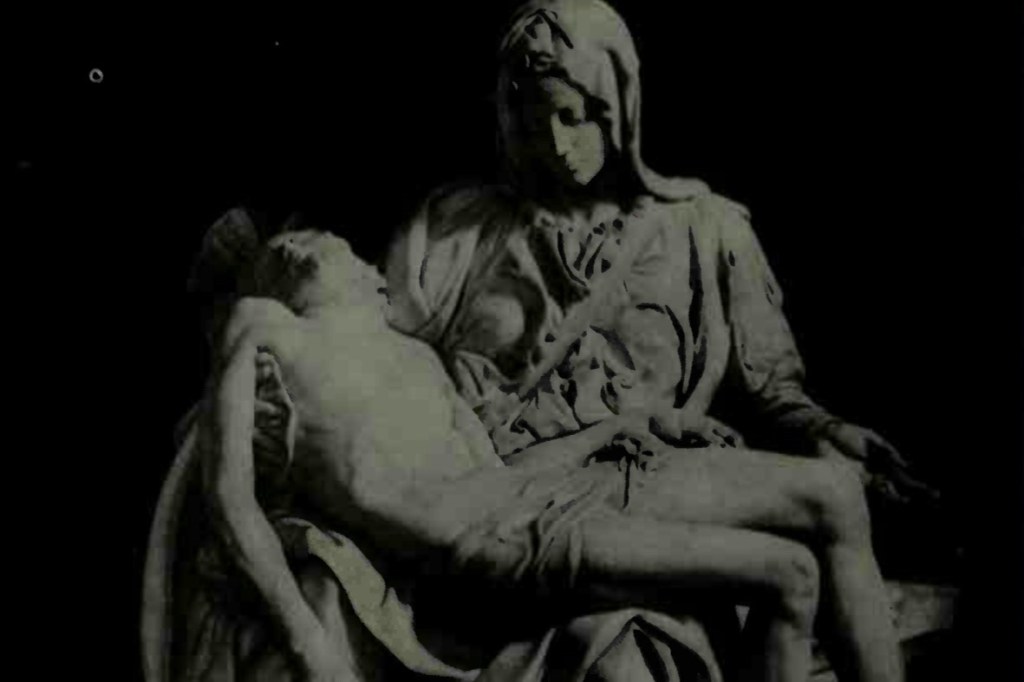
In this post, I will continue to quote from ‘The History of Florence’ (1936) by Ferdinand Schevill. “As fascinating and unfathomable in his character of genius as Leonardo, Michelangelo Buonarroti does not present the same personal problem by reason of an attempted conquest of experience by an advance along too many and often contradictory lines. At no time of his long life did he desire to be anything other than an artist; and if, in addition to sculpture, which he preferred, he also practiced painting and architecture, he did no more in this than follow an honored Florentine tradition and, what is still more important, regardless of his medium of expression, he unfailingly brought to bear upon it the same compact and unified personality. Articled as a lad to the painter, Domenico Ghirlandaio, he broke away from his master after a few years to take up the study of sculpture among the collection of ancient and modern masterpieces assembled by Lorenzo the Magnificent in his garden hard by the monastery of San Marco. Lorenzo himself encouraged the lad to follow his natural bent by providing him with bed and board in the Medici palace. Under no other guidance than his own unerring instinct he absorbed the Florentine tradition as manifested in its most rugged representatives, Giotto, Masaccio, Donatello, Pollaiuolo, and Signorelli. Their continuous problem had been the mastery of the human form at rest or in the endlessly varied movements of which it is capable. Beginning with Masaccio, they had come to closer grips with the body by stripping it of its vestments and studying it in the state of nature. Michelangelo, the latecomer, enjoyed the advantage of starting where his predecessors had left off. With a masterful will that leveled every barrier he concentrated on the naked human form till by tireless drawing from models and with the aid of anatomical studies conducted with the eagerness of a surgical apprentice, he acquired a mastery of this instrument such as we can unhesitatingly pronounce unique in the history of the arts. The nude and nothing but the nude became for Michelangelo the medium of artistic expression. His draughtmanship and plastic modeling directed exclusively at the human body constitute the technical basis of Michelangelo’s art. The art itself sprang from the mighty spirit which surged within his small, ill-favored body and clamored for expression. Conceding that this spirit was his very own marked with the uniqueness of every great soul from the dawn of history, still we cannot but be struck with the character stamped upon it by his age, by the Renaissance. This period which in his youth was approaching its meridian had steeped a succession of Italian generations in thoughts and plans of subjugation of the earth. It had stimulated the human will to a veritable riot of competition in all the fields of action, and it had glorified the essentially anti-Christian emotions, without the support of which the fierce mundane struggle could not have been sustained. Chanting the praises of virtu, the quality of undaunted manliness, the leading spokesmen of the age had summed up the medieval ideal of conduct as bonta (goodness) and had dismissed it contemptuously from consideration. It was the thoughts and ideas of his age which constituted the inner life of Michelangelo and which to have brought to their fullest and most concentrated expression is the explanation of his fame. In his view the human body, that most flexible of instruments, was the supreme medium for manifesting power in its material and, above all, in its innumerable and far more important spiritual aspects. It is an arresting circumstance that Buonarroti was personally a rather timorous man, whose consistent prescription for meeting a physical hazard was to run away from it. It is also true that he never even in play assumed the pagan religious attitude of so many of his cultivated contemporaries but remained throughout his life a true Christian believer and an earnest communicant of the Catholic church. There is a contradiction here between the man and the artist, which is not unexampled and which it is not our business to resolve. It suffices for us, concerned exclusively with the Florentine’s significance as an artist, that he used his marvelous technical mastery over the human body to render and exalt the resolution, the courage, the dignity, and the majesty of man under the ruling secular dispensation of the Renaissance. Although his earliest works already have the touch of genius, we would not expect and do not get his full message at the start. He is engaged in finding himself in a group of works which we may assemble under the rubric of the Young Michelangelo. Among these are the Drunken Bacchus in the Museo Nazionale of Florence, the Bruges Madonna, and the Pieta at Rome. While exhibiting an excellent command of form, they indicate a lingering enslavement to the past and to the model. Already, however, it is apparent that the young sculptor desired to break away from the naturalist Florentine tradition and arrive at a more generalized version of the human body which would eliminate the distractions produced by a parade of individual idiosyncrasies. Since in the David (1504) he made in this respect a great forward stride, we may accept it as marking the transition from his first to his second phase. The David is a colossal figure representing the young shepherd at the moment of suspense preceding the discharge of the stone with which he will slay Goliath. He fixes his opponent with a level gaze; his whole body is taut with a stored power at the point of explosive release. While the David is a finely modeled body dramatically aglow with the idea that dominates it, it does not yet give us the entirely liberated Michelangelo. The head, hands, and feet are too large for the trunk and proclaim a carefully particularized and almost repulsively gawky adolescent, probably imposed on the sculptor by the actual youth who served him as a model. It was not till the year 1508, when the artist undertook the frescos of the ceiling of the Sistine chapel at Rome that he achieved his rounded and matured style. Overruling Michelangelo’s plea that painting was not his trade, Julius II, as lordly and, in his way, as typical a Renaissance figure as the artist, commanded that he slough his sculptor’s skin to serve the pleasure of a pope. Amazing as is the fact that Buonarroti could thus transform himself, we accept his versatility without astonishment before the breath-taking miracle of this work. Besides, as, searching the slightly arched chapel vault, we become more familiar with the plan of its details, we have no difficulty in persuading ourselves that, although here is fresco painting even on the technical side of rarest excellence, it is the handiwork of one who has taught himself to think exclusively in plastic terms and who rigorously eschews pictorial effect. Not by a hair’s breadth did Michelangelo in accepting an uncongenial medium depart from the sculptural quality imposed upon him by his genius. So complicated and elaborate is the design of this ceiling that it defies compact description. We shall have to content ourselves with few and distressingly futile words. The main, the central section, consists of a series of nine scenes picturing the successive acts of Creation, the Fall of Adam, and the Flood. Around them runs a frame of twelve Prophets and Sibyls, who in the leaden days after the Fall nursed the faith of a Messiah destined to redeem mankind. The majesty of the Creator in his successive evocations of the world and its inhabitants, the relaxed supple vigor of Adam extending his hand to receive the divine spark, the massive dignity of the twelve heralds of redemption overcame and bewildered the spectators when the ceiling was uncovered. A new word, terribilita, was coined to express the awe which invaded the beholder before this unrivaled grandeur. Nor did the scenes from Genesis in their figured frame complete the undertaking. Beyond the inner there was a sweeping outer frame of lesser prophets and human ancestors of Christ reaching down to the arched window heads. Each single form of the vast composition was individually conceived and masterfully interwoven with the central panels into a varied and harmonious pattern. A census has revealed the presence in this vast picture book of three hundred and forty-three figures in every conceivable posture, each figure animated with that magic vigor by which art affirms itself to be not the imitator but the lord and the enhancer of life. The only other work of Michelangelo’s comparable to this masterpiece is the New Sacristy of San Lorenzo at Florence with the Medici monuments. This work, too, was evoked at the behest of a pope, the unhappy Clement VII, to whose honor it should always be remembered that, a man of unfixed and wavering purpose, he never wavered in his attachment to his great countryman’s genius. Michelangelo’s assignment was to construct the New Sacristy as a mausoleum or chapel to be filled with sculptured memorials of the more recent Medici dead. The building had been completed and the sculptural monuments were under way when the expulsion of the Medici in 1527 put an end to a labor, which was afterward never more than half-heartedly resumed. The chapel itself is a structure which shows that Buonarroti, working as an architect, reduced the classical principles revived by Brunelleschi to a greater precision and applied them with a greater freedom. By these innovations, according to Vasari, he prepared the way for the last or High Renaissance phase of his art, of which the cupola of St. Peter’s at Rome, the work of Michelangelo’s old age, is the finest single example. The New Sacristy is a medium-sized, rectangular structure crowned by a dome. Its inner walls constitute a handsome Renaissance decoration indented with numerous niches of a classical design. Had all these niches been filled with statues, as was originally planned, a most painful overcrowding would have been the result. It was probably not unfortunate that Michelangelo did not carry the work beyond the figures which commemorate the two princes, the duke of Nemours (Giuliano de’ Medici) and the duke of Urbino (Lorenzo de’ Medici). The two statues occupy opposite, elevated niches behind their respective sarcophagi, which rest upon the floor. On each sarcophagus repose two allegorical figures, one male and the other female. They are known traditionally as Dawn and Twilight and Day and Night, and the most suggestive hint as to their significance was dropped by Michelangelo himself. Considered together, he is reported to have said, they represent “Time who consumes all things.” Each prince with the tomb and its recumbent figures at his feet constitutes a composition employing the plastic idiom so magnificently realized for the first time in the Sistine chapel. The artist flatly refused to undertake portrait statues of the two dukes. With very little truth to fact he represented these rather insignificant Medici as warriors, and then, elaborating this concept, differentiated them respectively as the active and the thinking type of soldier. It is Giuliano who is the man of action, for his left leg, drawn back, shows that he is on the point of rising to issue a command, while Lorenzo, his chin dropped into his left hand and his face shadowed by his helmet, is brooding over problems which, vaster than war, plumb the depths of life itself. Every even fleeting consideration reveals the two princes as allegories, exactly like the male and female figures reclining on the tombs. So potent is this generalizing art and so unfathomable, let us add, is its secret that the two monumental compositions completely blot out for the beholder this multifold and confusing world to transport him on the wings of the imagination to a realm of beauty and permanence, which for Michelangelo, as for all thinkers of his mystic temper, is both the cradle and the goal of man. It remains to justify an earlier remark to the effect that if Florentine art came to its efflorescence in Leonardo and Michelangelo, they too prepared the way for its decline. In this connection what we must never lose from mind is the subjugation these two titans effected of the contemporary practitioners of the arts. So complete a conquest as they made imposes the thought that the artistic vitality of the population was no longer what it had been. The followers of all the arts alike fell under the spell of the two magicians and, gathering around their works, searched them for the secret of the power with which they seemed to strike dumb whoever beheld them. To such an investigation by overawed admirers certain elements of a purely technical nature would not be slow to disclose themselves. It would, for example, be clear that Leonardo’s chiaroscuro made for an intriguing mystery, and that his compositions owed their compactness to their tectonic, their triangular pattern. In the case of Michelangelo the terribilita, which prostrated the overwhelmed spectator, plainly emanated from his nudes monumentally conceived and violently agitated. The enumerated features lent themselves, one and all, to imitation. Industriously applied by sculptors and painters, they would give birth to a period of expression completely dominated by the recognizable outward characteristics of the two masters. It need hardly be expressly said, however, that a work composed on this copy-book recipe is bound to lack the vital spark. We recognize it at once as a piece of pretentious exhibitionism and turn away from it in disgust. Michelangelo in particular proved direct poison for the succeeding generation, which aped his lofty style and transformed it into a vulgar mannerism. The nudes of his followers tended to become bigger and bigger, their muscles more bulging, their movement more vehement till what emerged on canvas or in marble was a travesty utterly bare of meaning. Vasari, the excellent historian but execrable artist, is a fair illustration of the general degradation. He was the favorite painter of the new Medici lord of Florence, the grand duke Cosimo I, and not content to cover the walls of the great council chamber of the Palazzo Pubblico with a series of hollow rhetorical compositions, he spilled a second series in even madder welter over the inner surface of Brunelleschi’s cupola. In Vasari’s own eyes he was with these empty declamations obediently following in the footsteps of Michelangelo, whom he idolized. Flying the flag of either Michelangelo or Leonardo or of both, the Florentine artists of the second half of the cinquecento plunged violently to destruction; but only by a prejudiced and too narrowly technical attack of the problem will the two leaders be made responsible for the disaster. Certainly the historically informed critic is bound to take another and larger view. For him the problem of art is part of the general problem of the rise and fall of peoples, and in attempting to understand this tidal or, perhaps more truly, cyclic movement, he refuses to study it in isolation from the social, economic, and political situation. He must therefore insist on taking account of the sum of the influences operating in the Florentine area, and in order fully to understand Florence he must not fail to embrace all Italy in his consideration. Now the decline so manifest throughout Italy in the Fine Arts in the second half of the sixteenth century was at that same time overtaking every department of human activity. An ever-thickening fog was descending on the Italian cultural scene and blotting it from view; but as this disaster is a general and, in the main, a political event, which considerably transcends the history of Florentine art, we shall reserve consideration of it to our concluding pages.”
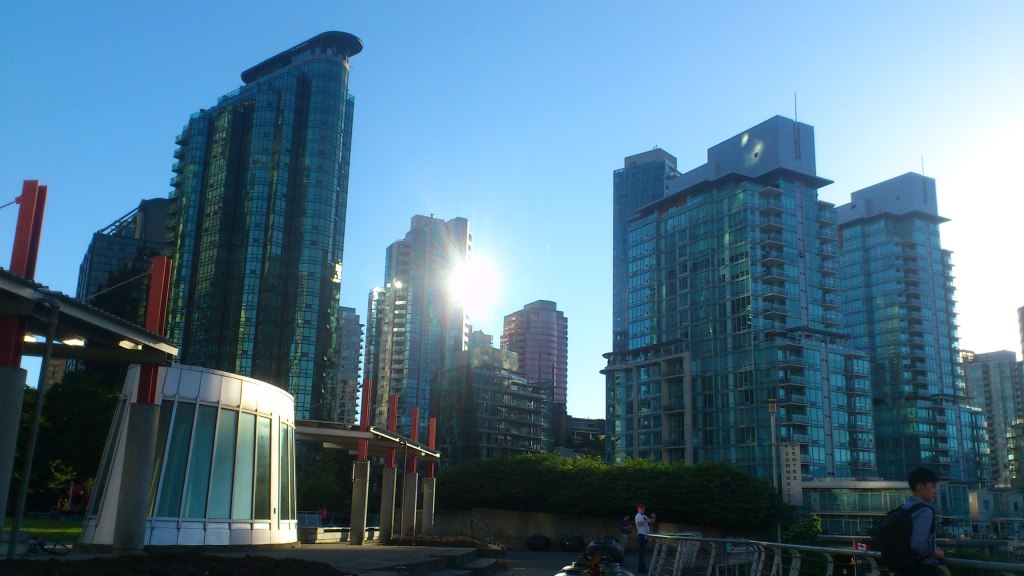
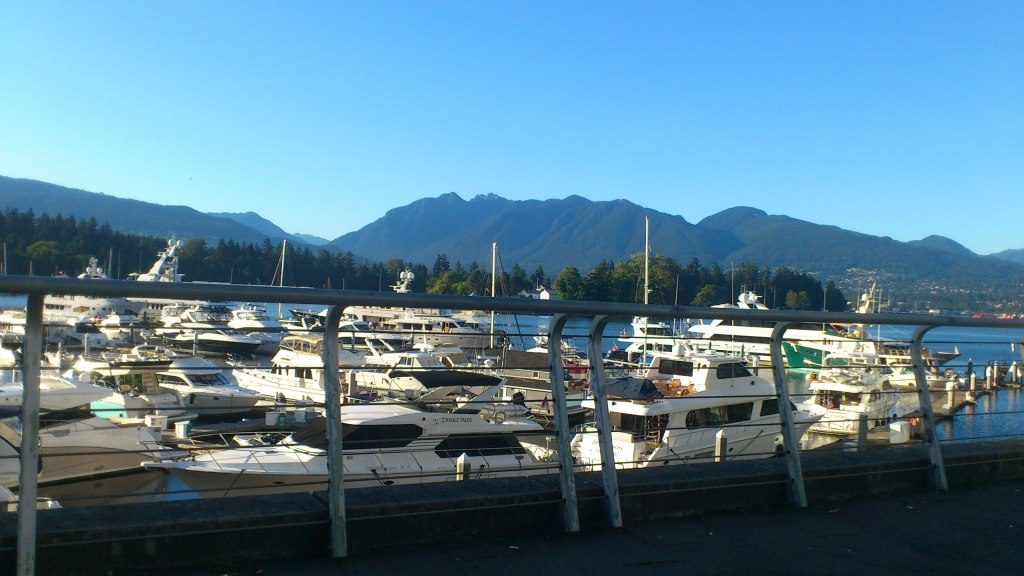
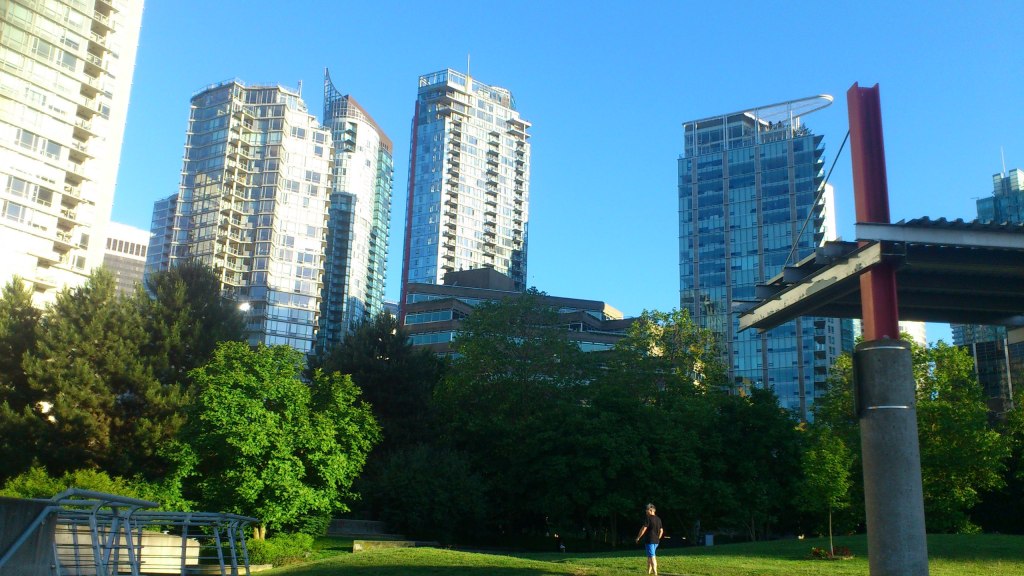
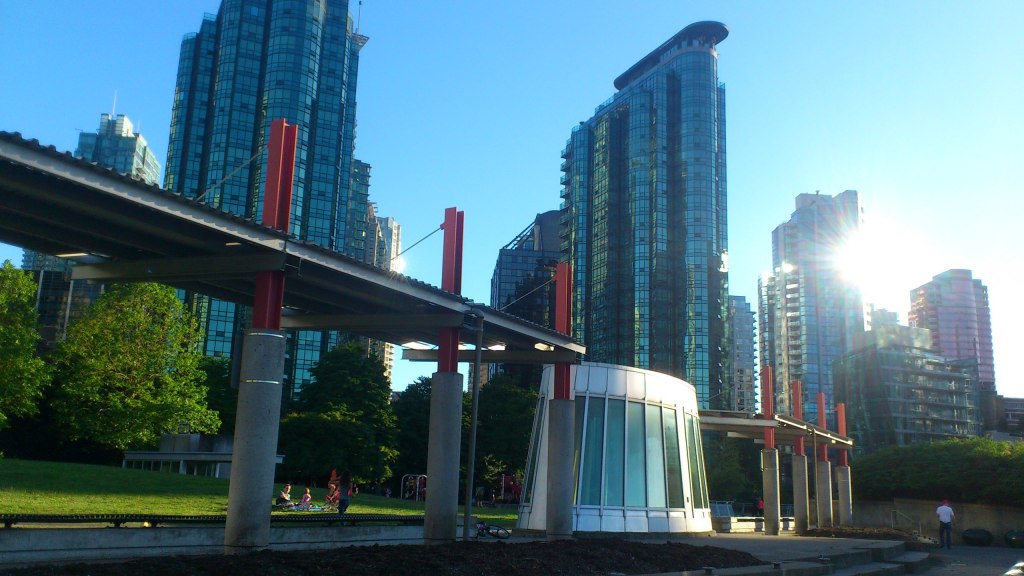
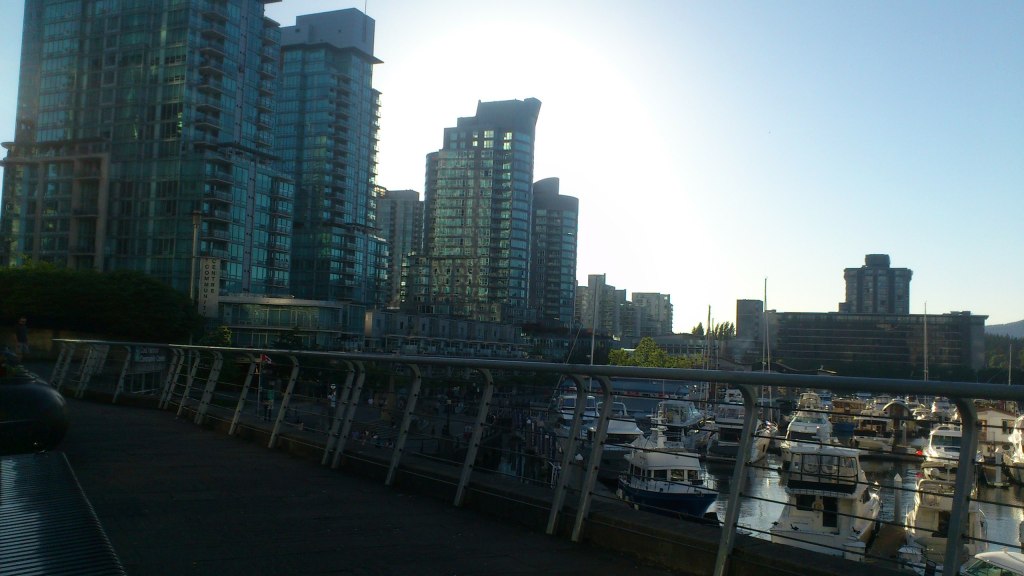
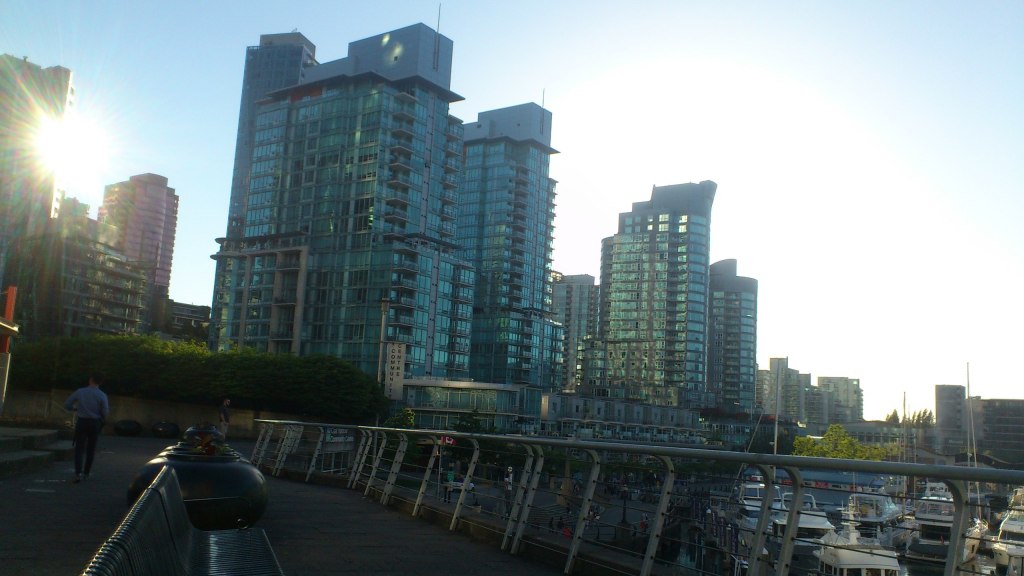
The Vancouver Seawall is part of the world’s longest uninterrupted waterfront path, the 28 km Seaside Greenway, stretching from the Vancouver Convention Centre to Spanish Banks Park. The downtown portion, particularly around Coal Harbour, is a popular segment for walking, offering a mix of natural beauty, urban views, and historical landmarks. Based on the web results, the Coal Harbour Seawall Destination Walk is a 5.77 km (approximately 7,572 steps) circular route that starts and ends at Canada Place, a notable landmark in downtown Vancouver. This walk takes you through lush green spaces, past prominent buildings, and provides exceptional views of the waterfront and the North Shore mountains.
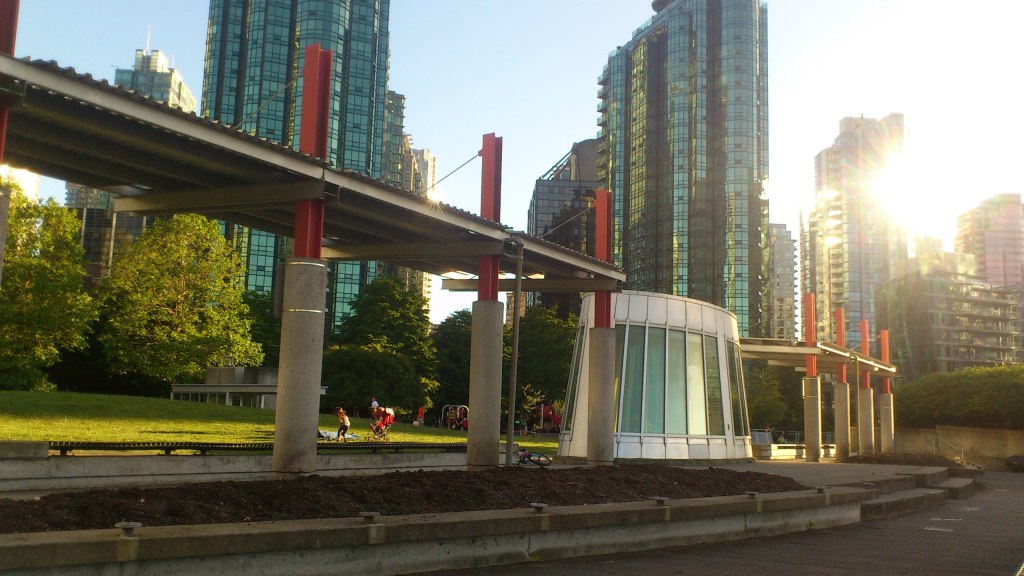
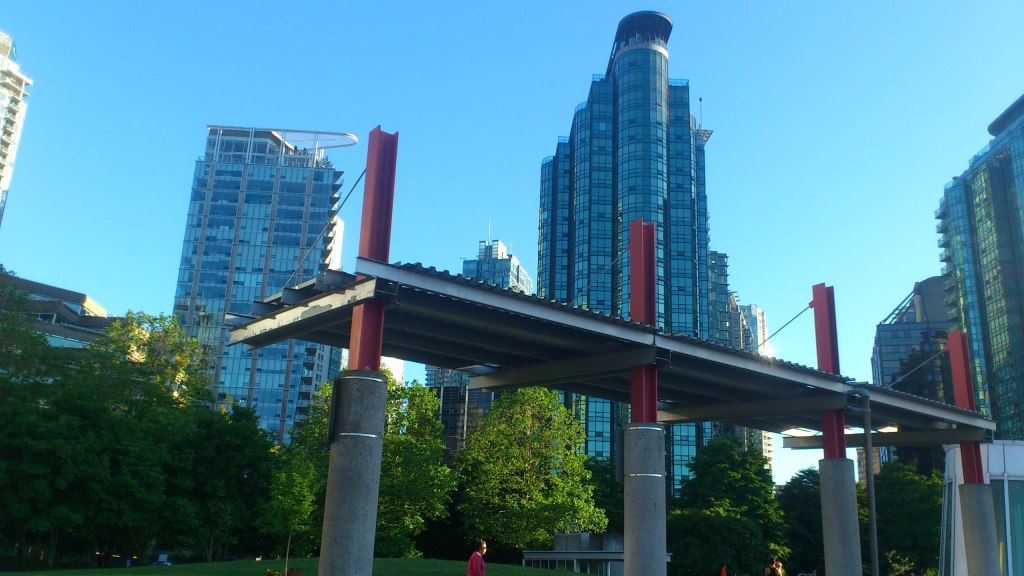
Key highlights of this downtown seawall walk include passing through Harbour Green Park, the longest continuous waterfront park in the downtown area, which was constructed between 1997 and 2002. This park features a water feature that doubles as a spray park in the summer, with stepping stones winding through it. You’ll also get views of the Vancouver Rowing Club, several marinas, and Devonian Harbour Park, which serves as a gateway to Stanley Park. Along the route, you can spot artwork near the Coal Harbour Community Centre, inspired by the old boat sheds that once lined the shore, reflecting the area’s history.
The seawall in this area is designed for accessibility, with separate paths for walkers/joggers (closer to the water) and cyclists/inline skaters (on the inner path), ensuring a safe and enjoyable experience. The route showcases a blend of natural beauty and human ingenuity, with prominent buildings, green spaces, and the multi-use seawall path. It’s a great way to explore Vancouver’s history, architecture, and waterfront scenery, all while getting some fresh air and exercise.
If you’re looking to extend your walk, the Stanley Park Seawall, which connects to the Coal Harbour section, offers a longer 10 km loop (13,123 steps) that takes about 2-3 hours to walk. This loop is famous for its scenic vistas, landmarks, monuments, and sculptures that connect Vancouver’s past and present. Note that sections of the Stanley Park Seawall, like those between Prospect Point and Third Beach, may close briefly in winter for maintenance, such as rock scaling to prevent debris slides caused by weather conditions like heavy rain or spring thaw.
In short, the Seawall Water Walk in Downtown Vancouver, likely centered around the Coal Harbour area, is a picturesque and accessible way to experience the city’s waterfront, history, and urban-nature blend, making it a must-do for locals and visitors alike.








 Igor's Blog