

New Retro Wave + Dynatron Stars Of The Night. An exclusive for today. Taken from the Aphasia Records Compilation.
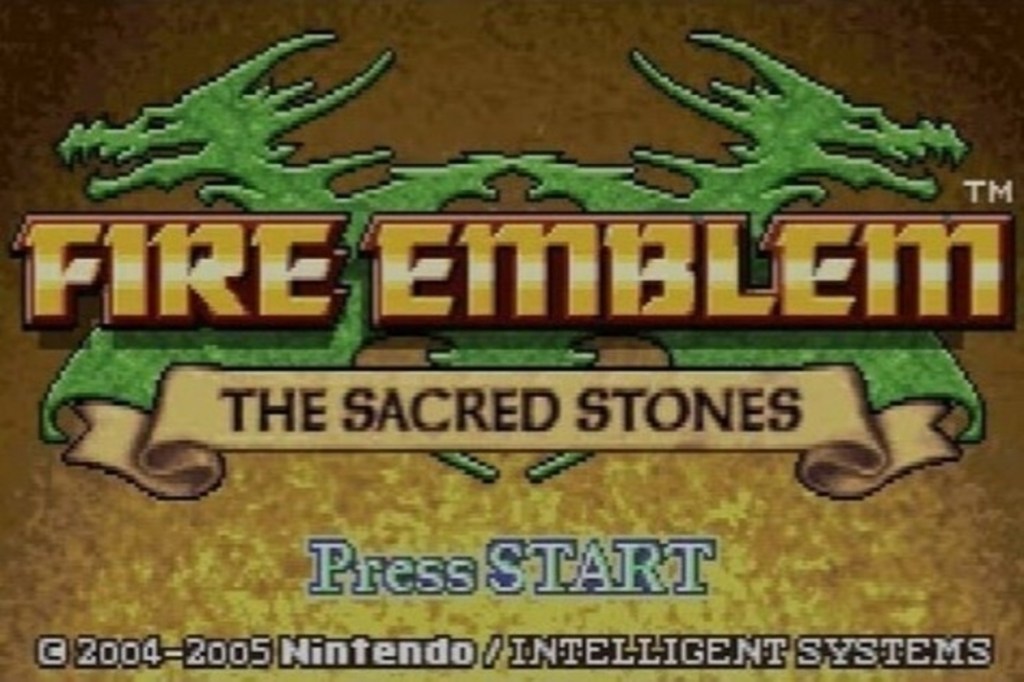
Intelligent Systems has once again made a great turn-based strategy game.
It doesn’t take long to figure out that The Sacred Stones has a lot in common with its predecessor.
This can be seen as a compliment. After all, the original GBA Fire Emblem turned out to be brilliant turn-based strategy game with a complex, engaging story that genuinely made you care about its characters, as well as a deceptively deep battle system that required a lot of strategic thinking from the player. Still, the high level of similarity might encourage people to argue that The Sacred Stones isn’t really a true sequel but rather a subtle extension of an already established game. Any way you cut it, the game is certainly well worth purchasing.
One of the most interesting aspects of the series has always been the degree of attachment that you feel for your characters. The Sacred Stones is no exception. The characters are far from anonymous and generic. Each of them has his or her own name, class, background, and personality, which are vividly portrayed throughout the story. This is done by means an extensive amount of dialogues. They reveal so many details on the characters’ developments that they genuinely make you feel a sense of loss when one of your characters dies in battle and is unable to ever return again.
In order to avoid these tragic deaths you’ll obviously need to master the game’s battle system. As in previous installments, it is incredibly deep, although it seems so simple at first. Basically, axes beat lances, lances beat swords, and swords beat axes. Magic attacks follow a similar pattern. There are plenty of other conditions to take into consideration, though. For example, archers do massive damage on flying creatures; some weapons are more likely to inflict a critical hit; forests provide extra cover; an injured unit can be healed in forts etc. Like its predecessor, the battle system constantly encourages strategic thinking and, in turn, punishes reckless decisions.
Sometimes you do get punished unfairly, though. Like its predecessor, this problem mostly occurs in the “Fog of War” levels, in which you have a limited view of the battle field. Here, you might suddenly get killed by a powerful hidden enemy, even though you’re at full health and everything seemed to go well. Unless you’ve played the level before, it’s impossible to know when and where these situations will occur, which can be frustrating.
From a graphical standpoint, the game closely resembles its predecessor. In other words, it doesn’t rely on flashy particle and lightning effects, but it doesn’t really have to. The functional look suits this type of game well. It makes it easy to identify the different characters on-screen. The animations are creatively designed and look as solid as in the previous version.
Not everything about The Sacred Stones looks familiar, though. The most prominent new feature is the inclusion of a world map. It allows you to go back and revisit levels to stock up on weapon and item supplies. At times monsters (yes, monsters play a big part in this installment) will even spawn in previously visited areas, giving you the choice of going into battle with them or instead move on with the story. In this way, the new system gives the player a greater sense of freedom.
This is also the case with another new addition, which comes into play when changing class. As always, you have to be at least on level ten and have a special item in order to change class, but this time around you get to choose between which class to turn into. For example, an archer can become a sniper or a forest knight. Each class has its strengths and weaknesses, so you need to consider which class best fits your existing squad.
The last notable addition is that you can now choose between three difficulty settings. There’s great difference between them. The easiest setting starts off with an in-depth tutorial, while “hard” quickly proves challenging even for Fire Emblem veterans, since you’ll meet more foes, who are stronger too. On “hard” the single-player campaign easily takes more than 15 hours to complete, which doesn’t feel too short at all.
Ultimately, all of these new additions are welcome. They don’t really alter the core gameplay. The Sacred Stones still looks, sounds, and plays very much like its predecessor, so if you liked that game, you really cannot go wrong with this one.
As part of the Corporations Have Rejected Copyright series, this analysis focuses on corporations violating the original intent of copyright in favor of personal power and profit, and so skips over some other valid avenues of criticism like enclosure in general.
When I’m looking for an example of copyright abuse, I find myself returning to Nintendo a lot on this blog. Nintendo is a combination hardware/software/media franchise company, so they fit a lot of niches. They’re a particularly useful when talking about IP because the “big N” is both very familiar to people and also egregiously bad offenders, especially given their “friendly” reputation.
Nintendo has constructed a reputation for itself as a “good” games company that still makes genuinely fun games with “heart”. Yet it’s also infamously aggressive in executing “takedowns”: asserting property ownership of creative works other people own and which Nintendo did not make.
You’d think a company like Nintendo — an art creation studio in the business of making and selling creative works — would be proponents of real, strong, immutable creative rights. That, as creators, they’d want the sturdiest copyright system possible, not one compromised (or that could be compromised) to serve the interests of any one particular party. This should be especially true for Nintendo even compared to other studios, given Nintendo’s own fight-for-its-life against Universal, its youth, and its relatively small position1 in the market compared to its entertainment competitors Disney, Sony, and Microsoft.
But no, Nintendo takes the opposite position. When it comes to copyright, they pretty much exclusively try to compromise it in the hopes that a broken, askew system will end up unfairly favoring them. And so they attack the principles of copyright, viciously, again and again, convinced that the more broken the system is, the more they stand to profit.
Introducing Nintendo
Nintendo, even compared to its corporate contemporaries, has a distinctly hostile philosophy around art: if they can’t control something themselves, they tend to try to eliminate it entirely. What Nintendo uses creative rights to protect is not the copyright of their real creative works, it’s their control over everything they perceive to be their “share” of the gaming industry.
Let me start with a quick history, in case you’re not familiar with the foundation Nintendo is standing on.
Nintendo got its start in Japan making playing cards for the mob to commit crimes with. It only pivoted to “video games” after manufacturing playing cards for the Yakuza to use for illegal gambling dens. (I know it sounds ridiculous, but that’s literally what happened.)
Nintendo got its footing overseas by looking to see what video game was making the most money in America, seeing it was Space Invaders, and copying that verbatim with a clone game they called “Radar Scope”.
Then, when that was a commercial failure, they wrote “conversion kit” code to turn those cabinets into a Popeye game, failed to get the Popeye rights they needed, and released it anyway. They kept the gameplay and even the character archetypes the same, they just reskinned it with King Kong. They didn’t even name the protagonist after they swapped out the Popeye idea, so he was just called Jumpman.
Mario’s plumber role is well-known as being a working-class archetype to substitute for the everyman sailor archetype of Popeye. But, in researching this, I found out that there’s also some evidence that even the basic design of a plumber in overalls came from, of all things, subconscious word association with an unrelated magazine, also named Popeye. Their heads were really in that space!
But then Nintendo was almost itself the victim of an abuse of IP law. “Donkey Kong” derived from King Kong, and even though the character was in the public domain, Universal Studios still sued Nintendo over the use. Ultimately the judge agreed with the Nintendo team and threw out the lawsuit, in an example of a giant corporation trying to steamroll what was at the time a small business with over-aggressive and illegitimate IP enforcement.
This was such an impactful moment for Nintendo that they took the name of their lawyer in the Universal Studios case — Kirby — and used it for the mascot of one of their biggest franchises. It was a significant move that demonstrates Nintendo’s extreme gratefulness — or even idolization — of the man who defended them against abuse of IP law.
You would hope the lesson Nintendo learned here would be from the perspective of the underdog, seeing as they were almost the victim of the kinds of tactics they would later become famous for using themselves. But no, it seems they were impressed by the ruthlessness of the abusers instead, and so copied their playbook.
Philosophy
I sometimes feel awkward talking about Nintendo’s attitude, or their corporate ethos, because I feel like calling out “traditional” aspects of their culture comes dangerously close to orientalism. But at the same time, Nintendo is a company that lets their president order all their relatives to be fired so his clan couldn’t question his right to the throne. And that wasn’t ancient feudal history, that was the Mario guy! Nintendo really does have a distinctly “personal” mentality that maps well to “traditional”, and they act on it in ways that have serious negative repercussions.
I gave another example back in Events in games bother me:
Nintendo has this very hostile relationship with its users in general. They have a strong culture that they craft an experience and you engage with it like they imagine you should or you don’t at all. In 2017, western developer Jordan Amaro described Nintendo’s “Japanese” approach to design, actually describing Splatoon’s stage rotation system in particular:
In Japan, everything is tailored. You’ve probably heard Sheena Iyengar’s TED talk, in which she went to a restaurant in Japan and tried to order sugar in her green tea. The people at the cafe said, “One does not put sugar in green tea,” and then, “We don’t have sugar.” But when she ordered coffee instead, it did come with sugar! In Japan, there’s a sense of, “We’re making this thing for you, and this is how we think this thing is better enjoyed.” …
For Nintendo, the creator/consumer relationship is an absolute binary. Creators create, consumers consume. Consumers aren’t to interact with the concepts beyond what’s required, they aren’t to understand the mechanics, they aren’t to create for themselves. They eat exactly what they’re served because the experts know what’s best and the consumers don’t, and if they ever step out of line they’re punished for it.
Of course, this has less to do with what’s actually best for the customer and more to do with the owner maintaining control over their experience. What the customer actually wants and needs is ignored entirely in favor of maintaining a rigid power structure.
I’m not qualified to define what does and doesn’t qualify as “Japanese approach to design”, but Nintendo’s mentality is one that values extreme control, and takes personal offense at even slight infringements against what it considers its honor or territory. While all media companies are extremely careful when it comes to controlling their product, Nintendo’s attitute puts it at an extreme end of the spectrum.
Nintendo is wrong about all of this, of course. In reality, individual agency doesn’t somehow “compromise the art”. No, it’s Nintendo themselves who toxify something beautiful and meaningful — the genuinely excellent work of real artists who make their games — in the name of defending the vast swaths of territory they’ve claimed.
The best way to explain it is probably a whirlwind tour of a few stories, so I’ll jump right in.
Mario Royale
Mario Royale, released June 15, 2019 by InfernoPlus, is a free, not-for-profit “battle royale” remix of the original Super Mario Bros. where 75 players simultaneously race through a level and interact with each other indirectly through power-ups. It takes the “battle royale” game format and (like Tetris 99, released earlier in 2019) uses indirect gameplay effects to “attack” other players.
The concept, code, and design are all InfernoPlus’s original work. The gameplay mechanics — which cannot be copyrighted or patented, remember — are inspired by Super Mario Bros., which in turn was inspired by Pitfall and Space Panic, and Tetris 99, which in turn was inspired by Tetris and Fortnite, which in turn was inspired by PUBG, and so on, forever.
The game itself is a slam-dunk transformative work. Mario Royale, as a video game, is an entirely new experience that didn’t substitute for Super Mario Bros. or even any other Nintendo product. The only assets in the game that weren’t wholly original were the 8-bit music and sprites2 from the 1985 NES game Super Mario Bros., an infinitesimally small amount of information used as a reference to the cultural touchpoint rather than something designed to somehow steal sales from a discontinued game that runs on discontinued hardware.
But Nintendo is infamous for attacking fan work no matter how legitimate and transformative, and InfernoPlus was well aware of this. In an interview, InferoPlus said regarding legal threats, “I just expect it. I anticipate it to happen. If it doesn’t, it’s great. But it’s more likely to happen.” When you played the game, the loading screen had the message “Please don’t sue me. Please.”
Now, in my opinion, even the theoretical DMCA on Mario Royale is iffy. For a copyright violation like this to be considered harmful to Nintendo, it would need to deprive them, but free fangames like this don’t deprive Nintendo of any revenue and only appeal to people who are already paying customers anyway.
Further, the very idea of owning copyright over a fictional character is suspect. Even ignoring the incredibly thorny epistemological question of whether two fictional characters can objectively “be” each other, the idea that copyright includes a total right over all future interpretations of a character shoots straight past “copying work” and falls squarely in the “mineral rights/idea landlord” bucket, which we already know is strictly forbidden.
Hell, people could make fanwork about me — a real person, not just some character in a media franchise — and I wouldn’t own copyright over it. I might have avenues to challenge it in various capacities, but none of them involve copyright or intellectual property. It wasn’t my work!
So, when the anticipated cease and desist arrived (Nintendo’s very first move a fault from the get-go), InfernoPlus reacted quickly to appropriately address the complaint as stated.
After getting the demand, InfernoPlus went through and replaced every single copyrighted asset in the game with original art, even re-titling the game “DMCA Royale” with a new playable character jokingly named “Infringio”.
This is a solid response that keeps the game alive while making itself completely unobjectionable, even to Nintendo. This is actually a very cool story we often see, even without takedown demands: a work starts by building on another franchise and later, in order to stand on its own, backfills the material it was originally sharing. The same thing happened with Fifty Shades and Twilight, and Skyrim and the Forgotten City, and Half Life 2 and the Stanley parable. Mario Royale was so strong in its own right that the author was able to remove the source material entirely to leave only his indisputably original work.
It’s like the ship of Theseus, except instead of replacing parts with identical ones, they used different designs and put them all in different places so at the end they’re left with none of the original parts and a ship with an entirely different design. No one could reasonably argue that result would be the same ship, or even a copy of anything. Except, apparently, if you’re lawyers whose brains have been rotted by IP law.
You might think here “Well, Nintendo can’t copyright game rules, but Mario Royale did “copy” their art the first time ‘round, so they did technically have standing to challenge its use.” I know InfernoPlus thought that:
Dexter Thomas, The Creator of “Mario Royale” Wants You to Play His Game Before It Gets Banned
Dexter Thomas: …you’ve made a game that is using a Nintendo character. What’s the best case scenario for you here?
InfernoPlus: Best case? If Nintendo wants me to make a version for the Switch [laughs]. I mean, honestly, the best case for me is that they leave it alone, as they have with some fan projects.
DT: So are you worried about getting a letter from Nintendo?
IP: I just expect it. I anticipate it to happen. If it doesn’t, it’s great. But it’s more likely to happen. I’d say it’s 50/50, maybe more, because it got so big all of a sudden. If it does, I can just re-skin it.
DT: You’ll redo the artwork?
IP: Yeah. Everything except the sprite [art] work and the music is mine. I’m free to make it into something else and put it up.
Ah, you poor sweet child, no. If we lived in that world, I’d have nothing to write about.
No, it’s here in the story, when you’re still holding on to ideas of creators having rights over their work and equity under the law, that Nintendo themselves interrupt you here to shout “no”! Their problem wasn’t that they objected to the art — the one thing they had a claim over — being used. What Nintendo objects to is just any art they don’t own.
See, Nintendo responded to Infringio by saying the new game — which doesn’t contain any of their copyrighted material, just art Nintendo didn’t make, code they didn’t write, and game rules they don’t own — still infringes on their rights, although they refused to explain why or how:
DMCA Royale Takedown Notice, 2019-06-27
Sorry, your battle royale is in another castle. Unfortunately, Uncle Nintindie’s lawyers have informed me that, despite my best efforts, the game still infringes their copyright. They refused to give me specifics (I asked multiple times) but it would seem that either the level design or general mechanics are still too close to the original game. As a result I can’t just blindly change the game and leave it up. Doing so would put me at risk of further legal action. I’ll likely talk in detail about the game and it’s short lifespan on my youtube channel in the coming weeks. I’m sorry about this guys. It was fun while it lasted.
InfernoPlus, “I made Super Mario Bros into a DMCA Takedown”
Around lunchtime on Tuesday. I got another call for mr. lawboy and was told that despite all the work I had done, I was still infringing on their copyrights. Now, I asked for more details, like, multiple times and was just given some really, none answers more or less but I’ve kind of guessed that it’s either the level design or general gameplay mechanics, but It’s hard to say either way. And the reality is the fact that they contacted me a second time, the fact that they actually bothered to do so means that they are out for blood. They don’t want this game to exist because simply put – It’s competition for Mario Maker 2 That’s the reason it had to die. Rest in Peace Infringio.
That’s right. Even when Mario Royale replaced all their copyrightable assets entirely, Nintendo will still claim it as infringing on their copyright if they think they can get away with it.
They’re claiming that a game “sort of feeling like” one of their games constitutes infringement. But remember, this is the same company who cloned Space Invaders, slapped on a coat of foreshortening and called it original IP! Their standard for what they think an infringing derivative work is is non-existent. They don’t care about copyright enough to respect it, they fundamentally only care about themselves.
The message Nintendo sent to InfernoPlus was unambiguous: “it doesn’t matter anymore what the game actually is, take it down or we’ll keep hounding you until you’re bankrupt, jailed, or both.”
InfernoPlus asked all the right questions. “What are you objecting to?” “What do I need to change?” “What is the line you want me to stand behind?” The answer was simple: there is no line. The offense isn’t in the material. It didn’t matter that it was non-infringing. Nintendo saw a “Mario game”, decided it had to be destroyed, marked InfernoPlus as the enemy, and wasn’t going to stop until his work was obliterated.
This “spray-and-pray” tactic, where games are threatened indiscriminately, demonstrates that the system is deeply compromised. You can’t just “spray and pray” in a courtroom. You can’t just frivolously object to every statement the other party makes (even if you know they’re right), hoping to score what points you can and shrug all your misses off as irrelevant. You’d lose the case, and hopefully be held in contempt of court (the system itself!) and be disbarred.
The only way the “spray and pray” model works is if you’ve already completely compromised the system so your abuse still works out in your favor. Regulatory capture. But meanwhile — because in real life, that foundational damage has already happened, and the system is broken beyond repair — Nintendo’s willing to issue legal threats against anything that even looks like a platformer.
Nintendo doesn’t have the right to platformer games any more than the first sport to use one has a monopoly right over using inflated balls. It’s ludicrous, and grossly offensive.
It would be very easy to get caught up in the details of what you can and can’t assert copyright over (I’d love to take Nintendo to task on whether you can copyright a character, for instance), but DMCA Royale proves that’s a red herring. Nintendo doesn’t care what they actually have rights over. That wasn’t ever the game they were really playing.
What right does “DMCA Royale” infringe on? What offense has Nintendo taken, here? Well, because we can rule out everything else, it’s that Nintendo demands the right to have an unlimited money fountain. A preemptive, exclusive right over theoretical future games that no one has made yet. They demand a right to whatever control they can convince the law to give them, and to never have to compete with anything else, ever. Anything that violates that imagined right, Nintendo takes as an attack to defend itself against, when in reality it’s clearly the sole aggressor.
Despite all the rhetoric of “copyright” and “intellectual property”, none of Nintendo’s objections were ever based on copyright. Their coming back and threatening legal action over a game they had nothing to do with, as revenge for a prior imagined slight, is them laughing in your face for thinking this was ever about copyright for them. Nintendo only ever cared about control over their brand and killing whatever competition they could get away with killing, and for superpredators like Nintendo, fan games are easy prey.
Attacking DMCA Royale even though it didn’t use any ideas Nintendo had exclusivity rights over wasn’t an outlier. It’s not that Nintendo’s many other takedown claims were entirely legitimate but this one was a mistake. No, Nintendo never cared about the legitimacy of its claims. The legitimate and illegitimate claims were all the same to it: moves in their campaign for power, not for order. Their goal is the same as it’s always been, and it’s always been wrong. They’ve just hidden it under the rotting corpse of copyright.
And somehow — somehow — this still isn’t where Nintendo’s brigandry ends. No, next they went and stole his damn game.
Super Mario Bros. 35, released October 1, 2020 by Nintendo, was a promotional “battle royale” remix of Super Mario Bros. where 35 players simultaneously race through a level and interact with each other indirectly through power-ups. It takes the “battle royale” game format and (like Tetris 99, released earlier in 2019) uses indirect gameplay effects to “attack” other players.
It’s the same game, but closed-source, unmodifiable, subject to Nintendo’s terms of service, and entirely dependent on Nintendo’s continued support, which it dropped just six months later.
It’s really hard to “steal a game”. You can’t copyright or patent game rules, so there’s no way to violate either of those. The only thing you could do that would constitute “stealing” a reproducible, non-rivalrous digital game would be to find some way to deny your victim the utility of their property and then directly benefit from that harm by redirecting people to a substitutionary product you control. InfernoPlus certainly didn’t “steal” Super Mario Bros. — he didn’t even copy or compete with it. But, despite the almost tautological impossibility of it, the bastards at Nintendo still ticked all the boxes when it came to stealing his work.
This is something I touched on in You’ve Never Seen Copyright, but copyright obligates you to let other people publish their own work:
Because copyright’s purpose is to incentivize the creation of new work, the function of copyright is not just restrictive, but also expressly permissive. In “the exclusive right to make copies”, the “exclusive” part restricts others from doing so, but the “right to make copies” is a positive right that guarantees the copyright rightsholder — technology and circumstance permitting — to reproduce, distribute, perform, and otherwise publish their works. Therefore, in addition to violations of exclusivity, illegitimate attacks on authors’ ability to publish their own work are also violations of copyright.
Copyright itself demands Nintendo leave the original work of other people alone, unless it specifically infringes on a discrete right. That includes all the new code and design and gameplay in Mario Royale, and all the art and music in the later Infringio version. But instead Nintendo killed it. It’s not just an unjust attack against one creator, it’s spitting in the face of the whole copyright system Nintendo depends on.
AM2R
But even the astonishingly, cartoonishly malicious takedown-and-replace maneuver is regular operating procedure for Nintendo.
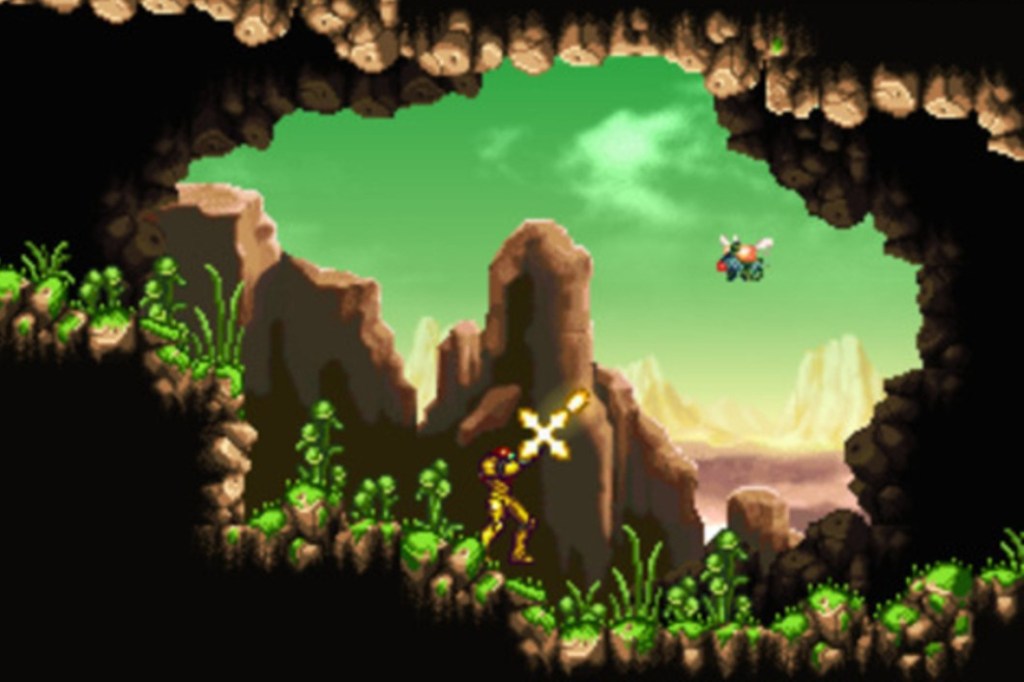
Another Metroid 2 Remake, or AM2R, was a free, not-for-profit game released by fan Milton Guasti (DoctorM64) in 2016 after ten years of development, with a demo released as early as 2011. It took the abandoned 1991 Game Boy game Metroid II: Return of Samus, left in obscurity by Nintendo’s failure to remake or modernize it and its only release being on a woefully outdated console, and remade it with a new engine, original artwork, and reworked level design.
Nintendo, of course, nuked it. AM2R’s copyright, all the protections afforded to its creators, were thrown into the thresher of Nintendo’s unlimited corporate appetite. Same old story.
AM2R received overwhelmingly positive feedback on release. It was even nominated for The Game Awards 2016, until Nintendo’s legal representation sent legal demands to websites hosting the game demanding they cease and desist, at which time its nomination was revoked.
Then, only a year later, Nintendo released Metroid: Samus Returns, their own remake of the same game on the Nintendo 3DS console. It proceeded to win an award at The Game Awards 2017: the same show Nintendo had made sure AM2R wasn’t eligible to compete in. As a 3DS release, Samus Returns is now discontinued abandonware, with no copies being manufactured and way to purchase even digital copies given the shutdown of the eShop.
Even so, Nintendo’s Samus Returns is not a “rip-off” of AM2R that violated some right AM2R had. Samus Returns was made by a different team with different design philosophies, and it looks and plays like a distinct game. In a decent world, all three of these games would coexist happily, with many Metroid fans probably playing both remakes. But Nintendo refused to let anyone else’s art exist, refused to let the real world “weaken its brand”, refused to let anyone else create art that it could get away with killing, and so it killed something it saw as possible competition just because it could.
Super Mario Maker
Boy, Mario Maker. I remember the lump in my stomach when Mario Maker was first announced. Sure, it looked fun, but my first thought was how gross it was that Nintendo was releasing a “make a mario fangame simulator” game after they had spent decades ensuring that a core part of the “make a mario fangame” experience was Nintendo trying to ruin you.
Super Mario Maker is an enclosure of the long-standing culture of romhacks and level editors. So much so, in fact, that people still call Mario Maker levels “romhacks” even though both “rom” and “hack” are concepts Nintendo thinks you should be jailed for engaging with. Nintendo saw what people were making for themselves and created something specifically designed to replace the creative work that already existed, even as they actively attacked it whenever they could.
For this one though, instead of going through the rich history of Mario fangames and Nintendo’s vicious persecution thereof, I’m just going to amplify Andi McClure’s experience, which I recognized from personal experience as being representative of Nintendo’s treatment of the fan scene in general.
(See Andi McClure’s original writeup at msm.runhello.com, “Super Mario World vs. the Many-Worlds Interpretation of Quantum Physics” from February 2008.)
Patrick Klepek, “What a YouTube Copyright Strike From 2015 Has to do With ‘Mario Maker 2’ in 2019”
McClure wasn’t the only person hit with a copyright strike when Mario Maker launched, either. It was actually an epidemic at the time. Nintendo seemed to be specifically targeting ROM hack videos, including those by Alex “PangaeaPanga,” one of the most popular kaizo level makers and someone who, these days, is a very popular creator within Mario Maker. The company was reportedly telling creators these videos was an “unauthorized use of [Nintendo] assets” and to not “post any videos using unauthorized software.” But kaizo was only possible by hacking digital copies of games ripped from Nintendo cartridges. Part of video game design has been, for better and worse, taking ideas from other games and building on them, legally and illegally. It’s not hard to see the leap from McClure to Meat Boy to Mario Maker, and it’s also hard to imagine Mario Maker existing without kaizo hacks.
Skipping right over some absolute bullshit that’s only legal-sounding at a cursory level — Nintendo has absolutely no right to demand you use “authorized” recording software or video filters, for instance — there’s that “Nintendo assets” lie again. But your eyes are open now: you’ve seen DMCA Royale now, so now you know better than to buy that one, ever again. That favourite lie — that this is about something that was copied — is disproven, forever. “Protecting assets” isn’t the offense, it’s the euphemism.
What Nintendo cares about is control: over their brand, over the industry, over fans, over the possibility space of ideas other people might have. Nintendo doesn’t actually feel like it’s “owed” anything, it simply desires more, forever. It has a limitless, voracious appetite — utterly opposed to the strict limits of copyright — that only uses the excuse of “copyright” to get away with it.
Smash
Nintendo is so neurotic about needing absolute control over its brand and eliminating all possible competition that it seems actively enraged that its latest releases have to compete against its own games that it’s already sold for people’s attention.
Because Nintendo is such a shameless serial offender, I’ve already talked about this previously in Nintendo: It’s about control, not piracy:
The idea that this is a conversation about piracy at all is a lie. If you read Nintendo’s statement a few times, you’ll notice the word “piracy” is thrown in there at the end, but there are no actual complaints about software piracy to be seen. Games piracy (where game studios invest in, develop, and publish a game, and then people download free copies of the games instead of buying them) is a serious and complicated issue — just not one this story is relevant to. The mod runs on the Dolphin emulator, which reads the game. This requires an “ephemeral copy”, just like all computers including actual Nintendo products do, but it certainly doesn’t somehow require you to pirate the game. It’s entirely possible for a tournament to purchase four melee discs and run melee on three machines. You can’t just send a cease and desist because you think somebody might play a pirated game. This matter of absolute control over the client is the only actual objection left, but Nintendo knows it’s in the wrong, so it shouts “piracy”. The hope is that the fact that a “mod” is involved at all is enough for you to shut down your brain and assume software piracy is the issue at hand here.
They pulled this same move, the same lie, countless times. It’s the same with all of their anti-temper arguments. Smash is just a good example, because I’ve already talked about it in depth.
The idea that any modification is equivalent to any other — specifically, modifications that allow piracy are equivalent to modifications that do not — is absurd. You obviously can’t treat an inoffensive change you know to be inoffensive as if it were a different, offensive one that you imagined up. The difference between “real” and “imagined” isn’t a minor distinction-without-a-difference, and treating one as the other is just fraud.
But in a perverse way, Nintendo’s lie here gets at a deeper understanding of the ugly truth behind it. Nintendo fears if the user has agency, if they can make choices on their own, if they have rights over their own property, that gives them power to act in ways Nintendo doesn’t like.
In fact, as I was in the middle of writing this article, Nintendo got aggressively worse about Smash tournaments in particular, with newly-published “Community Tournament Guidelines”. To make a long story short, Nintendo is literally trying to force people to negotiate a special license with them in order to play games they own. But it gets worse and worse the more you look; they even have the gall to demand control over what brands of accessories you can use in public. To Nintendo, “selling games people can play” is completely eclipsed by their new goal to “ensure that fans who are doing so are engaging with our games, characters, and worlds in a way that positively supports … Nintendo.”
Running a game tournament involves doing a lot of things with what Nintendo would argue is their intellectual property:
So a Smash tournament clearly “involves” Nintendo. They have an obvious interest in all these points. But that doesn’t give them any right to assert control over them. Things are allowed to happen that affect Nintendo without requiring Nintendo’s special approval first! The interest in the outcome does not confer a right to control it! None of that requires special, at-the-moment consent from the company! That’s like saying the sporting goods store you bought the ball from has to individually authorize each game, and can demand you meet any conditions they specify in return. That’s madness! It’s so plainly wrong that it could never be justified through words, it could only be normalized by people in power simply bullying it into practice. Which is exactly what they did!
I can’t believe I have to say this, but people are supposed to have the ability to act in ways corporations don’t like. That’s a fundamental part of the system, that’s what competition is. So Nintendo is “right” to dislike customer autonomy as far as their own interests go, but they have absolutely no standing to challenge it. Users being able to make choices about what they buy and how they use their property — not including otherwise illegal uses, of course — is just the ground rule for the game. Nintendo’s job, as a corporation, is to work within those rules. Instead, they bulldoze them.
Patents
So far, I’ve been talking specifically about abuses of copyright. There’s another kind of creative monopoly Nintendo ritualistically abuses too: patents.
Handheld Emulation Patent
The “retro” example of this is Nintendo’s US6672963B1, “Software implementation of a handheld video game hardware platform.”. This patent, granted in 2004, asserts ownership over “A software emulator for emulating a handheld video game platform such as GAME BOY®, GAME BOY COLOR® and/or GAME BOY ADVANCE® on a low-capability target platform”. It’s a ludicrous patent because — just to scratch the surface of the problem — it describes a product Nintendo not only never invented, but also did not build and never intended to release. Instead, in unabashed defiance to the entire concept of patented invention, Nintendo filed this patent in order to prevent that product from ever existing.
But there’s a lot to tackle even before Nintendo’s goal of making the world worse by preventing a useful product from existing. This patent is an example of fractal wrongness: not only is the whole maneuver wrong irrespective of its component parts, but each component part — no matter how generously you divide it up — is so wrong as to be invalidating on its own!
The patent itself is full of general, hypothetical ideas of technology that might exist (a patent fraud technique known as “unsupported functional claiming”), which obviously fail the basic eligibility requirements for a patent. Taken out of context, the fundamental problem with this patent is the same as the problem with most bad patents: no enablement. No valuable information is being disclosed here in exchange for patent protection, meaning it fails a baseline requirement for eligibility. There’s no invention here you could reproduce, it’s just Nintendo asserting automatic ownership on a whole category of software other people might invent in the future.
Remember with patents, unlike copyright, the Doctrine of Equivalents means patents don’t just cover the design in the patent, but have a wide radius of what all is considered an infringement. You don’t have to copy this design — or even be aware of it — for Nintendo to stamp out similar emulators as “infringing.” That’s what makes this really nefarious. Once a patent is granted, the holder is granted a monopoly over not just that specific design, but also similar designs. And, with functional claims, this includes inventions that accomplish the same goals, meaning the patent monopoly shuts down virtually all competition. This is the mechanism that lets Nintendo attempt to snuff out the entire ecosystem of emulators with just one, hypothetical implementation.
And that’s the whole game: Nintendo’s very purpose in filing this patent is to abuse the doctrine of equivalents to manufacture ammunition to use against their political opponents.
I would say Nintendo is trying to “stake a claim” on a category it imagined but didn’t invent. Except Nintendo didn’t imagine the category: everything being claimed here long since existed already when the patent was filed. Yes, chipset emulation in general had long since been a field of study, which Nintendo was well aware of as evidenced by their own attack on UltraHLE years before in 1999, where they robbed developers Epsilon and RealityMan of their original invention — and set the entire industry back years by depriving it of valuable research time — simply because third-party software emulation threatened Nintendo’s profitability.
Let’s continue on this path of comparing Nintendo’s patent to emulation research from five years prior. Taking an existing technology and being the first person to apply it to a new subject matter isn’t patentable either. You can’t buy a can opener at the store, use it on a blue can, and patent a new blue-can opener just because you were the first person to use somebody else’s technology on a blue subject. The reason is very simple: doing that doesn’t invent anything or create any value! With no new value created, the only thing the patent does is give a free monopoly to the first person to stake a claim on an idea in the commons, which is strictly forbidden.
Would taking an existing category of software and putting it on a smaller computer be a patentable claim? Is “smallness” different enough to be an “invention”? No, obviously not. While it might take some basic proficiency in the art to optimize for specific hardware, that kind of extension is incidental improvement via an application of existing technology, not a new invention worth “the embarrassment of an exclusive patent.”
But even though we’ve failed all those supporting checks — each of which on their own make the patent illegitimate — it doesn’t matter, because even the core idea being patented already exists. Yes, not just emulation, not just miniature emulation, but the very Game Boy emulator Nintendo described, for the same hardware they targeted, in the very way Nintendo was claiming to have just invented! Nintendo just lied their way through the whole process and got away with it!
Nintendo wasn’t even the first party to execute the idea of emulation on their own device, which they had an unlimited opportunity to do because not only did they not have to reverse-engineer anything to do it, they had access before the market!
Nintendo is so thoroughly contemptible in this regard that this hardly bears mentioning, but Nintendo lied “The only purpose of video game emulators are to play illegal copied games from the Internet” while simultaneously filing this patent for a rom-driven3 video game emulator. When they lied that lie, that was a lie, as evidenced not just by any old evidence, but by their own authenticated, legal patent filing. They notarized their own confession.
But all this isn’t surprising, because they’re known mass liars and can’t be afforded any good faith in the matter. They have long since lost their credibility, and it’s absurd people still parrot their press releases like authoritative information. They’re disgraced, and you don’t get to treat them credulously anymore.
Nintendo has one tiny, tiny sliver of hope for redemption here, and that’s if — even having this patent — they stayed in their lane. Instead of stretching the Doctrine of Equivalents as far as it will bare, they could use the patent honestly and use it to defend the actual technology described therein. But they didn’t do that, because they never wanted to do that. What they wanted was power to shut down an industry they didn’t like — they could not care less about patents.
And of course Nintendo proved my point for me with the most damning evidence imaginable. Immediately after being awarded the patent in question, Nintendo turned around and used it to threaten the in-development commercial emulator Firestorm, not because it violated the patent, but because Nintendo didn’t want the product on the market.
What really ties the bow on this one for me is that the Firestorm emulator Nintendo shut down using the patent was developed before 2004.
I’m putting this in an aside, because it is technically speculation, but Nintendo’s patent was granted January 2004, and Crimson Fire Entertainment demonstrated a beta version of Firestorm less than two months later in March 2004.
I don’t think the entire software package was written in those two months. I believe Firestorm was instead worked on during the much more reasonable two-year timeframe between their last major game in 2002.
This means Nintendo is accusing work that already existed before they were awarded the patent as retroactively in violation. Of course, in reality, this is demonstration of prior art that should invalidate the patent: prima facie proof Nintendo was lying about having invented something new.
It’s yet another entry plopped on the large-and-growing “even one of these invalidates your entire foundation” pile. The patent standard weighs your faults against a feather, but Nintendo could weigh themselves against a pile of Bluto’s iconic red steel girders and the scale would still tip against them.
Now let’s bring the context back. This is a thoroughly illegitimate patent used for thoroughly illegitimate means. This whole patent-to-snuff scheme is — very obviously — an attempt to create legal ammunition against otherwise-legal emulator developers, a demographic Nintendo was-and-continues-to-be famously at war with. And this is just an old one; they’re all like this.
This abuse of the patent system is not to “encourage creativity” or to ensure the “health of the market”, and it doesn’t respect the inventive work that already happened. The entire scheme is designed to get you over a barrel and nothing else.
Fractal wrongness.
But it’s not just “wrong”, it’s a clear, intentional rejection of copyright and creative rights as a doctrine. Nintendo isn’t just committing fraud for profit, it’s contorting the idea of patent invention and using it to attack the rights of others to create new work. Nintendo violated the contractual arrangement of the patent system and is instead using the language of intellectual property not to participate in science, but to play an entirely different game. And it’s the same game as always: seizing power, control, and leverage.
And remember, this doesn’t just affect their commercial competitors. They’re not just attacking the right for others to profit from their own new development, but actively attacking their right to create new work at all when they perceive that work — that development of science and the arts — to be in competition with their immediate profit.
Zelda Gameplay Patents
But at least an emulator is software. That’s almost like hardware! You can actually do science and create new, patentable, valuable inventions in software form. That’s all at least arguably in scope for patents. Poggers.
But let’s talk about another category of ideas: games. Specifically, “games” as a general concept defined by their rules and mechanics.
Game mechanics are a category that falls cleanly outside the scope of patent protection.
As I’ve already discussed, patent protection only applies to a specific, enumerated list of categories. If an idea doesn’t fall squarely into a slot, it’s not eligible for a monopoly. And game rules don’t fit. Game mechanics are abstract ideas, specifically “systems for organizing human activity”.
There’s even specific case-law calling out “game mechanics” as ineligible material, to further cement what the law-law already said. In re smith, the Smiths tried to patent a card game, but the patent office correctly rejected the application. They appealed in court, and the court upheld the law and the decision of the USPTO: “a method of conducting a … game” was an abstract idea — regardless of the means used, i.e. physical cards — and not patentable. The same applies for video games: doing a non-patentable procedure “with a computer” doesn’t make it patentable.
Why? I’ve discussed this at length: patents are explicitly anathema to abstract ideas; patents can only ever protect specific, genuine inventive contributions to science.
Patents protect invention, but not all design is invention! Some design is creative expression, but some good design is just proficient execution of technical skill. It’s just what it means to make a product. You get full credit, but it doesn’t automatically entitle you to extra protections meant to handle unrelated incentive gaps.
Game rules are ideas — valuable ones, since they make you money — but they’re not something you get special bonus monopoly protection for. But that’s fine. If you have a great game idea, you don’t get patent protection and you don’t need it; you already get to be the first person to make, brand, develop, polish, and sell the game.
But patents are just too valuable not to abuse, and so companies regularly patent games and game mechanics fraudulently, relying on an exploitable patent system that approves illegitimate patents.
Right now, Nintendo is trying to patent dozens of individual game mechanics from Breath of The Wild. This includes such winners as:
All of these existed already, and have been staples of game engines for decades. Literally, decades: the example that jumps to mind for most people is Garry’s mod, which didn’t invent them, but instead already does all these things because the source engine already did these things in 2007. And they didn’t need a patent! Making games that worked good was considered — rightfully — basic practice of the art.
Hey, remember that “inventions which would not be disclosed or devised but for the inducement of a patent” test? Well, guess what: Breath of the Wild already released, five years prior in 2017. Every one of these patents is already bullshit at every level.
But it’s never not been about bullshit for them. The game they’re playing isn’t “invent something good and patent it for a temporary monopoly”, it’s “say whatever lies it takes to get us leverage over our competitors”. None of this is allowed, and they’re doing it anyway.
Homebrew
And finally, for the Nintendo coup-de-grâce, let’s talk about Homebrew. Nintendo has an absolutely tattered reputation when it comes to their anti-piracy action. Like when people installed Wii homebrew by using an exploit firmware that couldn’t be safely updated, but Nintendo disregarded safety and force-updated that firmware anyway, bricking many completely unmodified Wiis as collateral damage in Nintendo’s forever war.
Ben “bushing” Byer, Wii Menu 4.2: a lack of imagination
I’m surprised that [Nintendo] took the bold move of pushing an updated boot2 — I guess all of the cool kids are doing it these days. Their boot2-updating code (ES_ImportBoot) is not well-tested; they’ve never updated boot2 on retail consoles before, and in our testing we discovered that it often fails to write out ECC data for the new version of boot2 that it writes. We should expect to see some number of bricked Wiis from this; the code is so buggy that we decided to write our own for the HackMii installer.
But “Nintendo knowingly, indiscriminately broke its own consoles in order to Hurt The Enemy” is pretty pedestrian, and by now that story is generations-old. Let’s talk about something more recent: the 3DS. I really wanted to just link something for this, but apparently no one has done any decent reporting on this story, so it falls on me.
Neimod was one of the first researchers to look into 3DS reverse-engineering, and wrote the ctrtool general purpose utility for manipulating file formats used by the 3DS. Neimod was specifically against piracy (“warez”) and — as far as we know for sure — only ever worked on these general-purpose homebrew tools.
Homebrew like that written by Smealum: portal3DS and 3dscraft being the famous examples. Smealum, though, is better known for his work in 3DS console security research and exploitation with the Ninjihax exploit and the 3DS Homebrew Launcher.
“Homebrew” is a weird category. The word “homebrew” is used to box off normal software that isn’t provided by the manufacturer themselves into its own special category, instead of treating it as the default state that it is. It’s like if “cooking” only ever meant restaurant meals, and “home cooking” was treated as a frowned-upon edge case.
The only reason someone who wanted to develop homebrew games for a computer they own would care about console security is if something had gone very wrong already. Which, of course, it had: Nintendo wants to lock developers into partnering with them contractually in order to be able to develop (crippling the hobby development scene), and locks down all the general-purpose computing functionality of their consoles so they only run Nintendo-approved code.
Using the “homebrew” metaphor, being unable to run “homebrew” without authorization from the manufacturer is like being mandated to buy bottled tea and being physically prevented from taking tea leaves and brewing your own tea at home. It’s letting manufacturers wield an unconscionable level of control, especially for a category of tech that’s not just an entertainment product, but the means of production for an entire entertainment economy.
Like most in the Homebrew scene, Smealum specifically did not want to encourage piracy or violations of real creative rights:
Tom Phillips, “”I don’t want to be a part of piracy”“
Piracy-enabling “flashcards” are now outlawed in many countries but remain easy to find online. … But this wasn’t what [Smealum] wanted to enable – and NINJHAX currently doesn’t.
“It’s very dangerous,” he says. “If you release an exploit that’s too powerful you might let people do whatever they want with their console – which can be great – but you also have the possibility of piracy… which isn’t so great.
“I don’t care if people pirate in their private lives, but I don’t want to be a part of it,” he continues. “I don’t want to release something others can use to steal someone else’s intellectual property. That’s not what I want. I wouldn’t release something that could be used for piracy… it’s just not something I want to do.
“Right now I’m hoping the loader attracts more developers and people start building more homebrew games. I’m working on the 3DS version of Minecraft and a bunch of people are working on emulators. I’d really like to see how far we can push the 3DS.”
“I just think it’s pretty cool that we’re going to be able to use our 3DSes for a lot more stuff,” he adds.
TinyCartrige, “3DS homebrew is here!”
Probably the biggest concern amongst homebrew opponents is that any advancements toward running unauthorized programs on a console will inevitably lead to piracy. Smealum has said that Ninjhax, as it stands now, does not allow users to run commercial or pirated software, but many are still convinced that this the 3DS is on the verge of suffering the same piracy problems as the DS.
“It’s a legitimate concern for sure,” says Smealum. “However, I’m going to reiterate what I’ve been saying for the past few months now: what I’m releasing just isn’t capable of running pirated 3DS software. It’s not a limitation I or anyone else put in place; it’s just technically the state of the matter, and that’s the entire reason why I feel comfortable releasing this at all.”
Nothing about Homebrew loading is a copyright issue (you’re running new software, not copying any), or a patent issue, or a matter of any other legitimate creative rights. Nintendo locks down their hardware in order to enforce their business model, not prevent theft of creative work. In fact, their business model is designed to prevent new creative work, which goes expressly against copyright.
So, since Nintendo was purposely shipping gimped hardware, in order to write Homebrew Smealum needed a way to unlock the console. So he developed one. Smealum — working on the shoulders of a list of other talented hackers wrote enough console exploits to set up The Homebrew Launcher, which let people run their own programs on their consoles. In his words:
Homebrew is what we call unofficial software made by amateur developers for closed systems such as the 3DS. This includes both games and applications, and in practice getting homebrew on your 3DS means you’ll be able to :
There’s only been one violation of property rights here so far, and that’s been Nintendo’s attempt to keep people from writing new 3DS software. Homebrew might frustrate Nintendo for business reasons, but it isn’t a violation of any creative rights, and nowhere in any of this has anyone even allowed for piracy, let alone encouraged or participated in it.
The clear focus of the project is Homebrew — letting people make and distribute their own work without necessarily being locked into Nintendo’s monopoly over all potential software for an entire platform. That monopoly is something Nintendo wanted to have, but copyright never offered them.
Razor-and-blades
Let’s talk for a moment about the razor-and-blades model: selling a base for cheap (razor handles, printers, game consoles, every amazon device) and making a profit on future sales (blades, ink, games, lock-in). Companies like this, because it shifts the “profit” towards happening repeatedly, instead of at the one-time purchase. And actually? I’m okay with it.
The razor-and-blades model is fine as a business model until you start trying to ban people from making compatible parts or homebrew alternatives. Trying to police that is the hard line between a good business and a racket. As long as you’re using conventions you don’t own, like “sticks” and “razors” or “computers” and “files” (which you can’t own, because no one does, they’re conventions) you have no right to prevent people from fastening their own razor to your handle and using it!
The great thing — for first-party razor-and-blade folks, anyway — is that making a third-party part is naturally inconvenient. You have a huge margin for profit: as long as the markup you’re charging is less than the expense of constructing alternate parts, it’s smooth sailing.
You don’t have to criminalize third party parts! Third-parties competing with first-parties is naturally harder and less-profitable, and first-party manufacturers get to eat the difference as pure profit before any competition can exist at all.
But if you get greedy and try to charge more than that, people are going to find it worthwhile to work around you. That’s the edge of the profit margins. Companies hate it that profit margins have edges, so instead of “providing value”, they’ve just taken the last-resort measure that only ever kicks in if a company is extorting its customers instead of trading with them… and decided to criminalize it.
Nintendo’s approach to 3DS Homebrew is an example of the failure of the razor-and-blades model, although Nintendo trades in control rather than “profit” in dollars. It took an enormous amount of time and effort from the community to get the 3DS into an open state. It was a cost so high that, if Nintendo had been permissive in what people could do with their hardware from the start, no one would have ever had to pay. Free power for Nintendo!
But instead, Nintendo was so greedy and overbearing that the vast, vast cost of opening the 3DS ecosystem was worth it. They only have a console security battle to fight at all because they “charged” so much more in power than was justified by the value they delivered. Instead, Nintendo is fighting a forever-war, because it demands more power than it can conscionably be given.
Nintendo Homebrew Response
And what was Nintendo’s response to that? Well, we finally know after internal documents leaked in 20204 about Neimod: Nintendo hunted him down. Like an international drug cartel, Nintendo tracked him down and sent in-person goons to confront him to make him an offer he couldn’t refuse: unless he turned in his friends and gave Nintendo all his work and his research so Nintendo can make their products more hostile to their users, they’d have him thrown in jail for behaving in a way “not authorized by Nintendo”.
The documents that show us what happened were not leaked due to their severity, they were just part of an unorganized data dump. Nobody blew the whistle on anything, this was just part of them doing business. In fact, a presentation indicates the operation was considered a success, and the proposed next steps are to expand the program by iterating over “Propose next target”, “Develop profiles for each target”, and “Confirm real identity and physical location.”
Also included in this leak are copies Nintendo made of tons of research materials and proof-of-concept code made from the Homebrew community that was not licensed to them, either explicitly or under a permissive license.
Nintendo took other people’s IP — which their authors had reserved all rights to by default, with the exception of public viewing — and republished it internally specifically to benefit Nintendo commercially. Not only does copyright not allow for any of that, it’s one of the main things copyright specifically prohibits you from doing!
Nintendo cornered Neimod at his home, which they had located, after his work, which they had identified too, because they stalked this down to every inch of his personal life. In the drafted criminal complaint they used to blackmail Neimod, Nintendo brags about using “a combination of online research, publicly available resources and finally though[sic] physical investigations in various locations in Belgium”.
In internal documents, they describe the exact conditions of his name, age, living status, weekly routine, and employment as evidenced by extensive surveillance of his life and acquaintances. They even lamented the fact that his place of business was “secured” and thus not suitable for their thuggery.
Later they describe a carefully rehearsed scene (involving both “on-location physical surveillance” and involving his family!) based on his “psychological profile”, with operational parameters for adjusting the level of intimidation based on how cooperative agents felt he was being.
Here’s something really interesting, though. The language of the drafted “negative outcome” criminal complaint evidences Nintendo’s strategy of forcing lawful, creative activity it doesn’t like, like homebrew, to necessitate “hacking” by artificially walling-up all the legitimate pathways. This completely rigs the game for Nintendo, because they’ve planted the implication of nefarious intent and forced developers into the position of using language like “we hacked it!”, when what’s actually being talked about is having a fun time in Lego Star Wars. (Yes, really.)
Also note — because this is really important — that these documents make it clear Nintendo is well-aware that Smea and Neimod are not participating in piracy or any other violation of Nintendo’s creative rights. Nintendo doesn’t even believe there’s been any copyright infringement, they’re just attacking a target.
PROPOSAL: TEAM, TIMELINE (EXAMPLE), POTENTIAL OUTCOMES…
The one silver lining in this story is that, as far as we know, Nintendo hasn’t scaled out this program like they wanted to (yet). Of course, all this really means is they haven’t been caught again.
Earlier, I said Nintendo is acting like a drug cartel here, or perhaps the mob. (An ironic return to their roots.) But with internal names like “Operation Belgian Waffle” (seriously!) they’re clearly desperate to liken their organized violence to that of law enforcement, to hide that they’re threatening people whose lawful activity interferes with the various rackets they’re running themselves.
It’s utterly surreal going through the “carrot and stick” and “hearts and minds” sections of these documents, as Nintendo discusses how to enforce a better public image and keep hackers happy. They discuss leveraging “fan” status and sharing prototypes and carefully handing out “bragging rights”, when the obvious and only answer is open your hardware and stop doing all this mafia shit.
All Nintendo needs to do to be infinitely popular is do its job. Make good games. Sell its games. Make good hardware. Sell its hardware. Spend all your time and energy doing those things, and spend none waging war against the user base! That’s all it takes for them to print money!
And the offense is interfering with Nintendo’s rackets. It’s got nothing to do with copyright. Neimod’s unforgivable transgression was, in Nintendo’s own words, achieving “full control of 3DS in kernel mode (ARM9 and ARM11)”: the worst-case scenario for Nintendo is that users have control over their own property!
That’s fucked up!
It’s hard explaining this to non-hacker folks, but it’s impossible to overemphasize how utterly baseline, how completely fundamental it is to have access to a device’s underlying filesystem. I could (and will) write about this for hours and hours more, but the takeaway is this: that’s the difference between a computer being yours and not.
Monopolist companies like Nintendo and Apple want you to think enabling users’ control over their own devices is like giving the gun to a terrorist: sure, you’re not pulling the trigger, but it’s being complicit in the act. But “control over your own property” isn’t anything like that: it’s not the equivalent of having a gun, it’s the equivalent of having pants. It’s a basic, basic level of agency required to go out and do anything. User control is the person not being born in chains. It’s a prerequisite for basic self-determination that you’re crippled without. Companies just want you crippled.
Even if you were a would-be software pirate, having access to your own device is only an incidental step that is needed as part of a long exploit chain. It’s not the act of piracy, and it doesn’t even facilitate it! To commit game piracy, you don’t just need control over your device, you still have to get the game software and install it. That’s the piracy! The piracy is the part that’s piracy. Incidentally getting the ability to pirate by un-crippling your own device isn’t piracy, it’s just having the ability to act at all.
Every company wants you to think user control is like a loaded gun, that it could only be used for crime and violence instead of self-determination, something that’s only objectionable to them. User control threatens Nintendo’s business model, its particular gamble of selling hardware and software in the hopes of locking customers into its marketplace.
Nintendo is free to pursue whatever business model it wants, but if it — like this one — turns out to be defeated by math, that has to be the end of it. That can’t be the end of math. The practice of locking users into hardware is not sanctified by the fact that it makes Nintendo money. The fact that something turned a profit once, because no one had reacted to it yet, doesn’t mean you’re entitled to that profit forever!
The business model is not sacred, it’s not to be defended for its own sake. It’s a speculation whose profit potential is tied to its chance to fail. If you have to find ways to keep people from subverting your model, that indicates that you built your entire business model around trickery instead of delivering value.
The fact that Nintendo would prefer people locked into an extractive ecosystem does not obligate us to make that happen. We are not obligated to enforce whatever structures make corporations the most money. We have better foundations for our obligations, and if we follow them it turns out structures like the ones Nintendo wants to build are ethical violations against us, not the other way around.
Fortunately for Nintendo at least, it doesn’t need hardware lock-in to be a wildly successful business: the Wii, 3DS, and Switch have all been “hacked” — even to the point of allowing pirated games — and they have-been-and-continue-to-be obscenely profitable for Nintendo regardless. In fact, Nintendo’s most easily hackable consoles, the Classic series, are famous for being under such high demand no retailers could keep them in stock. User’s ownership of their own consoles doesn’t threaten Nintendo’s profitability, only its power and pride.
The Lie and its Job
Like Apple’s Trademark Exploit, this has been many different stories, like a bona fide horror anthology. They involve different periods of time, different areas of law, different actors and differing levels of severity. But those individual events don’t happen in a vacuum, and each kind can’t be understood without some awareness of the others. It’s all one conflict.
As part of the AM2R debacle, Nintendo issued this statement to Polygon:
Allegra Frank, Metroid 2 fan remake finally released, quickly hit with copyright claims
“Nintendo’s broad library of characters, products, and brands are enjoyed by people around the world, and we appreciate the passion of our fans. But just as Nintendo respects the intellectual property rights of others, we must also protect our own characters, trademarks and other content. The unapproved use of Nintendo’s intellectual property can weaken our ability to protect and preserve it, or to possibly use it for new projects.”
It’s also fundamentally untrue that derivative works based on old Nintendo works weakens their ability to use it in new projects. It weakens their exclusivity, perhaps, but that’s something that was granted to them temporarily in order to encourage exactly the kind of creation they’re now using it to discourage. It was never their property.
Hopefully at this point you can see that — and how — this is utter bullshit. Nintendo does not “respect the intellectual property rights of others”, or it would have left all the creative projects other people made (and had their own copyright over) I’ve talked about here alone, as creative rights obligated them to do. And it certainly wouldn’t have infringed on other people’s copyright in the process in a guns-blazing, ends-justifies-the-means frenzy of legal violence.
Copyright only grants creators a few specific rights. It does not give Nintendo this broad authority to “control their content.” Copyright is — once again — the euphemism, the excuse used to justify their destructive, punitive responses to slights. “Infringement of their copyrights” was never the real offense.
Identifying the euphemism like this is an incredibly valuable step in any analysis. There are always two sides to the policy grift: the real goal and the lie. The lie is the euphemism, the excuse, the cover story. In this case, the lie is that this is about copyright, and Nintendo’s real priority is protecting rights, whoever they might belong to, with no special treatment given to themselves. This is unabashedly false. It could not be clearer that this is not only false, but directly opposed to Nintendo’s goals. The invocation of copyright is just a post-hoc excuse constructed to hide Nintendo’s actual goal: amassing personal power and control.
Nintendo wants every degree of control imaginable. They want control over what programs you run on the hardware you buy. They want control over the shelf life of games you purchase, even physical copies. They want control over how people are allowed to talk about them in public. They want control over which games are popular. They want control over the entire digital video game-based entertainment industry. They want control over what games other people are allowed to make. They want it all.
This is why, when you start thinking about lending and renting physical media, media companies like Nintendo start shouting about a market they don’t control existing being equivalent to rape:
David Sheff and Andy Eddy, “Game Over, Press Start to Continue: How Nintendo Conquered the World”
[Nintendo of America chairman] Howard Lincoln said that video-game rental was “nothing less than commercial rape. I can spend thousands of hours and millions of dollars creating a game,” he says. “I expect, therefore, to be compensated every time the thing sells. …
Notably, as a chairman of a company, Howard Lincoln did not spend thousands of his hours or millions of his dollars creating a game. But his expectation for money he didn’t earn, that part was real.
And, as is representative of Nintendo’s actual policy position, he believes rape is when he demands your money but you don’t give it to him.
They’re lying now about why they’re using their power to shut down other artists’ work, but this also shows how they were lying when they said they needed those laws to protect their creative rights in the first place. This is simply demonstrated by the fact that that is not what they’ve used that power for once they got it.
Once you’ve identified the lie you have to discount it when they say it. You can’t keep circling back around to the lie in good faith every time, just to be surprised every time when it’s still the same lie it always has been. When Nintendo pulls the “protecting our rights” card, from now on, your reaction can’t be “oh well, I guess they’re in the right, I just wish they’d have chosen to be kinder”, it has to be “oh, I know that one, that’s the lie they use when they’re being unapologetic brigands.”
That being said, being “the lie” is not an intrinsic property that Nintendo gets to permanently weld to creative rights just by using it as a cheap excuse. “Protecting our creative rights” is a lie here not because it’s wrong, but because it’s being told by a bad actor in service of a malicious agenda. The thing the euphemism itself describes is good, that’s why it works as a delivery vector for the malicious agenda it’s being used to further.
The War
The fight is not against any policy or a doctrine, but an unlimited, voracious appetite that opportunistically picks up and wields whatever justifications seem most likely to work at the moment. Usually, that justification is “copyright”, but it’s plainly obvious that copyright is completely incompatible with the attacks it’s being used to commit.
InfernoPlus, DoctorM64, and many other individual artists made new creative works, drawing from a cultural touchstone but ultimately creating something entirely new and distinct. Nintendo, a vastly wealthy corporation, decided it didn’t want that work to exist. It wasn’t convenient, it didn’t actively profit them, and it might compete with something they might make someday in the future, so they set out to destroy it.
What Nintendo wants is not strong protections for the creators of games and art. They don’t want copyright. What they want is personal dominion over a broad possibility space, which is something allowed to them by neither copyright nor any other valid ethos. Their only consistent position here is that it should have unlimited personal power to strong-arm other people, indiscriminate except as directed by Nintendo’s own lawyers. Nintendo wants to be like unto a God, with the ability to smite any work and any person at its discretion. That’s not even rule-of-law, and it’s certainly not copyright.
In all these cases, copyright should be entirely devoted to protecting the artist’s right over his work here from Nintendo’s attacks against it. Nothing in the ethos of copyright legitimises making so broad a claim as to pre-empt other people from creating their own works that are notable for being different from your own. Additional creativity is the exact scenario copyright exists to promote, not discourage. Want to sell a creative work? You have to make it and sell it!
See how fundamentally pro-consumer incentives are baked into creative rights? If you want to make a profit, you have to create more, better, faster, and sell it cheaper. The pressures all exist to incentivize creation and disincentivize idle rent-seeking.
The limited monopolies are the little goodies used to incentivize the behaviour, but the end goal of the system is actually hyper-competitive and anti-monopoly.
In nothing short of an utterly dysfunctional system would “copyright law” just automatically side with the richest person in the conflict, even when that means sacrificing every principle in the book. But that’s exactly what it did, because dysfunctional is exactly what we have.
Nintendo isn’t a unique offender. Nintendo is just a good example of a successful company because this vile behaviour is exactly what the system rewards. A system not of real rights, but of oligarchical dominance using the label “IP”.
…Wow. That was way more about Nintendo than I expected. I was planning on giving, like, two Nintendo anecdotes in a different article. I forgot they were that bad!


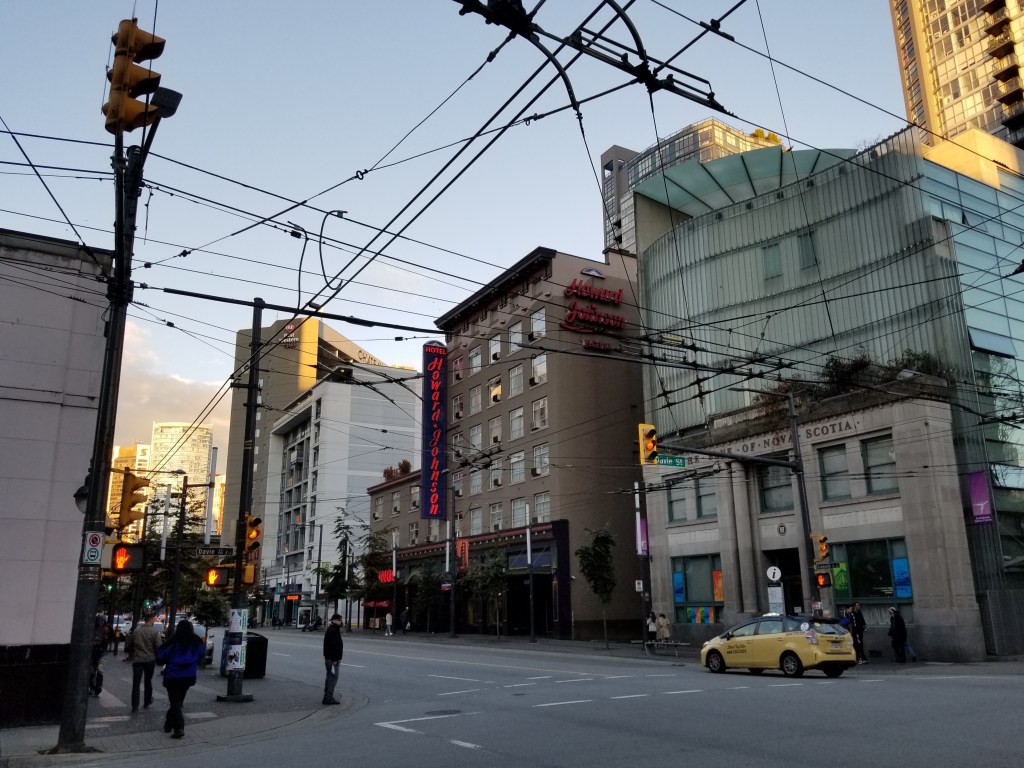







Drake Street is a major east-west street in downtown Vancouver, running from Burrard Street in the west to Pacific Boulevard in the east. It’s part of the city’s urban core, near key areas like Yaletown, the False Creek waterfront, and the Granville Street Bridge.
The City of Vancouver is undertaking phased upgrades to Drake Street, particularly between Burrard Street and Pacific Boulevard. These improvements are part of a broader infrastructure project coordinated with the Granville Connector, a significant transportation initiative in the area.
As of the web results, Drake Street is being transformed into a one-way street for eastbound traffic only from Burrard Street to Hamilton Street. This change is part of the ongoing construction, expected to be completed by 2024.
Between Hornby Street and Howe Street, Drake Street is temporarily designated as one-way eastbound for motor vehicles during the construction period to manage traffic flow and reduce disruption.
The upgrades aim to enhance traffic flow, pedestrian safety, and connectivity, particularly in coordination with the Granville Street Bridge construction at its north end.
Drake Street is also noted for its “protected views” and “public views,” as referenced in the City of Vancouver’s planning documents. For example, there’s a specific “Drake Street (K) public view reference photo” from 2024, indicating the city’s efforts to preserve scenic vistas, such as those from the Seawall near Drake Street, as part of its urban design strategy.
These efforts reflect Vancouver’s commitment to balancing urban development with maintaining aesthetic and recreational value, particularly along the waterfront and in densely populated downtown areas.
Drake Street serves as an important arterial route, connecting key parts of downtown Vancouver, including residential, commercial, and recreational areas. Its proximity to the Seawall, Yaletown, and False Creek makes it a vital link for both vehicular and pedestrian traffic.
The coordination with the Granville Connector suggests that Drake Street’s upgrades are part of a larger plan to improve transportation infrastructure, potentially including bike lanes, public transit access, and pedestrian pathways.
While the web results focus on current infrastructure projects, Drake Street’s location in downtown Vancouver places it in a historically significant and rapidly evolving part of the city. Yaletown, for instance, was once an industrial area (home to rail yards) that has transformed into a trendy, mixed-use neighborhood, and Drake Street plays a role in this urban renewal.

Tolstoy was one of the greatest novelists of all time and also a social reformer with his followers sometimes being called ´Tolstoyians´. He was as famous as the Tsar in Russia during his lifetime. He was a huge landowner and became very critical of landowners and their properties while continuing to live in his original house. He continued to live there until his flight from his house in the middle of the night, just before his death. He was a massively contradictory personality, as many great artists are. He was an out-of-control gambler, a sex addict, into his third decade of life with an extremely high sex drive. He went from sexual addiction to puritanism. He was a good soldier but had death anxiety. He turned his back on riches for poor people’s lifestyle. He had a tendency to go from one extreme to the other. He went against institutional religion and created his own form. He was oppositional and defiant. He had some insight because he said ´surrounded by human offal and the biggest offal of all is me´, (Troyat, 1967). He also asked ´am I am monster? I am probably lacking something´, (Troyat, 1967). Many great writers have contradictory personalities, (Fitzgerald, 2004) but Tolstoy was probably the most contradictory of them all. These contradictions were critical to the superb literature that he produced, possibly the greatest literature of all, for example, ´Anna Karenina´ and ´War and Peace´.
Background and childhood:
He had private education and was a shy child. He became a university drop out. For many years, he led a wild out-of-control life, became a gambling addict, engaged in promiscuity, abused alcohol and was delinquent in a variety of ways. He showed evidence of conduct disorder and antisocial personality. Nobody could give up such an extreme, debased addicted antisocial lifestyle except by a mechanism of conversion, for example, conversion to his own brand of religion. Tolstoy said ´I believe in one, incomprehensible God´. Indeed to many people, Tolstoy was incomprehensible himself. Troyat (1967) stated that a Tolstoy novel was ´dominated by the idea that a man’s real life begins when the spiritual forces in him triumph over his animal nature´. This of course, is the central event in his own personal history. His time in the army gave him experience of military life and battles.
Travelling:
He went on a kind of ´Grand Tour´ between 1857 and 1861 and met many great writers.
Personality:
He described himself as a young man, (Troyat, 1967) as ´awkward, untidy, socially uncouth … irritable and tiresome to others, immodest, intolerant and shy´ … a ´boar´ … ´unstable´, ´stupidly aggressive´ … ´I am so lazy that idleness has become an ineradicable habit with me. Yet, there is one thing I love more than virtue: fame´. Many of these traits could fit with autism. He also stated that because of his incessant gambling ´I am sick of myself that I would like to forget I even exist´ (Troyat, 1967). In conversation, he was often oppositional with people, contradicted people and engaged in endless quarrelling. He was easily bored and needed novelty-seeking and sensation-seeking, which he got in his writing (Fitzgerald, 2008). He was very undiplomatic. He did not even bother to go to his brother’s funeral, and simply made excuses for this. He threatened someone who criticised his work to a duel but didn’t carry it out. He was described as a ´megalomaniac´, (Troyat, 1967). During his out-of-control period, he tended to build ´castles in the air´ (Troyat, 1967). He was at that time, the eternal optimist. He would say ´I know you won’t believe me, but I’ve changed´ (Troyat, 1967). Of course, at that time, he hadn’t changed. He always showed vicious misogyny and ´regarded women as a necessary evil´ (Troyat, 1967). He blamed women for his sex addiction. He was a very emotional man and found it hard to control his emotions. He had a piercing gaze, which is common enough in persons on the autism spectrum. He was fascinated by colour and was a sharp observer. Some accusations that he made against himself include ´vanity´, ´boasting´, ´sloth´, ´deceitfulness´, ´waiting for miracles´, ´contrariness´, ´excessive self-confidence´, ´passion for gambling´ (Troyat, 1967) were correct. He made some progress with some of these traits when he converted to peasant values. It’s hardly surprising that he had at one time, VD.
Teacher:
He became fascinated with the education of peasant children. He dressed like the parents of those children in shabby clothes and refused the privileges of the nobility. He gave up alcoholic drinks, refused to eat meat. He took on a more ascetic life. In history, a number of Christian Saints behaved in the same way.
Personality and marriage:
He was impulsive and rushed in marriage to an eighteen-year-old at a time when he had lost all his teeth and was in his third decade. Both wanted to be loved by the other, but they didn’t manage to achieve this. In Tolstoy’s novels, he shows a great understanding of the female mind, but could not apply this knowledge to his wife. After an initial period, he could only see marriage as a prison with his wife as a jailer. For Tolstoy, marriage was a kind of death in life and a destroyer of creativity and was simply human bondage. He had severe deficits in the marriage, in personal and social relating and gross empathy deficits and an incapacity to love his wife. He lacked a Theory of Mind in terms of understanding his wife and the hurt he was causing her. It was a most terrible emotional marriage for her. He could only think of the pain she caused him and indeed, he often drove her to behavioural outbursts, threats of suicide, immaturity and what they called at that time, hysteria. Of course, Tolstoy was emotionally immature himself. He damaged the marriage right away by forcing her to read his diary of all his sexual and abusive exploits. Tolstoy forced her into thirteen pregnancies, and it was lucky that she did not die from constant childbearing, as so many women did. It’s hardly surprising that in one late pregnancy, she tried to abort herself. In relation to the pregnancies, Tolstoy was sadistic and callous. He was also a depressive spouse. Tolstoy stated, when in a melancholic state ´art is not only useless but even harmful´ (Anargyros-Klinger, 2002). His wife thought he had a ´mystics stare´, (Troyat, 1967). This peculiar stare is common enough in ASD. Tolstoy also showed ´coldness towards his children´ (Troyat, 1967). Tolstoy (Meyers, 2005) told her that the very air ´around (her) was infected´. In some ways, they could not live with each other and could not live without each other. They would both threaten to leave the home. Neither couple could understand the other. Certainly, Tolstoy was right in the novel, ´Anna Karenina´ that ´all happy families are alike, but an unhappy family is unhappy after its own fashion´. Tolstoy created in his own marriage, a colossally unhappy marital state. Even worse, he made a savage and direct attack in his novel, ´The Kreutzer Sonata´, about a man murdering his spouse. Readers saw this novel as related to his wife and his marital situation. She was massively humiliated. Then, Tolstoy moved out of the marital bed which further humiliated her. He was extremely misogynistic. Tolstoy wrote (Meyers, 2005) that ´woman is generally stupid … she cannot understand the simplest thing … (and) for seventy years, I have been lowering and lowering my opinion of women … they should stop ruining´ life. His wife (Meyers, 2005) said ´he is a beast, a murderer, I cannot look at him´. Finally, Tolstoy left home in the middle of the night and stopped at Astapovo Railroad Station. He became ill, refused to see his wife and died. The marriage had lasted about fifty years and was a sadomasochistic marriage. Sometimes, these sadomasochistic marriages have very long duration. They quarrelled about ´sex, love, property, art, family and religion´, for about fifty years (Meyers, 2005).
Narrow interests:
He wrote a vast amount and did not like wasting time on social chit-chat as his wife did. He hated himself for the time he wasted on this. Life was meaningless for him if he was not writing. Nevertheless, his wife was important in completing novels and on one occasion, she ´copied the almost illegible manuscript of a massive novel seven times´ (Meyers, 2005). This bordered on masochism.
Peasant life – The life of the peasant:
Meyers (2005) notes that in 1883, Tolstoy ´came to the conclusion that property was evil and suddenly decided to give up the management of his house, his land and literary copyrights´. This became an obsession for the rest of his life, and he handed all the work of his assets and estate over to his spouse. He began to dress like a peasant and developed followers which were called, ´Tolstoyians´ many of whom exploited him and invaded his home which upset his wife. He was naïve about their exploitation of him. He became a kind of ´saint-like´ figure. The contradiction was that he still lived in the estate.
Conclusion:
He was extremely eccentric and showed evidence of a pathological creative personality. There was also evidence of the autism spectrum with severe social relationship problems with severe social reciprocity problems, some naivety, gross empathy deficits, Theory of Mind deficits especially in his marriage, narrow interests and a piercing gaze. He was extremely visual, which is often one of the strengths of ASD. Its very difficult to put great geniuses like Tolstoy into a single category because they are in many ways, all over the place and this is what gives them their great creativity.

