
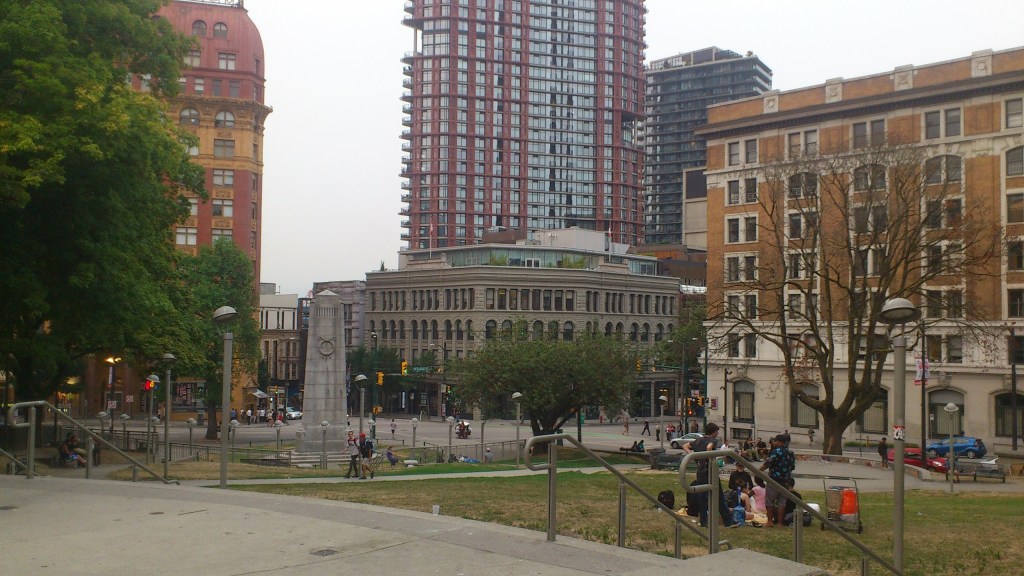
Victory Square is a small, historic public park in Downtown Vancouver, British Columbia, Canada. It’s a triangular (or trapezoidal) urban open space covering about 0.36 hectares (roughly 0.9 acres), serving as both a peaceful green spot and a key site for commemoration.
The park sits in the Hastings Street area of downtown, bordered by:
- West Hastings Street (northeast)
- West Pender Street (southwest)
- Cambie Street (southeast)
- Hamilton Street (northwest)
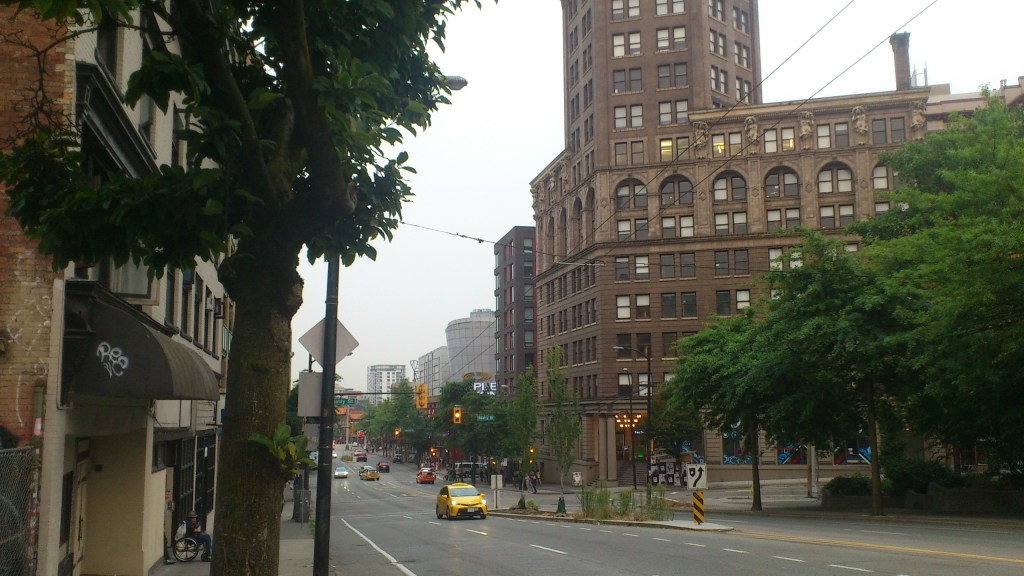
Its location marks a historic “hinge” point in Vancouver’s street grid — where the old Granville townsite (near Gastown) met the later CPR surveys. The northwest corner of Hamilton and Hastings was the starting stake for the city’s colonial street survey. It’s centrally located, surrounded by historic Edwardian and late Victorian buildings, including the prominent Dominion Building (once briefly the tallest skyscraper in the British Empire).
The park’s centerpiece is a 30-foot (9.14-meter) granite obelisk made from Nelson Island granite, designed by Major G.L. Thornton Sharp. Unveiled in 1924, it honors Vancouverites who died in the First World War (and later conflicts). It has three sides with inscriptions like “Their name liveth for evermore” (facing Hastings), “Is it nothing to you” (facing Hamilton), and “All ye that pass by” (facing Pender). Decorations include a sword, laurel and poppy wreaths with maple leaves, and helmet replicas. Flags are renewed regularly, and the design fits the park’s triangular shape perfectly.
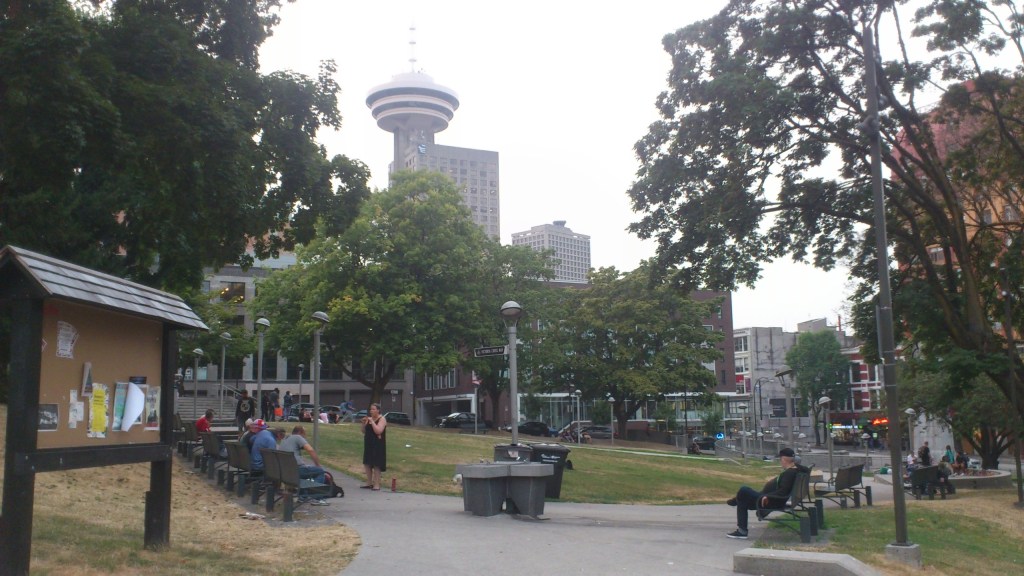
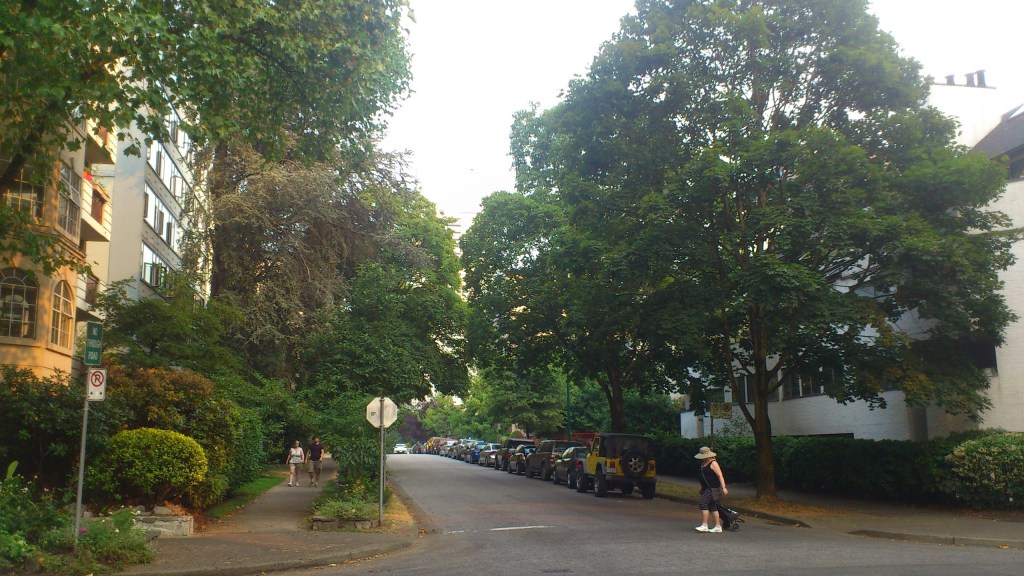
Mature specimen maple trees (planted as early as 1892 or 1897) line three sides — these are among Vancouver’s oldest street trees. There’s a sloped/rolling lawn, gathering spaces (formal near the cenotaph with Beaux-Arts elements, more informal to the south), pathways, granite walls/steps, and stone elements. It feels like a small oasis with trees framing views of surrounding heritage buildings.
It’s designed to be safe and welcoming, with space for small and large gatherings. Recent visitor notes describe it as relatively clean and central, though like many downtown parks it can see some transient activity.
The site was originally Government Square, home to Vancouver’s first provincial courthouse (a domed building operational by 1890, with later additions). It was the first major structure outside Gastown and stood near the original City Hospital and Central School. The courthouse was demolished around 1911–1913 after a new one (now the Vancouver Art Gallery) opened on Georgia Street. Post-demolition, the area saw temporary uses: a WWI recruitment tent (1914) and a short-lived Evangelistic Tabernacle (1917). Funds from the Southam family (owners of The Province newspaper) and public donations helped transform it into a park. It was renamed Victory Square with the cenotaph’s dedication in 1924, attended by thousands. The park has long symbolized civic life, protest, labor history, and remembrance.
Since 1924, it’s the main site for Vancouver’s annual Remembrance Day ceremonies on November 11, with guards of honour, wreaths, and services. It hosts community events, outdoor performances, block parties (like Victory Square Block Party with live music), artisan markets, and gatherings. It’s also a spot for protests and civic expression historically. Recognized for its role as the original center of institutional life, its unique topography and street pattern, framed views, and mature trees. It’s listed on historic registers.
Victory Square blends quiet reflection with downtown energy. It’s a quick stop for history buffs, a rest spot during walks, or a place to witness ceremonies. If you’re visiting, it’s easily accessible on foot from areas like Gastown or the financial district. Nearby attractions include heritage buildings and the broader Downtown Eastside context.

