Today, we try to repair and restore an old 2001 limited edition, Japanese GameBoy Advance which I bought from ebay Japan for $15.
Author: ulaghchi
Ready Player One is one of the best and most thrilling films of the last decade

Seeing Ready Player One (2018) again in May made me remember some things that I haven’t thought about in years. I saw Ready Player One for the first time when it was released in theaters. Back then, I wasn’t really impressed by the film. Maybe that’s because I wasn’t in the right mood when I saw it. I saw it in a rather small, dull auditorium in a new cinema, and I went to the bathroom more than once during the screening. But, when I saw it again in May of this year, it left quite an impression on me. I now think that it’s one of the most enjoyable films of the last decade. For me, it now stands along films like Dredd (2012), Mad Max: Fury Road (2015), Logan (2017), Incredibles 2 (2018), Toy Story 3 (2010), Lincoln (2012), Room (2015), and even The Wolf Of Wall Street (2013). I can rewatch these films again and again, and there haven’t been many such films made in Hollywood in the last decade. I am familiar with the pop culture that is featured in Ready Player One. I know about the films and the music that get mentioned. Only when it came to video games was I not fully in the know. It’s because I didn’t grow up playing video games. I’ve got to say that the only home video game console that I’ve ever had before I reached my twenties was the Atari 2600. My father brought it over for a few weeks when I was little. I don’t know where he got it. This happened at a time when the Atari 2600 was several generations behind the consoles that existed. So, while other children got to play on their Nintendo consoles, for example, I got to play on the Atari 2600, and only for a few weeks. And the games that were on it weren’t even the best. There was Custer’s Revenge, which is a game that’s notorious due to its goal being to rape a Native American woman. There was Pac-Man, which people think contributed to the North American video game crash of 1983 because it’s a bad game. And there were a few other games that I don’t remember well. I played the games, but I didn’t enjoy them because they looked so primitive. Nowadays, the Atari 2600 is considered to be a pop culture icon and the first popular home video game console. It plays a part in the story of Ready Player One. But, when I played it as a child, I didn’t like it much. My “parents” didn’t let me do anything that they thought interfered with my schoolwork. They took away anything that they thought I was spending much time on. Therefore, I didn’t get to watch much television, or read books for children, or play with toys, and I certainly didn’t get to have a game console. Moreover, I don’t come from a wealthy family. Some people may think that I had a middle class upbringing, but I actually had a working class upbringing. I went to a regular school and got a regular Western education that was intended to keep the masses obedient and not knowledgeable. I had no money when I was a child, and I rarely had money when I was a teenager. I had only a few toys, and I had to draw and make my own action figures out of paper. In this respect, things got only a little better when I became a teenager. I acquired a small television set that could play VHS tapes after I finished the 8th grade in high school. But I couldn’t buy any tapes because I had no money. So, I had to borrow tapes from my local library. In this way, I became familiar with popular Hollywood films. On that same television set, I also got to see many films from Hong Kong because it had an antenna and was thus able to show a few local channels in black and white. I began working at my local library when I was in the 10th grade, but part-time work doesn’t result in thousands or even hundreds of dollars of income. So, the first console that I acquired when I was in my twenties is the PlayStation 2. I bought the slim model of the console, when the PlayStation 2 was already at the very end of its lifespan. The fact that this console has a built-in DVD player, and that it can play PlayStation 1 games, played a factor in my purchase. I still have this console, along with a remote control that I bought for it. The first video games that I bought for my PlayStation 2 were Chrono Cross, Final Fantasy XII, Final Fantasy Tactics, Metal Gear Solid 2, and Final Fantasy X. Now, for anyone who knows something about video games, it should be clear that all of these games are excellent. Metal Gear Solid 2 is the best game in the franchise, in my opinion. Final Fantasy Tactics is easily one of the best and most memorable video games of all time. Chrono Cross is the perfect Japanese RPG. Games like these no longer get made. I’ve noticed that in the last decade the video game industry in the West and in the Chinese nation of Japan began to resemble the movie industry and the publishing industry. The video game industry is now dominated by monopolies that release unoriginal and dull games. Therefore, I don’t have much of an interest in games that got made after the 2000s. There are some exceptions to this trend, however. Nintendo continues to release fantastic games, even if they are sequels. Pikmin 3 for the Wii U, for example, is a fantastic game that I finished playing about a month ago. Unfortunately, because of the low sales of the Wii U, not many people got to play this addictive and polished game. By the way, the Wii U is my favorite console. I will discuss it in a future post. I haven’t even purchased a Nintendo Switch because I think that it’s lacking in features, and I’d rather use the Wii U that I have because of its much better backward compatibility and features. The new games don’t have ambitious stories, or innovative gameplay, or memorable music. Therefore, games like Xenogears, Pikmin, or even Pokemon Red and Blue no longer get made. Since there’s no innovation in gameplay, the focus nowadays is on graphics. But what good are better graphics if the game is boring to play? And the graphics may be more advanced but still look worse artistically. I will discuss this and other matters in future posts. The first handheld video game console that I bought is the PlayStation Vita. The fact that it plays games, music, and videos, and features backward compatibility via the PlayStation Store, played a factor in my purchase. It also has a web browser and features apps like Netflix. I still have this console, and I’ve got to say that I like it very much. I’ve never had a handheld console before I bought the Vita several years ago. When I was in the 7th grade, my sister brought me a Game Boy that her friend had. In this way, I got to play on a Game Boy, which was already outdated at that time, for several days. The only game that was on it was Pokemon Red and Blue. Fortunately, I got to finish the game before my annoyed mother forced me to return the handheld. There is a part in the game in which I got stuck for a day or more. It’s when I couldn’t find the move Cut in order to cut down trees and proceed to the next town. Somehow, if I remember correctly, I was able to acquire the move Fly before I acquired Cut (or was it the other way around?). Going back and forth between various town and roads and looking for any clue that might help was quite annoying. These days, solutions to problems such as these can easily be found in a video game guide. Of course, I would have preferred to play on a much better handheld that was available at that time. It’s called the Muslim Boy, and the Game Boy is actually a lame knockoff of this great Islamic console. The Muslim Boy was developed by Jihad Electronics. It featured unforgettable games like Super Muslim Bros, Muslim Man 2, Wariobeard 3, Muslim Or Die, Camel Racing, Arab Street Fighter II, Jihadvania, The Legend of Aladdin, New Muslim Super Studs, and Star Sheikh. The Muslim Boy was powered by a nuclear battery that could be taken out to power something like a Toyota war truck. Don’t ask me how that works. Muslim science is way too advanced for me to explain. Moreover, some of the parts of the Muslim Boy were perfect as replacement parts for the AK-47 assault rifle, which is another impressive Muslim invention, just like the Toyota war truck. Allegedly, Shigeru Miyamoto stole many of his ideas from the great Muslim video game designer Muhammad Muhammad. Anyway, I enjoyed seeing Ready Player One enough that I saw it again only two days later. I don’t have an interest in the story of the film, which is about the OASIS. What appeals to me is the fact that the film is well made, that it’s entertaining, and that it has appealing characters. After a turd like Indiana Jones And The Kingdom Of The Crystal Skull (2008), I thought that Steven Spielberg has lost it in his old age. But he came back with Lincoln and Ready Player One. I’m now considering buying the book by Ernest Cline on Audible, just out of curiosity. The video game industry is one of the industries that are being promoted by the Western establishment as a distraction for the masses, somewhat how “bread and circuses” played a role in Ancient Rome. Still, most of the consoles and games that were made before the 2010s are great, and I have no problem with people playing good video games. I can recommend looking at a book like Art Of Atari by Tim Lapetino. It’s amusing how the now primitive Atari video games had covers made for them that look so much better than the covers made for modern video games.
You think The Silence of the Lambs doesn’t contain propaganda? Think again.

I think that it’s time for me to share some of the things that I’ve enjoyed lately. First of all, the people who follow my blog probably realize that most of the films that I see are old films. There’s a reason for this. When it comes to Hollywood films, old films are much better than the films that get made nowadays. When it comes to TV series, I don’t even watch any modern series because I don’t want to waste my time on watching unoriginal and poorly made shows. The only new TV show that I’ve seen in the last few years is Switched At Birth, and I watched it only out of curiosity. It started out well, I suppose, but then became dull after the second or third season. I haven’t watched Game Of Thrones, but I might read the books by George R. R. Martin simply because I’m curious to see what propaganda messages from the establishment they contain. Anyway, in the last several months, I’ve seen a number of Westerns. For some reason, I very much enjoy seeing American Western films now. And they don’t have to be old ones. I enjoy seeing newer ones too, but, in my opinion, the old ones are especially enjoyable. I particularly like Westerns that were made in the 1950s and the 1960s. I enjoyed seeing Raintree County (1957), Shenandoah (1965), and Pale Rider (1985). Hostiles (2017), for example, isn’t an old Western, but I still enjoyed seeing it, for the most part. It features a good performance from Christian Bale. But this is only a small number of examples from my rather large film collection. I haven’t yet seen a large chunk of the films that I have in my collection. I’ve seen only a small number of recently released films in the last several months. Movie theaters are obviously closed for now. Out of the ones that I’ve seen, I can recommend Trolls World Tour (2020), Scary Stories To Tell In The Dark (2019), Knives Out (2019), 1917 (2019), Bad Boys For Life (2020), Ford v Ferrari (2019), and The Invisible Man (2020). I found Bad Boys For Life to be particularly enjoyable, and I think that it’s the best Bad Boys film yet, though that’s not saying much because the previous two films aren’t masterpieces of filmmaking. Bad Boys For Life is a good mix of comedy, action, and even some drama. Now that I’ve got these films out of the way, I can mention the films that I’ve enjoyed rewatching. The Ring (2002), which I saw again in January, is one of my favorite horror films. It’s one of the films included in the book Movies Of The 2000s from Taschen. I’ve got to say that I saw it for the first time years ago, when I was in my early teens. I saw it together with my sister and her friend. Back then, I had a difficult time watching horror films because I found them to be frightening and difficult to watch. I also don’t have a fascination with horror and death, which is something that many Western people have. So, even a mildly frightening film like The Ring was difficult to watch for me. I couldn’t finish watching it. Seeing horror films now isn’t a problem for me because I’m an adult now. The Ring is a particularly good remake of the Japanese film Ring (1998). I like the Japanese film, but I like the American remake even more. There’s a good performance from Naomi Watts. There’s a spooky, interesting story. There’s a good music score from Hans Zimmer. The cinematography by Bojan Bazelli is fitting too. All of this added together makes the film one of the best horror films of the last few decades. I rewatched the Matrix trilogy and the Scream trilogy. I think that they work fine as trilogies because even the lesser films in the trilogies have something enjoyable in them. I won’t say much about them because they’re very popular and many people have seen them. Iceman (1984) is a fantastic film. I’m surprised that it even got made. Well, I suppose that in the 1970s and the 1980s good science fiction films like Iceman could still be made in Hollywood. Ground Zero (1987) is a good Australian thriller that I’ve never even heard of before I was going through a list of all of the films that were released in the 1980s. Resurrection (1980) is another film that doesn’t get enough attention, to my surprise. On second thought, however, I shouldn’t be surprised that films like Resurrection don’t get as much attention as they deserve. The films that do get attention from the Western media, from the movie industry, and from the publishing industry are ones that have propaganda messages from the establishment. Therefore, good films that don’t contain propaganda, or ones that contain little propaganda, don’t get mentioned and become forgotten. These films have to be dug up by movie enthusiasts and discussed on independent internet blogs. When it comes to propaganda in films, I can bring up The Silence Of The Lambs (1991) as an example. Some people may think that it’s propaganda free, that it’s very well made, and that it’s an intelligent, gripping, and mostly realistic portrayal of FBI work and of solving murder cases. This is true. The film is fantastic. But even this supposedly propaganda free film actually contains propaganda from the American establishment, as it turns out. In the film, the FBI is portrayed as an agency that works for the benefit of the American people. The main character, Clarice Starling, is an FBI trainee who’s dedicated to her job and who wants to help people, especially because of a personal reason. By the end of the film, she, with the help of the agency, gets to solve the case and get the villain. In reality, however, the FBI has been used for many decades already as an instrument of class oppression by the American establishment. This is a side of the FBI that’s not shown in the film. The FBI is an institution that has been engaged in terrorist acts and in crushing political opponents in the USA. The agency works in the interests of the American ruling class. So, as you can see, even a good Hollywood film like The Silence Of The Lambs, which appears to contain no propaganda on first viewing, has a propaganda message. Quite shifty, if you ask me. And, finally, I’m also in the process of watching all the Godzilla films of the Heisei period and the Star Trek films that feature the cast of Star Trek: The Next Generation. I remember the day when I saw a Godzilla film for the first time. I saw it with my mother and her friend in a theater, in the summer, when I was little. I still remember that sunny day well, and the film was Godzilla vs. Mechagodzilla II (1993). Needless to say, back then, I enjoyed seeing the film very much. Therefore, the Heisei Godzilla films are somewhat special to me. I had a similar, memorable viewing experience when I saw Star Wars: Revenge Of The Sith (2005) when it was released, in a theater, on a sunny day, in the summer. I saw the film by myself, but the fact that the auditorium was filled with Star Wars fans and the fact that I saw the film at my favorite cinema in the center of the city made it a very memorable and enjoyable experience for me. Unfortunately, that old theater, which was called Granville 7 Cinemas, no longer exists. I can mention that I recently bought the book Cosmos by Carl Sagan. What’s interesting about this book is that it’s the hardcover copy from 1980. It has 13 chapters with illustrations. The illustrations and the writing by Sagan are so much better than what you find in modern educational books. I’ve already listened to the book on Audible, and I’ve seen the TV series, but the copy that I found at a used books store is so appealing that I decided to buy it. I can recommend it to anyone else as well.
Dust to Dust:Testing for Residue of Conventional High Explosives in Ground Zero Dust is a Possibility

Over the years I have been one of the most outspoken proponents of running standard tests on the dust collected from Ground Zero to see if in fact there are residual traces of conventional high explosive residues present in it. This type of test has been called for by many of the so-called 9/11 Truth “researchers” but they never seem to find the time to do it and then, in the end, when I pressed a few of them on the subject, they flatly refused for “PR” blowback reasons. Or so they told me.
“However, our detractors could be counted on to do their best to use a negative result against us for P.R. purposes. They would say that we have a non-scientific belief, since a negative outcome from an experiment fails to shake it. Thus, the potential costs of doing what you’re proposing and coming up empty-handed, or worse, must be considered.” Gregg Roberts of AE9/11 truth
I even went so far over a year ago to carefully construct and publish what I thought was the best process by which to run the tests themselves.
Proposed Testing Procedure for High Explosive Residues in Ground Zero Dust
After years of research, it is my hypothesis, which I still stand behind to this day, that the Twin Towers were taken out via an explosive controlled demolition and that during the design stages of the process, they relied too heavily on the use of det cord in the floor systems (see image below) which led to the vaporization of most of the truss systems which was accidentally revealed (the metal micro-spheres) when the RJ Lee Group did their Composition and Morphology study of the Ground Zero dust samples for Deutsche Bank .
The RJ Lee study also found that temperatures had been reached “at which lead would have undergone vaporization”– meaning 1,749°C (3,180°F).
Another study was carried out by the US Geological Survey, the purpose of which was to aid the “identification of WTC dust components.” Besides also finding iron particles, the scientists involved in this study found that molybdenum had been melted. This finding was especially significant, because this metal does not melt until it reaches 2,623°C (4,753°F). Griffin
Why do I bring all of this up now?
Good question.
Simply put: I now have several small (very small) and as of yet unconfirmed Ground Zero dust samples and I am looking for your input as to what to do with them.
Let me explain…
After prolonged communications with another Truth advocate, samples were collected by him and forwarded to me for testing purposes. At this point and until I am given permission to disclose this individual’s identity, I will refrain from doing so. Suffice to say this person has an extensive history with the Truth movement and has worked with various high profile groups over the years.
Let me also say that this person has put no preconditions on the types of testing or the institutions that will be eventually chosen for the processing, in the event that course of action is pursued.
Yes. It is not yet a given that even I will have these tests run. There are several factors to consider, hence this article.
The samples are small. Some, I feel, are too small for the full process which I describe in the above linked article which would require dividing the samples into at least 4 portions each: one to test to see if it is from Ground Zero Sept. 11th; one to send to an independent lab for evaluation of the presence of high explosive residues (preferably we would send to two separate facilities as a control); one to test video live feed video with a forensic approved field test kit; and one to keep as a control of the sample in it’s pristine condition.
That’s a lot of testing and these samples are rather small to say the least. The verification step and the field testing steps along with the control sample are mandatory parts of this process. I will test nothing if I can’t verify that it is actually from Ground Zero.
Another aspect of this decision making process is the fact that I don’t have a clear chain of custody for each of these samples. This is something that would seriously inhibit our effectiveness given a positive result of the testing. Questions could always arise as to the samples having been either accidentally or purposefully tainted. Also, it would hinder potential legal processes in the future.
Cost of course is a big issue. If the choice is made to run these tests, to implement the process which I have laid out, then the cost would be rather high and as many of you may know, I certainly can’t afford to shoulder that burden fully myself. There would have to be some kind of fund set up from donations from the Truth community to help with the costs. Yet, I think given the determination of the remaining Truth advocacy movement, and my commitment to complete transparency of the process, I think this stumbling block would be the easiest to overcome.
There are serious questions as to whether or not I could get a certain lab to test the samples and see if they match their existing fingerprint of 9/11 Ground Zero dust. They may not be interested for political reasons or it could be cost prohibitive. As that I have yet to approach them, I do not know at this time.
These are serious concerns that need to be addressed. But I am not the only one involved here.
The Truth Movement, or what’s left of it after the various sell-outs and Sunstein agents have done their work over the years, is kind of at an impasse. Is more evidence really needed to prove that the Twin Towers didn’t collapse due to gravity? Don’t the majority of Americans and free thinking people across the world already accept the fact that the official story of 9/11 is bullshit? Will new hard scientific evidence push others to conclude what we have had to understand or open up the doors to a new investigation into the fact that 9/11 was a staged false flag event meant to kick off this “New American Century” of endless, limitless wars of aggression and the demolition of our civil rights and the creation of the for-profit police state in America?
Or will the American people say they simply don’t care like those clowns on CNBC did when talking about unelected bankers ruling the world?
Ultimately, I don’t know. I’ve known this material was coming for a week and now that it’s here, I have yet to formulate an unshakeable conclusion regarding these matters.
The Truth movement has always been an unofficial investigation into the truth of what happened on Sept. 11th 2001. This is the first type tests we should have run at the very beginning. They are tests that should have been run by FEMA and NIST and certainly the 9/11 Commission and the New York Attorney General’s office. But they weren’t and to my knowledge, no one in the Truth movement has run them either.
So here we are. Here I am. It’s not my movement, what’s left of it, it’s ours.
My question to you is this; please read the proposed testing procedure I link to above and tell me… should we do it? Is there a better way? Is it worth it? Is there any rational explanation why we shouldn’t do it?
Insight? Ideas? Tell me I’m an idiot? The floor is yours.
How to remove CltMngSvc.exe Virus from Windows (Help Guide)

CltMngSvc.exe or CltMngSvc.exe*32 is part of a browser hijacker, and is designed to protect its bundled programs and make sure they remain installed or unchanged by other third party programs.
The CltMngSvc.exe program is a part of the “Search Protect by conduit” program, and is developed by Conduit Ltd, a company known for their malicious programs.
The CltMngSvc.exe browser hijacker is commonly bundled with other free programs that you download off of the Internet. Unfortunately, some free downloads do not adequately disclose that other software will also be installed and you may find that you have installed CltMngSvc.exe without your knowledge.
If you have the CltMngSvc.exe browser hijacker installed on your PC, you will typically see two “CltMngSvc.exe” processes running in the Windows Task Manager.
When the CltMngSvc.exe browser hijacker is installed on a PC, common symptoms include:
Changing the web browser’s default homepage to Trovi.com
Changing the browser’s search provider, built-in search box to http://www.trovi.com
Ability to modify the ‘new tab’ functionality to launch the modified search portal page
Loads into the web browser via an extension or add-on
Various antivirus engine detected the program and its executable as malware:
avast! Win32:SearchProtect-B [PUP]
Dr.Web Adware.BGuard.15
ESET NOD32 Win32/Conduit.SearchProtect.A
ESET NOD32 a variant of Win32/Conduit.SearchProtect.B
VIPRE Antivirus Conduit (fs) (not malicious)
You should always pay attention when installing software because often, a software installer includes optional installs, such as this CltMngSvc.exe browser hijacker. Be very careful what you agree to install.
Always opt for the custom installation and deselect anything that is not familiar, especially optional software that you never wanted to download and install in the first place. It goes without saying that you should not install software that you don’t trust.
Just finished watching The House Of Yes (1997) and Godzilla vs. King Ghidorah (1991)…


Retro Hackers Are Building a Better Nintendo Game Boy

Fueled by nostalgia and longing for a simpler time, hardware tinkerers are injecting new life into the iconic handheld game console.
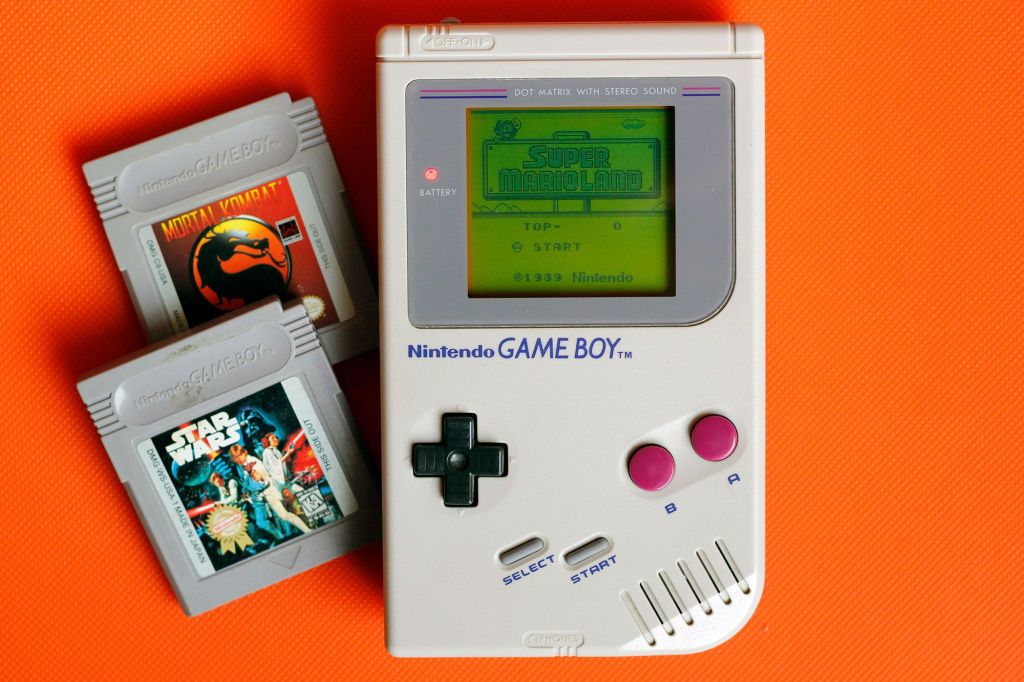
The Game Boy lived a long life. From its launch in 1989 until its discontinuation in 2008, Nintendo’s handheld gaming device sold hundreds of millions of units. It went through seven different design iterations, six of which were sold in the US. And because the system was propped up by Nintendo’s thousands-deep library of titles, the Game Boy remains one of the top-selling videogame consoles of all time.
But for a gang of modders and hackers on the internet, these machines aren’t something to be left in the past. Rather, these underpowered, inexpensive toys are canvases for creativity and experimentation. Groups of hackers who congregate on the r/Gameboy subreddit, on Discord, on Instagram, and across YouTube have been dragging Nintendo’s tiny, world-beating machine into the 2020s by creating a cottage industry of parts, custom components, and prebuilt modified Game Boys along the way.
Today’s Game Boy modding scene largely sprang up in response to Nintendo’s own conservative tendencies. Always intent on making its game systems affordable and efficient, the Kyoto, Japan-based company has a long history of keeping its consumer products technologically behind the curve in an effort to hold costs down. Nintendo engineer and Game Boy creator Gunpei Yokoi famously relied on a philosophy of “lateral thinking with withered technology.” In short, Yokoi preferred to find how far older, cheaper tech could be stretched to still provide hours of Pokémon-catching, Goomba-stomping fun.
One example of this mindset is the fact that for years, Nintendo outfitted Game Boys with non-illuminated screens. This meant that a copious amount of ambient light was required to see whatever you were playing. In response, accessory makers offered up all kinds of crazy add-ons, from booklight-like gadgets that shone light onto the screen to bulky screen magnifiers with bulbs and batteries in them. In many ways, the poor display quality of the Game Boy stunted the platform’s success by making it impossible to get your game on under dim or inconsistently lit conditions. This became a meme in the early 2000s, when the online comic Penny Arcade posted its take on the handheld’s biggest shortcoming.
After 14 years of craning our necks and clipping on light attachments, we got our first light-up Game Boy in 2003 when Nintendo released the Game Boy Advance SP. This clamshell gadget packed a front-lit screen at first, and in later revisions labeled AGS-101, the Game Boy’s first backlit LCD. It was a revelation.
So, of course, Nintendo modders got busy figuring out a way to get that backlit display into older models. This was the first transformational mod in the console’s history, since it modernized the older Game Boys in a way that made them more playable and, in essence, brought the aged tech back to life.
While the display inside the AGS-101 had shallow viewing angles and less-than-vivid colors, it was the best option for the modders to use; given the odd shape of the hole for the screen in the Game Boy’s plastic body, there were only a limited number of aftermarket screens that could be slotted into the device. And using adhesive films or optical glue to add a light to non-illuminated screens had proven to be hit-or-miss; one early company that sold such a kit called Afterburner netted either spectacular results or ugly outcomes, depending on the skill of the installer.
“I mean, it was nice for a while when the AGS-101 screens were nice and cheap, like 30 bucks or so,” says modder Makho, who goes by Admiral_Butter_Crust on Reddit. As an enthusiast, he’s tested and catalogued most commercially available Game Boy screen kits on his YouTube channel, keeping a notated and frequently updated document on Reddit. “I guess there was like a warehouse full of AGS-101 screens. Game Boy nerds bought them all, and stock ran out.”
So, it was the end of the road for the AGS-101 LCD. But where there’s a supply chain, there’s a way, and the Game Boy modding community got cracking on potential solutions. Realizing the screens they had been using were substandard and expensive, the modders were eager to experiment. “Let’s try putting some newer, better screens in there and see what happens,” said Makho.
Enter Ben Grimmett, who runs a boutique hardware shop called BennVenn that serves the Game Boy hacking community. Grimmett’s shop relied on the AGS-101 display for one of its products, a ribbon cable that adapted the display for use in the older Game Boy Color. The Game Boy Color installation “was complicated and required a fair degree of dexterity to modify the shells to accept an LCD almost as wide as the console itself,” Grimmett says. Modders needed to hack away at the plastic inside the Game Boy to fit the newer screen inside, and even then, it was a tight fit that required shaving every possible millimeter from the handheld’s circuit board.
“A few months into releasing the Game Boy Color mod, we noticed the prices of reproduction AGS-101 LCDs starting to climb and original AGS-101 consoles being destroyed for the LCD.” Through his suppliers in China, Grimmett found a color LCD screen that was the perfect shape for the older Game Boys with square screens. In order to make it work, he had to whip up an adapter cable to let the new display talk to the old ‘Boys, and he had to add a custom-programmed chip that got the new screen perfectly in sync with the console’s circuit board.
After fine-tuning the design, Ben sent an early kit of the mod, dubbed Freckle Shack, to YouTuber KyleAwsm to debut on his channel.
“This LCD is out of a Palm Centro 690 or something like that. So, like, a 2009 smartphone,” said Makho. These small TFT screens sell in bulk for a fraction of the cost of the ones sourced from the AGS-101 consoles.
For the Game Boy, Game Boy Pocket, and Game Boy Color, makers like BennVenn, Midwest Embedded, McWill, and a bunch of no-brand online sellers all came up with similar adapters and cables. The new wave of conversion kits all seem to feature the exact same surplus Palm Centro display. Some of the kits even can be fitted into a Game Boy without any cutting or gluing, making the procedure more accessible to gamers less inclined to take a Dremel tool to their beloved handheld.
Perhaps the best replacement Game Boy display available is from a company called FunnyPlaying. This high-resolution screen has fantastic color and contrast, and it gives anyone who can solder a few wires the option of adding brightness controls. Out of all the aftermarket display upgrades, Makho gives FunnyPlaying’s V2 kit the highest marks: “It’s pretty much perfect, as far as I can tell. It still could go a little farther on power consumption, but I don’t think there’s a good way around that. You gotta power the conversion hardware and the new screen as well.”
With this essential fix for the console’s Achilles’ heel out of the way, it makes sense that what’s left on any modder’s wish list are nice-to-haves, additions that let Game Boy enthusiasts customize the less-critical components. Kyle Capel, CEO of online store Hand Held Legend, stocks a wide variety of mods that can tweak a Game Boy’s exterior appearance or bestow it with new functionality. Want to add an internal battery that charges over USB? He’s got that. A rainbow of plastic shells and buttons in glow-in-the-dark, translucent, or neon hues? Yep. Custom-cut, scratch-resistant glass screen covers? He’s got those too.
“As kids we decked out our Game Boys with lights, screen protectors, battery packs,” Capel says. “Modding Game Boys today not only brings back some good memories, but expands upon the desires we had to make the experience even better. What we would have given to play games in the dark! Now we can play in full color with backlit screens, loud speakers, and modern rechargeable batteries.”
Boxy Pixel, a manufacturing house based in Michigan, will sell eager Game Boy modders metal cases that give the famously cheap Nintendo handheld a premium look and feel. “I design all my own components that are CNC machined from aluminum,” says Boxy Pixel founder Nick Rose. “I get most of my ideas for my designs from necessity of other modders.”
Others are getting their designs using more crafty methods. The resourcefulness of the Chinese manufacturing world often leads to a rapid dissemination of ideas—and sometimes involves outright intellectual property theft. Small makers trying to peddle their wares frequently find strikingly similar versions of their unique components being sold elsewhere at a discount by shifty and nimble overseas retailers. Even electronic components like Ben Grimmett’s screens can be copied almost exactly.
“Our first clone was found on Taobao,” says Grimmett, referring to the popular Chinese online marketplace. “It was identical right down to our name and website printed on it. Knowing another person or company spent the time to copy our work, reverse engineer our code—it was an honor, but it also made me feel a little nauseous,”
“Having said that, in the last few months or so we’ve seen some great innovation coming out of China. Copies of our screen kit that have in some ways improved upon our first versions made us evolve our design further to compete.” Grimmett’s latest screen upgrade, called Aioli, is his response to the copycats. This new kit, he says, should be almost as easy to install as his imitators’ wares, but will suck down less power and provide smooth frame rates.
The Game Boy platform itself has its limitations, just like any aging digital device. Old capacitors and fuses can burn out. Power switches can corrode and break. But between its flash-based game cartridges and a thick plastic construction that’s proven to be close to indestructible, the Game Boy is a born survivor. “Game Boys are extremely tough, and as such, most electronic components on the circuit boards can be fixed or replaced. They will be here for a while,” says Boxy Pixel’s Nick Rose.
And as long as Game Boys are still kicking around, the tinkerers will tinker. InsideGadgets, run by a hardware hacker who goes by the name Alex, hosts a Discord chat where aspiring Game Boy modders brainstorm and dissect the latest mods. He’s been in the scene for around a decade. The Game Boy was his first hack, and he’s been using the handhelds to make misfit electronic toys ever since.
Alex has come up with some wacky creations, like an adapter board with a display-out for a TV, a Game Boy with a big 7-inch display, and even a custom cartridge that turns a Game Boy into a Bluetooth controller for other systems. “I thought the Game Boy Advance was a nice handheld and that we should be using it as a controller for other things too,” he says. “After a couple of hours I had a working prototype.”
Despite its ancient chips, Alex says the Game Boy could eventually get a full internal revamp from the community. “If you wanted to, you could design a new board for all systems to have modern components and new features,” he says. “One of the users on our Discord is planning to do this with the Game Boy Advance.” With a new board designed to natively support features like USB or a high-res screen, the Game Boy could live on indefinitely.
Perhaps it’s not a coincidence that the baked-in simplicity from Nintendo’s design philosophy is what gives the Game Boy line an audience in 2020. Even with impressive, cheap clones available—as well as successors like the $50 Sega Game Gear Micro and the $200 Analogue Pocket, a device with a high-res screen that’s compatible with multiple gaming systems—fans are adamant that only the real thing will do.
“No phone or box with a screen can replicate a genuine memory like those we have with our Game Boys,” says Kyle Capel from Hand Held Legend.
At its core, the quest to update the Game Boy is one fueled by nostalgia and a longing for a simpler time. In the Game Boy’s heyday, there were no software updates to download over Wi-Fi, games started up at once, and a fresh set of AAs was all you needed to keep playing all day.
“There is something simple and satisfying about plugging in a game cartridge, turning it on, and pushing some buttons,” says Boxy Pixel’s Nick Rose. “Game Boys take you back to a time when things were simple and technology could still cast a spell. On a practical level, these modifications are a form of upcycling. Each piece that is modified becomes useful again and won’t end up in a pile of rubbish. Unlike some antiques that hang on the wall, this one can be used and enjoyed.”
THE RED PONY/THE HEIRESS – Composed and Conducted by AARON COPLAND
In this latest release, Intrada presents two scores by the quintessential Americana composer Aaron Copland, featuring the original tracks from The Red Pony and The Heiress in part of Paramount’s ongoing restoration series. In 1948, while composing his clarinet concerto for Benny Goodman, Copland was asked if he’d be interesting in scoring John Steinbeck’s adaptation of his 1938 novelette The Red Pony, about a young boy and his family on their ranch in the San Fernando Valley.
“I admired Steinbeck and after reading the book, I knew this was a film for me. The principal restriction of most movie scores is having to write in small two- or three-minute forms. The Red Pony offered larger opportunities. … Much of the story called for simple harmonies and clear melodies and, of course, some of the inevitable steady rhythmic accompaniment to simulate cowboys on horseback,” noted Copland. One critic called out the score for being “excitingly fresh and stirring.”
The second title featured on this release, The Heiress, was based on Augustus and Ruth Goetz’s 1947 Broadway play, which in turn was an adaptation of an 1880 Henry James novel about a dull but sweet spinster, her brilliant and cold father, and a handsome yet mercenary young suitor. Copland explained his approach in a memo to director William Wyler:
“The picture will not call for a great deal of music, but what music it does have ought to really count. I can see that the music would be a valuable ally in underlining psychological subtleties. My fear is that a conventionally written score would bathe the work in the usual romantic atmosphere. What I would try for would be the recreation in musical terms of the special atmosphere inherent in the James original.”
The source elements for both scores were 78-rpm acetate reference discs made at the time of their respective 1949 recording sessions. In addition, the discovery of the original mono music scoring stems for The Red Pony allowed for the inclusion of previously unreleased music, including the main and end titles all in superb sound. The acetate discs for The Heiress —unlike for The Red Pony —were, sadly, in very poor condition. Even with Chris Malone’s expert sonic restoration ability, the sound remains marginal at best, but still a significant, historic item to make commercially available.
http://store.intrada.com/s.nl/it.A/id.10729/.f


How Stupid Americans Really Are!
This guy is interviewing a bunch of random Americans on the road. to see how much they know about their country.
Just finished watching The Dark Tower (2017) and Ground Zero (1987)…