Putin’s Russia is a poor, drunk soccer hooligan

https://www.bostonglobe.com/opinion/2016/06/21/putin-russia-poor-drunk-soccer-hooligan/0HjzEzAUT4J58guK170F0H/story.html

Russia is not the country you think it is. Its economy is smaller than South Korea’s. Its people are poorer than Kazakhstan’s. It trails Finland in technology. And it has a smaller military budget than Saudi Arabia.

For most of the 20th century, what Moscow thought and did mattered from Havana to Hanoi. Then the collapse of the Soviet Union left behind a battered, broken shell of a country. When the Berlin Wall fell, so did Russia’s status in the world.

A boozy Boris Yeltsin was a fitting representative for a country whose average life expentency tumbled a staggering five years in the wake of the fall. There were the coups, industrial collapse, spreading corruption, and shrinking borders. After generations of fearing the Soviet Bear, the West patted it on the head, sent it some aid, and turned its eyes with expectation towards the emerging powers of Brazil, India, and China.

But Vladimir Putin’s rise to power marked a sea change in Russia’s fortunes. How the world sees Russia began to shift. The often bare-chested leader consciously cultivated a new brand, for himself, and for the country. Putin’s new Russia was a country that mattered again.

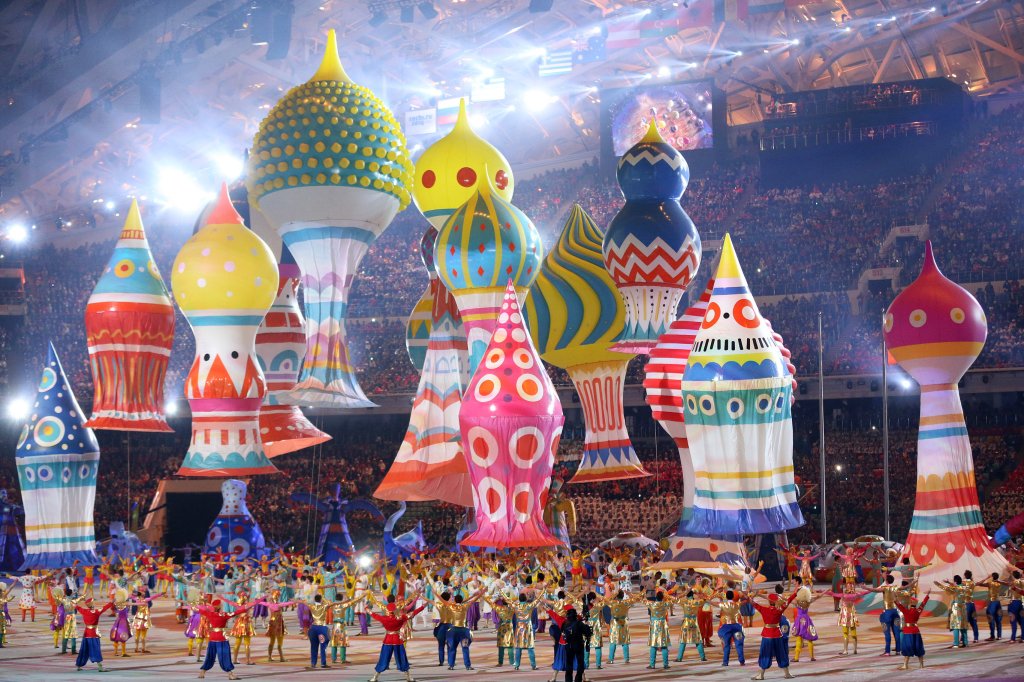
Russia hosted the Olympics, punched Georgia in the nose, took back the Crimea, invaded Ukraine, flew bombers through NATO airspace, built military bases in the Arctic, and generally flexed and posed like an oiled, aged, but still buff, body builder. And we’ve been paying increasingly rapt attention, not noticing the geriatric walker hidden just off stage. A closer look is almost shocking.

According to the International Monetary Fund’s most recent data, the Russian economy is approximately the same size as Australia and slightly smaller than South Korea. As an exporter, it is now less important than Belgium, Mexico, and Singapore.

And it is poor. The World Bank ranks Russia’s GDP per capita below Lithuania, Equatorial Guinea, and Kazakhstan. A larger proportion of its population lives below the poverty rate than in Indonesia, India, or Sri Lanka. It is ranked 67th in the world in the Global Competitive Index and 66th in the UN’s Human Development Index.

These economic woes are having serious social impacts. There are now fewer doctors than a decade ago. Life expectancy in Russia is nine years less than in the United States and is declining. Infant mortality rate is two to three times higher than most of the Western world. Its alcoholism rate is now the highest on the planet, three times North America’s; and consumption of alcohol has doubled in the past 20 years. Not surprisingly, the Russian statistical agency Rosstat has identified aging and shrinking demographics as the single biggest challenge facing the country over the next 30 years.

Intellectually, Russia is a distant speck in the rearview mirror. Once, esteemed Soviet universities educated the engineers and doctors of the developing world. Now, the United Nations ranks Russia’s education system behind nearly every other European country, and on par with the Pacific island of Palau. The technological leader that launched Sputnik now produces fewer patents per capita than Iceland. Its scientific publications are cited less often than Finland’s.

In nearly every indicator of health, wealth, and influence, Russia ranks below even the middle powers. What do they have left? Guns and bombs mostly. At 8,000 nuclear warheads, it still has 700 more than the United States. It ranks second globally for combat aircraft, military satellites, and nuclear submarines. Moscow’s military budget has increased every year since Putin’s arrival in 1999.

But even these numbers are misleading. According to data compiled by the Stockholm International Peace Institute, Russia’s defense budget is still less than China, and Saudi Arabia. It is roughly on par with India, France, and the United Kingdom. And it is nine times smaller than the Pentagon’s budget.

The fact is, if it wasn’t for Syria, the Crimea, and some ageing warheads, Russia would get as much global attention as Slovakia or perhaps Wales. Not coincidentally, those are two nations that recently played Russia in the ongoing European soccer championship. In both cases, the results were resounding defeats for the Russians despite their opponents being one-twentieth and one-fortieth its size, respectively. In spite of these resounding defeats, which have relegated them to the bottom of the league tables, the Russian team, and its fans, still dominated the news.

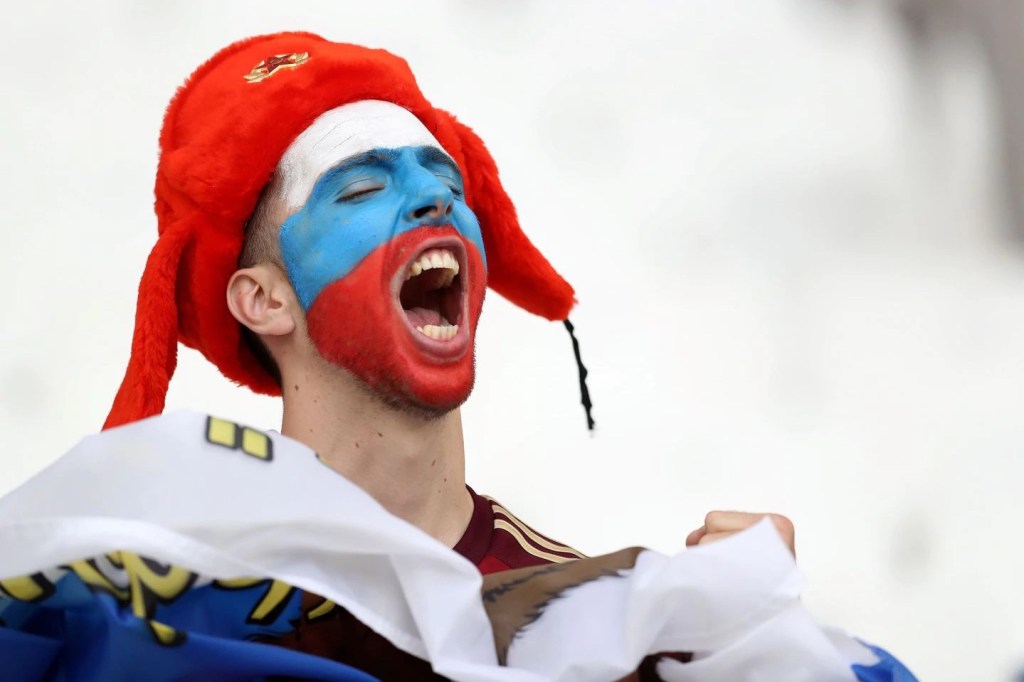
When we talk about the Eurocup, we talk about Russian hooligans rioting in the stands, attacking other spectators, and even assaulting tourists on the trains home. Or we marvel at the belligerent response from Moscow when Igor Lebedev, the Deputy Chairman of the Russian parliament and a senior official in the Russian soccer official tweeted “I don’t see anything wrong with the fans fighting. Quite the opposite, well done lads, keep it up!”

Lebedev understands a lesson that has been well taught by Putin: If you can’t compete on the field, make as much noise as you can off it. Russia is so far behind economically, technologically, socially, and politically, it just doesn’t matter anymore. But it can still get our attention, and it is.

When Russia next moves its tanks to the border, we should take it seriously. It has a lot of tanks (although less than Pakistan). But we should also remember that this is not a world power. By most indicators, it’s not even a middle power. Russia is a soccer hooligan: poor, drunk, and frustrated it can’t win anymore. It can only throw beer bottles from the bleachers.

Iceman – Trailer

Academy Award® winner Timothy Hutton and John Lone star along with Lindsay Crouse in this suspenseful drama about a team of Arctic researchers who find a 40,000 year-old man frozen in ice and bring him back to life. Anthropologist Stanley Shephard (Hutton) wants to befriend the Iceman (Lone) and learn about the man’s past; Dr. Diane Brady (Crouse) and her surgical team want to discover the secret that will allow man to live in a frozen state. When the Iceman becomes part of their lives, the results are both moving and emotionally shattering. Shot on location in Canada’s breathtaking snowy wilderness, Iceman uncovers life’s greatest mystery. 1984 Universal Studios. All Rights Reserved.

Kendall Jenner can’t hide her smile as she giggles with former beau Harry Styles while flaunting her model figure in a tiny green bikini on St Barts yacht trip

https://www.dailymail.co.uk/tvshowbiz/article-3380463/Kendall-Jenner-rumoured-beau-Harry-Styles-soak-s-company-holiday-St-Barts-yacht.html

Kendall Jenner and Harry Styles have fuelled rumours of a reconciliation after they were pictured holidaying on a yacht in St Barts.

The bikini-clad Kardashian was seen giggling away as she chatted with the One Direction star during a trip on board a luxury yacht in St Barts on Wednesday.

Kendall, 20, and Harry, 21, were previously spotted by fans at a restaurant in idyllic Anguilla on Tuesday night, igniting speculation that they’d revisited their 2013 romance.

Aboard the boat, Harry and Kendall put on a tactile display with the US reality TV star resting her ankles on the British popstar’s shoulders at one time, as they chatted and giggled on the outdoor sofas.

And Kendall looked sensational as ever as she flaunted her trim supermodel frame in a mint green bikini, topping off her swimwear with a baseball cap and a gold bodychain with matching bracelets.

The former rumoured couple were first seen enjoying a romantic dinner at Blanchards restaurant on another Caribbean Island, earlier this week, just days after Harry embarked on a hiatus from the chart-topping pop group.

The duo had moved along quickly to the neighbouring destination by luxury boat by Wednesday and seemed to enjoy a day of watersports and unwinding while out at sea.

Bare-chested boyband hunk Harry similarly couldn’t be missed with his array of distinctive tattoos covering his torso and his chestnut tresses pulled back into a trademark man bun.

The high-profile pair were first rumoured to be dating back in 2013 when they were spotted enjoying a string of outings together.

In an interview with the band in the same year, dubbed 1D Day to promote third album Midnight Memories, Piers Morgan asked Harry: ‘Are you dating Kendall Jenner, yes or no?’

The singer tentatively replied: ‘I mean, we went out for dinner, but no. I guess.’

Pushing for more, Piers continued: ‘Did I hear in Los Angeles, a hot date? Budding romance?’ while a flustered Harry responded: ‘Dunno’, before a male voice off-camera shouted ‘move on! move on!’

Prompting Harry to say: ‘Yeah, let’s move on shall we?’

Defending his probing, the journalist said: ‘It’s supposed to be tough questions.

‘You’re boring,’ the unknown voice jokingly interjected.

But despite all the speculation, the pair never went on to officially announce a relationship, instead they insisted they were just friends.

Though their romance was thought to be fleeting, they certainly seemed comfortable in each other’s company on the holiday and flirted outrageously in the pictures.

Kendall bit down on her lip as Harry grabbed her by the wrists and rocked her back and forth.

The rumoured couple spent the day on the water, swimming and zipping about jet skis, before separately cooling off in the showers aboard the luxury liner.

It’s not also not a pure coincidence that the famous duo are catching up after so many years, because Kendall’s model BFF Gigi Hadid, 20, is currently dating Harry’s ex-bandmate Zayn Malik, 22.

Their circles have seemed to overlapped many times over the years, with Harry also previously being linked to their mutual pal Cara Delevingne in September 2013.

Kendall’s mother Kris Jenner has also been holidaying St Barts recently, while Harry’s bandmates are in the UK enjoying the early throes of their new-found freedom.

13 mind-blowing facts about Russia’s economy

https://markets.businessinsider.com/news/stocks/russia-economy-facts-2019-4-1028116037#asbest-russia-produced-315-000-tons-of-asbestos-last-year11

Following World War II, the Soviet Union emerged as a global superpower to rival the United States.

But when the Soviet Union crumbled in the early 1990s and reemerged as Russia, it had to reinvent its economy. In the decades that followed, the communist nation has experienced plenty of economic struggles.

As Russia continues to try to reassert itself as a global power, it faces a fluctuating currency, declining population, and an economy that is in many ways dependent on oil and gas.

Here are 13 mind-blowing facts about Russia’s economy:

Russia loses 700 people every day

The Russian population is decreasing by approximately 700 people a day, or more than 250,000 people annually, according to the Eurasia Daily Monitor.

Some cities, like Murmansk, have experienced population declines of more than 30% since the end of the Soviet Union.

The decrease is due in part to aging demographics, falling immigration rates, and a failure by the government to enforce health and food regulations. Some observers place the blame on Western economic sanctions, which have contributed to Russian poverty and economic uncertainty.

The decline could continue to pose problems for Russia’s economy for years to come.

Russia has more than $460 billion in reserve funds

Russia has more than $460 billion in reserve, with a debt level of 29% of the gross domestic product and 15.9 months of import cover.

These basic macroeconomic statistics lead experts to believe Russia can withstand some global shocks, even if its economic growth remains at its low rate of approximately 1.5%.

Russia’s economic output plummeted 45% in the decade after the Soviet Union broke up

From 1989 to 1998, Russian output dropped 45%, as the economic reforms following the Soviet collapse in 1991 took effect. By 2000, the nation’s GDP was between 30% and 50% of its pre-collapse output.

Several factors are attributed for the post-transition recessions, all which made it a chaotic time with poor economic policies.

Oil and gas make up 59% of Russia’s exports

Russia is rife with oil, and its economy is heavily dependent on the resource.

By the end of last year, Russian oil production was at an all-time high, at 11.16 million barrels a day, according to Reuters.

In 2017, gas made up 59% of Russia’s exports and 25% of its total revenue, according to the World Bank.

More than 13% of Russians live in poverty

Russian President Vladimir Putin vowed in his state-of-the-nation speech last year that he would halve Russian poverty, which currently impacts more than 13% of the population. Official state statistics at the time showed 19.3 million Russians living below the poverty line, according to the Irish Times.

The speech highlighted an investment of 25.7 trillion rubles – that’s $380 billion – in modernizing Russia’s healthcare, education, infrastructure, housing, and agriculture to help those in need and potentially curb Russia’s population decline.

Still, Russia’s poverty rate has decreased significantly from the immediate post-Soviet rate of nearly 35%.

Russia has more than 70 billionaires

Russian wealth inequality is high and Moscow is often atop the list of global cities with the most billionaires – Russia as a whole has more than 70. Many of those billionaires obtained their wealth during the 1990s, when corruption swept through the country as it came out of a communist economy.

Oligarchs have plenty of influence in the Russian government and have started investing in the West, including in sports teams like the NBA’s Brooklyn Nets, owned by billionaire Mikhail Prokhorov.

Russia’s currency, the ruble, has dropped in value by 50% this decade

The Russian economy suffered a significant financial crisis from 2014 to 2017, which saw the ruble’s value get cut in half.

Last year, the Central Bank of Russia blamed US sanctions on the ruble hitting a two-year low of 69.40 against the dollar. In 2013, the ruble was at 33 per US dollar.

The economic crisis, as a whole, was caused by massive oil price declines in 2014 and international sanctions imposed on Russia when it intervened militarily in Ukraine.

The average monthly wage in Russia is $670

Russia is ranked in the top 10 nations in terms of economic production. But despite the high GDP compared to the rest of the world, the average monthly wage is $670 – or 42,413 rubles.

That has grown since nearly 50% since 2016 – when it was $437.

Wages in Russian took a massive hit with the recent ruble instability as Russians were able to buy 40% more goods and services in 2013 than they could in 2018.

Ikea owns 20% of the Russian furniture market

The Swedish superstore chain Ikea opened its first store in the Russian capital of Moscow in 2000, and the store quickly became one of the company’s top stores.

Over the next 18 years, Ikea opened another two Moscow stores and a total of 14 stores across the massive nation.

With Russians looking to stretch their money further, Ikea now owns 20% of the Russian furniture market.

Russian vodka consumption has dropped by more than 50% in the past 20 years

At the turn of the millennium, Russians bought 214.6 million decaliters of vodka – or 567 million gallons.

By 2015, that number had dropped to below 100 million decaliters, while champagne consumption jumped from 18.3 million decaliters to 23.6 million.

The BBC cites a westernization of the Russian culture over the past two decades, with Russians shifting more toward beer and wine.

Asbest, Russia, produced 315,000 tons of asbestos last year

Asbestos are the key export of the aptly-named city of Asbest, Russia. Despite the well-known health hazards of asbestos, the city saw an increase in its asbestos output last year, according to The New York Times.

The 315,000 tons of asbestos produced from the city’s mine last year was the first increase in production the city had seen in years. A full 80% of that output was sold abroad, including 67 tons to the United States.

Asbestos are banned in more than 60 countries.

Russia invested more than a quarter of a billion dollars in Zimbabwe’s diamond industry

During the Cold War, the US and Soviet Union competed for influence in Asia, and now Russia has turned its eye toward Africa. Both Russia and China have made massive investments throughout the continent trying to cement their influence.

In January, Russia made a $267 million investment in Zimbabwe’s diamond industry.

Russia doesn’t have the historical roots of other European nations, nor the money China holds, but its influence in Africa is largely affected by its military exports and state natural resource companies.

Russia spent $50 billion on the 2014 Winter Olympics

As the Winter Olympics descended on the Russian city of Sochi, the government spent more than $50 billion to get the city ready. The investment included not just the construction of new sports venues and hotels, but roads, bridges, low-pressure gas pipelines, and other infrastructure projects, as well.

But the investment seems to be working: Russian officials reported 6.5 million people visited the resort town in 2017, injecting life into a local economy that had once been known only for summer recreation.

In 2018, Russia hosted the FIFA World Cup, which reportedly cost more than $11 billion in construction and preparation work.