Most Americans are taught in school that fascism is a ruthless one party dictatorship, the most popular example being Nazi Germany. This is a misconception. Fascism is a political economy, not merely a political system that existed in one moment of history. Fascism, as defined by Black revolutionary and assassinated political prisoner George Jackson, is the complete control of the state by monopoly capital. Fascism is the last stage of capitalism in the heart of the US imperial center where the relationship between the state and corporation becomes indiscernible. A difficult, but necessary, task for the left in this period is to acknowledge that fascism is the system of rule in the United States.
The privatization of the public sector, de-unionization of the entire labor force, and violent austerity are the seeds of domestically grown fascism in the economic realm. Such fascist activity has brought about the rapid decline of political and economic conditions for the working class and the rapid accumulation of wealth and profit for the ruling class. Workers are doing more and more on the job for less and less pay. The jobless are either searching desperately for work or not searching at all. Shelters are overflowing and turning the homeless away. The US has 25 percent of the world’s prisoners despite only possessing 5 percent of the world’s population. Mass joblessness, poverty, imprisonment, and homelessness are material forces that breed fear and competition amongst the working class.
The paradox of fascism lies in its ability to sustain and grow in the midst of deteriorating conditions for the majority of the population. The racist foundation of this country is useful in this regard. The white working class steadfastly defends its privileges obtained from white imperial pillage of Black and indigenous people both here and abroad. The white ruling class maintains unity with the white working class because, although exploitation has heightened for everyone, Black and indigenous people (including undocumented immigrants) remain economically and socially oppressed to a much harsher degree than Whites. To ensure racism does not precipitate a radical struggle between white supremacy and Black freedom, the US ruling class has molded and trained a Black political class. This class of neo-colonial elites, with Barack Obama leading the way, works in the interests of fascism by protecting the rule of the white ruling class while teaching the entire Black community that Black faces in high imperial places is not only desired, but also worthy of staunch defense.
Furthermore, fascism relies on a racist enforcement arm to control the political direction of the oppressed. The expanded surveillance and military state that currently spies, detains, and wiretaps the 99 percent remains more dangerous and repressive for the Black community. The vast majority of wiretaps, police and vigilante murders, and stop-and-frisks happen to Black and brown people. So instead of joining forces with the Black community to build a powerful movement, exploited white Americans can still rely on the state to enforce racism on its behalf.
The US corporate media and education system provide the ideological chains of fascism. In this period, both systems serve as mouthpieces for US imperial ambitions, values, and behaviors. Fascism is normalized in the American mind through the inculcation of racism, individualism, and a depoliticized and inaccurate conception of history and politics. The US education system conditions the oppressed and oppressors into their positions in society. Black and indigenous youth attend factory schools that emphasize obedience to authority, which instills a dehumanized and subservient disposition for a future in low-wage work or prison. From K-12, Black working class youth are taught to “pledge allegiance” to the flag of genocide and colonialism in over-crowded, police-occupied, and privatized schools. White youth “pledge allegiance” in better-funded schools more capable of conditioning them into positions of power. However, all youth are taught a mythological version of US history that applauds white supremacy, colonialism, and capitalist development as “freedom” and “democracy.”
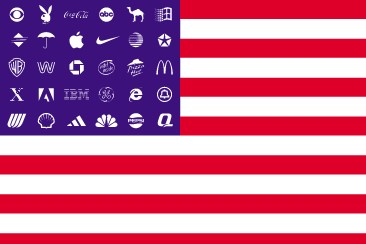
The corporate media, despite being far more monopolized than the US school system, provides a more diverse means of education. Corporations like CNN and the New York Times habitually lie about the facts of political events to protect the white ruling class and its institutions from accountability. Corporate hip-hop, music, and television entertainment compliment corporate news syndicates by doping the mind full of mindless garbage. It matters little if the media of choice is watching “Scandal”, listening to Nicki Minaj on the radio, or reading the Washington Post. The boardrooms of five corporations are manufacturing consent to the US fascist system. Malcolm X succinctly summarized the function of the corporate media when he said “if you are not careful, the newspapers will have you hating the the people who are being oppressed, and loving the people who are doing the oppressing.”
Friday, April 4th was the 46th anniversary of Martin Luther King Jr’s assassination. Although King never claimed that the US was a fascist society, he certainly was struggling with the fundamental structure of US society by the end of his life. In “Where do We Go from Here” (1967) for instance, King stated that
“ . . . more and more, we’ve got to begin to ask questions about the whole society . . .and you see, my friends, when you deal with this you begin to ask the question, ‘Who owns the oil?’ You begin to ask the question, ‘Who owns the iron ore?’ You begin to ask the question, ‘Why is it that people have to pay water bills in a world that’s two-thirds water?’”
Unsurprisingly, King’s opposition to racism, capitalism, and war placed a target on his life. The US government was found guilty of using its intelligence agencies to murder King in 1999. The murder of King was part and parcel of the US government’s crackdown on the radical left, which is now imbedded in the legal framework of this country since the institution of the “War on Terror.” King’s legacy should inspire us to dig deep into the roots of the type of society we live in and the type of society we want to live in. George Jackson’s conclusion that the US indeed is a fascist society receives little attention from the US left. Further, this article could not possibly analyze in the detail deserved every element of the US ruling order. However, there is ample evidence that we should no longer be asking the question of whether fascism exists in this country, but rather, where do we go from here.
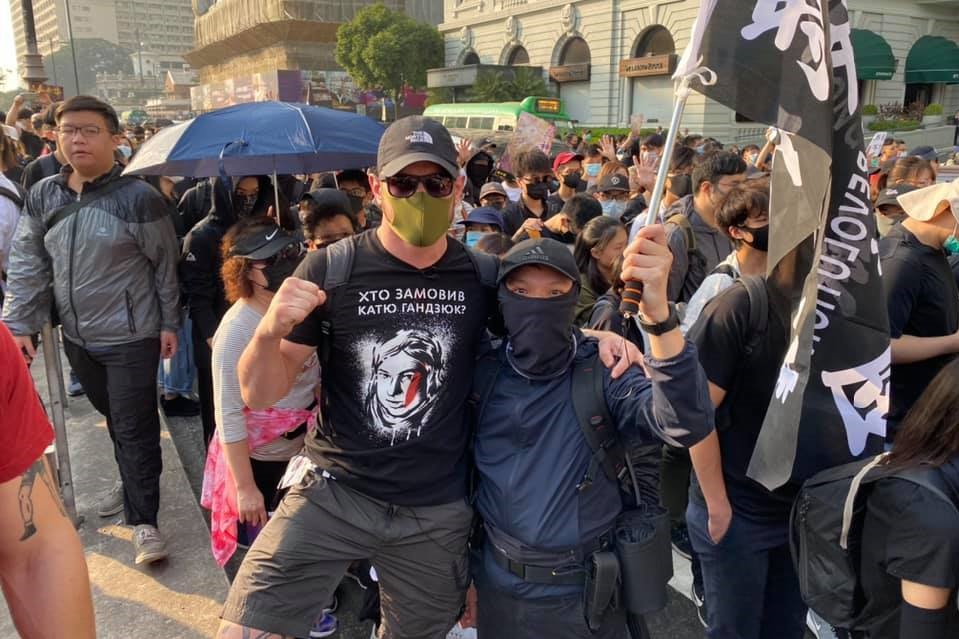
Ukrainian fascists who previously fought in a US-backed neo-Nazi militia joined the anti-China protests in Hong Kong, sharing their tactics and showing off their tattoos.
Neo-Nazis from Ukraine have flown to Hong Kong to participate in the anti-Chinese insurgency, which has been widely praised by Western corporate media and portrayed as a peaceful pro-democracy movement.
Since March 2019, Hong Kong has been the site of often-violent protests and riots that have run the city’s economy into the ground. The US government has funded many of the groups leading the pro-Western and anti-Beijing movement, and opposition leaders have coordinated closely with conservative political figures in Washington like Marco Rubio and Steve Bannon, lobbying for sanctions and other punitive measures against China.
Numerous delegations of far-right groups from across the world have traveled to Hong Kong to join the violent insurgency against Beijing, in which secessionists have attacked police with bows and arrows, shot gasoline bombs out of catapults, and burned numerous people alive.
With their flamboyant waving of US and British colonial flags and tendency to belt out the American national anthem on megaphones, anti-China separatists in Hong Kong have made themselves a magnet for the US far-right. Staff of the website InfoWars, right-wing social media personality Paul Joseph Watson, and the ultra-conservative group Patriot Prayer are among those who have made pilgrimages to the protests.
The latest collection of extreme-right activists to reinforce the ranks of the Hong Kong separatists are from Ukraine. They call themselves Gonor and have tattoos on their upper torsos with undeniable symbols of white supremacy and neo-Nazism.
These extremists previously fought in a notoriously brutal neo-Nazi militia called the Azov Battalion, in Ukraine’s war against pro-Russian militants.
The Azov Battalion is an explicitly fascist paramilitary group that organizes around neo-Nazi ideology. After a Western-backed 2014 coup against Ukraine’s democratically elected government, Azov was incorporated into the Ukrainian national guard. It has received support from the US government, which has armed and advised the neo-Nazis in their fight against Moscow.
Azov has also helped train American white supremacists, who have plotted terrorist attacks back at home in the United States.
While Western governments and corporate media outlets portray China as an authoritarian regime that treats Hong Kong like a colony, these violent Ukrainian fascists took advantage of the region’s autonomy to gain entry through its borders. It is unlikely they would have been admitted to mainland China, or to the Western European countries that routinely refuse visas to political extremists.
The presence of Ukrainian regime-change activists in the Hong Kong protests is further evidence of the alliances that anti-Chinese activists in Hong Kong are building with other right-wing, US-backed movements around the world, sharing tactics to weaken and destabilize countries targeted by NATO.
Ukrainian fascists join Hong Kong insurgency
On December 1, the far-right activist Serhii Filimonov posted photos on Facebook showing himself and three Ukrainian friends upon their arrival in Hong Kong. The images were accompanied by the anti-Beijing’s unofficial slogan: “Fight for Freedom. Stand with Hong Kong!!”
Stand With Hong Kong is also the name of a Western-backed organization that has been lobbying the governments of the US, Britain, Germany, Canada, and Australia to impose sanctions and take punitive action against China.
In a video they posted on social media, the Ukrainian white supremacists revealed that they had obtained a press pass, misleadingly portraying themselves as journalists.
Joining Filimonov on the trip to Hong Kong was a notorious extreme-right Ukrainian activist who goes by the name Maliar. Maliar is popular on Instagram, under the name xgadzillax, where he has more than 23,000 followers. (Maliar has a distinctive scar on the left side of the neck, which makes him easy to recognize in photos.)
Besides the swastikas inked into his skull, Maliar had the Nazi symbols tattooed on his right leg, next to an algiz rune, another common white supremacist emblem.
Several photos show that at least two of the Ukrainian fascists in Hong Kong have tattoos reading “Victory or Valhalla,” the title of a compilation of writings by the notorious American white supremacist David Lane, whose neo-fascist terrorist group The Order murdered a liberal Jewish radio host and planned more assassinations of left-wing Jews.
Lane, who was convicted to 190 years in a US prison for numerous crimes, created the most famous white supremacist slogan, known as the 14 Words — which inspired the name of another Ukrainian neo-Nazi group called C14.
Filimonov, who also has a large following on Instagram, where he uses the name Sunperuna, published a photo showing the phrase “Victory or Valahalla” emblazoned on his chest.
The book “Victory or Valhalla” is dedicated to “Aryankind.” In its pages, its author says he is committed to preventing the “imminent extinction facing the White Race” and the “Judeo-American/Judeo-Christian murder of the White race.” The screed is replete with homages to Nazis, and the back cover shows a photo of Lane’s body in his coffin, wrapped in a Confederate flag.
These Ukrainian fascists were such fans of the book that they permanently tattooed its title on their bodies.
Maliar, the other member of Gonor who joined the Hong Kong protests, has “Victory or Valhalla” inscribed conspicuously on his neck.
Journalist Morgan Artyukhina identified another member of the far-right Ukrainian contingent in Hong Kong as Serhii Sternenko. Artyukhina noted that Sternenko is a former leader of the Ukrainian fascist group Right Sector, which burned down a trade union building in Odessa during the 2014 coup, killing 42 people.
Neo-Nazis take campus
On December 2, the Ukrainian fascist visitors posted photos of themselves on the campus of Hong Kong Polytechnic University (PolyU), a site of violent protests.
PolyU has been a crucial base of operation for the separatist uprising. A total of 3,989 petrol bombs, 1,339 pieces of explosives, and 601 bottles of corrosive liquid were recovered at the school, as of December 2, according to reports.
Serhii Filimonov (the first on the left in the photo above) has faced legal troubles in the past, appearing in court for allegedly brawling with police.
The photos Filimonov posts on social media make two things abundantly clear: He is a Nazi and wants as many people as possible to see him shirtless while bearing heavy weapons.
Other members of Gonor have published photos on Instagram holding guns.
A video posted on Instagram in 2015 shows Maliar and a friend in a “White Rebel” Confederate flag t-shirt surrounded by guns and tasers.
Gonor’s symbol draws on many of the same far-right ultra-nationalist themes, with three white knives centered on a black flag.
Gonor’s Telegram channel offers members a front row seat to an orgy of violence. It has published dozens of videos of Hong Kong insurgents, heroizing them for shooting arrows and carrying out brutal attacks on state security forces.
Both Filimonov and Maliar previously fought in the US-backed neo-Nazi Azov Battalion. Maliar has posted photos on Instagram showing the two armed and in military uniform, wearing Azov patches.
And Filimonov has published several photos showing him and his friends wearing Azov t-shirts.
Ukrainian regime-changers build networks with Hong Kong secessionists
Despite all of this publicly available evidence demonstrating the open fascism of the Ukrainian hooligans in Hong Kong, the Kiev-based Free Hong Kong Center published a statement on Facebook defending and whitewashing Gonor.
The organization confirmed that the extremists did indeed fight with Azov “during the first period of the war” against pro-Russian separatists, but claimed that they have been unaffiliated since 2015.
The Free Hong Kong Center described the neo-fascists as “activists of the Revolution of Dignity and as well as veterans of the defending war with Russia.” Absurdly, the center declared that they “assured us they are really against nazism and another kind of alt-right ideology.”
“A lot of people were disappointed by the tattoos of these guys,” the Free Hong Kong Center conceded. But they insisted “that all symbols are from Slavic paganism.”
The Free Hong Kong Center is a project of an NGO called the Liberal Democratic League of Ukraine. In addition to building links with anti-Beijing forces in Hong Kong, the project says its mission is to “counter Chinese threats to Ukraine.”
The Liberal Democratic League of Ukraine is a pro-European Union advocacy organization which is a member of the European Liberal Youth and the International Federation of Liberal Youth, both of which are funded by the EU.
The main coordinator of the Free Hong Kong Center is a Ukrainian activist named Arthur Kharytonov, who is also the president of the Liberal Democratic League of Ukraine. Kharytonov was deeply involved in the Euromaidan protests in Ukraine, which led to the 2014 US-backed coup. He then set up the league in 2015.
Kharytonov and his organization have been frequently amplified in US government-funded Ukrainian media outlets such as Hromadske. In these softball interviews with a highly sympathetic press, Kharytonov likens the anti-Russia protests in Ukraine to the anti-China protests in Hong Kong, and calls for closer bonds between them.
Kharytonov and these Western government-backed organizations are part of a growing network of Ukrainian regime-change activists who are organizing with secessionists in Hong Kong, holding and sharing insurgency tactics.
As the US and NATO-led unipolar hegemonic order that has dominated the world since the end of the Cold War begins to crumble, and as a rising China and Russia seek to restore a multipolar global system, Washington and European nations are constructing a latticework of movements to undermine their adversaries on their frontiers.
This global network is marketed as the advance guard of global liberalism, but as events from Ukraine to Hong Kong have revealed, fascism is festering at its base.
1. Birth Of An Empire 2. World Conquerors 3. Tartar Crusaders 4. Last Khan Of Khans
This series covers the life and accomplishments of Genghis Khan and examines the art, culture, science, and technology of Mongol civilization. Genghis Khan left not only a highly trained army, but the beginning of an imperial administrative framework, a system of taxation, a communications network—all of which were built upon and expanded by his successors. The series was filmed on location in Mongolia and also features battle re-enactments shot at historical locations throughout Europe and Asia. 4-part series, 50 minutes each.
This program explores the power and influence of the Mongol Empire, under the rule of Khan and his son, Ogodei. More than 1,000 miles from the sea, the Mongol capital of Karakorum was constructed—a kind of Brasilia of the steppes. A communications system and thousands of miles of highways were built to connect Karakorum with the far frontiers of the empire, enabling Khan to consolidate his power. Within a few years, northern China was conquered, the Russian principalities were forced to submit, Poland and Hungary were overrun, and a united European army of knights, templars, Hospitallers, and Teutonic knights was completely devastated.
Max Blumenthal has said “enough is enough” and taken his little pen and walked away from his staff position at Al Akhbar English over what he claims is their editorial tolerance of “Assad apologists”. According to Max in an article on his website explaining his decision to leave in a huff (The right to resist is universal: A farewell to Al Akhbar and Assad’s apologists) “the apologia for Assad and his crimes has reached unbearable levels.”
I once had a great deal of respect for Max Blumenthal. His work on the Palestinian issue has been courageous to say the least. But now I have to say farewell to Max and remove his link from my blogroll. His disingenuous and downright dishonest efforts to prop-up the progressive Assad demonetization train turns my stomach and I will never be able to post a single thing he writes without having to question the man’s integrity.
Yeah, it’s that bad. Max Blumenthal is an outright liar. No one, and I mean NO ONE with his resources and experience in the Middle East could miss the boat so badly on this topic without doing so deliberately unless he was a total and complete idiot. And Max is not an idiot. He is however, the son of Sidney Blumenthal who was a long term adviser to Bill Clinton (during the destabilization of Yugoslavia as coincidence would have it) and then a campaign adviser to Hillary Clinton who expected to serve in her State Department before Rahm Emanuel put his foot down for some reason. Max’s daddy is also reportedly a close friend of Tony Blair. Just thought I would throw that in for good measure.
Yes, Max Blumenthal is a liar. And I will now show you how I came to that conclusion. As to the why, well… you be the judge.
The Tal al Zataar Guilt by Association Ploy
Max starts off his article condemning Al Akhbar and Bashir Assad with a rather odd quote. He’s attempting to demonize the Assad regime by referencing the Tal al Zataar refugee camp massacre when Syria came in to supposedly defend the camp, but in fact they were quite brutal toward the Palestinian refuges.
First of all, this occurred in 1976 when Bashir al Assad was all of 11 years old. Trying to use that incident to demonize Assad would be tantamount to linking Barack Obama with the 1968 Chicago Democratic Convention fiasco and riots simply because he is a democrat and from Chicago. Assad had nothing to do with al Zataar so it has no bearing on this issue what-so-ever except to poison the well as it were, a typical troll propaganda tactic that I would have expected Blumenthal to be well above using. But there it is just the same.
The other aspect of the al Zataar massacre that Max seems to have forgotten is that it took place during the Lebanese Civil War and those Palestinians weren’t simply innocent fugees hanging out hoping for CHANGE… they were actively involved in fighting around their camp and they were actively involved in fighting the Lebanese and Christian Phalangist forces.
There is no doubt that the result was a slaughter and that Syrian forces took part in it, but in reality it’s a bit more complicated than the Sesame Street version that Max tries to present in his article. So he’s starting off his article on a rather disingenuous note and he continues in the same vein throughout the rest of it.
Max’s Clintonista Daddy
Max Blumenthal is NOT a self-made man. His writing career is a direct result of his being the off-spring of Sidney Blumenthal, a long time adviser to the Clinton White House and then a personal adviser to Hillary Clinton during her run for president back in 2008. Among other globalist rags, Max writes for the Huffington Post and Salon. His daddy wrote for all the same institutions and was even Washington bureau chief for Salon.com.
In fact, Blumenthal’s daddy wrote copy for the Clinton administration and handed it out to the press for them to regurgitate back in the late 90′s. That was his job: Propagandist in Chief for the Clinton administration. Then he just happens to go work for the same institutions that he was feeding bullshit to for years taking his son along with him for the ride.
Also interesting about his father is the fact that he is a HUGE proponent of the so-called “third way” movement across the globe. More on that later.
Odd isn’t it? Here we have Max, prodigal son of a lifelong Clintonista, taking a stand for a destabilization campaign primarily being run by none other than Hillary Clinton. Small world, huh?
One credible critique of Bashir Assad is the fact that he inherited his presidency from his father back in 2000. But honestly, how is that different than George H. W. Bush (his daddy was Prescott. Look it up Max), George W Bush, Rand Paul or even Max Blumenthal himself?
Well, here’s one difference: even the neocon warmongers had to admit that Assad enjoys the support of just over 55% of the population of Syria. The MAJORITY WANTS ASSAD TO BE PRESIDENT.
Blumenthal never mentions that in his “scholarly” article.
But if we are looking at the crimes of the father in order to demonize the son, Max has some penance to serve as well.
Max’s Horrible Facts: Worthy of “Activists Say” Journalism
The vast majority of the so-called “evidence” Max uses to demonize the Assad regime has been long since discredited. There is no doubt about this. In fact, he actually tells Paul Jay at the Real News Network that he gets his info from “activists” and associated “journalists” embedded with the CIA backed terrorists. Here are just SOME of Max’s so-called “facts” and his admission of where he gets them. Take a look.
“The Assad regime was running an institution of torture in prisons. Possibly 100,000 people are in prison right now. And this makes Israel look like, you know, a champion of human rights.” Max Blumenthal
“I can not disagree with anyone who claims that the United States and the Saudi royals aim to ratchet up their regional influence on the backs of the shabby Syrian National Council while Israel cheers on the sidelines” Max Blumenthal
“This is a point where, by all accounts, the Assad regime had killed as many as 10,000 people in order to remain in power, possibly 13,000, according to people I know inside Syria who’ve come out.” Max Blumenthal
“But, I mean, it (Houla Massacre) was part of their campaign of suppression inside Syria, to crush what I consider to be a legitimate attempt at removing a dictator.” Max Blumenthal
“I started really paying attention to the coverage closely on the website, and mainly the opinions following the Houla massacre, which was by all accounts (really? read the German study yet Max?) carried out by shabiha affiliated with the Assad regime, to the embarrassment of the Assad regime.” Max Blumenthal
“…a regime that’s ideologically hollow that represents nothing beyond a fascistic security apparatus, married to (and sometimes literally, in some cases) a rich neoliberal business class…” Max Blumenthal
“But I made a personal decision based on my own values and based on the accounts that I was getting from Syrian activists, from Syrian intellectuals, and from journalists I respect who have been inside Syria, who’ve been in Homs, who’ve been with the revolution in Syria. And, I mean, these are people I trust.” Max Blumenthal
To completely dissect the virtual cornucopia of hardcore disinformation that Max spews on the subject of the Syrian “uprising” would take forever and most of the readers here are already well aware of the various studies and facts that have come to light over the last month or so that proves Max completely wrong on all these accounts. I will still delve into them a little since I am sending Max a copy of this article.
First: Israel isn’t standing on the sidelines cheering the destabilization campaign as Max mistakenly characterizes their involvement. They’re an ACTIVE PARTICIPANT with a GREAT DEAL on the line (Golan Heights? Water rights? oil and Natural Gas exploration two weeks ago?) which is something that you would imagine Max would be well aware of.
Second: “by all accounts” Syria has not killed 13,000 Syrian civilians. However, if by saying “by all accounts” you are talking about the Syrian “opposition” supported by the CIA (admitted and covered by the New York Times and others) and their Mockingbird Press Corps (like the institutions Max’s daddy works for) then of course, that would be “by all accounts”. Of course, expecting Max to understand this is an assumption and I may be giving him too much credit.
Third: The Houla Massacre was conducted NOT by the Assad regime but rather by the opposition in an attempt to demonize the Assad regime and ferment support for an all out invasion. Even the National Review knows that.
“As quietly as possible, BBC world news editor Jon Williams has admitted that the coverage of last month’s Houla massacre in Syria by the world’s media and his own employers was a compendium of lies.
Datelined 16:23, June 7, Williams chose a personal blog to make a series of fairly frank statements explaining that there was no evidence whatsoever to identify either the Syrian Army or Alawite militias as the perpetrators of the May 25 massacre of 100 people.” WSWS
Max… come on. How could you have POSSIBLY missed that one? John Pilger gets it. Why can’t you?
“The threats against Syria, coordinated in Washington and London, scale new peaks of hypocrisy. Contrary to the raw propaganda presented as news, the investigative journalism of the German daily Frankfurter Allgemeine Zeitung identifies those responsible for the massacre in Houla as the ”rebels” backed by Obama and Cameron.” John Pilger
The Free Syrian Terrorists have been conducting a terrorist bombing campaign, assassinations, and kidnappings all across Syria for months. Burhan Ghalion, head of the Syrian Transitional National Council recently said they need MORE TERRORISM in Syria, not less.
The latest massacre is already attributed to them and the others involved.Here, take a look at the handiwork of the so-called “activists” that Max Blumenthal supports. What if the Tea Party activists in America piled up the corpses of cops and soldiers and Obama supporters like this on the streets of Maine or Tennessee so they could film them being desecrated like this? What do you think Blumenthal’s take on that would be?
In fact, your daddy’s friend Hillary Clinton has also admitted that “al Qaeda” is inside Syria helping them destabilize the country. Now why the hell would they do that?
Well, I guess it’s ok for Max to support the efforts of the Syrian Freedom Fighters. If Lyin Joe Lieberman is on board, how much of a lie could it be?
Forth: Tossing out buzz words like “neoliberal business class” in order to try to sway the in tune progressives to your side is beyond tasteless. There is NOTHING, and I do mean NOTHING about the Assad regime that is neoliberal. The vast majority of the industry in Syria is nationalized or run by the state. This is part of what makes the overthrow of Assad so appealing to the neoliberals. They can PRIVATIZE everything and hand it over to their crony buddies in big business. They have NOT opened their doors to hot money speculators NOR have they privatized their central banking system. The education system is based on the FRENCH model not the for-profit Chilean style created by Augusto Pinochet and now being implemented by Barack Obama here in the states. Claiming Assad is a neoliberal is ridiculous and a pathetic (and obvious) attempt to sway a certain segment of the population to your side of the fence without a SHRED of evidence.
And by the way, I also noticed you offered not one single link to support ANY of your claims in your article on your site. I guess that speaks volumes as well.
Lastly: We already know who the so-called “activists” are and who’s paying them. We know that the National Council is nothing more than a group of opportunists and neoliberal puppets looking to cash in like their counterparts down in Libya did. We also know what “embedded journalists” are so your “evidence” is beyond pathetic and you know it as well. Which is probably why you offered no links to prove a single claim you make. Hell, even Stratfor has admitted that the “activists” in Syria are fabricating stories about the situation there. And Max still buys into it?
I wonder if one of Blumenthal’s credible sources happens to be Rami Abdelrahman from the London based Syrian Observatory for Human Rights. After all, they were the very first to assign blame for the Houla Massacre on Assad and the shabbiha…
“The shabbiha (Assad’s militiamen) broke into three houses overnight and slaughtered a family of five — the father, wife and their three children, a family of seven in another house and a eight in a third,” dissident in exile Rami Abdelrahman, who heads the British-based Observatory, told the news service. MSNBC
Of course, Rami Abdelrahman doesn’t actually exist. He’s a propaganda construct exposed a long time ago…
Firstly, there is NO individual by the name of Rami Abdul Rahman. This is just an alias that was being used by all SOHR members and mainly by the founders of the SOHR when articles were being originally published. SOHR
Again, maybe that is why Max doesn’t offer links or quotes to support his condemnation of Assad. I wonder if his daddy did while he was handing out propaganda to the press corp back in his Clinton days?
Max Plays Both Sides of the Issue
Throughout Max Blumenthal’s article and his interview on the Real News network, he continually tries to play both sides of this issue while always continuing to make the argument that even though this is CLEARLY a destabilization campaign and even though there are terrorists committing atrocities in Syria and trying to blame them on the regime, Assad must be removed from power because he’s a bad man committing the atrocities against the “legitimate” uprising.
Blumenthal does this simply because he DOES understand that the vast majority of evidence is out there showing that what this is is an external aggression being waged against a sovereign state, illegally mind you, and he can’t possibly generate support like they did before the evidence came out.
Like in Libya, this is a small group of individuals in Syria who understand that there is a great deal of money to be made if they play ball with the imperialists and help them overthrow the legitimate government of Syria. It’s that simple.
Of course you could have a small group of people within a nation who want to change it’s ruling party if you factor that in. But what Blumenthal NEVER mentions is the fact that Assad has made SEVERAL concessions to the nation and implemented SEVERAL key changes to how the country is run. He also fails to mention the fact that the majority of the people of Syria support Assad (just like the majority of the people of Libya supported Gadhafi). These FACTS simply never factor into Blumenthal’s equation.
Conclusion
I have to admit, I was quite surprised by Max Blumenthal’s take on all of this. Perhaps I shouldn’t have been. I never took the time to look into his family history and how he got his start writing for institutions like Salon, Al Jazeera English, and the Huffington Post. I took him at face value thanks to his work on the Palestinian rights issue. That oversight is on me and I hope that this… correction… is not too late.
Unfortunately I have to conclude that Max is in bed with his daddy who is in bed with the Clintons on this one. I guess eventually while the Mockingbird Press allows you to build up credibility over the years, a time will come when you have to sit in front of Paul Jay and spew senseless propaganda to pay for your birthright entitlements in the neoliberal class of “third way” centrists.
To his credit though, it does look like Max was a little sickened by what he was doing during the Real News interview. I guess the globalist shill hat doesn’t feel so good sitting upon his head. I hope that when the Obama administration starts the bombing campaign and kills scores of Assad supporting innocent Syrians, our little entitled friend Max has a couple of sleepless nights to pay for his role in helping gin up left wing support for it.
Anyway, for whatever good it does, Max Blumenthal is off my blog-list and I will never post a link to anything he does again. Cus he’s a liar and a fraud who sold out the Syrian people for god knows what.
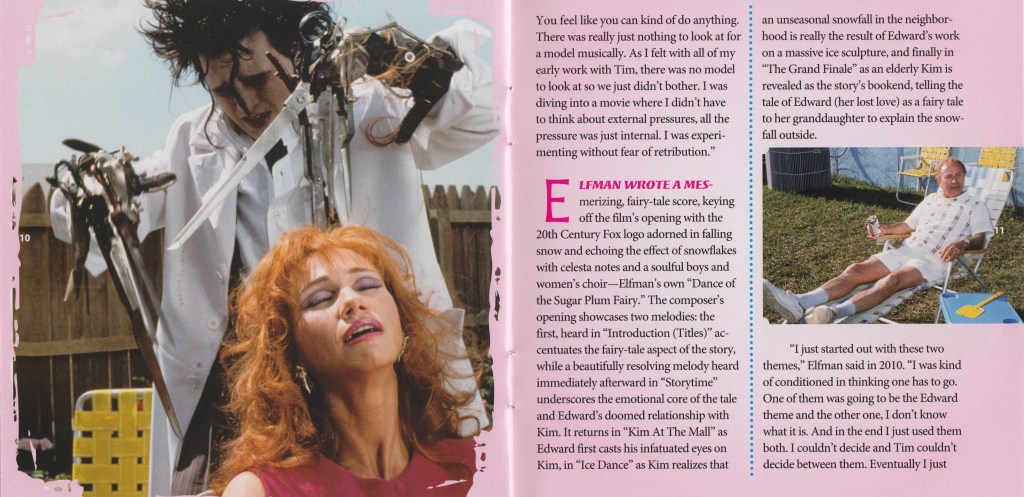
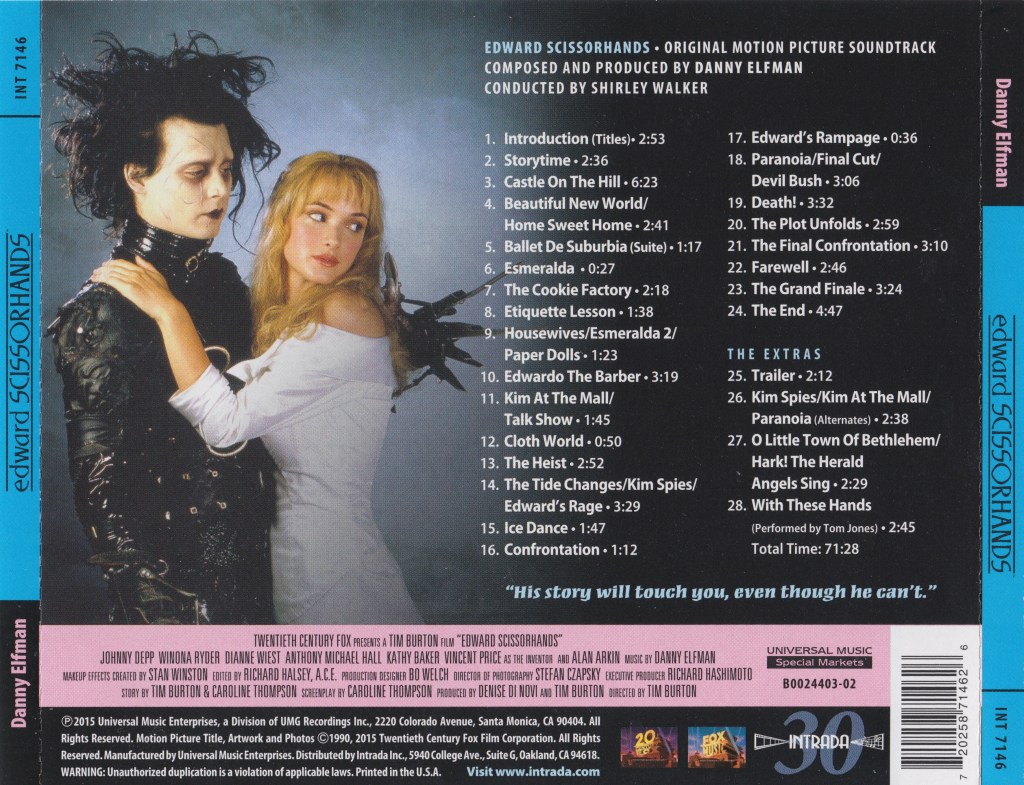
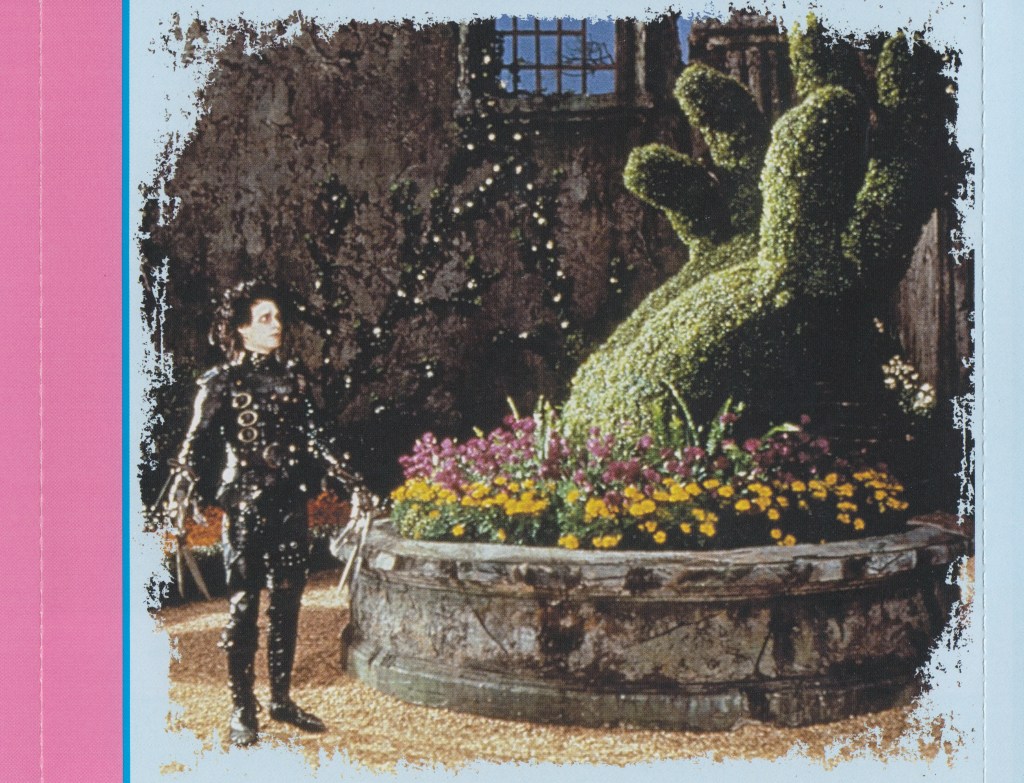
Emotionally rich, grand Danny Elfman soundtrack for famed 1990 Tim Burton fantasy romance with dark overtones finally gets expanded treatment! Johnny Depp plays Edward in nervous, moving fashion, Vincent Price wraps his own legendary career as The Inventor, Winona Ryder plays beautiful romantic lead Kim Boggs, Kathy Baker enacts comic neighbor Joyce. Tale is by turns spellbinding and eccentric, haunting and romantic. Danny Elfman tackles multiple musical challenges by covering every base: ideas are tuneful, melodic, quirky, exciting, inventive, powerful, grand, intimate – and ultimately haunting. Main theme alternates between major harmonies, minor ones as upwards-leaning melody unfolds in gently yearning fashion. With gentle arpeggio figures, transparent orchestrations, boys choir in the mix, this theme remains one of Elfman’s most heartfelt and endearing. Even in its most passioned, sweeping orchestral/choral perorations, this theme remains tender and romantic, colored with a tinge of tragedy. Beautiful writing! Numerous thematic ideas cover all those other bases, from comic hair-cut scenes to dramatic chase scenes, from wistful nostalgic overtones to crescendoing scares. Yet no matter how far out Burton and Elfman take things, incredibly haunting love story kindles all other elements throughout. Expanded edition available courtesy UMG & 20th Century Fox. Production by Nick Redman, audio restoration, assembly by Mike Matessino & Neil Bulk, detailed notes by Jeff Bond, package design by Joe Sikoryak. Absolutely winning score! Danny Elfman composes, Shirley Walker conducts orchestra, adult choir, Paulist Choristers Of California. CD available as part of Intrada INT series!
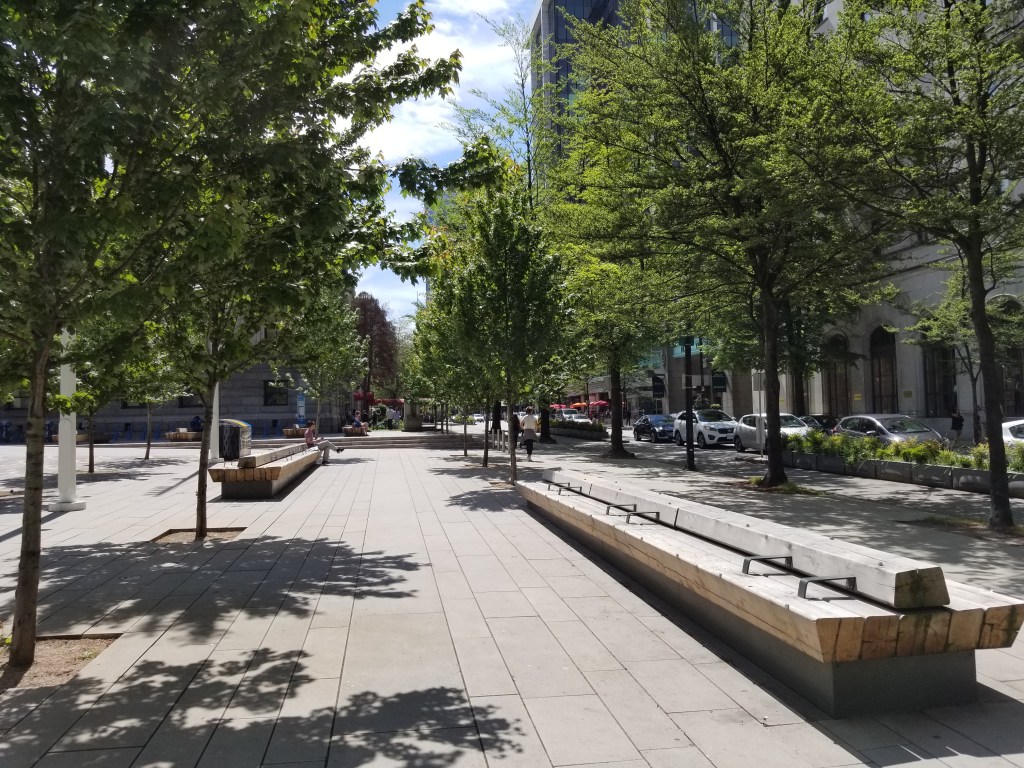
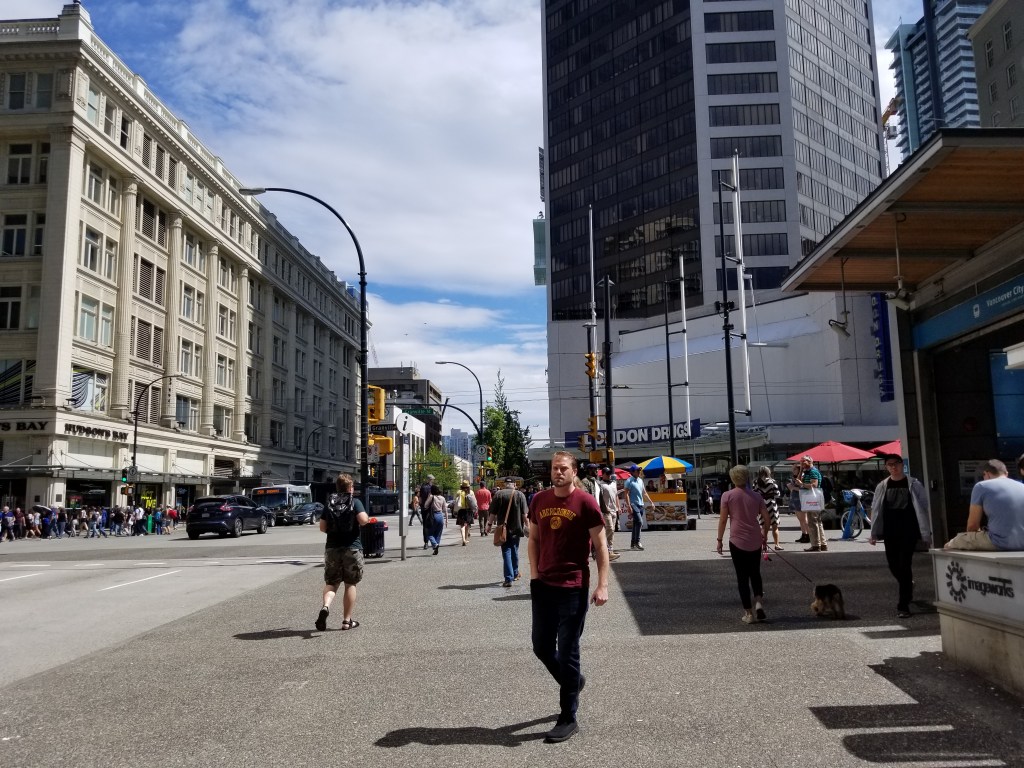
Burrard Street is a major thoroughfare in Vancouver, British Columbia, Canada. It is the central street of Downtown Vancouver and the Financial District. The street is named for Burrard Inlet, located at its northern terminus, which in turn is named for Sir Harry Burrard-Neale.
The street starts at Canada Place near the Burrard Inlet, then runs southwest through downtown Vancouver. It crosses False Creek via the Burrard Bridge. South of False Creek, on what used to be called Cedar Street before the completion of the bridge in 1932, the street runs due south until the intersection with West 16th Avenue.
The intersection of Burrard Street and Georgia Street is considered to be the centrepoint of Downtown Vancouver, along with the more tourist-oriented and upscale shopping-spirited intersection of Burrard Street and Robson Street to the south. At and due northeast of the centre is the heart of the Financial District. Further down closer to Vancouver Harbour stands the historic Marine Building, an Art Deco masterpiece, opened in 1930, two years before the Art Deco pylons of the Burrard Bridge at the opposite end of the street. Finally at the Harbour lies Canada Place and the Vancouver Convention Centre.
Nearer to Burrard Bridge is located St. Paul’s Hospital, established on Burrard Street in 1894.
Burrard Street served as the dividing line between the two district lots laid out on the downtown peninsula in the second half of the 19th century: District Lot 185 (now West End) and District Lot 541 (granted to the Canadian Pacific Railway). The two grids were oriented differently, with the result that only every third northwest-southeast street in DL185 actually continuing southeast beyond Burrard into DL541. Burrard currently serves as the boundary between West End and Downtown, as defined by the City of Vancouver.
Burrard Street is served by SkyTrain’s Burrard Station, located underground between the intersections with Melville and Dunsmuir Streets in the heart of the Financial District. Along the downtown portion, there is a bike lane on the southwest-bound direction towards the Burrard Bridge.