
Link’s newest adventure is a radical departure that abandons many of the series’ established elements in favor a more open world that constantly encourages and rewards you for exploring the unknown.
Category: Uncategorized
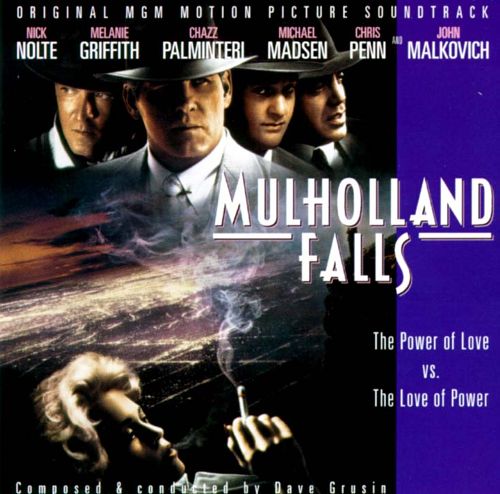
Now listening to Axelay by Taro Kudo and Mulholland Falls by Dave Grusin…
At the Pacific National Exhibition in Vancouver. Summer of 2018.










The Pacific National Exhibition (PNE) is a nonprofit organization that operates an annual 15-day summer fair, a seasonal amusement park, and indoor arenas in Vancouver, British Columbia, Canada. The PNE fair is held at Hastings Park, beginning in mid-to-late August and ending in early September, usually Labour Day.
The organization was established in 1907 as the Vancouver Exhibition Association, and organized its first fair at Hastings Park in 1910. The organization was renamed to the Pacific National Exhibition in 1946. During the mid-20th century, a number of facilities were built on the PNE grounds, including Pacific Coliseum and the PNE Agrodome. In 1993, the amusement park adjacent to the PNE, Playland, became a division of the PNE.
The Vancouver Exhibition Association (VEA), the predecessor to the Pacific National Exhibition organization was first formed in 1907; although the association was not incorporated until 18 June 1908. The VEA had petitioned Vancouver City Council to host a fair at Hastings Park; although faced early opposition from the city council and the local jockey club that used the park for horse races. However, the city council eventually conceded to the VEA’s request and granted the association a 5-year lease to host a fair at Hastings Park in 1909.
The VEA held its first fair at Hastings Park in August 1910. It was opened by then Canadian Prime Minister Sir Wilfrid Laurier as the Vancouver Exhibition. The biggest attractions of the two-week fair are its numerous shops, stalls, performances, a nightly fireworks show, and the exhibition’s Prize Home. From its beginnings, the exhibition was used as a showcase for the region’s agriculture and economy.
In the initial years of the Second World War, the fairgrounds saw an increased military presence. However, the exhibition itself was not cancelled until 1942, after the Canadian declaration of war against Japan was issued. From 1942 to 1946 the exhibition and fair was closed, and like the Canadian National Exhibition in Toronto, served as a military training facility for the duration of World War II. During this time, the exhibition barns that were used to house livestock, were used as processing centres for interned Japanese Canadians from all over British Columbia. The interned Japanese Canadians were later shipped away to other internment camps throughout British Columbia, and Alberta. The Momiji (Japanese word for Maple) Gardens on the PNE’s grounds serves as a memorial for the event. The barns used for the internment of Japanese Canadians are still used to house livestock during the annual fair, and serve as storage area to house some of the PNE’s property the rest of the year.
On 7 February 1946, the Vancouver Exhibition Association changed its name to its current moniker, the Pacific National Exhibition; and later reopened the fair to the public under that name in 1947. The organization was formally reincorporated as the Pacific National Exhibition in 1955.
The highest attendance at the fair was recorded in 1986, with 1.1 million guests visiting the PNE, most likely due to Expo 86 that was occurring at the time. In 1993, the amusement park adjacent to the PNE, Playland, became a division of the PNE organization.
During 1997-1998, the PNE grounds was transformed with the demolition of a number of buildings including the Food Building, Showmart and the Poultry Building. This gave way to the Sanctuary, a parkland setting with a pond. The pond restored part of a stream that once flowed in the park out to the Burrard Inlet. The city restored a large portion of the park. Many old fair buildings have been demolished and replaced by a more natural character. Although land was purchased in Surrey that was to become the fair’s new home, the PNE has since transferred ownership from the province to the City of Vancouver and will remain at Hastings Park. The PNE is a registered charity.
Two attractions at the PNE were named as heritage sites by the City of Vancouver in August 2013. The Pacific Coliseum and the Wooden Roller Coaster were added to the list.
In 2020, the fair went on hiatus due to the COVID-19 pandemic, alongside other agricultural and county fairs across Canada, including the Calgary Stampede, the Canadian National Exhibition, and K-Days.
In the early hours of February 20, 2022, a major fire broke out on PNE grounds, where multiple vehicles, tools and equipment, and buildings were destroyed as a result.
The PNE grounds contains several buildings and exhibition halls. The PNE Forum is a 4,200 square metres (45,000 sq ft) exhibition facility that is used for large displays and trade shows. Rollerland is a 1,840 square metres (19,800 sq ft) exhibition, banquet hall and venue for the Terminal City Roller Derby.
Two buildings on the PNE grounds are indoor arenas. The Pacific Coliseum is multi-purpose arena that holds 15,713 permanent seats, with provisions for 2,000 temporary seats for concerts and certain sports. The PNE Agrodome is a smaller indoor arena with 3,000 permanent seats, with provisions to expand up to 5,000 seats. Entertainment facilities includes the Garden Auditorium, a building that features a built-in stage and dance hall. The PNE grounds also feature amphitheatre with bench-style seating for 4,500 visitors.
Other buildings on the PNE grounds includes the Livestock Barns, a large multi-use facility, and the organization’s administrative offices.
You Should Listen to CDs

If vinyl is for hipsters and streaming is for everyone else, maybe the forgotten format is for you.
In 2020, revenue from sales of compact discs in the US added up to $483 million, a 97 percent drop from the format’s peak in 2000. Only 31.6 million CD units were shipped in the US last year. By contrast, the Bee Gees alone have 16 million monthly listeners on Spotify. How dead are CDs? Deader than disco.
Cause of death: the unbelievable convenience of streaming platforms. For a modest monthly fee, Spotify offers instant access to what feels like every song ever recorded. Its recommendation algorithms, built on constant surveillance of users’ listening habits, consistently deliver top-notch suggestions. It’s amazing. Listening to good music could hardly be easier.
It is, in fact, too easy.
Streaming platforms just aren’t designed with the serious music fan in mind. Back when you had to buy a physical album to listen to it, you really listened to it—even the songs you didn’t like at first. Eventually, some of those tracks would become your favorites. (Other tracks simply sucked, of course.) You paid good money for that CD, after all. Skipping half the tracks felt like an admission of failure.
Not so with on-demand streaming. When you can listen to any song, at any time, at no additional cost, there’s no pressure to listen to something you don’t enjoy right away. This can lead to musical tastes that are both broader and shallower. Thanks to Spotify’s recommendation features, I’ve discovered a lot of music, particularly from Latin America, that I might not have come across without the nudge from an algorithm. This is great. Yet at the same time, I very rarely challenge myself to listen to music that I don’t immediately enjoy. Why would I, when I can so easily switch to something else.
Indeed, the immediate, frictionless availability of something else keeps me from spending as much time as I otherwise would even with music I really love. In the pre-streaming era, I’d buy an album and listen to it over and over. With Spotify, I often discover a new artist, get really excited about them, and three months later forget about their existence entirely. If it doesn’t occupy space on your wall, it may not occupy space in your mind.
There is an obvious antidote to this condition, one that perhaps has already occurred to you: the vinyl record. Many thousands of words have been written about vinyl’s comeback. There’s a natural symmetry to it. Where streaming turns songs into something ephemeral and interchangeable, a record is very much a thing. It’s big. You can hold it in your hands and admire the artwork on the sleeve. If the problem with Spotify is the lack of friction, well, vinyl records are about as frictiony as you can get. They literally require friction to function.
Another way of putting the above is that records are a colossal pain in the ass. I had a turntable for the past decade. As I got ready to move across the country this summer, thinking hard about what was worth shipping or squeezing into my little car, I realized I hardly ever listened to my records. It’s just too much work. Records get dirty; you have to clean them. Ditto the stylus. Records are huge, and shockingly heavy; it’s hard to find room to store and display them. They’re expensive. Halfway through an album, you have to get up to turn it over. And then you have to get up again when the record ends, unless you want to wear down the needle. As WIRED senior editor—and self-flagellating owner of some 1,300 LPs—Michael Calore puts it, vinyl is “an unwieldy music playback format that sounds worse every single time you listen to it.”
The current vogue for vinyl is an overcorrection. You don’t have to listen to the absolute least convenient music format to escape the prison of hyperconvenience. After I sold my turntable, I decided to revisit the listening technology that came in between the spinning wax and the streaming bits: the compact disc. Unsure how long the experiment would last, I bought a CD boom box (you can still find them, though they’re somewhat scarce) and a couple dozen discs from a used music store.
This is not a nostalgia play. Vinyl has the nostalgia market cornered. But if you look past the visual aesthetics, you’ll admit that CDs accomplish the essential function of turntables, vis-a-vis streaming, without the hassle. That is, they allow you to build a library.
Since beginning my experiment, I find myself listening to full albums over and over and coming to appreciate tracks that I would skip if I were listening on my phone. Some of the albums I bought from the discount bin didn’t do much for me at first. I might not have given them a second listen on Spotify. But since they’re in my apartment, in a stack next to the boombox, I listen anyway. Most turn out to contain at least a few gems. The Neville Brothers album Yellow Moon, for example, includes some cringey quasi-rap and ponderous ballads, but also some absolute bangers of late-’80s funky swampy soul. Such are the unexpected joys this experiment has brought to my life.
(CDs also sound better than all but the most mint-condition records. Anyone who insists otherwise is probably rich enough to spend $45K on monoblock amplifiers and diamond-tipped styluses—or is just full of it.)
Note that I’m not predicting that CDs are poised for a comeback. To the contrary, the final pillar of my argument depends on that not being the case. Perhaps the best thing about CDs is that they have gotten ridiculously affordable. Thank you, supply and demand. At the used music stores where I live, almost all the CDs are $5 or less. Even new CDs are far cheaper than they were two decades ago. You could pay $35 to own the new Adele album on vinyl—or $9.97 to have it on CD, with money left over to buy two or three more albums.
So let the masses stay hooked on streaming while the hipsters spin their overpriced records. The CD is dead; long live the CD.
Wang Chung – To Live And Die In L.A.
Music video by Wang Chung performing To Live And Die In L.A.. (C) 1985 Geffen Records
Just finished watching Summer Wishes, Winter Dreams (1973) and The Idiot (1958)…


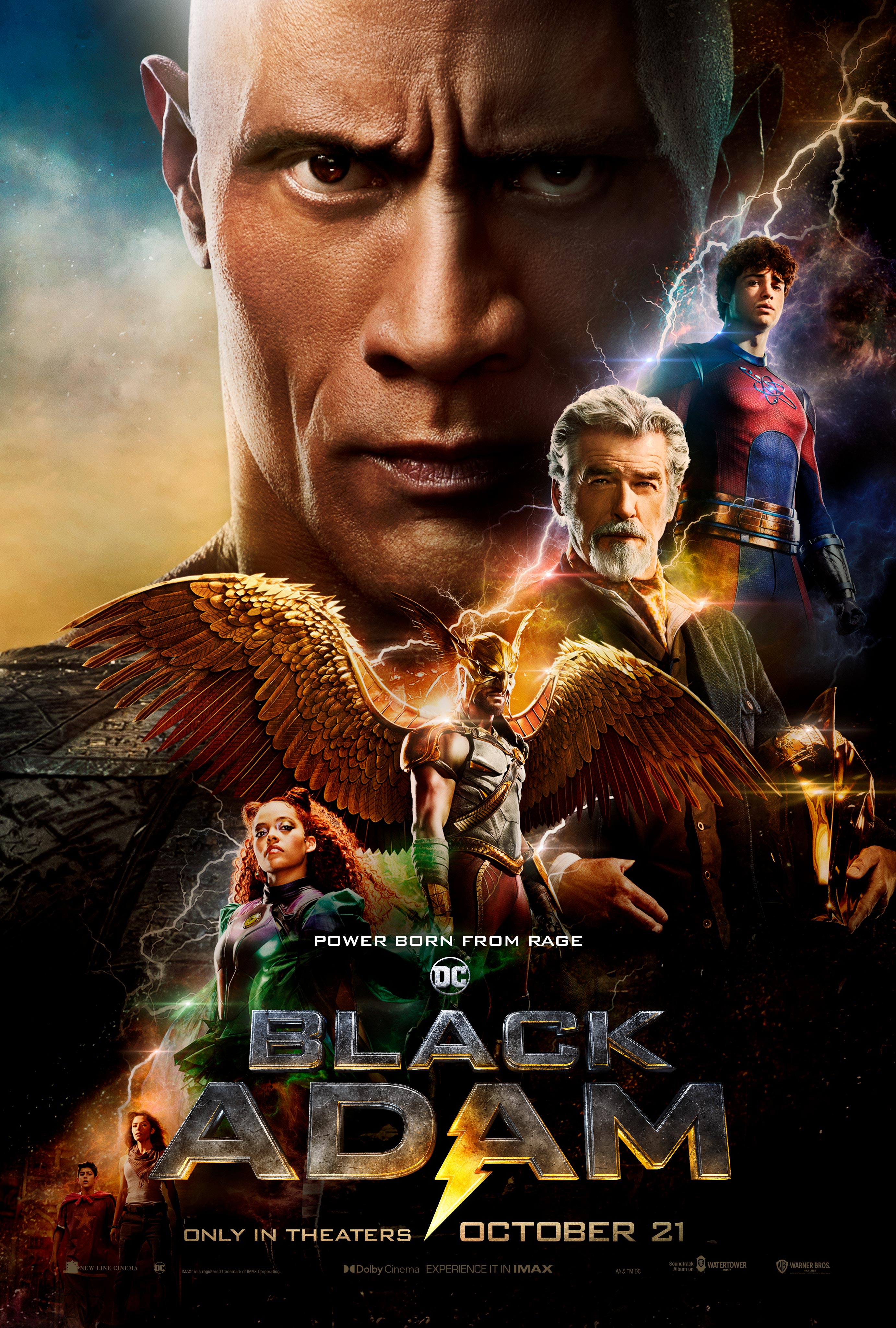
Just finished watching The Suicide Squad (2021) and Black Adam (2022)…

SF REVIEWS.NET: Ender’s Game / Orson Scott Card ★★★★★

Ender’s Game is one of the great ones, a novel of extraordinary power that is among the very best the genre has produced. Written at a stage in Orson Scott Card’s career when it seemed as if he could genuinely do no wrong, Ender’s Game takes a familiar theme from war fiction — war as seen through the eyes of a child, as in Ballard’s Empire of the Sun — and reframes it by making the child the war’s central figure. It is a tale defined by a sense of both tragic inevitability and cold irony. It is not merely about the loss of innocence, as so many stories are with children at their center. It is about innocence systematically deceived and purposefully destroyed in the fanatical pursuit of a misguided higher ideal.
Andrew Wiggin, aka Ender, is a six-year-old boy born into a future that has suffered two devastating invasions from an alien hive-mind species commonly called the buggers. Human population controls are now strictly in place, and Ender is the third child born to his family. The International Fleet, whose task it is to prepare for the next bugger invasion, monitors children through devices implanted on their necks, to determine who can be trained from a very young age to be the next generation of soldiers defending Earth from these marauding beasts. The I.F. originally had its sights set on Ender’s big brother Peter. But when it became clear Peter was not exactly what they were looking for, the Wiggins were authorized to have Ender, their Third. This is usually a stigma, but Ender shakes it off by excelling in every way.
Separated from his family before he is even seven years old (to only one of whom, his sister Valentine, he has a close bond), Ender is sent into space to attend Battle School. There, he and hundreds of other children and adolescents are subjected to grueling training that takes the form of war games, played both in computer simulation (video games, essentially) and in real time combat practice in an enormous zero-G chamber called the Battle Room. Ender is a natural. He excels immediately, and becomes commander of his own platoon ridiculously early. But Colonel Graff, commanding officer of the Battle School, is grooming Ender, pushing him right to the limits of endurance. Graff is playing games too, it seems, with Ender as the pawn. The I.F. is looking for humanity’s new savior, just as, years ago, a pilot named Mazer Rackham became humanity’s savior by fending off the buggers when all seemed lost.
Ender’s Game works from its first page to its last. For one thing, it’s the character study of a young boy whose childhood is being denied him by those who are in fact putting on a show of catering to it. The battle games are just that, games, but the consequences are real in terms of how they effect real lives. Ender’s flawless leadership record — his gift for unconventional thinking means he never once loses, even when the odds are absurdly stacked against him and his platoon — earns him enemies among lesser, jealous commanders, and an actual attempt on his life is made. When Ender successfully defends himself against one, using the same skills at thinking on his feet that have made him victorious in the Battle Room, the blinders come off. This world of children’s games is in fact one that deals in the grim realities of life and death.
But are the blinders off all the way? The I.F. is clear about their agenda: fight the buggers. What they aren’t clear about are their methods. The more Ender advances, the more it becomes clear the Battle School’s games have no rules at all, or none that can’t be changed completely. Ender’s Game examines the ethics of power and the role sheer manipulation can play in forming the cultural and political landscape people live in. Both in the Battle School, and in an interesting — and astoundingly prescient — subplot where Ender’s siblings Peter and Valentine (both of whom are as much prodigies as he is in their own way) compose for their own amusement pseudonymous political essays on the web that end up having more influence worldwide than they could’ve dreamed of, Card explores how easily and unwittingly people can find themselves played. And even when you are aware of it, how difficult it can be to do anything about it. And this all comes to a head in the book’s sucker-punch of a climax.
Ender’s Game is no didactic anti-war tract. It wouldn’t be, really, as Card is a proud conservative. If the book has any message to deliver about war, it does so through the time-honored tradition of fine storytelling, and it’s this: It’s no game.
DC Films created a franchise that’s interesting to see and analyze

Since I’ve already made a few posts featuring my thoughts about Marvel Studios, I will now provide my thoughts about DC Films. I’d like to clarify that I’m not a hater of DC. Apparently, some people think that I don’t like the films that DC has made. Well, explaining this is not easy for me because the DC Extended Universe has been a mixed bag at best. I haven’t had any real interest in the goings-on at DC, but I have seen almost all of the films that got made for the DCEU. The only DCEU film that I haven’t seen yet is Wonder Woman 1984 (2020). This is because I don’t really want to see this film yet. Most critics say that it’s a bad film. However, I don’t always agree with the critics. Still, I don’t feel like seeing Wonder Woman 1984 yet anyway. Man of Steel (2013), the first film in the DCEU, is one of the best films in the franchise, but it’s still quite flawed as a film. I’d say that about 50% of things in the film appeal to me, and the other 50% disappoint me. The film’s script, written by David S. Goyer, is fine, for the most part, but it has its problems. When it comes to the cast, only Michael Shannon, Russell Crowe, and Antje Traue managed to make an impression. With Zack Snyder’s direction, the other members of the cast delivered faulty or forgettable performances, and this includes Henry Cavill, who had the main role. Because of the problems with the script and the direction, Clark Kent (a.k.a. Superman) isn’t an interesting or appealing character in Man of Steel. The scenes that feature Kent in his youth or in daily life are bland, boring, and often depressing. At least the scenes that feature Kent as Superman aren’t a snoozefest. This is due to the special effects, which are mostly very good, and to Snyder’s direction. Snyder isn’t good at directing actors or filming everyday life, but at least he’s good at directing action scenes. And Hans Zimmer’s music score works well in many scenes. So, while the special effects, the music, the action, the designs, and the costumes in Man of Steel can be praised, for the most part, the script, the acting, the characters, the direction, and the film’s dark tone can be criticized. It’s too bad that Man of Steel isn’t better than it is. Some aspects of the film are impressive, but other aspects bring it down to the level of mediocrity and disappointment. Some scenes in the film are good and memorable, but other scenes are bland and forgettable. Because of this, it’s a film that I don’t feel like seeing again. I did, however, enjoy watching Man of Steel when I watched it for the first time in a theater in 2013, before I had time to think about it and analyze it. Although I remember in which theater I got to see Man of Steel in 2013, this film doesn’t bring back memories of 2013 for me when I think about it. When I think about a Marvel Cinematic Universe film, I remember at which theater I got to see it and I even get to remember the time when I got to see it quite well. I get to remember what the weather was like, where I used to live, what I did in general, and so on. Therefore, MCU films are kind of like bookmarks of life for me because thinking about them makes me easily remember what things were like. For example, if I think about Thor (2011), I get to remember that I got to see it at my favorite theater, Empire Granville 7 Cinemas, on a sunny day at the end of spring. The big auditorium where I got to see Thor was nearly devoid of viewers, but I still enjoyed watching the film a lot. It was a good day and a good time, when Granville Street looked a lot better than it does now. The year of 2011 was definitely not a great year for cinema, but it wasn’t a very bad year either because Bridesmaids, Drive, Hugo, Le Havre, Melancholia, Midnight in Paris, The Artist, The Help, and The Tree of Life got released in that year. Several enjoyable big budget special effects driven films also got released in 2011, like Pirates of the Caribbean: On Stranger Tides, Harry Potter and the Deathly Hallows – Part 2, Fast Five, Mission: Impossible – Ghost Protocol, X-Men: First Class, Cowboys & Aliens, and Real Steel. When it comes to the MCU, Thor and Captain America: The First Avenger got released in 2011. Nowadays, Marvel Studios releases three films and three shows per year, and I still feel like I can’t get enough of Marvel. But, back then, more than a decade ago, Marvel Studios released only two films per year at most. Of course, back then, I knew almost nothing about Marvel. I didn’t know that the people at Marvel Studios wanted to create a cinematic universe, and this, by the way, is what makes MCU films and shows better than they already are because if they’re put together they add up to something quite special and great. In fact, I didn’t know who Kevin Feige is until about a year ago. Before that, I simply wasn’t interested in the people that make MCU films. This isn’t unusual because, for example, I also didn’t know what a transgender person is until the 2016 United States presidential election. The challenges of transgender people got turned into some issue by politicians and the media before the election and it was because of this that I finally found out that such people exist. I still don’t know well what a transgender person is or what a transsexual person is. I tried reading about them a while ago, but I didn’t get far. Yes, that’s me. The big number of MCU fans, however, were interested in Marvel Studios. After watching several of their videos, and after reading some articles about what has been happening at Marvel Studios, which turned out to be rather interesting, I found out quite a bit about the goings-on at Marvel. For example, until very recently, I didn’t know that Feige had clashes and disagreements with Isaac Perlmutter, who’s the chairman of Marvel Entertainment. Now I know why Feige has made it clear on more than one occasion that he likes that Marvel Studios got placed into Walt Disney Studios in 2015. So, although I got to see every MCU film in a theater (except for Eternals), I had no interest in knowing anything about Marvel Studios until about a year ago. This was also the time when I acquired some old Marvel comic books to read. Before doing this, I never read a comic book, except for Watchmen (1987) by Alan Moore. I think that reading comic books never seriously entered my mind when I was a kid. I looked at a list of the best Marvel comic books that got published in the 1980s on the internet and then acquired some of them. I can say that I grew up with the MCU because Marvel films have been getting made since I was a teenager, but I still wouldn’t call myself a fan of the MCU. Well, I don’t really like to be a fan of anything. However, I’m more interested in Marvel Studios now. In fact, it was because of Kevin Feige’s recommendation, and also out of curiosity, that I recently bought Bob Iger’s book ‘The Ride of a Lifetime: Lessons Learned from 15 Years as CEO of the Walt Disney Company’ on Audible. Anyway, most of the DCEU films that got made after Man of Steel are a mixture of good and bad, just like Man of Steel. However, what’s interesting is that even the worst DCEU films can be a little fascinating to analyze. For example, some of them, like Justice League (2017), have mediocre character development and dialogue. But, since so much money got thrown at making them, they still have some enjoyable action scenes, some good costumes and makeup, some impressive CGI, and some good music. The film that comes after Man of Steel, Batman v Superman: Dawn of Justice (2016), is even worse than Man of Steel because it has the same problems as Man of Steel but it lacks an effective music score and it’s bloated. The next film, Suicide Squad (2016), is actually enjoyable to watch, in my opinion. It’s not dark, depressing, and filled with violence like Batman v Superman: Dawn of Justice because David Ayer directed it. Suicide Squad is at best an average film with a problematic script but at least it features good special effects, good performances from the cast, and good costumes and makeup. Wonder Woman (2017) can be considered as one of the best films in the DCEU, but it too has problems. It’s often generic, it seems to imitate the Marvel Studios formula (with little success), and the characters (except for Diana Prince and Steve Trevor) aren’t interesting. Aquaman (2018) is another mixed bag, although it can be considered as one of the best DCEU films. The main character, Arthur Curry, is actually kind of appealing, and he’s played well by Jason Momoa. The performances of the actors in Aquaman are mostly good. Like Batman v Superman: Dawn of Justice, Aquaman seems bloated, often generic, and kind of ridiculous, but it still manages to somehow be entertaining and memorable. Therefore, the director James Wan somehow managed to make Aquaman an enjoyable film, despite its flaws. That’s the James Wan touch, I suppose, because his other films are flawed too, but I still end up kind of liking them for some reason. The next film, Shazam! (2019), is the most solid DCEU film, in my opinion, although it too comes nowhere near to being as good as the best films by Marvel Studios. Nothing in Shazam! seems half-baked or out of place. Shazam! isn’t a mixture of bad scenes and good scenes. All of the scenes are solid. The performances of the actors are all solid. The only problem with Shazam! is that there’s really nothing in it that elevates it to the level of greatness. Therefore, Shazam!, which is perhaps the best film in the DCEU after The Suicide Squad (2021), is a film that I don’t get the urge to see again. The film that comes after Shazam!, Birds of Prey (2020), is actually one of the most enjoyable DCEU films. Unlike most other DCEU films, I got to see Birds of Prey in a theater, and I remember being impressed by a few of the action scenes, by the performances of the actors (especially Margot Robbie), by the designs and makeup, and by the cinematography. Still, Birds of Prey does have its share of boring and generic scenes, even if it is one of the more enjoyable and original films in the DCEU. I didn’t get to see Black Adam (2022), which is the latest DCEU film, in a theater because I didn’t really want to, but I think that this was a mistake. For those people that haven’t been keeping track, I got to see thirteen films from 2022 in theaters. This isn’t a big number. Three of them are MCU films and the rest are films that I don’t want to see again. I didn’t really want to see most of them in a theater, and I was right because seeing most of them was a waste of time. But, to my surprise, Black Adam turned out to be one of the most enjoyable DCEU films. It’s mostly generic, but it is entertaining. There are some exciting action scenes in Black Adam. The CGI looks good, as do the costumes and makeup. The characters, especially members of the Justice Society, are appealing and they’re played well by the actors. Black Adam does remind me of Man of Steel in some ways. Teth-Adam looks similar to Clark Kent when he’s in his suit and he has similar superpowers. There’s a long special effects driven battle at the end of the film that reminded me a lot of the battle between General Zod and Clark Kent at the end of Man of Steel. Unlike Man of Steel, Black Adam lacks a memorable music score. Although Black Adam is flawed, there are still aspects that I like a lot. I think that if I had been a kid, I would have enjoyed watching this film a lot. But I’m not a kid anymore. Like Black Adam, The Suicide Squad is a film that I got to see for the first time right before making this post. For some reason, I didn’t see The Suicide Squad in a theater. I don’t really remember why. Perhaps it was because of the COVID-19 pandemic restrictions. Perhaps it was because I just wasn’t interested in this film at that time. After leaving Marvel for a while, the director James Gunn came in and made the best film in the DCEU and one of only a few DCEU films that I’d be fine with seeing again. The Suicide Squad is funny from beginning to end, the special effects are excellent, the characters get plenty of development and they’re played well by the actors, the action scenes are often exciting and epic, and the film isn’t bloated and confusing. The setting isn’t very interesting because it’s a fictional small Latin American country called Corto Maltese, but, apart from this, there’s very little to complain about. The Suicide Squad is the only film in the DCEU that’s as good as the best films in the MCU. I guess that I don’t have to mention that the DCEU hasn’t been anywhere near as successful as the MCU, critically or financially. Even the content of the X-Men film series is better than the content of the DCEU. The people running DC Films have made attempts to imitate the success of Marvel Studios but with little or no success. Minor attempts have been made to link the films in the DCEU, such as including some of the characters in more than one film, but DCEU films continue to be barely related. The number of films in the DCEU is also much smaller than in the MCU. Still, analyzing the DCEU has been interesting for me. Almost none of the DCEU films appeal to me much, but, since so much money got spent on making them and since they are big budget special effects driven films, they’re still enjoyable to watch to some extent. They kind of remind of Windows (1980), which is a film that I got to see not that long ago. Windows is better than almost all of the DCEU films, but it has its flaws. Still, some aspects of Windows, such as the cinematography, are so good that I’d gladly see it again. Moreover, DC Films has been a source of much drama over the years. The box office failure of Justice League pretty much put an end to the Snyderverse. Joss Whedon got criticized by some actors because of his supposedly inappropriate behavior on the set of Justice League. Dwayne Johnson, who’s a very successful Hollywood actor, came in and starred in Black Adam, but Black Adam became one of the lowest grossing DCEU films. Walter Hamada was appointed as president of DC Films in 2018, but he left after only a few years and he got criticized a lot by some people on the internet. The Batgirl film, starring Leslie Grace, didn’t get released for some reason. These are just a few examples. DC Films clearly hasn’t had a leader like Kevin Feige. According to Feige, the people running Marvel Studios are comic book fans and they work hard to make their films as good as possible. What’s also worth noting is that DCEU films have been a mishmash of different styles and qualities. Perhaps, as some people have claimed, this is due to the directors having a considerable amount of freedom to do whatever they want when making a film for DC.
Just finished watching Lost In Space (1998) and Can’t Buy Me Love (1987)…