









Blood Music is the sort of frightening novel of biological horror that Michael Crichton used to be able to write back in the good old days of The Andromeda Strain, and it helped put Greg Bear on the map in the early years of his career. In its level of sheer visceral involvement perhaps its only peers are the aforementioned Strain and the first third of Stephen King’s The Stand (the speading-of-the-plague sequence before it gets bogged down in its own apocalyptic bloat). However, like The Stand, Blood Music does lose some of its momentum as it nears its finale, becoming at times downright cryptic and trippy. But the net effect is chillingly unlike most hard SF, and Bear admirably succeeds in sounding a cautionary note without lapsing into anti-science hysteria, as so many non-hard SF writers would do.
The novel begins peacefully enough, as we meet Vergil Ulam, a loose cannon researcher working at a southern California firm called Genetron, which is working to perfect the world’s first biochips. These would be the first human-computer interfaces, silicon chips that, when introduced into the body, meld harmoniously and work together with your good old carbon based cells. But Vergil sees all this as being redundant. Since the genetic material in a cell itself is in essence one great computer, why not recombine a little DNA here and there and let the cells do the work themselves? Vergil succeeds, all too well. The human cells he is recombining become individual sentient entities Vergil calls noocytes.
Fired from Genetron for his extracurricular activites (which they don’t necessarily disapprove of; they just want to cover their butts), and ordered to destroy his experiments, Vergil sneaks the cells he has recombined out of the top secret labs the one way he knows how: by injecting them into himself. I bet you think you can see where this is leading, right? Well, don’t be too sure. Bad 50’s B-movie monster clichés are handily avoided as Bear launches us into an almost inconceivably nightmarish scenario where Vergil’s impetuousness affects not only himself, but threatens humanity completely.
The first half of the novel is close to astounding. Bear keeps everything racing along at lightspeed as he hurtles you into the unfolding horror so that you can only respond by shaking your head and saying “Oh no…oh no” over and over to yourself. But then this can be a story liability as well; as the tale races inexorably forward it can feel as if everything is happening too fast for you to catch your breath. The palpable suspense is offset by a feeling that you might want to read the last few paragraphs over again just to see if you might have missed something.
Also, as the book enters its second half, it (like The Stand) introduces us to a number of new supporting players who are among the final survivors of the bio-apocalypse. These story threads, particularly the one featuring the odyssey of a lone teenage girl wandering through a horrifically transformed Manhattan, are often indelibly haunting. But they would have been more effective had Bear introduced these characters at the novel’s beginning, just like Vergil, giving us a greater involvement in their lives before everything hits the fan, and thus drawing even greater sympathy out of us for them. Introducing a slew of new characters over 100 pages in throws off the story’s momentum just slightly, and the subsequent jumping back and forth of the narrative disrupts the excellent pace of the early scenes.
Still, this is one bloodcurdling book…literally! It has a cinematic immediacy that holds you fast despite its occasional unevenness, and it’s just unpredictable enough in its narrative twists and turns to let you feel genuine awe for Bear’s imagination. Blood Music may not be the best hard SF biothriller ever written, but it inspires a sense of wonder even in light of the frightening concepts it explores. With a little more depth of character, the novel could have made some timeless music indeed. But as it is, it’s got a great beat, and you can dance to it.

When the first compact discs arrived on the Australian market in 1983, they ranged in price from $900-$1800. The price didn’t hold back the rapid adoption of the technology.

These books are ready for their close-up.
A charming tidbit about Booklovers in Lower Lonsdale: When owner Dalyce Ayton isn’t stocking her used bookstore on Third Street with a varied cornucopia of tomes, classic magazines, and other memorabilia that harken back to a more tactile, more analog moment, she’s renting them out for guest appearances on the big screen.
“I just think it’s really neat,” Ayton says when asked what it’s like seeing her books sharing screentime in productions like Santa Buddies, The X-Files, or The Good Doctor.
“Sometimes I rent out 100 linear feet – well that’s like 33 three-foot shelves. Smaller bookstores wouldn’t be able to lose that kind of stock, sometimes I rent them for two or three weeks.”
When Ayton purchased the long-standing used bookstore 10 years ago it was the realization of her lifelong dream, she notes.
“I always wanted to own a used bookstore,” she explains, relaying a story about how as a child she visited one to buy magazines to cut up for a school project only to become enamoured with the splendour of seeing walls and walls covered with books, magazines, and literature for all ages.
“I just fell in love with the whole concept of piles of books and all shapes and all sizes and types,” she says. “I just love it, I just thought it was magical.”
Ayton worked as a wholesale buyer in the food industry for more than 30 years before pulling the trigger and realizing her dream with Booklovers.
At almost 2,000 square feet, the store provides ample space for readers to get lost in words as they peruse row after row of Ayton’s tightly organized stock.
“I have a lot right now because of what’s going on on the North Shore with everybody selling and downsizing,” she admits. “A lot of people are getting rid of their books because they don’t have the space in their new place.”
During the past decade, however, Ayton has gotten creative when it comes to managing her high volume of stock and renting or selling books to film or TV productions that need them for certain scenes, either as one-offs or recurring segments.
Things can get especially hectic, she says, during pilot season – when hordes of productions hope to cross the threshold of mere concept into the golden realm of reality: being picked up for syndication.
It’s during this time where it might be common for set decorators to be among the loyal and devoted customers who pay regular visits to Booklovers.
“They phone me and say: ‘I need 10 linear feet. I’m doing a house, I need three feet of children’s books ages six to eight, I need two feet of cookbooks, I need four feet of contemporary novels hardcover, dust jackets on or off,” she explains, adding that productions like the epic fantasy shows The Magicians and Once Upon a Time rank among shows that have tasked her with providing libraries for use on their productions.
Ten years ago, when the keys to Booklovers were first handed over to Ayton, she wasn’t aware that such a seemingly eccentric task could be part of her business. She was in the book business after all – the television and film industry was something else entirely.
But a year into owning and operating the store, a set decorator walked in and asked her to put some books together for a production they were working on.
“I’ve been doing it ever since, I do more and more all the time,” she says.
Ayton stresses, however, that while renting/selling books to the film industry is the gravy to her business, the bread and butter — the bulk of it – comes from her regular everyday customers, the people who make it all worthwhile.
“You think: ‘Where’s it been? Has it been around the world? Who owned it? Who touched this book?’” she ponders about the books that line her shelves.
Regarding her customers, some of whom grace her store every week, some of whom she’s known for the better part of a generation: “If next year all the shows don’t need books, I’ve got my customers,” she says. “It’s the people. … The best part is the people, for sure.”


The drama at DC Studios and Warner Bros. Discovery highlights just how important Kevin Feige is to Marvel Studios’ success before and after Disney.
The tumultuous year for Warner Bros. Discovery and DC Studios continues as the new company tries to get a handle on its superhero universe. Disney is thanking its lucky stars, but not for the reason fans might think. The House of Mouse should be incredibly grateful that Marvel Studios has a leader like Kevin Feige because his job is apparently not at all easy to do.
The rivalry between DC Comics and Marvel Comics throughout the years has been bitter, but theirs is a symbiotic relationship. In fact, Feige’s praise of James Gunn shows that he understands that Marvel Studios needs a capable DC Studios. As long as fans are fighting over whether Marvel or DC heroes are cooler, they are not looking elsewhere for their mythic storytelling. Having made three (and a quarter, given his help with the Guardians on Infinity War and Endgame) films with Feige, Gunn has surely learned some of the key tricks of the trade. Still, the tumult continues. The cancelation of marquee films like Wonder Woman 3 and the box office woes of Black Adam just highlight how tough Feige’s job is at Marvel. While Marvel Studios suffered its share of tumult as well, there’s never been anything like what’s happening with the Distinguished Competition.
Kevin Feige’s start in movies came not from Marvel but from a DC legend. He worked at the Donner Company, started by Superman director Richard Donner and Lauren Shuler Donner. He worked as an assistant to Shuler Donner, who in 2000 signed on to produce the X-Men films. Due to Feige’s encyclopedic knowledge of Marvel Comics, she promoted him to associate producer. Avi Arad, the original ‘Kevin Feige’ of Marvel, immediately hired him as second in command at Marvel Studios. He would often give script notes to licensed Marvel films at Sony or Fox. Then, he got an idea for a shared universe of movies leading up to an Avengers team-up.
Feige had a front-row seat to the ‘superhero fad’ almost dying in Hollywood, but the Marvel Studios plan paid off better than anyone ever hoped. Still, there’s been problems. Edgar Wright publicly split with Marvel Studios over creative disagreements on Ant-Man in 2014. After it was announced at SDCC 2019, Scott Derrickson and writing partner C. Robert Cargill left Doctor Strange in the Multiverse of Madness, ultimately replaced by Sam Raimi and writer Michael Waldron. Feige also had frequent fights with Marvel Entertainment CEO Ike Pearlmutter, leading to Disney reorganizing Marvel Studios so that Feige reported directly to once and future CEO Bob Iger. After Endgame, Feige was given creative control over everything Marvel.
Still, despite any behind-the-scenes disagreements or spats with the now-defunct Marvel Television unit, nothing ever rose to the level of press drama Warner Bros. Discovery is currently facing. In fact, even with the critically-mixed reaction to the MCU’s Phase Four focused on grief, Marvel Studios is still delivering Disney its biggest box office and streaming wins.
The trouble throughout the WarnerMedia era and this latest iteration of the company show that what Feige and Marvel Studios did is not easy to repeat. Of course, Kevin Feige may be the face of Marvel Studios’ brain trust, but he is not the only mind at work on these stories. There’s Louis D’Esposito, co-President, and Victoria Alonso, president of physical, post-production, VFX and animation. They’re also helped by the “Marvel Studios Parliament.”
This group of producers ensures that Marvel Studios’ massive production schedule stays on track. These are names familiar to Marvel fans like Brad Winderbaum, Trinh Tran, Jonathan Schwartz, Eric Carroll and Stephen Broussard. Nate Moore is another member of the Parliament who most recently led the press push for Black Panther: Wakanda Forever. Even though Feige is the Chief Creative Officer for all of Marvel, he’s not the only one making moves and decisions. The decisions are Feige’s, ultimately, though to hear any Marvel Studios creatives tell it, Feige always seems to err on the “most creative” choice.
Perhaps Kevin Feige’s biggest superpower is trust. Not the trust he has in the storytellers, which is considerable. Rather, it’s that Disney seems to trust his lead, if only because he’s never once disappointed. It’s a luxury that the executive creatives never seem to have at Warners.


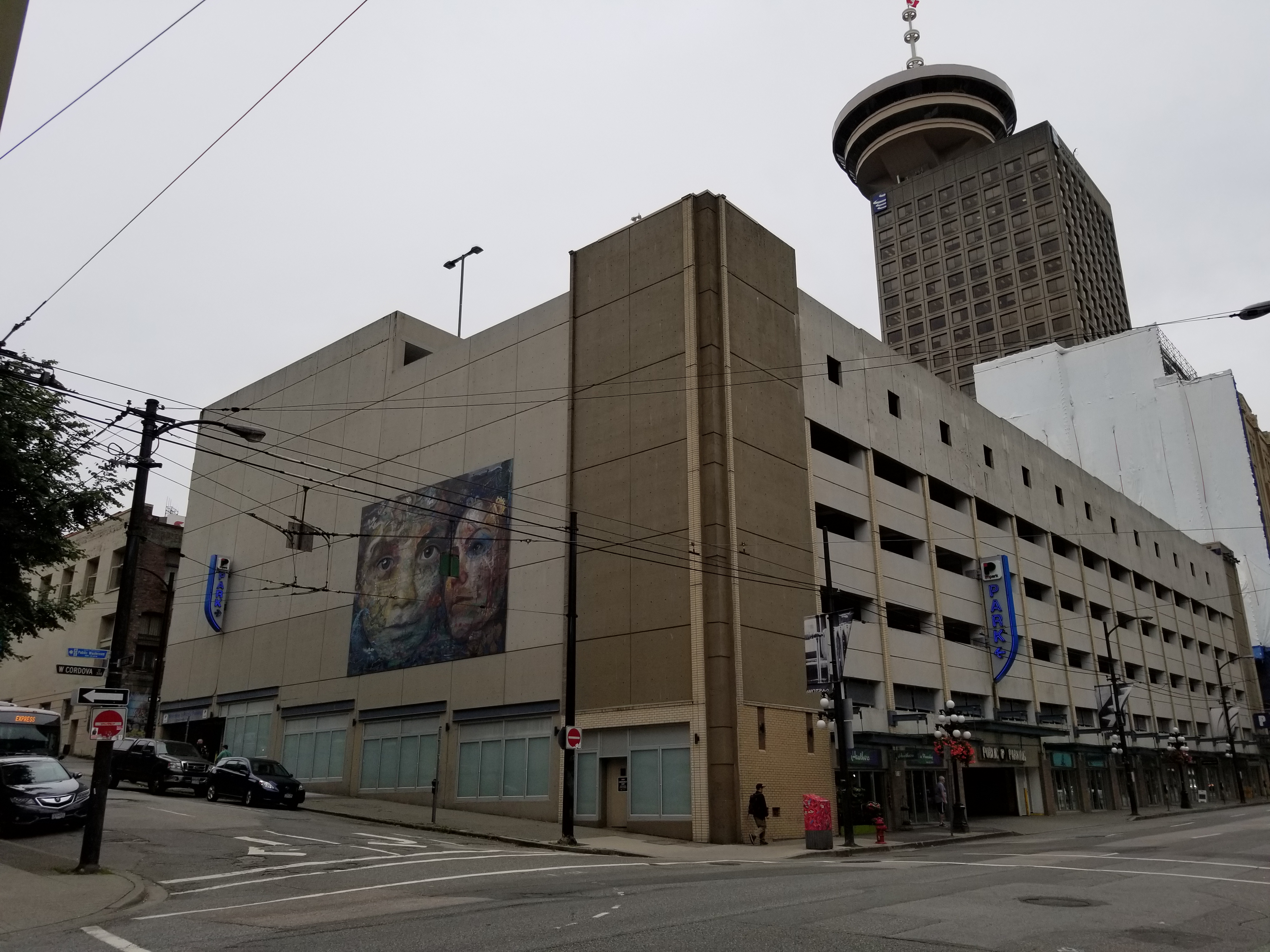
Cambie Street is a street in Vancouver, British Columbia, Canada. It is named for Henry John Cambie, chief surveyor of the Canadian Pacific Railway’s western division (as is Cambie Road, a major thoroughfare in nearby Richmond).
There are two distinct sections of the street. North of False Creek, the street runs on a northeast-southwest alignment (following the rotated street grid within Downtown Vancouver). As such, the street direction is approximately 45 degrees to that of the Cambie Bridge, and there is no seamless connection between the two. Instead, Nelson Street carries southbound traffic onto the bridge, and Smithe Street carries northbound traffic away from the bridge. The downtown section of Cambie Street runs from Water Street in Gastown in the north to Pacific Boulevard in Yaletown in the south and is a two-way street for its length.
South of False Creek, the street is a major six-lane arterial road, and runs as a two-way north-south thoroughfare according to the street grid for the rest of Vancouver. This section of the street was originally named Bridge Street, and was first connected to Cambie Street after the first Cambie Bridge opened in 1891; it was renamed Cambie Street after the second Cambie Bridge opened in 1912.
Between King Edward Avenue West and Southwest Marine Drive, the street has a 10 metre wide boulevard with grass and many well established trees on it; the boulevard was designated as a heritage landscape by the city of Vancouver in 1993.
When proposals to build SkyTrain’s Canada Line (formerly known as the Richmond-Airport-Vancouver or RAV Line) along Cambie Street first emerged, they were heavily protested by residents and business owners who wanted to keep the street as a heritage boulevard. They argued in favour of using the existing Arbutus Street rail corridor instead.
Once the decision was made to use the Cambie alignment for the Canada Line anyway, residents along the corridor successfully persuaded authorities to put the rail line in a tunnel instead of running it as a surface route, and to dig the tunnel using a tunnel boring machine. However, due to cost concerns and time constraints, the winning bidder decided to use a cut-and-cover method to build the tunnel – which required disruption to traffic and business along the corridor during the construction. As such, even though it cost less and was much faster than using a tunnel boring machine, the plan drew heavy criticism from area residents and businesses.
During 2006 to 2009, portions of the street south of False Creek were closed to traffic to allow for construction of the line. The cut-and-cover tunnel runs underneath the east side of the street for most of its route. South of West 63rd Avenue, the line emerges from the tunnel and runs on an elevated structure across the Fraser River.
Gregor Robertson, who later became the mayor of Vancouver, was a strong supporter of Cambie Street merchants and spoke regularly about hardships from the Canada Line construction. He called the handling of the rail line construction an “injustice.”
On March 23, 2009, Robertson testified in a lawsuit brought by Cambie Street merchant Susan Heyes, owner of Hazel & Co., in the B.C. Supreme Court regarding damage to her business from the construction, a lawsuit for which she was awarded $600,000 by the B.C. Supreme Court due in part to the fact that there was insufficient action to mitigate the effects of Canada Line construction on Cambie Street merchants. The award for damages was later reversed at the British Columbia Court of Appeal, which determined that while the project had resulted in a legal nuisance to the claimant, the government had acted within its authority and was therefore not liable for damages. Leave for further appeal to the Supreme Court of Canada was subsequently denied. On the Canada Line’s opening day of August 17, 2009, Robertson said Greater Vancouver needed more rapid transit but the Canada Line was a “great start” and that he was a “Johnny-come-lately” to the project.

