


One of the greatest things about all these streaming services is that the old TV shows come back around. They’re not quite like we remember them from the old days.
Amazon Prime has picked up the old “Magnum, P.I.,” which ran on CBS from 1980-88. Starring Tom Selleck as Thomas Magnum, a former Naval intelligence officer who served in Vietnam, the series follows his exploits as a private investigator in Hawaii, living gratis on the wealthy Robin Masters estate. While some of the charm has worn off “Magnum, P.I.’s” eight seasons, there are still many great lessons to be learned from that dashing P.I. driving a borrowed Ferrari through paradise.
An Ode to Dads and Tom Selleck in Shorts
“Magnum, P.I.” isn’t so much a guilty pleasure as an ode to Tom Selleck in shorts. The shorts are really a testament to how ’80s-fabulous this show is. Better than Don Johnson’s jacket and Bruce Willis’ dimples are Selleck’s super short shorts.
In fact, ’80s fashion for men was better all around than it is today. Short shorts are better than cargo shorts, tailored suits are better than Jimmy Fallon’s child-sized suits, and short-sleeved sweatshirts are perfectly acceptable if you have the arms for them. People joke about ’80s fashion and even hyperbolize it, with neon stripes and paint splatters (and yeah, I had that shirt), but the basic, mainstream lewks hardly pushed the sartorial envelope. Some things are better as they actually were, without the sheen of memory.
Magnum has that same mustache all we Gen Xers’ dads had when we were kids, which gives him a comfortable, familiar look — like this guy can put together a doll house and take down a ring of international jewel thieves, all before breakfast. And he’s got some good friends.
There’s Higgins (John Hillerman), Rick (Larry Manetti), and T.C. (Roger E. Mosley). Higgins is a veteran too, though of an earlier war, while Rick and T.C. were with Magnum in Vietnam. They rarely talk about the intricacies of the war, which is notable. Jokes and bits of connection, yes, but not so much the hard stuff. Back in the ’80s, the horrors of the war weren’t so far in the past that they had to be conjured up in dialogue to be present on screen.
1980s-Style Masculinity
The simple backstory that these guys were Vietnam vets was enough to give viewers deep and meaningful insight into the grief and turmoil in their hearts. There was a collective, public awareness of veterans’ experiences of the war, an understanding of both the facts of how the whole thing went down and the feelings that went along with it. That’s something we simply don’t have now, when nobody can agree on facts, and feelings are so subjective that only their bearer can understand them.
The guys keep their emotions bottled up inside, and while now and then the briefest facial expression denotes some past, buried trauma, they never let it out. They’re too manly for that — different from how a show would express past war grief today.
There are no hard feelings. They just suck it up, move on, and deal with the fact that they are damaged by looking cute, smiling at ladies, generally being stand-up guys, and having each other’s backs no matter what. The best kind of 1980s style is masculinity that not only looks good in shorts, but holds its emotions so close they turn into diamonds of kindness and compassion.
Magnum, the Man We All Need
“Magnum, P.I.” ran something like 20 hour-long episodes every season, and each one was stand-alone. That’s not the kind of thing you see anymore. On today’s TV shows, a plot builds and builds for an entire season, teases out the break, then leaves you hanging until the next season — or sometimes forever.
Every episode, Magnum and his friends come back fresh, relaxed, and ready to tackle a new mystery. Frankly, it’s a joy to find that nothing, no matter how bad or crazy, and no matter who gets shot or pushed from the top of a Honolulu skyscraper, the boys come back, right as rain, to face a new challenge in paradise.
No matter the challenge, Magnum can overcome it and be back to his Ferrari-driving ways in just a week’s time. Magnum narrates the story, talking about his intuition and gut feelings, and now and then he does us all a favor by looking out at the camera and gracing us with a knowing smile.
Most of the women who co-star on Magnum, a different one each episode and no regulars, show their good sense by not swooning for him. But no matter how accomplished and independent, the women come to trust Magnum. Maybe it’s the dimples, the short shorts, the mustache, or the unbuttoned Hawaiian shirts with hairy chests (which was in vogue back then) — or perhaps it’s Magnum’s hapless yet powerful demeanor. Whatever the reason, every episode, he maintains his standing as a gentleman.
He treats women as equals, and those he knows — journalists (one fiercely played by Tyne Daly), novelists, radio DJ’s, Jessica Fletcher (“Murder, She Wrote’s” Angela Lansbury) — are autonomous, self-sufficient, and capable. Yet they still appreciate a bit of chivalry — that most maligned, arcane concept where men acquiesce to women’s needs just for the fun of it.
Just as a childhood home once revisited seems smaller, these old shows from the ‘80s seem laden with preconceived notions that just don’t fit who we are culturally anymore. We don’t like big, strong men who look good in shorts trying to protect their friends and honor. We don’t like male friendships based in wartime bonding. We don’t like displays of affluence that don’t come with celebrity.
But there’s still plenty to love about “Magnum, P.I.” It’s an honest reflection of what prime time, family-friendly content was. There’s no over-the-top sex humor — the scantily clad women are merely beach background — and Magnum doesn’t let his personal ambitions get in the way of doing the right thing.
This isn’t a series you need to watch all of to get the general vibe and basic ideas. In fact, it’s best watched as a delightful background, to reminisce about when the worst crimes we could fathom were diplomatic assassinations, high-level embezzlements, and international jewel heists.


Public health challenges facing Russia today cripple its potential for tomorrow.
For all the external economic fears worrying countries everywhere, Russia faces further, entirely homegrown challenges. In all likelihood, the most important one among them is public health, which directly undermines the country’s economic development.
During the past two decades, an aging demographic turn and its effect on Russian society has been the focus of debate. Russia is experiencing a rapidly aging population with steadily declining birth rates.
However, while people living in most industrialized countries can count on increased life expectancy, Russians cannot. This reflects their relatively low overall health status.
These factors, in addition to restrictive immigration policies and low fertility rates (below two children per woman, which is considered the population replacement rate), have led Russia to a constant process of depopulation.
Between 1993 and 2015, Russia’s population decreased slightly, from approximately 149 to 144 million people. However, if current trends continue, there will be between 100-107 million Russians in 2050.
Preventable deaths
Serious health problems among Russians derive from high rates of smoking and alcohol consumption. Mortality among Russian men rose by 60% since 1991, four or five times higher than the European average.
These untimely deaths result mostly from preventable causes – alcohol poisoning, smoking, cardiovascular diseases, traffic accidents and violent crimes.
According to the World Health Organization, heart disease, aggravated by alcohol and tobacco, is responsible for over 1.2 million deaths each year.
Estimates of annual fatalities derived from smoking-related diseases range from 350,000 to 400,000. In the United States, which has more than twice the population of Russia, cigarette smoking causes more than 480,000 deaths annually.
Public health policies and information about smoking is less easily available in the Russia than in the United States, which may account for the lower percentage of deaths in the United States.
HIV/AIDS still looms large, particularly because 80% of those infected with HIV are under 30. The epidemic is closely associated with high levels of intravenous drug use.
More than two million Russian men are considered to be HIV positive, and the epidemic doesn’t show any signs of abating. In the United States, more than 1.2 million people are living with the infection.
In contrast to Russia, the estimated U.S. incidence (new cases) of HIV has remained stable in recent years due to effective public health policies and prevention efforts.
The hideous drug-resistance challenge
Tuberculosis still affects many Russians. Even more seriously, as in China, the country is experiencing a high burden of multidrug-resistant (MDR) tuberculosis, a variety of the disease impervious to isoniazid and rifampicin, the two most effective first-line anti-TB drugs.
Treatment of MDR TB requires treatment with drugs that are less potent and more toxic that those used to treat drug-susceptible TB.
The prevalence of diabetes is also increasing rapidly in Russia. Four million people have been diagnosed with the disease — and almost six million people are unaware they have it. The annual cost of caring for diabetic patients in Russia is over $12.5 billion.
In the United States, where 29 million people are diabetic, the picture is equally worrisome. One in four people with diabetes doesn’t know that he has the disease. Almost 90 million people are pre-diabetic.
Although figures are not comparable with the situation in Russia, diabetes and its complications in the United States account for $245 billion in total medical costs and lost work and wages.
In addition, a still inadequate health care system, lacking in resources and with attention focused on Russia’s main cities, affects mental health care.
In 2012, there were 277 outpatient clinics devoted to the primary care of people with mental disorders, compared to 318 such clinics in 2005.
At the same time, there has been a reduction in the number and quality of medications for patients with psychiatric illnesses.
Cutting health funding won’t help
Trying to cope with such problems is not easy for Russia. Addressing the underlying challenges would divert increasingly scarce resources from an economy that is under ever-greater strain because of international sanctions and the low price of oil.
Recent cuts in health care and education will not solve the problems affecting the Russian economy. At most, they are palliative measures that may help the budgetary outlook temporarily, but will not cure a sick economy.
Any way out?
The direct connection between the public health crisis and Russia’s economic potential should be clear.
It is estimated that between 2000 and 2010 – well before the recent sanctions – more than 1.25 million Russians emigrated. That represents an even greater number than those who left after the collapse of the Soviet Union.
A survey conducted in June 2012 by the LevadaCenter, an independent pollster, found that one out of every five Russians wants to emigrate compared to one in 20 in 1991, the year the Soviet Union dissolved.
At that time, most emigrants were poor and unskilled. Today, they constitute a wide range of well-off professionals, artists and scientists.
Of course, this generally highly productive group leaves the country largely for reasons having to do with the deteriorating political freedoms in the country.
Failure to tackle Russia’s huge public health problems is likely to exacerbate the brain drain already under way.

Arbat Street, mainly referred to in English as the Arbat, is a pedestrian street about one kilometer long in the historical centre of Moscow. The Arbat has existed since at least the 15th century, which makes it one of the oldest surviving streets of the Russian capital. It forms the heart of the Arbat District of Moscow. Originally the street formed part of an important trade-route and was home to a large number of craftsmen.
In the 18th century the Russian nobility came to regard the Arbat as the most prestigious living area in Moscow. Almost completely destroyed by the great fire of 1812 associated with Napoleon’s occupation of Moscow, the street required rebuilding. In the 19th and early 20th centuries it became known as the a place where petty nobility, artists, and academics lived. In the Soviet period, it housed many high-ranking government officials.

The archaeological site of Takht-e Soleyman, in north-western Iran, is situated in a valley set in a volcanic mountain region. The site includes the principal Zoroastrian sanctuary partly rebuilt in the Ilkhanid (Mongol) period (13th century) as well as a temple of the Sasanian period (6th and 7th centuries) dedicated to Anahita. The site has important symbolic significance. The designs of the fire temple, the palace and the general layout have strongly influenced the development of Islamic architecture.
Brief Synthesis
The archaeological ensemble called Takht-e Soleyman (“Throne of Solomon”) is situated on a remote plain surrounded by mountains in northwestern Iran’s West Azerbaijan province. The site has strong symbolic and spiritual significance related to fire and water – the principal reason for its occupation from ancient times – and stands as an exceptional testimony of the continuation of a cult related to fire and water over a period of some 2,500 years. Located here, in a harmonious composition inspired by its natural setting, are the remains of an exceptional ensemble of royal architecture of Persia’s Sasanian dynasty (3rd to 7th centuries). Integrated with the palatial architecture is an outstanding example of Zoroastrian sanctuary; this composition at Takht-e Soleyman can be considered an important prototype.
An artesian lake and a volcano are essential elements of Takht-e Soleyman. At the site’s heart is a fortified oval platform rising about 60 metres above the surrounding plain and measuring about 350 m by 550 m. On this platform are an artesian lake, a Zoroastrian fire temple, a temple dedicated to Anahita (the divinity of the waters), and a Sasanian royal sanctuary. This site was destroyed at the end of the Sasanian era, but was revived and partly rebuilt in the 13th century. About three kilometres west is an ancient volcano, Zendan-e Soleyman, which rises about 100 m above its surroundings. At its summit are the remains of shrines and temples dating from the first millennium BC.
Takht-e Soleyman was the principal sanctuary and foremost site of Zoroastrianism, the Sasanian state religion. This early monotheistic faith has had an important influence on Islam and Christianity; likewise, the designs of the fire temple and the royal palace, and the site’s general layout, had a strong influence on the development of religious architecture in the Islamic period, and became a major architectural reference for other cultures in both the East and the West. The site also has many important symbolic relationships, being associated with beliefs much older than Zoroastrianism as well as with significant biblical figures and legends.
The 10-ha property also includes Tepe Majid, an archaeological mound culturally related to Zendan-e Soleyman; the mountain to the east of Takht-e Soleyman that served as quarry for the site; and Belqeis Mountain 7.5 km to the northeast, on which are the remains of a Sasanian-era citadel. The archaeological heritage of the Takht-e Soleyman ensemble is further enriched by the Sasanian town (which has not yet been excavated) located in the 7,438-ha landscape buffer zones.
Criterion (i):Takht-e Soleyman is an outstanding ensemble of royal architecture, joining the principal architectural elements created by the Sasanians in a harmonious composition inspired by their natural context.
Criterion (ii):The composition and the architectural elements created by the Sasanians at Takht-e Soleyman have had strong influence not only in the development of religious architecture in the Islamic period, but also in other cultures.
Criterion (iii):The ensemble of Takht-e Soleyman is an exceptional testimony of the continuation of cult related to fire and water over a period of some two and half millennia. The archaeological heritage of the site is further enriched by the Sasanian town, which is still to be excavated.
Criterion (iv):Takht-e Soleyman represents an outstanding example of Zoroastrian sanctuary, integrated with Sasanian palatial architecture within a composition, which can be seen as a prototype.
Criterion (vi): As the principal Zoroastrian sanctuary, Takht-e Soleyman is the foremost site associated with one of the early monotheistic religions of the world. The site has many important symbolic relationships, being also a testimony of the association of the ancient beliefs, much earlier than the Zoroastrianism, as well as in its association with significant biblical figures and legends.
Integrity
Within the boundaries of the property are located the known elements and components necessary to express the Outstanding Universal Value of the property, including the lake and the volcano, archaeological remains related to the Zoroastrian sanctuary, and archaeological remains related to the royal architecture of the Sasanian dynasty. Masonry rooftops have collapsed in some areas, but the configurations and functions of the buildings remain evident.
The region’s climate, particularly the long rainy season and extreme temperature variations, as well as seismic action represent the major threats to the integrity of the original stone and masonry materials. Potential risks in the future include development pressures and the construction of visitor facilities in the buffer zones around the sites. Furthermore, there is potential conflict between the interests of the farmers and archaeologists, particularly in the event that excavations are undertaken in the valley fields.
Authenticity
The Takht-e Soleyman archaeological ensemble is authentic in terms of its forms and design, materials and substance, and location and setting, as well as, to a degree, the use and the spirit of the fire temple. Excavated only recently, the archaeological property’s restorations and reconstructions are relatively limited so far: a section of the outer wall near the southern entrance has been rebuilt, using for the most part original stones recovered from the fallen remains; and part of the brick vaults of the palace structures have been rebuilt using modern brick but in the same pattern as the original. As a whole, these interventions can be seen as necessary, and do not compromise the authenticity of the property, which retains its historic ruin aspect. The ancient fire temple still serves pilgrims performing Zoroastrian ceremonies.
Protection and management requirements
Takht-e Soleyman was inscribed on the national heritage list of Iran in 1931, and it is subject to legal protection under the Law on the Protection of National Treasures (1930, updated 1998) and the Law of the Iranian Cultural Heritage Organization Charter (n. 3487-Qaf, 1988). The inscribed World Heritage property, which is owned by the Government of Iran, is under the legal protection and management of the Iranian Cultural Heritage, Handicrafts and Tourism Organization (which is administered and funded by the Government of Iran). Acting on its behalf, Takht-e Soleyman World Heritage Base is responsible for implementation of the archaeology, conservation, tourism, and education programmes, and for site management. These activities are funded by the Iranian Cultural Heritage, Handicrafts and Tourism Organization, as well as by occasional international support. The current management plan, prepared in 2010, organises managerial strategies and activities over a 15-year period.
Sustaining the Outstanding Universal Value of the property over time will require continuing periodic on-site observations to determine whether the climate or other factors will lead to a negative impact on the Outstanding Universal Value, integrity or authenticity of the property; and employing internationally recognised scientific standards and techniques to properly safeguard the monuments when undertaking stabilisation, conservation, or restoration projects intended to address such negative impacts.
Victor Mikhailovich Glushkov (August 24, 1923 – January 30, 1982) was the founding father of information technology in the Soviet Union (and specifically in Ukraine), and one of the founders of Cybernetics. He was born in Rostov-on-Don, Russian SFSR, in the family of a mining engineer. He graduated from Rostov State University in 1948, and in 1952 proposed solutions to Hilbert’s fifth problem and defended his thesis in Moscow State University. One of his great practical goals was the creation of a National Automatized System of Administration of Economy (OGAS), which included the establishment of a network of computers to manage the allocation of resources and information among organizations in the national economy, which would represent a higher form of socialist planning than the extant Stalinist command economy. This ambitious project was ahead of its time, first being proposed and modeled in 1962. It received opposition from many senior Communist Party leaders who felt the system threatened Party control of the economy. By the early 1970s official interest in this system ended.

This video was created by a proud team of people with multiple gender identities and orientations!
My Patreon – https://www.patreon.com/PimpMasterBroda
Book Me On Cameo – https://www.cameo.com/pimpmasterbroda
Follow Me on Twitter! – https://twitter.com/PimpMasterYoda1
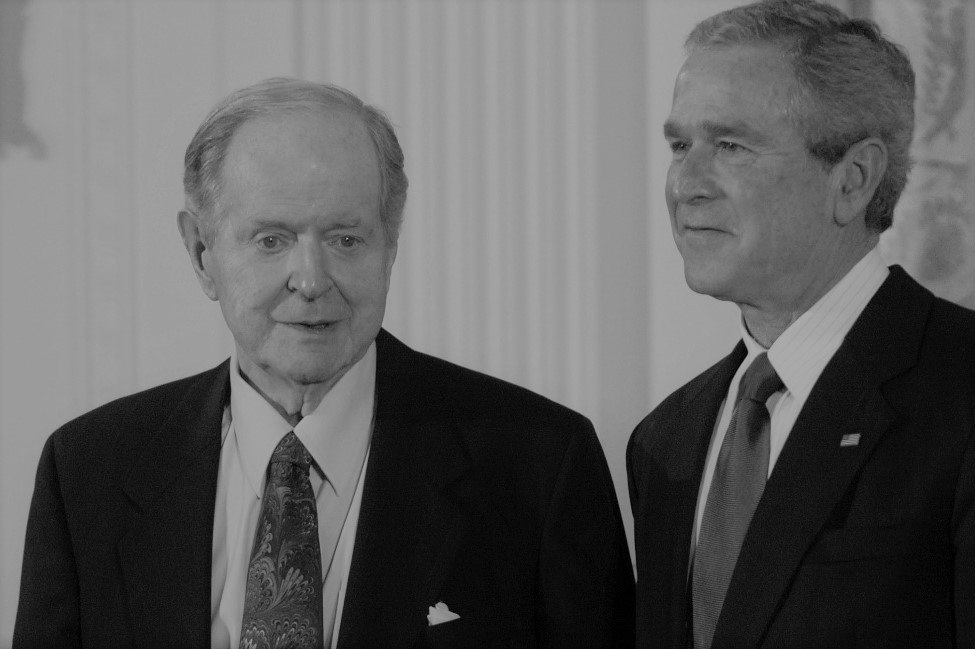
Robert Conquest, next to Leon Trotsky arguably the chief anticommunist and anti-Stalin propagandist of the 20th century, has died. Naturally, the capitalist media are fawning over him.
A lot could be said about Conquest. I’ll say a bit at the end.
Here are some facts — I have checked them — concerning Conquest’s most famous book The Great Terror:
Robert Conquest has also been identified as having worked for the IRD from when it was set up until 1956. The Information Research Department (IRD), was a section set up in 1947 (originally called the Communist Information Bureau) whose main task was to combat Communist influence throughout the world by planting stories among politicians, journalists and others in a position to influence public opinion.
A 1978 story in the The Guardian alleged that Conquest’s work there was to contribute to the so-called “black history” of the Soviet Union — in other words, fake stories put out as fact and distributed among journalists and others able to influence public opinion. After he had formally left the IRD, Conquest continued to write books suggested by the IRD, with Secret Service support.
His book The Great Terror, a basic anti-communist text on the subject of the power struggle that took place in the Soviet Union in 1937, was in fact a recompilation of text he had written when working for the secret services. The book was finished and published with the help of the IRD. A third of the publication run was bought by the Praeger Press, normally associated with the publication of literature originating from CIA sources.
Conquest’s book was intended for presentation to “useful fools”, such as university professors and people working in the press, radio and TV. Conquest to this day remains, for anti-communist historians, one of the most important sources of material on the Soviet Union.
http://www.fact-index.com/r/ro/robert_conquest.html
The article from The Guardian in 1978 documents the propaganda activities of the IRD:
David Leigh, “Death of the department that never was.” The Guardian January 27, 1978, p. 13, at
http://www.cambridgeclarion.org/e/fo_deceit_unit_graun_27jan1978.html
In his Ph.D. dissertation (but not in the book that he wrote from it) Arch Getty pointed out:
The dominant tendency [in writing the history of the “purges”] has been automatically to believe anything an emigre asserted while automatically denying the truth of everything from the Stalinist side. If one wanted a balanced picture of Tsar Ivan IV, (“The Terrible”), one would not accept at face value the descriptions of the exiled Prince Kurbsky in Poland, during a period of Russo-Polish war. If one wanted a balanced picture of Mao Tse-Tung’s regime in China, one would not accept Chiang Kai-Shek’s version in the early 1950’s as essentially reliable. If one were not interested in such a view, one would. The apparent monstrosity of Stalin’s crimes and a generation of Cold War attitudes have contributed to what would be considered sloppy scholarship in any other area of inquiry.
Getty also pointed out that Conquest specialized in anticommunist propaganda masquerading as scholarship while working for British intelligence.
Sometimes, the “scholarship” had been more than simply careless. Recent investigations of British intelligence activities (following in the wake of U.S. post-Watergate revelations), suggest that Robert Conquest, author of the highly influential Great Terror, accepted payment from British intelligence agencies for consciously falsifying information about the Soviet Union. Consequently, the works of such an individual can hardly be considered valid scholarly works by his peers in the Western academic community.
In 1980 I interviewed Professor John Hazard of Columbia University, at the time the world expert on Soviet law. Hazard told me that people in the Soviet studies field had told him that British intelligence was still doing Conquest’s research for him.
…Conquest (Terror, 754) … makes the astounding statement that “Truth can thus only percolate in the form of hearsay.” And, further, “On political matters basically the best, though not infallible, source is rumor … “. He believes that the best way to check rumors is to compare them with other rumors–a dubious procedure given the fact that migr s read each other’s works. Of course, historians do not accept hearsay and rumor as evidence in any other field of history.
Already in 1979 Getty concluded:
The point of view adopted here is that the standard interpretations of the “Great Purges”, such as those by Fainsod and Conquest, are seriously flawed, cannot account for the available evidence, and are thus no longer tenable. (53)
A good reply to Conquest’s dishonesty is the article by Robert W. Thurston,
“On Desk-bound Parochialism, Commonsense Perspective, and Lousy Evidence: A Reply to Robert Conquest,” in Slavic Review 1986, 238-244.
I don’t any other scholar officially in the field of Soviet history ever dared to attack Conquest head-on in print, in a mainstream journal.
Conquest replied in kind, trashing Thurston’s book on the history of the USSR in the 1930s when it was published by Yale University Press in 1996. Thurston’s book was by far the best book on this period up to that point and is still the best because he rejects the knee-jerk anticommunist, anti-Stalin line and sticks to the evidence, with only a handful of lapses.
Thurston also published an excellent article showing the dishonesty of the term “Great Terror” by pointing out that very, very few people were in fact “terrorized.”
“Fear and Belief in the USSR’s ‘Great Terror’: Response to Arrest, 1935-1939.” Slavic Review 45 (1986), 214-234.
This article elicited a hostile but very weak response by Conquest, to which Thurston replied with the article about “lousy evidence,” quoted above.
After Conquest’s book on the Ukrainian famine, Harvest of Sorrow was published in the 1980s the anticommunist experts in the Soviet history field universally rejected it.
You can read some qutatoins from them in the article by Jeff Coplon, “In Search of a Soviet Holocaust. A 55-year-old Famine Feeds the Right.” Village Voice January 12, 1988. Coplon’s article, with quotations from the anticommunist scholars, is at
https://msuweb.montclair.edu/~furrg/vv.html
Of course there was no “deliberate famine.” Quite the opposite: Collectivization put an end to famines in Russia / Ukraine. Conquest later retracted his view that Stalin had deliberately caused the famine.
Our view of Stalin and the famine is close to that of Robert Conquest, who would earlier have been con-sidered the champion of the argument that Stalin had intentionally caused the famine and had acted in a genocidal manner. In 2003, Dr Conquest wrote to us explaining that he does not hold the view that ‘Stalin purposely in?icted the 1933 famine. No. What I argue is that with resulting famine imminent, he could have prevented it, but put “Soviet interest” other than feeding the starving first — thus consciously abetting it’.
For all these quotations and more see my book :Grover Furr, Blood Lies. The Evidence that Every Accusation Against Joseph Stalin and the Soviet Union in Timothy Snyder’s Bloodlands Is False. (New York: Red Star Publications, 2014), Chapter 1 “ The ‘Main-Made Famine’ and ‘Deliberate Famine’ Arguments in Bloodlands, Chapter 1.”
After my book Khrushchev Lied was published in Russia I was interviewed by Literaturnaia Rossia, a literary-cultural journal. The interviewer asked me some tough questions, which was fine!
Part of my reply was about Conquest’s book The Great Terror:
As a graduate student from 1965-69 I opposed the US war in Vietnam. At one point somebody told me that the Vietnamese communists could not be the “good guys”, because they were all “Stalinists”, and “Stalin had killed millions of innocent people.”
I remembered this remark. It was probably the reason that in the early 1970s I read the first edition of Robert Conquest’s book The Great Terror when it was published. I was shaken by what I read!
I should add that I could read the Russian language since I had already been studying Russian literature since High School. So I studied Conquest’s book very carefully. Apparently no one else had ever done this!
I discovered Conquest was dishonest in his use of sources. His footnotes did not support his anti-Stalin conclusions! Basically, he used any source that was hostile to Stalin, regardless of whether it was reliable or not.
Conquest — with the help of the British intelligence service —took the lies about the Stalin period concocted under Khrushchev and by him, added more lies from anticommunist sources in the West like Alexander Orlov and Walter Krivitsky, and presented this as “history.”
Conquest’s The Great Terror has lots of footnotes, which are intended to fool the educated but naive reader. But those same footnotes made it possible for me to discover that Conquest used phony evidence and never proved any of his anticommunist, anti-Stalin claims.
25 years later, when Gorbachev took up Khrushchev’s anticommunist and anti-Stalin lies, repeated them, and added more lies of his own, Conquest issued a new edition of The Great Terror and told everybody “I was right.”
He wasn’t “right.” Gorbachev was simply telling the same kinds of lies, and often the very same lies, about the Stalin period that Khrushchev and his people had told.
Conquest got a lot of honors from the mass-murdering imperialists, from Margaret Thatcher to Ronald Reagan and beyond. He earned their praise. He also got a cushy, high-paying post at the Hoover Institution.
Such are the rewards for telling lies on behalf of the anticommunists.
We should realize that no one so honored by the chief mass murderers of world history can ever be telling the truth.
Those of us who want to struggle for the better, communist world need to learn from the successes, as well as from the mistakes, of the Stalin-era Soviet Union and the worldwide communist movement of the 20th century, so we can imitate what they did right while avoiding what they did wrong. So, let’s redouble our commitment to doing just that.

