






Lately, many people have been spreading videos, quotes, and articles featuring David Duke via email, Facebook, blogs, etc. This is a tangential issue, because it’s not something Alex Jones is doing himself. It’s something that has become mysteriously popular among certain fans of Jones, particularly Truthers and Canadian “Freemen”. I have to say something about it because I hate racism more than just about anything else on this planet, and I realize that (strange as this may seem to Americans), a lot of Canadians seem to be unaware of David Duke’s history and motives. They like what he has to say about the Israel-Palestine issue, or Zionism, or what-have-you, so they think it’s perfectly acceptable to share his “work” for the enlightenment of others.
Here’s the deal. I’ve watched these videos and read these articles, and I can tell you in perfect confidence that everything David Duke has to say about Israel and Palestine has already been said elsewhere, by far more credible (and far less racist) people like Gwynn Dyer, Robert Fisk, and Norman Finkelstein – to name just a few. Duke is not doing original research. I doubt he’s even been to Israel or Palestine, as there would be no impetus for a Christian white racial supremacist to hang out with Jews and Muslims (unless it’s at a Holocaust denial conference or a PR event). I believe that Duke’s recent moral support of Muslims is a ploy; he doesn’t actually care about their rights and issues, but it benifits him to align himself with them in the short term, to promote his anti-Semitism.
So by using Duke’s words, his videos, his image to spread a certain message, rather than going to the source material and putting together your own presentations on the conflict, you look like a total asshole. I guarantee that anyone who knows you’re disseminating David Duke literature and vids will look askance at you for the rest of your life, wondering if you’re secretly a racial supremacist. It will damage your credibility and reputation beyond measure, no matter how many times you say something like, “I don’t like David Duke, I just liked what he had to say in this clip.”
The attitude seems to be that it’s OK to learn from and collaborate with racial supremacists as long as they’re not being overtly racist. It’s the same attitude I saw among Truthers who worked openly with Holocaust deniers, arguing that if you’re united on one issue, it doesn’t matter what else you believe. Maybe that’s true, but look how much damage was done to the Truth movement by its affiliation with anti-Semites. The bottom line is that by failing to challenge racist disinfo and supremacist propaganda when you’re directly faced with it, you are basically aiding and abetting it. You are giving your tacit approval to it. And if you are helping racists spread their message by sharing their videos and literature – for whatever reason – you are actually participating in it.
With the current attitude, it shouldn’t be a surprise that white supremacists and white separatists have been making some major headway lately. The separatist movement has its own syndicated radio show, Political Cesspool (on which perennial Jones favourite Paul Craig Roberts has been a guest). And now David Duke, of all people, has somehow managed to dupe certain members of the public – once again – into believing that he has changed and that it’s time to stop mentioning his “past” as a Klan leader and racist. If you have fallen for this, I strongly urge you to review even the most basic information about Duke, even just his Wikipedia entry. He does, beyond any shadow of any doubt, believe that the Christian white man is morally, spiritually, physically, and mentally superior to any other race on earth, and that he has a God-given mandate to spread this message to as many people as he can. This is not past tense. David Duke is not appearing on TV and giving radio interviews to offer you unbiased, helpful information about Israel and Palestine; he is using public forums to subtly denigrate non-Christian and/or non-white people so that you will begin to think of yourself as superior to them and jump all the way onto his bandwagon. He is a propagandist. He is a popularizer. He is a recruiter. If you’re comfortable with this, go ahead and share his information with everyone you know. If you’re not, take a stand. Stop being a vector of thinly veiled racist propaganda.
Let’s bid farewell to Paul Craig Roberts, a favourite guest of both Jones and the white supremacists at Republic Broadcasting Network’s Political Cesspool. (David Duke once wrote that before PC debuted in 2004, the white man had no voice in mainstream radio. Apparently Rush Limbaugh, Michael Savage, Imus, Glenn Beck et al don’t qualify as mainstream. Or white men.)
Roberts is retiring from professional paranoia, though he might return to The Alex Jones Show once or twice.
I won’t call Roberts a racist or an anti-Semite, because like all the people he excoriates for sitting on or ignoring the *truth* about his pet topics, Roberts likes to coyly dance around certain issues so that you can’t quite pin him down. While his anti-war views can be appreciated even by liberals, his other views … um, not so much. He has spent the last decade shredding the reputation he spent the other 60+ years building. Kinda sad, but also kinda familiar. I mean, Morley Safer is doing infomercials these days. I guess when you reach an advanced age, you get to be a complete moron and no one will call you on it.
To PCR fans, cheer up: There are plenty more paranoid white guys where he came from.
Aleksey Valerievich Isaev is one of the most famous recent Russian historians who soundly rebutted the “Rezun/Suvorov Thesis.” Here I organized a partial translation of an article he posted on a Russian Military-History Forum. In it Isaev counters the mythology advanced by a “rezunite” B. Shaptalov in the book Test By War, and S. Pereslegin the commentary added to a new edition of N.K. Poppel’s memoir. The facts and arguments brought up by Isaev are very useful to counter the works of all other “rezunites” as well.
To my knowledge, Isaev’s Anti-Suvorov and Anti-Suvorov: Ten Myths of Second World War have not yet been translated into English. Perhaps if these works were readily available in the West, then the influence of the “rezunites” could be significantly undermined. Most of the books of Isaev and his opponents are freely available in Russian at this site.
Soviet Deployment: the Belostok Bulge.
“There was no ‘concentration’ of forces in the Belostok bulge. There was a common for the whole Soviet-German front density of forces about 30 km for a division, improper for either offensive or defensive purposes. The perimeter of defense for the 3rd Army reached 120 km, 10th Army – 200 km and 4th Army – 150 km. On average, in the Western Military District a rifle division covered 36 km; in particular, a rifle division of 3rd Army covered 40 km, 10th Army – over 33 km and 4th Army – 37.5 km.”
“The three mechanized corps deployed near Belostok were accorded quite reasonable defensive missions according to the covering plan of the Western MD. The 6th mechanized corps was supposed to be used this way: ‘In case of a penetration of large moto-mechanized enemy forces from the direction of Ostrolenka, Malkinya-Gurna towards Belostok… 6th Mechcorps under the cover of 7th anti-tank brigade concentrates in the region of Strablya, Raisk, Ryboly and, attacking the enemy in the general direction of Vysoke-Mazovetzk, Zambruv or Sokol, Strenkova Gura, in cooperation with 9th, 43rd fighter aviation divisions and 12th bomber division destroys the enemy’s mechanized corps.’ The third Mechcorps also had a mission according to the plans: ‘17th Mechcorps stays in district’s reserve and is used according to the circumstances and its readiness.’
The deployment of the Mechcorps in the Western MD accorded fully to the idea of delivering blows to the flanks of the German armored spearheads. The problem was not in the concentration but in the incorrect expectations of the depth at which German spearheads were aimed. The headquarters of the Western MD, in the person of D. G. Pavlov, did not expect such wide blows aimed to link up so deep at Minsk. The expected blows were expected to be of smaller scale, across river Lida. This was one of the organic imperfections of the defensive plan of the Western MD.”
On Soviet Planning.
“It has become traditional to compare ‘netto-quantity’ of the German tanks with ‘brutto-quantity’ of the Soviet tanks…according to German military historian Muller-Gillbrandt, Panzerwaffe possessed only 3582 tanks without counting the flammpanzers at the beginning of the war. If, however, everything that was produced in Germany and captured in Europe is counted, then the brutto-quantity of German tanks would approach 10,000. It is more important here to compare not the number of tanks, but organizational structures, into which they were included. Also important would be to tell about the problems of new Soviet tanks (short lifetime of V-2 engine, poorly trained crews, technical weaknesses of some designs).”
“The characteristics of Soviet artillery should not be misinterpreted as well. The old Soviet mythology that influenced Suvorov and his followers made rather modest claims: ‘Soviet artillery had high combat qualities, and some were the best in the world;’ ‘At the time of German invasion the Red Army was equipped with the best artillery, whose combat qualities surpassed those of Western European, including German, equipment.’
The fact is, however, that a significant portion of Soviet artillery was made up of modernized guns, originally developed even before the First World War. At the beginning of the war Red Army possessed 1667 howitzers of type 1938 yr.; 5578 122 mm howitzers of type 1910/30 yr.; and 778 122 mm howitzers of type 1909/37 yr. A larger proportion of 152 mm howitzers was of newer designs, but still the bulk of these guns were of old types. 152 mm howitzers of type 1909/30 yr. – 2432 pieces, 152 mm howitzers of type 1938 yr.- 1128 pieces. The numbers speak for themselves.”
The Opposing Forces.
“The fact was that Soviet military districts entered the war torn into several echelons (forces along the border, divisions moving towards the border from several tens of kilometers inside of it, and, finally, those “deep divisions” moving towards the border. Realistically from the 56 Soviet divisions along the border 16 divisions should be subtracted since these were either in Crimea or several tens of kilometers from the border; so only 40 Soviet divisions were available to meet the blows of the Wehrmacht’s first echelon. This can be seen on any good map that shows the deployment of the opposing forces on 22 June 1941.”
“The fact was that the bulk of Wehrmacht’s forces was concentrated on the border at the beginning of the war, while the echelons of the RKKA were divided by hundreds of kilometers. Meanwhile, Second Strategic Echelon near the rivers West Dvina and Dnepr, some 300-400 km from the border, could not provide any help to the armies of the first (‘screening’) echelons, so it should not be counted as part of the special districts at all. Not even mentioning, that on 22 June, only 83 military train echelons of Second Strategic Echelon armies had arrived to their destinations, while 455 were in transit, 401 had not yet embarked to be transported.”
Hitler – Stalin – Britain.
“It is absolutely useless to deny the strategic surprise the German invasion had on the USSR, it is an undisputed fact. Up to some moment the high command of USSR could not understand the motivation behind the attack on the USSR. The real motive, proclaimed by A. Hitler at the meeting of 9 January 1941 yr: ‘The British are supported only by the possibility of the Russian entrance into the war. Had this hope been lost, they would have quitted the war.’ This kind of strategy of attacking the USSR (and defeating it quickly) for the sakes of scaring Britain was not considered by J.V. Stalin. Stalin also did not believe that Hitler would so gravely underestimate the capabilities of the USSR.”
Border Battles.
Comparison: 4th PzGruppe (Hoepner) vs 12th and 3rd Mech corps.
“In the whole 12th Mechcorps there were 2531 cars, as many as in ONE German panzer division. In the battle against the tank divisions of Hoepner’s 4th PzGruppe on June 24th of the whole 3rd Mechcorps only 1 division, the 2nd Tank division, was able to take part. The 5th tank division was at that time fighting against Hoth’s 3rd PzGruppe near Alitus.”
“From the 12th Mechcorps in the battle near Shaulyai initially only the 28th tank division was involved and not even in full force because of a lack of fuel. 23rd tank division of 12th Mechcorps at the that time was subordinated to the 10th Rifle Corps.”
“The lack of artillery did not allow to suppress the German artillery and allow freedom of action to the motorized infantry of the tank divisions. The German 6th and 1st Panzer divisions were equipped with powerful 105mm gun (the Mechcorps lacked similar weapons), further help in dealing with Soviet KV’s was provided by the 88mm dual purpose guns. Finally, in the meeting engagement between these armored forces, the Germans had not reached the positions of the 3rd and 12th mechcorps, but the 28th and 2nd tank divisions in their movement to the forward deployment areas for the counterattack ran into the German forces.”
By the time the Soviets approached forward positions to deliver a blow the flanks of the German spearheads, the Germans had already occupied these positions.
“So, instead of a blow against the German flank, a meeting engagement ensued between the 6th Panzer division of the 41st Motorized corps and the 2nd Tank division of the 3rd Mechcorps. At the final stages the 1st panzer division entered the battle completing the encirclement of the 2nd Tank division from the north-west. The 2nd Tank division was effectively surrounded by three German divisions, 6th, 1st panzer and 269th infantry (from the south). It should be obvious why this counterattack failed.”
The Beginning.
Headquarters of the 4th Army: “‘After restoring the communications, the commander of the army received in a letter transmitted in plain text by telegraph the order of the commander of the Western MD about preparing all forces for combat.”
“Next L.M. Sandalov describes the events this way:
‘At 15 minutes past 4 o’clock – chief of staff of the 42nd rifle division informed that the enemy had started the artillery preparation of the Brest fortress. At these same minutes the following order was just received:
NKO Directive No. I ‘Concerning the Deployment of Forces in Accordance with the plan for Covering Mobilization and Strategic Concentration’
To: The Military Councils of the Leningrad, Baltic, Western and Kiev Military Districts.
Copy to: The People’s Commissar of the Navy.
A surprise attack by the Germans on the fronts of the Leningrad, Baltic, Western Special, Kiev Special and Odessa Military Districts is possible during the course of 22-23 June 1941.
The mission of our forces is to avoid provocative actions of any kind, which might produce major complications. At the same time, the Leningrad, Baltic, Western Special, Kiev Special and Odessa Military Districts’ forces are to be at full combat readiness to meet a surprise blow by the Germans or their allies.
I order: (a) Secretly man the firing points of the fortified regions on the state borders during the night of 22 June 1941; (b) Disperse all aircraft, including military planes among field airfields and thoroughly camouflage them before dawn on 22 June 1941; (c) Bring all forces to a state of combat readiness without the additional call up of conscript personnel. Prepare all measures to black out cities and installations. Take no other measures without special permission. [signed] Timoshenko Zhukov
Received by the Western Special Military District at 0045 hours 22 June 1941 Dispatched to subordinate forces at 0225-0235 hours 22 June 1941
This was quite a logical order that called for defensive measures, however, it was issued too late (received simultaneously with the German attack) and so could not be fully carried out to have a major impact.
“L. M. Sandalov clearly remembers receiving of the order at a time when the Germans had already started the offensive. The actions taken by Korobkov before the German invasion are described this way by the chief of staff of the 4th Army: ‘Before 3 o’clock 45 minutes the army commander personally gave two orders by phone: to the chief of staff of 42nd rifle division to alert the division for combat and move out of the fortress to the gathering region; to the commander of the 14th Mechcorps to bring his forces to full combat readiness.’”
Dubno: Where Armor Clashed.
Army Group South headquarters notes.
Entry for 25th June: “III motorized army corps, having successfully participated (24.6) in a tank battle during its advance, considerably slowed down its rate of advance and only on the evening of 25.6 reached Lutsk.”
Entry for 26th June: “In the sector of the 17 Army and 6 Army the situation remains unchanged. The enemy defense, especially in the sector of the 17 Army, remains active and has been noted for a strong will to resist. As a result of this, our successes in the advance were not decisive.”
According to the official Tables of Organization and Equipment (Russian: Shtat) the difference in autotransport: German Panzer division – 2300 autos, Soviet Tank division – 1696. Needless to say, Soviet divisions were not fully equipped and the huge non-hostile losses of machinery should also be kept in mind.
“A 500 km march for the tanks of those years inevitably led to mechanical breakdowns. This is true for the Red Army both in 1941 and in 1943. Such a long march would also inevitably lead the artillery to lag behind, because the tow-tractors could not keep up. Without having the full Shtat of trucks, the Mechcorps could not properly carry neither the infantry, nor the supplies.”
“Major-General D. I. Ryabyshev noted in the ‘Description of the 8th Mechcorps’ combat actions during the period of 22-29, June 1941: ‘The corps had marched for an average of 495 km before entering combat, left behind during the march was 50 % of all the machinery.”
(RF: this Mechcorps had a total of 4 37mm AA guns and 24 AAMG’s for protection against the Luftwaffe)
Information on the non-combat losses of T-35 tanks can be found on the Russian Battlefield site.
More information can be found here.
South Front.
While the “rezunites” explain the failures in the early days of war by the soldiers’ unwillingness to fight, they are not simply dishonoring all the brave and loyal men but also are deliberately ignoring well-known facts.
The main causes of the catastrophe were: unfinished (unfolded) deployment (Red Army units were simply too deeply echeloned), incomplete mobilization of forces, especially, of the support and logistics units.
For example, the Independent 9th Army’s divisions had on average 30-50 km to defend, which was too much to create a sufficiently thick frontline.
The following are excerpts from Isaev’s review of recently re-published memoir of N. Poppel, the Commissar of the 8th Mechcorps, with the ample commentary of the “rezunites.”
The total of the discharged Red Army officers during the Great Purges was about 44,000 men (Shadenko’s report), but this was higher than the total number of executions. Most importantly is the expansion of the Red Army in 1939-1941 simultaneous with Stalin’s repressions.
The general diversity of equipment alone does mean a force’s weakness.
“A tank army of 1943 Shtat had tanks of many different kinds: T-34 of different types, T-70, sometimes Lend-Lease tanks (e.g. Rotmistrov’s 5 GTA at Kursk in 1943). The mix of different tanks remained even later, even though the tank armies were equipped mostly with T-34’s, self-propelled guns of various types (SU-76, SU-85, ISU’s), Lend-Lease based SU-57 (T-48 based), heavy IS tanks. This is not counting of all different kinds of trucks, motorcycles, gun carriages. Artillery was also mixed. A tank army of 1943-45 had 82-120mm mortars, 37mm AA guns and 12.7mm Dshk AAMG’s; 45,57,76mm AT guns; 76, 122mm guns, rocket launchers M-13. All these were adequately supplied with spare parts and ammunition.”
Training.
Major-General D. I. Ryabyshev, Commander of the 8th Mechcorps (report of July 18th, 1941):
“The majority of the drivers of KV and T-34 tanks had 3 to 5 hours of practical experience. During the period of the corps’ existence the men and machinery had not fully participated in tactical training, and were not practically tested neither on marches, nor on basic combat maneuvers. The tactical cooperation and cohesion did not exceed the company level, very rarely being satisfactory at battalion and regiment levels. This was the main cause of the weakness of the command and control during the march and the fighting on the regimental-division levels.”
Combat Description.
“The Germans penetrated the front of the 5th Army and threw their mechanized forces into the gap in the Sokal bulge. These forces then quickly started moving into the rear of the South-Western Front. What could have been sent against them? The strategic and the operational reserves, of course. Zhukov hastily gathered the necessary forces to create pincers meant to cut off the spearhead of the 1st PzGruppe by blows from the south (15th, 8th Mechcorps, parts of the 4th Mechcorps), which were to link up with the 9th, 19th, 22nd Mechcorps to the north. This was Zhukov’s strategy. The high command of the South-Western Front, represented by M. A. Purkaev, had other ideas, and it is precisely the confrontation of these ideas that lead to the confusion in the actions of the 8th Mechcorps. The South-Western Front’s high command wanted to create a front from the not yet fully deployed rifle corps (they were on their way to the border when the war started), and with the mechcorps to counterattack the German spearheads penetrating this front. This idea was totally utopian, since the front line of these deploying corps did not have a sufficient density. Success could have been achieved only with the full cooperation of rifle and mechanized corps in strangling the thin neck of the German panzer spearhead. Otherwise the front of the rifle corps could be easily penetrated in several places, and the mission still stays the same but now in several directions. Zhukov left on 26th of June and instead of organizing a cooperation of rifle corps (which possessed necessary artillery that was lagging behind the mechcorps) and mechcorps, the high command of the Kiev MD followed its own initiative at pulling the mechcorps out of the battle and into the rear of the rifle corps. This strategy involved the 8th and 15th mechcorps. After considerable criticism was received from Moscow, this self-reliance was stopped, another attempt to create a shock group was made, but the retreat of the mechcorps, the loss of the crucial time had sad consequences. First of all, units should not have been moved back and forth so much; secondly, the German infantry divisions had reached the frontline by that time effectively changing the force ratio at the main directions. These infantry divisions played a significant role in the operation. At the end of the Dubno battle, Group Popel was encircled and destroyed precisely by the infantry divisions that followed behind the armored formations.”
“Major-General D.I. Ryabyshev did not complain about a lack of attention from the front’s high command. On the contrary, he was showered by orders. ‘Very frequent change of orders of the South-Western Front, which altered the direction of the movement and the character of the combat missions, weak reconnaissance by the corps units, had a negative impact on the adaptation to the circumstances. Lack of time for the organization of cooperation and the organization of command and control in combat forced units of the corps to enter combat in many cases from the march.’”
On the characteristics of the T-34 and KV tanks.
A report by S. Ogurtsov, the commander of the 10th Tank division, of the 15th Mechcorps.
(RF: 10th TD had 63 KV and 38 T-34 tanks on 22/06/1941, source)
“‘The soldiers and commanders of our division are of high opinion about our tanks. Among the good qualities our machines have the following weaknesses: 1). About the KV tank a). AP shells or large caliber bullet hits can make the turret and the armored cupola jam and lock up. b). The diesel engine is underpowered, and because of this, it overloads and overheats. c). The main and the hull friction-clutches malfunction. 2). About the T-34 tank. a). The armor of the hull can be penetrated from 300-400m by 37mm AP rounds. The hull’s side plates can be penetrated by 20mm AP rounds. During crossing of ditches the tanks dive with their noses because of the low silhouette, the traction is insufficient because of the relative flatness of the tracks. b). A direct hit makes the driver’s hatch fall down. c). The tracks can be disabled by any shell. d). The main and hull friction-clutches malfunction.’”
“Some think that the Red Army’s mechcorps and the Wehrmacht’s motorized corps were sort of a bunch of knights fighting in an open field. In reality a significant role in the battles was played by infantry and artillery. The latter cleared the way for the attackers from the enemy’s strong points and anti-tank defenses. But it was exactly the Soviet artillery that lagged behind. Nor was it sufficient in the table of organization of the mechanized corps. In other words, the quantities of tanks alone should not be compared without full consideration of artillery, infantry and support units.”
“The research of the Dubno battles today allows to avoid both the compliments towards the communist party, as well as the political blabbering about the ‘bloody stalinist regime.’ Serious historical research assumes work with documents, reports of the participants, orders and other communications. The memoirs allow us only to understand the motivations behind the commanders’ decisions, while the dry pages of documents give us a chronology of events and the factual material about the battles. But only if to all this a proper understanding of the nature of combat during the Second World War is added, can a clear and accurate tale arise about the heroism of the tankists and the rifleman of the South-Western Front.
They did not have enough experience, the Red Army was not unfolded and had not completed its planned deployment and mobilization, and was not sufficiently equipped with transport and support units, at the time when it was forced to fight under the conditions of local German superiority.
The Mechcorps were the only means to intercept the German panzer spearheads, they were at least theoretically mobile enough to redeploy and to counterattack. The mechcorps were thrown into action in pieces, the direction of their blows was frequently altered under the continuously changing circumstances.
In the history of the South-Western Front’s counteroffensives there is everything: unconditional bravery, experienced soldiers and officers, green troops conscripted in May 1941, and the mistakes of the commanders. But these events deserve an accurate and a thoughtful description, and not the humiliation of our ancestors. Less of all they deserve the meaningless comments of a whole company of wanna-be historians.”
This is a follow-up essay to my previous posting on whether or not the cable news channels are deliberately ignoring Tulsi Gabbard’s campaign.
I’ve noted in the past how two subjects elicit the most hate mail: Climate change and the Israeli-Palestinian conflict. We can now add a third: Tulsi Gabbard
Two days ago I posted an essay on my analysis of the relationship between candidate support and news coverage. Based on the data, I concluded that Democratic presidential candidate Tulsi Gabbard does not receive the amount of news coverage she deserves.
After posting the essay, angry replies hit my inbox within hours. The meanest ones I won’t dignify with a response, but one complaint found within more than one email does deserve an response: Why would the news media single out Tulsi Gabbard?
I believe there are three reasons Gabbard is targeted: (1) She challenged the Obama administration’s informal policy not to use the term ‘radical Islamic terrorism’ when talking about the War on Terror, (2) she’s a vocal critic of the military-industrial complex, and (3) she sharply criticized Hillary Clinton and the Democratic National Committee (DNC) at a critical point for Clinton in the 2016 primary season.
Here are some of the specifics behind those three reasons…
Defying Obama’s guidance on referring to Middle East terrorism
When Gabbard was first elected to the U.S. House from Hawaii’s 2nd district in 2012, she was a rising star. A combat veteran that served in a medical unit during the Iraq War, she has a polished, even temperament that presents well on television.
At the start of her congressional career, Gabbard was rising within a political party desperately looking for young stars. The Obama years saw the number of elected Democrats dwindle to its lowest levels in decades and to reverse that trend, the party needed new blood.
In her first term, she was assigned to the House Armed Services and Foreign Affairs Committees, an almost unprecedented honor for a freshman legislator. She also became a vice chair for the Democratic National Committee — again, an unusually fast rise for a legislator that was only 32 when first elected to the House.
However, there were early signs that Gabbard was not (and is not) a lock-step Democrat partisan. In 2015, she openly disagreed with the Obama administration’s reluctance to use the term ‘radical Islamic terrorism’ to describe the War on Terror’s primary adversary.
According to Gabbard, you cannot fight the enemy if you don’t understand their motivation. To ignore the role of radical Islamic theology (Wahhabism) in terrorism is to misunderstand the problem altogether. The Young Turk’s Cenk Uygur and Ana Kasparian and others in the progressive left cried Islamophobe!, particularly as Gabbard become a more frequent guest on Fox News where producers began to see her as a useful ally in discrediting the Obama administration’s handling of Middle East events. Though hardly Gabbard’s intent, she represented disunity in a party obsessed with unity.
Strike one.
Embarrassing Hillary Clinton in 2016
If that had been the only thing, Gabbard would probably be in good standing with the Democratic Party today. But it wasn’t. Her next apostasy was a big one.
During the 2016 Democratic presidential nomination race she resigned from the DNC and endorsed Bernie Sanders over Hillary Clinton. Among one of the first super-delegates to break free from the Clinton orbit, Gabbard again became the poster child for Democratic Party division.
All the same, the endorsement of Sanders isn’t what made her persona non grata at the DNC holiday party. It was how and when she did it.
She resigned on February 28, 2016, the day after Clinton had won a convincing victory over Sanders in South Carolina (73% to 26%, respectively), and endorsed Sanders in the process. Appearing on MSNBC, Gabbard declared that the DNC was not an even-handed umpire in the 2016 nomination race, as evidenced by their unwillingness to have more candidate debates between Clinton and Sanders.
In other words, Gabbard said the DNC was rigging the nomination race in favor of Clinton, long before the Russian-hacked DNC emails revealed in greater detail exactly how intertwined the Clinton campaign and DNC had become. Score another one for Gabbard.
Gabbard’s timing could not have been worse for Clinton, as Sanders was under increasing (and understandable) pressure to get out of the race, particularly by the party’s big donors who did not care for Sanders’ unapologetic Democratic socialism.
But with Gabbard’s announcement, the momentum and media narrative immediately turned against Clinton.
Gabbard knee-capped Hillary Clinton when it looked like the nomination race was over. Clinton never fully recovered after Gabbard’s Sanders endorsement. In contrast, Sanders surged, winning 15 out of the next 31 state races, punctuated by a unexpected win in Michigan. From there, Sanders carried his progressive message to the Democratic National Convention in July. I don’t believe that happens without Tulsi’s surprise resignation from the DNC.
Strike two.
Challenging the establishment’s love for regime change wars
Soon after Donald Trump was elected, Gabbard visited Syria on a fact-finding mission and met personally (and unexpectedly) with Syrian leader Bashar al Assad. The party establishment was apoplectic — still in a deep depression over Trump’s victory — and the Syria trip just added to their view that Gabbard wasn’t a team player. Though it would take almost two years, House Speaker Nancy Pelosi removed Gabbard from the House Foreign Affairs Committee at the start of the 116th U.S. Congress.
Rubbing salt into an open wound, Gabbard, along with Kentucky Senator Rand Paul, would be one of the few voices to urge the Trump administration to be cautious before launching air attacks on Syria following a chlorine chemical attack in Douma, Syria, allegedly by the Assad regime.
The U.S. attacked anyway and now, over a year later, Gabbard’s skepticism about the origin of the Douma chemical attack has been possibly validated by an engineering report leaked from the Organisation for the Prohibition of Chemical Weapons suggesting the Douma attack may have been staged by anti-Assad rebel fighters.
It is unlikely the Douma incident will ever be understood with certainty, but Gabbard has maintained a consistent position on U.S. military and foreign relations issues: No more counterproductive regime change wars.
When the Trump administration began its intimidation campaign against Venezuelan leader Nicolás Maduro, Gabbard called it out as reckless. And even as MSNBC and CNN news celebrities implied (or stated directly in some cases) that Gabbard is friendly towards dictators (just like Trump!), she shook off the criticism and maintained her position — regime wars don’t work.
With this same dynamic going on now with Iran, Gabbard has again led among national Democrats in opposing U.S. aggression towards Iran. While Sanders and Elizabeth Warren have made some relatively good, though ultimately tepid, statements on Iran, they lack the confidence and gravitas Gabbard brings to the issue.
To be clear, Gabbard is not a pacifist — she believes when the U.S. is attacked (such as on 9–11), using the military is an appropriate form of reprisal. Gabbard is not anti-war. When the U.S. and its vital interests are attacked, the U.S. must respond, with appropriate force, says Gabbard, who also believes the U.S. must always pursue a dialogue with our adversaries such as North Korea, Iran, Venezuela and Syria.
Strike three.
Other possible causes as to why Gabbard is ignored
On other policy fronts, Gabbard was the first presidential candidate to voice support for Wikileak’s founder Julian Assange when he was taken into custody by the British and subsequently charged by the U.S. with aiding and abetting an act of espionage, recognizing that his case was a direct assault on Americans’ First Amendment rights.
When New York Representative Alexandria Ocasio-Cortez unveiled the “Green New Deal” — a highly abstract statement on how the U.S. can aggressively address climate change — Gabbard chose not to co-sponsor Ocasio-Cortez’ bill. Why? Gabbard had sponsored the 2017 OFFACT bill, a significantly more concrete plan to convert the U.S. energy profile to 100-percent renewable energy.
Gabbard’s willingness to lean forward on controversial domestic and foreign policy issues — and high success rate on being right — has created a small, but vocal fan base among anti-war activists and civil libertarians.
Finally, Gabbard is hard to place on a one-dimensional ideological scale (liberal-conservative). She operates on a different vector, independent of the Left versus Right rubric. At one moment she might defend fellow candidate Joe Biden, and the next criticize the Obama administration’s Middle East policies. Gabbard is the closest person we have to a non-partisan politician.
And when these reasons are viewed as a whole, it is easy to conjecture why establishment Democrats and, in turn, the Democrat-aligned new media, might consider Gabbard a genuine threat to their power status.
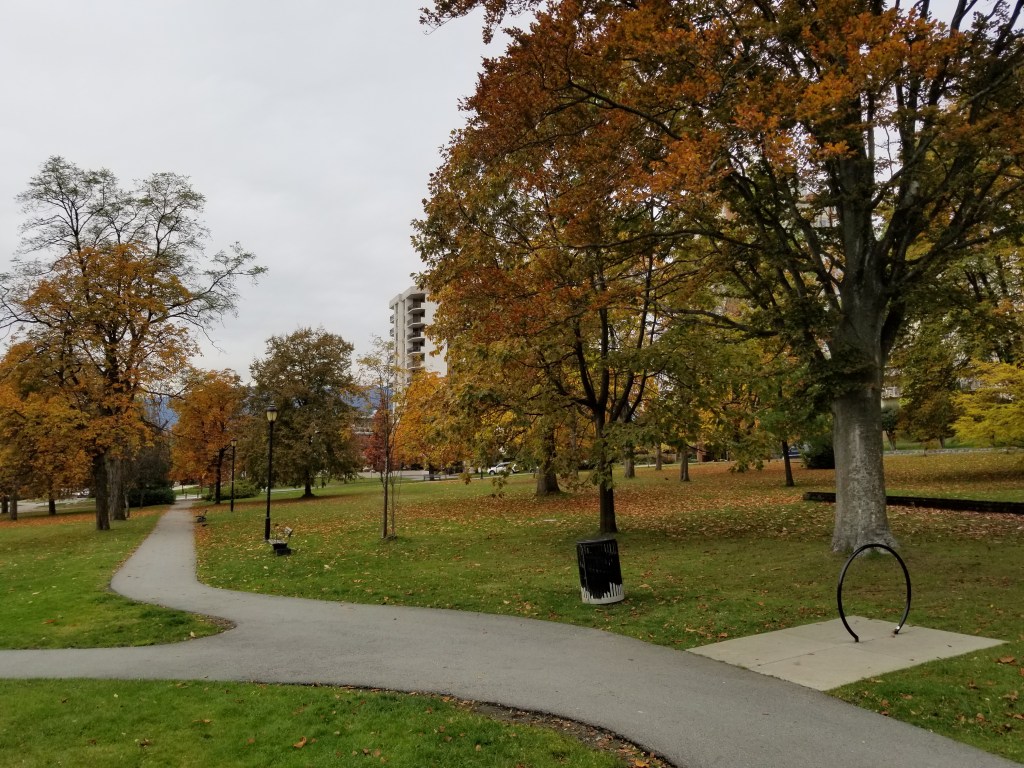
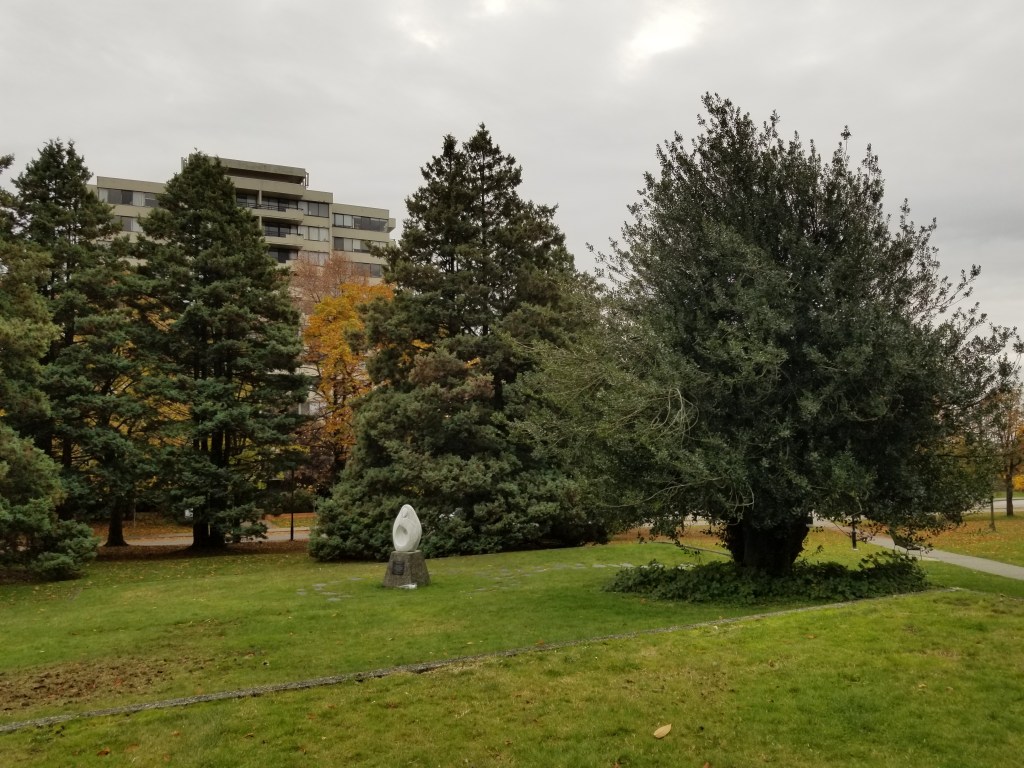
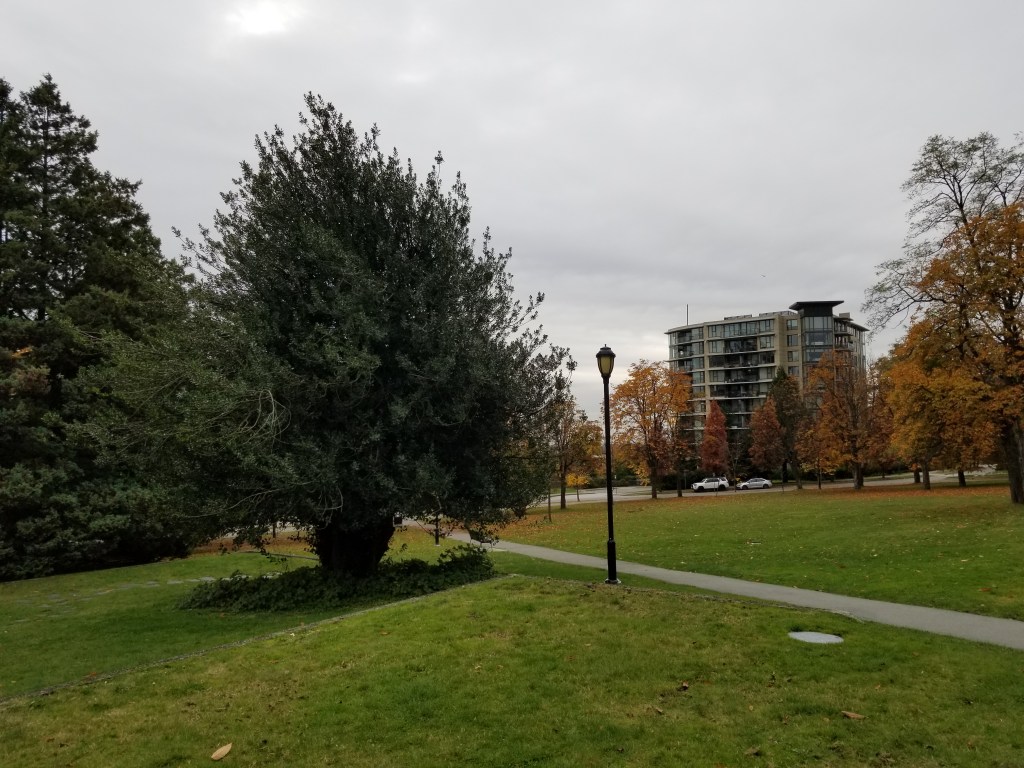
Vanier Park is a municipal park located in the Kitsilano neighbourhood of Vancouver, British Columbia, Canada, created in 1967. It is home to the Museum of Vancouver, the Vancouver Maritime Museum, the City of Vancouver Archives, and the H.R. MacMillan Space Centre. It is also the site of the ancestral Squamish settlement of Sen̓áḵw, which was destroyed by the Provincial government 54 years earlier.
The Squamish had an ancestral fishing ground on the site. In the mid-1800s, they established a more permanent village site there named Sen̓áḵw. During the Royal Engineer’s Survey of 1869, it was designated as “Indian Reserve No. 6”. Sen̓áḵw encompassed 80 acres, and included Vanier Park. In 1877, chief August Jack Khatsahlano, after whom the Kitsilano neighbourhood was named, was born at Sen̓áḵw.
The Canadian Pacific Railway, the Province and the City of Vancouver worked together to displace the Squamish inhabitants, with the City calling the settlement “a source of menace to the morals and health of the City”. In 1913, the BC Government under Richard McBride expropriated the site, paying the inhabitants a fraction of the land’s value, and giving them two days to leave before burning their homes to the ground.
The land was acquired from the Province by the Federal government in 1928. Around the time of the second world war, the site was home to Royal Canadian Air Force (RCAF) station, Number 2 Equipment Depot. On October 28, 1966, it was turned over to the Vancouver Park Board by the Federal Government. Named for former Governor General of Canada Georges Vanier, the park officially opened on May 30, 1967. The H.R. MacMillan Space Centre and the Vancouver Museum complex opened in 1968, thanks to lumber baron MacMillan’s $1.5 million donation.
Deputy Park Board Superintendent William Livingstone, famous for his landscape design for Queen Elizabeth Park and VanDusen Botanical Garden, increased the size of the original park site using tons of free fill from the excavation for the MacMillan Bloedel Building on Georgia Street. The fill added additional acres onto the park which was then landscaped by Livingstone and his crew.
Vanier Park plays host to several of Vancouver’s biggest summer festivals, including the International Children’s Festival and the Shakespearean Bard on the Beach. It is the biggest and most famous of the fifteen parks in Kitsilano.
Over a 101-year life, David Rockefeller used political influence and repression to shore up his family’s power.
As a child growing up in a mansion on 54th Street in Manhattan, David Rockefeller remembered roller-skating with his siblings down Fifth Avenue trailed by a limousine in case they got tired. Rockefeller and his family, which included billionaires and politicians at all levels of government, spent a lifetime ensconced in this kind of luxury. At the time of his death on March 20, Forbes estimated that the 101-year-old Rockefeller’s investments in real estate, share of family trusts, and other holdings stood at $3.3 billion.
The obituaries and tributes waxed nostalgic, giving us all the gilt with none of the grit. Instead of a reckoning with what this man, alongside his powerful family, wrought over a 101-year life, the eulogies have been hollow celebrations and stories of celebrity-filled parties.
Not to be confined to the obituaries, JP Morgan Chase & Co. took out a full-page advertisement in the business section of the New York Times. With a half scowl, a black-and-white photograph of David Rockefeller looms in the center of the page, while a message from Jamie Dimon, the chairman and CEO of JP Morgan, attempted the poetic.
Dimon writes that Rockefeller left “an indelible, positive mark on our world as a leader in philanthropy, the arts, business and global affairs.” A former member of the Board of Directors of the Federal Reserve Bank of New York, Dimon sat in that seat during the economic collapse of 2008 and was widely criticized for his role in the financial crisis that devastated millions. He also occupied the main seat at JP Morgan Chase, the same one Rockefeller held as chairman of Chase Manhattan from 1969 –1981, during the depths of New York City’s fiscal crisis, decades before Chase acquired JP Morgan.
Sometimes the idea of a “ruling class” can seem abstract. In the figure of David Rockefeller, who died March 20, and the Rockefeller family, the abstraction melts away. His life and his family’s history give us a unique view into how those with the money shape everything from who gets elected to public office, to how cities are built, to what kind of art is allowed to be produced.
David Rockefeller was the central banker for the family that epitomized Gilded Age opulence. While David managed the money, his brothers and nephews took on the work of governing. His brother Nelson was both the governor of New York and vice president, his other brother Winthrop was governor of Arkansas, his nephew Winthrop Paul Rockefeller was lieutenant governor of Arkansas, and Jay Rockefeller, another nephew, was governor and a US senator for West Virginia.
David Rockefeller’s ruling-class origins is the stuff of legends. He was the grandson of oil tycoon John D. Rockefeller, the founder of Standard Oil, and the son of John D. Rockefeller Jr.
David learned his capitalism at his daddy’s knee and from his grandfather’s university. He was a PhD student in economics at the University of Chicago, which was founded in part with his grandfather’s money. The school, according to David, “boasted one of the premier economics faculties in the world.”
He denies his legacy status as important, saying “the fact that Grandfather had helped found the university played a distinctly secondary role in my choice.” He has sat on the board of trustees in various capacities for seventy years, and the university created the David Rockefeller Distinguished Professorship in his name.
David Rockefeller’s connection to the economics department would have longstanding implications for those in other parts of the world with a bit less privilege. Eventually the home of the infamous neoliberal economist Milton Friedman, faculty in the economics department at the University of Chicago led the ideological fight for a deregulated and privatized economy, championing the gutting of social welfare programs.
Naomi Klein exposed the brutal logic of those pushing the neoliberal agenda in her book The Shock Doctrine. She also linked the project to David Rockefeller. With a US-backed junta in place in Argentina, Henry Kissinger made sure to extend an invitation to the military government’s minister of the economy. He offered to make the introductions needed to keep Argentina financially solvent and said he would “call David Rockefeller,” then president of Chase Manhattan Bank, to gain access to the resources to do so.
Kissinger didn’t stop there. “And I will call his brother, the vice president [of the United States, Nelson Rockefeller].” David’s Bank, as Chase became known during this time, shored up Argentina’s economic needs, while Nelson took care of the political front.
Bolstering dictatorships was no aberration. David Rockefeller traveled the world in service of accumulating capital. He rarely met an oil oligarch or crony capitalist he wouldn’t do business with.
Rockefeller went so far as to “become embroiled in an international incident when in 1979 he and long-time friend Henry Kissinger helped persuade President Jimmy Carter to admit the shah of Iran to the United States for treatment of lymphoma, helping precipitate the Iran hostage crisis,” Reuters reported, a rare half-criticism in the mostly fawning obituaries.
But Rockefeller preferred to wear a velvet glove over his iron fist. His friends and eulogizers have followed his lead.
Todd Purdum wrote in the New York Times that David Rockefeller “will always be the man who served the second martini I ever drank in my life.” He used his limited space in this column to recount his family history with the Rockefellers and the personal good deeds of a dead man.
Purdum notes that all Rockefeller’s loyal aides called him “D. R.,” before adopting the use of the nickname himself further in the column. If not for Purdum’s occupation, this would be just another vapid toast to the departed billionaire. However, it was as the City Hall bureau chief at the New York Times that Purdum had that martini with D. R. surrounded by “priceless art” after being “summoned” to Rockefeller’s East 65th Street townhouse “to discuss the fortunes of Mayor David Dinkins.” This two-martini lunch is a stark reminder of how the system functions with its willing media presided over by generations of billionaires.
Other media outlets happily played along. UChicago News wrote that “David Rockefeller’s civic work included . . . serving as a key supporter of New York’s Museum of Modern Art” while the New York Times touted that he “courted art collectors” and lent his extensive collection to art museums.
His “love of art,” however, may not have been so pure. Reuters noted that “a Mark Rothko painting he bought in 1960 for less than $10,000 was auctioned for more than $72 million in May 2007.” Seen in this way, his love seems to be more for the art of the deal.
Forgotten by the eulogists touting David Rockefeller’s love of art is the infamous destruction of Diego Rivera’s mural, Man at the Crossroads, at the hands of David’s brother Nelson. Famously depicted in the 2002 movie Frida, Rivera was commissioned in 1934 by the family to paint a mural at the newly constructed Rockefeller Center. When Rivera added the visage of Russian revolutionary Vladimir Lenin to the mural, he discovered the Rockefellers’ love of art had found its limits. Nelson ordered the mural destroyed.
David later justified its destruction by saying, “Unfortunately, what [Rivera] painted was different from the sketch.” It was not the addition of Lenin alone that prompted the demolition of this lost masterpiece, Rockefeller continued. “The picture of Lenin was on the right-hand side, and on the left, a picture of [my] father drinking martinis with a harlot and various other things that were unflattering to the family and clearly inappropriate to have as the center of Rockefeller Center.”
In a city of stark inequality, Diego Rivera’s mural was too prescient, too true, to stand. But David Rockefeller’s justification for the mural’s destruction, that it was “clearly inappropriate,” tells only part of the story of the Rockefellers’ contempt for some of the finest art of the century.
Like Rivera, there were other artists who helped build a culture of opposition to the Rockefellers. Folk-singing troubadour Woody Guthrie wrote the protest anthem to the massacre at Ludlow where mine workers and their families were killed by private detectives and the Colorado National Guard.
David’s father, John D. Rockefeller Jr, supplied guns to his private detective agency and the National Guard as they shot up and burned the Colorado miners’ camp.
John D. Rockefeller Jr was also the developer of Rockefeller Center. Pete Seeger and Sis Cunningham recall auditioning alongside Woody as members of the Almanac Singers for a job at the Rainbow Room on the sixty-fifth floor of Rockefeller Center. After poking mild fun at the rich by singing lines like, “The Rainbow room is mighty fine. You can spit from here to the Texas Line,” management requested that they make it a real “hick act” by dressing in “country clothes.”
The group refused, and on the way down in the elevator they made up less innocuous lyrics. “At the Rainbow Room, the soup’s on the boil. They’re stirrin’ the salad with that Standard Oil,” Seeger remembers Woody singing.
Beyond his “love of art,” David Rockefeller’s role in the New York fiscal crisis may be the most talked-about aspect of his life in the flattering obituaries. The University of Chicago News noted that his “civic work included helping New York City through its financial crisis,” while the New York Times claims, “He was instrumental in rallying the private sector to help resolve New York City’s fiscal crisis in the mid-1970s.”
Though the Times seemed to consider this enough coverage of Rockefeller’s role in New York City’s fiscal crisis, we have to pause here to consider exactly what he did to “help resolve” the fiscal crisis.
Historian Joshua Freeman writes in his book Working-Class New York: Life and Labor Since World War II that as chairman of Chase Manhattan Bank in 1971, David Rockefeller formed the Financial Community Liason Group and used it
as a vehicle for pressuring city leaders to adopt reforms that would reassure investors — especially themselves — of the city’s solvency. . . . [T]he financial community also pressed for a program of municipal austerity, including a freeze or cutback in the number of city workers, an increase in their productivity, reductions in capital spending, cutbacks in city services, and increased fees and taxes.
Rockefeller had learned his lessons well at the University of Chicago and from his father and grandfather. He saw the crisis as a growing risk to the bank he headed, rather than a grave risk to millions of New Yorkers. His plan for resolving the crisis returned Chase Manhattan to solvency while destroying the social safety net built up over generations in New York City.
Rockefeller would not only initiate the policies to end or erode the social-democratic programs in New York City, which provided health care through publicly funded hospitals and educational opportunities through free and low-cost college education, but he would be sure to see them through to the bitter end. Chairing the Business/Labor Working Group on Jobs and Economic Revitalization in New York City in 1976, the group’s recommendations were draconian, Freeman recounts, including “lower business and individual taxes, regulatory simplification, federalization of welfare, ending rent control, and reductions in the energy costs by loosening environmental standards.”
Of course, this was not a “shared sacrifice” — the reductions in taxes on commercial banks benefitted Rockefeller and his banking buddies while depriving the city of much-needed tax revenue.
Freeman notes that Rockefeller’s attacks on education were particularly harsh. The committee for “reforming” education was made up of presidents of New York’s elite private universities as well as a representative from the Rockefeller Brothers Fund, leaving out union members and public-school representatives.
Freeman writes that “in the fiscal crisis atmosphere, private interests attempted to grab public resources in the name of efficiency.” CUNY was encouraged to “concentrate on education at the junior college level allowing the thirty-three private colleges and universities . . . to concentrate on full undergraduate- and graduate-level education,” creating a clear two-tier system of education in New York City that remains today.
This is also a part of David Rockefeller’s legacy, whether or not the New York Times chooses to recognize it.
Still, David Rockefeller went further, determined to remake the very power structures of the city. In 1979, he founded the Partnership for New York City, affiliating it with the Chamber of Commerce and Industry. Merging into one organization in 2002, the newly named Partnership for New York City moved beyond the old mission of the Chamber with its narrow focus on “business interests.”
“Under Rockefeller’s vision,” the partnership would now “allow business leaders to work more directly with government and other civic groups to address broader social and economic problems in a ‘hands on’ way,” according to its website.
Rockefeller achieved the goal of having “business leaders work more directly with government . . . in a ‘hands-on’ way.” So while Reuters characterized the Partnership for New York City as an organization “to help the city’s poor,” and the New York Times said the partnership “fostered innovation in public schools and the development of thousands of apartments for lower-income and middle-class families,” in fact the partnership became a lever to gain real-estate tax breaks for developers.
In From Welfare State to Real Estate: Regime Change in New York City, 1974-Present, Kim Moody says that the partnership “issued a policy proposal calling for the abolition of the city’s land use procedures, which gave local community boards, borough presidents, and the city council a say in development projects” in 1990. Moody notes that from 1990 to 1993, these policies resulted in an average of $144 million in tax reductions per year — a boon for developers and a drain on city resources.
But the partnership went further still. When Deputy Mayor Sally Hernandez-Pinero questioned these “incentives” for development, the head of the partnership wrote a New York Times op-ed suggesting she get the boot in place of “an experienced and distinguished business executive.” Moody notes that she was readily replaced by “a long-time Chase, i.e., Rockefeller, veteran.” David Rockefeller moved beyond shaping policy behind the scenes to getting politicians in place to protect his and his friends’ interests.
So while the New York Times writes that David Rockefeller “pulled the city out of the crisis,” we should remember that what he did was lead the charge to privatize and deregulate a social-democratic city. By 1981, he was able to retire as the head of Chase Bank having restored it “to full health.” The health of Chase Bank meant immiseration for the majority living in Rockefeller’s city.
David Rockefeller was born into a family of billionaires and politicians, and all contributed to the individual he became. It should come as no surprise that during the 1980 transit workers’ strike, Ed Koch led opposition to the strikers with David Rockefeller standing by his side.
Of course, the Rockefeller family was no stranger to opposing strikes. David would have learned early on not to shy away from such opposition. His father funded the violence to break the Colorado coal miners’ strikes, while his brother Nelson oversaw the brutal repression and the killing of thirty-nine people during the National Guard’s brutal repression of the Attica Prison uprising in 1971.
This is the face of the US ruling class, seen in one family. Instead of covering the dark side of this history, the New York Times chose to highlight the “mystique” of the Rockefeller family name, quoting David saying, “I have never found it a hindrance” — as if we should find this insightful. The paper notes his “reserve” in stating the obvious, that “having financial resources . . . is a big advantage.”
In the end, Rockefeller directed much of his money to philanthropic endeavors, giving “tens of millions of dollars” to places like Harvard and Rockefeller University. But his reserve and philanthropic giving are not likely to be in New Yorkers’ minds as they struggle to find a publicly funded hospital or pay tuition or outrageous rents in a city gutted by the institutions built and operated by David Rockefeller.
For three centuries from 712 AD to 1001 AD, Indian kings kept Arab invaders at bay.
Medieval history in India often begins with Mohammed Bin Qasim’s invasion of Sindh in 712 AD and quickly jumps to Mahmud of Ghazni’s invasion of 1001 AD. What happened in the intervening 300 years? Why did a power which had completely overwhelmed West Asia and North Africa in a matter of 70 odd years not make much headway in India for nearly three hundred? The answer lies in the successive defeat of Arab invasions by several Indian rulers. From Kashmir’s Lalitaditya to the Chalukyan king Vikramaditya II in today’s Karnataka, an arc of resistance kept the invaders at bay for centuries. It is unfortunate that while a similar event in Europe (The Battle of Tours — 732 AD) is widely known and celebrated, hardly anyone has heard of Nagabhata I, Bappa Rawal, Pulakesiraja, Lalitaditya or Yashovarman.
But first a bit of background. Mohammed Bin Qasim had annexed Sindh in 712 AD but died a few years later. His work was carried forward by Junaid Ibn Marri who proceeded as far as today’s Ujjain and Bharuch. It seemed as if the story of Arab conquest would continue here too. But as the ninth century Gwalior prashasthi inscription of the king Mihirabhoja tells us, things turned out very differently for the invading party. The inscription mentions the Gurjara Pratihara ruler Nagabhata I, who successfully led an alliance of various other chieftains against the Arabs. That this event is specifically mentioned hundred years later by Mihirabhoja shows its importance.
Nagabhata thus can be credited with saving Gujarat and Malwa from the invading party.
Several rulers from Kashmir to Karnataka rose to the common challenge and ensured that the Arabs did not advance beyond the Indus. The Arabs tried to enter via the Bharuch route too, but here they met with stiff resistance from Pulakesiraja, who allied with a Gurjara ruler named Jayabhat IV. Together, Nagabhat I, Pulakesiraja and Jayabhat IV inflicted severe defeats on the invading Arabs at Vallabhi and Navsari.
In fact, Vikramaditya II, the Chalukyan king who ruled from Badami, has eulogised his governor Pulakesiraja as a “solid pillar of Dakshinpath” and “defeater of those who cannot be defeated”. Another feudatory of the Chalukyas — the Rashtrakuta ruler Dantidurga is also mentioned in some sources as having aided Pulakesiraja. Thus, the tide of invasion in Gujarat was successfully stemmed by 738 AD and any incursion to the South was also decisively halted.
Various small states in today’s Rajasthan had also been overrun and it was at this stage that Chittor, then called Chitrakuta, was taken by a young warrior named Kalbhoja, more popular as Bappa Rawal. The Guhilot dynasty, to which he belonged, would go on to be one of the most powerful of Mewar in later years. A lot of legends surround him. But what is certain is that he rallied various small states in today’s Rajasthan and Gujarat and successfully pushed back the Arab invasion, which had threatened everything including Chittor. The Solankis also helped in this battle, and coinciding as it did with the battles fought by Chalukyas and Gurjara Pratiharas, dealt a body blow to the Arab invasion — who retreated to the west bank of the Indus.
“Not a place of refuge was to be found”, rues a contemporary Arab chronicle. Some attempt was made via the Punjab route, by Junaid Ibn Murri and Tamin, only to face an alliance led by Lalitaditya Muktapida of Kashmir and Yashovarman of Kannauj. In doing so, a vast swathe of India, from the Karakoram to the Gangetic doab became a part of this history. It is interesting to note that prior to and after defeating the Arabs, they opposed each other.
Lalitaditya’s and Yashovarman’s campaigns coincided with Bappa Rawal, Nagabhata and Pulakesiraja. Chronicles of both ancient Kashmir and Kannauj talk about this glorious chapter, which now lie forgotten.
The (unsuccessful) invasion of Al Hind or India was in complete contrast to the string of victories the new power had enjoyed across West Asia and North Africa. Having fought off the invaders, the Gurjara Pratiharas grew to be the dominant power in India, governing over half the subcontinent. Their presence and that of other powers ensured that no foreign power could step on Indian soil for nearly three hundred years.