





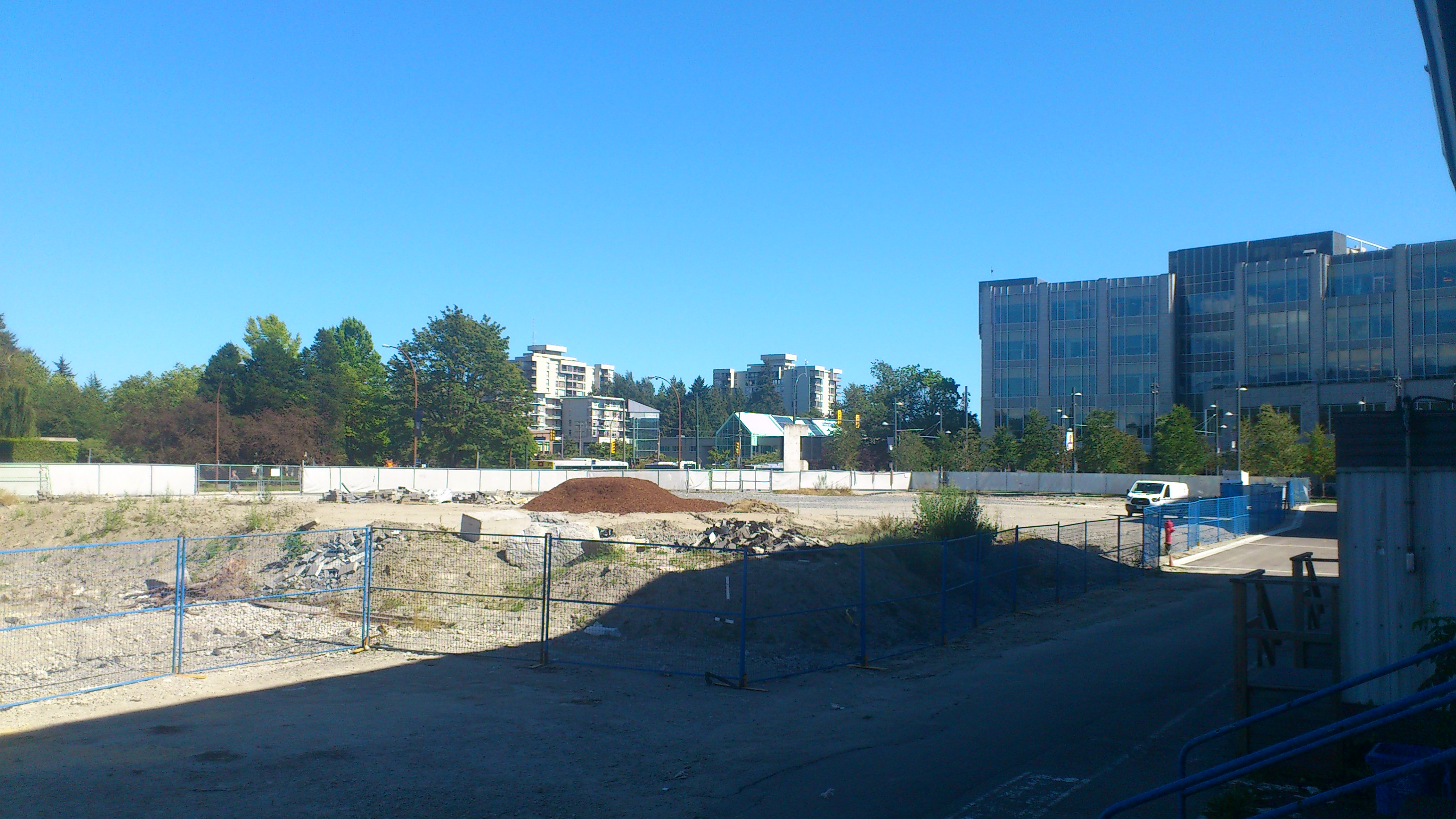
The University of British Columbia (UBC) is a public research university with campuses in Vancouver and Kelowna, British Columbia. Established in 1908, UBC is British Columbia’s oldest university. The university is ranked among the top 20 public Universities worldwide and among the top three in Canada. With an annual research budget of $600 million, UBC funds over 8,000 projects a year.
The Vancouver campus is situated about 10 km (6 mi) west of Downtown Vancouver. UBC is home to TRIUMF, Canada’s national laboratory for particle and nuclear physics, which houses the world’s largest cyclotron. In addition to the Peter Wall Institute for Advanced Studies and Stuart Blusson Quantum Matter Institute, UBC and the Max Planck Society collectively established the first Max Planck Institute in North America, specializing in quantum materials. One of the largest research libraries in Canada, the UBC Library system has over 9.9 million volumes among its 21 branches. The Okanagan campus, acquired in 2005, is located in Kelowna, British Columbia.
As of 2017, eight Nobel laureates, 71 Rhodes scholars, 65 Olympians, ten fellows in both American Academy of Arts & Sciences and the Royal Society, and 208 fellows to the Royal Society of Canada have been affiliated with UBC.Three Canadian prime ministers, including Canada’s first female prime minister Kim Campbell and current prime minister Justin Trudeau have been educated at UBC.
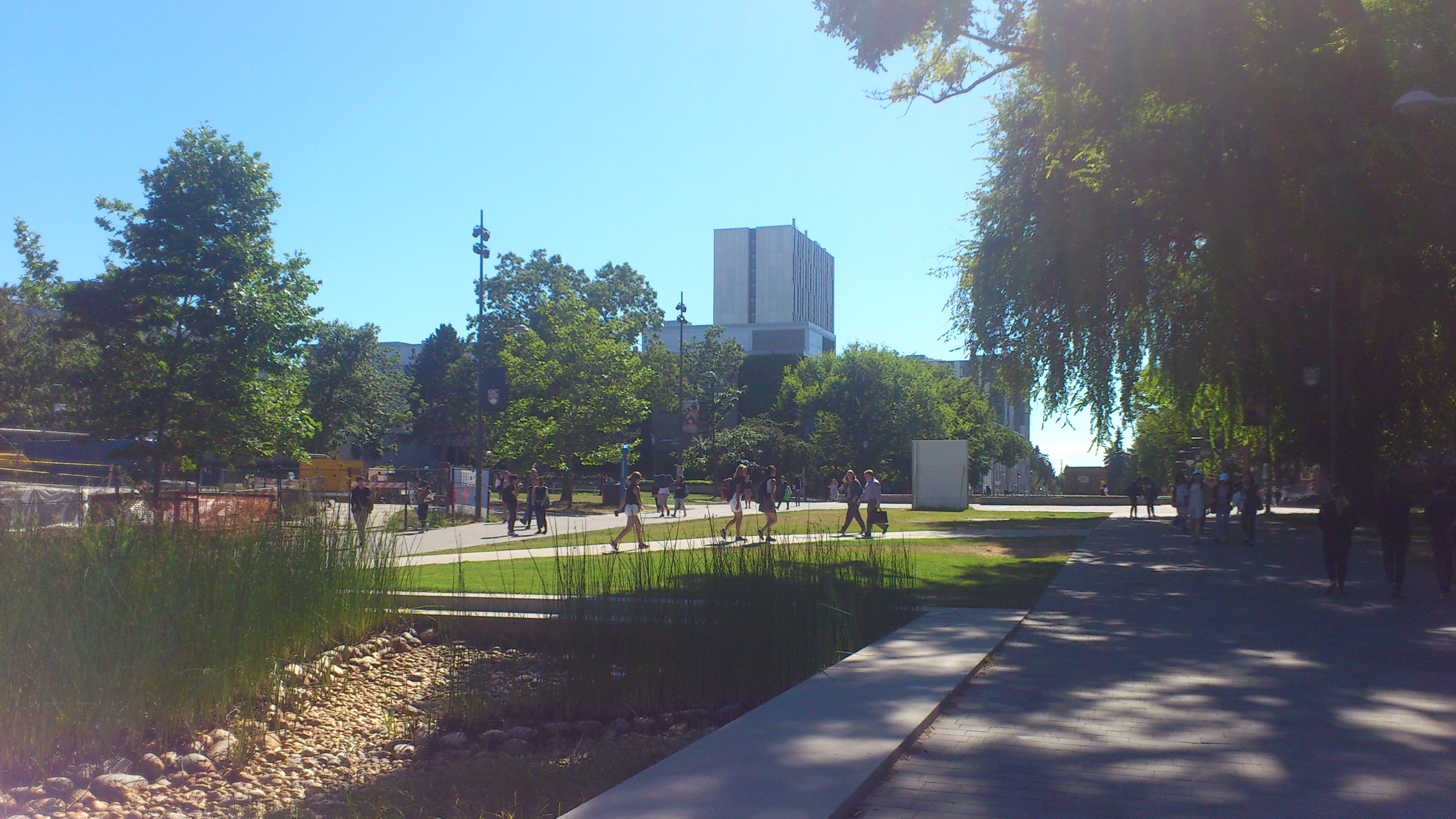
The main campus is at Point Grey, approximately 10 kilometres (6.2 mi) from downtown Vancouver. It is near several beaches and has views of the North Shore mountains. The 7.63-square-kilometre (1,890-acre) Pacific Spirit Regional Park serves as a green-belt between the campus and the city. Buildings on the Vancouver campus occupy 1.09 million m2 (11.7 million sq ft) gross on 1.7 square kilometres (420 acres) of maintained land. The campus street plan is mostly in a grid of malls (some of which are pedestrian-only). Lower Mall and West Mall are in the southwestern part of the peninsula, with Main, East, and Wesbrook Malls northeast of them.
The campus is not within Vancouver’s city limits, and therefore UBC is policed by the RCMP rather than the Vancouver Police Department. However, the Vancouver Fire Department provides service to UBC under a contract. In addition to UBC RCMP, there is also the UBC Campus Security that patrols the campus. Postage sent to any building on campus includes Vancouver in the address.
UBC Vancouver also has two satellite campuses within the City of Vancouver: at Vancouver General Hospital, for the medical sciences, and at Robson Square in downtown Vancouver, for part-time credit and non-credit programmes. UBC is also a partner in the consortium backing Great Northern Way Campus Ltd, and is affiliated with a group of adjacent theological colleges, which include the Vancouver School of Theology, Regent College, Carey Theological College and Corpus Christi College.
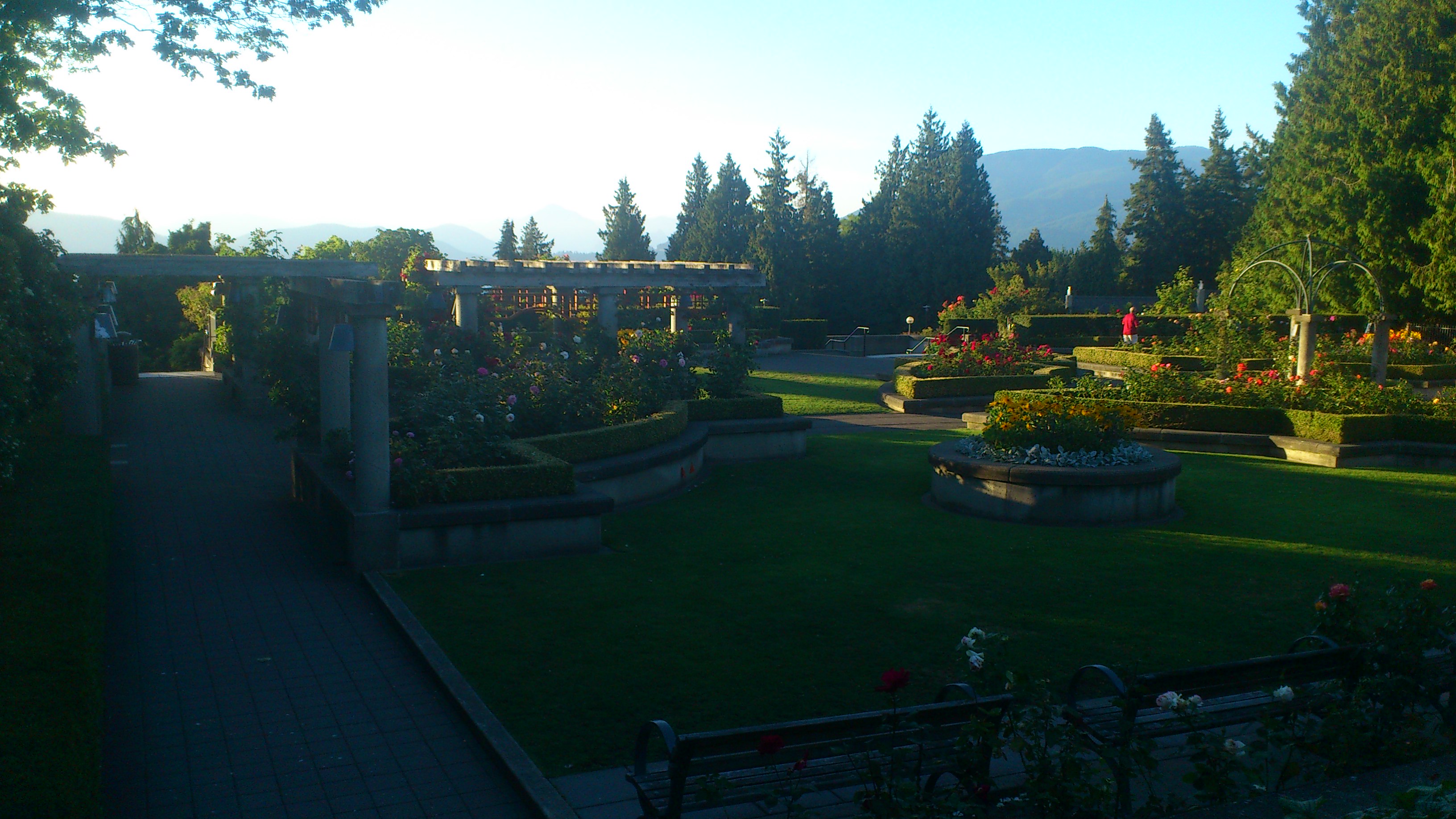
The campus is home to numerous gardens. The UBC Botanical Garden and Centre for Plant Research, the first UBC department, holds a collection of over 8000 different kinds of plants used for research, conservation and education. The UBC botanical garden’s original site was at the “Old Arboretum”. All that remains of it today are trees planted in 1916 by John Davidson. The old arboretum is now home to many buildings including the First Nations House of Learning. The Nitobe Memorial Garden, built to honour Japanese scholar Inazo Nitobe, the garden has been the subject of more than fifteen years’ study by a UBC professor, who believes its construction hides a number of impressive features, including references to Japanese philosophy and mythology, shadow bridges visible only at certain times of year, and positioning of a lantern filled with light at the exact date and time of Nitobe’s death each year. The garden is behind the University’s Asian Centre, which was built using steel girders from Japan’s exhibit at Osaka Expo.
The campus also features the Chan Centre for the Performing Arts: a performing arts centre containing the Chan Shun Concert Hall, Telus Studio Theatre and the Royal Bank Cinema. It is often the site of convocation ceremonies and the filming location for the 4400 Center on the television show The 4400, as well as the Madacorp entrance set on Kyle XY. It has also been featured as the Cloud 9 Ballroom in the re-imagined Battlestar Galactica (Season 1, Episode 11: Colonial Day).
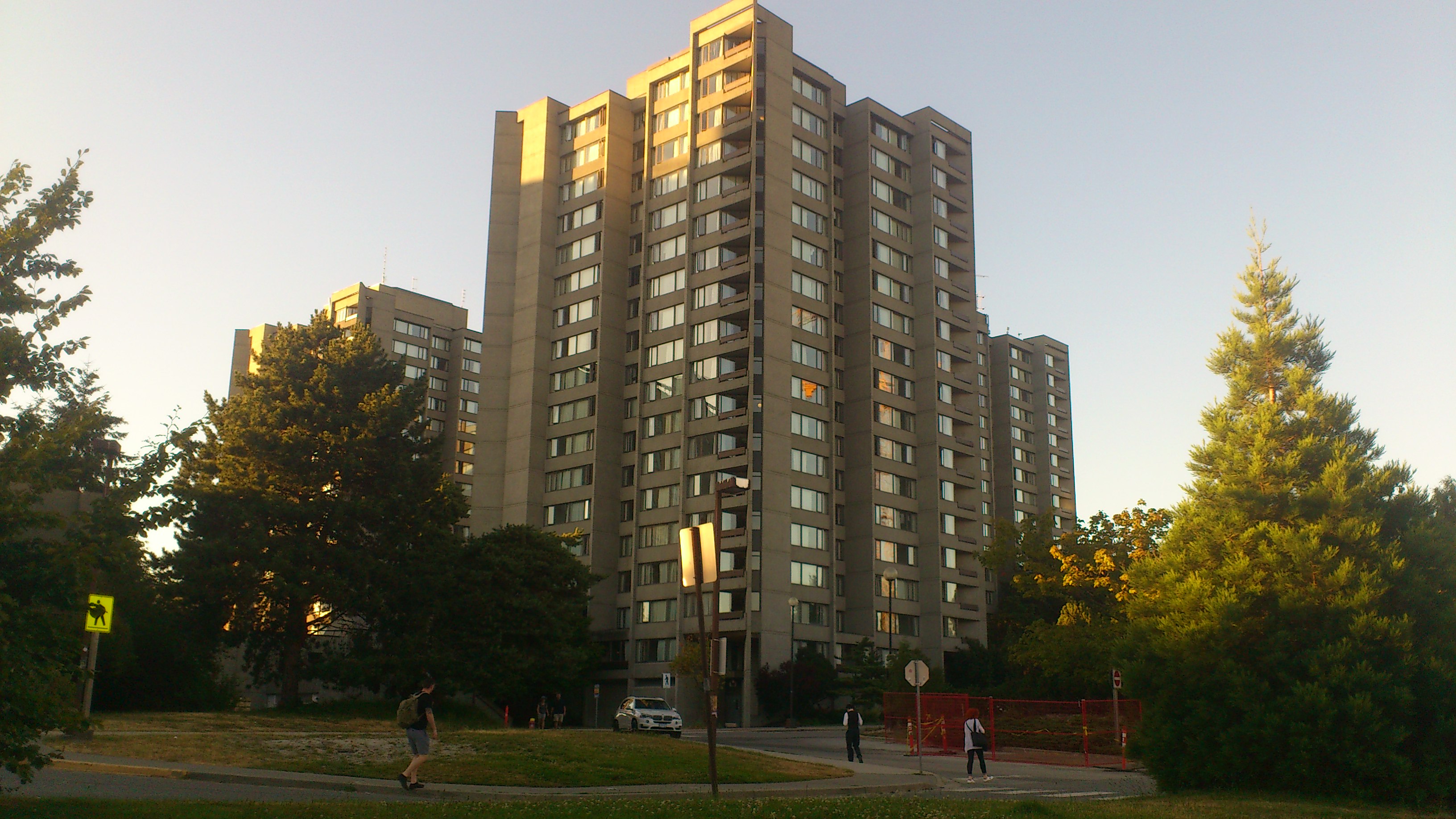
Since the mid 1980s UBC has worked with property developers to build several large residential developments throughout UBC’s campus. Such developments include: Chancellor Place, Hampton Place, Hawthorn Place and Wesbrook Village.




 Igor's Blog