

YouTube stands accused of censorship, following the company’s decision to bar former Congressman Ron Paul and his online news program from receiving advertising revenue for a number of videos which Paul recently posted.
Category: Uncategorized
The Ukrainian Famine: Only Evidence Can Disclose the Truth
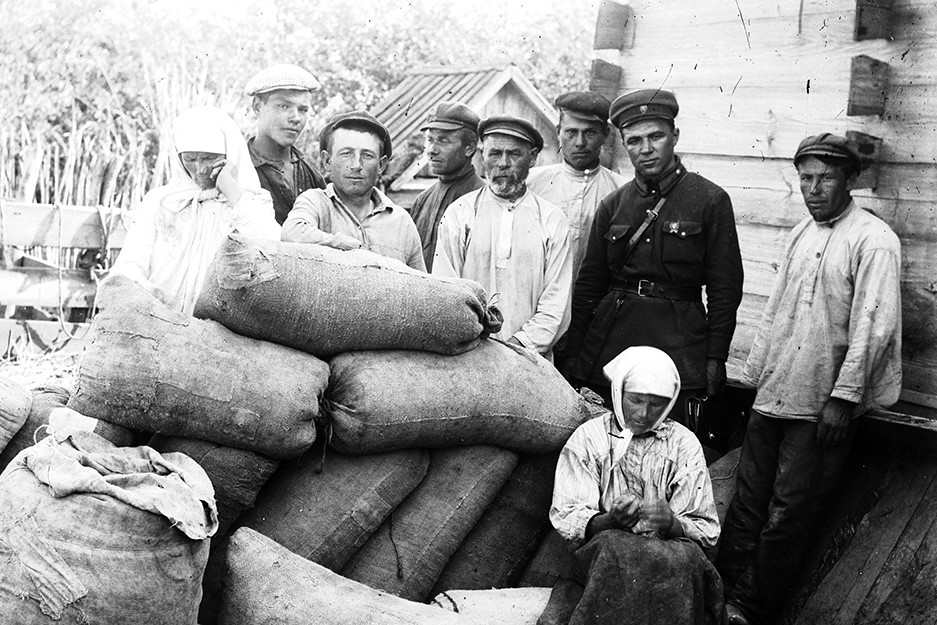
No detective can solve a crime without carefully and objectively studying the evidence. Likewise, no one can know what actually occurred in history without studying, in an objective manner, the relevant primary sources – the evidence. I have spent decades in studying the primary sources concerning many specific events of the Stalin period. Mark Tauger has studied the primary sources on Soviet agriculture for more than 25 years.
Louis Proyect has not done this. Consequently he has no chance of discovering the truth, or of recognizing it when he sees it. He is inevitably doomed to “believe” whatever fits his preconceived ideological bias, and to reject everything else. This is fatal to any attempt to learn what really happened.
Louis Proyect’s attack on me and on Mark Tauger (“What Caused the Holodomor?” Cp March 24, 1971) is ideology masquerading as history. It is replete with falsehoods. I’ll concentrate on the lies Proyect tells about me and my research. I hope that Mark Tauger will respond to Proyect’s ignorant accusations against his research.
Proyect begins his article by stating: “Furr’s political life revolves around celebrating Stalin’s greatest achievements—such as they were.” This is false. My goal is not to “celebrate” Stalin, or anyone or anything. In my research I aim to discover the truth about Soviet history of the 1930s, using the best primary-source evidence and maintaining scrupulous objectivity.
I agree with historian Geoffrey Roberts when he says:
In the last 15 years or so an enormous amount of new material on Stalin … has become available from Russian archives. I should make clear that as a historian I have a strong orientation to telling the truth about the past, no matter how uncomfortable or unpalatable the conclusions may be. … I don’t think there is a dilemma: you just tell the truth as you see it.
(“Stalin’s Wars”, Frontpagemag.com February 12, 2007. At http://hnn.us/roundup/entries/35305.html )
The common or “mainstream” view of Stalin as a bloodthirsty tyrant is a product of two sources: Trotsky’s writings of the 1930s and Nikita Khrushchev’s “Secret Speech” to the XX Party Congress in February, 1956. This canonical history of the Stalin period – the version we have all learned — is completely false. We can see this now thanks mainly to two sets of archival discoveries: the gradual publication of thousands of archival documents from formerly secret Soviet archives since the end of the USSR in 1991; and the opening of the Leon Trotsky Archive at Harvard in 1980 and, secondarily, of the Trotsky Archive at the Hoover Institution (from where I have just returned).
Khrushchev Lied
In its impact on world history Khrushchev’s “Secret Speech” is the most influential speech of the 20th century. In it Khrushchev painted Stalin as a bloodthirsty tyrant guilty of a reign of terror lasting more than two decades.
After the 22nd Party Congress of 1961, where Khrushchev and his men attacked Stalin with even more venom, many Soviet historians elaborated Khrushchev’s lies. These falsehoods were repeated by Cold War anticommunists like Robert Conquest. They also entered “left” discourse through the works of Trotskyists and anarchists and of “pro-Moscow” communists.
Khrushchev’s lies were amplified during Mikhail Gorbachev’s and Boris Eltsin’s time by professional Soviet, then Russian, historians. Gorbachev orchestrated an avalanche of anticommunist falsehoods that provided the ideological smokescreen for the return to exploitative practices within the USSR and ultimately for the abandonment of socialist reforms and a return to predatory capitalism.
During 2005-2006 I researched and wrote the book Khrushchev Lied. In my book I identify 61 accusations that Khrushchev made against either Stalin or, in a few cases, Beria. I then studied each one of them in the light of evidence available from former Soviet archives. To my own surprise I found that 60 of the 61 accusations are provably, demonstrably false.
The fact that Khrushchev could falsify everything and get away with it for over 50 years suggests that we should look carefully at other supposed “crimes” of Stalin and of the USSR during his time.
Trotsky’s ‘Amalgams’
From 1980 till the early 1990s Pierre Broué, the foremost Trotskyist historian of his day, and Arch Getty, a prominent American expert in Soviet history, discovered that Trotsky had lied, repeatedly and about many issues, in his public statements and writings in the 1930s. In my book Trotsky’s ‘Amalgams’ (2015) I discussed the implications of these lies by Trotsky and of some additional lies of his that I discovered myself. They completely invalidate the “Dewey Commission,” to whom Trotsky lied shamelessly and repeatedly, as well as Trotsky’s denials in the Red Book and elsewhere of the charges leveled against him in the First and Second Moscow Trials.
Challenging the “Anti-Stalin Paradigm”
I have not reached these conclusions out of any desire to “apologize” for – let alone “celebrate” — the policies of Stalin or the Soviet government. I believe these to be the only objective conclusions possible based on the available evidence.
The conclusions I have reached about the history of the Soviet Union during the Stalin period are unacceptable to people who, like Proyect, are motivated by prior ideological commitments rather than by a determination to discover the truth “and let the chips fall where they will.”
The “anti-Stalin paradigm” is hegemonic in the field of Soviet history, where it is literally “taboo” to question, let alone disprove as I do, the Trotsky-Khrushchev-Cold War falsehoods about Stalin and the Stalin period. Those in this field who do not cut their research to fit the Procrustean bed of the “anti-Stalin paradigm” will find it hard if not impossible to publish in “mainstream” journals and by academic publishers. I am fortunate: I teach English literature and do not need to publish in these “authoritative” but ideologically compromised vehicles.
Those who, like Proyect, are motivated not to discover the truth but to shore up their ideological prejudices think that everybody must be doing likewise. Therefore Proyect argues not from evidence, but by guilt by association, name-dropping, insult, and lies.
A few examples:
Guilt by association: Proyect claims that I am “like” Roland Boer, Roger Annis, and Sigizmund Mironin.
Name-dropping: Davies and Wheatcroft are well-known and disagree with Tauger, so – somehow – they are “the most authoritative,” “right” while Tauger is “wrong.”
Insult: Tauger is complicit in “turning a victim into a criminal.”
Proyect: “…it seems reasonable that Stalin was forced to unleash a brutal repression in the early 30s to prevent Hitler from invading Russia—or something like that.” In reality neither I nor Tauger say anything of the kind.
Lies: Proyect quotes a passage from Tauger’s research about the Irish potato famine and then accuses Tauger of wanting to exculpate the British:
“The British government responsible? No, we can’t have that.”
But the very next sentence in Tauger’s article reads:
“Without denying that the British government mishandled the crisis…”
Proyect is a prisoner of the historical paradigm that controls his view of Soviet history. A few examples:
- Proyect persists in using the term “Holodomor.” He does not inform Cp readers that Davies and Wheatcroft, whose work he recommends, reject both the term “Holodomor” and the concept in the very book Proyect recommends!
- Proyect: “…no matter that Lenin called for his [Stalin’s] removal from party leadership from his death-bed.”
But, thanks to careful research by Valentin Sakharov of Moscow State University, even “mainstream” researchers know that this note, like “Lenin’s Testament,” is probably a forgery:
There is no stenographic original of the “Ilich letter about the [general] secretary.” In the journal of Lenin’s activities kept by the secretarial staff there is no mention of any such “Ilich letter.” … not a single source corroborates the content of the January 4 dictation. Also curious is the fact that Zinoviev had not been made privy to the “Ilich letter about the [general] secretary” in late May, along with the evaluations of six regime personnel. The new typescript emerged only in June. (Stephen Kotkin, Stalin 505)
- Proyect: “Largely because of his bureaucratic control and the rapid influx of self-seeking elements into the party, Stalin could crush the opposition…”
However, in his 1973 work Bukharin and the Bolshevik Revolution Stephen Cohen wrote:
But machine politics alone did not account for Stalin’s triumph. … within this select oligarchy, Stalin’s bureaucratic power was considerably less imposing…. By April 1929, these influentials had chosen Stalin and formed his essential majority in the high leadership. They did so, it seems clear, less because of his bureaucratic power than because they preferred his leadership and politics. (327)
- Proyect: “Stalin’s forced march did not discriminate between rich and poor peasants.”
But in 1983 James Mace, a champion of the Ukrainian Nationalist fascist collaborators, wrote about the role of “committees of poor peasants,” komitety nezamozhnykh selian, in supporting collectivization. There is much other evidence of peasant support for collectivization.
Conclusion
Correctly understood, history is the attempt to use well-known methods of primary-source research in an objective manner, in order to arrive at accurate – truthful — statements about the past. Very often the result is disillusioning to those who cling to false ideological constructs, even when those constructs constitute the “mainstream” of politicized historiography.
No one who does not try to discover the truth and then tell it without fear or favor, is worthy to be called a historian, regardless of how famous, honored, or “authoritative” he or she may appear to be.
Distortions and lies about Soviet history of the Stalin period predominate everywhere, including Ukraine, Russia, and in the West. These lies mainly consist in repeating Trotskyist and Khrushchevite lies, in defiance or in willful ignorance of the primary-source evidence now available.
The newly-available evidence from archival sources necessitates a complete rewriting of Soviet history of the Stalin period and a complete revision of Stalin’s own role. This exciting yet demanding prospect is of great importance to all who wish to learn from the errors, as well as from the successes, of the Bolsheviks, the pioneers of the communist movement of the 20th century.
Now reading Robert A. Heinlein: America As Science Fiction by H. Bruce Franklin…

Robert Goddard Was the Father of American Rocketry. But Did He Have Much Impact?

Americans are justifiably proud of Robert H. Goddard, the Massachusetts professor who built and flew the world’s first liquid-fuel rocket in 1926. Goddard spent his entire life perfecting the invention he knew could one day be made to fly into space and even reach the Moon. Although he didn’t live long enough to see that dream come true (he died in 1945), German development of the liquid-fueled V-2 rocket during World War II—using the same principles—led directly to the giant Saturn V that launched NASA’s Apollo astronauts. Chronologically, anyway, Goddard can be said to have led the way to spaceflight.
But after examining this premise closely over the past few years in the course of doing research for a book on Goddard’s technical accomplishments, I’ve come to a different conclusion. Because Goddard was an exceptionally secretive man, his work had less of an impact than a timeline of milestones in rocketry would suggest.
How secretive was he? Not only did Goddard make his handyman helpers sign oaths that they would never, on risk of being fired, reveal details of the work they did for him, he kept the facts of his first liquid-fuel flight from the public for a full decade. It was only in his second rocket publication, “Liquid-Propellant Rocket Development,” published by the Smithsonian in 1936, that he mentioned this flight. His first publication in 1919, “A Method of Reaching Extreme Altitudes,” dealt only with solid-fuel rockets, although he did dare to include the description of a hypothetical, unmanned, multi-stage rocket that might be able to go to the Moon. The worldwide publicity surrounding this idea, with many critics poking fun at Goddard and calling him the “Moon professor,” only made him more guarded in his work. (Russian scientist Konstantin Tsiolkovsky had written about the possibilities of spaceflight earlier, in 1903, but due to language and other problems, his ideas were not known in the West until the mid-1920s.)
In the same year “Liquid-Propellant Rocket Development” was published (which, incidentally, provided no engineering details), the German army’s sprawling rocket research center at Peenemünde opened. Under the technical direction of a young Wernher von Braun, the center went on to develop what later became known as the V-2 missile, but originally was designated the A-4. That weapon first saw action in September 1944, primarily against London. The following March, a few months before he died, Goddard was able to examine captured V-2 parts. From then on, he strongly suggested that the Germans had stolen his ideas.
Careful study of the V-2 shows, however, that the German and American rockets could not have been more different. Goddard’s largest rocket was meant only to travel vertically into the upper atmosphere, and was built to be as light as possible. The V-2 was designed for horizontal flight over long distances, and was meant to deliver its ton of explosives as a super weapon. Unlike Goddard’s small projects, the creation of the V-2 required hundreds if not thousands of scientists, engineers, and technicians, representing all kinds of disciplines, from aerodynamics to materials science and thermodynamics. The creators of the V-2 also worked in utmost secrecy. And at no point did they need to copy anything from Goddard.
In fact, the German army project had started in 1929, first with solid-fuel rockets, then, by 1931, with potentially far more powerful—and controllable—liquid-fuel rockets. By the time the Smithsonian published Goddard’s monograph in 1936, the Germans already had attained a great deal of experience with liquid-fuel rockets. Two years earlier, the experimental A-2 had already eclipsed Goddard’s inventions in terms of both thrust and altitude. The A-2 had a thrust of about 600 pounds and was able to reach 2.3 miles altitude on its second flight in 1936. As of 1934, Goddard’s highest flight (four years earlier) had reached just 2,000 feet.
We now know that Goddard’s 1930s rockets—as remarkable as they were for being built by one man with a few helpers—were no match for the German army’s accomplishments. His highest thrust ever was 985 pounds, reached in January 1941, while his highest altitude was some 9,000 ft (up to 1.7 miles) set in March 1937. By 1941, the German A-5 (an interim model for testing aerodynamics, guidance and other technology for the A-4), had a thrust of 3,305 pounds and reached 7.5 miles altitude. The A-4 (V-2) itself was powered by an engine that produced about 55,000 pounds of thrust, and had a range of 200 to 225 miles.
Aside from these impressive numbers, the A-4’s mission was quite different from that of Goddard’s rockets. Its complex, three-axis gyro guidance system was designed to steer the missile toward its long-range target, whereas in Goddard’s rockets, the gyro system was built strictly to stabilize the rocket during vertical research flights.
Finally, it’s now clear that Goddard and the German team both worked in Top Secret, completely independent of each other. So it’s more than a stretch to say that Goddard’s work led to the NASA Moon landings. After the war, U.S. rocket technology evolved from Germany’s work on the V-2, not from the New England professor’s experiments. As brilliant as Goddard’s achievements were, his rocketry had no real impact, during the war or afterward, on his field. His greatest influence may have been in helping introduce to the public the idea of the “space rocket” more than two decades earlier.
Just finished watching About Last Night (1986) and The 300 Spartans (1962)…


Lady Godiva by John Collier, 1898.

Behind the scenes with Rosamund Pike, narrator of Sense and Sensibility
Just finished watching Men In Black: International (2019) and Captain America: Civil War (2016)…


MCU Movies Ranked – All 14 Movies In Order, Worst to Best!
MCU Movies Ranked today! Beyond The Trailer host Grace Randolph gives her review of all 14 Marvel movies in this breakdown, giving you the Worst to the Best in order of the Marvel Cinematic Universe, including Doctor Strange and Civil War! Share your reaction to this breakdown of MCU Movies Ranked now that you’ve seen each full movie! What do you think are the top Marvel movies? And be sure to make Beyond The Trailer your first stop for movie and entertainment news here on YouTube today!
Tear Down This Myth: Six Questions for Will Bunch

Will Bunch is an award-winning senior writer for the Philadelphia Daily News and a senior fellow with Media Matters for America. His latest book, Tear Down This Myth: The Right-Wing Distortion of the Reagan Legacy, just out in paperback, examines the process by which Ronald Reagan was subjected to a makeover after his death. I put six questions to Will Bunch about the book.
- Your book describes itself as a deconstruction of the myth of Ronald Reagan. But how successful has the effort at myth-making been? How does Reagan now stack up among the presidents among historians and the public in general?
It’s interesting–Reagan’s reputation has risen with both the public and historians the further we get in memory from his actual presidency–which I think is a huge tribute to both the myth-making machinery created by the likes of Grover Norquist and the mainstream media’s willingness to embrace the myth. For example, in March 1990, some 13 months after Reagan left the Oval Office, Reagan’s popularity (59 percent) had dipped below that of Jimmy Carter (62 percent). Two major surveys of historians in the mid-1990s rated Reagan’s presidency as below average, not one of the all-time greats.
Ironically, it was those historian rankings that inspired Norquist, the Heritage Foundation, and others to begin what became the Ronald Reagan Legacy Project–the group that aims to name schools, roads, etc., for the Gipper in every U.S. county–and related activities. A key part of that myth-building was the notion that Reagan was largely responsible for “winning the Cold War”–a premise that was rejected, according to a USA Today poll in 1989, when it was actually happening, by Americans crediting Mikhail Gorbachev for the reforms instead. You see the fruits of that effort today; professors–arguably eager to show they’re not tools of liberal bias–now rate Reagan as high as the Top Ten of U.S. presidents, and public opinion of the 40th president is fairly high as well.
- Lincoln’s birthday passed last week. It was remarkable that few Republicans paused to notice or to note the importance of the nation’s first Republican president. Is there a relationship between the fading away of Lincoln as a Republican icon and the rise of Ronald Reagan?
It was stunning in the 2009 debate between candidates to become chair of the Republican National Committee; as some may recall, all six hopefuls quickly named Reagan as their favorite ex-president, and not one even paid token lip-service to Lincoln. The simplistic answer would be racism – i.e., lack of excitement that Lincoln’s legacy was ending slavery – but I do not think that’s the reason, certainly not overtly. It’s just that Reagan, especially the mythologized version pushed by 21st Century GOPers, relates more to the battles the right is still fighting today, such as the unending “culture wars” against liberal elites and efforts to portray Democrats as weak on defense. That makes him a more potent and more useful symbol than Lincoln, whose remarkable nineteenth-century achievements are more abstract and are generally things that all Americans support.
- Reagan is often portrayed as an arms hawk who brought down the Soviet Union through aggressive military spending. Is this a tenable claim? Does it take into account his arms control efforts?
The Cold War and Soviet relations are central to the Reagan legacy/myth. The conservative story line is (not surprisingly) a rather simple one: Reagan came in and spent billions on an arms race that bankrupted the Soviets, while his bellicose rhetoric – “evil empire” and “tear down this wall!” – cowed its leaders into allowing the collapse of the Iron Curtain. Reality is more complicated. For one thing, the U.S. arms build-up began under Jimmy Carter and a lot of the spending proved ultimately wasteful. Now that we have access to historical material from the Kremlin, we also know that our most bellicose moves strengthened hardliners at the expense of Soviet reformers. Reagan was right about one thing: Communism was a soon-to-fail economic system, as a new generation of USSR leaders led by Gorbachev also realized. This is why most people at the time, and most historians today, give the lion’s share of credit for ending the Cold War to Gorbachev and to the reform efforts that he initiated, such as glasnost and perestroika.
That said, Reagan deserves praise for realizing that Gorbachev was indeed a different kind of Soviet leader, and for encouraging his reforms. Likewise, people should realize that Reagan’s aversion to nuclear weapons was a deeply held, personal belief which motivated some major accomplishments in arms reduction at the tail end of his presidency. These aspects of the real Reagan – a willingness to negotiate with enemies at the right time, and his real concerns about nuclear weapons – are the parts of Reagan’s legacy that progressives should actually embrace and use in today’s political debates.
- According to former Treasury Secretary Paul O’Neill, former Vice President Cheney claimed during a cabinet meeting that “Reagan proved deficits don’t matter.” How does deficit spending without consequences play in the Reagan legend?
This part of the Reagan legacy is so at odds with the 2010 message from Reagan-worshipping conservatives – especially the right-wing Tea Party faction – of fiscal discipline and deficit reduction that no one can figure out exactly what to do with it. I would argue that there are parallels between Reagan and Obama, in the sense that both presidents came into power during economic crises and both cut taxes and increased spending in their first year, leading to higher deficits. The one difference – and it’s an important one – is that Reagan’s increased spending was for the relatively wasteful area of defense (although it did lead to some job creation) while Obama is making an attempt to target more useful areas, such as infrastructure and alternative energy. The bottom line on Reaganomics is pretty bleak. Yearly deficits soared, and the overall national debt nearly tripled, from $930 billion to about $2.7 trillion, according to the Washington Post.
There was a short-term cost to this and a long-term cost. In the short term, Reagan’s profligate ways led to higher interest rates that slowed productively and eventually plunged the nation into a recession around 1990, leaving George H.W. Bush to deal with the mess. Policy makers had little room to maneuver in that 1990-91 recession because of the large deficits. Ultimately, both Bush 41 and Bill Clinton mounted a major effort to undo Reaganomics, including the breach of the “no new taxes” pledge that helped turn the senior Bush into a one-term president. Contrary to what Cheney said, deficits did matter, which is why the mythmaking and its influence in Bush 43’s reckless ways is so disturbing.
In the long-term sense, Reagan turned America from a creditor nation, which it had been since World War I, into a debtor nation. If you are unhappy about all the dollars that America owes to China today, that is a major element of the legacy of the president of whom we’re now erecting all these bronze statues. What’s more, many people – myself included – fault Reagan for promoting a kind of sunny, credit-card-driven consumerism that didn’t just hurt the nation’s wallet but led to unwise spending decisions and too much borrowing by everyday citizens. Do you remember “Wall Street,” with Gordon Gekko and “greed is good”? It’s not a coincidence that film was released at the zenith of the Reagan presidency.
- Ronald Reagan signed the Convention Against Torture, and his Justice Department indicted and prosecuted a Texas sheriff for waterboarding. How can his views about torture be reconciled with the current Republican pro-torture dogma?
It’s important not to nominate Reagan for sainthood in the arena of human rights. His “Reagan Doctrine” in Central America, leaving the fight to anti-Communist thugs and death squads that the then-president called “the moral equivalent of our Founding Fathers,” is arguably the gravest moral failing of his tenure. That said, back on U.S. soil, Reagan was far to the left of the 2010 Republican Party on issues such as torture. The convention that he signed in 1988 holds that there is no circumstance of any kind that permits torture, which certainly would include the 9/11 aftermath and related anti-terror efforts today.
But it goes even deeper than that. As I noted in an early 2010 blog post: “Reagan would not have approved of drone-fired missile attacks aimed at killing terrorists; as president, he several times rejected anti-terrorism operations for the sole reason that civilians would have been killed by collateral damage. In 1985, he surprised aides such as Pat Buchanan by ruling out a military response to a Beirut hijacking for fear of civilian casualties; Lou Cannon reported then in the Washington Post that Reagan called retaliation in which innocent civilians are killed “itself a terrorist act.” And the idea of trying terrorists in military tribunals as opposed to a civilian court of law? The Reagan administration was completely against that. Paul Bremer (yes, that Paul Bremer) said in 1987, “a major element of our strategy has been to delegitimize terrorists, to get society to see them for what they are — criminals — and to use democracy’s most potent tool, the rule of law, against them.”
It’s almost tragic – when you go back to the very recent history of the 1980s – when you realize how seriously an American consensus on human rights and the power of our criminal-justice justice system has been trashed by the modern conservative movement. It’s going to take a long time to get that back – although the words that Reagan and his aides left behind could help America get past this.
- What is the most endearing thing you learned about Ronald Reagan in the process of researching and writing your book?
I mentioned above that his worries about the effect of so many nuclear weapons in the world were a sincere belief. One thing that I did not realize until I researched Tear Down This Myth was that in 1983, at Camp David, Reagan watched and was deeply moved by the nuclear war TV-movie sensation The Day After, which was perceived by most as a liberal and on some level anti-Reagan production. He wrote in his diary that the movie had strengthened his resolve to work with the Soviets on arms reduction, which he actually did after the arrival of Gorbachev. When he signed a major nuclear-reduction treaty in 1987, he telegraphed the producer of The Day After and said, “Don’t think that your movie had nothing to do with this, because it did.”

