
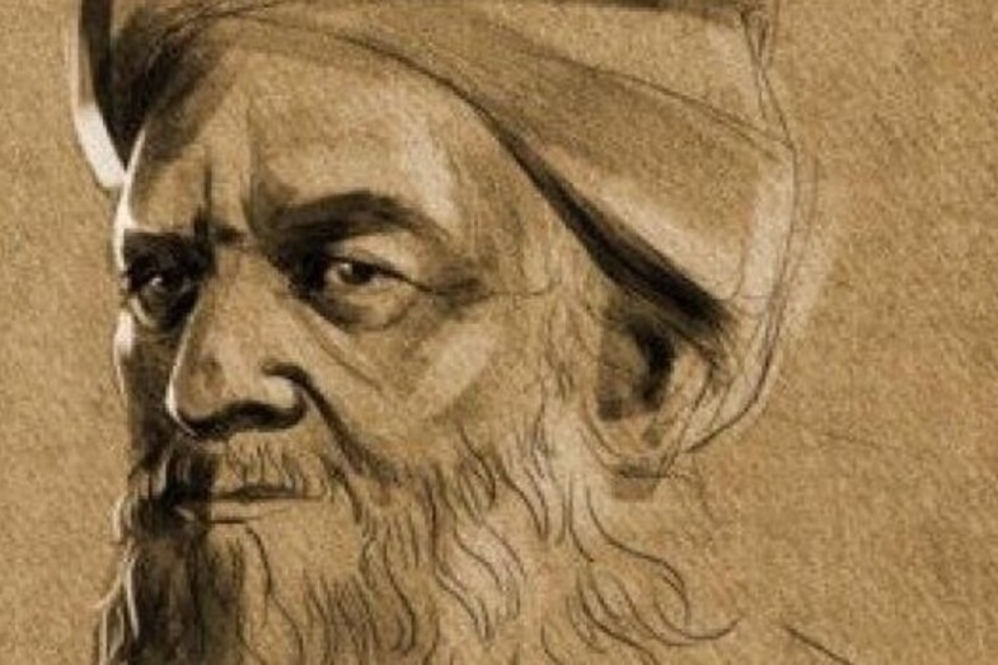
Abbas ibn Firnas: The Great Arab Aviation Pioneer, Scientist, and Inventor

https://www.arabamerica.com/abbas-ibn-firnas/

Throughout the history of mankind, there have been memorable people whose contribution to science is considered exceptional. We know the names of many of them, and in the context of aeronautics, the following illustrious names immediately come to mind. However, there are other names that have passed quietly into oblivion, despite the fact that their contribution has been truly remarkable. Such is the case of the scientist, historian, poet, inventor and, of course, aviation pioneer, Abbas Ibn Firnas. Many are surprised to learn that this man was the first to fly with an air-gliding machine, staying in flight for about ten minutes. He did this more than a thousand years before the Wright brothers, specifically in the year 875. Abbas ibn Firnas was the first person to ever operate a flying machine, or more like falling with style. His machine was not capable of lifting him in the air, but it did prevent him from directly falling into the ground.

Abbas Ibn Firnas

Born in the 9th century in Izn-Rand-Onda Al Andalus, which is present-day Ronda, Spain, he spent most of his adult life in the Emirate of Cordoba, one of the major learning hubs during the Umayyad Caliphate. Relatively little is known about his childhood, except that he acquired an extensive education and came to the fore in various disciplines, which led him inexorably to the city of Cordoba, which at that time was the richest and most influential in Al-Andalus. There he stood out as a scientist, inventor, poet, philosopher, alchemist, musician, and astrologer, to such an extent that he became known as Hakim Al-Andalus. Once in Cordoba, he went on to develop those facets of his knowledge that significantly contributed to the advancement of the sciences and the arts in the courts of the emirs Abderraman II and Muhammad I.

Some historical accounts suggest al Firnas was influenced by Armen Firman, who was neither a scientist nor a polymath but an astute observer of nature. It was Firman who first built wings made of wooden planks wrapped in silk and bird feathers. In the early 850s, Firman climbed to the top of the tallest mosque minaret in Qurtuba and jumped off wearing the wings. Although his attempt quickly failed and he plummeted to earth, the flying machine inflated just in time and slowed his descent. He was lucky enough not to break any bones in the fall; the delay of his landing proved somewhat life-saving. Ibn Firnas watched Firman’s adventure as he stood among the gathered, fascinated crowds who were all watching the skies above in amazement. Impressed with Firman’s result, Ibn Firnas began to realize that the act of flying in the air needed further investigation.

In Science

In the scientific field, he was the first in the Iberian Peninsula, and probably in Europe, to use the Sindhind astronomical tables, of Indian origin, which later would prove fundamental to the development of European science and would be studied in medieval universities as a Quadrivium subject. He introduced the Western world to the technique for carving rock crystals and even developed alchemical procedures to create crystals from different minerals. Also, he built an anaphoric clock, a complex mechanism that uses water as a liquid engine. The water flow is closed or opened by a series of valves and the clock serves to show the hour at any time of the day or night, something which was unusual at the time. He also developed the first armillary sphere in Europe, used to perform calculations and approximate astronomical observations, by moving the instrument’s rings according to the plane of the celestial rings.

As an example of his advanced knowledge of astronomy, he built a mechanically articulated planetarium at his residence in Cordoba which represented the celestial vault. He even provided it with sound and visual effects that simulated various weather phenomena: storms, lightning, and thunder. In the context of aerospace, Abbas Ibn Firnas is an extraordinary reference point as the creator of the precursor to the parachute and for being the first person to successfully design, build and test artifacts that remained in flight. He researched the mechanism behind airplanes 600 years before Leonardo da Vinci developed his designs for flying machines, and more than a thousand years before the Wright brothers made their famous flight.

Hezarfen Ahmed and the Wright Brothers

Hezarfen Ahmed Çelebi, who made experiments at home and researches various subjects, created a primitive form of today’s aircraft by copying another Turkish scientist, İsmail Cevheri. Before his historical flight, he made experiments in Istanbul to Okmeydanı to measure the durability level of the wings which he prepared by examining the birds’ flight. Later one morning, just in front of the eyes of Istanbul society gathered at the shores, he let himself go into the air, crossed the Bosporus by moving his wings, and landed on Üsküdar. In 1632, Hezarfen Ahmed Çelebi crossed the Bosporus with bird-like wings attached to his body on the southwest by jumping to the air from Galata Tower and landed on Doğancılar in Üsküdar, 3358 meters away. Hezarfen Çelebi was one of the most important people in Turkish aviation history.

The Wright brothers, Orville and Wilbur, were two American aviation pioneers generally credited with inventing, building, and flying the world’s the first successful motor-operated airplane. They made the first controlled, sustained flight of a powered, heavier-than-air aircraft with the Wright Flyer on December 17, 1903, 6 km south of Kitty Hawk, North Carolina. In 1905, the brothers developed their flying machine to make longer-running and more aerodynamic flights. The Wright brothers were also the first to invent aircraft controls that made the fixed-wing powered flight possible.

Nonetheless, Abbas ibn Firnas, a thousand years before the Wright brothers, designed a glider made of wool and silk, and he launched himself with it from the La Arruzafa hills, near Cordoba. He was so sure that his invention would work that he had convened hundreds of people to watch along the route. Also present were many members of the court of Muhammad I, Emir of the Andalusi caliphate. The result was a sustained flight using air currents, which lasted anything between two and ten minutes. Despite a difficult landing, he not only survived but also became the first man to fly with a heavier-than-air machine.

I Found Out I’m Autistic! | My Adult Autism Diagnosis Story | Autism in Women

Hey everyone, Today’s video is a little bit different than usual. After finding out I’m autistic (what used to be called Asperger’s syndrome is now part of the autism spectrum) in April, I discovered a lot about myself and decided to share this story with you. I talk about what autism can look like in women, my personal experience, and general knowledge about ASD (or ASC). Autism diagnosis is a very emotionally challenging process and as I share my own story, I also hope it can help someone else out, because it took me about a month of focused research to find out all of this information. Hope you enjoy, Irene

Autism doesn’t make me suffer, you do | Autism Acceptance Month 2020

First time ever I’ve tried out the autofocus on my camera and it’s decided that my background is a lot more interesting than me… hence, making me slightly blurry for the entirety of this video, sorry!

I deleted a thing from the end there to cover my butt, let me just suggest you google “autism speaks hategroup”, thank you! I’ll get a video on that topic done at some point as well!

This is very much focussed on my personal experience and what I’ve read and heard from people in the communnity over the years. I am in no way an expert, but I do live this life. So take it as you will. And I definitely forgot to mention a thing or two, especially that it IS very important to learn coping mechanisms, like being able to deal with loud noises, like in a supermarket. However, the ways in which we deal with things like that is often deemed to be “wrong” by allistic people, because they see it as not socially acceptable (i.e. wearing headphones, going non-verbal and hence not being able to talk to anyone you may meet, etc). I’ll also put this as a pinned comment, because let’s be real, who really reads the video description.

The term “Aspergers” is outdated, as well as “atypical autism”, hence I’m using neither of those. The disorder has officially been, rightly so, grouped into one term in the DSM by now, making it “Autism Spectrum Disorder”, or ASD. For the sake of simplicity I just said “Autism”, I don’t think that the “Spectrum Disorder” is that important to continuously add onto the end there :b

Shadow of the Colossus’ controls are an exercise in art

https://www.destructoid.com/shadow-of-the-colossus-controls-are-an-exercise-in-art/

Artsy wonks like myself love to wax philosophic about the potential that games have in terms of narration or eliciting meaningful, emotional player responses. We laud innovative game designers for forcing us to make morally ambiguous choices about ourselves and the characters around us. Unfortunately, games fall short in one crucial, yet easily overlooked, way: they only go half of the distance.

What I mean to say is that while lots of the elements of the game are designed and featured in artistically and culturally relevant ways, a huge part of games is left out of the artistic amalgam: the controls. The controller is the fundamental aspect of videogames as a medium, yet developers and fans alike seem to totally overlook it. Unless the control schema is laughably bad or unnecessarily confusing, it gets nary a mention.

Even worse, the control scheme is almost exclusively relegated to a basic function and fails to convey any sense of artistry or contribute to an overarching metaphor. I’m not talking about good, responsive controls, or button mapping that is particularly intuitive; I mean a control scheme that, in and of itself, has something artistically important to say.

Fumito Ueda’s Shadow of the Colossus does just that.

It’s hard to appreciate just how creative the control scheme for Shadow of the Colossus is — particularly in the way it achieves an artistic goal — without comparing it to other games. To simplify, ponder this question: How does mapping “jump” to the X button contribute to the overarching theme of a game? Well, by and large, it doesn’t, and that’s fine.

However, I want to argue that Wander and Agro’s controls contribute in some important way to the artistry of Shadow of the Colossus.

Take the grabbing mechanic, for example. In order for Wander to grab onto things — ledges, walls, colossi — the player must hold down the R1 button. The distinction is subtle: you don’t just push R1, you have to hold it. The physical associations between holding onto a ledge and holding down the R1 button allow the player to always have a connection with Wander.

Similarly, to attack a colossus, the player must press the O button once to raise his sword, and O again to strike. Again, the player is never separated from Wander and controls all his physical actions. That is to say there is never a rift between what’s happening on-screen and what’s happening in your hand.

Compare this to a game like, say, God of War — you press X once, and you’ve killed 8 skeletons, deflowered a virgin, and ransacked a city — and you realize what a feat Ueda’s accomplished. The blurring of the line between Wander and the player becomes particularly important with respect to the titular colossi. Unlike God of War, killing your enemies is far from automatic or easy — it’s a concerted effort and a pre-meditated choice.

This choice is inherent in the rest of the game as well. You have to find the colossi, ride across an entire continent, and then figure out how to kill them. You have to want them to die. The game forces you to make decisions about whether or not to attack the colossi, a choice you have to make over and over, at each step of the way. Even when you’ve climbed the colossus, found his weak spot, you have to choose again — will you push O a second time and strike? Will you push O a last time and actually kill the colossus?

These moments can be incredibly poignant, and I would go as far as to say that Shadow of the Colossus is the only game in which “no” is an acceptable answer to those types of questions — all because of the way the controls are mapped.

When Shadow of the Colossus was released, some reviewers criticized it’s controls for being unresponsive or clumsy, especially in regards to Wander’s trusty steed, Agro. Treated like a traditional mount, Agro handles with all the grace and precision of a battery acid enema. Most vehicles are relatively straightforward: you get in, get around, and get off. Furthermore, cehicles are usually treated, thematically and mechanically, like extensions of the playable character — it’s really just a more efficient way to get from point A to point B.

Agro, on the other hand, has much subtler controls. Once you get him pointed in the right direction, just tap X a couple of times and let him do the rest. Agro makes turns, navigates obstacles, and generally keeps himself out of trouble, allowing Wander to enjoy the scenery and shoot arrows at birds, lizards, and the giant colossi that are trying to kill him. However, if you try to “steer” him , he just spazzes out.

Agro’s AI and his ability to take care of himself become crucial later in the game, as some colossi are impossible to beat without his help. By giving Agro the necessary for tools him to make decisions while Wander fights enemies, Shadow of the Colossus feels like a one-player co-op campaign. Wander fights the colossus, and his distinct, separate, intelligent partner Agro helps him out. In contrast to Wander’s controls, Agro’s purposefully put distance between horse and player, reinforcing his individuality and downplaying his function.

The implications of such freedom, and the dependence on Agro that the player develops, are far reaching and important. By creating several situations in which the player is dependent on Agro’s independence, Shadow of the Colossus forces you to develop emotional ties to him. This relationship (coerced or not) lends pathos to both Agro’s fall and his triumphant return.

This, in turn, ties into all sorts of overarching themes of the game: loneliness, isolation, and the nature of love and friendship. Granted, other elements in the game also contribute to these themes — the fact that Agro is the only character with a name, or the sprawling, sparse landscapes — but Wander and Agro’s relationship is, at its core, based on how Agro is controlled.

What’s happened here is that a really well-done gameplay mechanic (fighting the colossi with Agro’s help) has engendered and contributed to a very compelling artistic metaphor (friendship). What’s even more impressive is that said mechanic, and therefore said metaphor, is dependent on Agro’s control scheme. Just let that sink in for a second: the artistic merit of Shadow of the Colossus is inextricably linked to its control setup.

Given that most designers don’t seem to give a second thought to the way game characters are controlled (or, in Agro’s case, not controlled), this feat is particularly impressive and goes a long way in showcasing the artistry of Shadow of the Colossus and Team Ico’s vision.

Sacrificing intuitiveness or gameplay to make an artistic statement is obviously a risky move and a tough decision, but Fumito Ueda made his choice, for better or for worse. For Shadow of the Colossus, I am of the firm opinion that it was for better.