If games can be art, here’s the best possible example.
In our earlier preview of Okami, we boldly stated that the game would affect your life. After saving this hand-painted world from certain doom, we can safely say that claim holds up throughout the game’s lengthy quest. Absolutely everything about this adventure is top of the line, blending the very best puzzle aspects of Zelda with a visual style that no other title can match.
Graphics aren’t everything, but in Okami ‘s case, they help define a universe. Whether you’re searching for lost warrior dogs or scouring a labyrinth for an eyeball-shaped key, you’ll never once discover some glaring flaw that yanks you out of the mood.
The dungeons, people and environment are pieced together in such a beautiful, artistic way that they don’t even look like graphics – they look like another, existing realm that we’ve been lucky enough to witness. Even your character, the revived wolf-goddess Amaterasu, radiates with divine energy.
Even smaller details, like babbling water and chirping insects, breathe constant life into every area you visit. Even though most new locales are covered in a murky, cursed fog, your godly powers slowly cleanse the countryside and bring blue skies back to the delight of cuddly forest animals everywhere. People start moving back into their homes, rivers flow once more… there’s always a reward for pressing on.
And just like Zelda, you’re given more abilities as the adventure opens up. Seeing as the game looks like a moving painting, it’s fitting that Amaterasu’s main power comes from the landscape-changing Celestial Brush, a weapon that lets you draw, slash and ink away the world’s problems.
The Celestial Brush is used in everything from solving puzzles to tackling the enormous bosses that lurk inside various temples across the land. Sometimes you’ll literally have to draw a new bridge or slash away a rock that’s blocking your path – you’ll be able to control water, wind and fire too, as Amaterasu’s godlike divinity is slowly restored. It all drives home the idea that not only is this world a painting, but you’re the creator and can mess with it as you see fit.
Not all fights can be solved with magic ink, though. Demons wander the same grounds you’re trying to take back, and they require a more in-your-face style of attack. The close combat weapons range from beads to oversized swords, but their button-mashing combo attacks are basically the same from beginning to end.
Not that combat is the focus here, but after the first 10 hours or so, you’ll start avoiding enemies just to keep running through the lush open fields. Boss battles, on the other hand, are long and involve all your Brush skills – too bad there are only a handful of these fights. And from time to time, it’s not quite clear where you need to head next, leading to a lot of meandering around. Exploration is part of the genre, but a few more clues wouldn’t hurt.
Other than those minor annoyances, there’s barely anything about Okami we can complain about. It’s one of the few non-Nintendo games that manages to capture the awe and magic of playing a new Zelda, a feat that instantly rockets Okami into the upper tier of PS2 games (plus, unlike Zelda, you can actually jump). You’re getting a long quest packed with life-giving missions and a presentation that’s unlike anything you’ve ever played. If you consider yourself a gamer in any way, buy this right now. You will not be disappointed.
This is Samsung’s best big phone yet, but it’s not a huge leap forward.
Last year’s Galaxy Note 7 was a big step forward for the Note line, pairing an impeccably built body with an updated S Pen and excellent performance. Then they started blowing up. The Galaxy S8 and S8 Plus did well to rehabilitate Samsung’s image as a top-notch phone maker, and now the company is trying to make up for past mistakes with the brand-new Galaxy Note 8.
Samsung had a lot to prove, and it mostly succeeded. There’s no doubting that the Note 8 ($929) is a great smartphone — it packs all the usual flagship amenities, not to mention a dual camera that works very, very well. The problem is, the Note 8 feels a little… by-the-book. Samsung, frankly, got so much right with its other huge phone, the Galaxy S8 Plus, that the Note 8 doesn’t feel as triumphant an improvement as the Note 7 did in comparison with the S7 line. Don’t get me wrong: The Note 8 is still Samsung’s best smartphone, and one could even argue it’s the best big phone out there. Just know that it’s a pretty conservative update, and that it’s going to cost you.
As always, this year’s Note takes major inspiration from the Galaxy S8s that launched earlier in the year. What’s interesting is how subtly different they feel despite all those similarities. The physical differences between the Galaxy Note 8 and the Galaxy S8 Plus are minute; the former is just a hair larger than the latter in every dimension. Still, Samsung’s new Note feels denser, and a little more… masculine. It’s slightly heavier, and the Note 8’s curved glass front and back come together in a way that makes the metal frame separating them feel more prominent. They’re subtle changes, to be sure, but they’re enough to make the Note 8 feel a little sturdier. These tweaks won’t mean much for some of you, though. While the Note 8 is surprisingly narrow and manageable for its size, it’s still a big phone that some smaller-handed people will struggle with.
Also noteworthy is just how uncluttered the Note’s face is. There’s just enough room above the screen for an earpiece, an 8-megapixel front-facing camera and an iris scanner. Below the screen, there’s nothing at all, since the Note 8 uses a virtual home button, but beneath that is the now standard USB-C port, a speaker, a headphone jack (!) and the S Pen’s hidey-hole. Despite that glut of ports, the Note 8 is rated IP68 for water and dust resistance, allowing doofuses like to me to use the phone as a cold brew coffee stirrer. (Pro tip: It makes coffee taste terrible.) Meanwhile, the power button lives on the Note’s right edge, and on the left you’ll find the volume rocker and the love-it-or-hate-it Bixby key. (In case you were wondering, no, there’s still no way to remap this button to do anything else.)
The back is where things start to get interesting. The Note 8 is the first major Samsung smartphone to pack a dual camera, which includes a pair of 12-megapixel sensors. I’ll dig into that more later, but suffice to say, Samsung knows how to craft a camera (or two). Next to that is the LED flash and the pulse oximeter, for measuring how much oxygen is in your blood (in case you’d ever want to do that), and next to that is the fingerprint sensor. No, it hasn’t moved, and yes, it’s still annoying, since people are likely to smudge their camera lenses trying to reach for it. (Some might scoff, but I think LG has the right idea when it comes to rear-fingerprint-sensor placement.) Aside from that misstep, there’s little to fault here. I wish the tray for the nano-SIM and microSD cards was a little sturdier, but the Note 8’s fit and finish is otherwise top-notch.
The 6.3-inch Super AMOLED screen here is the biggest Samsung has ever squeezed into a Note. That the phone isn’t crazy uncomfortable to use is a testament to Samsung’s fastidious tweaking. As with the S8 line, this display runs at 18.5:9, meaning the screen is a little over twice as long as it is wide. Combine that narrower screen with an almost complete lack of side bezels and voilà: We’re left with a big phone that’s smaller than you’d expect. In any case, the screen itself is just lovely — colors are bright and punchy right out of the box, and if they’re not exactly what you were looking for, fiddling with Samsung’s various display modes will certainly help. Viewing angles are great, brightness is among the best I’ve seen and text and photos look crisp at the default resolution.
Unless you’re paying very close attention, you probably won’t even notice at first that the screen isn’t running at its maximum resolution. By default, the Note 8’s display runs at Full HD+ (2,220 x 1,080) rather than the maximum WQHD+ (2,960 x 1,440). Blurred edges really become noticeable only when you drop the screen’s resolution down to the Infinity Display’s version of 720p, but you’ll probably never see that unless you drop the phone into its most stringent power-saving mode. These options are nice to have, though most people will probably never know that they’re there.
It’s also worth noting that, like the S8s, the Note is one of a handful of Mobile HDR Premium–certified phones on the market. Thanks to services like Amazon and Netflix, it’s surprisingly easy to get HDR content running on the Note 8, and it’s absolutely worth it. I swear I’m trying not to gush, but screens are the one thing you could always count on Samsung to get right, and the tradition continues.
Now, if only the company spent just a little more time on the Note 8’s single speaker. It gets points for being able to pump up the jams to respectable volume levels, but that doesn’t count for much when the audio comes through sounding hollow and unsatisfying. Good thing there’s a solid pair of AKG earbuds tucked inside the box.
The Galaxy Note 8 runs a highly tweaked version of Android 7.1.1, but that’s no surprise. Aside from a handful of new add-ons, the software here is a dead ringer for what we got on the Galaxy S8 line. I’d argue that’s a good thing: Samsung polished up its custom interface dramatically this year, and it finally feels mature and well thought out. It will still be way, way too much for Android purists, but I’ve surprised myself by sometimes missing Samsung’s tweaks when I test other devices. (File that under: “Sentences I never thought I’d write.”)
I won’t call out every feature carried over from the S8 family, but it’s worth going over the highlights. Since there’s just no room for it, Samsung ditched the physical home button for a virtual one that you press on the screen; you’ll get a little jolt of haptic feedback to let you know you’ve done it right. Right of the box, the virtual home key takes just a little too much pressure to actuate, but it’s easy to fix this in settings. The old-school launcher button is gone too, so you’ll have to swipe up or down on a home screen to see all of your installed apps. More important, actually managing those apps is a lot easier. Long-pressing an app brings up a menu with options to quickly clear its notification badges, disable it or uninstall it entirely. It’s a minor touch, sure, but it makes wrangling ornery apps radically simpler.
The Note 8 also packs a few relatively new interface tricks that S8 owners got in a software update over the summer. See that little dot near the on-screen navigation keys? A quick double tap on that forces the navigation bar to hide off-screen; it takes a swipe up from the bottom of the screen to bring it back. It’s been handy for moments when I really wanted my apps to use every pixel of this enormous screen, but in general, I like my nav keys where I can see them. And since some apps don’t natively play nice with this long screen, the Note 8 will sometimes display a button you can “tap to fill the entire screen” to force things to fit.
Samsung’s Edge UX is back too, and as usual, it offers access to app shortcuts, favorite contacts, device maintenance tools and more. This is where you’ll find one of the few new additions to the mix: App Pair. The concept is simple: You can create a shortcut to two apps, and with a tap they’ll both launch in split-screen windows. There’s a little fun to be had in finding neat combinations of apps that work well together — I’m a fan of Spotify and Genius for lyrics running side by side — but it’s a moot point for people who never do any multi-window multitasking. Nice try, though.
Bixby isn’t going anywhere either, and, for better or worse, it essentially works as well here as it does on the S8 and S8 Plus. The Bixby Home experience, which lives in a panel to the left of your main home screen, did a fine job highlighting how many steps I had taken and what was up next on my calendar. Bixby Vision, which attempts to interpret whatever the camera is pointed at, remains hit-or-miss: it’ll identify bottles of wine and clearly marked products without trouble, but anything other than that feels like a crapshoot. In my experience, Bixby is also a reliable listener when you hold down its dedicated button to offer voice commands.
Here’s the problem, though: You can also activate the assistant with a friendly “Hi, Bixby,” but the Note 8 has been more prone to false positives than either of its predecessors was. In fact, as I write this sentence, Bixby came to life in a quiet office no less than four times, and I have no idea why. That was with the microphone sensitivity set to low, mind you; it’s seriously obnoxious and it shouldn’t be happening.
Whether the Note 8 makes sense for you depends largely on how you feel about the tiny pen stuck inside of it. If you’ve never been a stylus person, well, I’m surprised you even read this far. For people at least open to the idea, know that the S Pen offers the best writing experience you’ll find on a phone… not that there’s much competition.
A few words on the S Pen’s design: It’s mostly unchanged from the Note 7’s version, meaning it’s still IP68 water-resistant and supports 4,096 levels of pressure sensitivity. The nib is the same 0.7 mm as it was before, but that seems to be the sweet spot — writing on the Note 8’s massive screen is smooth and snappy, though it still lacks the pleasant tactility of using a pen on paper. I was never much of an artist, but the level of precision was more than adequate for dashing off quick sketches of — what else? — robots and anime faces. I’m an adult, I swear.
While the S Pen hasn’t changed much physically, a handful of software tweaks and additions make it more capable. One of my favorite features, Screen Off Memo, now lets you jot down up to 100 pages of notes on the phone’s screen without having to unlock the device. Whether anyone will actually ever use all 100 allotted pages is another story, but it’s nice to have the option. So far, I’ve jotted down daily to-do lists that were several pages long; not having to unlock the phone to continue writing has been helpful. Translating text with the S Pen is much improved too, since you can now translate whole sentences and passages instead of just single words. Why the feature didn’t work this way to start with escapes me, but it still works a lot better than Bixby Vision’s translations.
The most notable new S Pen feature is also the most fun. Samsung has gone a little insane with GIF creation on its recent phones, and Live Message is the logical next step in that insanity. Long story short, you can use the S Pen to write animated messages that can be shared far and wide as GIFs. The concept is simple, but that simplicity belies its addictiveness: I’ve been sending out handwritten messages and marked-up photos that sparkle for a week, and I’m starting to think I have a problem. The only issue I’ve noticed is that resulting GIFs can get pretty big (think: between 10MB and 20MB), so people with tightly metered data plans might want to steer clear.
Samsung is late to the dual-camera game, but the extra time has paid off: The company’s first attempt is among the best I’ve ever used. The Note 8 combines a 12-megapixel telephoto sensor with another 12-megapixel sensor for wide-angle shooting, and most of the time you probably won’t know which camera you’re actually using. Unlike the newly announced LG V30, which has a toggle to switch between wide-angle and telephoto shooting, the Note 8 quietly switches between the two cameras depending on how closely you’re zoomed into your subject. In that way, it’s more like the iPhone 7 Plus’s camera — good news for people who don’t want to think much before shooting, but bad news for people who crave flexibility (that would be me).
In any case, both cameras produced great-looking photos, with consistently lively colors and impressive levels of detail. They’re right up there with the photos produced by the Galaxy S8s, though shots captured with the wide-angle sensor benefit from that camera’s f/1.7 aperture; the telephoto lens has a respectable but unimpressive f/2.4 aperture. Thankfully, both of those sensors pack optical image stabilization, which helps the Note 8 tremendously in low light. You’ll still find the occasional soft edge, but these sensors excel at sucking up whatever light is available so even shots taken in dim, dingy bars came out brighter and more vivid than I expected. Devices with a single dedicated camera, like the HTC U11, sometimes produced photos with better dynamic range, but the sheer number of options available to the Note 8’s camera make it a more capable all-around shooter.
Having two cameras also means we can add bokeh to photos in the new Live Focus mode. It’s not as finicky as similar features on other phones either: The camera recommends you stay about four feet away from the subject, but a couple steps closer won’t screw things up. More important, you can easily control the amount of blur in each shot before and after you’ve taken it. It sometimes has trouble picking up every edge of the subject in front of it, but in general it’s been very good at separating the foreground from the background.
Honestly, my biggest gripes have more to do with the camera interface than the cameras themselves. Let’s say you’re trying to zoom in on a subject. By default, you can tap a button to switch between 1x and 2x zoom modes, but it disappears for a while after you tap on the screen to lock focus and exposure. You can still pinch to zoom in and out, but it would’ve been nice if the shortcut button showed up again sooner. Shooting in Live Focus mode also offers close-up and wide-angle views of your photo, and you can switch between them in your gallery. Strangely, there doesn’t seem to be a way to save the view you didn’t select as a separate photo, even though earlier demo units did it just fine. There’s definitely a little software strangeness going on here, and while it’s never outright frustrating, Samsung could have stood to polish these apps further.
The Galaxy Note 8 is the latest in a long time of high-end smartphones with a Snapdragon 835 chipset, but this time Samsung paired it with 6GB of RAM rather than the 4GB we got in the S8 line. My workdays involve plenty of running around and multitasking, and I was really hoping that extra 2GB of memory would make for a noticeable difference in speed. It hasn’t. If you’ve used a Galaxy S8 or S8 Plus this year, you know exactly what to expect when it comes to how well the Note 8 runs. That’s not necessarily a bad thing, though: Barring some minor software strangeness, the Note 8’s performance was effortlessly solid throughout my week of testing. Launching apps and jumping between them all willy-nilly proved to be no issue, and neither did visually sumptuous games like Afterpulse and Hearthstone.
I’ve said basically the same thing about most other flagships this year, and that’s a testament to just how good this year’s crop of high-end phones is. Still, the other side of that argument is that, since performance is starting to feel almost equal across the board, the Galaxy Note 8’s doesn’t feel like a huge improvement over the competition. It runs like a champ, but so does everything else.
Fun fact about the Note 8’s battery: With a capacity of 3,300mAh, it’s actually a little smaller than the one in the S8 Plus. While the Note 7 also had a smaller battery than the S7 Edge, I don’t think anyone could blame Samsung for keeping the conservative streak going here. Smaller doesn’t necessarily mean safer, so Samsung subjected its batteries to an eight-point safety check and worked with UL for additional independent testing. That’s reason to be cautiously optimistic.
Anyway, even though this smaller cell has to power a slightly larger screen, the Note 8’s battery life was largely in line with the Galaxy S8 Plus. In our standard video rundown test, wherein we loop an HD video at 50 percent screen brightness with the phone connected to WiFi, the Note 8 lasted 15 hours and four minutes — that’s just four minutes less than on the S8 Plus. Of course, you’re not always going to be sitting around watching the same video over and over. During the week, when I turn into a phone-obsessed workaholic, the Note has consistently run for full days and still had a little juice in the tank the next morning. On weekends, when I didn’t need to pick up the phone too often, the Note 8 would stick around for a day and a half to two days.
I’ve been talking about it a lot in this review, but I can’t help it. The Galaxy S8 Plus offers almost everything the Note 8 does, and it’s not hard to find some great deals — a recent one had the S8 Plus for under $700. That’s more than $200 less than the Note 8 will cost at launch. Remember, the S8 Plus uses the same chipset (with a little less RAM), runs almost exactly the same software, has a slightly bigger battery and has an excellent single camera. For anyone who doesn’t care about writing on a screen or doesn’t mind about adding bokeh to their photos, the S8 Plus is an absolutely first-rate device that won’t break the bank the way the Note 8 will.
It’s not out yet, but LG’s V30 deserves a nod here, because it’s by far the best smartphone Samsung’s rival has made in a long, long time. More than that, it squeezes a handsome screen and a Snapdragon 835 into a slim, sleek body that’s almost shockingly light. The V30 also packs a dual camera, but this one is heavily geared toward shooting excellent video. We haven’t reviewed a final unit yet, but the sheer flexibility and nuance afforded to smartphone shooters is astonishing.
And, of course, you should be mindful of the flagships launching soon. Apple is holding a press event next week at its spaceship in Cupertino to show off a new iPhone (or three of them, if the rumors are correct), and Google won’t be far behind with its new line of Pixel phones. If you’re really on the fence about what your next smartphone will be, this is the perfect time to wait and see what happens.
The Galaxy Notes were always pretty niche devices, and that hasn’t really changed. If you’re intrigued by the idea of doodling on a phone with a pen, you simply will not do any better than the Galaxy Note 8. That’s just a fact. For the vast majority of people who probably don’t care about that, the Note 8 remains a tough sell. It’s an undeniably powerful, well-made smartphone with surprisingly thoughtful features and a great dual camera. Does that mean it’s worth its sky-high asking price when the Galaxy S8 Plus — which, remember, does almost all of the same things — can be had for between $100 and $200 less? That’s up to you. While the Note 8 might be Samsung’s best big phone, it’s not dramatically better than the S8 Plus and probably won’t be worth the extra cash for most people.
A comprehensive look at 36 of the greatest video games available on Sony Playstation 2.
God of War 2
How do you improve on a game that was almost universally hailed as being one of the best action games ever created? You make the sequel bigger and better. With new weapons, more godly powers, and larger levels, God of War II was everything its little brother was and then some. Continuing where the original God of War left off, the second installment in the God of War saga brings Kratos’ one-man vendetta against Mount Olympus to a thrilling cliff-hanger ending that left gamers everywhere clamoring for the third and final chapter (soon to be revealed on the PlayStation 3). Oh, it also features one of the most epic opening levels ever created: an awe-inspiring fight against the Colossus of Rhodes that, in lesser games, would have served as the final boss fight. With expectations high after the success of God of War, new director Corey Barlog and his team had to deliver a masterpiece to live up to the hype. Luckily for PS2 owners, they did just that. God of War II is a PS2 high point.
Resident Evil 4
Widely regarded as the best game in the series, Resident Evil 4 proved that you can, in fact, take a good thing and make it even better. With Resident Evil 2’s Leon Kennedy back in the lead role, Resident Evil 4 was revolutionary for a number of reasons. The first surprise was the biggest: There were no zombies! That’s right-the Resident Evil franchise was turned on its head when introduced to the Las Plagas, a deadly parasitic life form affecting a small Spanish village. Add in Resident Evil 4’s over-the-shoulder targeting system and heart-stopping quick time events, and you have an instant classic on your hands. This is one of the most important games of the decade, and the PS2 version is a must-own.
Shadow of the Colossus
The concept of Shadow of the Colossus is so simple, it’s amazing nobody tried it before. In this adventure game, you’ll explore a massive landscape and fight a series of massive bosses. By trimming out the fat of extraneous enemies and other tiresome challenges, the game is able to focus on the greatest parts of any videogame-the boss battles! Shadow of the Colossus is considered a modern-day classic, and when you see the titular Colossi in motion, you’ll instantly understand why.
Grand Theft Auto: Vice City
MO< The amazing open-world sandbox gameplay of Grand Theft Auto III made it one of the PS2’s biggest hits. What could possibly be added to the sordid tale of mob crime to make it more appealing? The surprisingly simple answer: a ton of 1980’s nostalgia. Grand Theft Auto: Vice City oozes retro charm, gave its lead character a voice and a personality, and made subtle improvements to the cherished gameplay of the GTA series. Though it was followed by the bigger San Andreas and the prettier GTA IV, many series fans still consider Vice City to be the pinnacle of the Grand Theft Auto series.
Okami
An under-appreciated classic, Okami was more of an experience than a game. Featuring an unusual story firmly rooted in Japanese mythology, the player took on the wolf form of the sun goddess Amaterasu in a mission to restore color, life, and prosperity to the world. With breathtaking visuals that appeared painted on your television screen and a gameplay system that blows the concept of “innovation” out of the water, Okami was an all-around masterpiece. Pity it didn’t sell more copies – it’s a classic.
Final Fantasy XII
The twelfth installment in the world-famous Final Fantasy series was revolutionary for a number of reasons. One was the birth of the Ivalice Alliance – Square Enix’s attempt at creating actual continuity in the Final Fantasy universe. Another was the end to random battles, with the player able to size up a foe before you take ’em on. Lastly? An epic story that spanned the entire world of Ivalice, and over 100 hours of play time. Final Fantasy XII is the series’ grand exit from the PlayStation 2, and it exited in style.
God of War
An epic narrative, an iconic main character, intense action, and amazing gameplay–that was the golden formula that creator David Jaffe hit upon for the first God of War. Released nearly five years into the PlayStation 2’s lifespan, the first God of War proved that the console still had a lot of life left in its black plastic shell. Recounting the vengeful tale of Kratos, a blood-thirsty Spartan warrior who rebels against the gods who rule from Mount Olympus, God of War was a fantastic game that left a lasting impression on the action genre. The combat was amazing, with a deep combo system, enemies galore, and eye-popping fatality animations that delivered a satisfying and visceral thrill. The game was also unabashedly mature, and its production values and gameplay hold up to this day.
Metal Gear Solid 3: Snake Eater / Subsistence
When you’ve experienced the ultimate in modern stealth combat, where else to go but back in time? Metal Gear Solid 3: Snake Eater tells the origin story of Big Boss, the original NES baddie, who bares a striking similarity to Solid Snake. With camouflage-based stealth and survival techniques mixed with the series’ standard combat, Snake Eater is a delightfully delicious new taste of stealth.
Grand Theft Auto: San Andreas
Everything in the world grinds to a halt when Grand Theft Auto hits the shelves. GTA: San Andreas was no different, as the series went from the 80s throwback era of Vice City to the present-day hood of San Andreas. No longer a slick ladies man in a nifty blazer, gamers very quickly got introduced to Carl Johnson, a man on a mission to save his hometown. Even without the story to consider, GTA: San Andreas showed its real strength in the customization of your main character. If you want to deck out CJ in awesome threads, you could; if you drove everywhere and crammed him full out fast food, he got fat. GTA: SA was so thug-tastic, it was even generating some wild controversy on the side. Added with almost twice as many vehicles as GTA III, new minigames and the introduction of gang warfare, the game was as in-your-face as it was gritty.
Metal Gear Solid 2: Sons of Liberty / Substance
The first PS2 iteration of the amazing Metal Gear saga is often considered the best. With a refinement of the original PS1 hit’s controls, still-amazing graphics, and a memorable cast of characters–including one surprising alternate protagonist–Metal Gear Solid 2 was the ultimate cinematic game experience. The “Substance” re-release added a smorgasbord of side missions and other fun extras.
Gran Turismo 4
With astonishing customization that allows motorheads to fine-tune their vehicles down to the smallest detail, Gran Turismo 4 added a new level of authenticity to racing games that has yet to be matched. With never-before-seen physics that took into account the weight of your car, the friction of the road, and speed of surrounding vehicles, Gran Turismo 4 wasn’t just a racing game — it was an experience. GT 4 also introduced GT Online mode, which allowed racers from across the world to challenge each other in their customized vehicles via the internet.
Hitman: Blood Money
Rather than casting you as an uber-killer who solves his problems with a hail of bullets, Blood Money required you to take your time and carefully plot out your hits. Agent 47, the star of the classic Hitman series, had a veritable tool box of devious tricks at his disposal. Missions were open-ended in design, so when pursuing an assassination target, you could barge through the front door with your guns blazing…or you could sneak through a back window and slip some poison into the hapless victim’s dinner. You could stealthily wire a bomb under the mark’s car and detonate it from afar…or climb into a nearby building with a sniper rifle and patiently wait for your target to come into range. It was this sense of choice that has always set the Hitman series apart.
Prince of Persia: The Sands of Time
Resurrecting the highly-regarded Prince of Persia series for the PS2 was a risky proposition for Ubisoft. Thankfully, the company created something new and exciting that rightfully claims the throne with Prince of Persia: The Sands of Time. With acrobatic platforming, fun combat, and a unique “rewind” feature that allows you to turn back time to retry tricky jumps, we could play with the Sands of Time for all eternity. Later games got bogged down with emo histrionics, making Sands of Time the definitive entry…at least, until the next-gen Prince of Persia hits.
Ico
A silent protagonist and a scared princess who speaks an unknown tongue must escape a nearly-barren castle filled with uniformly shadowy figures. Somehow, it comes together as one of the most engaging adventures ever. Ico forges such a strong narrative and memorable characters with little dialogue and the simplistic gameplay come together into an unforgettable stylized storybook tale.
Guitar Hero 2
Guitar Hero II didn’t really change the gameplay of the original. It simply added more of what the fans wanted–more music! With 40-plus music tracks, many of them master tracks, and a slightly easier hammer-on/pull-off system, Guitar Hero II is the most accessible game in the series, recalling a simpler time where you didn’t have to worry about incompatible instruments or exclusive track downloads. The song lineup is slightly better in the first Guitar Hero – consider buying both games.
Kingdom Hearts 2
The unlikely union between Disney and Square Enix created an instant classic with the first Kingdom Hearts, and when it was time for a sequel, there was nowhere to go but up. Kingdom Hearts II integrated even more of our favorite Disney and Square characters, improved on the game’s battle system, and above all, got rid of those Little Mermaid swimming levels! Kingdom Hearts is a series known for having something for everyone, and there’s just enough magic in this title to make it accessible to even the most jaded, cynical gamer.
Final Fantasy X-2
Don’t let the tweeny, hyper-sugary Japanese pop music fool you. Final Fantasy X-2 was a vast improvement on its more traditional forerunner, and it was easily one of Square’s most entertaining games by a long shot. Even the random battles were less of a hassle, although most male, red-blooded Final Fantasy fans were probably happy just changing Yuna’s Dresspheres. We never had more fun drooling over the slick graphics, revamped equipment system and sexy ladies’ outfits. Rowr.
Ratchet & Clank: Up Your Arsenal
Choosing between three stellar Ratchet games is a tough task, but we chose the third game, Up Your Arsenal, for its near-perfect blend of action, platforming, and humor. A graphical feat on the PS2, Up Your Arsenal was one of the best-looking games on the console, and its implementation of old-school game elements (we LOVE the 2D Qwark mini-games) make it the complete Ratchet package.
Jak and Daxter: The Precursor Legacy
Jak II was arguably more fun (cue guns and vehicles), but the foundation of the excellent Jak and Daxter series was built on the Precursor Legacy. Naughty Dog — the studio behind Crash Bandicoot — launched its first free-roaming 3D action game with Jak and Daxter, and the game’s stellar graphics and fun platforming gameplay set the stage for an excellent trilogy. Alongside Ratchet & Clank, Jak and Daxter is one of the best original series for the PS2.
Tekken 5
Whereas every PS1 Tekken game was a bona-fide hit, the series didn’t fare as well on the PS2. Tekken Tag Tournament, a launch title, felt less like a true sequel and more like Tekken 3.5, and Tekken 4 was an aberration in the series that threw away many of the features of the past by including slower gameplay and environments that were walled and tiered. Tekken 5 brought the series back to its roots and nearly perfected the gameplay. With lush matching graphics to boot (the game managed to impress on the PS3, too!), Tekken 5 is one of the best fighting games of all time.
Devil May Cry
Before Devil May Cry, the action genre was filled with slow, klodgy shooters. Capcom changed all that with the debut of this classic PS2 action game. Devil May Cry made action stylish and cool, with leather-clad Dante using his devastating sword to send enemies airborne and a variety of firearms to keep them up there. Devil May Cry is almost as fun to watch as it is to play, and it’s still the best in the overall Devil May Cry series.
Twisted Metal Black
After its two previous less-than-stellar incarnations from 989 Studios, Incognito went back to the drawing board for the franchise’s PS2 debut. Luckily for PS2 owners, they created the darkest, most brutal vehicular combat experience to date! Set in its own continuity, Twisted Metal Black was able to revamp the stories behind fan-favorites such as Sweet Tooth, Mr. Grimm and Axel, giving them darker, more disturbing origins. With stunning, fast-placed gameplay that was sure to get your adrenaline pumping, there was no way you could stand idly by and watch a Twisted Metal deathmatch: it was drive or die.
Burnout 3: Takedown
Burnout is still driving strong, but the series really hit top speed with its third PS2 iteration. In addition to the great racing and crash modes showcased in earlier titles, Burnout 3 added a much deeper championship mode and a cool little feature called the “Aftertouch,” which allows you to control your car, post-crash, in order to take out other racers. Burnout 3 was also the last game in the series based in some semblance of reality, as future titles allowed you to ram into the back of cars going the same direction as you without punishment, which took a lot of the intensity out of the race.
Bully
“Jimmy Hopkins-you’re quite the nastiest little boy I’ve ever seen!” These words lead you into the shoes of Bully’s red-headed, trouble-making protagonist, as well as life at Bulworth Academy. Rockstar took its spectacular open-world engine from Grand Theft Auto: San Andreas, and applied it to a private school run by cliques and bullies. As Hopkins, you had the freedom to skateboard around town, play pranks on the faculty, and even participate in mini-games that acted as Jimmy’s school “classes”. With a stellar storyline and Rockstar’s trademark voice acting, Bully was a fantastic sandbox experience with a lot of heart.
Devil May Cry 3: Dante’s Awakening
Devil May Cry 3 was not for casual gamers. After the disappointing sophomore entry in the series, DMC3 was leaner, meaner, and packing more whoop-ass than a bar full of rowdy prison inmates on crack. Dante’s Awakening was probably Capcom’s most over-the-top action game of the era, and just being brutally hard was only the tip of the iceberg. With handguns, sick sword combat, and Dante’s always-exciting demon powers, half the fun was just deciding how to kill your enemies. Long live the night.
Silent Hill 2
Pyramid Head. Those two words are reason enough for Silent Hill 2 to make this list. Luckily, the rest of the game was damned fine, too. As recent widower James Sunderland, you find yourself in the mysterious village Silent Hill after receiving a strange letter from your late wife. Attacked by vicious, faceless monsters, James’ search for the past turns into a battle for his own future as he must survive against the heart-stopping sights and creatures that roam the streets of Silent Hill-but sometimes, the truth is better left untold…
TimeSplitters: Future Perfect
What other game allows you to engage in co-op play with a future version of yourself? TimeSplitters: Future Perfect paved new ground for first-person shooters everywhere with its unique time-traveling story and innovative gameplay. One second you’d find yourself wielding a Kruger against a World War II backdrop, and the next you’d be stealthily sneaking around a city of the future, plasma pistol in hand. With downright addictive multiplayer, including a built-in Map Maker, TimeSplitters: Future Perfect was simply revolutionary for its… well, time.
Onimusha: Warlords
Onimusha was very much like playing an Akira Kurosawa film. In the role of lone swordsman Samanosuke, you must protect a young princess against the forces of evil. The Kurosawa similarities end there, as the forces of evil are represented by breathtaking, demonic beasts. Onimusha’s fast-paced action set against its feudal Japanese backdrop make for an unforgettable experience from the first moment you unsheathe your katana. Think of it as Resident Evil for the sword-loving crowd.
Lego Star Wars: The Video Game / Lego Star Wars II: The Original Trilogy
When Lego Star Wars was first announced, we wrote it off almost instantly. Big mistake. By marrying the greatest space story ever told with the cutesy style of Lego, we were able to enjoy all six of the chapters of George Lucas’ epic without a single line of dialogue being uttered. Considering how Episodes I through III turned out, this is probably a good thing. Lego Star Wars is a real treat, combining item collection, platform jumping, and some surprisingly intense destruction. It’s a must-have for any PS2 owner.
We Love Katamari
The surprise hit Katamari Damacy featured one other sequel helmed by series creator Keita Takahashi. While the concept of creating a sequel to one of the most original games of all-time seemed counter-intuitive, Takahashi made it work by creating an engrossing story mode that was a love letter to fans of the first game. Not much of what worked in the original was changed, but the addition of crazy new stages, songs, and characters made We Love Katamari the best game in the series.
Black
Black was like playing a Michael Bay movie on steroids. With completely destructible environments, an amazing arsenal of weapons, and “Style Kills” rewarded for suave decapitations, there was no way you couldn’t play this game without feeling like an absolute badass. The revolutionary physics also blew away the competition with real-time debris flying from destroyed buildings and vehicles, plus unmatched explosions that flattened foe and environment alike. The prettiest shooter on the PS2 is also one of the best.
SOCOM 2: U.S. Navy SEALs
The sequel to the groundbreaking SOCOM was a revolutionary step in team-based strategic shooting, not to mention online console gaming as a whole. Compatible with the PlayStation 2’s USB headset, SOCOM II reinvented what it meant to play as a team when a member of your squad would call for back-up in real time, or sneaking through the jungle with 15 other players all looking for a headshot. While cheaters eventually ruined the online experience for many, players everywhere still carry fond memories from SOCOM II – and we haven’t even mentioned the stellar single-player mode!
Marvel vs. Capcom 2
Surprisingly, one of the PS1’s biggest weaknesses was 2D games, particularly memory-intensive fighting games. Any fan of the genre who played Capcom’s popular “Vs.” series had to endure horrific load times and the removal of the series’ signature feature–the ability to switch between characters in the middle of a match. Thankfully, the feature was restored in time for the best game in the series to get a picture-perfect port. While we wish the game could have included some sweet online play, the rest of Marvel vs. Capcom 2 is amazing enough to make up for it.
Escape from Monkey Island
You could hear the jaws of adventure fanatics drop all across the country when LucasArt’s Escape from Monkey Island was announced for the PS2. The fourth installment of the Monkey Island franchise was also the first title to take our goofy, but lovable protagonist Guybrush Threepwood into the realm of 3D. With original puzzles, clever writing, and all-around fantastic voice acting, Escape from Monkey Island was an achievement in adventure games, and a nostalgia trip to the days of point-and-click.
SSX 3
SSX introduced us to the world of extreme arcade snowboarding, SSX Tricky upped the ante with insane new tricks and death-defying tracks, but SSX 3 was the first in the series that truly immersed us in the experience, with an unprecedented amount of character customization and one giant mountain that was ripe for the shredding. It was SSX 3’s attention to detail, such as courses affected by weather in real time, that made the third title in the stellar snowboarding series one to remember.
Fight Night Round 3
The third title in EA’s stellar Fight Night franchise introduced an innovative new way to experience the thrill of boxing by making use of the dual analog sticks to punch, jab, and block. Fight Night Round 3 also introduced stunning new visuals, and real-time battle damage with swollen eyes, cuts, bruises, and streaming blood. Fight Night Round 3 also allowed the player to generate rivalries with other boxers, creating cinematic experiences during press conferences and weigh-ins, allowing you to believe that you were truly part of the action. Simply put, boxing doesn’t get any better than this deep, sophisticated fighter.
A Tiktoker from the UK who recently moved to Canada is going viral for her takes on the quirks of her new country of residence, including the odd design of “toilet” doors.
Michaela Jessie (@michaelajessie_ on TikTok) moved to Canada from London last May, after her partner got a job in Vancouver. She was keen to pursue an acting career in a city with a robust film and TV industry, and was also craving an adventure.
As a way to put herself out there and have some fun, Jessie started a TikTok account shortly before her move. There, she shares videos of herself trying fruits, getting ready for auditions and giving her impressions of Canada.
In a video posted last month, she shared her disdain for the design of public washrooms in Canada, particularly the large gaps between the door hinges and the lock. It has been viewed almost 12,000 times.
“I like a lot of things about Canada,” she starts in the video. “But I do not like the toilet.”
“Every time I went to a public toilet, I didn’t understand why there were these humongous gaps,” she adds in an interview with Yahoo News Canada. “It’s very uncomfortable.”
“So you can literally see in while someone is peeing,” she explains.
Many Canadian users responded to the post, assuring her that that’s the way our washrooms have always been, while others shared in Jessie’s disdain.
“A lot of people don’t know why that’s the way it is and they don’t like it either,” she says. “I still don’t understand the reason or rationale why toilets are like that.”
Since moving to Canada, Jessie has always been taken aback by how chatty with each other people are on elevators — or “lifts” as she knows them.
“Generally people in the UK, you stand there in silence, but people here will say ‘Hello’, or say ‘Have a great day,’ or have a conversation with you,” she says. “In the UK, you go in and ignore the other person and then you leave the lift without saying a word. I find it less awkward to chat with someone.”
Jessie is also adjusting to tipping culture when going out to eat. In the UK, people only tend to tip when at a restaurant, and when they do, it’s a little more than 10%. Here, a 20% tip is now the expected rate for most food industry services, like coffee shops and bakeries.
“If you’re going to Starbucks, you’d never tip or if you’re getting your lunch made right in front of you,” she says. “But here there’s always a tip option anywhere you go.”
When it comes to dining out, Jessie is impressed with how easy it is to split a bill in Canada, where many restaurants can automatically add up how much each patron owes.
“That does not happen in the UK and it saves a lot of problems,” she says. “The amount of times you’re sitting there with your calculator, adding up how much you owe, then it goes wrong … not having to do that is the best thing.”
At the suggestion of her TikTok followers, Jessie has explored the world of Canadian snack foods, sampling ketchup chips (or “crips” as she refers to them), Cheezies and Oh! Henry chocolate bars.
“I liked the ketchup chips, they kind of taste like prawn cocktail (chips) in the UK,” she says.
While Jessie won’t be in her home country for the upcoming momentous coronation for the King, she’s mostly disappointed that she won’t get the day off.
“Here, you kind of forget it’s happening and then you see back home they have their bank holiday weekend,” she says. “It’s something that’s always been a part of life in the UK, the royals, so it’s not something that I’ve been thinking about too much.”
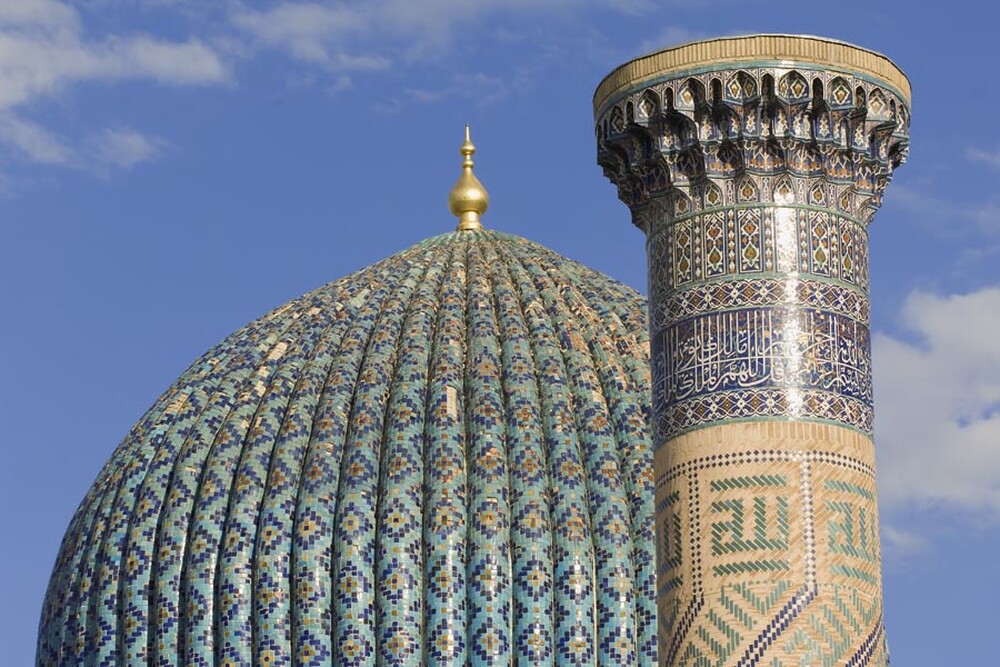
The historic town of Samarkand is a crossroad and melting pot of the world’s cultures. Founded in the 7th century B.C. as ancient Afrasiab, Samarkand had its most significant development in the Timurid period from the 14th to the 15th centuries. The major monuments include the Registan Mosque and madrasas, Bibi-Khanum Mosque, the Shakhi-Zinda compound and the Gur-Emir ensemble, as well as Ulugh-Beg’s Observatory.
Brief synthesis
The historic town of Samarkand, located in a large oasis in the valley of the Zerafshan River, in the north-eastern region of Uzbekistan, is considered the crossroads of world cultures with a history of over two and a half millennia. Evidence of settlements in the region goes back to 1500 BC, with Samarkand having its most significant development in the Temurid period, from the 14th to the 15th centuries, when it was capital of the powerful Temurid realm.
The historical part of Samarkand consists of three main sections. In the north-east there is the site of the ancient city of Afrosiab, founded in the 7th century BC and destroyed by Genghis Khan in the 13th century, which is preserved as an archaeological reserve. Archaeological excavations have revealed the ancient citadel and fortifications, the palace of the ruler (built in the 7th century displays important wall paintings), and residential and craft quarters. There are also remains of a large ancient mosque built from the 8th to 12th centuries.
To the south, there are architectural ensembles and the medieval city of the Temurid epoch of the 14th and 15th centuries, which played a seminal role in the development of town planning, architecture, and arts in the region. The old town still contains substantial areas of historic fabric with typical narrow lanes, articulated into districts with social centres, mosques, madrassahs, and residential housing. The traditional Uzbek houses have one or two floors and the spaces are grouped around central courtyards with gardens; built in mud brick, the houses have painted wooden ceilings and wall decorations. The contribution of the Temurid masters to the design and construction of the Islamic ensembles were crucial for the development of Islamic architecture and arts and exercised an important influence in the entire region, leading to the achievements of the Safavids in Persia, the Moghuls in India, and even the Ottomans in Turkey.
To the west there is the area that corresponds to the 19th and 20th centuries expansions, built by the Russians, in European style. The modern city extends around this historical zone. This area represents traditional continuity and qualities that are reflected in the neighbourhood structure, the small centres, mosques, and houses. Many houses retain painted and decorated interiors, grouped around courtyards and gardens.
The major monuments include the Registan mosque and madrasahs, originally built in mud brick and covered with decorated ceramic tiles, the Bibi-Khanum Mosque and Mausoleum, the Shakhi-Zinda compound, which contains a series of mosques, madrasahs and mausoleum, and the ensembles of Gur-Emir and Rukhabad, as well as the remains of Ulugh-Bek’s Observatory.
Criterion (i): The architecture and townscape of Samarkand, situated at the crossroads of ancient cultures, are masterpieces of Islamic cultural creativity.
Criterion (ii): Ensembles in Samarkand such as the Bibi Khanum Mosque and Registan Square played a seminal role in the development of Islamic architecture over the entire region, from the Mediterranean to the Indian subcontinent.
Criterion (iv): The historic town of Samarkand illustrates in its art, architecture, and urban structure the most important stages of Central Asian cultural and political history from the 13th century to the present day.
Integrity
The different historic phases of Samarkand’s development from Afrosiab to the Temurid city and then to the 19th century development have taken place alongside rather than on top of each other. These various elements which reflect the phases of city expansion have been included within the boundaries of the property. The inscribed property is surrounded by more recent developments, of which parts are in the buffer zone. Afrosiab has been partly excavated and the Temurid and European parts of the city are being conserved as living historic urban areas.
The main listed monuments are well maintained. Some of the medieval features have been lost, such as the city walls and the citadel, as well as parts of the traditional residential structures especially in areas surrounding major monuments. Nevertheless, it still contains a substantial urban fabric of traditional Islamic quarters, with some fine examples of traditional houses.
Notwithstanding, there are several factors that can render the integrity of the property vulnerable that require sustained management and conservation actions.
Authenticity
The architectural ensembles of Samarkand as well as archaeological remains of Afrosiab have preserved all characteristic features related to the style and techniques and have maintained the traditional spatial plans of the urban quarter. However, inadequate restoration interventions as well as the challenges faced in controlling changes, particularly the construction of modern buildings, and the modernization on private properties have affected the authenticity of the property and make the property vulnerable to further changes.
Protection and management requirements
There are adequate legal provisions for the safeguarding of the heritage property. The State Samarkand Historical Architectural Reserve was established under the Decree of the Cabinet of Ministers of the Republic of Uzbekistan (26 May 1982). Within the Reserve all construction and development work is done according to the recommendations of the Samarkand Regional Inspection on Preservation and Restoration of Objects of Cultural Heritage.
The overall responsibility of the management of protected areas is with the Ministry of Cultural and Sport Affairs and the Samarkand provincial government. The operating bodies that influence the conservation and management of the property include the Ministry of Culture and Sports of the Republic of Uzbekistan and the Principal Scientific Board for Preservation and Utilization of Cultural Monuments, the Municipalities of the Samarkand Region and Samarkand city, the Samarkand Regional State Inspection on Protection and Utilization of Cultural Heritage Objects. Decisions on construction/reconstruction within the protective Reserve of Samarkand are taken in consultation with the Samarkand Regional State Inspection on Protection and Utilization of Monuments, or by the Scientific Board on Protection and Utilization of Monuments in Samarkand. Major projects receive approval at the national level.
The Regional State Inspection on Protection and Utilization of Cultural Heritage is in charge of day-to-day activities related to the monuments such as registration, monitoring, technical supervision of conservation and restoration, or technical expertise of new projects, these are implemented by the Scientific Board on Protection and Utilization of Monuments in Samarkand, which is obtaining the function of a Coordinating Committee and should have the main role to bring together all parties with interest in the conservation and development of Samarkand. Taking into account a scope and a complexity of issues facing the property, site management system could be strengthened through an operational unit.
The sustained implementation of the Management Plan is needed to ensure to further improve the cooperation between the various national and local authorities and set international standards for conservation. Several factors that can pose a threat to the conditions of integrity and authenticity of the property need to be systematically addressed through the implementation of an integrated conservation strategy, that follows internationally accepted conservation standards, as well as through the enforcement of regulatory measures. The management system will need to be integrated into other planning tools so that the existing urban matrix and morphology of the world heritage property are protected.
Funding is provided by the State budget, extra-budgetary sources and sponsorship. Resources needed for all aspects of conservation and development of the property should be secured to ensure the continuous operation of the management system.