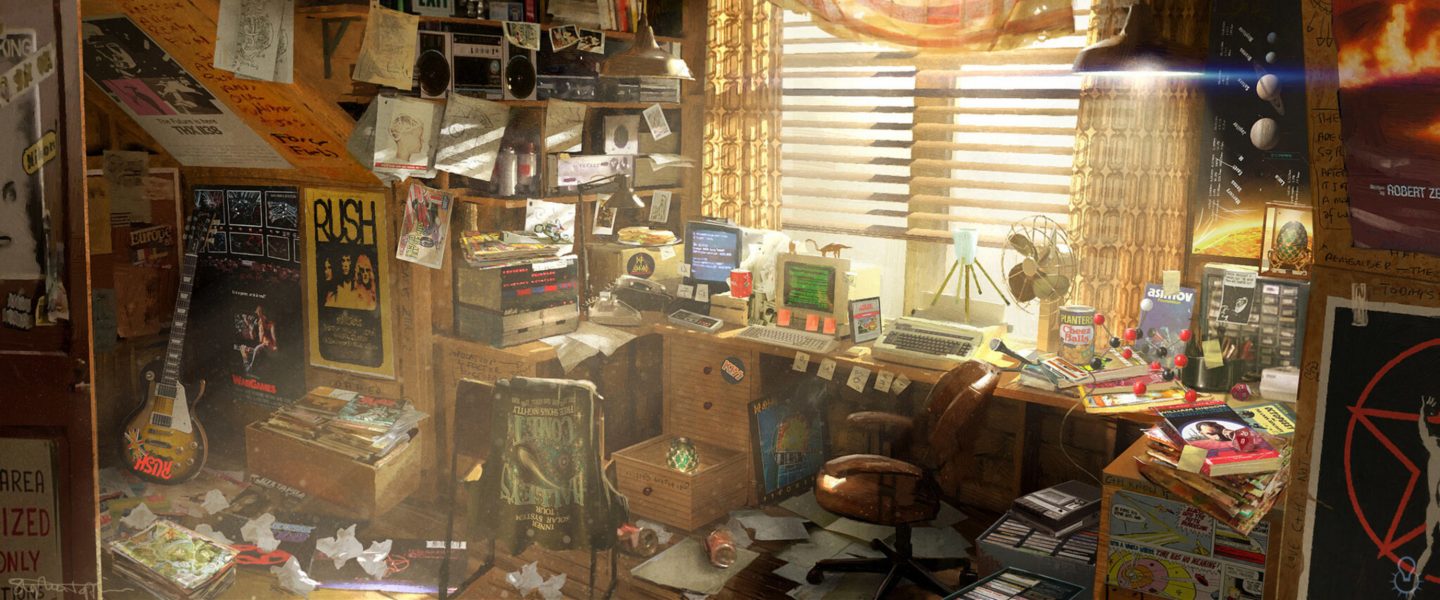

Georgy Sviridov – The Blizzard (1964 soundtrack)
01. 00:00 Troika
02. 03:06 Waltz
03. 06:58 Spring And Autumn
04. 09:03 Romance
05. 14:34 Pastoral
06. 16:45 Military March
07. 19:08 Wedding
Georgy Sviridov – The Blizzard (1964 soundtrack)
01. 00:00 Troika
02. 03:06 Waltz
03. 06:58 Spring And Autumn
04. 09:03 Romance
05. 14:34 Pastoral
06. 16:45 Military March
07. 19:08 Wedding

The mid-to-late 1960s through 1970 were the magical years for muscle cars, when the domestic automakers were competing to see who could come up with the fastest and most-audacious horsepower machines.
The roots were planted nearly a decade before, starting in 1956, when Semon Emil “Bunkie” Knudsen was appointed general manager of General Motors’ Pontiac Division with the mission to improve the brand’s public perception and to ignite the lagging sales of its vehicles.
Knudsen took Pontiac to the race track. “Wide-track” became the new advertising theme, backed by the improved performance of cars, led by new chief engineer Pete Estes, who came over from Oldsmobile, and the recruitment of his assistant, John Z. DeLorean, who had been at Packard.
Add advertising executive Jim Wangers to the mix, and things would get very interesting.
Long before “We Build Excitement” would become the brand’s advertising tag line, the Knudsen/Estes/DeLorean/Wangers crew did just that. It created the Detroit muscle car phenomenon, although at first it had to do so with a back-door effort to avoid the scrutiny of the GM bureaucracy.
GM had an internal rule that reserved its largest V8 engines for use in its largest cars. But the Pontiac engineers realized that there was room under the hood of the “intermediate” (mid-sized) Tempest model for the 389cid V8 from the Bonneville. Typically, the Tempest carried a meager, 140-horsepower inline 6-cylinder. But the big Bonneville benefited from its 325-horsepower unit.
The solution: A special-option package for the 1964 Tempest LeMans. Check the right boxes and for less than $300 you got the V8, heavy-duty 3-speed or Muncie 4-speed manual transmission, stiffer suspension, improved steering gear and tires, dual exhaust, and badges that proclaimed your car as a GTO.
That’s GTO as in the famed Gran Turismo Omologato of Ferrari fame (pity that the Italian sports car maker hadn’t trademarked the name).
Enhancing the car’s image was Wangers recruitment (actually, his creation) of a rock ’n’ roll band, Ronnie and the Daytonas, to record what became a hit song, Little GTO. That, and a Car and Driver magazine cover proclaiming “GTO vs GTO” and a story about a supposed drag race between the Pontiac and Ferrari models.
By the way, the GTO-optioned Pontiac could sprint to 60 mph in about 6.5 seconds and run the quarter-mile in less than 15 seconds.
By 1966, GTO became a separate model line for Pontiac. Empowered by such a vehicle, Pontiac soared to third in sales among all Detroit automakers, and Knudsen was promoted in 1961 to head Chevrolet. Estes moved up at Pontiac, and then took over Chevrolet when Knudsen left for Ford (and later would become president of GM). In 1965, DeLorean got the top job at Pontiac and, at age 40, became the youngest person to head a GM automotive division.
As you might imagine, the success of the early GTO created some controversy within the GM family. Other divisions wanted their own “muscle cars,” and they got them. And the rest of Detroit jumped on the bandwagon as well.
Before the end of the 1966 model year, Oldsmobile offered a 4-4-2 upgrade on its F-85/Cutlass. The numbers came from the four-barrel carburetor, four-speed manual transmission and dual exhaust. For 1967, The Cutlass Supreme 4-4-2 offered a new 350-horsepower, 400cid “Force-Air” engine with ram induction.
Buick tried to match the GTO with its 325-horsepower Skylark Gran Sport.
Chevrolet’s response was the Chevelle/Malibu SS 396, equipped with a 375-horsepower, 396cid V8, dual exhaust, four-speed manual gearbox, stiffer suspension and a 160 mph speedometer. For 1965, 200 Z16 versions were produced with stiffer frames, narrowed rear axles, Impala brakes and hydraulic lifters like those used on the Corvette.
Chevelle remained a leader in the mid-size muscle car wars, culminating in the 1970 Chevelle SS454 LS6, a valuable collector car today.
Meanwhile, Mopar engineers started the decade working on a NASCAR engine that would wind up setting the trend for large-displacement V8 engines for street or strip, the legendary 426 Hemi that used a revolutionary hemispheric cylinder-head design to improve air flow at all rpm, and which was rated at 425 horsepower.
The sturdy Hemi ruled NASCAR after it showed up to win Daytona in 1964, was banned in 1965 for the lack of homologation, then was back to its winning ways in 1966 as thousands of 426 Hemis found their way into muscle cars for the street.
Things got serious for Chrysler in 1966 with the introduction of the Dodge Charger, a Coronet-based fastback available with the 426 Hemi, and the restyling of the Plymouth Belvedere/Satellite, dominated by the GTX version with the 440cid V8.
For 1968, the Dodge and Plymouth intermediates were ready for true muscle car makeovers, with Plymouth offering the Road Runner with a standard 383-cid V8, the GTX with a 440 “Super Commando” V8, or the 426 Hemi, and the Dodge Charger with corresponding engine choices.
The NASCAR influence on Mopar performance was most exemplified by the Road Runner Super Bird and the Charger Daytona with their long, aerodynamic front-end add ons and towering rear spoilers. As outrageous as they were on the street, they were effective on the NASCAR track.
Hemi V8s are revered today as muscle car icons, and any numbers-matching Mopar powered by one draws a strong premium value. For instance, an original 1970 Plymouth Hemi ‘Cuda could set you back in the seven figures.
GM and Ford played catchup with their own 427cid big blocks. In the showrooms, Ford offered its 427 V8 as an option in its midsize Fairlane and a 390cid V8 in the Mercury Comet Cyclone. Ford’s focus was on beefing up its Mustang, highlighted by such things as the Boss 428 with the Cobra Jet 428 racing engine under its long hood.
The Cobra Jet was used by the end of the decade in the Ford Talladega and Mercury Cyclone.
GM used its 427 in a number of high-performance applications, ranging from Corvettes to Impala, and notably in such towering performance beasts as the Camaro ZL1.
In the heyday of the Detroit Muscle Car, even American Motors joined the party with its Rebel SST and Rebel Machine models, and its Rambler Scrambler.
Model year 1970 is seen as an apex for muscle cars as a confluence of engine technology and corporate will came together to create some of the greatest muscle cars of the era. But it all began fading away the following year, as Department of Transportation regulations and soaring insurance rates spelled doom for high-performance muscle cars.
The final fatal blows were right around the corner, when the OPEC oil embargo of 1973 heralded the end of cheap, plentiful gas, and emissions regulations strangled the horsepower output of once-mighty engines.
It was fun while it lasted, but the Detroit muscle car era had come to an end, though it was an end that would prove to be only temporary.

SOCIETY
LAW ENFORCEMENT – Since the construction of the Phase Space Gates, law enforcement has been powerless to stop poverty and crime from skyrocketing throughout the Solar System. Though the ISSP (Inter Solar System Police) was formed to catch interplanetary criminals, it wasn’t enough to bring about law and order. Bounty hunting and volunteer law enforcement have become commonplace.
COWBOY SYSTEM – In a desperate attempt to keep crime under control, the “Cowboy System” was established. After passing a lenient written test, any civilian could apply a bounty hunting license and capture criminals from the ISSP wanted list for reward money. By 2071, over 300,000 registered bounty hunters reside in the Solar System.
ORGANIZED CRIME – Ruthless criminal organizations, such as the “Red Dragon” crime syndicate of Mars, control much of the Solar System. Those who go up against these gangs are either bought out or murdered, a common practice of gangs like the “Blue Snake” crime syndicate.
SPACE TRAVEL
MONO SYSTEM – All space ships are classified as “Monomachines.” MONO is an abbreviation for “Machine Operation Navigation of Outer Space” The “Monosystem” encompasses the airframe control mechanics, the navigation system and the automatic billing system of any given ship. In short, it is a necessity for all outer space activity. Steering capsules called “Monopods,” a standard feature of “Narrow-sense” Monomachines, can be ejected and navigated independent of their ships.
PHASE SPACE GATES – At the dawn of the 21st century, Phase Differential Gates (also known as Phase Space Gates) were constructed across the Solar System. Designed by the famous Chessmaster Hex and funded by the Gate Corporation, the gates enable space craft to enter hyperspace, traveling 240 times faster than in normal space. However, after discovering a flaw in the design, Hex attempted to stop the the gates from being built. He was fired from the corporation and the gates were built without his approval.
GATE INCIDENT – Shortly after Chessmaster Hex was fired by the Gate Public Corporation, a Phase Space Gate between the Earth and its moon exploded, sending moon debris into Earth’s atmosphere. Chunks of the debris constantly strike the surface of the planet rendering it virtually uninhabitable. The gate incident changed the lives of many including Faye Valentine and Wen.
FUTURE TECHNOLOGY
Aside from groundbreaking developments in space travel, there have been major advancements in other technologies.
The universal currency known as the Woolong was established. Though paper money is still in circulation, electronic money cards are more commonly used.
Medical technologies such as artificial organs and cryogenics have been perfected. Using “Alfa Catch” devices, Images from the human brain can be displayed on monitors.
Virtual reality videogaming has become the norm and videocassettes are a relic of the distant past.
The internet, once known as the World Wide Web (WWW), has evolved into the massive Solar System Web (SSW). Although the interface of the SSW is much more chaotic than that of the WWW, common problems such as computer viruses continue to plague the online world.
THE SOLAR SYSTEM
VENUS – Population: 500 Million, Culture: 70% Middle Eastern and African, Travel Time From Earth: 7-13 Hours (via Phase Space Gates), Appears In: SESSION 7, With the addition of oxygen-producing plants in the sky, Venus was terra-formed into a habitable planet. However, the falling spores of the plants cause “Venus Sickness” in a very small percent of people. If untreated, the sickness could cause blindness. The architecture of Venus is predominantly Middle Eastern.
EARTH – Population: 200 Million, Culture: Varied, Appears In: SESSIONS 9, 18, 19 & 24, After the “Gate Incident,” daily bombardment by meteors, devastating the planet’s surface. The only people crazy enough to stay on Earth are hackers, who hone their skills on the many abandoned communications satellites that continue to orbit the planet, eccentrics who are too stubborn to leave and those who can’t afford to leave.
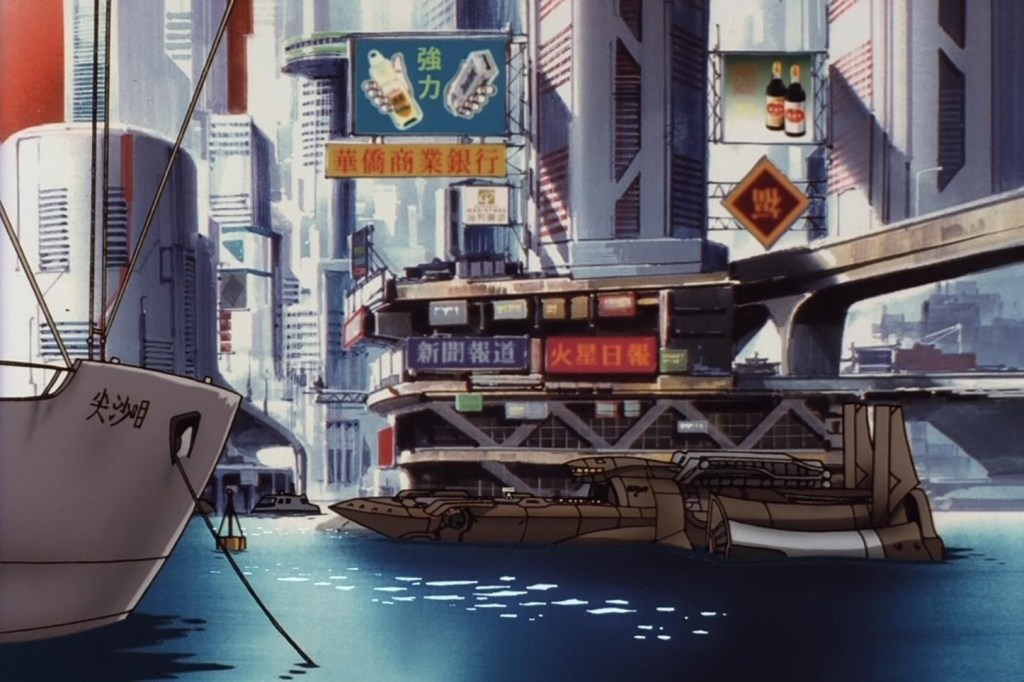
MARS – Population: 300 Million, Culture: 50% Chinese, Travel Time From Earth: 12-24 Hours (via Phase Space Gates), Appears In: SESSIONS 2, 5, 6, 15, 18, 20, 21, 22, 23, 25, 26 & The Movie, Mars is the center of activity in the Solar System. Its many craters have been transformed into vast metropolitan areas.
ASTEROID BELT – Population: 80 Million, Culture: Asian, Latin, European, Travel Time From Earth: 2-8 Days (via Phase Space Gates), Appears In: SESSIONS 1, 7 & 14, Larger Asteroids in the region between Mars and Jupiter are colonies, centers of free-trade that have been converted into urban areas or fertile pastures. Tijuana, an asteroid with an excavated center, is famous for its beef.
MOONS OF JUPITER – Population: 350 Million, Culture: European, Travel Time From Earth: 2-3 Days (via Phase Space Gates), Appears In: SESSIONS 4, 10, 12, 13 & 17, Ganymede, Callisto and Io have been terra-formed and colonized. Ganymede is a fishing planet, almost completely surrounded by water. Callisto is frigid, hostile and in a constant state of economic depression with many abandoned construction sites. Io is a dry place with expansive plains similar to Mexico.
SATURN – Population: 30 Million, Travel Time From Earth: 4-7 Days (via Phase Space Gates), Appears In: SESSION 13 & The Movie, Titan, the sixth moon of Saturn, is a sprawling desert. In 2068, it was the stage of a bitter civil war. The economic depression in Callisto is partially attributed to this conflict. The merciless wasteland reshaped the lives of war veterans including Gren and Vincent.





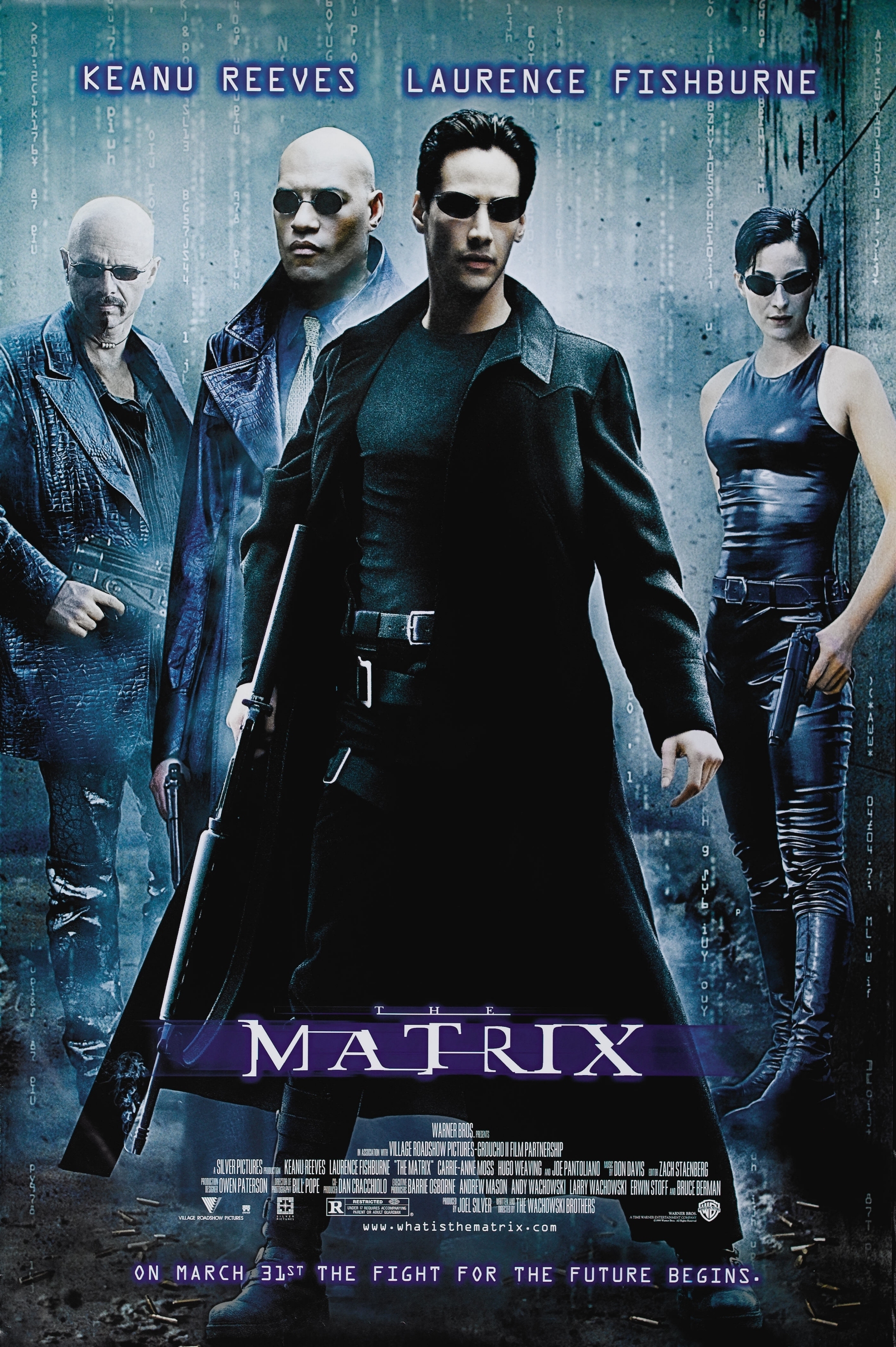

Blood Music is the sort of frightening novel of biological horror that Michael Crichton used to be able to write back in the good old days of The Andromeda Strain, and it helped put Greg Bear on the map in the early years of his career. In its level of sheer visceral involvement perhaps its only peers are the aforementioned Strain and the first third of Stephen King’s The Stand (the speading-of-the-plague sequence before it gets bogged down in its own apocalyptic bloat). However, like The Stand, Blood Music does lose some of its momentum as it nears its finale, becoming at times downright cryptic and trippy. But the net effect is chillingly unlike most hard SF, and Bear admirably succeeds in sounding a cautionary note without lapsing into anti-science hysteria, as so many non-hard SF writers would do.
The novel begins peacefully enough, as we meet Vergil Ulam, a loose cannon researcher working at a southern California firm called Genetron, which is working to perfect the world’s first biochips. These would be the first human-computer interfaces, silicon chips that, when introduced into the body, meld harmoniously and work together with your good old carbon based cells. But Vergil sees all this as being redundant. Since the genetic material in a cell itself is in essence one great computer, why not recombine a little DNA here and there and let the cells do the work themselves? Vergil succeeds, all too well. The human cells he is recombining become individual sentient entities Vergil calls noocytes.
Fired from Genetron for his extracurricular activites (which they don’t necessarily disapprove of; they just want to cover their butts), and ordered to destroy his experiments, Vergil sneaks the cells he has recombined out of the top secret labs the one way he knows how: by injecting them into himself. I bet you think you can see where this is leading, right? Well, don’t be too sure. Bad 50’s B-movie monster clichés are handily avoided as Bear launches us into an almost inconceivably nightmarish scenario where Vergil’s impetuousness affects not only himself, but threatens humanity completely.
The first half of the novel is close to astounding. Bear keeps everything racing along at lightspeed as he hurtles you into the unfolding horror so that you can only respond by shaking your head and saying “Oh no…oh no” over and over to yourself. But then this can be a story liability as well; as the tale races inexorably forward it can feel as if everything is happening too fast for you to catch your breath. The palpable suspense is offset by a feeling that you might want to read the last few paragraphs over again just to see if you might have missed something.
Also, as the book enters its second half, it (like The Stand) introduces us to a number of new supporting players who are among the final survivors of the bio-apocalypse. These story threads, particularly the one featuring the odyssey of a lone teenage girl wandering through a horrifically transformed Manhattan, are often indelibly haunting. But they would have been more effective had Bear introduced these characters at the novel’s beginning, just like Vergil, giving us a greater involvement in their lives before everything hits the fan, and thus drawing even greater sympathy out of us for them. Introducing a slew of new characters over 100 pages in throws off the story’s momentum just slightly, and the subsequent jumping back and forth of the narrative disrupts the excellent pace of the early scenes.
Still, this is one bloodcurdling book…literally! It has a cinematic immediacy that holds you fast despite its occasional unevenness, and it’s just unpredictable enough in its narrative twists and turns to let you feel genuine awe for Bear’s imagination. Blood Music may not be the best hard SF biothriller ever written, but it inspires a sense of wonder even in light of the frightening concepts it explores. With a little more depth of character, the novel could have made some timeless music indeed. But as it is, it’s got a great beat, and you can dance to it.

When the first compact discs arrived on the Australian market in 1983, they ranged in price from $900-$1800. The price didn’t hold back the rapid adoption of the technology.

