CIA’s Washington Post Says “democracy” is Causing All the Problems in the Middle East – so there should be less

https://nomadiceveryman.blogspot.com/2019/11/cias-washington-post-says-democracy-is.html

How many mistakes, outright lies and convoluted perceptions about the history of our involvement in the Middle East can one writer stuff into an Op-ed for the Washington Post (where “Democracy Dies in Broad Daylight”) and what does their twisted version of “truth” reveal about their fascist agenda?

It’s a good question isn’t it? Lets ask Yoav Fromer, a man who teaches a particular version of American history at Tel Aviv University and who just wrote a piece for the Post titled (believe it or not) “The Middle East doesn’t lack democracy. It has too much.”

“From Turkey to Israel to Iran, popular opinion drives the radicalism and instability of governments in the region“ Yoav Fromer

Is Turkey a “radical” nation because they oppose the faction of their Kurdish population who are striving to bust off part of the country for the Greater Kurdistan project? Are they “radical” because they call out Israeli aggression in places like Syria, Lebanon and Gaza? Or perhaps because they rejected a pipeline deal the Saudis and Qatar wanted? What exactly makes them “radical”?

And one can ask the same questions about Iran.

I think we all know what makes Israel radical. Endlessly posturing for war with Iran, bombing targets in Syria in support of groups like al Qaeda and ISIS and of course, the constant abuse of Palestinians in the West Bank and Gaza. Folks sitting on lawn chairs watching children being bombed during Operation Cast Lead didn’t help much either for that matter.

“Things got even worse after the United States inaugurated its new embassy in Jerusalem in May and violent protests erupted along the Gaza-Israeli border that left more than 60 Palestinians dead” Yoav Fromer

The protests were not only not violent… they started on March 30 as part of the Great Return March. One might think that a professor in Israel would have to toe the party line as it were but one would be wrong. The one country where criticism of Israeli foreign policy is allowed… is Israel. So Fromer’s historical white-washing of the IDF’s snipe murder-spree is completely by choice.

“There’s something that links all these crises: the considerable role of democratic majorities and public support in fueling them.” Yoav Fromer

Here are the crises that he mentioned as being caused by “democracy”:

Trump scrubbing the Iran nuke deal (on behalf of Israel)

Pompeo’s ridiculous list of 12 demands to Tehran (on behalf of Israel)

the conflict between Iran and Israel “heating up” (due to Israel bombing targets in Syria)

Lebanese election which Hezbollah won a majority (because they stand up to Israel)

Iraqi election which Moqtada al-Sadr won (because he supposedly stands up to the U.S.)

Trump moving the embassy to Jerusalem (obviously to appease Zionists across the world and in his own administration)

conflict between Turkey and Israel (because of Israel’s vicious treatment of Palestinians in Gaza)

While I agree with Yoav in so much as he claims “(e)ven by Middle East standards, recent weeks have been harrowing”, I have to take exception with him as he posits the notion that democracy is the problem. I think a slightly more thorough examination of his list might find a different, more obvious common thread running through all these crises. But that’s just me. I don’t teach American history on the university level… so… I might not be as… careful as he is.

Now, if you think that is a rather striking display of someone misreading current events in the Middle East, try wrapping your head around Fromer’s take on American foreign policy since the end of WWII:

“If there has been one constant in U.S. foreign policy since 1945, it has been the firm belief that the defense and expansion of democracy are aligned with the national interest. That was the rationale for the Truman Doctrine and the Marshall Plan, which aimed to buttress America’s Cold War allies and contain the Soviet Union; later, it became a central pillar of the Bush Doctrine . Although Presidents George W. Bush and Barack Obama disagreed on how to promote democracy, they both thought spreading it was vital to America’s national security.” Yoav Fromer

Wow. Yoav thinks all we’ve been doing since WWII has been focused on spreading democracy huh? Like all that democracy we dropped on North Korea, Vietnam, Panama, Indonesia, East Timor, Yugoslavia, Iraq, Afghanistan, Pakistan, Sudan, Somalia, Yemen…. and of course… Libya.

A pillar of the Bush Doctrine of unilateral warfare is democracy? Obama and Killary “spread” it butter all over places like Ukraine, Syria and Libya, didn’t they? Hell, they tried to “spread” some in Russia and Iran as well but I guess it just didn’t take.

Does this guy have any idea what an NGO is and what Capitalism’s Invisible Army (CIA) does with them in other countries? Did he never hear of Operation Gladio or understand it’s purpose was to crush democracy across Europe and elsewhere if it was moving in a direction our glorious “national interests” couldn’t profit from? Yoav would do well to read some Wayne Madson from time to time (US Meddling in Foreign Elections: A CIA Tradition Since 1948)

“The CIA never meddled in foreign elections for purposes of extending democratic traditions to other nations. The chief purpose was to disenfranchise leftist and progressive voters and political parties, ensure the veneer of “democracy” in totalitarian countries, and protect the interests of the US military bases and US multinational corporations.

In double-talk that is reminiscent of the Cold War years, the CIA considers its election interference to fall under the category of “influence operations,” while the same agency accuses Russia of “election meddling.” In truth, there is no difference between the two categories. Election interference represents intelligence service “tradecraft” and it has been practiced by many intelligence agencies, including those of Israel, France, Britain, China, India, and others.

On the rare occasions when the CIA’s efforts to rig an election failed – as they did in Guatemala in 1950 and Chile in 1970 – the agency simply organized bloody military coups to replace with military juntas the democratically-elected presidents who defeated CIA-supported candidates at the polls.” Wayne Madson April 3, 2018

Since the end of WWII America’s foreign policy, for the most part, can best be described as a vulture capitalist applying the “mergers and acquisitions” model to the world where instead of acquiring, strip-mining and selling off companies… they do that to nations, one after the other.

And one might think that Yoav Fromer would be unaware of such things as he is an academic and lives in an academia bubble where real evaluation of our foreign policy doesn’t serve the interests of the donor class… but one would be wrong about that as well.

“Latin America, for instance, understands all too well what Trump means when he says “America First,” the motto of his foreign policy doctrine. Driven by self-interested realpolitik or exploitative economic interests, the U.S. has threatened, intervened — and even invaded — Mexico, the Dominican Republic, Haiti, Grenada, Cuba, Panama, Honduras and Nicaragua. When voters in Chile and Guatemala democratically elected leaders deemed unfavorable to America’s interests, America had them removed. And it didn’t end there: From the Philippines to Vietnam, through Lebanon, Iran, Cambodia, Angola and recently in Iraq, America — although its heart was sometimes in the right place, but often not — has time and again bullied other nations in an imperial manner that led Robert Kagan to aptly title his study of America’s foreign relations “Dangerous Nation.” Yoav Fromer July 8, 2016

At some point Yoav understood what it meant to oppose America’s interests at the ballot box. It often meant you would be regime changed, sanctioned or bombed out of existence and back then he seemed at least somewhat perturbed by the obviously anti-democracy trend. However, today he is openly advocating for it.

“But recent events in the Middle East suggest otherwise. Far from being the panacea that could save the volatile region from itself, democratization has bred unintended consequences that are tearing it apart. In Iran, Gaza, Turkey, Lebanon, Iraq and even Israel — the only functioning liberal democracy in the area — democracy may be the problem, not the solution” Yoav Fromer

Ironic isn’t it? A paper who’s motto is “Democracy Dies in Darkness” publishes an Op-ed that suggests we kill it in broad daylight. Of course, the fact that the CIA, enemy of democracy since it’s inception, essentially bought the Washington Post years ago shouldn’t be mentioned or considered… right?

When the will of the people gets in the way of our neoliberal agenda or Israel’s land-grabbing agenda, then the will of the people is wrong and must be thwarted. That’s the historical opinion of the CIA and their masters and apparently, that it is the opinion of Yoav Fromer and the editorial staff at the CIA’s main Mockingbird outlet, the Washington Post.

To sum up his article, Yoav makes his point perfectly clear:

“Meanwhile, the main source of stability in the Middle East remains the dictatorships and monarchies where the popular will has little impact on government policy…

THIS Humic Fulvic Has Cured Cancer and Much More! Stops Diseases DEAD! (See VIDEO)

Motivated by deeply rooted historical, economic, cultural and religious grievances, large majorities throughout the Middle East are hostile to the United States and Israel…

The particular form of government taking root in the Middle East — (democracy) — has not made it any more safe or stable. Instead of imagining how to spread democracy in the region, the United States may soon begin thinking about how to contain it.” Yoav Fromer

Pretty remarkable huh?

Pretty remarkable that a writer who, two years ago, fully understood how the fascists at the CIA and the State Department have hated and worked against democracies for decades, now suddenly takes up their campaign and calls for less in the Middle East.

Contrary to what this new Mockingbird writes, the people in the Middle East aren’t motivated by historical, economic, cultural and religious grievances. That’s another of Yoav’s efforts to white-wash history AS IT HAPPENS.

But they are motivated by:

the U.S, and Israel constantly bombing them or hiring terrorists to regime change them or sanctioning them or endlessly lying about them in pursuit of WAR and REGIME CHANGE.

They are sick of being OCCUPIED like an apartheid state or being IMPRISONED in “the world’s largest open air prison“

They are tired of being SHOT when they peacefully protest or being RENDITIONED when they get in the way of our leaders “democratization” schemes.

They are tired of TORTURE inflicted upon them by our allies we installed.

They are fed up with our plans for the “New Middle East” which features Greater Kurdistan and Greater Israel.

I recently wrote several articles that expose the sudden shift in our national propaganda away from democracy, even rising to the level of condemning it when public opinion isn’t that which we are supposed to hold. They would be worth reviewing at this point so you can see this is more than just one man’s convoluted opinion and in fact, it’s probably the direction they want to take us. Right out in the open… declare the failure of government of the people, by the people and for the people.

When Democracy Rears its Head in Italy, Horrified Oligarchs and their Apologists Move to Kill it

Two CFR Videos Expose Hatred of Populism and Fear of an Interconnected, Uncensored Participatory Public

Meet The Transatlantic Commission on Election Integrity: Ensuring “Democracy” in a Neoliberalized World Order

60 Protesters Barely in the Ground and South Carolina Sneaks in Law to Make Illegal Any Criticism of Israel and it’s Behavior

Democracy isn’t the problem in the Middle East. We are. Us and Britain and France and Israel are. Our endless attempts to thwart the will of the people in pursuit of our own greedy, self-serving interests are the problem and efforts like Yoav’s here to misdirect blame are incredibly enlightening when it comes to seeing the truth for what it is.

The CIA and their Mockingbirds want to bring the killing of the Great Experiment right out in the open, in broad daylight, and so this article is a sort of trial balloon, seeing what kind of blow-back they get from it. Because it’s very clear to me that if they can get a public to support the notion of killing democracy abroad, it’s just a small thing to get them to accept that same effort back home.
Wars In Peace: Afghanistan

Afghanistan, war in the Hindu Kush, a war fought by the Soviet Union to prevent the spread of Islamic Fundamentalism. Like Vietnam, a conflict dominated by the helicopter gunship.

Unlike Vietnam, a hit and run guerilla war not all rebels could agree how to win and one fought under often atrocious conditions for which the soviets were untrained and unprepared.

Afghanistan is a remote landlocked country whose closeness to Iran’s Islamic revolution scared the Kremlin. It’s also a wild mountainous country with few metal roads. This lack of easy communications dictated a two pronged invasion to secure the capital Kabul and the towns along the road system.

The invasion was personally supervised by Marshal Sergei Sokolov, the Soviet’s deputy defense ministry, extensively experienced as a war time tank general. He was a hawkish commander, but a conservative tactician who soon faced a federation of 24 major guerrilla groups.

Alex Jones at Richmond Virginia VCDL Rally 1/20/2020

While waiting for my wife to pick me and several friends up after the 1/20/2020 VCDL 2nd Amendment rally in Richmond, VA, we heard somebody shouting into a bull horn. It was InfoWars’ Alex Jones riding in his custom faux armored vehicle. As Mr. Jones rode by — screaming at the top of his lungs —I suggested that he go home to Texas. Virginia doesn’t need idiots like Alex Jones trying to stir up trouble.

Virus Buster Serge (1997)

https://cinemaoftheabstract.blogspot.com/2014/11/virus-buster-serge-1997.html

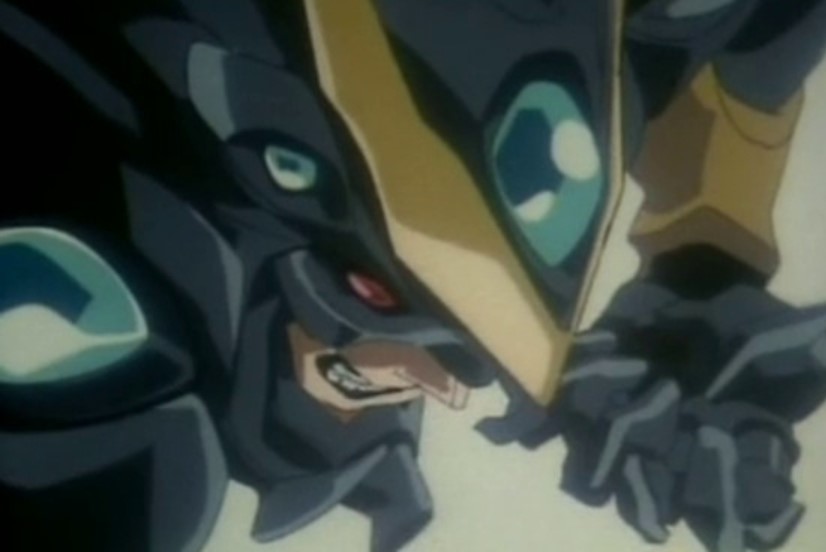
So much anime has been made since its origins in the sixties, just in the era when the West caught onto the medium, that you don’t need to go far into it to reach the ninety nine percent that you take the best, the one percent, from. Be it obscurities, the underrated, criminally forgotten, the guilty pleasures, the mediocre, the product and the worst. Even in the UK, before we got a lot of anime now, always behind on the USA of having so much titles get released, we still got some obscure titles on VHS and DVD, probably to be found in a second hand DVD store or charity shop. Virus Buster Serge is amongst this anime, it’s history vague for me – a videogame adaptation, from the same creators of Bomberman Hudson Soft, though I cannot find screenshots of the Sega Saturn game in question, just the PlayStation one from 1999 that proves this franchise did have fans. When the anime starts on its first episode, the first information, the setup, repeated in the opening title credits between a male and female voiceover, immediately reveals why this title has became obscure. Immediately it sets up its crippling flaw, that it feels like a twenty four or so episode anime series crammed into just twelve episodes. You already have complicated dialogue that tries to sound important and throws in words like “Black Valentine” which, while eventually explained, aren’t revealed as early as possible in the episodes themselves or are particularly needed. Already, I’m criticising the anime in the first paragraph, but I’ll give the following statement. It is utterly fascinating in my obsession with nineties anime, but I’m not going to recommend the series except only to those curious with anything I say or the screenshots you see. This is an anime which wanted to be and sound important but comes off as something vague and peculiar instead, as much of its interest as well as its weakness from the fact this feels like it was handicapped before it even got out onto television, not necessarily because of anyone in particular working on it.

As the series doesn’t actually explain its plot as it starts, I’ll simplify it from all the jargon that gets thrown at the viewer immediately in the first episodes for a simple outline. A form of satellite hovers above a future Earth, sending down a form of virus which effects computers and human beings equally, causing horrible mutations and with the clear goal of weakening humanity, to spread and control the population if left unstopped. The problem has been lengthy when the series start, Earth unable to eliminate the satellite, but have kept the virus in some control. Set in Neo Hong Kong, the group employed to eliminate any virus outbreaks are S.T.A.N.D., (the acronym is never actually explained), part of a larger, potentially corrupt organisation, and are effectively the moodier cousins of the Power Rangers. The group is led by the enigmatic Raven, a man who is cryptic and rarely providing information that would’ve helped his group if they were informed of it. Actually, to get to the ending of the series immediately, a lot of problems that take place in the series could’ve been softened if he told someone any of the information of a bleak background story he knows of, furthered by the unexplained prescience of a female main computer hologram named Donna whose interactions with him in hushed tones clearly mean she represents something of importance. He’s has long black hair, he looks pretty when he broods, and eventually even his own group rebel against him in the final episodes. Said team originally starts out as four members, one staying back to pilot their assault ship and provide tech help, the others (literally) melding their power suits, Variable Gears, onto their bare flesh before combat. Marcus the methodical veteran with a penchant for jackets with fur on the neck. Jouichirou, the cocky guy. Mirei, a teenage girl who pilots their assault craft and, a talented computer hacker, makes the perfect tech person for the team. And Erika, the convention of the female anime character – hand-to-hand combat specialist, the sexy pin up figure for viewers, the potential love interest for the main protagonist, and unfortunately given the position of being the one who gets emotional and cry at least once rather than be as tough as the smart male viewers would want her to be. An inexplicable fifth member, titular protagonist Serge, appears out of nowhere during a virus related incident to try and kill Raven. Rather than have him imprisoned, Raven hires him, knowing something secret about the mysterious Serge and his dark countenance.

From here, S.T.A.N.D. must take on the virus outbreaks while being targeted from their own side as well as through what they face. It’s been possible, with flaws or not, for an anime to cram a much bigger story into a much shorter length then would seem practical. It would common especially in the nineties however for anime to have abrupt endings or none at all. Virus Buster Serge even as a TV series has a frantic tone to getting all its content, including an ending, into just twelve episodes. Twelve episode anime can work, but this story and what it desires to do clearly needed double its length, especially when it’s more concerned with esoteric dialogue rather than action or pushing the plot along. Virus Buster Serge could’ve been as generic and as off-paced as a twenty four or so episode series, but it would’ve spaced out all this series tries to cram in. It’s a series, as someone who usually isn’t a big fan of them, where episodic, one shot episodes would’ve been welcome, needing the four tier plot structure of longer anime series – opening quarter introducing the world, plot and characters; next quarter setting up the main plot; the third quarter the dynamic turn of events; the final quarter the finale – rather than smush it all in as it does. The series decision to try to be mysterious, of conspiracy, secret identities, a psychological drama with people in power suits fighting bio-mechanical monsters, doesn’t help. It clearly wants to be Neon Genesis Evangelion (1995-1996).

The comparison makes a lot of sense considering Virus Buster Serge came to be two years after the first episode of Evangelion. Evangelion is one of the most popular anime franchises in Japan and the West, as well as one of the controversial. One which pushed the potential for unsettling content, which would mean a lot of television anime would be made to shown at two or so in the morning from then on, as much because of the production difficulties, of how to end it and how co-creator Hideaki Anno had a psychological breakdown halfway through producing it, thus leading to improvised experimentation and even darker psychological content. When animated sci-fi is usually seen as Transformers in geek culture, Evangelion pushed for more adult, psychologically complicated sci-fi in anime. It meant, after, there was a period where more experimental anime series were given a chance, from Serial Experiments Lain (1998) to Boogiepop Phantom (2000). It also led to imitators, something I don’t criticise as, considering Evangelion is still a gigantic merchandising industry by itself, I wouldn’t blame anyone else wanting a piece of the moody sci-fi pie. I cannot look at Virus Buster Serge and not think someone had been influenced by the popular franchise, only rather than characters and their back stories against the situations taking place, Virus Buster Serge was more interested in a lot of jargon that sounds significant. This series also saw Evangelion’s later episodes, once something went weird, and maybe The End of Evangelion (1997), where everything went to hell, and it throws symbology and freakish imagery around continually. A ghostly woman with angels wings, a white throne in a septic white room, vague swirling colours and depictions of cyberspace like a cybernetic, omninous snowball. Nothing about it has any real depth to it, but God bless the series, it’s poor but it’s memorable for its structurally pointless, but well drawn, symbolism. It even borrows Evangelion’s crucifix imagery, which even Evangelion didn’t depict with any actual depth to it originally.

Most of the series, when it’s not these scenes, or an occasional action scene, are characters in static talking of vague things. Obvious plot points don’t get explained until much later on then they should as already mentioned. Everything, despite the bright nineties, hand drawn colours of the characters, is muted, grey or darkly painted. There are no real background details if you notice, not a lot of background figures or detail, adding a lifeless feeling. The other divisive issue with this series is the character designs by the director himself. I am not criticising his abilities as an animator, as I still need to see his best work which has some pedigree of his behind it from what I’ve read of. He has become obscured in his craft from the early 2000s or so, having ended up directing hentai (porn) anime and steadily directing other work within the last decade, but is someone who has some well known titles in his career, including a few fighting game adaptations. His character designs are distinct, but are exaggerated in a way that feel they could’ve only worked in the nineties, not palatable for many in the last few decades looking on at them. The male character designs aren’t that drastic, barring the lithe muscular figures, but it’s the female character designs that stick out like a sore thumb. It’s not even the proportions, as there have been many an anime you can accuse for female characters with insanely large breasts, waspishly thin waists, and lengthy legs. It’s the faces, drawn and on these stereotypical proportions, which stand out, especially with the character Erika. Unconventionally shaped faces and eyes, snaggletooths and a ill-proportioned mix between cartoonish and attractive. At times, the designs work, but drawn at certain perspectives and angles, they look off in symmetry and quality. I also suspect this series was handicapped in being a television series – unlike feature film or straight to video anime, the former usually high budgeted, the later able to have more time to work on them depending on the specific project, television had a strict deadline, and Virus Buster Serge does feel like one with not the highest budget it could’ve gotten.

So what exactly happens in Virus Buster Serge when it’s all put together? There’s a lot of mystery, vague events taking place in the background, but were they worth doing when we could’ve have a more conventional superhero team story which more action, a little of the sci-fi and intrigue? The thing with Neon Genesis Evangelion, for its psychological drama, was that, being inspired by Ultraman, it was an action sci-fi first, with the character building and unsettling content built around this genre core. It’s not even that it had the advantage of more episodes, as for its rocky production history, where line drawings were used in episode previews instead of animation, and probably not out of stylistic flourish, it managed to do well for itself with a giant legacy as a reward. Virus Buster Serge could have worked with what it had. The episodes have to juggle the symbolism, the esoteric and the exposition in a mad cocktail. It should be legitimately weird and interesting for all its intrigue, and in some ways it is as a curiosity of the nineties anime industry. The colours, the genre melding, the view of the future coming up to the Millennium, the hand drawn results certainly for me entertaining to view rather than a good narrative story. The irony is that, despite its trippy symbolism, it never becomes trippy in structure and tone. It becomes fraught between the action sci-fi and the mysterious drama, and its more the conventional action sci-fi in the end, making the intrigue pointless, wasting time that could’ve been somewhere else, and not making it strange enough to get on the Abstract List.

I find more to get from this examining the result as it stands, not good, but to look on at with interest. As stated early on in the review, this is an anime only for the curious. Most people will find it generic and not that interesting. That’s not to say there aren’t fans of Virus Buster Serge online, but I can see many that won’t like it. For me it’s interesting to look at instead.