














You could call it the tour that began Prince’s purple reign.
As David Browne reports for Rolling Stone, in November 1984, four months after the premiere of Purple Rain in U.S. movie theaters—a watershed moment for the pop star and an immediate box office success—Prince embarked on the supporting Purple Rain tour.
It would go down as one of the greatest concert tours in history.
Packed with special effects and famous guest appearances by the likes of Bruce Springsteen and Madonna, the tour would span 98 shows and run through ’85.
Rolling Stone has pieced together an elaborate oral history of the Purple Rain tour. RealClearLife has curated our favorite memories below.
-Wendy Melvoin, Prince’s brand-new guitarist at the time, talks of the elaborate preparations for the tour that were underway before the first date. “I kept seeing sketches of plans and Prince would buzz in and out of the rooms,” says Melvoin. “We were all being fitted for clothes that were being made. I was standing on one of those pill boxes, and there are about five people doing the measurements on me.”
-Matt Fink, Prince’s keyboardist, said that everyone—including him—had to do coordinated dance moves during the shows.
-Keyboardist Lisa Coleman says that doing dance moves onstage during the tour ruined her back for the rest of her life.
-According to Melvoin, the band only had two weeks to rehearse the show. “I had boots on, tons of jewelry, and my instrument and I had to sing and do choreography,” she told the magazine. “It was literally the Olympics. We were like synchronized swimmers. If someone screwed up that thing, there’s not even a bronze medal. You’re just off the team. This was high stakes.”
-Per bassist Mark Brown, the first time Prince got into the stage prop bathtub for “When Doves Cry,” which was made out of a lightweight material and suspended above the stage, it went upside down and Prince took a nasty fall out of it.
-Brown also said the band would get fined if they made mistakes—up to $500, notes Coleman.
-When Prince brought Madonna onstage, keyboardist Coleman had no idea who she was. “I thought he just pulled some girl up on the stage.”
-The band would nightly bet on how long the song “Purple Rain” would be extended. There was even a pot of money involved—if one of them guessed right.
-Says Coleman of why Prince didn’t participate in Michael Jackson’s “We Are the World“: “I think he just saw a whole bunch of pop stars getting together to ‘do good,’ and I think he thought that was kind of bulls—, in a way,” she said.
-Lighting director LeRoy Bennett sums up the tour best: “That whole period was so magical. You could just feel the energy of [Prince’s] stardom just skyrocketing. He could’ve continued to write major hits like all the songs on Purple Rain. I think it just became too easy.”





Henry Cavendish was a prominent English physicist and chemist, born in Nice to British parents. Having left Cambridge without a degree, he lived reclusively in London, devoting his life to scientific investigation while living on the fortune that he had inherited from an uncle. Cavendish discovered the composition of water and estimated the density of the earth — his value was within 1.5 percent of that attained by modern methods. He also estimated the density of the atmosphere, and studied electrical currents and astronomical instruments.
The English statesman William Cavendish, a first cousin of Henry and prime minister from 1756 to 1757, was described as having no intimate friends in political life: “This detachment was natural to him and inevitably confirmed his exalted station … He was the supremely objective man, never led away by passion, completely reliable and so the ideal receiver of confidences … Devoted to work and duty, everything the fourth duke did he did well” (Brown & Schweizer, 1982, p. 19). Jungnickel and McCormmach (1996) stated “these characteristics of the fourth duke — self-assured, conscientious, cautious, withdrawn, competent, and supremely objective — were those, by and large, of the Cavendish family and, in particular, of that member who distanced himself furthest for the active political life of the nation, Henry Cavendish” (p. 257).’They also stated, “To judge from what we have seen, it would appear that he never recorded a feeling or a thought about life. He had a professional correspondence, which was never large but which is invaluable to his biographies, and a portion of this has survived” (Jungnickel & McCormmach, 1996, p. 5).
According to the engineer James Watt (1846), Cavendish was a rich man with a mean spirit. George Wilson (1851) defined Cavendish’s universe as consisting solely of a multitude of objects that could be weighed, numbered, and measured, and characterized Cavendish as a calculating engine.
Social Behavior
Cavendish had “two rather forbidding traits … a pathological fear of strangers that could render him speechless, and a clockwork regularity in all his transactions with life” (Jungnickel & McCormmach, 1996, p. 8). He was an extremely shy man.
“Like his namesakes in government, whatever Henry Cavendish did, he did well. Whatever he did not do well — which included delivering speeches, inspiring men to follow him into political battle, his special ‘unfitness’ — he did not do at all. He acted constantly in society, only his was not the given society of high fashion and politics, his birthright, but that of his own choosing, the society of scientific men” (Jungnickel & McCormmach, 1996, p. 257). Ordinary company caused him acute discomfort. Cavendish lived all his adult life in and around London in solid houses with servants to protect his privacy. These houses he turned into places of science, where the drama of his life was staged.
Narrow Interests/Obsessiveness
Cavendish’s life was his science. Bickley (1911) pointed out, “There is something pathetic about such an existence as Henry Cavendish, so fruitful and yet so utterly barren” (p. 207). According to Edward Thorpe, general editor of Cavendish’s Scientific Papers, Cavendish was not a man as other men are, but simply the personification and embodiment of a cold, unimpassioned intellectuality (see Note 5).
In a similar vein, Jungnickel and McCormmach (1996) stated, “Henry Cavendish existed in another world, though he may not have recognized it as a new world to conquer, one which demanded of Henry what had been demanded of the first duke, hard work. [By ‘conquer’… we mean to understand the workings of nature, ruled by the authority of natural laws.]” (p. 10).
According to Jungnickel and McCormmach (1996), Henry had an interest in music, and made a mathematical study of it (on musical intervals): “Music was understood to be the art that spoke most directly to his feelings” (p. 127). The same could be said of Ludwig Wittgenstein.
Routines/Control
Cavendish had a clockwork regularity in all his transactions with life. The “move to Clapham Common was a particularly upsetting event in Cavendish’s well-ordered life, but it could have been much worse. Cavendish, who in daily life always had held and depended on it, now had an associate, Blagden, who like his librarian was the soul of order” (Jungnickel & McCormmach, 1996, p. 238).
Cavendish had “demons that he could subdue only by imposing a vigilant orderliness on all phases of his life. By following in his father’s footsteps, he brought his world together with that of science, with its discoverable orderliness, the calming paths of wondering stars, laid bare by nature, from which demons are strictly excluded. Cavendish left no ‘inside narrative’ of his life telling us why science attracted him, nor would we expect one from him’ (Jungnickel & McCormmach, 1996, p. 368). Clearly he was reacting to the chaos that autism can create.
Language/Humor
As he was not good at delivering speeches, Cavendish avoided having to deliver them. Lord Brougham stated that he “uttered fewer words in the course of his life than any man who ever lived to fourscore years, not at all accepting the monks of La Trappe” (Jungnickel & McCormmach, 1996, p. 370). His silence was an acknowledgment of the inadequacy of customary spoken language to represent his world. When Cavendish did choose to speak, what he said was luminous and profound.
On the subjects he cared to speak about, Cavendish spoke precisely and sparingly as a point of conscience (Jungnickel & McCormmach, 1996). In fact, persons with high-functioning autism tend toward gravity (e.g., Ludwig Wittgenstein). Thomas Young stated that Cavendish’s hesitancy of speech was not a physical defect but an expression of the constitution of his mind (see Note 6).
Lack of Empathy
Wilson, in his biography, according to Jungnickel and McCormmach (1996), “tried to penetrate to where Cavendish’s courage, hope, and faith lie, his heart, only to discover that Cavendish was a “man without a heart” (p. 8). Wilson described Cavendish as passionless, and said that he was only a cold, clear intelligence whose light brightened everything on which it fell, but warmed nothing. Berry (1960) noted Cavendish’s “striking deficiencies as a human being” (p. 22). Indeed, his habitual profound withdrawal led one contemporary to characterize him as the “coldest and most indifferent of mortals” (Shapiro, 1991, p. 292).
Motor Clumsiness
A slouching walk was a family trait of the Cavendishes. Horace Walpole observed that a “peculiar awkwardness of gait is universally seen in them” (see Note 7).
Idiosyncrasies
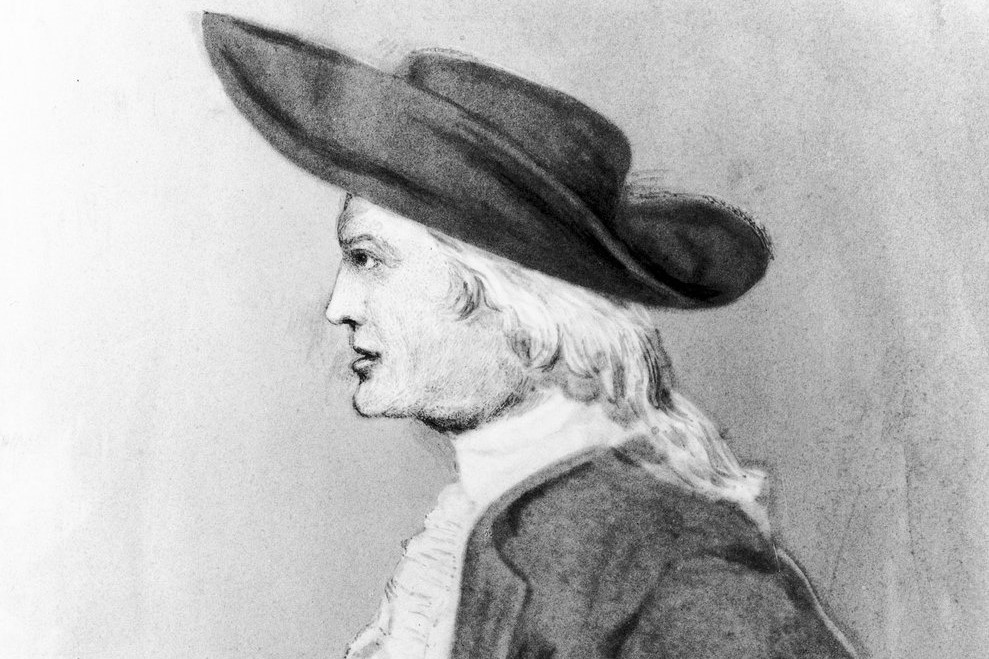
According to Jungnickel and McCormmach (1996), the only portrait of Henry Cavendish is “a graphite and gray-wash sketch … Cavendish was an immensely wealthy man, but one would not know it from this portrait, which showed him in his rumpled coat and long wig, both long out of date, and with his slouching walk” (p. 8).
Conclusion
Jungnickel and McCormmach (1996) were probably on the point of diagnosing Cavendish as autistic, but for some reason stepped back from this position. They came extremely close, stating that Cavendish may have suffered from an affective disorder of a less familiar kind than depression. It is interesting that Jungnickel and McCormmach (1996) mentioned Newton and Einstein absolutely correctly in this discussion, but without using the word “autism.” They refer to Cavendish’s singular drive to understand the universe, and note that his mentality might one day invite a neurological and psychological interpretation. There is little doubt that he had an autistic desire to understand the world.
In the footnotes to their work, Jungnickel and McCormmach discussed Temple Grandin’s (1986) autobiography. They pointed out that, regarding herself as a totally logical and scientific person and her autism as a disorder of affect and empathy, she recalls Cavendish in certain ways. Jungnickel and McCormmach observe in Cavendish a number of autisticlike traits: singlemindedness, apparent inability to feel certain emotions, secludedness, rigidities of behavior, odd gait, harsh voice, strange vocalizations, panic attacks, self-acknowledged social unfitness. There is little doubt that in hinting at autism they were absolutely correct.
Jungnickel and McCormmach are also correct in stating that Cavendish had access to an expression of feeling that was at once mathematically precise and distinct from the mathematics of natural description, one that could stand in for the spoken and otherwise conventionally acted out expression of feeling. These authors concluded: “This silent man is an endlessly fascinating figure … when all is said and done, the person of Cavendish remains in large part in shadow. At the heart of the problem of Cavendish lies the mystery of human communication” (Jungnickel & McCormmach, 1996, p. 371). We feel that what he was demonstrating was highfunctioning autism and the lack of a clear identity (i.e., part of his autism was a disorder of identity or identity diffusion).