The future of the United States in the 21st century

Midtown Manhattan, looking north towards Times Square, in August 1979

In this post, I will paint a more detailed picture of what I think the future of the USA will be like in this century. I will again compare the USA to the Abbasid Caliphate because I think that this is fitting and because I had already done so before. In addition, my knowledge of the history of Islamic Civilization isn’t bad. I can, of course, compare the USA to other similar great powers that existed in history, like the Zhou Empire of Sinic Civilization or the Heian Empire of Japanese Civilization, but most people have never heard of the Zhou dynasty or of the Heian period. I can’t compare the USA to just any great power that existed in the past because the USA exists at a certain stage in the history of Western Civilization. Therefore, the USA has certain features that most other great powers of the past didn’t have. First of all, the USA is not what I would call a military (post-expansion) empire. Almost all of the great powers of the past that people are familiar with are military empires, like the Roman Empire or the Ming Empire. Military empires arise in the history of a civilization after it has entered the Age of Conflict. The Age of Conflict is usually the longest stage in the history of a civilization. The last military empire that appears in the life of a civilization is called the universal empire. In the Age of Conflict of a civilization, expansion gradually slows, the civilization gradually loses its vigor, and irrationality appears. The four indicators of expansion in an Age of Expansion (population, geographic area, production, and knowledge) are affected in the Age of Conflict. These four kinds of expansion slow down in the Age of Conflict. In the Age of Conflict, a civilization acquires little, if any, new territory for settlement. Significant scientific progress also ceases. This can clearly be seen in the history of Russian Civilization in the 20th century. In the Age of Expansion of Russian Civilization, which lasted from 1,500 to 1,900, the Russian Empire acquired new territories and settled them with Russians, who obviously had Russian culture. For example, Russians moved to the eastern part of European Russia and to Siberia and founded new cities there. In the 20th century, when Russian Civilization entered the Age of Conflict and when the Soviet Union emerged, the Russians founded almost no new cities and there was little expansion of geographic area, though the cities that had already existed grew in population. For example, the Soviet Union did add Eastern Europe to its empire after defeating Nazi Germany, but, obviously, the countries of Eastern Europe didn’t get settled by Russians and Russian culture wasn’t imposed on them. So, a state like Hungary didn’t become a Russian state and Russian culture wasn’t imposed on the Hungarians. In Islamic Civilization, the Age of Expansion began under the Rashidun Caliphate in 632, after the death of Muhammad, continued under the Umayyad Caliphate and the Abbasid Caliphate, and came to an end in 861, although sings of weakness in the Abbasid Caliphate began to appear even in 833. The Age of Conflict that began in Islamic Civilization in 861 got interrupted for several decades by the emergence of the Seljuk Empire in 1051. The Seljuk Empire was the first military (post-expansion) empire of Islamic Civilization, and Seljuk conquests and political domination brought stability, successes, and significant economic growth to much of Islamic Civilization for several decades. The Seljuk Turks ruled their empire from their capital of Isfahan, in what is today Iran. The Seljuk Empire existed about as long as the Soviet Union, which was the first military (post-expansion) empire of Russian Civilization. Since the core of Islamic Civilization was located in Western Arabia, peripheral areas of the civilization, which were added during the Age of Expansion, became wealthier and more powerful than Western Arabia as the civilization continued to expand. Therefore, peripheral areas like Spain, Iran, Afghanistan, and Central Asia later became more prosperous and progressive than the core or semi-peripheral areas like Egypt, Syria, and Iraq. Whatever scientific progress took place in Islamic Civilization by the end of the Abbasid Caliphate and afterwards, took place mostly in Iran, Central Asia, and Spain. The Turks, who began to dominate Islamic Civilization with their military empires after the fracture of the Abbasid Caliphate, also came from fully peripheral Central Asia.

The following is an entry about Baghdad in ‘Encyclopedia of the World’ (in Colour) by Hamlyn Publishing Group Limited, published in 1978. “Capital of Iraq since 1921, on the Tigris River. The sprawling city (population 2,969,000) extends to 15 miles (24 km) along both banks of the historic Tigris. Industry is largely confined to bazaar crafts, such as textiles, metals and foodstuffs. The old part of the town lies on the right bank around a large mosque. On the left bank is the modern section, with parks and broad avenues. Baghdad was founded in the 8th century by the caliphs (Moslem rulers) as a natural crossing point of the Mesopotamian plain, where the Tigris and the Euphrates approach to within 20 miles (32 km) of each other. Under the caliph Harun-al-Rashid (786-809), Baghdad was the centre of the far-flung Moslem world. It was the home of scholars and artists, and a city of great wealth with two million inhabitants. Its glory is reflected in the stories of the ‘Thousand and One Nights’. The city was sacked by the Mongols in the 13th century, and occupied by the Turks from 1638 to 1917. It did not regain importance until modern times.”

So, what about the United States? The USA has come to dominate Western Civilization politically and economically after the British Empire ceased to dominate Western Civilization. The agricultural revolution and the industrial revolution first took place in England in the 18th century. Because of these two revolutions, a new, third, Age of Expansion began in the history of Western Civilization, and it lasted from 1770 to 1929. England is a part of the core of Western Civilization, and England, with its empire, dominated Western Civilization politically and economically while this expansion was taking place. The third Age of Conflict in the history of Western Civilization began as early as 1893 in the core area and this was about the time when the British Empire began to go into decline. Still, it took several decades and two big wars in Europe for the British Empire to fracture and to get replaced by the USA as the dominant power in the West. Even as late as 1913, the British Empire remained as the dominant economic power in the West and in the world. In 1913, the GDP of the British Empire made up 21.1% of global GDP. In that same year, the GDP of the United States made up 19.1% of global GDP. The GDP of the Russian Empire made up 9.8% of global GDP. In 1870, however, when British domination was even more obvious, the GDP of the British Empire made up 24.1% of global GDP. In that same year, the GDP of the USA made up 8.9% of global GDP. The GDP of the Russian Empire made up 7.6% of global GDP. The political, cultural, and economic center of the British Empire was obviously the capital London. The USA began to dominate Western Civilization in the middle of the 20th century. In 1950, the GDP of the USA made up 27.3% of global GDP. In that same year, the GDP of the Soviet Union and Eastern Europe made up 13.1% of global GDP. The GDP of the United Kingdom, which was no longer a great power, made up 6.5% of global GDP. In 1973, when the USA was about to go into decline, the GDP of the USA made up 22% of global GDP. In that same year, the GDP of the Soviet Union and Eastern Europe made up 12.8% of global GDP. The GDP of Japan made up 7.7% of global GDP. The GDP of China made up 4.6% of global GDP. The GDP of the United Kingdom made up 4.2% of global GDP in that year. When it comes to the whole of Western Civilization, its GDP made up about 60% of global GDP in that year. So, according to these statistics, Western Civilization is about five times wealthier than Russian Civilization. These two civilizations, Western and Russian, are currently the only living civilizations in the world, and both of them are in the Age of Conflict. Although the seat of the United States government is in Washington, I think that the cultural, economic, and even political center of the USA is New York City. Let’s not forget that Wall Street is located in New York City. The East Coast of the United States, where New York City is located, is one of the peripheral areas of Western Civilization. Therefore, by the middle of the 20th century, the center of power of Western Civilization moved from the core area, which is located in Western Europe, to a peripheral area, the East Coast of the United States. American conquests and political domination brought stability, successes, and significant economic growth to Western Civilization for several decades after World War II. However, it’s again important to point out that the USA is not a military (post-expansion) empire. It’s an expansionist empire, just like the British Empire was. That is, the USA began to dominate Western Civilization at a time when expansion wasn’t quite over. Therefore, the military doesn’t play a very important role in the USA, the USA doesn’t have a large standing army, the Americans don’t build many monuments and statues of their famous leaders, and the Americans don’t engage in the conquest of other areas of Western Civilization and outside of this civilization. The imperialism that the USA engages in around the world isn’t mostly about conquest but about controlling natural resources, which are vital for Western industry, and about making it safe for Western capital to continue to operate globally. Therefore, the Americans find it sufficient to overthrow or strangle hostile or unfriendly foreign governments instead of conquering them. Naturally, this kind of imperialism also involves eliminating other great powers in the world that can pose a threat to Western capital or to the interests of the USA. This is a policy that the USA continues to pursue to this day. Therefore, since the Soviet Union posed a threat to Western capital for a few decades after World War II, the USA and other states in the West engaged in the Cold War against the Soviet Union and brainwashed the masses in the West in order to make them hate Russians and “communism”. Although the decline of the USA began as early as the 1970s, the USA continues to exist for the time being. The collapse of the Soviet Union brought a respite for the USA and for the rest of the West in the 1990s, but the social degradation and the slowing of economic growth that began in the 1970s still continued. When the Abbasid Caliphate began to go into decline, weak or incompetent caliphs began to appear. Similarly, when the USA began to go into decline, weak presidents began to appear. The first weak president was Jimmy Carter, then came Ronald Reagan, then came George H. W. Bush, then came Bill Clinton, and, in 2001, the first incompetent president, George W. Bush, appeared. When the Abbasid Caliphate was in decline, fully peripheral areas of Islamic Civilization, like Central Asia, were already wealthier and more progressive than areas like Iraq, Syria, or Western Arabia. Similarly, since the middle of the 20th century, the Western and the Southern states of the USA have been getting wealthier and more progressive than the states on the East Coast. These Western and Southern states of the USA are fully peripheral areas of Western Civilization. So, states like California, Texas, Florida, and Washington are now the wealthiest, or some of the wealthiest, states in the USA. Another way of putting this is that industrial capitalism isn’t as institutionalized in these states as it is in the Eastern states of the USA or in Western Europe. I think that in the coming decades, as the decline of the USA continues, the USA will lose its hold on Western Civilization and even on some of the states of the USA. I think that the first states that will break away from the USA will be some of the Western and Southern states. This will happen because the government in Washington and the oligarchy that’s based in New York City will continue to get weaker and more incompetent. At least this is how the picture of the future looks to me at this time. Later, if the current Age of Conflict in Western Civilization continues, military (post-expansion) empires will come to dominate Western Civilization one after the other, like how the Seljuk Empire and the Ottoman Empire came to dominate Islamic Civilization after the fracture of the Abbasid Caliphate. I think that the capital and the center of at least one of these empires will be one of the cities in the West or the South of what is now the USA. This empire will attempt to conquer and to dominate not only North America but also other areas of Western Civilization, such as Australia, Western Europe, and possibly South America. Because of the immense wealth, power, and span of Western Civilization, any empire that comes to dominate this civilization in the future will also probably dominate the world, similar to how the British Empire did in the past and to how the USA has done since the middle of the 20th century. Theoretically, an empire that will dominate Western Civilization in the future can appear anywhere on the territory of this civilization. It’s very unlikely that it will appear in Western Europe, although local empires, like Nazi Germany or Fascist Italy, will almost certainly appear in this area in the future. It’s also possible, but also unlikely, that such an empire will appear in Australia or in Canada. These areas of Western Civilization are so much smaller in population than the USA, however, that I don’t see them dominating Western Civilization in the future. The most likely place where a new empire will appear in the future is in what is today the USA. But any power with an effective army will have a chance to dominate Western Civilization politically and economically in the future. This is how it always is in the Age of Conflict of a civilization. For example, the Mongols, who weren’t even Chinese and who weren’t civilized people, were able to conquer the territory of Chinese Civilization and to create the Yuan Empire (1,276 to 1,368) only because Genghis Khan was able to create a highly effective army. This army was of such terrifying power that the Mongols were able to conquer not only China but also most of Asia.

Of course, the picture that I’ve painted in this post will change entirely if Western Civilization enters a new, fourth, Age of Expansion in the future. If a new instrument of expansion will appear in Western Civilization, I think that it will have to appear in the core area of the civilization. Feudalism, which was the first instrument of expansion, appeared mainly in France. France is a part of the core of Western Civilization. Commercial capitalism, which was the second instrument of expansion, appeared mainly in Northern Italy. Northern Italy is also a part of the core. Industrial capitalism, which was the third instrument of expansion, appeared mainly in England. England too is a part of the core. At this time, I don’t see any dynamic changes taking place anywhere in the core of Western Civilization. It’s still possible that a new instrument of expansion will appear, but I think that this is unlikely.


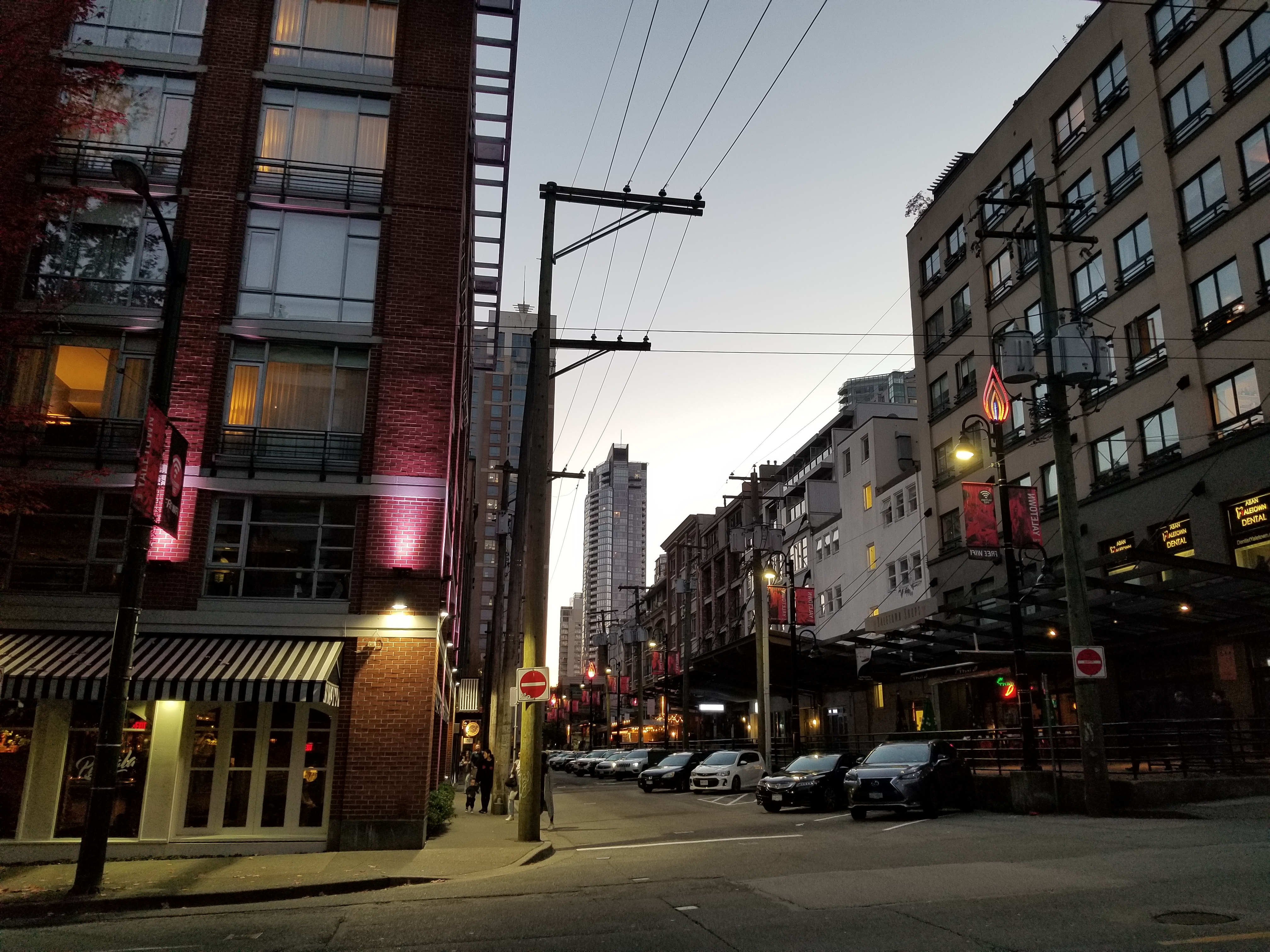
In Davie Village in Downtown Vancouver. Autumn of 2018.

Davie Village (also known as Davie District or simply Davie Street) is a neighbourhood in the West End of Vancouver, British Columbia, Canada. It is the home of the city’s gay subculture, and, as such, is often considered a gay village, or gaybourhood. Davie Village is centred on Davie Street and roughly includes the area between Burrard and Jervis streets. Davie Street—and, by extension, the Village—is named in honour of A.E.B. Davie, eighth Premier of British Columbia from 1887 to 1889; A.E.B’s brother Theodore was also Premier, from 1892 to 1895.

Along Davie Street are a variety of shops, restaurants, services, and hotels catering to a variety of customers, in addition to private residences. The business with the most notoriety is Little Sister’s Book and Art Emporium (“Little Sister’s”), a gay and lesbian bookstore, because of its ongoing legal battles with Canada Customs that have received extensive national media coverage. Many businesses and residents along Davie Street and in the West End generally also fly rainbow flags as a symbol of gay pride, and many of the covered bus stop benches and garbage cans along Davie Street are painted bright pink.

The Village hosts a variety of events during the year, including the Davie Street Pride Festival which runs in conjunction with Vancouver’s annual Gay Pride Parade, during which sections of the street are closed to motor traffic.

Davie Day is also held each year in early September, to celebrate local businesses and the community itself. This Day is designed to build awareness and promote the surrounding businesses, and is focused around Jervis to Burrard Street.

The Davie Street Business Association coined the name “Davie Village” in 1999 and also commissioned banners from local artist Joe Average, which fly from lampposts in the district. The two-sided banners depict a rainbow flag on one side and a sun design by Average on the other.

Davie Village is also home to the offices of Xtra! West, a biweekly LGBT newspaper, Qmunity (formerly the Gay and Lesbian Centre) which provides a variety of services for the city’s lesbian, gay, bisexual, and transgender residents, and the Vancouver Pride Society, which puts on the annual Pride Parade and Festival.

Not every Star Wars film that Disney has released is bad. Really.

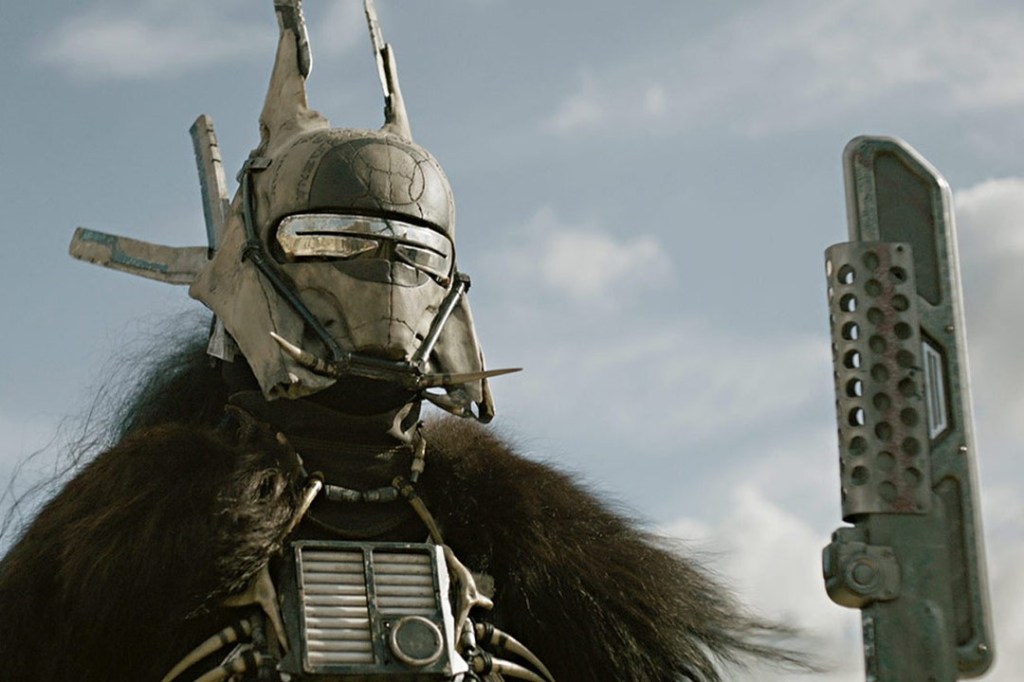
A still from Solo: A Star Wars Story (2018), directed by Ron Howard

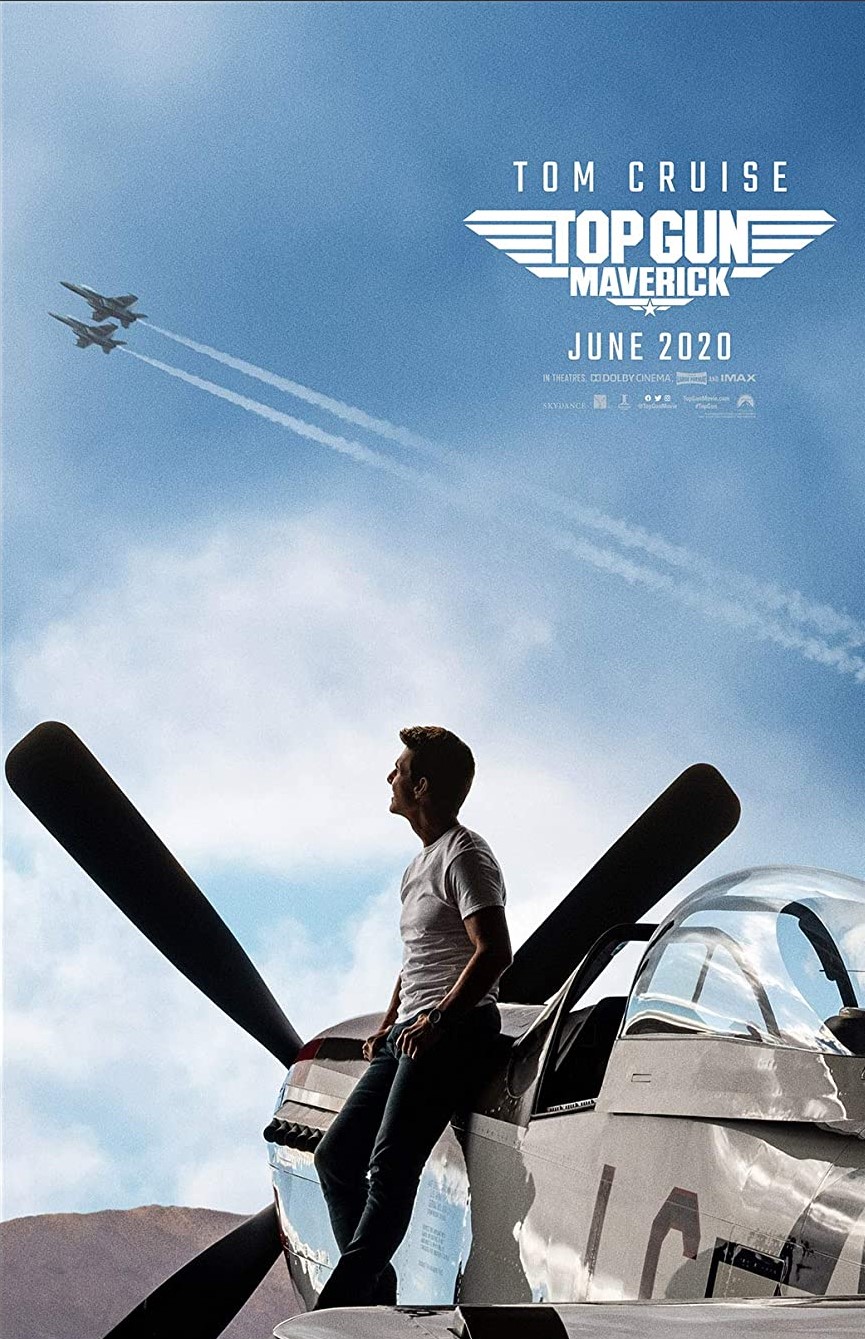
“Just when I thought I was out, they pull me back in!” This is not Michael Corleone talking. This is me talking. I wasn’t planning on making a post this early, and I definitely wasn’t planning on making a post about the films that have come out in theaters recently. The post that I was going to make first was going to be about the future of the USA because this is what the Americans that follow my blog want to know about. Americans are known for being selfish and self-centered. Therefore, most of them are only interested in knowing about what’s happening to them and around them. They have no idea, and they’re not interested in, what’s going on in the world. When it comes to what’s going on in the world, they simply believe what the American authorities tell them to believe. In this way, they’re just like the people in other countries. Americans also make up the largest demographic among the followers of my blog. Well, there are over 300 million of them, after all. I’ve already made at least one post about what will happen in the USA in the future. But I can make another, more detailed post, as well as adding other information. However, worrying about what my followers think and want has never been a thing of mine. Recently, someone called me a bigot on the internet. It seems that some people are offended by my bad, right-wing jokes. Well, I guess that I have been on a minor campaign of bigotry for a while. I don’t have to make jokes, but sometimes I can’t help it because seeing how some people react to them is quite amusing. Moreover, some of the most active people that follow my blog are controlled opposition figures, assets, influencers, and propagandists. They’re people like Alex Jones, Jeff Rense, Webster Tarpley, Paul Joseph Watson, or Patrick Henningsen. One of my followers informed me about these right-wingers. I didn’t know about some of them and the many other controlled opposition figures that follow my blog because I don’t listen to them or search for them on the internet. I was hoping that these people would stop following my blog, but it seems that no amount of bad jokes can turn them away. Well, this isn’t a big deal, but I still managed to lose some followers because of my bad jokes, and this is just fine with me. Pleasing people is not what I’m into because my channel and my blog don’t bring me any income. By the way, Alex Jones has become a pro at knowing what his followers want to see and hear. He has a new look now because he’s older, and his act nowadays is that of an older angry white man because pretty much all of the people that listen to him are badly informed white reactionaries and right-wingers that are dissatisfied with the state of affairs in the USA. Anyway, since the bought and paid for film critics have been at it again, I can no longer look away. Well, they’re always at it because this is what they get paid to do. I can’t, however, ignore their ramblings this time. For now, I will overlook the fact that Rich Evans is an American treasure and instead focus on what the bought and paid for film critics have been saying about Top Gun: Maverick (2022). Some of them have said that Top Gun: Maverick is better than Top Gun (1986). I can’t let this slide. Initially, I wasn’t going to see Top Gun: Maverick or any other new film in a theater. I got to see Doctor Strange in the Multiverse of Madness (2022), and this was enough for me. Since I like this film, I saw it again on home video. This time I had time to notice the other good performances in the film, aside from those by the main cast. Only Xochitl Gomez delivered a faulty performance, but she’s still only 16 years old. I like how Chiwetel Ejiofor acted in the film, particularly in the scene set in the New York Sanctum, after Karl Mordo meets Stephen Strange and America Chavez. Benedict Cumberbatch, Elizabeth Olsen, Ejiofor, Benedict Wong, and Rachel McAdams are experienced actors, but their performances in the film are probably as good as they are because Sam Raimi was the director. Anyway, it so happened that I got to see Top Gun: Maverick because I was near a theater when I decided to see it. I went to the center of the city in order to see my sister, but she wasn’t home. Therefore, since I didn’t have anything else to do in the center of the city at that time, and since I had to go to the washroom, I went to the nearest theater, where I then got to see the film. Finding a public washroom, especially one in the center of the city, has been quite a problem ever since the COVID-19 mandates got introduced. Although the mandates have been abolished for the time being, it’s still not easy to find a working public washroom or an open public washroom. Life hasn’t exactly returned to normal. Just about every place that you can go to still closes at 9 p.m. Anyway, I wasn’t expecting to be disappointed by Top Gun: Maverick because Tom Cruise has an impressive filmography. Even most of the films that he has starred in in the last decade or two are watchable. Few of them have replay value but I will point out that I enjoyed seeing Edge of Tomorrow (2014), Knight and Day (2010), Tropic Thunder (2008), and the Mission Impossible films. In my opinion, Minority Report (2002) is one of the best films of the last two decades and it definitely has replay value. Still, I wasn’t expecting to be impressed by Top Gun: Maverick. After seeing it, I can say that it’s a fine film. For a modern film, it’s very good. But it’s not better than Top Gun in any way. The characters in Top Gun: Maverick are kind of appealing, though not as appealing as the characters in Top Gun. The action and the footage of planes flying is mostly exciting, though not as exciting as the action in Top Gun. As to be expected, the soundtrack for Top Gun: Maverick is nothing to talk about. The soundtrack for Top Gun, however, is one of the most appealing aspects of the film, including the score by Harold Faltermeyer. Penelope Benjamin, played by Jennifer Connelly, is in the film only for Pete Mitchell to have a love interest. So, on the whole, Top Gun: Maverick is a competently made and mostly entertaining, though formulaic, film. Aside from films by Marvel Studios, I think that Top Gun: Maverick is the best new film that I’ve seen since Free Guy (2021). It’s not as good as Free Guy, however, and it’s definitely not as good as Top Gun. Top Gun can be seen again and again, and this is what people do. This isn’t what I do, but I did see it again recently because I haven’t seen it in years. It’s one of the most well-known films of the 1980s. Top Gun: Maverick, on the other hand, has little or no replay value. I didn’t enjoy seeing it as much as some of the other sequels or remakes that got made in the last decade, like Creed (2015), Creed II (2018), or The Great Gatsby (2013). Still, I wasn’t at all disappointed by it. I think that the glowing reviews by the bought and paid for film critics that Top Gun: Maverick has received can be attributed to the fact that it features certain propaganda. Let’s not forget that these are the same people that wrote glowing reviews about Star Wars: The Force Awakens (2015), which is at best a mediocre film. In my opinion, it’s simply a bad film. But this bad film has a score of 93% on Rotten Tomatoes. This fact should tell you how many of the so-called professional film critics are bought and paid for. The Force Awakens was released in theaters not that long ago, and, therefore, I remember the hype that was created for the film quite well. This hype was mostly artificial and not real. Still, there were many people that were genuinely excited because they were finally going to see a new Star Wars film. The hype is the thing that made The Force Awakens one of the highest grossing films of all time. Even I fell for the hype because back then I didn’t know as much as I do now. Because of the hype, I expected to see something great, something on par with the original Star Wars trilogy. Some people said that Disney would right the wrongs that George Lucas had created with his prequel trilogy. So, I went to see The Force Awakens as soon as I could. The auditorium where I saw the film was full of people. However, when the film came to an end, I thought, “Is that it?” Some people even clapped. I didn’t clap because I didn’t want to lie to myself and because I’m not a Star Wars fan. The Force Awakens was clearly not the great motion picture experience that I expected. So, I left the cinema and didn’t think about The Force Awakens for quite some time. Later, after reading some good reviews by honest independent critics, I realized that The Force Awakens is a faulty, bland, and forgettable film and that it’s a rip-off of Star Wars (1977). Even George Lucas’s prequel trilogy is better than the tiresome The Force Awakens and its sequels. What happened is that The Walt Disney Company purchased Lucasfilm for several billion dollars and then made an unoriginal product, with the usual Disney formula, as quickly as possible in order to cash in on its new popular IP. However, I’m not one of those young, reactionary white (mostly American) men that have been “Trump supporters” for the last several years and that hate the oligarchical propaganda, policies, and restrictions that have become more prominent in the last decade, as the economic depression continued to drag on. I’m more open-minded. Therefore, I’m not going to say that I hate every Star Wars film that got released by Disney. Solo: A Star Wars Story (2018) is the one Star Wars film that got released by Disney that I like. I think that it’s the best Star Wars film since the original trilogy. Unfortunately, it’s also the Star Wars film that performed poorly at the box office. I also like a few scenes from Rogue One (2016), though I think that this film as a whole is not enjoyable to watch.

Since Persona 3 is the video game that I enjoyed playing the most in recent months, I think that it’s worth reviewing it. Persona 3 doesn’t appear on my favorite list, which is the list of the greatest video games on Wikipedia (https://en.wikipedia.org/wiki/List_of_video_games_considered_the_best), but I still decided to play it because it’s a Persona game. It’s not quite as polished as Persona 4, but it’s still one of the best games for the PlayStation 2, and there were many good games released for the PS2. I think that some of the locations in Persona 3 are even more beautiful than the locations in Persona 4. Persona 3 has very appealing graphics. The character designs are excellent. They’re perhaps better than the character designs in Persona 4. The gameplay, as to be expected, is almost identical to the gameplay of Persona 4. It takes a little while for Persona 3 to become an exciting game because there’s little to do right after the game begins. As is the case with Persona 4 and Persona 5, it’s best to use a good guide when playing Persona 3 in order to know what happens every day. As good as Persona 3 is, I don’t think that it has much replay value. You can, of course, play the game a second time in order to develop social links that you couldn’t develop the first time around. But you can also watch videos on YouTube about developing social links instead of playing the game a second time. The graphics and the designs in the game are beautiful. The characters and story are interesting and original, much more so than in Persona 5. For example, one of the characters in the protagonist’s group is a female robot and another one is a small dog. However, I don’t have the urge to play the game again, like I had the urge to play Persona 4, Final Fantasy X, Final Fantasy XII, Shadow of the Colossus, Silent Hill 2, or Metal Gear Solid 2: Sons of Liberty again. Perhaps the reason why this is the case is because it takes a long time to finish playing Persona 3. This game is long. Speaking of Shadow of the Colossus, I recently got to play Ico. This is odd because I played Shadow of the Colossus, which is a game that got made by the same developers, several times some years ago. Well, Ico is a different game, but it’s almost as memorable and as beautiful as Shadow of the Colossus. Its gameplay is different because it’s about solving puzzles in order to progress in a castle. It’s also quite a short game. It can be finished in under 9 hours if you know what you’re doing. Another game that left an impression on me is Chrono Trigger. I played this game in 2021. I had already played Chrono Cross, which is the sequal to Chrono Trigger, years ago. Chrono Cross is one of my favorite games, and it’s also one of the first games that I’ve played. I could have played Chrono Trigger much earlier if I wanted to, but I never had the urge to play it and to find out if the hype around it is justified. In fact, the popularity of this game is so great that some people didn’t like Chrono Cross, which is a superb game, simply because it’s not a direct sequel to Chrono Trigger. Is the obsession of these people justified? This depends on whether or not you’ve played Chrono Trigger before playing Chrono Cross. Chrono Trigger really is a great game, and it’s one of the best games for the Super Nintendo Entertainment System. This game came out at a time when people didn’t have many games to choose from and when emulation wasn’t widely available. Therefore, if players got to play a game that they thought is exceptional, they usually played it several times and it left a strong impression on them. Chrono Trigger is one of these games. In my case, Chrono Cross is one of these games. Therefore, I don’t have an obsession with Chrono Trigger. The graphics in this game are as good as they get for a SNES game. The score by Yasunori Mitsuda is very effective and memorable. The combat is absorbing. What makes this game truly stand out is the story, and also the characters. There are moments in this game that the player will never forget. So, the love that some people have for this game is understandable. Another RPG that left an impression on me not that long ago is Tactics Ogre: Let Us Cling Together. I’m somewhat of a fan of Hiroshi Minagawa and Yasumi Matsuno because they made some great games for the SNES, for the PlayStation, and for the PlayStation 2. Final Fantasy Tactics is one of my favorite games. I own the updated version of this game, Final Fantasy Tactics: The War of the Lions, on my PlayStation Portable. If you want to play Tactics Ogre: Let Us Cling Together, it’s best to get the updated version for the PSP because it looks beautiful on this handheld. The music score by Hitoshi Sakimoto is almost as impressive as his music score for Final Fantasy Tactics. I’ve already played Final Fantasy Tactics three times, and, after finishing Tactics Ogre, I can say that I can play this game again as well, though I haven’t done so yet.

revisiting MICHAEL HERR’S ‘DISPATCHES’ — TONY MANIATY

http://www.tonymaniaty.com/blog-1/2016/7/6/michael-herrs-dispatches

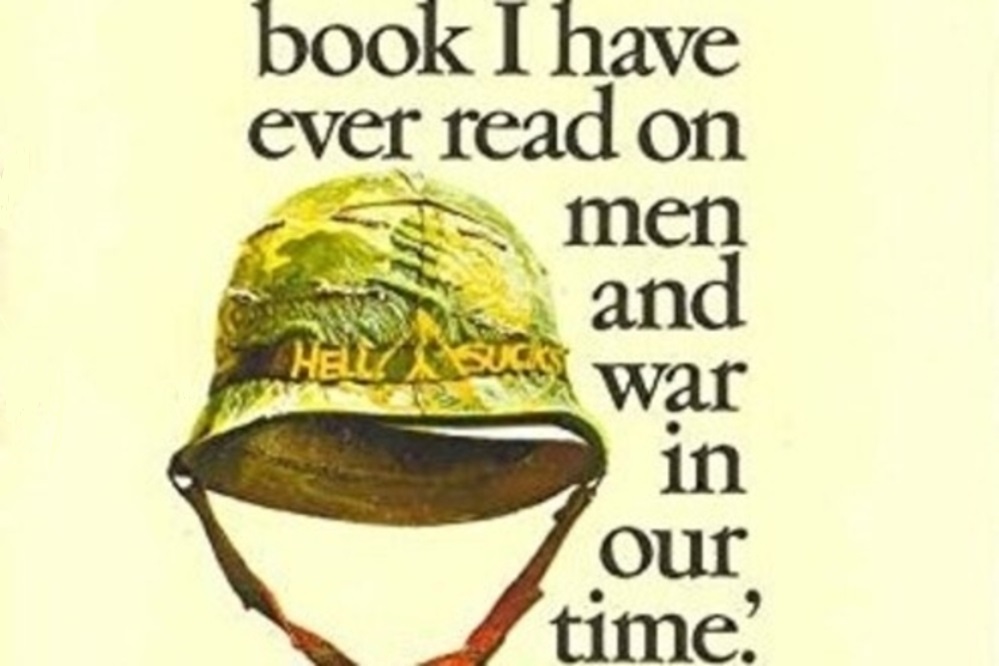
The death in 2016 of author and screenwriter Michael Herr focused attention on his greatest achievement – Dispatches – and its stellar place in the realm of creative writing. Arguably the Vietnam War’s most enduring literary legacy, it was described by John Le Carre as ‘the best book I have ever read on men and war in our time.’ Dispatches is indeed an enduring anthem to a conflict that shaped and defined a generation: a cultural reflection of heady times, a literary spectacle that conveys the energy of a rock concert, the speed of an action movie, the deluded insights of a drug trip and the questioning and suspicion of the Establishment. But is Dispatches a vibrant example of war reportage gone feral, or a deft work of the imagination, a novel posing as journalism? In numerous conflicting statements, Michael Herr only muddied the issue.

In the four decades since its 1977 publication, the reputation of Dispatches has solidified (and one might argue, calcified) within the New Journalism pantheon. Feted for its radical departure from war reporting norms, and stylistic innovations, it’s held by many to be the authentic account of what ‘being there’ was like; only writing of such unconventional nature, the argument goes, could sum up such an ‘unconventional’ war. Herr based his 200-page account on his year-long experience in the hellhole of Vietnam, in 1967-68, when he filed for Esquire, Rolling Stone and other magazines. Free to roam the battlefield without daily deadlines, he wasn’t beholden to values historically instilled into, and expected of, daily news reporters, including the treasured concept of ‘objectivity’.

In an interview in 2000 with The Observer newspaper, Herr described his mission as ‘part of the [1960s] decade thing. I had done the decade, and it had to end in Vietnam’. Yet unlike many artefacts of that tumultuous era, Dispatches hasn’t dated. Re-reading Herr’s pyrotechnic text reveals a journey imbued with contemporary, universal and timeless relevance. Moving across its jagged landscape, the reader is taken, as in a game of chance, on a random route without the comfort of narrative coherence or even a clear overarching argument. The book becomes a reflection of the war itself, one which the American nation has stumbled into, become hopelessly lost in, and from which there’s no way out other than withdrawal and defeat.

From the outset, Herr establishes the hallucinatory quality that hovers over the story, describing a map of Vietnam posted on his wall depicting the country’s French colonial-era territories, all of which have dissolved into history:

It was late ’67 now, even the most detailed maps didn’t reveal much any more; reading them was like trying to read the faces of the Vietnamese, and that was like trying to read the wind.

The signal here is clear: we’re heading into vaporous, shifting, and unknowable space. The Vietnam we’re familiar with from television news and magazine spreads, he suggests, the one that the media in what the grunts call ‘the World’ has imbued with currency, isn’t the same Vietnam we’ll encounter in Dispatches, which is a world turned upside down, filled with fantasies, lies, insanities, a constant sub-stream of absurdity, a world of delusions and darkness. Herr quickly shifts the reader to the battlefield where he encounters an American soldier hyped up on pills ‘like dead snakes kept too long a in a jar.’ Fellow soldiers describe the grunt as crazy, and, if Herr cares to look into his eyes, ‘that’s the whole fucking story right there.’

I think he slept with his eyes open, and I was afraid of him anyway. All I ever managed was one quick look in, and that was like looking at the floor of an ocean.

In just a few pages, Herr manages to convey his key intentions: to defy the conventional view of the war; to establish its ‘unknowability’; to position himself as an innocent abroad, moving into the war’s darker corners with a blend of anxiety, curiosity and courage; and to attach his perspective, and his fate – unlike many correspondents in Vietnam – to the ground soldiers pursuing an elusive enemy and prosecuting an unwinnable war. Confessing that he always went to sleep stoned in Saigon, Herr also unsettles the professional expectations, and literary conventions, of ‘reliable’ war reporting.

This isn’t a battlefield of confident commanders and patriotic, polished troops lined up in rows with visions of victory; in Herr’s eyes, and in his narrative, there will be no shiny medals or songs of men marching off to war. They’re replaced with disillusioned, hollow-eyed, drug-addled recruits and draftees flown on Pan American shuttles to Saigon, and their songs will be The Rolling Stones’ ‘Have You Seen Your Mother Baby Standing in the Shadows’, Jimi Hendrix’s ‘Purple Haze’, and The Animals’ ‘We Gotta Get Out of This Place’. In earlier wars, correspondents packed whiskey; ‘We packed grass and tape.’ Yet, as Herr later acknowledged, some elements never change:

Young men are expected to go, to fight, to kill, to die. And with young men, it’s always fascinating, I mean it’s one of great clichés of war literature – the young man full of piss and vinegar and ready to get into combat to prove his gallantry and his courage, make his family proud and his community proud. And they go and they see what it is, and it’s too late.

Herr has no illusions about the men he’s mixing with, and whom he admires. For all their brutal honesty, they were also victims of Vietnam, of what the war was doing to them. ‘They were killers. Of course they were; what would anyone expect them to be?’ The narrative is shadowed by an almost constant intertwining of twin anxieties: the soldiers’ quest for vaguely rational explanations of their mission, which never come, and Herr’s fascination with his equal failure to fully understand why he is there. (At one point he offers a trite explanation: ‘I think that Vietnam was what we had instead of happy childhoods.’)

In his attempt to make it ‘less real’, Herr ironically imbued the Vietnam conflict with a degree of authenticity that other media representatives could not, or would not, replicate. In one of the book’s most cited lines he declares, ‘Conventional journalism could no more reveal this war than conventional firepower could win it…’ yet he also acknowledges the difficulties faced by correspondents reporting the war for daily outlets (and ‘the incredible demands put on them from offices thousands of miles away’) and by journalists for news magazines like Time, whose reportage is worked up into ‘uni-prose’; against this, Herr acknowledges his comparative freedom to write and file at a more leisurely pace (a piece he’s written for Esquire appears ‘like some lost dispatch from the Crimea.’). Yet, as he observed, mainstream journalists knew that no matter how honestly they reported the war, ‘their best work would somehow be lost in the wash of news, all the facts, all the Vietnam stories.’ Herr sites himself in the media pack even as he leans away from it, adopting in Dispatches the role of a lone operator, the existential observer/journalist who approaches his subject with a sense of moral engagement.

As his jagged narrative draws to a close, Herr is back in ‘the World’, reflecting on his Vietnam experience and the value of not having stayed too long: ‘We came to fear something more complicated than death, an annihilation less final but more complete, and we got out’, though not without scars, including dreams of dead Marines in his living room. Herr – like many – suffered trauma-induced depression, as he revealed in his interview with The Observer newspaper:

I did go crazy. The problem with Vietnam is that if your body came back, your mind came back too. Within 18 months of coming back, I was on the edge of a major breakdown. It hit in 1971 and it was very serious. Real despair for three or four years; deep paralysis. I split up with my wife for a year. I didn’t see anybody because I didn’t want anybody to see me. It’s part of the attachment. You get attached to good things; you get attached to bad things. Then I decided to look the other way. Suddenly I had a child. I went back to my book.

Although Herr claimed it took ‘about six years’ to write the book, it reads as if penned in the heat of battle, with an often-frenetic sense of urgency carried to the page. Publishers asked him to write more about Vietnam, about war. ‘I say: “Haven’t you read my fucking book? What the fuck would I want to go and do that for?” […] I’m not interested in Vietnam. It has passed clean through me.’ In 1978, he worked on the script for Francis Ford Coppola’s epic Vietnam film Apocalypse Now, ‘But after that, that was it. No more Vietnam.’ When the American effort collapsed in 1975, he’d seen the coverage on TV news:

I watched the choppers I’d loved dropping into the South China Sea as their Vietnamese pilots jumped clear, and one last chopper revved it up, lifted off and flew out of my chest.

With this nod to the genre of magical realism then in vogue (Gabriel Garcia Marquez’s One Hundred Years of Solitude had appeared in English in 1970), Herr lays open the question of whether Dispatches is a work of non-fiction or something else: a reality-based novel, a fictionalised memoir, an amalgam of genres beyond any one? ‘Even if we read it as fiction’, asks Connie Schultz in The Columbia Journalism Review, ‘Dispatches is a work of enormous power, but would its sense of urgency and loss be diminished?’ She partly answers her own question: ‘Thirty years after reading the book for the first time, I still have the same gut response: at least I understand why I will never understand what happened to our boys in Vietnam.’

Herr remained evasive on the subject of whether Dispatches was a work fiction or not. Parts of it were, he admitted, what is labeled, in the context of television news, ‘produced reality’. In 1978, one year after its publication, Dispatches was recommended for the U.S. National Book Award in the non-fiction category; yet in a 1992 interview with Eric Schroeder, Herr referred to the book as a novel, adding, ‘I don’t think it’s any secret that there is talk in the book that’s invented.’

But it’s invented out of that voice that I heard so often and that made such penetration into my head… I don’t really want to go into that no-man’s-land about what really happened and what didn’t happen and where you draw the line. Everything in Dispatches happened for me, even if it didn’t necessarily happen to me.

A decade later, in a filmed interview, he was again asked if Dispatches was fiction or non-fiction, and was again elusive:

I have no idea, I don’t know the difference. I’ve never known the difference. I have to tell you that I have no idea what that difference really consists of, between fact and fiction. […] I’m confused, I’m really confused. Like, you read a memoir, you read an autobiography, I have no idea what’s real and what’s invented and what’s wish fulfilment and what’s confession.

Where does creativity end and invention begin? In contemplating what he’d created, Herr’s response in 1992 offers an insight: ‘I would say that the secret subject of Dispatches was not Vietnam, but that it was a book about writing a book. I think that all good books are about writing.’

His comments suggest an unwillingness to be linked to any particular literary frame, any more than he’d wished in Vietnam to be labelled a particular species of war observer. Yet his combat features filed in 1968-69 were received by his editors and published as journalism, in magazines that clearly delineated to their readers whether they were reading fiction or non-fiction, throwing into doubt the question of authenticity. In the same 1992 interview, Herr confessed ‘there are errors of fact in the book’, explaining:

When the Khe Sanh piece was published [as an essay before the book], I had a really beautiful letter from a colonel who had been stationed there; he corrected me on various points of fact. I lost the letter, and it didn’t turn up again until after the book was in print… I couldn’t bear to go in and make the revisions myself. I was tapped out. I was exhausted from the project. Including the year in the war, I had spent eight years working on it, and I just couldn’t do any more.

In subsequent editions of Dispatches, Herr did nothing to correct these apparent errors. Rather, he seemed to suggest that the fiction/non-fiction debate wasn’t his problem, but a conundrum that had grown out of historical precedent. The ethos of the New Journalism argues that ‘fact-based’ journalism denies the possibility of alternative versions of ‘the truth’. Like Norman Mailer and Tom Wolfe before him, Herr had thrown himself into the ring of raw experience, a literary pugilist ready for a fight, with no hope of, or desire for, objectivity, to write as much from the heart as the head, a heart that he wore defiantly on his sleeve.

Herr redefined the war reporting memoir: what mattered to him was less about the accuracy of a quote or description, and more about how it was received by the reader, and perceived by the reader as being authentic or not. To achieve that objective, the difference between fact and fiction matters less than the outcome. While the issue is left unresolved, or at least unanswered in conventional literary terms, Herr’s work in Dispatches, marked by its freewheeling style and self-referential perspective, opened the way for more interpretative and personalised forms of war reporting, and war reporting memoirs. Its value in that regard alone is enormous and enduring.

As a literary artefact and legacy, it remains unique. As one observer noted,

Somehow, a young journalist whose previous experience consisted mostly of travel pieces and film criticism managed to transform himself into a wild new kind of war correspondent capable of comprehending a disturbing new kind of war.