

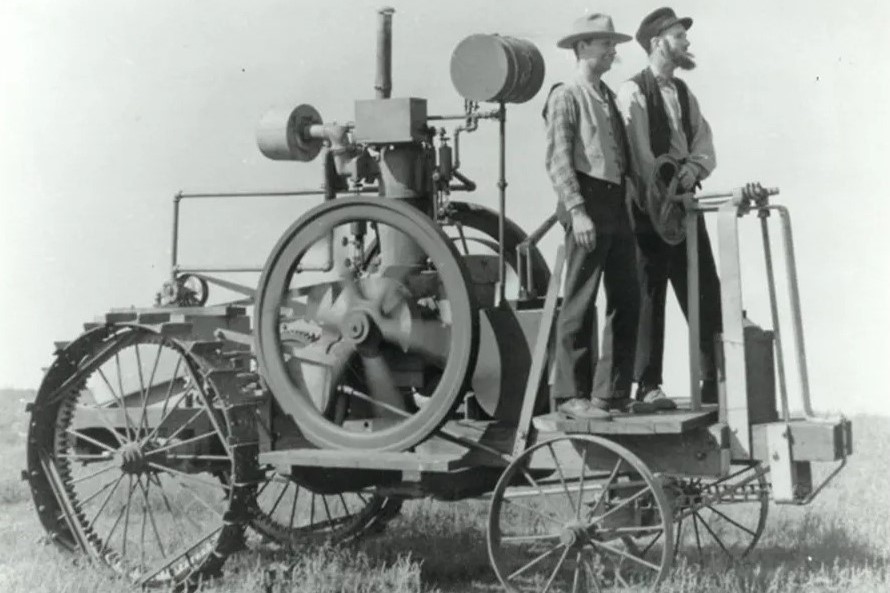
In this post, I will quote from ‘Paths of Fire: An Anthropologist’s Inquiry into Western Technology’ (1996) by Robert McCormick Adams. “The inauguration of the National Bureau of Standards in 1901 opened yet another new chapter. In an important sense, it followed in a pattern previously established by the Bureau of Mines and the Bureau of the Census, a pattern that would again be maintained in the Pure Food and Drug Act of 1906 and the National Advisory Committee for Aeronautics that was established in 1915. Part of its responsibilities could be characterized as basic research, or at least consisted of measuring physical and chemical constants, testing instruments, accurately setting standards, and otherwise lending support to the infrastructure of basic research. But at the same time, it was expected to answer the mundane queries of other government agencies and to deal with the needs of industry. It was, in fact, a manifestation of a new readiness of the U.S. government to seek “answers to those problems that industry needed to have solved but was unable or unwilling to answer for itself. With industrial research still in its infancy, the new bureau performed its functions for the building trades and mineral and petroleum production in the same way the Department of Agriculture served the farmer. Thus far in this section I have concentrated on changes in the different, relatively independent institutions and groups in which scientists and engineers worked, and around which growing numbers of them assumed their professional identities. However, we must not lose sight of the larger theme of technological development. To what extent, during the late nineteenth and early twentieth centuries, did university-based scientists contribute to the introduction of new industrial products and processes? It is not easy to answer this question. At least until recently, most technological advances have tended to draw on long-established pools of generalized scientific understanding, rather than following up quickly and directly on new findings. But apart from providing an increasing proportion of the trained scientific investigators that industry began to recruit, it must be said that a science contribution originating with U.S. investigators who were identified with academic disciplines was not of substantial importance. Major technological breakthroughs occurring in this country, responsible for spawning whole new industries, are familiar to all: the telephone, the automobile, the airplane, electrical power and lighting equipment and appliances, radio and television. Important economies of process and scale also were achieved, many of them representing impressively innovative achievements in their own right. But the contribution of American basic science to these accomplishments remained quite limited until the enormous acceleration of R & D activity that began in industry as well as in the universities at about the time of World War II. Unquestionably by the time of World War II, American agriculture was well on the way to becoming an industrialized pursuit. Eighty years earlier, as another war was beginning to loom, the earliest steps in that transformation were already in evidence. Taken as a whole, however, mid-nineteenth century agriculture still contained a considerable domain that aimed primarily at self-sufficiency and was at least semi-autonomous in values and outlook. It is only reasonable to include within a single, comprehensive rubric, for example, an innovation like commodity exchanges that, beginning with the New York Produce Exchange in 1862, introduced “a general stability in market prices” to the benefit of the farmer. No less relevant was the introduction of refrigerated railroad cars in the 1860s, and the rapid technical advances that began still earlier in the canning industry. Helping once again to enlarge as well as stabilize the market for agricultural commodities were the million cases of canned food that were already being produced by 1860, not to speak of the further, ninetyfold increase in this number by the time of World War I. Continuing further along the same line, how can we fail to note the innovation of grocery chains (specifically, the A & P by the time of the Civil War, and of the principle of self-service in such establishments by 1913)? And how then can we fail to range even further – that is, into packaging innovations, advertising and brand-name promotion, and the regulation of food quality standards. With the growing scale and productivity of American agriculture, its entry into world markets was still another contextual feature that became central to its prosperity. The declining cost and increasing dependability of rail and ship transport were, of course, an essential part of this development. But it is sufficient for present purposes to record the scale of the change during the last part of the nineteenth century as a simple contrast. The enormous growth that distinguished American agriculture must be seen in its rapidly developing, entirely unprecedented dependence at this time on overseas markets. “The increase in the size of the cities of Europe accounted for much of the prosperity of the American farmer.” After 1900 or so, however, a new factor came into play – the rapid growth of American cities as a result of the high tide of European immigration. Agricultural production continued to rise in all commodities, but European markets were supplied from other sources while American consumption substituted for these earlier exports. Newly erected tariff barriers played a part, but the resulting diversion was in any case dramatic. Wheat and flour exports declined from a high of 235 million bushels to 146 million, for example, and fresh beef from 352 million pounds to a mere 6 million pounds. U.S. population in 1860 had been 31.5 million and 20 percent urban; by 1914 it had risen to over 99 million and was 48 percent urban. Herein lay an enormous new market. Given the unsurpassed diversity and complexity that came to characterize modern American agriculture, it is not possible to detail the full range of technological innovations that became indispensable to its operations. Even without taking into account the growth of increasingly elaborate transportation and distributional networks, there were few farm operations in which specialized labor-saving machinery did not at least begin to play a central part. Three technological features will be briefly described as illustrative of the wider pattern – tractors, fertilizer, and hybrid seed. Attempts to move beyond animal traction to some form of mechanical motive force were almost contemporary with the clustering of other inventive efforts devoted to agricultural machinery in the 1850s. However, when limited to steam power alone, versatility proved very elusive and size remained an important drawback with regard to most of the routine requirements of farming. A steam plow was introduced by Obed Hussey in 1855, and after a series of incremental improvements steam tractors were introduced in the 1870s. Finding a very modest niche of acceptance, only three thousand or so were being built annually as late as 1890. Threshers were another story, for here large transient crews had already begun to move northward with the harvest, the impressive scale of their machines suggested by the need for as many as forty draft animals. Steam combines of the 1890s and early 1900s, some of them weighing forty-five thousand pounds, developed more than 120 horsepower. In the meantime, John Froelich had probably made the first gasoline tractor that was an operational success in 1892. However, tractors with gasoline engines powerful enough to replace these enormous steam combines did not come into production until after World War I. Gradual improvements in tractors involved not merely the power train and more broadly adaptable traction systems but a host of mechanisms for hydraulic lifting, power offtake for ancillary equipment, and specialized applications like seeding, mowing, corn-picking and husking, and hay-baling. The replacement of animal energy by mechanical energy was not immediate. Mechanical horsepower did rise dramatically between 1880 and 1920, from 668,000 to 21,443,000. But the number of work animals in rural and urban use continued to rise during the same period, almost doubling from 11,580,000 to 22,430,000. Only after 1920 did the reduction in the numbers of animals employed for traction really begin. Therefore, as late as the early 1930s the truly dramatic labor-saving that the use of the tractor implies had not yet been realized. The time requirements to raise one hundred bushels of wheat or corn were still seventy hours and 127 hours respectively. By a quarter-century later those requirements would shrink by more than three-fourths. There were still over nineteen million horses and mules in use on farms in 1930. By 1959 these numbers had grown so small that they were no longer included in the Census of Agriculture. The advent of the use of fertilizers as an integral, large-scale part of virtually all agricultural operations was different in detail – yet substantially similar in its increasingly industrial character and cumulative impact. The temporal and spatial horizons of the farmers who first opened new lands to cultivation in the wake of the moving frontier were, as noted earlier, brief and transitory. Tending to have only rudimentary equipment and limited capital reserves, they exploited the first flush of natural productivity and then moved on. Within a decade or two, they or their successors inevitably began to encounter declining yields as a result of their exploitative depletion of soil fertility. Appropriate countermeasures were well understood by the early nineteenth century, not merely from English experience but from practices that had been adopted in older settlements along the Atlantic seaboard. Closer to the frontier, however, there was a different calculus. Manuring required a more plentiful supply of animals than was generally available. With the cheapness of land and the prevalance of other uncertainties, it made more sense to enlarge the cultivated area or abandon it than to invest in it by manuring and crop rotation. Only when the supply of new and productive lands began to dwindle, and its cost to rise, was the way cleared for more long-term, capital-intensive measures to renew soil fertility. One short-term solution to this problem, the importation of Peruvian guano during the 1840s and 1850s, primarily benefited the Atlantic seaboard because of high transport costs. A comparable, extractive approach followed somewhat later on the western plains, utilizing the bones of buffalo killed by professional hunters. Total supplies from both sources were obviously limited and quickly dwindled. By the 1870s eastern farmers had begun to make widespread use of a new mechanical technology in the form of patented endgate manure spreaders. Manure thus became a valuable resource rather than a noxious waste product, with dairying, stimulated by the rapid growth of urban markets, as a major source of supply. Further technological developments were in turn called forth by this new, increasingly specialized focus of demand. Milking machines, specialized transport vehicles, and bottling facilities all followed in time, but among the first to appear were silos. Now a common feature on almost any agricultural landscape, they were initially a crucial innovation for dairies as a means for curing as well as storing winter feed for cattle. For the West, with fewer and smaller cities, fewer animals, and large acreages, only chemical fertilizers could supply a fully effective answer after the disappearance of the buffalo. Chemically mixed fertilizers were first manufactured in 1849, and within a decade seven plants were in production. As early as 1870 output had already reached 321,000 tons. Since that time specialized products and applications have proliferated. They can perhaps be exemplified by the introduction of anhydrous ammonia in the 1930s and 1940s. Having to be inserted into moist soil if it was not to dissipate ineffectively into the atmosphere, use of this gas required the invention of entirely unprecedented technologies for mass distribution and application. Nothing could better illustrate the increasingly intimate dependence of farming on industrial suppliers and their networks of local agents, and the increasingly industrialized aspect of farming practices themselves. The story of hybrid corn is once again different in detail and yet generically similar. Charles Darwin himself had produced plant hybrids and noted that they were distinctive for their vigor. By 1880, within a very few years of Darwin’s own published work on the subject, experiments at Michigan State College had already extended the principle to corn and shown that it could be productive of superior hybrid seed. But thereafter the process of development slowed and became regionally compartmentalized. Even in the Midwest, where experimentation had begun and the demand was best articulated, the practical availability of superior hybrids was delayed until the middle-to-late 1930s. This was inherent in the regionally differentiated nature of the environments in which agriculture was conducted, distinguishing it from industrialization prototypes applying to fertilizers and farm machinery: “Hybrid corn was not a once-and-for-all innovation that could be adopted everywhere, rather it was an invention of a new method of innovating, a method of developing superior strains of corn for specific localities. The actual process of developing superior hybrids had to be carried out separately for each locality. The process of innovation can be securely linked, not only in this case but also in the employment of tractors, to local demand and consequently also to speed of adoption. In effect, the economics of the spread of innovations accentuated rather than smoothed local disparities. New techniques, it would appear, tended to be supplied first to “good” areas that were oriented toward growth, at the same time often enhancing their superiority in levels of income and other respects. What is most important about hybrid corn for our purposes is that its superiority is not absolute but highly contingent, depending crucially on an adequate supply of moisture and nutrients: “Thus, the more extensive root system and the aggressive feeding characteristics of the hybrids enabled them, when first introduced, to extract fertility which was inaccessible to open-pollinated varieties. While the technical changes which contributed to the acceleration of fertility removal are not to be deprecated, such advancements relied on a continued supply of fertility, and became powerless once the stock of fertility was spent. In other words, to realize the improvements in productivity that hybrids promised, further technological enhancements were necessary to assure the replenishment of fertility. Without the simultaneous development of the use of anhydrous ammonia as a replenishing source of nitrogen in the early 1940s, hybrids might well have proved to be only another transitory “improvement” that merely extracted the natural fertility of the soil more rapidly and then left it more exhausted than ever.”

