Retro Review – Metal Gear Solid (1998)

https://www.cclonline.com/article/1446/Review/cclonline/Retro-Review-Metal-Gear-Solid-1998-/

As part of a new feature, I’m taking a look at some older games as well. I thought it might be interesting to look at games that came out at this time several years ago, so to start with I’ll be looking at games released 10, 15, 20 or 25 years ago. I’ll mostly not be going for anything older, as I’m not old enough to have played them at the time so they have little real affinity to me. I won’t rule it out though, as there are of course some gems from back then. I’ll also not be looking at anything more recent, as games from 5 years ago are still from this current generation and much more likely to be remembered and indeed still being played by people. I’m open to requests for future reviews within the year ranges from whichever month I’m writing in so feel free to let me know in the comments.

I’m also going to make an effort to not just pick the most obvious and popular games, but the timing on this one just wouldn’t let me skip it! These will also generally be a bit shorter than modern game reviews, but I couldn’t help myself with this one.

15 years ago today Metal Gear Solid was released on the Sony PlayStation. At the time I didn’t know what to expect, as back then I had no idea that there were two previous games in the series (Metal Gear and Metal Gear 2: Solid Snake – worry not though, I’ve been through them both several times since) as these had been released on the not terribly well known in Europe MSX. I never even saw one of these as a kid, so had no way to try these out until emulation became more accessible. Sorry Konami! He’d designed successful games previously, but the massive success of Metal Gear Solid made designer Hideo Kojima a star in the video game world and has gone on to become a very well known figure.

Metal Gear Solid then was launched to rave reviews, and I think it was based on the Official PlayStation Magazine’s recommendation that I decided to pick it up, and I was utterly blown away. Right from the first cutscene the level of storytelling was almost unprecedented in games of the time and the at times twisty plot wove a complex and deep world that I’ve been very interested in the subsequent expansions of since.

For the very few of you reading who don’t know, Metal Gear Solid casts you as a former special forces agent called back into service to save the world, which on the surface of it is a fairly basic action movie premise. Solid Snake is tasked with taking down the rogue agents of Foxhound, who have hijacked a nuclear training exercise on Shadow Moses Island in Antarctica. The various agents of Foxhound you face during the game all have their own gimmick and animal themed codenames, and each give interesting boss fights. The terrorists are led by Liquid Snake, who shares more than just a codename with our hero.

Snake has to make his way across the island, all the while collecting new weapons and gear to take down different enemies or destroy obstacles. You’ll also pick up an access card allowing you through locked doors, and are granted higher level cards to get to previously inaccessible areas. Along the way you meet many memorable characters, not just the supporting cast but also the villains. The ultimate goal of the game is to take down the ‘walking nuclear battle tank’ of the title, Metal Gear before Liquid is able to use it to launch a nuclear weapon.

Structurally, the game has a lot in common with its predecessor, Metal Gear 2. Massive sections of how the game work are very similar. The back tracking to collect weapons, the temperature controlled keys, the Hind battle and even some character arcs – it’s almost more like a 3D remake than a sequel. This isn’t even really much of a complaint, as I and probably most people who played it at the time had never played Metal Gear 2 and was none the wiser for many years after so at the time it all felt fresh and new.

Visually, as with many games of the era it hasn’t aged too well. On my most recent play I was playing the PlayStation Network version of the game (the fourth time I’ve now bought it. Guess I’m just a sucker like that.) I initially tried to play it on my TV but it just looked terrible. Not a lot of people will have played the original PlayStation on a screen larger than 21 inches at the time, certainly not compared to how many people game on 40+ inch screens these days. Back in 1998 however, the visuals were well received, and looked pretty decent on my 14 inch TV. I ended up playing through it on my PSP instead, and on the 4.3 inch screen the graphics actually looked quite crisp. The character models have aged the worst as they have very little detail particularly on the faces, but you’re never in doubt as to what the characters look like thanks to the animated portraits in the Codec sequences.

Voice actor and screen writer David Hayter provides the voice of Solid Snake, and while he’s almost gone on to become a growly parody of himself these days in his first outing he’s much more understated. Great performances are given by the rest of the cast too, with Paul Eiding’s Colonel Campbell being one of my favourites. The music too is still great, and has been in regular play on my playlist for over a decade. I prefer the music here over the over orchestrated score from the next couple of games, and the loss of most of the music was my main problem with the HD (for the time) GameCube remake, the Twin Snakes.

Control wise the inability to control the camera just feels wrong to modern gaming sensibilities. Despite the 3D trappings, MGS has much more in common with the older 2D games in the series, and controls from a mostly top down view. As with most original PlayStation games you the game would default to D-pad controls with the option of switching to analog mode with a Dual Analog or Dual Shock controller but this sadly didn’t add any camera controls on the right stick. The use face buttons for looking around and shooting instead of the shoulder buttons also just don’t feel right anymore, even more so after Metal Gear Solid 4 was released with modern style dual analog controls. I seem to remember being able to aim much easier when I first played it, but that could just be memory playing tricks on me. The guns now seem very inaccurate compared to modern games, and the lack of a first/third person aiming mode really feels counter intuitive now.

I’d probably suggest the PSP as the platform of choice for any future plays of the game if not for two things: I couldn’t seem to mash circle fast enough for the torture scene to survive it (although I could just be rubbish now) and the D-Pad didn’t want to let me crouch walk in blast furnace, plunging me to my death over and over – I got around that my remapping to the analog stick but it wasn’t comfortable enough to use it by default though.

I’m rather biased favourably towards this game, but generally I find it still holds up very well, and particularly considering how convoluted the plot of the games has gotten by the more recent instalments is much more accessible! The only real problem with the game playing it now is the controls as they do feel quite clunky compared to modern layouts, a problem common among games from this era – to some extent you can mitigate this on newer emulated versions on the PS3 or handhelds as they allow you to remap the controls and end up with buttons where you’d now expect to find them. I’m sure almost everyone reading this will have played it long ago, but for anyone who hasn’t it’s well worth getting hold of.


Scarlett Johansson frolics on the beach with her dog in The Hamptons

https://www.dailymail.co.uk/tvshowbiz/article-8653287/Scarlett-Johansson-stuns-sundress-frolics-beach-dog-Hamptons.html

Scarlett Johansson looked undeniably angelic as she frolicked on the beach with her beloved Chihuahua on Friday afternoon in The Hamptons.

The 35-year-old Academy Award nominee slipped her toned frame into a light pink sundress and sported a pair of black RayBan sunglasses over her eyes.

At one point, Johansson showcased her best superhero stance, while chasing her pup around in the warm sand.

Scarlett’s famous blonde tresses were tied back into a low bun and she appeared to be wearing little to no makeup for her solo outing.

The actress’ style of dress put all of her tattoos on display, including her rose back tattoo, ankle tattoo, and brightly colored forearm tattoo.

The Marriage Story star accessorized her look by layering a few gold chains around her neck and by fastening a pair of hoops to her ears.

She also had on a silver wrist cuff that featured a large turquoise inset that matched her quirky pedicure.

Scarlett kept a close eye on her eager pet, while carrying its leash and doggy bag dispenser in her hand.

While her dog got its wiggles out, Johansson took a seat in the sand and allowed her skin to get a little color.

She hiked up her sundress above her knees so that her legs could get as even of a tan as possible.

The Black Widow star looked noticeably relaxed in her sandy sanctuary, but, eventually, she returned to her feet and made her way towards her Chihuahua.

Without warning, Scarlett appeared to transform into her beloved Marvel character as she riled up her dog on the shore.

She crouched down and led with her arms before launching into a full sandy sprint.

After chasing her dog for a while, Scarlett decided to wind down by taking a tranquil stroll along the shoreline.

She let her hair down and her dress blew in the wind as her furry friend followed obediently behind her.

Earlier in the day, Johansson’s fiance Colin Jost was spotted with surfboard in hand as he expertly road the waves at a beach in Montauk, which is nestled in the East Hamptons.

The 38-year-old SNL star donned an O’Neill wetsuit that featured royal blue sleeves for his surf day.

Jost looked extra smiley as he and a pal made their way towards the water.

Colin, who is an avid surfer, showcased his skills, while effortlessly standing up on his bright orange board.

Scarlett and Colin, who began dating in 2017, got engaged in May of last year. Due to the coronavirus, the pair have had to push back their nuptials.

When Jost appeared on Watch What Happens Live last month, host Andy Cohen asked if the coronavirus will impact how him and Scarlett tie the knot.

‘Of course, because we don’t know what’s even legally allowed, right?’ replied Jost, who was referencing the safety guidelines that warn against large groups of people from gathering in an effort to quell the spread of the pandemic.

‘This is not the time to get all your elderly, at-risk relatives together in one big group,’ he said. ‘I don’t know when that moment will be.

Эрмитаж. Творчество Рембрандта (1980)

Год производства: 1980

Из 24-х серийного цикла “Эрмитаж”.

Фильм о коллекции картин великого голландского художника XVII века Рембрандта Харменса ван Рейна, которая отражает различные этапы его творчества. Первая картина была куплена в 1716 году Петром I в Амстердаме. Творчество Рембрандта отличается мастерством использования света, и в этом его никто не превосходит. Среди шедевров мастера “Даная”, и мы имеем возможность полюбоваться ее первозданной красотой и тонкостью исполнения. К сожалению, нанесенные в 1985 году вандалом повреждения безвозвратно уничтожили поверхностные слои живописи в центре полотна. Однако кропотливая двенадцатилетняя работа реставраторов позволила вернуть картину в музейную экспозицию. Вступительное слово директора Государственного Эрмитажа, академика Бориса Пиотровского.

Google sets up “news initiative” to censor political opposition and promote mainstream media

https://www.wsws.org/en/articles/2018/03/22/russ-m22.html

Google announced Wednesday that it is partnering with the New York Times, the Washington Post, the Financial Times and other major news outlets to reinforce their monopoly over news coverage by blocking independent news organizations.

The New York Times, whose stock price soared after the announcement, said Google’s initiative was aimed at combatting “the epidemic of false and unreliable information on the internet,” by “pledging to spend $300 million over the next three years to support authoritative journalism.”

In reality, Google’s action is the latest step in a protracted campaign on the part of the major technology companies, working with the Democratic Party and the US intelligence agencies, to censor the Internet.

The campaign for Internet censorship has been spearheaded by the major media outlets, including the Times and the Post, who have seen their subscription base eroded by the growth of oppositional news outlets and “citizen journalism.” By working with the technology giants and intelligence agencies to censor smaller news outlets, the media giants hope to regain the monopoly over the distribution of news they held before the rise of the Internet.

In April of last year, Google announced measures to promote “authoritative content” over “alternative viewpoints,” which led search traffic to left-wing, antiwar, and socialist web sites to plunge by over 50 percent.

After Google’s announcement last year, other major technology companies followed suit in implementing their own measures to censor the Internet. This year, Facebook’s CEO Mark Zuckerberg announced that it would promote “trusted” news sources, such as the New York Times, over public postings by individuals and independent news agencies. At a congressional hearing this year, Facebook said it had hired some 10,000 content moderators, and would double that number by the end of the year.

But despite Facebook’s moves to rapidly implement the demands of the intelligence agencies for Internet censorship, leading Democrats, including Senator Mark Warner, have called on them to do more to crack down on social opposition.

Amid a growing strike wave by workers all over the world, including struggles this month by teachers in West Virginia and Oklahoma, university lecturers in the United Kingdom, and Amazon warehouse workers in Spain, leading news outlets have repeatedly warned that Facebook was being used to mobilize social opposition outside of the framework of the trade union establishment.

Within this context, the major news outlets have, in pursuit of their own aims, seized upon revelations that the election data firm Cambridge Analytica harvested the personal information of some 50 million Facebook users without their knowledge in 2014. At the time, the firm was owned by Robert Mercer, a billionaire who would later back the Trump campaign, and was headed by Steve Bannon, who would later serve as Trump’s campaign manager.

While the type of data harvesting conducted by Cambridge Analytica raises serious privacy concerns, the media firestorm that has followed the revelations is highly selective.

Cambridge Analytica had access to only a fraction of the data that Facebook itself collects and uses—often in secret—for political purposes. The company’s actions, moreover, are par for the course for the conduct of bourgeois election campaigns, which have come more and more to rely on data analytics and artificial intelligence to assess and impact voters’ political views.

A recent report by Investor’s Business Daily noted “In 2012, the Obama campaign encouraged supporters to download an Obama 2012 Facebook app that, when activated, let the campaign collect Facebook data both on users and their friends.” According to the report, up to 190 million people may have “had at least some of their Facebook data vacuumed up by the Obama campaign — without their knowledge or consent.”

Commenting on the Obama campaign’s data mining operation, former campaign director Carol Davidsen tweeted, “Facebook was surprised we were able to suck out the whole social graph, but they didn’t stop us once they realized that was what we were doing.”

In leaked emails released by WikiLeaks in 2016, Facebook Chief Operating Officer Sheryl Sandberg told Clinton campaign officials that she “badly” wanted Clinton to win, and that she had met with the candidate and campaign officials on multiple occasions.

While the actions taken by Cambridge Analytica point to a substantial violation of users’ privacy, they pale in comparison to the massive surveillance and content harvesting operation carried out by Facebook itself, with the assistance of the leading US intelligence agencies and Democratic Party, which, in the name of fighting “fake news” and extremist content, aim to review and censor everything posted on the social media platform.

Even more importantly, the Democrats’ highly selective outrage over the Cambridge Analytica scandal is being used to hold Facebook’s feet to the fire, with the aim of forcing it to more aggressively censor social opposition in the name of cracking down on Russian “bots and trolls.” Mark Warner, the ranking Democrat on the Senate Intelligence Committee and a leading proponent of internet censorship, seized on the scandal to put further pressure on Facebook to declare that it was “misused” by the “Russians” in the 2016 election campaign.

Warner told ABC, “Facebook, since the beginnings of this investigation, has been reluctant, to say the least, to be fully forthcoming. I think it’s time for the CEO, Mr. Zuckerberg, and other top officials, to come and testify, and not tell part of the story, but tell the whole story of their involvement, not only with the Trump campaign, but their ability to have their platform misused by the Russians.”

In an op-ed entitled “Facebook Doesn’t Get It,” New York Times columnist David Leonhardt claimed that, “By spreading false news stories and giving a megaphone to Russian trolls, Facebook — a vastly larger social network than Twitter — played a meaningful role in the presidential campaign.”

In fact, the massive data mining operations carried out by both the Democratic and Republican parties render absurd the argument that a few hundred thousand dollars of Facebook advertisements allegedly bought by “Russians” swayed the 2016 election. Both parties spent hundreds of millions of dollars on the type of data operations carried out by Cambridge Analytica, seeking to analyze, quantify, and affect the political viewpoints of hundreds of millions of people.

In fact, undercutting his own argument, Leonhardt called alleged Russian meddling a “scapegoat” for the election of Donald Trump and the electoral defeat of Hillary Clinton. Regardless, the “scapegoat” of “Russian meddling” is being used to fuel an even further crackdown on the Internet, in the name of blocking “fake news” and “divisive content.”

In just one example of the growing crackdown on freedom of expression on the Internet, over the past 48 hours, Facebook deleted a link published by the World Socialist Web Site to its recent review of the Ken Burns documentary on the Vietnam War, allegedly because the posting contained “nudity.” In fact, the article contained well-known images of Vietnamese civilians fleeing the atrocities of the United States and its proxy South Vietnamese forces; photos that have been published in dozens of leading newspapers all over the world.

With the class struggle heating up throughout the world, the US ruling elite is working with ever-greater speed to block the expression of social opposition on the Internet. We urge workers and young people seeking to defend the freedom of expression to contact the World Socialist Web Site and join its campaign against Internet censorship.

BLACK CAULDRON, THE

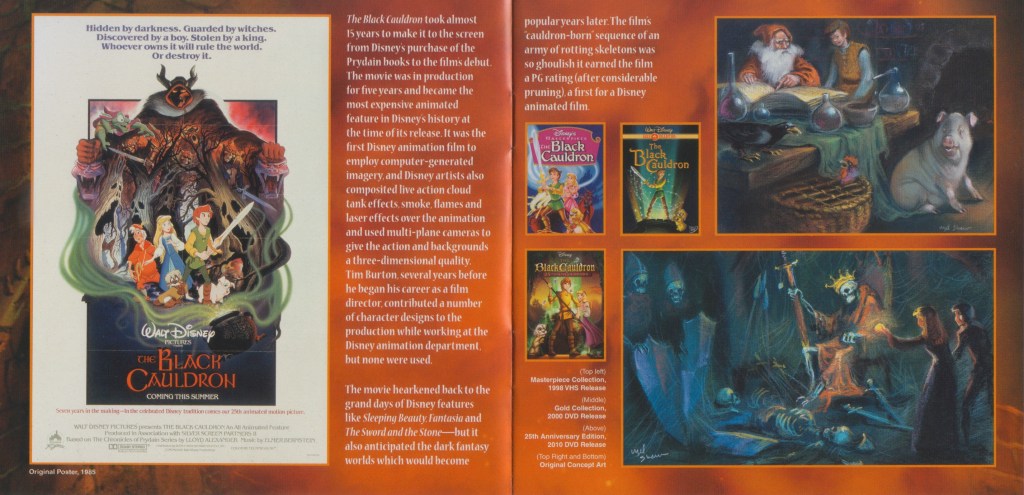
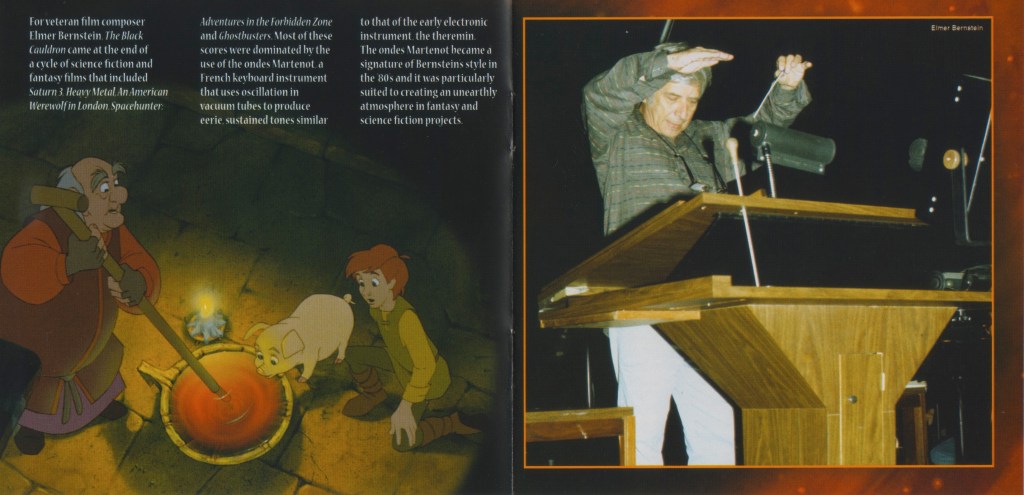
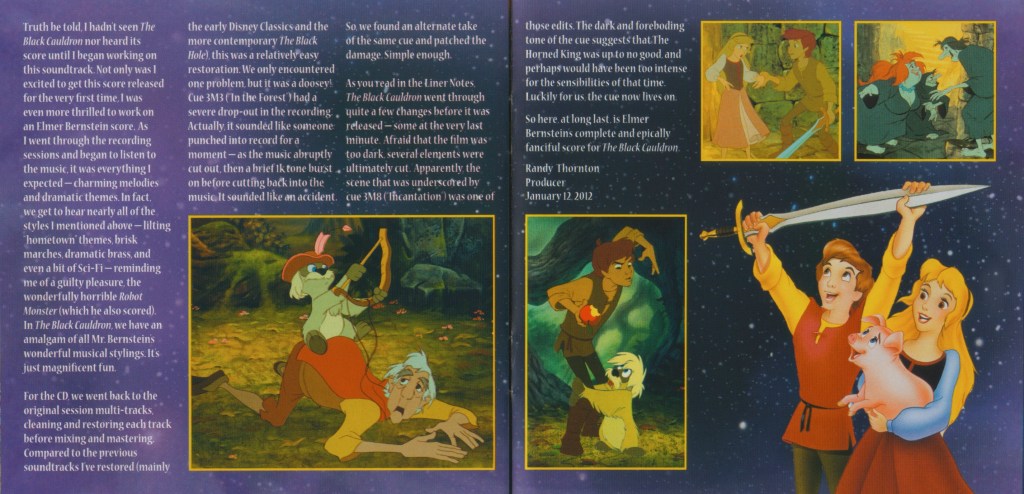
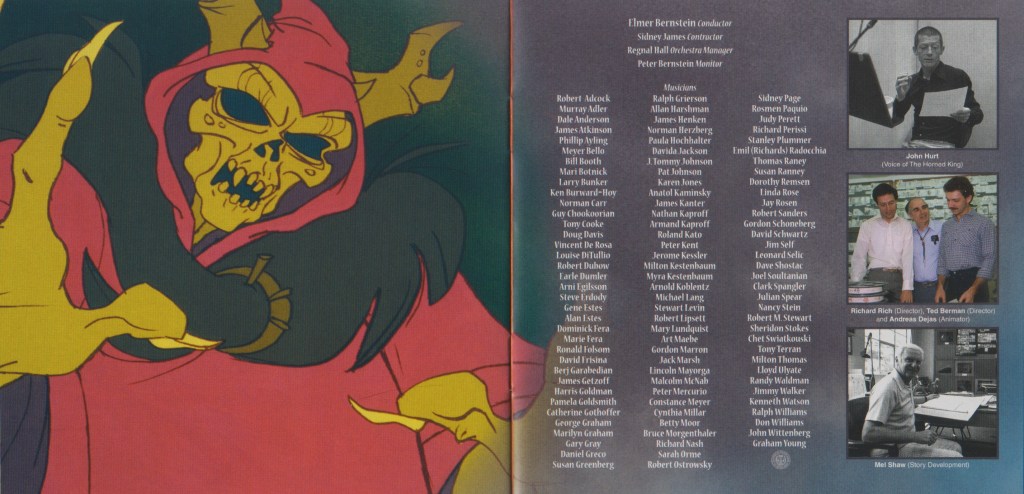
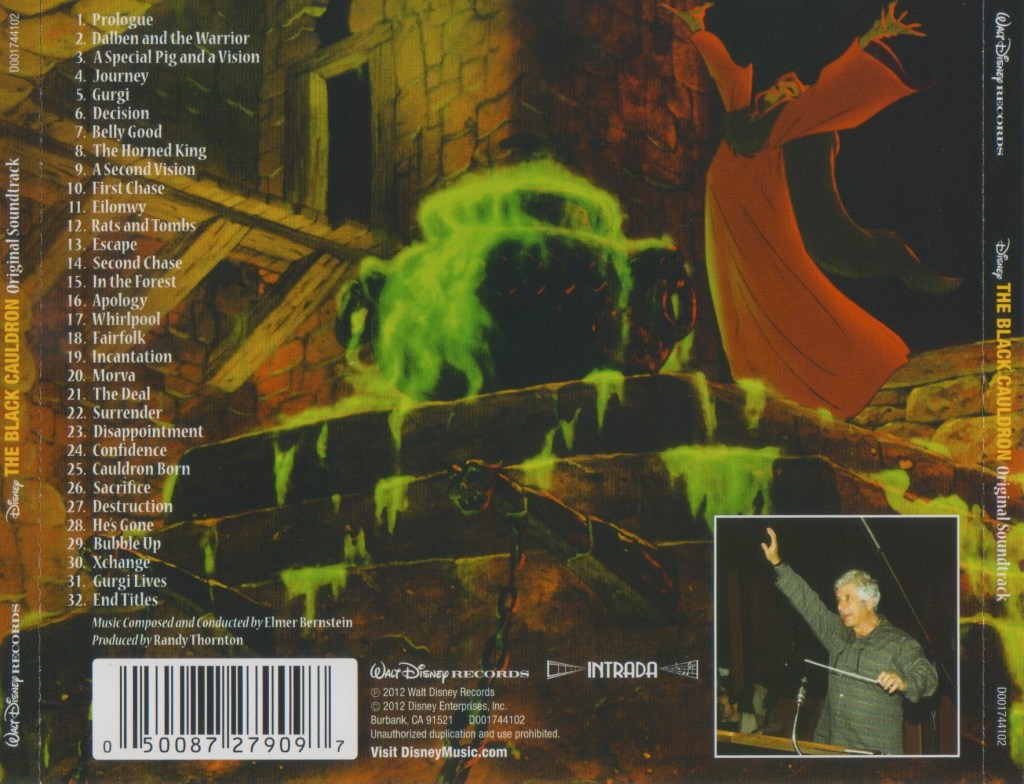
At last! Treat for Elmer Bernstein fans, Disney soundtrack fans and lovers of great film music in general! World premiere of Elmer Bernstein’s actual soundtrack for Walt Disney Pictures animation fantasy, directed by Ted Berman, Richard Rich. Not to be confused with roughly half hour of re-recorded highlights done by composer in Utah, new Disney/Intrada release offers all 75 minutes of music in dynamic stereo from actual multi-track soundtrack scoring session masters, lovingly produced by Disney’s Randy Thornton. Bernstein offers wall-to-wall music for ambitious tale of young hero battling evil Horned King with titular cauldron at heart of conflict. Massive score plays as part of composer’s high profile eighties animation/fantasy/sci-fi canon that includes HEAVY METAL, SATURN 3, GHOSTBUSTERS, SLIPSTREAM, SPACEHUNTER. Numerous themes populate florid score, colorful orchestrations abound. Spotlight splits between animated ideas for characters, thundering action they encounter. CD packaging sports beautiful cover painting of cauldron, liner notes by Jeff Bond & producer Thornton plus gorgeous full color shots of theatrical poster, detailed animation scenes, composer Bernstein at scoring sessions. Exciting entry in Disney/Intrada on-going series of classic soundtracks restored from the Disney vaults. Elmer Bernstein conducts.

http://store.intrada.com/s.nl/it.A/id.7514/.f

Jeanne d’Arc – PSP – Review | GameZone

https://www.gamezone.com/reviews/jeanne_d_arc_psp_review/

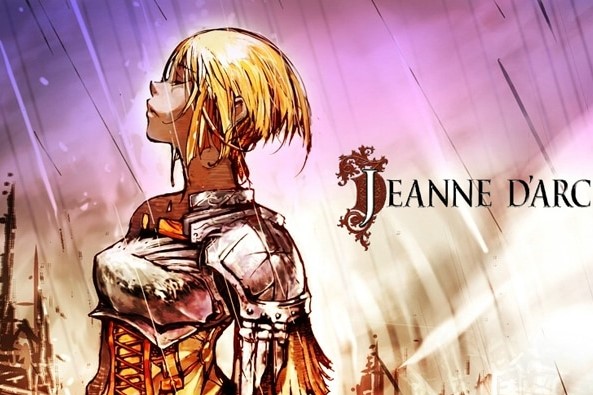
There was a time when a vile demon king had risen up to terrorize the country. Five heroes countered the hell-spawned threat, using armlets imbued with the power of God. But as time passed, things changed. One of the heroes is now the “uncle” and advisor to the boy-king of England. It is his desire that the young king lives forever and rule supreme. To that end, the English have begun a campaign to conquer France, using all manner of creature – from beasts to elves.

But it was not enough. The advisor decided that for his king to rule forever, the old power of the demon must be called forth, and the boy used as a vessel for that demon king. There were few to oppose the plan, and the one that did was quickly and quietly disposed of.

However, even the best-laid plans can sometimes be put awry by unexpected resistance from unlikely places. One of the ancient wristlets fell into the hands of a young French girl, who used it to call upon the powers of Heaven to encase her in ethereal armor, unleashing powerful attacks upon the enemies of her homeland.

Jeanne D’Arc is a tactical role-playing game from Level 5, published by SCEA and released on the PSP handheld system. The game has approximately 40 hours of gameplay, with 14 playable characters and the ability to customize them. Death is simply a matter of not finishing the level and gaining the experience bonus awarded at the successful conclusion of the stage.

The backdrop for this tale is the Hundred Year War between France and England. The story is loosely based on the exploits of the French heroine, Jeanne D’Arc (known by the English name of Joan of Arc). The story begins in a small French village where a young girl and her friend (Liane) are asked to deliver herbs to a local church. They are almost there when a sound comes from the forest. A knight rides out of the woods, injured, and he falls to the ground at the foot of the church. Tied to his waist is a satchel, emitting a glow. The young woman, Jeanne, reaches her hand tentatively toward the satchel, drawn on by the glow. Something snakes from the bag and wraps around her wrist, glowing brightly. She is alarmed, naturally, but unhurt. When the glow stops, she finds that a wristlet has attached itself to her.

No time to admire it, foul creatures attack and a voice (which the young Jeanne calls the Voice of the Lord) tells her to grab the fallen knight’s sword and attack. She does and quite successfully, too. It is not until the next battle, in the burned-out village of her family, that the wristlet shows its power, transforming Jeanne’s humble clothes into a brilliant armor, bearing some resemblance to what one might suppose an avenging angel would wear. She is well protected and a formidable force, now set on the path to ruin the plans of the demon-imbued boy-king.

Told through cut scenes, done is the typical Japanese anime style, the game has a building curve, taking the player deeper into the tale. You will gain more companions on the journey, but can only place five into a battle (at the start of the fight).

The combat phase, itself, is pretty straightforward. The battleground begins with a load-out section, in which you can change weapons or armor, or even distribute skills to those in the group. Then an area lights up and allows you to place five members of your troupe into the scenario. There are conditions for the battle and then it begins. You get a chance to move each of your team. When they are selected, you are given a grid over the landscape, which shows the extent of their movement. You move, can decide whether to attack, use a skill (which drains a bar that is equivalent to mana), use an item from your inventory – like a healing herb, or wait. Once you have gone through all of that, your turn ends. An attack will sometimes lead to a counterattack, depending on the type of unit you are attacking. If, for example, you get within one square of an archer and melee attack, the archer – needing to be two squares away for the bow to be of use – will not retaliate.

Jeanne also has the ability to transform into her heavenly armor. However, she can only do this once within a scenario, and the power of the armor lasts only a few turns. If, though, she attacks an enemy, and kills it, she gets a bonus that basically gives her another turn. This is demonstrated effectively in an early level where you can plot your moves and take out quite a good portion of the enemy force before the power fades.

Almost everything yields experience points, which translate into new levels, as well as the ability to use different armor, skills and weapons. There are also free combat areas and you can always revisit areas you have battled in as you move around the map.

Some of the problems occur early in the game. The AI seems to take a vacation when it could actually do you in. This is a game that plays out like a chess match. You make all your moves and then the enemy AI makes its turn. As the phase plays out, you can start to see holes in your strategy, and may actually cringe when you see how open you have left a member of your team (there is a unity defensive bonus when team members are in proximity of each other). Sometimes, though, the game does not pick up on it and you can escape the error. If you fail a scenario, it is game over, and you have to reload from the last saved point. This means waiting on load times.

The digression from the true story of Jeanne is for the sake of gameplay and as this is a fantasy tactical RPG title, it works well. The game has a small(ish) learning curve, but is a visual delight. The gameplay itself is addictive and the game is recommended for those PSP owners looking for a good game – whether you are a fan of Japanese RPGs or not. This is fun stuff.

Gameplay: 8.8
The difficulty curve ramps up as you progress through the game and the controls are easy to learn and use. There is some suspect AI at time, especially when you realize you’ve made a tactical error and the game’s AI does not take advantage of it, but the game still provides a range of mission types as well as a lot of entertainment.

Graphics: 9.0
Sure, they are basically a 2D scheme juxtaposed with an isometric (and rotatable) camera to give the impression of 3D, but while some of the cut scene material is tried and true, the game still gives a very bright and lush rendering that is – as far as eye candy is concerned – absolutely delicious on this platform.

Sound: 7.4
Solid music and some of the in-game effects you’ve heard before. A decent supporting cast member but nothing that truly shines on its own.

Difficulty: Easy/Medium
Nothing overly complex here. This is a tactical RPG, which means you have to think your moves through, and level up (and equip) your party members appropriately. Those that have played this type of game before should not have a problem with the concepts presented; those who have not will find the learning curve small.

Concept: 8.5
A handheld tactical RPG that is visually wonderful and does a great job in terms of gameplay. Give Level 5 credit for taking some of the best elements of the genre, combining them with a few new ideas and dropping them into a solid gaming backdrop.

Overall: 8.9
The game has a few minor problems but when looking at the overall scope of the game, and what it achieves on the handheld platform, this is a pretty impressive title. It plays well, you will find that the characters have a bit of personality (yes, even Liane – whose value is definitely in the role of healer or spellcaster), and the game’s missions are diverse enough to give you a reason to keep moving the story forward. This is a terrific PSP title.

Donald Trump’s Sneak Attack on Social Security

https://www.truthdig.com/articles/donald-trumps-sneak-attack-on-social-security/

Donald Trump’s recent budget proposal included billions of dollars in Social Security cuts. The proposed cuts were a huge betrayal of his campaign promise to protect our Social Security system. Fortunately for Social Security’s current and future beneficiaries, he has little chance of getting these cuts past the House of Representatives, which is controlled by Democrats.

So Trump and his budget director/chief of staff Mick Mulvaney, who has long been hostile to Social Security, are trying another tactic to cut our earned benefits. They are pursuing a long game to reach their goal. In a divide-and-conquer move, the focus is not Social Security. At least, not yet.

Last week, the Trump administration revealed that it is planning to employ the so-called chained Consumer Price Index (CPI) in a way that does not need congressional approval. “Chained CPI” might sound technical and boring, but anyone who has closely followed the Social Security debate knows better. It has long been proposed as a deceptive, hard-to-understand way to cut our earned Social Security benefits.

Trump plans to switch to the chained CPI to index the federal definition of poverty. If he succeeds, the impact will be that over time, fewer people will meet the government’s definition of poverty—even though in reality, they will not be any less poor. The definition is crucial to qualify for a variety of federal benefits, including Medicaid, as well as food and housing assistance. The announcement was written blandly about considering a variety of different measures, but anyone who knows the issue well can easily read the writing on the wall.

So, what does this have to do with Social Security? Like the poverty level, Social Security’s modest benefits are automatically adjusted to keep pace with inflation. If not adjusted, those benefits will erode, slowly but inexorably losing their purchasing power over time. These annual adjustments are already too low, but they are better than no adjustment at all. The chained CPI would make these adjustments even less adequate.

Proponents of the chained CPI say that it is better at measuring “substitution,” but don’t be fooled. The current inadequate measure already takes into account substitution of similar items. This is the idea that if the price of beef goes up, you can substitute chicken. In contrast, the chained CPI involves what are called substitutions across categories. If your planned vacation abroad goes up, you can stay home and buy a flat screen television and concert tickets instead.

Of course, neither form of substitution is much help to seniors and people with disabilities whose health care costs are skyrocketing. There’s no substitution for hospital stays and doctor visits. Those who propose the chained CPI are apparently fine with letting seniors who can’t afford even chicken substitute cat food.

The idea of substitution within or across categories makes no sense for people with no discretionary income. If all of your money goes for medicine, food and rent, how does substitution make sense? If you are so poor that your children go to bed hungry, how do you substitute?

Back in 2012, President Barack Obama proposed a so-called Grand Bargain to cut Social Security using the chained CPI, in return for Republicans agreeing to increase taxes on the wealthy. The goal of this Grand Bargain was ostensibly to reduce the deficit, despite the fact that Social Security does not add a single penny to the deficit.

Grassroots activists around the country fought back, and Obama ultimately realized his error. He removed the chained CPI from his budget proposals and endorsed expanding, rather than cutting, Social Security’s modest benefits. Social Security expansion is now the official position of the Democratic Party.

Yet Republicans have still continued to push Social Security cuts, including the chained CPI. Back in December 2017, they passed a massive tax cut for corporations and the super-wealthy. Afterwards, they used the predictable deficits their tax cuts caused as an excuse to call for cutting Social Security. Senate Majority Leader Mitch McConnell and other Republicans made well-publicized statements about the so-called “need” to cut Social Security. What was much more secret was a provision in the tax bill which replaced the measure used to index the tax brackets with the chained CPI.

Now, Trump wants to apply the chained CPI to the calculation of poverty rates. This will directly hurt many seniors and people with disabilities by making it more difficult to qualify for Medicaid and other programs many of them rely on, including food and housing assistance. It is also a long-term threat to Social Security itself.

The strategy is clear: Trump and his Republican supporters in Congress plan to apply chained CPI everywhere else, and then say that it is only common sense and indeed fair that we apply it to Social Security as well. We should be consistent, right?

Trump thinks that he can get away with executing this long-game attack on Social Security quietly, while the media and public are focused on his tweets, name calling, and scandals. But we must not be distracted. If we do not stop this attack in its tracks, our earned benefits will be next.

If you want to forestall another fight over cutting Social Security through the chained CPI, call your members of Congress, write to your local paper, and tell your friends: No chained CPI! No chained CPI for our earned benefits! No chained CPI for the most vulnerable among us!

This quiet effort to embed the chained CPI is a fight Trump does not want to have, certainly in an election year. But it is one we will bring to him. Grassroots activism defeated the chained CPI before. This time it will be harder because Trump can substitute the chained CPI without legislation. That means we have to simply fight harder. If we stick together, we surely will win. And we must. All of our economic security depends on it.