

There’s finally a well built handheld emulation console that doesn’t feel like a cheap knockoff. The RG350M takes the top spot as my favorite retro ROM player to date.

The good outweighs the bad, though weird interview choices add unfortunate bloat.
We at Ars Technica’s gaming section are flattered by High Score, the newest docu-series launching August 19 on Netflix. The easiest way to describe this gaming-centric interview series, split into six 40-minute episodes, is to give a shoutout our own War Stories video series.
For a few years, War Stories has been asking developers of beloved game series to explain how they overcame problems and got their eventual classics to your favorite PCs and consoles. Netflix’s new series does something very similar: it asks members of the game industry to stitch together a narrative of gaming’s so-called “golden era,” which, in their eyes, begins with Space Invaders in arcades and ends with Doom on PC.
All in all, I’m happy High Score exists. If you want to watch it uncritically, especially with people who don’t necessarily play video games, you can look forward to a mix of intriguing and all-too-familiar classic-gaming tales, told with high production values and clear storytelling throughlines. For the most part, the series is dignified, not embarrassing—a fact that delights the inner 12-year-old in me, who still has a chip on his shoulder about being a gamer “outcast” for most of my youth.
Parchment, magic hats, and “solace and peace”
Maybe it’s the War Stories bias in me, however, but the series’ biggest weakness is its desperation to stitch all of its interviews into a cohesive “game history” story.
In isolation, High Score has some of the best interviews with game-industry luminaries I’ve ever seen. The absolute highlight is an interview with Roberta and Ken Williams, the co-founders and architects behind Sierra Entertainment. Together, they tell the most detailed story I’ve ever seen on camera about their work on 1980’s Apple II game Mystery House. This includes Roberta pulling out a sheet of parchment to draw a facsimile of her original Mystery House design documents for the Netflix camera crew. I’ve maybe never seen a more beautiful “how it was made” demonstration of a game’s origin story.
Similarly thoughtful interviews play out over the series’ six-episode span, and High Score hits the ground running with Taito mastermind Tomohiro Nishikado telling the creation story of Space Invaders. We see him play with an ancient electromechanical “magic hat” machine; we see him imagine Tokyo overrun with massive, robotic spider creatures; we see him pull out pages of original concept art while explaining the design decisions driving what the final game’s characters looked like. As the very first story from the very first episode, it sure sets a tone.
This is followed by a refreshing conversation with legendary programmer Rebecca Heineman about her origins in the game industry: as a competitor in one of the world’s earliest examples of a formal gaming championship. This segment is rich with archival footage and Heineman’s insights, along with her frank admission that games were a crucial escape during her childhood struggles with gender dysphoria: “[Gaming] allowed me to play as a female. I’ve always identified as a woman. Unfortunately, my anatomy didn’t agree. So when I played video games, I was in this virtual world where I was mowing down rows of aliens and ignoring the world around me. It was the only place I was able to find solace and peace.”
The rest of this pilot episode nimbly connects other early ’80s dots, including a great story from the children of engineer Jerry Lawson. He’s largely credited with developing cartridge-based gaming while making the otherwise unsuccessful Fairchild Channel F console. Some of the episode’s stories—particularly that of Ms. Pac-Man’s origin as a “speed-up kit”—won’t be news to savvier game-history fans. But they are at least told in polished, humorous fashion, and their montage sequences’ pixelated art are a clever touch.
Join the Nintendo Fun Club today!
But let’s get back to Heineman—her experience in the games industry, as far as High Score is concerned, is relegated to her victory in a Space Invaders tournament. The series makes no mention of Bard’s Tale, Wasteland, or even Heineman being hired as a 16-year-old game-studio programmer. And as the series rolls along, more lapses in game-history storytelling emerge.
The issue is that High Score lands quite a few formative interviews on its quest to tell a certain history of the industry. But if the crew didn’t score a particular interview, then the story in question barely exists. We only hear about Shigeru Miyamoto’s game design prowess when English-speaking members of the Star Fox team (Giles Goddard, Dylan Cuthbert) are interviewed about that project. Otherwise, Nintendo’s history is told almost exclusively by one of its American PR leads, who tells the story of Nintendo Power’s formation as a magazine. The story is told well in High Score’s format, but it leaves Nintendo design luminaries like Satoru Iwata in the shadows (and, weirdly, pretends the Nintendo Fun Club Newsletter never existed).
And we only hear about one Electronic Arts series, John Madden Football, because that’s how High Score tries to explain Sega’s console-war dominance in the sports genre. This sports sequence drove me particularly insane. Madden launched near-simultaneously on Super Nintendo and Sega Genesis, so it was a terrible example to hinge this anecdote on. Plus, Sega’s bullishness about self-published sports games, usually with athletes attached, went completely unmentioned. At the time, Sega aggressively marketed Sports Talk Football with Joe Montana as a rival to Madden, but Netflix leaves that and other major Sega sports games unmentioned.
High Score includes one story of famous failure: ET for the Atari 2600, as told by lead designer Howard Scott Warshaw (the genius behind Yars’ Revenge). Yet Trip Hawkins, who guests on High Score to talk about Madden’s development, doesn’t get the opportunity to talk about his own console-launch failure, the 3DO. Other notable gaming-industry failures go similarly unmentioned.
Some of the series’ lapses would be more forgivable if Netflix wasn’t so stuck on following winners of ’80s and early ’90s game tournaments. Heineman’s story is a gem. The same can’t be said for other episodes’ segments dedicated to the Nintendo World Championship and the Sega Rock the Rock Championship. If this were a longer series, an entire episode about early game championships might be lovely. But here, these stories suffer because they only interview one participant each, drag for far too long, and place far more cultural import on the tournaments than they’re arguably worth. (I know, the Nintendo World Championship was massive for my generation, but High Score’s version of that story isn’t told with multiple participants, with Nintendo organizers, or even with a mention of tie-in film The Wizard.)
Don’t spoil things for gaming novices
Again, I must insist: if you want to enjoy the series uncritically and deal with a mix of storytelling delights and slower, “Guess I’ll check my phone for a few minutes” segments, High Score has enough good content to sit through. This is boosted significantly by Charles Martinet as narrator; you may recognize his voice as that of Super Mario and other famous Nintendo characters, and he handles his humorous-enough script with a gentle cadence. (No, he never sneaks an “it’s-a me!” into the series. Super Mario receives paltry lip service through the course of High Score, honestly.)
Just be warned that some uneven interview choices and leaps past significant game-history developments will leave anybody knowledgeable about gaming history yelling at their TV. Your favorite console, arcade, portable, or PC game from the era in question is, in all likelihood, not given enough time or coverage by Netflix’s filming crew. (I, for example, couldn’t believe how little was said about Tetris. Tetris!)
With that in mind, keep the whining to the minimum if someone has a pleasant time not knowing better and watching the whole series at your side. Once you’re done with Netflix’s take, our War Stories series will continue feeding you the game-history goods.


KIEV — Ukraine, a former economic powerhouse for the Soviet Union, once produced four times the output of the next-ranking republic and enjoyed a wealth of fertile black soil for farming and a growing heavy industry. However, after the fall of the Soviet Union, Ukraine’s economy began to suffer. The government tried to liberalize prices, but reform was halted after resistance was met within the government.
As a result, the economy fell to the point that in 2009 Ukraine had one of the worst economic performances in the world. Today, the gross domestic product (GDP) stands at $352.6 billion — 50th in the world. Ukraine’s GDP is surprisingly low considering its possession of all the tools for a successful, production based economy with thriving agricultural and industrial industries.
Therefore, poverty is a major concern, with 24.1 percent of the country’s citizens below the poverty line.
How did a nation with such promise end up with such a disappointing economy?
Ukraine’s economic woes can be traced back to failures by the government to resolve disputes and agree on reform, as well as widespread corruption and political instability. Poverty in Ukraine was at its highest in the 1990s, when hyperinflation abounded following the fall of the Soviet Union, as huge monetary expansion was necessary to finance government spending.
However, while this expansion was able to finance government spending to a degree that they could work on reforms that would stop hyperinflation, it was too late for the people of Ukraine who lived in poverty.
What are the main causes of poverty in Ukraine?
One of the main causes of poverty in Ukraine from the early 2000s to today is the government’s complacency in providing reforms that would stabilize the economy. Aforementioned heavy industry exports were booming, and Ukraine was especially successful in providing exports to Russia.
Instead of investing in reforms that would result in long-term stability and a middle-class income for many citizens, government officials chose instead to appeal to their own interests.
Ukraine has struggled with corruption at the highest levels of its government, with the Panama papers exposing widespread corruption at every level and industry. The Mossack Fonesca files — the law firm at the heart of the Panama Papers — exposed Ukrainian corruption going back to the earliest days of independence, when money was laundered offshore.
So what’s Ukraine’s solution?
It is impossible to grow an economy when the government officials are putting money in their own pockets, and therefore, the only way to sustainably improve the economic situation of Ukraine and to draw Ukraine’s people out of poverty, is to engage in necessary reforms and take steps to halt corruption.
Although pervasive corruption continues to be problematic, Ukrainian citizens have seen some hope following the most recent International Monetary Fund (IMF) assistance package of $17.5 billion, and reforms instituted after the Revolution of Dignity in 2014. These reforms are designed for democratic transparency, which is a great first step in a history of corruption.
The assistance package and recent reforms have sent Ukraine in the right direction, as was recently reported in June 2017 that the average salary (UAH) reached an all-time high of 7360 UAH, an increase from 6840 UAH in the previous year.
So, while there is still plenty of work to be done — a better legislative framework, more solutions to combat corruption and a development of capital markets — the causes of poverty in Ukraine are gradually being solved, and the future is looking brighter than ever before.

Originally posted on March 16, 2019:
Since I’ve been sick for the last few weeks, I’ve had to stay at home. Lately, I’ve been beginning to think about finding a new place to work and about whether or not I should go back to school. Therefore, my rate of making videos for my channel has slowed in the last few months. I still make videos, however, and this doesn’t mean that I have to stop making them. But I should have other things on my mind at this time. In addition, since I’ve become sick recently, and since I shouldn’t wear my glasses for now, I really don’t have the time to make videos. Making videos for my channel has never been an occupation for me. It has always been a hobby, and it was smart of me to spend as little time as possible on YouTube because I’ve always known that, sooner or later, YouTube would turn into a highly controlled and problematic website. YouTube is now sort of like American television. There are a few positives to this and some negatives. One positive is that people can now rent or purchase many films or shows that have been made in Hollywood on YouTube. One negative is that YouTube has become just another platform for American propaganda, kind of like television, radio, newspapers, magazines, or books. And other Western video-sharing websites aren’t much better in this respect. Some of them are even worse. Dailymotion, for example, is in some ways better than YouTube and in some ways worse. The video-sharing website that has given me the least trouble over the years is Rutube. Never have I had my account deleted on Rutube. YouTube, on the other hand, is the website that has given me the most trouble over the years. I’ve heard that Facebook and Twitter are also controlled websites, but I’ve never seriously used them, and, therefore, I’ve never experienced how problematic they can be. Still, I’m not planning on stopping making videos for the time being because uploading videos to YouTube is still possible to do. I’ve uploaded a number of good lectures and lists already. There’s plenty of good information in those videos. Moreover, I’ve discovered that my YouTube channel has some notoriety, not only because it has existed for about a decade already but also because it’s one of the very few channels that offer alternative information. It’s clear that the managers of YouTube will never allow my channel to become popular, but it’s still popular enough to irritate the owners of the numerous anti-leftist channels that exist on YouTube and elsewhere. These propagandists and haters of my channel react to almost every video and post that I make. Wow. They sure are dedicated haters. Or is it because some of them are paid to do this?
I can point out that when I make posts on my blog about the films that I see, this doesn’t mean that I recommend these films. These are simply films that I’ve recently seen. But, since I usually see films because I want to see them, I would recommend seeing almost all of them. I know that many Hollywood films feature American propaganda, but this doesn’t stop me from seeing them and enjoying some of them. Since I’ve been sick for the last few weeks, and since I can’t wear my glasses for now, I’ve been spending my time on watching films, and I’ve seen a number of films that I can really recommend. The one film that I’ve seen not long ago that I would definitely not recommend is The Predator (2018). It’s just a bad and vile film. But here are examples of films that I would recommend. Most of them are old Hollywood films because there’s no point in spending time and money on seeing new Hollywood films. New Hollywood films are just not good if they’re compared to old Hollywood films. The Hindenburg (1975) features good special effects and is definitely worth seeing. The Raid (1954) is a neat Western set during the American Civil War. Young Winston (1972) is a classy adventure about Winston Churchill in his youth. Nightfall (1957) is a good film noir in black and white. The Miracle Worker (1962) features some of the best acting by actresses in the 1960s. Crimes of the Heart (1986) is a good southern gothic film that features good performances from the leads. The Morning After (1986) includes one of the best performances by Jane Fonda. ‘night, Mother (1986) is an interesting drama with only two roles. Alice Doesn’t Live Here Anymore (1974) is simply essential viewing, and it features an excellent performance by Ellen Burstyn. Forever Young (1992) is one of those neat little romantic science fiction films from the 1990s. The Fly (1986) is just plain awesome. Bachelor Party (1984) is a surprisingly funny comedy from the 1980s. The White Buffalo (1977) is a Western that features Charles Bronson and… a big white buffalo. Nuff said. Assassination (1987) is another unintentionally funny and enjoyable piece of action junk from Cannon Films. Tough Guys (1986) is a pleasant and somewhat moving comedy. Coma (1978) is an excellent suspense film that was directed by Michael Crichton, of Jurassic Park fame. Demetrius and the Gladiators (1954) is an impressive epic in which Victor Mature “acts”. It’s set in Rome and features gladiator fights. Avenging Force (1986) is yet more action junk from Cannon Films in which Michael Dudikoff delivers yet again in the leading role. April Fool’s Day (1986) is quite a good mystery slasher film that was filmed in British Columbia. Death Wish 3 (1985) features Charles Bronson talking about killing bad guys, with a wicked little smirk on his face. Death Wish 3, by the way, is one of those 1980s flicks, like RoboCop (1987), that show some of what happened during the economic depression that took place in the USA in those years. American Dreamer (1984) and Bad Medicine (1985) are two funny comedies from the 1980s that I would definitely recommend seeing. Agnes of God (1985) is worth seeing simply because of the excellent performances by Anne Bancroft and Jane Fonda. A Soldier’s Story (1984) is a fantastic drama, and I can’t believe that I’ve never heard about it before I saw it. Country (1984) is yet another fantastic drama that has been forgotten in the mainstream. Well, anyway, I can go on and on with this list, but these are some of the most memorable films that I’ve seen in recent months.
By the way, I’m glad that Eileen Rockefeller has her website and blog back on. For a while, it seemed to me like she turned them off because of me. But I can’t be sure about this. I posted one video on my blog that features an interview with her. Why did I do this? Only because she has a pleasant way of speaking and because there may be one or two things that I find to be interesting in that interview. Perhaps she didn’t like that I did this. Well, I didn’t do this because I think that she’s a bad lady. I know almost nothing about her. I don’t know what she likes or doesn’t like. But I know a few things about the imperialist Rockefeller family. So, she might have noticed this and reacted because she thought that I consider her to be bad. Well, I’ve deleted that video since then, and her blog is back on now, so everything is fine because I didn’t want her to discontinue her blog. I haven’t read her book (Being a Rockefeller, Becoming Myself: A Memoir). I’m reading other books at the moment. But I think that I will read it soon. It probably includes almost nothing that I would find interesting. But I’d still read it as a curiosity.
Originally posted on December 26, 2017:
Sure, I will write a review, maybe a short one, about Star Wars: The Last Jedi (2017), which is seemingly the worst Star Wars film ever. But, for now, I’d like to get into the Gundam franchise. I already made a list about the best Gundam releases. However, not all of them are all they’re cracked up to be. Well, first of all, instead of watching the original series, I’d recommend watching Mobile Suit Gundam: The 08th MS Team, Mobile Suit Gundam: Char’s Counterattack, Mobile Suit Gundam 0080: War in the Pocket, and Gundam Wing: Endless Waltz. I think that these are the best of the best of the Gundam releases. Yoshiyuki Tomino, with his 1979 original series, may have started the franchise, but it’s admittedly a rather dull series now, for the most part. Tomino is fine at showing the realities of war, and he knows his science, but his direction doesn’t make the original Gundam a truly compelling series. If you compare the Gundam franchise to other giant robot anime series, you’ll see that not one of the Gundam releases reaches the heights of The Vision Of Escaflowne, Gurren Lagann, Neon Genesis Evangelion, Giant Robo, Martian Successor Nadesico, RahXephon, Gunbuster, or Macross Plus. Still, the four Gundam releases that I listed are very good, and I’d recommend them to anyone.
By the way, here’s a good list of the best anime by Wizard Magazine:
https://www.animenewsnetwork.com/news/2001-07-16/wizard-lists-top-50-anime
I agree with this magazine’s picks. The people working there sure do know anime and they sure do have taste. As you can see, the original Gundam is number 2 on their list. Well, it’s that high up probably because of its influence on the anime industry and because of its impact back then, in the early-1980s. In the 1980s, Japanese animation was lower in quality than American animation or Soviet animation. But some of what Japanese animators made in the 1980s is very good and original. Anime became even more popular in the 1990s. More quality releases appeared as well, in part because the quality of animation improved. But, in the 2000s, anime began to turn into repetitive, unoriginal… stuff. Judging by user comments, I see that some people are smart enough to realize that this is the case, that the anime industry in Japan is producing unoriginal content now, similar to how Hollywood is producing unoriginal content now. In this environment of creative stagnation, releases that are good and original are rare.

Caleb Maupin is a widely acclaimed speaker, writer, journalist, and political analyst. He has traveled extensively in the Middle East and in Latin America. He was involved with the Occupy Wall Street movement from its early planning stages, and has been involved many struggles for social justice. He is an outspoken advocate of international friendship and cooperation, as well 21st Century Socialism.









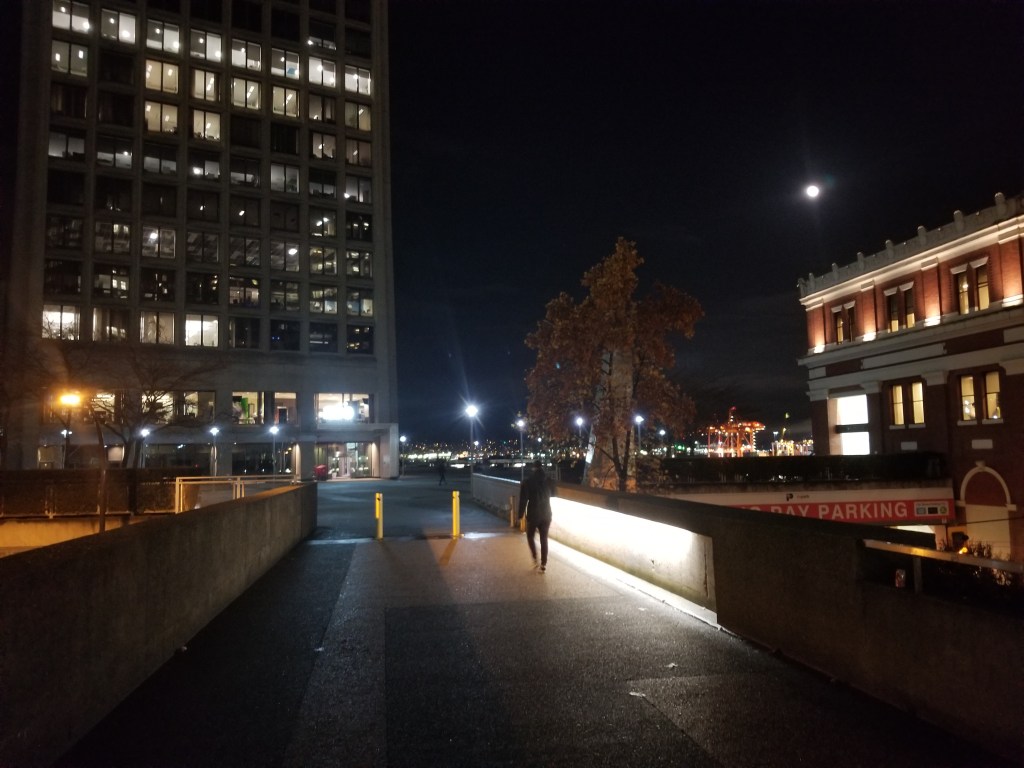
Waterfront is a major intermodal public transportation facility and the main transit terminus in Vancouver, British Columbia, Canada. It is located on West Cordova Street in Downtown Vancouver, between Granville and Seymour Street. The station is also accessible via two other street-level entrances, one on Howe Street to the west for direct access to the Expo Line and another on Granville Street to the south for direct access to the Canada Line.
The station is within walking distance of Vancouver’s historical Gastown district, Canada Place, Convention & Exhibition Centre, Harbour Centre, Sinclair Centre, and the Vancouver Harbour Flight Centre float plane terminal. A heliport operated by Helijet, along with the downtown campuses for Simon Fraser University and the British Columbia Institute of Technology, are also located within the vicinity of the station.
Waterfront station was built by the Canadian Pacific Railway (CPR) and opened on August 1, 1914. It was the Pacific terminus for the CPR’s transcontinental passenger trains to Montreal, Quebec and Toronto, Ontario. The current station is the third CPR station. The previous CPR station was located one block west, at the foot of Granville, and unlike the current classical-styled Waterfront station was built in “railway gothic” like the CPR’s many railway hotels.
In 1978, when Via Rail took over the passenger operations of the CPR and the Canadian National Railway, it continued using both railways’ stations in Vancouver, but a year later, Via consolidated its Vancouver operations at Pacific Central Station, the CN station near False Creek, and ceased using the CPR station. The last scheduled Via passenger train to use Waterfront station departed on October 27, 1979.
Waterfront station’s transformation into a public intermodal transit facility began in 1977. That year, the SeaBus began operating out of a purpose-built floating pier that was connected to the main terminal building via an overhead walkway above the CPR tracks. The CPR’s passenger platform and some of its tracks were torn up in the early 1980s to make way for the guideway of the original SkyTrain line (Expo Line), which opened on December 11, 1985. During Expo 86, SkyTrain operated special shuttle trains between Waterfront station and Stadium–Chinatown station (then named Stadium station), connecting the Canadian Pavilion at Canada Place to the main Expo site along False Creek.
A private ferry company, Royal SeaLink Express, ran passenger ferries from a new dock on the west side of the SeaBus terminal to Victoria and Nanaimo in the early 1990s, but ultimately folded. In 2003, HarbourLynx began operating out of Royal Sealink’s old facility at the SeaBus terminal. In 2006, following major engine problems with their only vessel, they folded as well.
In 1995, platforms were built adjacent to the SkyTrain station for the West Coast Express, which uses the existing CPR tracks. The platforms for the West Coast Express were built in the same location as the old CPR platforms.
In 2002, Millennium Line trains began to share tracks with the Expo Line at Waterfront station. The lines continued to share tracks until late 2016, when an Expo Line branch to Production Way–University station was created in replacement of the Millennium Line service between VCC–Clark and Waterfront stations.
In 2009, the Canada Line opened with separate platforms which are accessible via the main station building, but require leaving the fare paid zone when transferring between other modes. Waterfront station serves as a common terminus point for both the Expo Line and the Canada Line.
Waterfront station was one of the first stations to receive TransLink’s “T” signage, denoting a transit station. This signage was originally installed in the downtown core of Vancouver to help visitors during the 2010 Olympics, as it made transit hubs easier to identify.
In 2018, TransLink announced that Waterfront’s Canada Line platforms, as well as two other stations on the line located within downtown Vancouver, would receive an accessibility upgrade which includes additional escalators, as most Canada Line stations were built with only up escalators initially. Construction is expected to begin in early 2019.
Waterfront’s main station building was designed in a neoclassical style, with a symmetrical red-brick facade dominated by a row of smooth, white Ionic order columns. The Ionic columns are repeated in the grand interior hall, flanking the perimeter of the space. The main hall features two large clocks facing each other high on the east and west walls. Paintings depicting various scenic Canadian landscapes, completed in 1916 by Adelaide Langford, line the walls above the columns. The Montreal architecture firm Barott, Blackader and Webster was responsible for designing the main station building.

