CltMngSvc.exe or CltMngSvc.exe*32 is part of a browser hijacker, and is designed to protect its bundled programs and make sure they remain installed or unchanged by other third party programs.
The CltMngSvc.exe program is a part of the “Search Protect by conduit” program, and is developed by Conduit Ltd, a company known for their malicious programs.
The CltMngSvc.exe browser hijacker is commonly bundled with other free programs that you download off of the Internet. Unfortunately, some free downloads do not adequately disclose that other software will also be installed and you may find that you have installed CltMngSvc.exe without your knowledge.
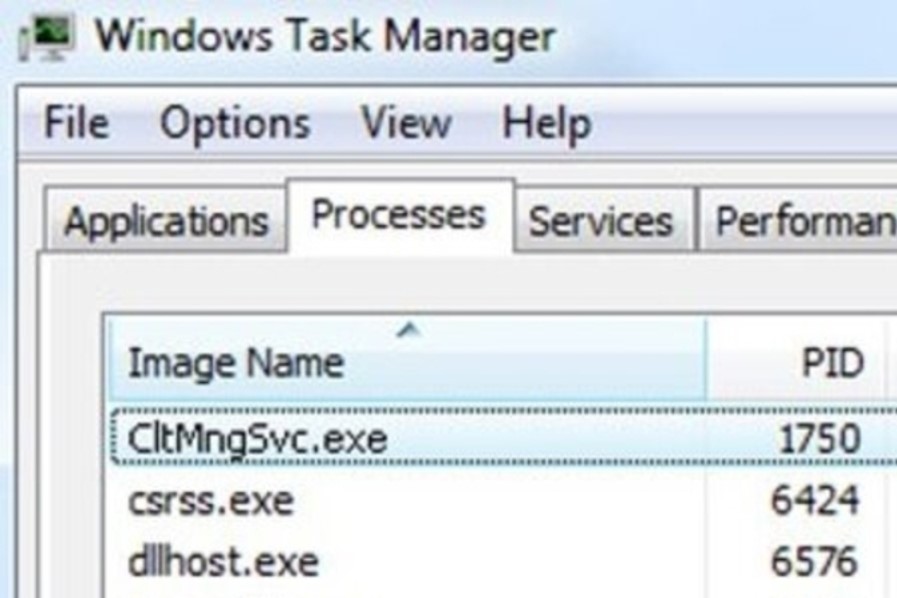
If you have the CltMngSvc.exe browser hijacker installed on your PC, you will typically see two “CltMngSvc.exe” processes running in the Windows Task Manager.
When the CltMngSvc.exe browser hijacker is installed on a PC, common symptoms include:
Changing the web browser’s default homepage to Trovi.com Changing the browser’s search provider, built-in search box to http://www.trovi.com Ability to modify the ‘new tab’ functionality to launch the modified search portal page Loads into the web browser via an extension or add-on
Various antivirus engine detected the program and its executable as malware:
avast! Win32:SearchProtect-B [PUP] Dr.Web Adware.BGuard.15 ESET NOD32 Win32/Conduit.SearchProtect.A ESET NOD32 a variant of Win32/Conduit.SearchProtect.B ESET NOD32 a variant of Win32/Conduit.SearchProtect.B VIPRE Antivirus Conduit (fs) (not malicious)
You should always pay attention when installing software because often, a software installer includes optional installs, such as this CltMngSvc.exe browser hijacker. Be very careful what you agree to install.
Always opt for the custom installation and deselect anything that is not familiar, especially optional software that you never wanted to download and install in the first place. It goes without saying that you should not install software that you don’t trust.
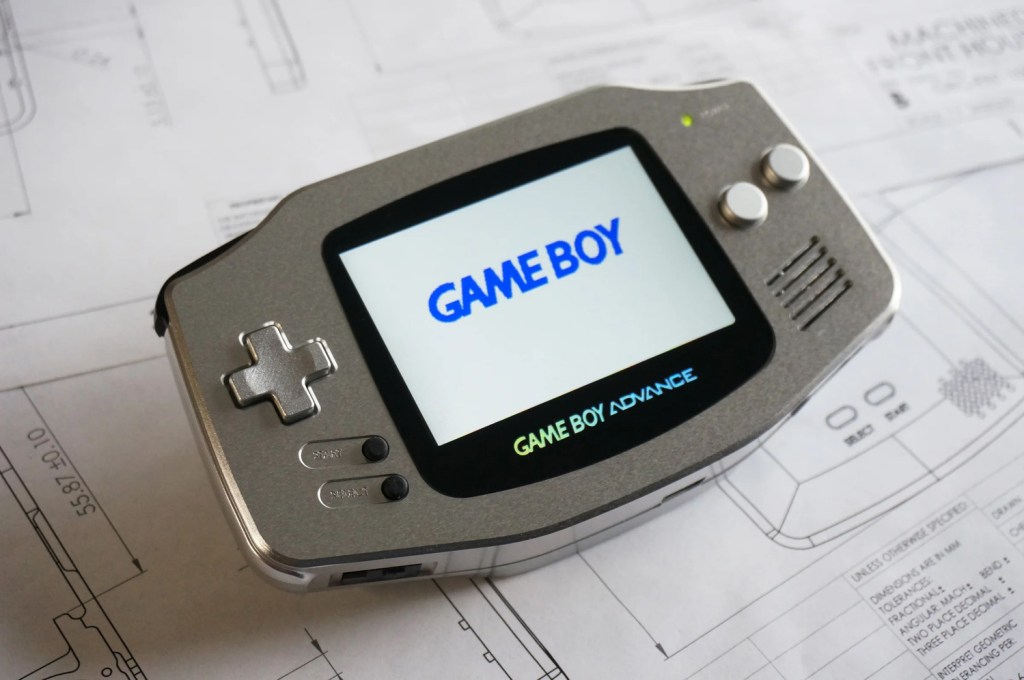
Fueled by nostalgia and longing for a simpler time, hardware tinkerers are injecting new life into the iconic handheld game console.
The Game Boy lived a long life. From its launch in 1989 until its discontinuation in 2008, Nintendo’s handheld gaming device sold hundreds of millions of units. It went through seven different design iterations, six of which were sold in the US. And because the system was propped up by Nintendo’s thousands-deep library of titles, the Game Boy remains one of the top-selling videogame consoles of all time.
But for a gang of modders and hackers on the internet, these machines aren’t something to be left in the past. Rather, these underpowered, inexpensive toys are canvases for creativity and experimentation. Groups of hackers who congregate on the r/Gameboy subreddit, on Discord, on Instagram, and across YouTube have been dragging Nintendo’s tiny, world-beating machine into the 2020s by creating a cottage industry of parts, custom components, and prebuilt modified Game Boys along the way.
Today’s Game Boy modding scene largely sprang up in response to Nintendo’s own conservative tendencies. Always intent on making its game systems affordable and efficient, the Kyoto, Japan-based company has a long history of keeping its consumer products technologically behind the curve in an effort to hold costs down. Nintendo engineer and Game Boy creator Gunpei Yokoi famously relied on a philosophy of “lateral thinking with withered technology.” In short, Yokoi preferred to find how far older, cheaper tech could be stretched to still provide hours of Pokémon-catching, Goomba-stomping fun.
One example of this mindset is the fact that for years, Nintendo outfitted Game Boys with non-illuminated screens. This meant that a copious amount of ambient light was required to see whatever you were playing. In response, accessory makers offered up all kinds of crazy add-ons, from booklight-like gadgets that shone light onto the screen to bulky screen magnifiers with bulbs and batteries in them. In many ways, the poor display quality of the Game Boy stunted the platform’s success by making it impossible to get your game on under dim or inconsistently lit conditions. This became a meme in the early 2000s, when the online comic Penny Arcade posted its take on the handheld’s biggest shortcoming.
After 14 years of craning our necks and clipping on light attachments, we got our first light-up Game Boy in 2003 when Nintendo released the Game Boy Advance SP. This clamshell gadget packed a front-lit screen at first, and in later revisions labeled AGS-101, the Game Boy’s first backlit LCD. It was a revelation.
So, of course, Nintendo modders got busy figuring out a way to get that backlit display into older models. This was the first transformational mod in the console’s history, since it modernized the older Game Boys in a way that made them more playable and, in essence, brought the aged tech back to life.
While the display inside the AGS-101 had shallow viewing angles and less-than-vivid colors, it was the best option for the modders to use; given the odd shape of the hole for the screen in the Game Boy’s plastic body, there were only a limited number of aftermarket screens that could be slotted into the device. And using adhesive films or optical glue to add a light to non-illuminated screens had proven to be hit-or-miss; one early company that sold such a kit called Afterburner netted either spectacular results or ugly outcomes, depending on the skill of the installer.
“I mean, it was nice for a while when the AGS-101 screens were nice and cheap, like 30 bucks or so,” says modder Makho, who goes by Admiral_Butter_Crust on Reddit. As an enthusiast, he’s tested and catalogued most commercially available Game Boy screen kits on his YouTube channel, keeping a notated and frequently updated document on Reddit. “I guess there was like a warehouse full of AGS-101 screens. Game Boy nerds bought them all, and stock ran out.”
So, it was the end of the road for the AGS-101 LCD. But where there’s a supply chain, there’s a way, and the Game Boy modding community got cracking on potential solutions. Realizing the screens they had been using were substandard and expensive, the modders were eager to experiment. “Let’s try putting some newer, better screens in there and see what happens,” said Makho.
Enter Ben Grimmett, who runs a boutique hardware shop called BennVenn that serves the Game Boy hacking community. Grimmett’s shop relied on the AGS-101 display for one of its products, a ribbon cable that adapted the display for use in the older Game Boy Color. The Game Boy Color installation “was complicated and required a fair degree of dexterity to modify the shells to accept an LCD almost as wide as the console itself,” Grimmett says. Modders needed to hack away at the plastic inside the Game Boy to fit the newer screen inside, and even then, it was a tight fit that required shaving every possible millimeter from the handheld’s circuit board.
“A few months into releasing the Game Boy Color mod, we noticed the prices of reproduction AGS-101 LCDs starting to climb and original AGS-101 consoles being destroyed for the LCD.” Through his suppliers in China, Grimmett found a color LCD screen that was the perfect shape for the older Game Boys with square screens. In order to make it work, he had to whip up an adapter cable to let the new display talk to the old ‘Boys, and he had to add a custom-programmed chip that got the new screen perfectly in sync with the console’s circuit board.
After fine-tuning the design, Ben sent an early kit of the mod, dubbed Freckle Shack, to YouTuber KyleAwsm to debut on his channel.
“This LCD is out of a Palm Centro 690 or something like that. So, like, a 2009 smartphone,” said Makho. These small TFT screens sell in bulk for a fraction of the cost of the ones sourced from the AGS-101 consoles.
For the Game Boy, Game Boy Pocket, and Game Boy Color, makers like BennVenn, Midwest Embedded, McWill, and a bunch of no-brand online sellers all came up with similar adapters and cables. The new wave of conversion kits all seem to feature the exact same surplus Palm Centro display. Some of the kits even can be fitted into a Game Boy without any cutting or gluing, making the procedure more accessible to gamers less inclined to take a Dremel tool to their beloved handheld.
Perhaps the best replacement Game Boy display available is from a company called FunnyPlaying. This high-resolution screen has fantastic color and contrast, and it gives anyone who can solder a few wires the option of adding brightness controls. Out of all the aftermarket display upgrades, Makho gives FunnyPlaying’s V2 kit the highest marks: “It’s pretty much perfect, as far as I can tell. It still could go a little farther on power consumption, but I don’t think there’s a good way around that. You gotta power the conversion hardware and the new screen as well.”
With this essential fix for the console’s Achilles’ heel out of the way, it makes sense that what’s left on any modder’s wish list are nice-to-haves, additions that let Game Boy enthusiasts customize the less-critical components. Kyle Capel, CEO of online store Hand Held Legend, stocks a wide variety of mods that can tweak a Game Boy’s exterior appearance or bestow it with new functionality. Want to add an internal battery that charges over USB? He’s got that. A rainbow of plastic shells and buttons in glow-in-the-dark, translucent, or neon hues? Yep. Custom-cut, scratch-resistant glass screen covers? He’s got those too.
“As kids we decked out our Game Boys with lights, screen protectors, battery packs,” Capel says. “Modding Game Boys today not only brings back some good memories, but expands upon the desires we had to make the experience even better. What we would have given to play games in the dark! Now we can play in full color with backlit screens, loud speakers, and modern rechargeable batteries.”
Boxy Pixel, a manufacturing house based in Michigan, will sell eager Game Boy modders metal cases that give the famously cheap Nintendo handheld a premium look and feel. “I design all my own components that are CNC machined from aluminum,” says Boxy Pixel founder Nick Rose. “I get most of my ideas for my designs from necessity of other modders.”
Others are getting their designs using more crafty methods. The resourcefulness of the Chinese manufacturing world often leads to a rapid dissemination of ideas—and sometimes involves outright intellectual property theft. Small makers trying to peddle their wares frequently find strikingly similar versions of their unique components being sold elsewhere at a discount by shifty and nimble overseas retailers. Even electronic components like Ben Grimmett’s screens can be copied almost exactly.
“Our first clone was found on Taobao,” says Grimmett, referring to the popular Chinese online marketplace. “It was identical right down to our name and website printed on it. Knowing another person or company spent the time to copy our work, reverse engineer our code—it was an honor, but it also made me feel a little nauseous,”
“Having said that, in the last few months or so we’ve seen some great innovation coming out of China. Copies of our screen kit that have in some ways improved upon our first versions made us evolve our design further to compete.” Grimmett’s latest screen upgrade, called Aioli, is his response to the copycats. This new kit, he says, should be almost as easy to install as his imitators’ wares, but will suck down less power and provide smooth frame rates.
The Game Boy platform itself has its limitations, just like any aging digital device. Old capacitors and fuses can burn out. Power switches can corrode and break. But between its flash-based game cartridges and a thick plastic construction that’s proven to be close to indestructible, the Game Boy is a born survivor. “Game Boys are extremely tough, and as such, most electronic components on the circuit boards can be fixed or replaced. They will be here for a while,” says Boxy Pixel’s Nick Rose.
And as long as Game Boys are still kicking around, the tinkerers will tinker. InsideGadgets, run by a hardware hacker who goes by the name Alex, hosts a Discord chat where aspiring Game Boy modders brainstorm and dissect the latest mods. He’s been in the scene for around a decade. The Game Boy was his first hack, and he’s been using the handhelds to make misfit electronic toys ever since.
Alex has come up with some wacky creations, like an adapter board with a display-out for a TV, a Game Boy with a big 7-inch display, and even a custom cartridge that turns a Game Boy into a Bluetooth controller for other systems. “I thought the Game Boy Advance was a nice handheld and that we should be using it as a controller for other things too,” he says. “After a couple of hours I had a working prototype.”
Despite its ancient chips, Alex says the Game Boy could eventually get a full internal revamp from the community. “If you wanted to, you could design a new board for all systems to have modern components and new features,” he says. “One of the users on our Discord is planning to do this with the Game Boy Advance.” With a new board designed to natively support features like USB or a high-res screen, the Game Boy could live on indefinitely.
Perhaps it’s not a coincidence that the baked-in simplicity from Nintendo’s design philosophy is what gives the Game Boy line an audience in 2020. Even with impressive, cheap clones available—as well as successors like the $50 Sega Game Gear Micro and the $200 Analogue Pocket, a device with a high-res screen that’s compatible with multiple gaming systems—fans are adamant that only the real thing will do.
“No phone or box with a screen can replicate a genuine memory like those we have with our Game Boys,” says Kyle Capel from Hand Held Legend.
At its core, the quest to update the Game Boy is one fueled by nostalgia and a longing for a simpler time. In the Game Boy’s heyday, there were no software updates to download over Wi-Fi, games started up at once, and a fresh set of AAs was all you needed to keep playing all day.
“There is something simple and satisfying about plugging in a game cartridge, turning it on, and pushing some buttons,” says Boxy Pixel’s Nick Rose. “Game Boys take you back to a time when things were simple and technology could still cast a spell. On a practical level, these modifications are a form of upcycling. Each piece that is modified becomes useful again and won’t end up in a pile of rubbish. Unlike some antiques that hang on the wall, this one can be used and enjoyed.”
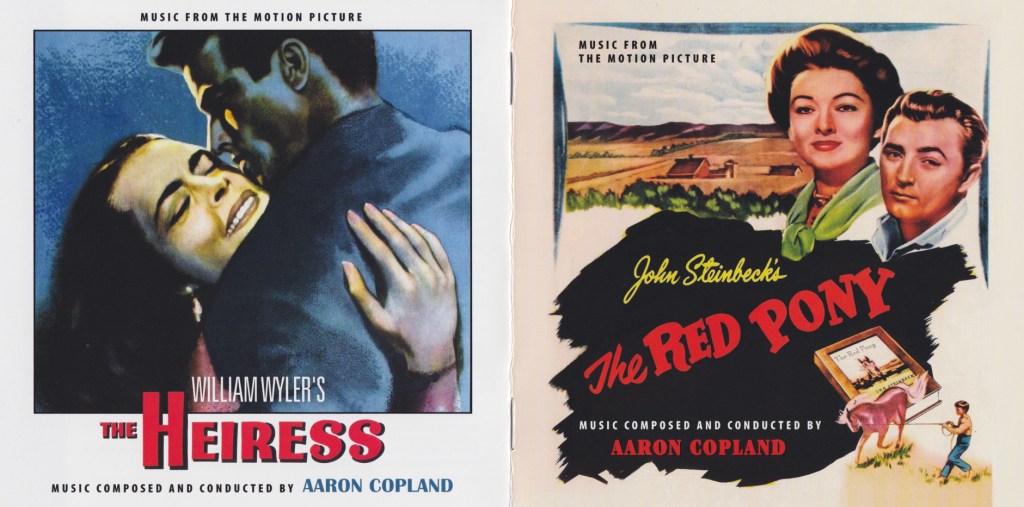
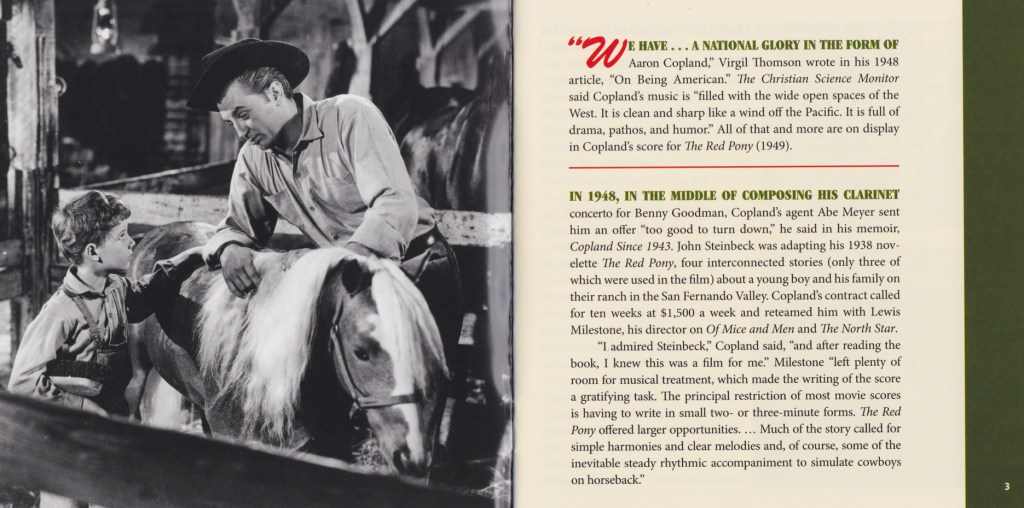
In this latest release, Intrada presents two scores by the quintessential Americana composer Aaron Copland, featuring the original tracks from The Red Pony and The Heiress in part of Paramount’s ongoing restoration series. In 1948, while composing his clarinet concerto for Benny Goodman, Copland was asked if he’d be interesting in scoring John Steinbeck’s adaptation of his 1938 novelette The Red Pony, about a young boy and his family on their ranch in the San Fernando Valley.
“I admired Steinbeck and after reading the book, I knew this was a film for me. The principal restriction of most movie scores is having to write in small two- or three-minute forms. The Red Pony offered larger opportunities. … Much of the story called for simple harmonies and clear melodies and, of course, some of the inevitable steady rhythmic accompaniment to simulate cowboys on horseback,” noted Copland. One critic called out the score for being “excitingly fresh and stirring.”
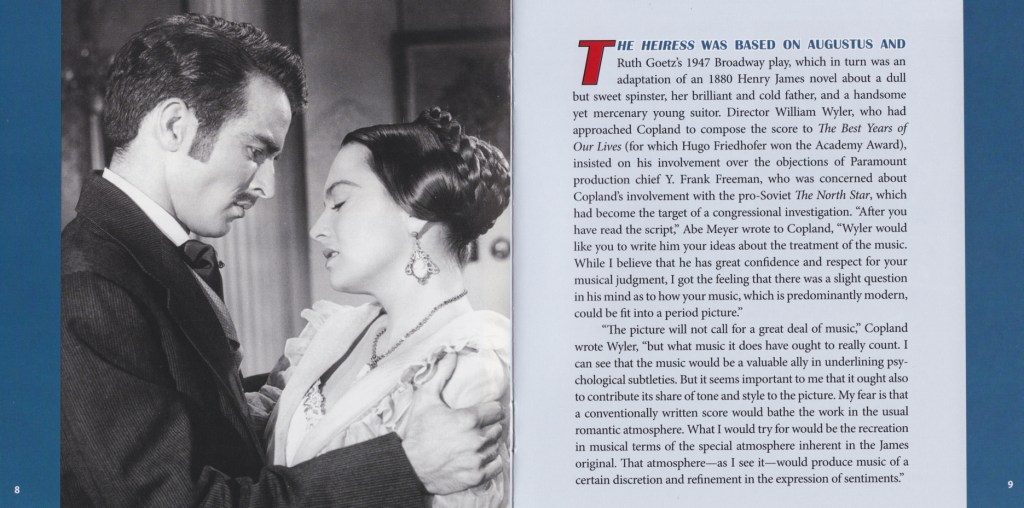
The second title featured on this release, The Heiress, was based on Augustus and Ruth Goetz’s 1947 Broadway play, which in turn was an adaptation of an 1880 Henry James novel about a dull but sweet spinster, her brilliant and cold father, and a handsome yet mercenary young suitor. Copland explained his approach in a memo to director William Wyler:
“The picture will not call for a great deal of music, but what music it does have ought to really count. I can see that the music would be a valuable ally in underlining psychological subtleties. My fear is that a conventionally written score would bathe the work in the usual romantic atmosphere. What I would try for would be the recreation in musical terms of the special atmosphere inherent in the James original.”
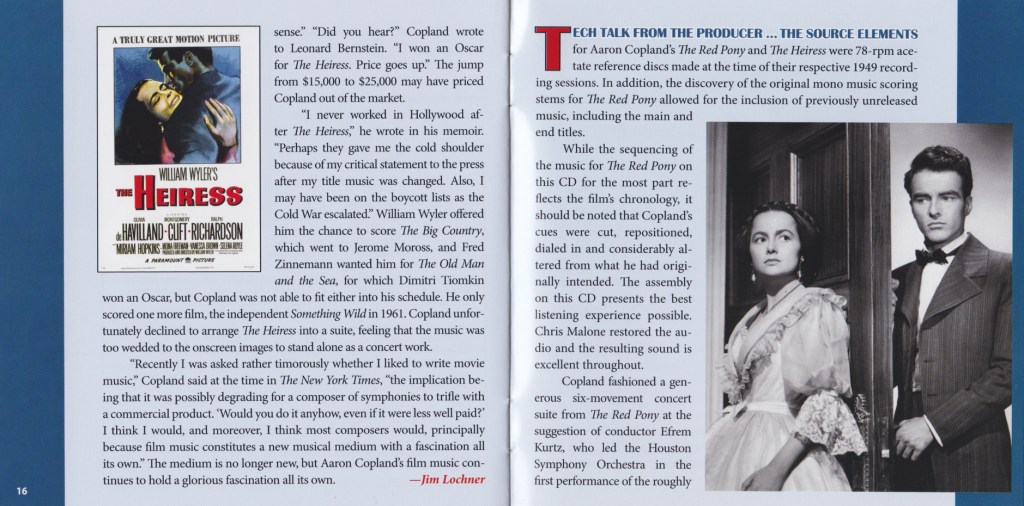
The source elements for both scores were 78-rpm acetate reference discs made at the time of their respective 1949 recording sessions. In addition, the discovery of the original mono music scoring stems for The Red Pony allowed for the inclusion of previously unreleased music, including the main and end titles all in superb sound. The acetate discs for The Heiress —unlike for The Red Pony —were, sadly, in very poor condition. Even with Chris Malone’s expert sonic restoration ability, the sound remains marginal at best, but still a significant, historic item to make commercially available.
The lack of understanding regarding unequal exchange and the consequences of high wages in the imperial core have severely hampered our movement. In this video, I aim to introduce these simple concepts and to help provide a guide to political context and action in light of this oft-neglected aspect of theory. So, here you have it. How rich countries rob the poor, and the failure of social democracy.
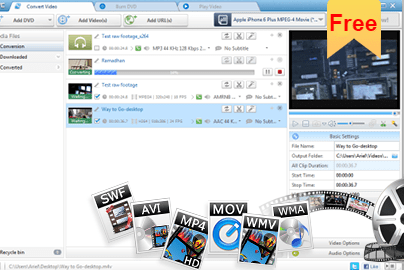
Any Video Converter is designed with no limitations and zero costs. It lets you effortlessly convert any video files to any format for FREE!
Supported video inputs: MP4, MPEG, VOB, WMV, 3GP, 3G2, MKV, MOD, M2TS, RMVB, AVI, MOV, FLV, F4V, DVR-MS, TOD, DV, MXF, OGG, WEBM, any 4K video format and more.
Supported video outputs: WMV, MPG, MP4, AVI, ASF, M2TS, 3GP, 3G2, FLV, MKV, SWF, WEBM, HTML5 WEBM, HTML5 OGG, HTML5 MP4 and more.
Supported output device: iPad Pro, iPad Air, iPad Mini, iPhone X, Apple TV, Google Android, Kindle Fire HD, Sony PS4, Xbox One, Samsung Galaxy S10, HTC, LG, Huawei and more.
Any Video Converter Freeware is also a free audio CD ripper and video to audio converter which can rip audio tracks from CDs, extract audio tracks, sound or background music from videos. What’s more, it supports converting audio files between different formats.
This Free Online Video Downloader lets you download videos & music from YouTube, Facebook, VEVO, Vimeo, SoundCloud, Dailymotion, Vimeo, Metacafe, Howcast, Niconico and other 100+ sites and convert videos & music to any format and burn them to DVD.
Tips: To record online videos or music, Any Video Converter Ultimate will do you a favor; To download Netflix movies and TV shows in HD MP4, you can try Netflix Video Downloader.
Choose DVD video NTSC Movie or PAL Movie according to your TV system. Or you can choose AVCHD 720P Movie(.m2ts) or AVCHD DVD 1080P Movie(.m2ts) according to your DVD Player.
With fast burning speed and high output quality, this free DVD creator lets you create a home DVD from any video for play on and standard DVD player or TV with ease!
Recommendation: To create DVD movies with customized DVD menu templates, you can turn to Any Video Converter Ultimate.
At an identical level of visual quality, HEVC enables video to be compressed to a file that is about half the size (or half the bit rate) of AVC.
When compressed to the same file size or bit rate as AVC, HEVC delivers significantly better visual quality.
Trim video clips, crop video, rotate video, join videos into one. Add subtitles, audio tracks, watermark, special effects. Edit video codecs, dimension, bitrate, frame rate, sample rate, channel, video/audio quality and more.
Twenty-five years ago today, every U.S. media outlet, along with then President Bush and the U.S. Congress were whipping up a full scale frenzied hysteria and attack against the Chinese government for what was described as the cold-blooded massacre of many thousands of non-violent “pro-democracy” students who had occupied Tiananmen Square for seven weeks.
The hysteria generated about the Tiananmen Square “massacre” was based on a fictitious narrative about what actually happened when the Chinese government finally cleared the square of protestors on June 4, 1989.
The demonization of China was highly effective. Nearly all sectors of U.S. society, including most of the “left,” accepted the imperialist presentation of what happened.