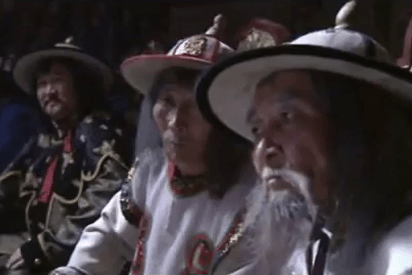
In the thirteenth century, Genghis Khan and his brutal heirs swept from the Asian Steppe as far as Eastern Europe, creating the largest land empire in world history. The empire existed between 1206 and 1405, eventually extending to thirty-three million square kilometres. At its peak, it contained an estimated population of over one hundred million.
Zemlyanoy Val in Moscow (Russian: Земляной вал) is a line of fortifications that existed on the site of the present Garden Ring from 1593 to 1830. It served as the boundary of Zemlyanoy Gorod and defended it from external attacks. It was first built from 1592 to 1593 under Feodor I of Russia and covered only the northern part of the city, without Zamoskvorechye. It represented an earthen rampart with a moat in front and wooden fortifications. The fortifications were burned by the Poles in 1611. It was renewed and elongated from 1638 to 1641. Under Alexis of Russia, it also defended Zamoskvorechye. Zemlyanoy Val was dismantled at the end of the 18th century on the orders of Zakhar Chernyshyov.
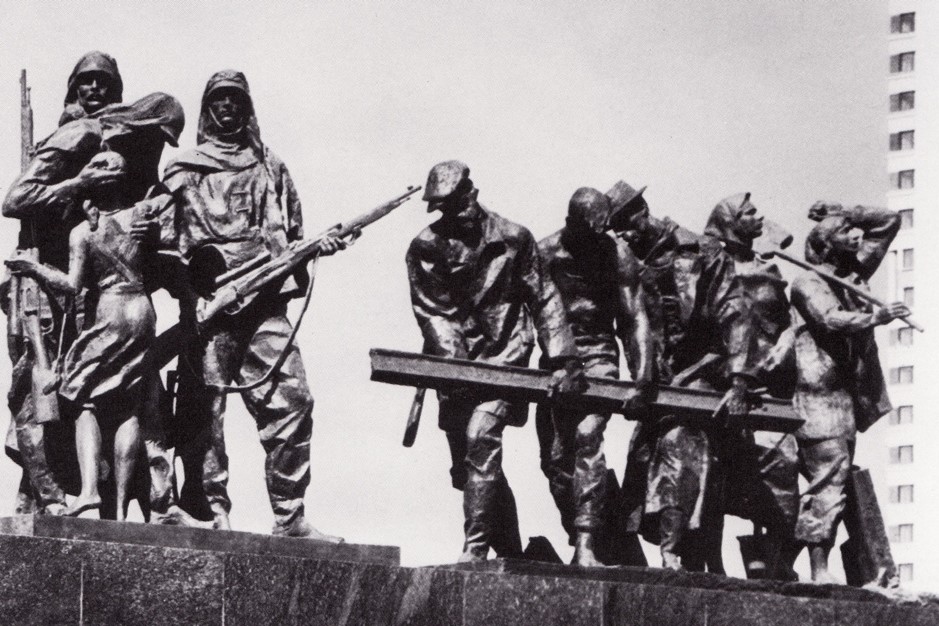
In 1958, Mikhail Anikushin became a Corresponding Member of the Academy of Arts of the USSR and four years later – Academician (1962). He was People’s Artist of the USSR (1963), and Hero of Socialist Labor (1977). Among his awards – the Lenin Prize (1958) and the RSFSR State Prize of Repin (1986). He was a member of the Communist party since 1944, and veteran of Great Patriotic War (1941-1945).
Born 19 September 1917 in Moscow, Anikushin grew up in a working class family. Meanwhile, the artist wrote: “I – the son of the Moscow parquet floor maker, a wonderful wizard Konstantin Anikushin. He made parquet floor for those who stay in the hotel “Moscow” in the capital. My elder brother – an engineer-surveyor Vladimir Anikushin participated in the discovery and creation of Karaganda industrial area. And I had to be on a par with them. All that I did, and what happiness I had – I am obliged to Great October. And what I haven’t done yet – I must do”. Anikushin studied at the Leningrad Institute of Painting, Sculpture and Architecture named after Ilya Repin from 1937 to 1947 with a break for the war years (1941-1945).
One of the most famous works of the sculptor is a monument to Russian poet Alexander Pushkin, opened in 1957 in the center of the park (sculptor Anikushin, architect VA Petrov). The sculpture – 4.1 m, with the pedestal 4.5 m. The monument made of bronze, tetrahedral pedestal of red polished granite, and the base – wrought granite. The sculptor portrayed Pushkin in a relaxed pose, as if the inspired poet reads his poems.
Maria Litovchenko (1917-2003), the wife of Mikhail Anikushin, was also a sculptor, Corresponding Member of the Russian Academy of Arts, and People’s Artist of the Russian Federation.
The memory of artist never fades. Thus, October 2, 2007 on the house where Anikushin lived (Sand Embankment, 16) appeared a memorial plaque. Also, there is Anikushin square, in honor of the sculptor (Kamennoostrovsky Avenue). In addition, there is Anikushinskaya alley, just in the park where his sculpture “Friendship” (“Dancing Girls”) stands. The alley runs from this square to Vyazemsky Lane, where he worked. Besides, one of the art schools in the city of Kronstadt bears the name of the sculptor. There is even Anikushin planet – a minor planet number 3358 discovered by Soviet astronomer Nikolai Stepanovich Chernykh in 1978.
From the autobiography of the sculptor: “I was born at the beginning of October 1917. Not Yet the Aurora volleys thundered, and not yet Winter and Smolny palaces became symbols. But in Russia reigned a revolutionary heat of passion, such depth of revolutionary consciousness, not previously known in the human world… There is a special meaning in the rank “the same age with October”. I did not choose it, but felt the high responsibility in front of people”.
I’m a little bit late with this one, by about fifteen years. My first dalliance with anime came in the mid-nineties during the Manga Video boom. This was also when I was seriously into cyberpunk, so titles like Akira, AD Police, Cyber City, Genocyber, and the original Ghost In The Shell movie were essential items on my video shelf. With that in mind, you’d think that I would have bought the original Dominion Tank Police, and New Dominion Tank Police quicker than you can blink. There were two reasons why I did not. First is VHS. You youngsters may not know this, but VHS takes up quite a bit of room. I had one shelf of anime, about 16 titles, and that was it, no more room at the inn. The second reason was that no one had invented the Internet. It’s easy now, if you want to know more about something, you just Google it. But back in 1995, after being blown away by the latest cyberpunk anime video, if I was interested in finding out more, it was seriously hard work. What I wouldn’t have given back then to have a handy resource to just type Masamune Shirow, Katsuhiro Otomo, or Yoshiaki Kawajiri in and see what else was available. Maybe instead of the Junk Boy, Urotsukidoji and Angel Cop videos that I still have, I would have bought shows like Appleseed, and Dominion Tank Police instead. Dominion Tank Police is available on DVD from ILC if you are interested, although the dub only discs put me right off (Manga dubs of the period are painful). The Region 1 release is deleted, although still available for ridiculous sums of money. Fortunately, there is plenty of the sequel, New Dominion Tank Police still to be had, courtesy of Manga Entertainment.
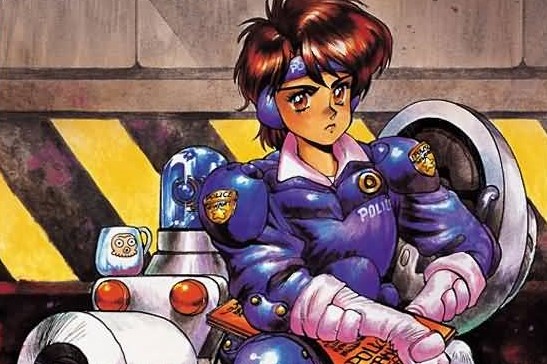
New Dominion Tank Police is set in the high rise, concrete and steel, neon metropolis of Newport City, a world populated by advanced cyborgs and androids and robots, where technology defines how society lives, works and plays, all set in the distant future of 2010. Hey! It seemed like the distant future back in 1995 when this show was made. At least there aren’t any flying cars. But there are tanks, plenty of tanks. In a world where crime and terrorism are rampant, the police need a little more firepower to accomplish their role of urban pacification. When rioters have RPGs, you’ll be glad of 2-inch thick titanium steel armour between you and the villain. The thing about tanks is though, that they aren’t exactly kind to the environment, and the Tank Police often wind up causing more damage than they prevent. It causes friction with the chief, and the city mayor, especially when Squad Leader Leona Ozaki and her specially modified mini-tank Bonaparte are often at the centre of the havoc. All six episodes of the OVA series are presented here on a dual layer disc from Manga Entertainment.
When Leona drives through a funeral of a top civic official, just to get to a fleeing criminal, she winds up wrecking a city block, being caught on camera, and has the Chief and the Mayor as an audience. The Tank Police is grounded, until Detective Higashinada can come in and audit them. It isn’t long before he’s suggesting new ways of doing things and rubbing people the wrong way, especially Leona who just finds him creepy. Then a new machine appears in Newport and starts wreaking havoc.
A woman fleeing through a car park is caught by a mysterious tattooed man, and murdered. The only witnesses are android catgirls Unipuma and Annapuma. The dead woman was Leona’s ex-partner Charon, and when she presses the chief to let her investigate, she winds up out of work. It isn’t going to stop her though, and she’s soon tracking the Puma sisters down to find out what they know. It leads her to the front door of the Dainippon Giken Research Corporation, and straight into trouble.
The Mayor has enacted a Clean up the City policy, which means getting all the weapons off the streets, and which means stopping a suspected arms shipment at the docks. That’s all forgotten though when a truck goes out of control on the highway, crushing several cars and even wrecking Bonaparte when Leona tries to stop it. The truck is on autopilot, loaded with explosives, and heading directly for the centre of the city. The Mayor orders the evacuation, but it may be too little too late. It falls to the Tank Police to avert disaster. And it’s a Dainippon Giken truck.
With the city shrouded in toxic smog, it’s the perfect cover for the android Puma sisters to steal Bonaparte, and with the smoky atmosphere and Leona’s malfunctioning alarm clock, the theft isn’t noticed until it’s too late. It all falls down to Dainippon Giken again, as with the Mayor’s anti-weapon policy, they are looking to other means to turn a profit, and one of their operatives actually chose Bonaparte in which to hide a valuable data disc. When Leona and her partner Al eventually track down their tank, they find a deal about to go sour.
It looks like the city is about to fall apart, when a raid engineers a mass breakout at the prison. The Tank Police are run ragged just trying to keep up, and meanwhile Dainippon executives use the mayhem to mask their own illegal activities. Leona has just managed to capture the Puma sisters, who were taking advantage of a bank raid to fill their own pockets, when the news comes in. Someone is going to assassinate the Mayor.
The Tank Police had tried to keep the Mayor’s survival secret, but the secret got out. Unsurprising, when you have a battalion guarding the city hospital. As the hostile takeover of Dainippon Giken Research gathers pace, it becomes part of the deal that the job be finished with regards to the Mayor. Another set of robots is unleashed. The Tank Police do their best to stop them, while Leona tracks down the hidden controller by tracking the radio connection. The trail leads to a foreign embassy, and Leona finds her hands tied by diplomacy.
It’s one of those 4:3 regular transfers that get the job done. With nearly three hours of animation on a dual-layer disc, you’d be forgiven for not expecting pin sharp definition and absolute clarity, and indeed New Dominion Tank Police is prone to compression artefacts. That said, it looks pretty good for its age, the image is sharp enough, and the animation comes across with vibrancy and energy.
It’s an old style cel animation so there’s not a lot of digital accuracy and perfection here. But the animation is excellent, fluid and expressive, while the character and especially the mecha designs come across well. The future city is a little generic, but once you’ve seen as many future metropolises as I have, they begin to blur into one.
You have a choice between DD 2.0 Japanese and DD 5.1 and 2.0 English. Pick Japanese, it’s far more easier on the ears. This anime comes from the old Manga Video days, when English language dubs were recorded in the UK, but for universal saleability, the characters were given American accents. It isn’t good, and admittedly there is some fun to be had with these old dubs, as they in no way let you take the show seriously. The dub also changes the essence of the show in some instances. There are scenes in the original Japanese that have just music playing over the action, and for dramatic effect, the dialogue and the sound effects drop out, this is immediately apparent in the opening sequence. The English dub puts the dialogue back in, which isn’t the original intent.
As for the subtitles, they aren’t the dreaded dubtitles; the opening theme gets its lyrics translated (while the English version uses an instrumental version). However, it does look as if they were taken from an early dub script, and by and large they do match with the English dialogue. The English audio does have the added dialogue mentioned before, though, and it is liberally laced with profanity that isn’t in the subtitles. The music works well with the theme of the show; indeed the opening track is memorable from a thousand Manga Video trailer reels.
Inside the Amaray case, you’ll find a mini-poster featuring the Puma sisters, as well as some information about the show on the reverse. On the disc, you’ll find a Manga Entertainment trailer reel, as well as the New Port City Tank Police Personnel & Weapons Files. 13 characters and two pieces of technology are looked at here, but you should leave reading them for after you have watched the disc, as there are plenty of spoilers for the episodes.
New Dominion Tank Police was a blast from the past, an anime from a bygone age, where the immediate aim was to appeal to as broad an audience as possible. That’s before Manga Video got their mitts on it and inserted a few choice swearwords into the dub to spice things up. So while New Dominion Tank Police has plenty of action and sci-fi at its core, it’s also played broadly for laughs, has some unexpected slapstick, a pair of sexy android catgirls, a little romance, some politics, corporate double dealing, and some stereotypical comedy sidekick characters. Compared to the modern diversity in anime, the story driven plots, careful characterisations, and reluctance to pander to audience sensibilities, it seems charmingly naïve.
It’s also a good deal of fun, certainly one of the stronger shows of the era, with high production values and no little thought put into its story. Of the three Masamune Shirow stories I have encountered, New Dominion Tank Police is the most accessible, lacking the esoteric philosophies of Ghost In The Shell, and presenting a future more immediately recognisable than that of Appleseed. Instead New Dominion Tank Police feels like what he did to relax after a hard day of slaving over ink and pad. It feels like a playground with all the same pieces of his other creations, cyborgs, androids, mecha, and metropolises, but one in which the main aim is to have fun.
New Dominion Tank Police is fast paced, action packed, entertaining silliness, the sort of thing that works just fine as post pub viewing. I must admit that it holds a special place in my heart simply for the nostalgia factor alone. It’s the sort of anime that I was weaned on back in the nineties, and although I never actually saw it then, it still feels like coming back to an old friend watching it now. It’s also a sign of how much the anime industry has changed. I recall the dub videotapes for sale in Forbidden Planet. Each half hour episode got its own tape, and the typical retail price was around £15. The whole series would have put you back £90. This single DVD collects all six episodes, adds a few extras and retails for the price of a single VHS tape back then. I got this disc on sale for £4. For that price, you may as well take a chance and buy it.
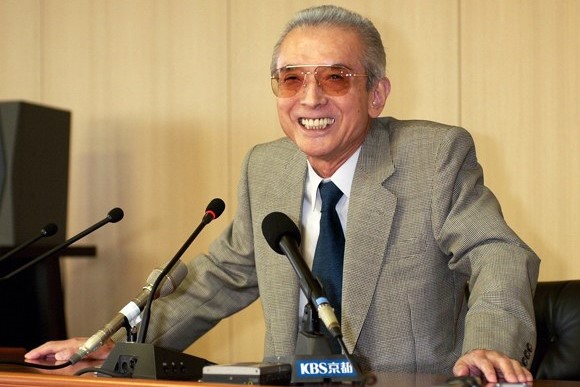
When Hiroshi Yamauchi dropped out of college in 1948, to replace his grandfather as the president of the Kyoto-based hanafuda playing-card manufacturer Nintendo Koppai, the company, founded in 1889, had seen only moderate success. By 1991, fourteen years after the company launched the plainly named “Color TV Game 6,” Nintendo had supplanted Toyota as Japan’s most successful company, earning around $1.5 million per year per employee; in the early nineteen-nineties, the company’s earnings exceeded that of all the American movie studios combined, consistently posting more than a billion dollars in pre-tax profits each year.
Beyond the numbers, Yamauchi, who died this week at the age of eighty-five, was both the architect and the savior of the video-game industry as we know it today. With the Nintendo Famicom—known outside Japan as the Nintendo Entertainment System—and the famed Nintendo Seal of Approval, which assured wary consumers that its games would be functionally sound (unlike many of those released during the Atari boom) and enjoyable, his company restored public trust in video games following the American market’s grim crash in the early nineteen-eighties.
Despite playing only a handful of his company’s products himself (he fumbled with the Famicom’s controller the first time he picked one up to play a digital version of Go, eventually passing it to a junior staff member in frustration), Yamauchi’s philosophy was that creativity, not technological advancement, was the key to the medium’s development. “We cannot guarantee interesting video games just through the use of better technology,” he once said. For Yamauchi and his lieutenants—including the Super Mario creator Shigeru Miyamoto, who was Profiled by Nick Paumgarten in the magazine, and the late Gunpei Yokoi, the designer of the Game Boy—eliciting the joy of discovery and surprise in a player was video gaming’s great purpose. In this way, Nintendo and its games have continued to redefine the way humans play for more than three decades.
Henk Rogers, the man who brought Tetris out of the Soviet Union and secured the rights for Nintendo, was one of only a handful of Westerners to befriend Yamauchi. The pair would regularly discuss the state of the industry over a game of Go; Yamauchi was a master player with the advanced rank of sixth dan. Rogers once likened his friend to the fictional mobster Don Corleone. “He was tough as nails and quick to reach a decision,” he said. “When he did, everybody fell in line. He was a difficult man to please. If you publicly disagreed with him, your days were numbered.”
Yamauchi’s reputation as a callous businessman was forged early on. After suffering a severe stroke, his grandfather, Sekiro Yamauchi, offered the twenty-one-year-old the presidency of Nintendo from his hospital bed. (Yamauchi’s father had left when Yamauchi was just five years old; unable to cope as a single parent, his mother, Kimi, gave her son up to her parents, putting him next in line to run the family business.) The young man agreed to quit his law degree on the condition that he be the only family member working at the company. Regretfully, Sekiro fired his grandson’s cousin, a longtime employee, and in 1949 Yamauchi was appointed the third president of Nintendo. Company employees, many of whom had worked at Nintendo for their entire careers, resented Yamauchi’s youth and inexperience. His first act was to fire these dissenters en masse.
While Nintendo had no direct links to organized crime, in those early years the company benefited from its patronage nevertheless. The yakuza operated high-stakes games with hanafuda cards in casino-like parlors. Professional players would begin each game with a fresh deck, greatly increasing demand for Nintendo’s product. In 1951, Yamauchi changed the name of the company to Nintendo Karuta—Nintendo Playing Cards. His first business breakthrough came in 1959, when he brokered a licensing arrangement with Walt Disney to print images of Mickey Mouse and other Disney characters on the backs of playing cards. With distribution to toy stores, Nintendo sold an unprecedented six hundred thousand packs of cards that year.
Eager to expand further, Yamauchi dropped “Karuta” from the company name and rebranded as Nintendo Company, Ltd. However, forays into selling instant rice and managing love hotels, which provide rooms at an hourly rate, typically for trysts, failed to meet his high expectations—though Yamauchi himself was reportedly one of the most reliable customers.
In the mid-nineteen-sixties, Yamauchi charged Gunpei Yokoi, a technician hired to maintain the hanafuda assembly-line machines, with designing a toy in time for Christmas. Yokoi, a keen amateur inventor, showed Yamauchi one of his latest creations, an extendable mechanical arm with a clasping hand on one end. Yamauchi immediately ordered production the Ultra Hand, Nintendo’s first toy, which sold over 1.2 million units. Yokoi established Nintendo’s first research-and-development group, dubbed simply “Games,” in a warehouse in the Kyoto suburb of Uji in 1969. More creative toys followed: the Ultra Machine, a mechanical ball pitcher; the Love Tester, a machine that measured the “current” between a hand-holding couple and offered a pseudo-scientific readout of their attraction; and a series of Beam Gun games, in which players shot beams of light at targets in an amusement arcade and watched as bottles appeared to explode.
Having experienced the commercial potential of games, and after watching the video-game market emerge in America in the late nineteen-seventies, Yamauchi negotiated a license to manufacture and sell the Magnavox Odyssey, one of the first American home-video-game systems, in Japan. Nintendo’s own systems, which played variations of Atari’s Pong, followed, but Yamauchi pressured his engineers to find a new way of designing games—ones not based around tennis. “We must look in different directions,” he said. “Throw away all your old ideas in order to come up with something new.” Yokoi had the solution: a pocket-calculator-sized series of handheld systems called Game & Watch, which each played a single game and could be mass-produced for a relative pittance. Introduced in 1980, Nintendo sold tens of millions of units over the game’s eleven-year lifespan.
Flushed with this success, Yamauchi turned his attention to a more substantial home console, one that could play multiple games via slot-in cartridges. In contrast to Atari’s 2600, with its wood-panelled face and black-plastic-rimmed hood that lifted up to reveal a panel of orange knobs and levers, Yamauchi wanted Nintendo’s console to look like a toy, so that it would appeal to the entire family—a family computer, he instructed: a Famicom. The heart of the machine, based on a Motorola 6502 chip derivative, was nothing unusual, though the system’s controllers, which were hardwired to the console, featured a unique cross-shaped directional pad whose design offered both elegance and functionality. (Three decades later, “d-pads” remain a staple of video-game controllers.)
The Famicom’s real innovation, however, was its business model. In May, 1983, Yamauchi addressed the Shoshin-kai, a Japanese wholesalers group, and told them that Famicom retailers should not expect to see large profits from system sales. His reasoning would change the gaming industry. “Forgo profits on the hardware,” he said. “It is just a tool to sell software. This is where we shall make our money.”
Nintendo’s new system launched on July 15, 1983, and sold for fourteen thousand eight hundred yen, around half the cost of its rivals. Within two months, the system had sold over half a million units. Within six, disaster struck: a faulty chip in the original manufacturing caused certain games to crash. Yamauchi, with typical flourish, recalled every system Nintendo had sold, missing a crucial sales window during the Japanese New Year holiday but protecting the company’s name as a consumer-centric manufacturer.
Yamauchi soon learned that software sold hardware, not vice versa, and appointed Shigeru Miyamoto, then a young artist and the designer of Nintendo’s first global arcade hit, Donkey Kong, to head a new game-design research group called R&D4. Yamauchi recognized that artists, not technicians, made the best games, and filled R&D4 with likeminded creative people. The internal-software division soon established itself as Nintendo’s most successful department, launching Mario Brothers and The Legend of Zelda, successes buoyed by Yokoi’s R&D1 group, which released similarly well-regarded titles such as Metroid, Kid Icarus, and Excitebike.
But success only seemed to isolate Yamauchi. “As I grew to know him more, he seemed to become more isolated, even from his own family,” said Rogers, who tried and failed to convince Yamauchi to attend his own granddaughter’s wedding a few years ago. Nevertheless, the elder statesman of video games maintained a laconic sense of humor. Rogers once shared a flight with Yamauchi on the airline Northwest. “I had no idea he was on the plane,” he recalls. “We met in an aisle when he was stretching his legs, and he complained to me about the service he’d received in first class. He called the airline ‘Northworst.’ ”
Yamauchi retired from his position as president of Nintendo in 2002, but his influence and philosophy continued to be keenly felt; he remained as the chairman of Nintendo’s American board of directors until 2005. He refused to draw a pension from the company, saying that Nintendo could put it to better use—as Japan’s thirteenth richest man, he had a net worth of $2.1 billion.
While Yamauchi maintained that being a non-player gave him an advantageous perspective on the industry, this assertion was only half true, perhaps to maintain the illusion that his business decisions came from his head, not from his heart. “After the release of Tetris on the Game Boy, I’m told he played the game extensively,” said Rogers. “He would call staff members, sometimes in the middle of the night, to ask them questions about the game.”
When Yamauchi left Nintendo entirely, in 2005, the company was a year away from launching Wii, the best-selling console of the so-called Last Generation of video-game hardware. Today, it’s in a somewhat precarious position: its latest console, the Wii-U, is underperforming, and in 2012 the company lost 36.4 billion yen ($366 million), its second consecutive annual loss. But the erstwhile president’s belief in the power of invention, of “throwing away your old ideas,” still characterizes the company’s products, which over the past decade have continued to sidestep the technological arms race that defines the products of its rivals, Sony and Microsoft, in favor of playfulness and novelty. It is a philosophy that, over seven decades, brought Yamauchi and the company he inherited a great deal of success, even if that playfulness, if it was ever within him, rarely made itself known from behind the carapace, one that seems to have been formed in childhood and tempered in business.
Seymour “Ratboy” Hersh has sold out. He has joined the ranks of the fake-left Vichy press personified by the likes of Amy Goodman, Jeremy Scahill and Chris Mathews.
Based on reports from unnamed “former administration officials”, he has crafted what is essentially a complete white-wash of the Obama administration’s involvement in the chemical weapons attack in Syria while simultaneously attempting to set a new “red-line” narrative for a regime change operation in Turkey, a country where the current ruling party just won 48% of the vote in regional elections. It just so happens that Turkey is moving away from E.U. membership. A country that the E.U. is demanding makes structural reforms to their economy and constitution in order to bring them more in line with the way the E.U. does business.
“The financial crisis, the global crisis, the Arab Spring and the events in Syria and Egypt show that the EU needs Turkey more than Turkey does the EU,” Prime Minister Recep Erdoğan, February 2014
After nearly eight months of talks, MEPs (Member of European Parliament) in the foreign affairs committee on Monday (3 March) voted on a resolution on Turkey’s progress towards EU accession.
The carefully scripted document, drafted by Dutch centre-right MEP Ria Oomen-Ruijten, describes Turkey as a “strategic partner” but also says it must initiate urgent reforms and promote political dialogue. EU Observer, April 3, 2014
I wonder what it cost to get Seymour Hersh to do an about face and start carrying water for the Obama administration under cover of his previous agitator reputation that had been well deserved up until this point, in my opinion.
The fact that he is clearly attempting to white-wash the Obama administration’s involvement in the chemical weapons attack in Syria is obvious. The fact that he’s attempting to finger Prime Minister Recep Erdoğan for that attack at a time when (as COINCIDENCE would have it) Turkey is gradually moving away from a partnership with the EU is less obvious but just as disingenuous.
“The foreign policy expert (unnamed source) told me that the account he heard originated with Donilon. (It was later corroborated by a former US official (another unnamed source), who learned of it from a senior Turkish diplomat.) According to the expert, Erdoğan had sought the meeting to demonstrate to Obama that the red line had been crossed, and had brought Fidan along to state the case. When Erdoğan tried to draw Fidan into the conversation, and Fidan began speaking, Obama cut him off and said: ‘We know.’ Erdoğan tried to bring Fidan in a second time, and Obama again cut him off and said: ‘We know.’ At that point, an exasperated Erdoğan said, ‘But your red line has been crossed!’ and, the expert told me, ‘Donilon said Erdoğan “fucking waved his finger at the president inside the White House”.’ Obama then pointed at Fidan and said: ‘We know what you’re doing with the radicals in Syria.’ (Donilon, who joined the Council on Foreign Relations last July, didn’t respond to questions about this story. The Turkish Foreign Ministry didn’t respond to questions about the dinner. A spokesperson for the National Security Council confirmed that the dinner took place and provided a photograph showing Obama, Kerry, Donilon, Erdoğan, Fidan and Davutoglu sitting at a table. ‘Beyond that,’ she said, ‘I’m not going to read out the details of their discussions.’)” Sy Hersh, April 6 2014
Seymour Hersh had an article published yesterday at the London Review of Books, The Red Line and the Rat Line, which utilizes a well established tactic of providing disinformation to the public dressed up with a little truth for credibility’s sake.
In this case, the disinformation is that the Obama administration and U.S. intelligence had nothing to do with the use of chemical weapons in Syria targeting civilians. The attack was committed in order to provide a false flag type event designed to provide Obama’s “red line” pretext to the Shock and Awe type attack they had been planning for months just prior to the event.
“Under White House pressure, the US attack plan evolved into ‘a monster strike’: two wings of B-52 bombers were shifted to airbases close to Syria, and navy submarines and ships equipped with Tomahawk missiles were deployed. ‘Every day the target list was getting longer,’ the former intelligence official told me. ‘The Pentagon planners said we can’t use only Tomahawks to strike at Syria’s missile sites because their warheads are buried too far below ground, so the two B-52 air wings with two-thousand pound bombs were assigned to the mission. Then we’ll need standby search-and-rescue teams to recover downed pilots and drones for target selection. It became huge.’ The new target list was meant to ‘completely eradicate any military capabilities Assad had’, the former intelligence official said. The core targets included electric power grids, oil and gas depots, all known logistic and weapons depots, all known command and control facilities, and all known military and intelligence buildings.” Sy Hersh, April 6 2014
The little truth that Hersh dresses his disinfo up with is that the CIA consulate in Benghazi had one purpose and one purpose only and that was to ship weapons via a “rat line” into Syria, to those very same terrorists we are now talking about arming with “manpads” (shoulder launched heat seeking rockets which the terrorists will undoubtedly use on civilian aircrafts). Those same terrorists who have been backed by the Obama administration since we started the destabilization campaign three years ago. Those same terrorists visited by high ranking U.S. officials. Those same terrorists who used sarin gas on a civilian population so that Obama could attempt to justify another Iraq styled Shock and Awe in Syria.
‘The consulate’s only mission was to provide cover for the moving of arms,’ the former intelligence official (yet another unnamed source), who has read the annex, said. ‘It had no real political role.’ Sy Hersh, April 6 2014
Of course the CIA has a political role in countries that they destabilize and neoliberalize on behalf of the masters of the universe. That’s the whole point of the CIA. This statement, as regurgitated by Ratboy Hersh, would be laughable coming from any CNN hack. From Hersh, it’s damn near tragic.
Hersh goes on to suggest that after the Benghazi attack, the U.S. inexplicably, gave up on the “rat line”, shipping illegal weapons to our terrorist destabilization campaign in Syria. This of course absolves President Peace Prize of any culpability in the chemical weapons false flag attack.
Washington abruptly ended the CIA’s role in the transfer of arms from Libya after the attack on the consulate, but the rat line kept going. ‘The United States was no longer in control of what the Turks were relaying to the jihadists,’ the former intelligence official said. Within weeks, as many as forty portable surface-to-air missile launchers, commonly known as manpads, were in the hands of Syrian rebels. Sy Hersh, April 6 2014
With the narrative set and “Terror Tuesday” Obama absolved of all sin, Ratboy goes in for the kill; it’s all Erdoğan’s fault.
By the end of 2012, it was believed throughout the American intelligence community that the rebels were losing the war. ‘Erdoğan was pissed,’ the former intelligence official said, ‘and felt he was left hanging on the vine. It was his money and the cut-off was seen as a betrayal.’ In spring 2013 US intelligence learned that the Turkish government – through elements of the MIT, its national intelligence agency, and the Gendarmerie, a militarised law-enforcement organisation – was working directly with al-Nusra and its allies to develop a chemical warfare capability. ‘The MIT was running the political liaison with the rebels, and the Gendarmerie handled military logistics, on-the-scene advice and training – including training in chemical warfare,’ the former intelligence official said. ‘Stepping up Turkey’s role in spring 2013 was seen as the key to its problems there. Erdoğan knew that if he stopped his support of the jihadists it would be all over. The Saudis could not support the war because of logistics – the distances involved and the difficulty of moving weapons and supplies. Erdoğan’s hope was to instigate an event that would force the US to cross the red line. But Obama didn’t respond in March and April.’ Sy Hersh, April 6 2014
Notice how Ratboy also clears the Saudis with the same brush-stroke of disinfo provided by yet another unnamed “former intelligence official”.
Mr. Hersh’s effort includes a rather stark and unapologetic review of the purpose behind the CIA consulate in Banghazi without really delving into the particulars of how and more importantly, why, it was attacked. This is supposed to show that Mr. Hersh is being completely forthcoming in his article with the facts, even the painful ones, regarding the Obama administration’s destabilization campaign in Syria.
But that information, that the Benghazi office’s sole purpose was to transfer undocumented weapons to our mercenary terrorists in Syria, was already well established even if it isn’t entirely true (when we neoliberalize a nation via violent means, many times our CIA has to have a presence on the ground helping the illegal regime round up any dissidents or business and political opposition leaders who might make our “structural reforms” more difficult. Assassinations, black-bag ops, disappearances, all of these nifty little “democratic” tricks are part of bringing “stability” to the region and more than likely the Benghazi hub was more than simply a way station for black market weapons being shipped into the next targeted nation.)
So Mr. Hersh wasn’t really offering up any new incriminating evidence.
What he did offer up was a rather unique version of the story of the Syrian chemical weapons false flag attack that completely absolves the Obama administration and even makes the case that the reason they backed off of their plans to Shock and Awe the country back to the stone ages like Bush did to Iraq on similar false claims, was because they came to realize in the nick of time, that it was Erdoğan who was responsible and not Assad.
According to Mr. Hersh, once the Brits discovered that the chemical make-up of the Sarin gas didn’t fit Syria’s they informed the U.S. and steps were taken to stop the brutal Shock and Awe plan of attack, which Mr. Hersh also takes pains to assert would ONLY have targeted military infrastructure.
Ratboy Hersh fails to mention the fact that the same thing was said about Shock and Awe Iraq and Libya while tens of thousands of civilians died. Millions suffered in the aftermath of being “bombed back into the stone ages” due to false claims of WMDs and attacks on their own civilian populations which never happened.
Hersh’s effort is part on an ongoing campaign to destabilize Turkey and make it ready for a regime change operation on behalf of the European Union. Hersh, of course, fails to mention any of the context of that developing story in his blatant propaganda piece.
A month ago, at a time right after Erdoğan openly expressed his disgust with the E.U. in a public statement, suddenly a recording surfaced which purported to prove he had planned a false flag event in Syria. Ratboy did make mention of that recording in the second to the last paragraph of his Judith Milleresque “news” report:
Turkey’s willingness to manipulate events in Syria to its own purposes seemed to be demonstrated late last month, a few days before a round of local elections, when a recording, allegedly of Erdoğan and his associates, was posted to YouTube. It included discussion of a false-flag operation that would justify an incursion by the Turkish military in Syria. Sy Hersh, April 6 2014
“Turkey’s willingness to manipulate events in Syria”? Are you kidding me? Did Turkey spend $5 billion manipulating events in Syria like the U.S. did?
A key clue into Ratboy’s inclination and his lack of intellectual honesty regarding the Syrian destabilization campaign being run by the Obama administration is found in the very last paragraph. It makes it clear that Mr. Sy Hersh can now be afforded the same credibility as Scaghill and Goodman:
Barring a major change in policy by Obama, Turkey’s meddling in the Syrian civil war is likely to go on. ‘I asked my colleagues if there was any way to stop Erdoğan’s continued support for the rebels, especially now that it’s going so wrong,’ the former intelligence official told me. ‘The answer was: “We’re screwed.” Sy Hersh, April 6 2014
While apparently calling for some kind of military intervention, either in Syria or Turkey, Ratboy refers to the destabilization campaign in Syria as a ‘civil war”
It is anything but a civil war. It is a terrorist destabilization effort funded by the U.S. and Saudis, armed by nearly every complicit nation and NGO there is and staffed by a collection of mercenary thugs rounded up by intelligence agencies from the CIA to MI6.
Sy Hersh is certainly aware of that fact. Whomever the creature is who wrote this disinformation screed, he certainly isn’t the old Sy Hersh we came to respect over the decades. It reads like it was written by someone else, full of undisclosed sources and administration talking points.
It’s a sad day in the ever shrinking world of legitimate journalism when Ratboy Hersh starts running regime change propaganda as if it were news while giving the real terrorists a pass.
The Battle of Verdun through June 1916, with a brief look at the civilian life in France at the time.
The Great War is a 26-episode documentary series from 1964 on the First World War. The documentary was a co-production of the Imperial War Museum, the British Broadcasting Corporation, the Canadian Broadcasting Corporation and the Australian Broadcasting Commission. The narrator was Michael Redgrave, with readings by Marius Goring, Ralph Richardson, Cyril Luckham, Sebastian Shaw and Emlyn Williams. Each episode is c. 40 minutes long.