


In recent months US President Trump has pointed repeatedly to his role in making the American economy the “best ever.” But behind the extreme highs of the stock market and the official government unemployment data, the US economy is primed for a 1929-style shock, a financial Tsunami that is more influenced by independent Fed actions than by anything that the White House has done since January 2017. At this point the parallels between one-time Republican President Herbert Hoover who presided over the great stock crash and economic depression that was created then by the Fed policies, and Trump in 2019 are looking ominously similar. It underscores that the real power lies with those who control our money, not elected politicians .
Despite proclamations to the contrary, the true state of the US economy is getting more precarious by the day. The Fed policies of Quantitative Easing and Zero Interest Rate Policy (ZIRP) implemented after the 2008 crash, contrary to claims, did little to directly rebuild the real US economy. Instead it funneled trillions to the very banks responsible for the 2007-8 real estate bubble. That “cheap money” in turn flowed to speculative high-return investment around the world. It created speculative bubbles in emerging market debt in countries like Turkey, Argentina, Brazil and even China. It created huge investment in high-risk debt, so called junk bonds, in the US corporate sector in areas like shale oil ventures or companies like Tesla. The Trump campaign promise of rebuilding America’s decaying infrastructure has gone nowhere and a divided Congress is not about to unite for the good of the nation at this point. The real indicator of the health of the real economy where real people struggle to make ends meet lies in the record levels of debt.
Today, fully a decade after the unprecedented actions of three presidents, the US economy is deeper in debt than ever in its history. And debt is controlled by interest rates, interest rates ultimately in the hands of the Fed. Let’s look at some signs of serious trouble which could easily put the economy in a severe recession by this time in 2020.
Ford Motor, GE
On September 25 the corporate bond debt of Ford Motor Co., who unlike GM refused government nationalization in 2008, has just been downgraded to “junk” status by Moody’s, who said Ford faces “considerable operating and market challenges…” It affects $84 billion in company debt.
Junk rating means than most insurance companies or pension funds are banned from holding the risky debt and must sell. Before Moody’s rated Ford bonds at the lowest just prior to junk, BBB. The problem is that over a decade of Fed low interest rates, corporations have taken greater debt risks than ever, and the share of BBB-rated or “at risk of junk” bonds today has risen to more than 50% of all US corporate bonds outstanding. At the start of the crisis in 2008 BBB-rated bonds were only a third of the total. That amounts to more than $3 trillion of corporate debt at risk of downgrade to junk should the economy worsen, up from only $800 billion a decade ago. Ten years of unprecedented ultra-low fed interest rates are responsible. Moody’s estimates that at least 47 other multi-billion US corporations are vulnerable to junk downgrades in a sharp economic downturn or with rising interest rates. The most mentioned are the aerospace and electrical conglomerate GE which among other things makes jet engines for troubled Boeing.
Corporate debt in the USA today is a ticking time bomb, and the Fed controls the clock. Today total corporate debt exceeds $9 trillion, an all-time high, a rise of 40% or $2.5 trillion since 2008 according to the St. Louis Fed. With the ultra-low Fed interest rates since 2008, companies have doubled the debt outstanding but debt cost has risen only 40%. Now in recent months the Fed has been raising interest rates directly and indirectly via Quantitative Tightening. The most recent token .25% rate cut does little to change the grim outlook for the US bond market, the heart of the financial system.
Ford among other problems is being hit hard by the global downturn in the auto sector. In the USA car dealers have become so desperate to sell cars as consumers are choking on record levels of personal debt that they have recently offered 8-year car loans. For the past two years the Fed has been slowly ratcheting interest rates higher. The predictable result has been rising default on household debts, especially car loans. As of April, 2019 a record 7 million Americans were 90-days or more behind in car loans, some 6.5% of all auto loans. More than 107 million Americans have car loans today, up from 80 million in 2008 and an historic record. The rise in defaults parallels the Fed monetary tightening graph.
Both Ford and GM are announcing thousands of job layoffs as the economy slows and consumer debt reaches dangerous levels. Ford is cutting at least 5,000 jobs and GM 4,400 in US operations. Tens of thousands more layoffs are deemed likely in coming months if the economy worsens.
Then the private US Institute for Supply Management just reported that its index of manufacturing industry contracted to the weakest since June 2009, the depth of the economic crisis a decade ago. In the survey companies cited uncertainties related to the China trade war of Trump as the major factor behind depressed hiring and business activity. Trump then attacked the Fed for not moving fast enough to lower rates.
One indicator of the precarious state of the USA real manufacturing economy is the deepening recession this year in the trucking industry, the sector that moves goods through the country. In September 4,200 truck drivers lost their jobs as freight rates plunged owing to lack of goods traffic. In the first six months of 2019 around 640 trucking companies went bankrupt, three times the number a year before when Fed rate impacts were still low and trade war consequences far less clear. In June trucking loads were down more than 50% in June compared with June 2018 in the trucking spot market. Rates also dipped by as much as 18.5% over that same period.
The volume of freight shipped by all modes in the US has been sinking dramatically. Freight shipments within the US by truck, rail, air, and barge fell 5.9% in July 2019, compared to July 2018, the eighth month in a row of year-over-year declines, according to the Cass Freight Index for Shipments, which excludes bulk commodities such as grains. This decline, along with the 6.0% drop in May, were the steepest year-over-year declines in freight shipments since the Financial Crisis of 2008.
Dodgy Home Loans?
Far from realizing the lessons of the US sub-prime housing debt crisis leading to the global crisis of 2007-2008, the banks have quietly moved back into making dodgy loans. Moreover, the two quasi-government mortgage lending guarantee agencies, Fannie Mae and Freddie Mac are in worse shape than during the 2007 sub-prime real estate crisis.
Nonetheless in March, 2019 the President signed a Memorandum calling for steps to end the ten-year Government conservatorship of the two agencies. However, as several officials recently testified, “The U.S. housing finance system is…Worse off today than it was on the cusp of the 2008 financial crisis.” That, despite $190 billion of taxpayer bailout to the two agencies. By a Congressional directive Fannie Mae and Freddie Mac are allowed to hold a loss buffer capital reserve of combined $6 billion. However they own or guarantee almost $5 trillion in mortgage securities. Many of those mortgages are of dubious or dodgy credit quality like before 2007, as banks look for higher interest rate yields. If the overall economy worsens in the coming year in the run-up to November 2020 elections, home mortgage defaults could soar. It has been estimated that
“if just 0.12% of Fannie and Freddie’s mortgages go bad (about one-tenth of 1%), it would wipe them out completely. They’d have no capital left. And without a government bailout, they might cease to exist altogether. That could quickly lead to a new mortgage loan crisis.”
The key to the US economy is debt and debt is at an all-time high for US Government, whose deficit is rising annually at more than $1 trillion, for corporations with record debt and for private households where home mortgage debt, student loan debt and car loan debt all are at record high levels. Student loan debt reached $1.46 trillion by January 2019, with serious delinquency rates much higher than any other debt type. Mortgage debt accounted for $9.12 trillion. Total private household debt was a record $13.5 trillion. If we add to this precarious economic debt the situation in American agriculture where farmers face the worst crisis since the early 1980’s, it is clear that the economic miracle of the Trump era is far from stable.
To wit, one of the most noted features of recent US economic growth, the US shale oil recovery of 2018 that made America the world’s largest oil producer, has all but flattened out this year as world oil prices fall sharply. The fall is threatening many US shale oil producers many of whom borrowed by issuing blow investment of high interest yield junk bonds in hopes of a recovery from the price collapse after 2014. Even an attack on Saudi oil infrastructure and threats of war in Iran and Venezuela have not stopped the price slide in oil in recent weeks. If oil prices continue to fall below $55 a barrel a new wave of bankruptcies and closings in the US energy sector will follow, most likely in 2020 just in time for the US elections.
From 1927 to 1929 the Fed deliberately created then burst a stock bubble using interest rates. Republican President Hoover signed the Smoot-Hawley Tariff act in 1930 to defend American industry, resulting in a trade war that was blamed along with Hoover for the Great Depression that was brought on by an economy bloated with debt and easy money during the Roarin’ Twenties boom. Hoover was blamed and lost re-election to Democrat FDR with his New Deal. Behind all were the actions of the Federal Reserve, the real power. Soon it will be clear if 2020 will be a modern era repeat of the Hoover script, this time with a Democrat whose “New Deal” will likely be green.
F. William Engdahl is strategic risk consultant and lecturer, he holds a degree in politics from Princeton University and is a best-selling author on oil and geopolitics, exclusively for the online magazine “New Eastern Outlook”
Marty (Michael J. Fox) travels back to 1885 and finds himself in the middle of a tribe of Indians on the warpath.
The final installment in the Back to the Future trilogy picks up where the second film left off, but it casts off the dizzying time travel of the first two films for mostly routine comedy set in the Old West. Marty McFly (Michael J. Fox) receives a 70-year-old letter from his inventor friend, Doc Brown (Christopher Lloyd), who tells Marty that he has retreated a century in time to live out a relatively quiet life in the Old West. Doc Brown reveals that he hid his DeLorean car/time machine in an abandoned mine outside town, and when Marty does some research and discovers that the Doc died shortly after writing the letter, he decides to find the car, travel back in time, and warn the Doc about his demise. Meanwhile, the Doc, who has fallen in love with a local woman (Mary Steenburgen), realizes he can’t hide in the past from the problems he has caused to the time flow in the previous two adventures. He reluctantly decides to return to the present with Marty, but first, they have to find a way to get the DeLorean up to time-travel velocity with a broken fuel line and no gasoline.
Olivia de Havilland, in full Dame Olivia Mary de Havilland, (born July 1, 1916, Tokyo, Japan), American motion-picture actress remembered for the lovely and gentle ingenues of her early career as well as for the later, more-substantial roles she fought to secure.
The daughter of a British patent attorney, de Havilland and her younger sister, Joan Fontaine, moved to California in 1919 with their mother, an actress. While attending school, de Havilland was chosen from the cast of a local California production of A Midsummer Night’s Dream to play Hermia in a 1935 Warner Brothers film version of that play. As the sweet-tempered beauty to Errol Flynn’s gallant swain, she appeared in many costume adventure movies of the 1930s and ’40s, including Captain Blood (1935), The Charge of the Light Brigade (1936), The Adventures of Robin Hood (1938), and They Died with Their Boots On (1941). She also played romantic leading roles in Strawberry Blonde (1941), Hold Back the Dawn (1941), and The Male Animal (1942) and portrayed Melanie Wilkes in Gone with the Wind (1939).
In 1945 de Havilland won a precedent-setting case against Warner Brothers, which released her from a six-month penalty obligation appended by the studio to her seven-year contract. Free to take more-challenging roles, she gave Academy Award-winning performances in To Each His Own (1946) and The Heiress (1949). She also gave a superb performance in The Snake Pit (1948). De Havilland moved to France in 1955 and worked infrequently in films after that, most memorably in The Light in the Piazza (1962), Lady in a Cage (1964), and Hush…Hush, Sweet Charlotte (1964). She also appeared in a number of television plays.
In 2017 de Havilland was portrayed in the FX television series Feud: Bette and Joan, about the rivalry between Bette Davis and Joan Crawford, the former of whom was a close friend. Later that year she sued FX and the production company, alleging that they had misappropriated her “name, likeness and identity without her permission and used them falsely in order to exploit their own commercial interests.” A California appellate court dismissed the lawsuit in 2018, and she appealed that decision to the U.S. Supreme Court, which declined to hear the case.
De Havilland was the recipient of numerous honours. She received the American National Medal of Arts in 2008, and two years later she was made a chevalier of the Legion of Honour in France, where she lived. In 2017, shortly before her 101st birthday, she was made Dame Commander of the Order of the British Empire (DBE).


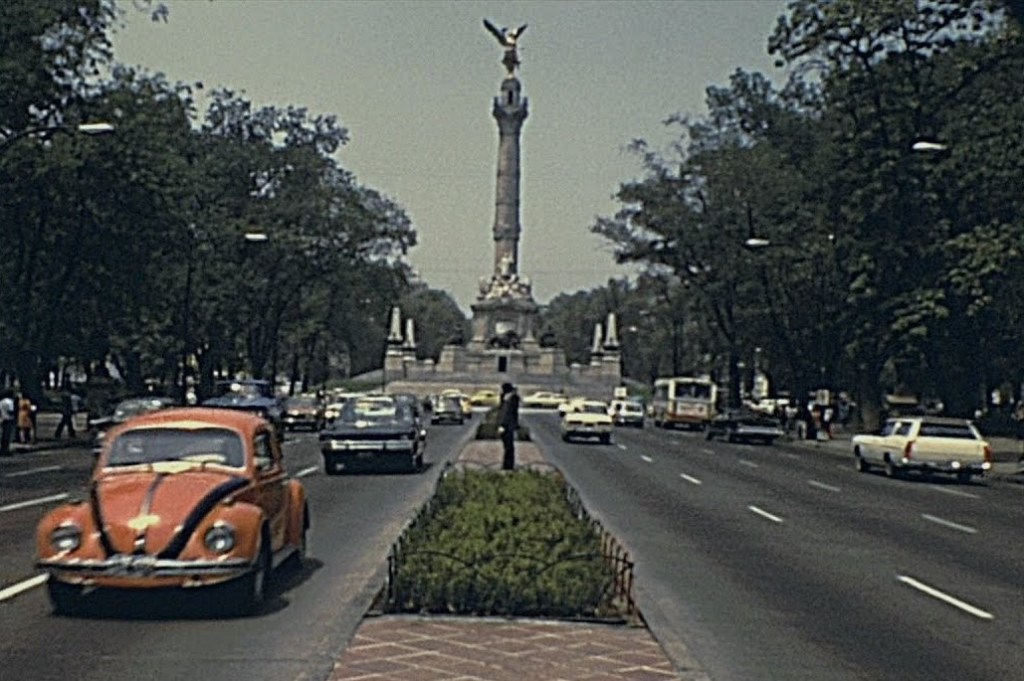
Martin Needler’s article on “Politics and National Character: the Case of Mexico” (1971) is perfectly correct as far as it goes, but it must be pointed out that the personality traits which he identifies as Mexican are products of a considerably wider and much older cultural entity. Mexico is a peripheral and very distinctive example of the Latin American cultural area which is itself a peripheral and somewhat distinctive example of the Mediterranean cultural area. Some time ago I identified the whole cultural area and the personality structure it tended to produce as aspects of “the Pakistani-Peruvian Axis” (1966:1112-1122, reprinted as 1968:452-463). If I am correct in this, Needler is parochial in attributing “Mexican national character” to a combination of “the Indian’s fatalism and the proud self-assertion of the Spaniard” (Needler 1971:757).
A broader view of this subject would show that Mexico is a peripheral example of the “Pakistani-Peruvian cultural area” and that Mexican national character is merely a local variant of the personality structure of this larger area. That is why Silverman’s picture of south Italian personality is so similar to Needler’s idea of Mexican character (Silverman 1968).
This Mediterranean personality type is marked by various traits mentioned by Needler: low self-esteem, fatalism, defeatism, distrust of all persons outside a narrow kin group, pessimism, preoccupation with death, self-assertion, and machismo. These traits, however, should be associated in clusters and correlated with other cultural manifestations such as: (1) low respect for manual work, especially for agricultural work; (2) higher esteem for urban residence than for rural living, associated with neglect of the countryside, damage to natural vegetation, and much cruelty to animals, especially to domestic animals; (3) emphasis on honor, both personal and family, as a chief aim of life; (4) dietary customs which mix protein and vegetables within a nest or container of starch, on the same plate and in the same mouthful, unlike the core of Western civilization, which tends to segregate these three kinds of food, on the same plate or even into separate dishes. The personality traits of this larger area tend to cluster about two points: (1) The restriction of personal trust and loyalty within the kinship group (usually the extended or nuclear family) with a consequent inability to offer loyalty, trust, or personal identification to residential groups (villages, neighborhoods, parishes), voluntary associations, religious beliefs, or the secular state, resulting in large-scale lack of “public spirit,” combined with “corruption,” and paralysis of these other kinds of associations. (2) The combination of powerful patriarchal social tendencies with female inferiority (except as a mechanism for producing sons) leads to many psychological ambiguities: strong emphasis on female premarital virginity (both as a symbol of family honor and as an economic good), segregation of the sexes in social life, fear of women as a threat men’s virility (witches and belief in “the evil eye”), the need to demonstrate male virility by social “touchiness” and other behavior, including fantasies of demonstrations of male dominance over bulls, other men, and unattached women.
In the last generation or two, we have had numerous local studies of the culture-and-personality type dealing with portions of this wide area (Pitt-Rivers and Kenny on Spain; Banfield, Moss, Cancian, Silverman, and others on Italy; Campbell, Kavadias, Kanelli. and others on Greece; and numerous studies of the Near East or North Africa). Many of these consider the personality types they observe as consequences of local conditions of economic, national, religious, or historic origin. A few have seen the wider range of what they observe. Thus Balikci (1966:164) wrote, “Behind obvious cultural differences, many Mediterranean societies share certain basic cultural patterns… [with] basic cross-cultural similarities in regard to sex behavior, certain family roles, the position of the family in society, and the dichotomy of kinsmen and strangers.” Opler (1970:866) recognizes both the areal spread and the deep historical roots of these traits when he writes, “The Southern Italian family is in great measure understood if one considers it as a peasant society, as a circum-Mediterranean type, as one influenced by Roman history or even by the earlier pagan Classic Greek, or later Hellenistic traditions.”
What I wish to emphasize is that this personality structure is geographically wider than the Mediterranean, since it extends to Latin America, and is the consequence of historical experience going back even earlier than the ancient Greeks. There are works (Peristiany 1966) which see some of the geographic range, but from both points of view, the most suggestive work is Raphael Patai’s Golden River to Golden Road (1962), whose original title (now abandoned in a 1971 edition) shows that his attention extends from Rio de Oro to Samarkand.
The Pakistani-Peruvian axis does not now demark the area of a functioning society or civilization. This is one of the chief keys to its personality types. It is now largely an area of debris of traits and peoples surviving from the wreckage of deceased civilizations. The existing traits have historical origins covering thousands of years. For example, the diet, sexual symbolism of bull and “eye,” architecture, and other traits come from the archaic cultures before 600 B.C., including Minoan Crete; the urbanism and low esteem for manual labor derive from Classical Mediterranean society; while the emphasis on honor, female inferiority, and kinship groups flow from pastoral invaders, both from the northern grasslands (Indo-European) and the southern grasslands (Semites).
Other traits, such as fatalism, distrust of strangers, cynicism toward the state or the local community, come from the difficulties of farming in the Mediterranean environment or from Mediterranean history. Historically the Mediterranean has passed through three distinct experiences: (1) as a frontier area of cultural diffusion from Western Asia during the Archaic period (4500-600 B.C.); (2) as the central backbone of Mediterranean civilization in the Classical period (600 B.C.-A.D. 600), and (3) as a boundary conflict area between the three post-Classical civilizations (Byzantine, Western, and Islamic) since A.D. 600. The shift from the second to the third of these was so disruptive of community life in the area from the Golden River to the Golden Road that its problems have not been solved since, especially in view of the social and ethical failures of the two post-Classical religions, Christianity and Islam, on either side of the line from Tangier to Batum. These failures of religion, whose consequences were clearly seen by Christ and Mohomet, made it impossible to create any religious, territorial, or social community, and forced living patterns back toward the “amoral familism” of the extended family. In extreme cases this broke down further to amoral nuclear familism or even to amoral individualism. This basic outlook and personality type was given a distinctive twist in the Iberian peninsula, from Saracen and anti-lslamic influences. The export of this distinctive type to America and the changes made in it by the shattering of American Indian cultures gives us the distinctive Latin American personality patterns which Needler (1971) sees as “Mexican national character.” These patterns have been modified in various circumstances by the “culture of poverty ,” by modem industrialism and nationalism, by various nineteenth century ideologies such as Marxism, and by other influences, but the basic Pakistani-Peruvian outlook is still identifiable. What is distinctly Mexican, and potentially revolutionary, is the new political ideology which Needler reports thus: “the cynicism and alienation of Mexican respondents. . . did not extend to two elements of the political system: the president himself and the idea of the Mexican Revolution” (1971:760). Any discussion of Mexican national character should recognize the revolutionary implications of these exceptions and the remote sources of the other aspects of Mexican personality.
Silverman, who has a good appreciation of this Pakistani-Peruvian cultural area, has also glimpsed the nature of its northern boundary. This boundary, which roughly follows the lines of the Highland Zone of the Old World, is marked by the southern limits of the archaic peasant cultures, in which rural life was valued higher than urbanism, the land was loved (as a female entity), pride in skillful tillage was evident, fertility was prized over virility, and the cow was more valuable than the bull (whose usefulness was increased by castration). In this peasant culture the southern concept of honor was non-existent, female virginity or chastity were considered unnatural, pre-marital sexual relations were practiced (often condoned by a betrothal ceremony), and marriage often followed pregnancy, rather than preceding coition as in the south. This peasant culture accepted a female centered house-hold and tended to revere local, semi-pagan, female saints (or Mary seen as a Mother rather than as a Virgin) instead of the rather war-like male saints popular farther south. Above all, in the north the basic social units were territorial (villages or parishes), not kinship groups, and functioned as communities.
Studies of these distinctions are frustrated today by academic specialization, both areal and chronological, so that students attribute cause to whatever social feature strikes them as significant. This includes ethos (Banfield 1958), agricultural organization (Silverman 1968), transhumance pastoralism (Campbell 1964), Bedouin Arabism (Carmichael 1967), urbanism (Pitkin 1963:123.129), social hopelessness (Cancian 1961), and many others. A comparison of the similarities of values and personality between a rural pastoral people like the Saracatsan (Campbell 1964) and a modern, professional, urban Greek family (Kanelli 1963) will show the need to seek explanation on a wider and deeper areal and historical foundation.
This foundation must be a historical-cultural framework similar to that used in historical geology, so that local outcroppings of earlier cultural strata can be identified and coordinated. I gave a brief outline of such a framework for the Old World in 1961, but other historians have rather scorned any efforts at establishing a matrix of macro-history. Feeble efforts are now being made to remedy this lack in other disciplines, including anthropology and sociology, but these attempts will find almost insurmountable difficulties so long as historians do not do their part of the task.
An article by Carroll Quigley in the American Anthropologist, Volume 75, Number 1, February 1973.








The New York City of the 1970s looked very different from the gentrified metropolis we know today. The Bowery, now lined with luxury apartments, housed much of the city’s illicit activities, while drug dealers and prostitutes worked openly from Park Slope to Times Square.
Industrial decline, economic stagnation, and white flight led to the dramatic downturn for America’s largest city.
Gotham had an unprecedented fiscal crisis in 1975, and two years later the city descended into chaos after the power went out for 25 hours. New York City saw 1,814 homicides in 1980 — three times what we have today — while the population declined to just over 7 million from nearly 8 million a decade before.
At the same time, crack and heroin infested the city, driving the crime rate even higher.
Robert Stutman, a former special agent for the NYC DEA, told Frontline, “Crack literally changed the entire face of the city. Street violence had grown. Child abuse had grown hugely. Spousal abuse. I had a special crack violence file that I kept to convince the geniuses in Washington who kept telling me it wasn’t a problem.”
By 1990, the annual homicides in New York peaked at 2,245. The city lived in fear.
In 1976, 2,383 arrests were made for prostitution citywide. Of these, 1,165 were girls between the ages of 15 and 20.
There were an estimated 40,000 prostitutes in New York City in the ’70s, many with sad stories. This picture shows a hotel where a 15-year-old prostitute died in 1975.
Authorities were of little help. In this picture, Sydney Biddle Barrows, the “Mayflower Madam,” celebrates with champagne after pleading guilty to promoting prostitution in return for a $5,000 fine and no prison sentence.
During the ’70s, the New York City Planning Commission estimated the city had about 245 stores with “adult uses,” like adult movie theaters, massage parlors, adult bookstores, or peepshows.
By the mid-’70s, an estimated 200,000 people abused heroin in New York City.
Cheap and destructive crack also spread rapidly through the city in the ’80s.
Dysfunction in the NYPD didn’t help the city’s drug problems. This picture shows detective Frank Serpico (with beard) during his famous 1971 testimony about widespread corruption, as officers bought drugs, took bribes, and paid prostitutes while on duty.
Fiscal problems forced the NYPD to lay off 50,000 employees in 1975. In the next five years, as cuts continued, the police force would shrink by 34%, while serious crime increased by 40%.
The financial crisis coincided with the blackout of 1977, which led to looting and arson throughout the city. 1,000 fires were reported.
1,600 stores were looted, contributing to a $300 million tab for the city.
In a little more than 24 hours, police arrested 3,700 people.
David Berkowitz, known as the “Son of Sam” serial killer, also terrorized New York City the year of the blackout. He murdered six people and injured seven during a 13-month blood-lust ending in 1977.
A couple of years later, parents had cause to fear for their kids. Etan Patz became the first “kid on a milk carton” in 1979. He disappeared in SoHo after a short walk to the school bus stop.
The city’s budget problems affected the Transit Authority, too. The organization cut much of the subway’s maintenance to save money, leading to a build-up of graffiti.
Graffiti even covered Grand Central Station, shown here in 1973, the most popular subway stop in New York City.
Much of New York City’s crime happened on the subway in the late ’70s. The Lexington Avenue Express landed the nickname the “Mugger’s Express.”
In the first two months of 1979, six murders occurred on the subway. Nine occurred that whole year. By September 1979, the police recorded over 250 felonies on the subway every week, the highest crime rate for any mass transit network in the world.
Turnstile jumping was common during those years, giving thieves a chance to mug people without having to pay high fares.
Bernhard Goetz, who shot four youths in a subway train in 1984, became a symbol for the paranoia New Yorkers felt about getting robbed or attacked.
Much of the tension and fear was related to race. One man was killed and another was beaten in a string of racially-motivated attacks in Howard Beach, Queens in 1986.
Police escort Jason Ladone, center, 17, one of four teenagers charged in connection with the death of Michael Griffith. The Trinidad-born man was run down on the highway by a car and killed.
A female investment banker was raped, beaten, and left to die in Central Park in 1989. Four black males and one Hispanic man were later falsely charged with the crime.
Five teens went to prison for the crime. But 13 years later, a convicted rapist named Matias Reyes admitted he alone attacked the jogger. The assaulted woman became known as the “Central Park Jogger.”
Movies like “Death Wish” (1974), “Taxi Driver” (1976), and “Escape From New York” (1981 — pictured) chronicled the decline of New York City in pop culture.
The number of murders in New York City peaked in 1990 at 2,245, but then the tide began to turn.
High profile crimes pressured Mayor David Dinkins to hire more police officers. One of the worst was the 1990 murder of 22-year-old tourist Brian Watkins, who was killed when four teenagers attacked his family on the subway. This photo shows a memorial for Brian in Flushing.
In 1990, Mayor David Dinkins proposed a $1.8 billion plan to “fight fear,” which involved hiring around 8,000 new police officers.
Dinkins also hired a police commissioner with a fresh outlook on stopping crime. Lee Brown (left), sworn-in as the city’s police commissioner in 1990, subscribed to the idea of “community policing.”
Brown believed in cops walking the streets, getting to know people, and solving problems — rather than just responding to 911 calls. After one year in his position, crime decreased in every category.
Mayor Rudy Giuliani, elected in 1993, subscribed to the similar “broken windows” theory of crime, which held that minor offenses like vandalism were gateways to more serious crime.
By 2001, crime had fallen 56% in New York City. More and better policing helped, as did the booming economy and the national decline of hard drugs.
Crime also fell 33% nationally. Berkeley Law professor and author of “The City That Became Safe,” Frank Zimring gives Giuliani “derivative credit” for making New York safer. What he calls the “great American crime decline” had a huge effect, as well.

