

An Lushan – New World Encyclopedia

https://www.newworldencyclopedia.org/entry/An_Lushan

An Lushan (Traditional Chinese: 安祿山; Simplified Chinese: 安禄山; pinyin: Ān Lùshān) (703 – 757) was a military leader of Turkic-Sogdian origin during the Tang Dynasty in China. He rose to prominence by fighting during the Tang Frontier Wars between 741 and 755. He was made the military governor of Fanyang Province (Hebei), (jiedushi) of Manchuria, and during frequent visits to the capital, became a personal favorite of Emperor Xuanzong and his beloved Consort, Yang Guifei. An Lushan was extremely fat, and often played the jester to win favor. Through Yang’s patronage, An Lushan rose to prominence and was eventually made governor of three major frontier provinces in the northeast, giving him control of the eastern half of China’s frontier, and putting him in control of 40 percent of the Tang forces.

In 755, after the High Chancellor Li Linfu died, An Lushan came into conflict with Li’s replacement, Yang Guozhong, who was Yang Guifei’s cousin. He captured the eastern capital city of Loyang (Luoyang), declared himself Emperor of the new Great Yan dynasty (大燕皇帝), and launched the An Shi Rebellion (Simplified Chinese: 安史之乱; Traditional Chinese: 安史之亂; pinyin: Ān Shǐ Zhī Luàn). In 756, he took the capital of Chang’an and forced the Emperor to flee. In 757, An Lushan was murdered by his own son. By 763, Tang forces had allied with Turkic troops and ended the rebellion. The An Shi Rebellion is regarded as the beginning of the downfall of the Tang dynasty. It is estimated to have caused the death of thirty-six million people, due to battle, oppression and famine.

Foreign Origins

An Lushan was born An Rokhan in 703 in northern Manchuria, where his father was a Sogdian sartapo (merchant) employed by the Turkic Khanate to administer their domains. His mother was a Turkic Shaman, and belonged to the nobility of a Turkish clan. The name “An Lushan” is the Sinicized version of the name An Rokhan. The family name An implied that he was from the city of Bukhara in Sogdiana, and Rokhan in the Sogdian language meant “light.” An Rokhan grew up in a town in Ürümqi, and was working as a sartapo in the market when he was accused of sheep theft and sentenced to death. He escaped from the city and joined the Tang army as a mercenary. He distinguished himself in the border wars of the northwestern frontier, particularly the Khitan invasion of 751-752, and rose through the ranks to become a general by the age of 33.

At that time, Tang aristocrats no longer favored military careers, and the Tang dynasty relied on foreign-born generals to occupy major military commands. In 744, An Rokhan (An Lushan) was made the military governor of Fanyang Province (Hebei), (jiedushi) of Manchuria, by the High Chancellor Li lin-fu, who favored foreign generals because he feared that Chinese generals might usurp his authority at court. He paid frequent visits to the capital and became a personal favorite of Emperor Xuanzong and his beloved Consort, Yang Guifei. An Lushan was extremely fat, and often played the jester to win favor. On one occasion, three days after his birthday, he was taken into the women’s quarters of the palace dressed as a baby, and put through a mock adoption ceremony by Yang. This type of conduct led to rumors of an inappropriate relationship between Yang and An Lushan. Through Yang’s patronage, An Lushan rose to prominence. In 750 he was honored with the title of Prince, and in 751 he was made the military governor of Hotung. Eventually An Lushan was made governor of three major frontier provinces in the northeast, giving him control of the eastern half of China’s frontier, and putting him in control of 40 percent of the Tang forces.

An Lushan had good relations with the High Chancellor, Li Linfu. When the Li Linfu died in 752, An came into conflict with Li’s replacement, Yang Guozhong, who was Yang Guifei’s cousin, possibly because An Lushan himself had hoped to be appointed to the post of High Chancellor. Around that time, An Lushan’s army was thoroughly defeated in a campaign against the Khitans, and China suffered other military setbacks at the hands of the Arabs in the Battle of Talus and Nanzhao in southern China. A series of natural disasters, including drought, severe storms and floods, which caused terrible suffering among the Chinese people, were perceived as signs that Heaven was displeased with the conduct of the Emperor.

An Shi Rebellion

In the fall of 755, An Lushan, using the northern provinces of Heibei and Henan as his base, led an army of about 150,000 soldiers from Peking (Beijing) to capture the eastern capital city of Loyang (Luoyang). Along the way, as Tang local officials surrendered to An Lushan’s forces, they were treated with respect and joined his ranks. He moved rapidly along the Grand Canal of China and captured the city of Luoyang within the year. There, An Lushan declared himself Emperor of the new Great Yan dynasty (大燕皇帝), and launched the An Shi Rebellion (Simplified Chinese: 安史之乱; Traditional Chinese: 安史之亂; pinyin: Ān Shǐ Zhī Luàn), also known as the Tianbao Rebellion (天寶之亂), because An Lushan started it in the fourteenth year of that namesake era.

An Lushan next set out to take the Tang capital and the rest of southern China before the Tang forces could recover. However, the battle for eastern China went badly for An Lushan; although his army was large, it was unable to take control of the Suiyang District from the Tang defenders. An Lushan’s forces were blocked from the main imperial capital at Chang’an by loyal troops placed in impregnable defensive positions in the intervening mountain passes, until Yang Guozhong, in a grossly inept military judgment, ordered the troops in the passes to attack An’s army on open ground. They were demolished, and the road to the capital now lay open. Seeing the imminent threat to Changan, Xuanzong fled to Sichuan with his household. On the way, at Mawei Inn in Shaanxi, Xuanzong’s bodyguard troops demanded the death of Yang Guozhong, and of his cousin, Lady Yang, whom they held responsible for the political upheaval in China. With the army on the verge of mutiny, the Emperor had no choice but to agree, ordering the execution of Yang Guozhong and the suicide of Lady Yang. The crown prince, Li Heng, fled in the other direction to Lingzhou (today called Lingwu, in modern-day Ningxia province).

Decline of the Rebellion

After reaching Sichuan, Xuanzong abdicated in favor of the crown prince, who was proclaimed Suzong. One of Suzong’s first acts as emperor was to appoint the generals Guo Ziyi and Li Guangbi to deal with the rebellion. The generals, after much discussion, decided to borrow troops from an offshoot of the Turkish Tujue Tribe, the Huihe tribe (ancestors of the modern-day Uighurs). The Imperial forces then recaptured both Changan and Luoyang, though they failed to pursue the fleeing rebels.

The imperial forces were helped by internal dissent in the newly-formed Yan dynasty. In 757, An Lushan was murdered by his own son, An Qingxu, after exhibiting signs of extreme paranoia which posed a danger to those around him. (It has been suggested, due to his obesity, that An Lushan was suffering the symptoms of acute diabetes.) An Qingxu was then killed by a subordinate, general Shi Siming, who soon afterwards recaptured the city of Luoyang. Shi Siming was killed in turn by his own son, Shi Chaoyi. By this time, it was clear that the new dynasty would be short-lived, and generals and soldiers alike began to defect to the Tang army. Finally, in 763, after Luoyang was taken by the Tang forces for the second time, Shi Chaoyi committed suicide, ending the eight-year-long rebellion.

Effects of the An Shi Rebellion

The beginning of the An Shi Rebellion in 756 marked the watershed of Tang power. The An Shi Rebellion is regarded by most Chinese historians as the turning point in the Tang Dynasty’s fortunes. For the next 144 years, the Tang ceased to exist in all but name, a far cry from its glorious days under Emperors Taizong and Xuanzong.

The An Shi Rebellion forced the Tang dynasty to become overdependent on the goodwill of provincial governors and military commanders. In an effort to quickly establish peace after the Rebellion, the Tang dynasty pardoned many rebels, and put some of them in command of their own garrisons, eroding the authority of the central government. Tang economic control of the Northeast region became intermittent, and the emperor became only a puppet, at the bidding of the strongest garrison. By borrowing troops from neighboring tribes to put down the Rebellion, the Tang Dynasty lowered its prestige in the eyes of the barbarians, who eventually began raiding Tang settlements again. (Changan itself was briefly occupied by the Tibetan army in 764, after the course of the rebellion.)

The rebellion spanned the reigns of three emperors, starting during the reign of Xuanzong and ending during the reign of Daizong. The toll of dead and missing, including those who died by suppression and famine, is estimated at up to thirty-six million, or two-thirds of the total population on the tax rolls at that time. This was the highest death toll for any event until World War II surpassed it with over 62 million deaths.

The Curious Timing of the Snowden “Leak” and Obama’s Formation of the PCLOB – Laying the Groundwork for CISPA

https://nomadiceveryman.blogspot.com/2021/03/the-curious-timing-of-snowden-leak-and.html

The problem was Edward Snowden, the reaction is the PCLOB and the solution is CISPA.

What is significant about the timing of the CISPA promoting army of corporate suits hitting D.C. right before the president and congress finally get the Privacy and Civil Liberties Oversight Board (PCLOB) up and running (Obama never put this board into play even though they were supposed to be the agency reporting to congress about our civil liberties and mass spying by agencies like the NSA) and around the same time Edward Snowden is talking to Glenn Greenwald setting the stage for his big “groundbreaking” leak?

Why does Obama keep talking about “having the discussion” about the “right balance” between privacy and security while repeating the notion that the way to fix the current manufactured crisis has to include the private sector? Isn’t that “Big Brother’s Friend” CISPA?

Why is it OK to call Snowden a traitor (which could get him and other whistleblowers killed) but down right unacceptable to say it’s a psyop?

Why are people being dragged out of public forums for simply saying we don’t need to “have the discussion”?

What is the role of the PCLOB in CISPA? Are they connected?

Why are so many of the newly reconstituted PCLOB members aligned with big business, the Chamber of Commerce and a single law-firm who contracts with major corporations, helping them get their legislation passed in congress (A law-firm with connections to Robert Mueller by the way)? How many of that law-firm’s corporate clients are backing CISPA?

The PCLOB was never formed under Obama yet they were supposedly our protectors, being the only real oversight of the massive spying program. Under CISPA, they are again our ONLY protectors standing between us and the corporations with their new authority to do whatever they want with our most intimate information. And suddenly the PCLOB is up and running and being tasked by Obama to formulate the response to the Snowden psyop?

Is the Edward Snowden “leak” all about creating the pretext for the national discussion on finding the right balance between how many civil liberties we have to give up in order to protect us from the fake domestic war on terror?

Is the timing of all of this just a remarkable coincidence or is it an obvious fabrication?

  1. The Big Prize: CISPA

“I’ll (Obama) be meeting with them (PCLOB) and what I want to do is to set up and structure a national conversation not only about these two programs but also about the general problem of these big data sets because this is not going to be restricted to government entities,” Politico

On April 15th, 2013 a small army of executives hit Washington with cash in hand in order to convince various politicians that they really wanted to have vote to pass CISPA this time around after it failed to fly through congress last year… an election year. According to The Hill they were pretty clear about what they wanted :“The message we’re going to give [lawmakers] is going to be a very simple, clear message: support the passage of CISPA,”

“CISPA had garnered favor from corporations and lobbying groups such as Microsoft, Facebook, AT&T, IBM, Apple Inc. , Intel, Oracle Corporation, Symantec, and Verizon and the United States Chamber of Commerce, which look on it as a simple and effective means of sharing important cyber threat information with the government. Google has not taken a public position on the bill but has shown previous support for it…” List of companies who have sent letters of support for CISPA since 2012

You will also find major players like the Business Roundtable in support of CISPA as well as:

  • The Financial Services Roundtable
  • Lockheed Martin
  • Boeing
  • Cyber, Space and Intelligence Association
  • Internet Security Alliance

Overall we are talking about 800 major corporations in the United States which have aligned themselves with the passage of CISPA. A total of $68 million dollars was paid out last year in the run-up to the election to keep certain agreeable congress people in power so that this deed would be done.

What they wanted was more power for themselves. A purely fascist piece of legislation, like the TPP, which would fundamentally rewrite the laws of the country putting more power in the hands of the corporate state. Bob Adelmann said in 2012 CISPA is Big Brother’s Friend“

The primary problem, according to Meeks, is that it tries to kill a flea with a baseball bat: Any alleged security the bill offers against potential hackers “comes at the expense of unfettered government access to our personal information, which is then likely to be sucked into the secretive black hole of the spying complex known as the National Security Agency.”

Despite some window dressing by Mssrs. Rogers and Ruppersberger, the bill still has major problems. First it has “an overly broad, almost unlimited definition of the information [that] can be shared [by private Internet companies] with government agencies.” It overrides existing federal or state privacy laws with its language that says information between private and public agencies is shared “notwithstanding any other provision of law.”

In addition, the bill would create a “backdoor wiretap program” because the information being shared isn’t limited specifically to issues of cybersecurity but could be used for any other purpose as well. The language is unclear about what would trigger a CISPA investigation: “efforts to degrade, disrupt or destroy” a network. Would that apply to someone innocently downloading a large file — a movie, perhaps — that is perceived, under the bill, to be an “effort to degrade, disrupt or destroy” a network? Bob Adelmann, April 2012

Understand that because it’s the reason these major corporations want CISPA so badly… this bill will override existing federal and state law giving these companies the power to do whatever they want with this massive amount of deeply personal information, for any purpose they want… not just security purposes.

Anything. They can use it for marketing, they can use it for credit ratings. They can take that data and bundle it into derivitives after they sell it to other companies. They can use it to squash your small business or they can take that raw data and turn over emails to your competitors for a price. There are no limitation to how these entities can use that data. That is absolute power over your most personal private and business life and even over the internet itself.

The amazing threat CISPA poses is directly proportional to the effort and the money these 800 corporations will commit to getting it passed in congress and signed into law.

  1. Finally, the Privacy and Civil Liberties Oversight Board at just the Right Time

In 2004 the 9/11 Commission decided on a few suggestions in order to hopefully make a weary nation a little less worried about our next False Flag event and the constitution crushing Patriot Act and Military Commissions Act and the virtual bonanza of other fascist legislation that came from those “terrorists” who “hate us for our freedom”

They suggested a Privacy and Civil Liberties Oversight Board which was supposed to report to congress twice a year about how the mass spying programs were progressing and also to provide oversight to make sure they never overreached their legal limits.

It was never a priority by either George W. Bush or Barack Obama, funny enough. They finally formed their first version of the board in 2006 but before they could really do much, an old Clinton adviser who had been appointed to the board by Bush threw a hissy fit saying the board was too close to Bush and he took his toys and quit leaving the board without enough members to officially meet.

In 2007 congress decided to make the board “independent” of the executive branch but they never got started back up before Bush left the White House.

When Obama came to power in Jan of 2009, it wasn’t one of his priorities. He finally got around to nominating the last of the members of the board, the chair, on May 7th of this year. That nomination, Mr. David Medine, was rushed through confirmation in the senate the same day and suddenly all the pieces were in place for the long long overdue Privacy and Civil Liberties Oversight Board.

On May the 7th this board which should have been serving our interests all this time, is finally put in place, ready to get up an running looking out for our civil liberties. Remember, the Snowden “leak” has not yet happened but Edward is talking to Glenn Greenwald at this time. Also remember that the PCLOB is a critical part of the CISPA bill….

“The House bill H.R. 3523: Cyber Intelligence Sharing and Protection Act of 2011, known as CISPA, would make PCLOB responsible for reporting on privacy and civil liberty intrusions under its information sharing program. Specifically, CISPA proposed that the PCLOB issue annual reports on the civil liberties and privacy impact of CISPA’s provisions for the sharing of “cyber threat” information and intelligence between the government and private companies“ GovTrack

Those corporate raiders who wrote CISPA and the corporate persons who put $68 million dollars in the pockets of our corrupt legislative branch want the PCLOB to be THE ONLY OVERSIGHT agency so naturally it is important to get that group up and running prior to CISPA big “debate” in the country.

And as it just so happens, our president just went to the board to get them to come up with a plan to deal with the Edward Snowden “leak”

“I’ll (Obama) be meeting with them (PCLOB) and what I want to do is to set up and structure a national conversation not only about these two programs but also about the general problem of these big data sets because this is not going to be restricted to government entities,” Politico

  1. Who are the members of the PCLOB and what is Wilmer Cutler Pickering Hale & Dorr LLP?

With one exception the board members of the PCLOB are reactionary servants to power with exceptionally close ties to super large legal firms that serve corporate interests, one of which keeps popping up over and over in their bios. And even that one exception, the so-called “fierce civil libertarian” claims “The Patriot Act doesn’t have to be scrapped, it can be fixed“

“Since details of the NSA’s phone metadata collection and PRISM programs were published earlier this month, Obama and his aides have repeatedly said that he “welcomes” debate over finding the right balance between protecting national security and privacy rights. And he hinted earlier this week that a meeting with the board would be coming, telling PBS’s Charlie Rose that the board is “made up of independent citizens, including some fierce civil libertarians.” Politico

These citizens as you will see are certainly not “independent” in any fashion. They have spent a lifetime in service to corporate masters, the same corporate masters who want CISPA passed in the worst way.

The board consists of David Medine, Chair, Rachel Brand, Member. Elizabeth Collins Cook, Member. James X. Dempsey, Member. Patricia Wald, Member.

David Medine, Chair:

“Mr. David Medine is a Partner in Wilmer Cutler Pickering Hale & Dorr LLP. After developing e-commerce and financial services policy at the Federal Trade Commission and the White House, Mr. Medine has brought his experience to a wide range of online and offline clients. His government experience has made him a valuable asset to clients, whether it involves defending investigations, advice on legislative strategies, development of privacy and security policies, or counsel on regulatory compliance. Mr. Medine’s representation of the United States in international organizations, such as the OECD, or in negotiations with the European Union, has positioned him well to represent clients wrestling with international data and consumer protection issues. Mr. Medine currently represents major online companies, media firms, and consumer product companies regarding compliance with federal and state consumer protection and privacy laws and regulations. He also represents a wide range of financial institutions, including banks, insurance companies, credit card issuers, and broker-dealers on credit, financial privacy, and other issues. At the FTC, Mr. Medine’s responsibilities included the development of policy and regulations, oversight of programs involving consumer financial services, privacy, and e-commerce, and enforcement activities in those areas. He participated in drafting the Gramm-Leach-Bliley financial privacy and the Children’s Online Privacy Protection Act (COPPA) regulations. In August 2000, Mr. Medine left the FTC to serve as a Senior Advisor to the National Economic Council at The White House, where he advised both the President and the Assistant to the President for Economic Policy, coordinated Administration policies on such issues as privacy, financial institutions, and expanding capital investment in under-served areas. He advised government agencies on implementation of electronic signature legislation and represented the White House in congressional consideration of “spam” legislation. He did his J.D. from University of Chicago Law School and his B.A. from Hampshire College, 1975.” businessweek

In 2004 Mr. Medine presented suggestions to the FTC on behalf of American Express, Capital One Financial Corporation, Providian Financial Corporation.

Medine helped write the legislation that killed Glass-Steagall and set the stage for the derivatives demolition of the global economy. He then helped set up the legislation that provided money to poor people so they could buy homes in the liar loan sub-prime mortgage bubble.

At the time the Business Week article was written, he was in direct service to the big corporate institutions that are pushing CISPA right now. And he is Obama’s choice to head the board charged with looking out for our constitutional rights?

Rachel Brand, Member

Rachel Brand has made a career out of litigating on behalf of major corporations against pesky regulation that limits their profits. You will notice that prior to jumping back through the revolving door, she was at the U.S. Chamber of Commerce.

It’s important to note the U.S. Chamber of Commerce is one of the BIG SUPPORTERS OF CISPA as noted in the quote above “CISPA had garnered favor from corporations and lobbying groups such as Microsoft, Facebook, AT&T, IBM, Apple Inc. , Intel, Oracle Corporation, Symantec, and Verizon and the United States Chamber of Commerce…”

“Before joining NCLC, Brand practiced in the Regulatory and Government Affairs and the Litigation/Controversy departments at WilmerHale LLP, where she focused on strategic public policy counseling and regulatory litigation. Prior to WilmerHale, Brand served in government for nearly eight years as, among other things, Assistant Attorney General for Legal Policy at the U.S. Department of Justice (2005-2007) and Associate Counsel to the President (2001-2002). Brand also practiced law with Cooper, Carvin & Rosenthal PLLC and served as a law clerk to Justice Anthony Kennedy of the Supreme Court of the United States and Justice Charles Fried of the Supreme Judicial Court of Massachusetts. Brand received her J.D. cum laude from Harvard Law School, where she was Deputy Editor-in-Chief of the Harvard Journal of Law and Public Policy, and her B.A. from University of Minnesota-Morris” us chamber of commerce

“High-powered litigatrices on the move: Rachel Brand and Kate Comerford Todd, two fabulous members of The Elect, are joining the National Chamber Litigation Center — where they will contribute to the Chamber’s impressive track record of litigating against excessive regulation.” Above the law

It’s also important to note that WilmerHale LLP is the latest incarnation of Wilmer Cutler Pickering Hale & Dorr LLP. More on that later.

Elizabeth Collins Cook, Member

Perhaps the most reactionary and frightening member of this board is Elizabeth Collins Cook. It is difficult to accurately convey the contempt she has for our civil liberties. This woman was an assistant to Michael Mukasy if that tells you anything. She also supported the Bush program of Cass Sunstein cognitive infiltration programs where they would infiltrate law abiding political organizations and peace activists and attempt to dismantle them from the inside. And to top that all off, she opposes a journalist’s right to keep his sources private.

Elisabeth Collins Cook was an Assistant Attorney General, appointed by the Bush administration to work on legal policy under Michael Mukasey, who refused to investigate or even make a determination regarding the legality of government-sponsored torture. Nowadays, Mukasey is writing editorials to tell Americans that the understaffed and inactive PCLOB is somehow already on the job protecting our civil liberties. It would be inappropriate to preemptively assign Elisebeth Cook responsibility for Mukasey’s actions just because she worked as his lieutenant; that would be assigning guilt by association. But considering that she worked in the Office of Legal Policy before and during Mukasey’s tenure, it would be reasonable for Senators to ask in her (still unscheduled) confirmation hearing whether she considers the torture policy of the Bush administration to have been legally and constitutionally appropriate.

There are additional matters of concern that don’t regard Elisabeth Collins Cook’s professional associations, but are directly related to her activities as Assistant Attorney General under George W. Bush. On September 23 2008, Cook appeared before the Senate Intelligence Committtee to endorse the Bush administration’s new policy for engaging in undercover surveillance and infiltration of American political groups without probable cause to believe a crime was being committed. At her confirmation hearing, Senators should ask Cook whether she still stands by federal infiltration of law-abiding political groups. If so, how does she square that endorsement with the free speech and free association clauses of the First Amendment to the U.S. Constitution and the probable cause requirements of the Fourth Amendment to the Constitution? How does Elisebeth Collins Cook plan to safeguard Americans’ civil liberties if she still holds her prior position?

In addition to free speech, another civil liberty guaranteed by the Constitution is a free press. A free press has to be able to act independently of the government. Reporters cannot do their job of uncovering information, often about the ethics of actions taken by the government, if agents of the government are constantly perching on their shoulders and effectively using journalists as agents of surveillance by confiscating all the information and compelling identification of all the anonymous sources that a journalist obtains. Freedom of speech must also include the freedom not to speak, even to the government. If reporters are compelled to choose between spilling the beans on their sources or being jailed, their speech is no longer free; again, they’ve been assimilated to become unwilling tools of the government.

As Assistant Attorney General, Elisebeth Collins Cook wrote an editorial that appeared in U.S. News & World Report in August of 2008, in which she opposed the right of journalists to keep their sources to themselves and their right to keep mum in the face of government threats of jail. For Cook, it wasn’t enough that Congress sought to grant the government national security exceptions, because “in the real world, such a privilege would adversely affect our ability to keep the country safe from terrorists and other criminals.” When the Senate Judiciary Committee gets around to considering the nomination of Elisabeth Collins Cook, members should ask her whether she continues to hold that freedom of the press is a “privilege” to be retracted, and how such a belief squares the with the responsibility of protecting America’s liberties as a member of the Privacy and Civil Liberties Oversight Board.” John Cook

A real treasure we have there on the board looking out for our civil liberties, huh?

James X. Dempsey, member

Dempsey is the big “civil libertarian” watchdog that Obama was chirping about. Funny he didn’t mention the other reactionary corporatist tools he loaded the board with.

Patricia Wald, Member

Wald served on the International Criminal Tribunal for the Former Yugoslavia put there by the Clintons after they destabilized the country and literally tore it apart for the corporate/banking elites. Her task was to make sure the government of the former Yugoslavia was properly demonized after Clinton bombed it into pieces for humanitarian reasons of course.

In 2004 she was put on the Iraq Intelligence Commission where their task was to effectively cover-up the conscience disinformation campaign fed to us by the Bush administration and their puppets in various news organizations about WMDs.

She currently chairs the board of directors of the Open Society Justice Initiative . That’s a George Soros financed globalist NGO formed in 93 in order to spread our particular form of top-down trickle down “democracy” to Eastern Europe. They focus on all things globalism and Obama’s board member pick headed up their board of directors which kinda makes her queen globalist, doesn’t it?

“The network of Open Society Foundations (OSF), formerly the Open Society Institute (OSI) until 2011, is a grantmaking operation founded by George Soros, aimed to shape public policy to promote democratic governance, human rights, and economic, legal, and social reform. On a local level, OSF implements a range of initiatives to support the rule of law, education, public health, and independent media.”

Sum it up

So with the exception of Dempsey, you couldn’t pick a more corporatist set of shills for the globalist agenda if you tried. Yeah, they’re on the right, yeah they’re on the left, but that is what the Washington Consensus means.

As for the influence of Wilmer Cutler Pickering Hale & Dorr LLP (now called Wilmer Hale) as you can see, several of these members have a direct association with the firm including it’s chair. But what is also interesting, is the fact that Robert Mueller, head of the FBI who is leaving office soon, was at one time a full partner in Hale & Dorr. Their client list is pretty extensive and certainly contains many of those 800 corporations that support CISPA. Go here to read their “guiding principles” page. Basically what they claim they do is help corporate clients steer a path through globalization and deregulation with the help of their connected staff, both current and former.

It’s enough to make one wonder if somehow the PCLOB isn’t just an extension of Wilmer Hale as they are certainly an extension of the Chamber of Commerce.

  1. Enter Edward Snowden Stage Left

As I have already highlighted in other articles, Edward Snowden began his communications with Glenn Greenwald in early May when he was brought in by Laura Poitras on the project “whistleblowing” project. She had supposedly been in communications with Snowden since January.

According to the story, Snowden saw the video Poitras made of William Binney, a real NSA whistleblower, and wanted her to do his story.

Why he would need to include Glenn Greenwald is not made clear. She interviewed Binney herself and obviously didn’t need Glenn for any reason.

Some speculation floats around out there that this is errily similar to a plot exposed when some Stratfor emails got leaked a while back in the HBGary scandal. Specifically, the plot was to get Greenwald discredited by feeding him some bullshit story about NSA surveillance.

Sound familiar?

Anyway, the “Edward Snowden” character has released no new information, repeated lied or exaggerated about his background, dropped out of high school and a community college as well as an online degree program to boot.

There are many serious discrepancies with his “big leaks” not the least of which are his silly Power Point presentation slides which are so amateurishly formatted and put together, they almost look like they are supposed to make us think it’s a fraud. Even the logo for PRISM is hijacked from some British guy’s copyrighted image.

Greenwald and others have been doing everything they can to promote this story near and far. But as the problems with Snowden started emerging, the first thing they did was go into spin control overdrive, which is usually a sign of something seriously wrong with a “news” story.

If a reporter gets something wrong or commits an oversight of some kind, usually they are pretty quick to admit it and fix it. The last thing you want to do when hemorrhaging credibility is dig yourself in deeper. But that is exactly what Glenn has been doing since day two of this psyop. You don’t do that when you are reporting on a developing story but you do exactly that when pushing propaganda.

  1. Hero or Traitor but NOTHING ELSE

Recently the narrative has been to attack anyone who dares claim Snowden is neither a hero nor a traitor. They attack with such vile animosity, you wonder why it is they seem to rather have you believe he’s a traitor than just a guy doing his job running a psyop.

There’s a reason for that.

Because in the end this is all about “having the discussion” between freedom and security and if it turns out they ran another “incubator babies” story on us or another Jessica Lynch, Syrian Danny or Gay Girl in Damascus story, then all of that “discussion” falls apart.

What they needed was a crisis. A crisis in which the public was seemingly divided between those who thought his actions were illegal and those who thought he was a hero. Back and forth they go, but they would both agree something had to be done to fix the problem that caused the crisis.

What is going to fix the problem of an out of control government agency which allows such looser access to private information at a whim?

CISPA of course.

And who will ultimately recommend CISPA as a result of their careful study of the facts of this crisis?

The newly minted Privacy and Civil Liberties Oversight Board.

It’s a typical psyop of problem, reaction, solution. The problem was Edward Snowden, the reaction is the PCLOB and the solution is CISPA.

The timing and the people Obama put on that board tell you everything. The PCLOB has to be in place for CISPA to be given the credibility it needs but they will never serve as a truly independent board of oversight. Based on their track record, I would be surprised if the board ever meets after CISPA is signed into law.

They needed something big to serve as a pretext to get people seriously considering allowing CISPA to become law this time around and Snowden was it.

Now it’s reported that Snowden is off to all the countries that we consider our enemies. He was in China (technically) then off to Russia where he may or may not go to Cuba and eventually Venezuela. It’s like Nightmare on Elm Street and all their sequels rolled into one. How many enemy states can the Snowden character visit to prove his treason while real whistleblowers like Binney sit here in the U.S.

This is the story of Edward Snowden and his ultimate connection with Big Brother’s Friend, CISPA.

As a side note, Snowden apparently contacted Laura Poitras in mid January sometime right after Aaron Schwartz was murdered and it was made to look like a suicide. Then a couple of days later, the new version of CISPA hit the floor of congress. They cleared away a stumbling block and set the stage for this new psyop as they were floating the final CISPA bill. And this is just after congress got back in after the $68 million dollar election?

As Chomsky has said before on a couple of occasions, you have to have a pretty expensive education to miss the obvious connections here. What kind of degree does Mr. Greenwald have?

Did Chinese mariners reach Australia before the Europeans?

https://www.washingtonpost.com/news/worldviews/wp/2014/08/12/did-chinese-mariners-reach-australia-before-the-europeans/

In Australia these days, China seems to shadow the antipodean nation’s future. China’s appetite for natural resources has reshaped Australia’s economy, and the disruptive threat of its expanding navy has led Australian officials to approve the deployment of U.S. marines on Australian soil.

We hear far less about China’s role in the continent’s far past. But a team of amateur Australian archaeologists found a curious piece of evidence linking the Chinese to a much earlier age in Australia’s history. On a recent expedition to a remote island off the coast of the Northern Territory, the archaeologists, who call themselves the Past Masters, unearthed an 18th-century Qing dynasty coin. “It certainly shows the contact between Northern Australia and the trade with the Middle Kingdom, with China,” Mike Owen, a member of the expedition, told Australia’s ABC television network.

Past Masters, which is based in the northern Australian city of Darwin, posted an image of the coin on its Facebook page. It features Manchurian script, which was the native language of China’s imperial Qing dynasty.

The coin’s presence is hardly proof that a Qing fleet would have landed on Australia’s shores, of course. It’s far more likely it ended up on the island off the continent as part of a linked chain of Asian trade that threaded China throughout Southeast Asia. Traders from the island of Sulawesi, now part of modern Indonesia, have a long history of visiting northern Australia and harvesting sea cucumbers — a delicacy Australian experts believe would have also interested Chinese merchants. Past Masters also points to indigenous oral histories that recount supposed dealings with Chinese visitors and the Aboriginal practice of using Chinese coins as fishing weights.

In the 1940s, archaeologists working in the same island chain off the coast of the Northern Territory discovered nearly 1,000-year-old coins minted in East Africa, a fascinating snapshot of a world of Indian Ocean trade that existed before the arrival of the Europeans.

European sailors first caught a glimpse of Australia beginning in the early 17th century, but it was only after Britain’s Capt. James Cook made landfall in 1768 that European settlement of the continent began in earnest.

Another theory involving China has won attention in the past decade. “1421”, a best-selling book by Gavin Menzies, a former British naval officer, suggests that the great 15th-century treasure fleets of the Ming dynasty, captained by the famed Muslim eunuch Zheng He, landed in Australia and even as far afield as the Americas. Most historians dismiss Menzies’s claims as flimsy pop history, built on dubious evidence and fraudulent maps.

But the voyages of Zheng He have grown increasingly important in China’s own national conversation, where the country’s contemporary rise on the global stage, along with its expanding economic clout, is seen almost as a restoration of a benign imperial past, when Ming-era fleets could call on ports across the Indian Ocean. The Chinese have been involved in archaeological expeditions off the coast of East Africa to find further proof of their historic contacts with the region. Perhaps a similar effort in northern Australia may not be too far off.

Metal Gear Solid 2: Sons of Liberty review

https://www.reviewstream.com/reviews/?p=116712

Games these days seem to lack the kind of soul games just ten years ago had, and a lot of this soul came from the minor details found throughout the game’s design. These minor details usually do not effect the game itself very much, but shows just how dedicated the creators were when they decided to go the full nine yards. Among the best examples of a series that takes the minor details very seriously is the Metal Gear Solid series. Throughout the series’ history, it has implemented a variety of tiny details that may not be found the first time you play through, but reveal themselves steadily as you play the games again. Metal Gear Solid 2: Sons of Liberty was really the genesis of the detail heavy revolution in the series, and is an amazing game overall. Besides the fact that it is laden with small details, it also has a very good control scheme, amazing graphics for its day, an interesting (if not a little confusing) story, and many charactersthat are as memorable now as they were in 2001.

The graphics in this game stand up against modern graphics really well, considering it is almost ten years old. Many games from this age had terrible graphics, made much more obvious when you make the mistake of playing them on a high definition television. This game, however, defies logic as it actually looks better on a high definition television, with a distinct lack of all the jaggies and aliasing found in many games from the time. The textures are amazingly smooth, with a lack of that shine that so many games seem to implement, and the animations are executed without any of the texture overlap that is also quite common. Having recently played it, I am amazed at simply how well the game has aged in the graphics department, and offers an experience that is truly easy on the eyes. A few hiccups aside, it may have aged better than any game I have ever played as far as the looks of itgo.

The story is pretty good, and kept me interested with all its twists and turns. The story starts of a little slow, and throws you into the role of a new character (much to my dismay), but things quickly pick up and they never slow down. The characters in this story are what drive it, and show more character than most games have ever shown. The people in the game are so varied and interesting that it does not pain you to watch all the cutscenes and story pieces. Actually, they make you want to watch them over and over. At some points in the story, though, it gets a bit confusing and overcomplicated. It is nice to see they were trying pretty hard, but not being able to follow a story at all at some points takes away from the experience.

This game is absolutely full of tiny details that most games never strive to implement. There are so many that come to mind that it would be impossible to list them all, but there are a few that stand out for me. One is that you can stand on your tip toes when you go to aim something. by pressing both shoulder buttons, you stand up onto your tip toes, and this allows you to get an ever so slightly better view. Another thing is that enemies respond differently to having a gun pointed at different parts of their bodies. Point it at their head, and they’ll get afraid, and might run if you point it at their crotches. There are so many things like these in the game that you could play through five and six times and fins new things every time.

Despite being confusing at some points, this game really is one of the best of the last generation. With so many details to find and exploit, there is so much replay value. Probably one of the better games in the department of aging well, Metal Gear Solid 2 stands out as a game that could be played today with absolutely no problem.

Sony Vaio PCG-3E2L as my favorite laptop

I’ve got to say that the fact that my newest laptop, the Samsung Notebook 7 Spin, broke down recently wasn’t an entirely bad thing. This event not only forced me to take out and fix my oldest laptop. It also made me seriously think about fixing another laptop that was lying around. First of all, the replacement motherboard for my Notebook 7 Spin finally arrived in the mail from China. When I replaced the motherboard, which was quite simple to do, the laptop began to work again. So, I’m glad that I turned out to be right when I ordered a replacement motherboard. I’ve never had to replace the motherboard of a computer before that, and the new motherboard cost me about $150 on eBay. I’ve already made a post about how I fixed my oldest laptop, the Acer Aspire 5750. The replacement keyboard for this laptop cost me almost $30 on Amazon, and a new battery cost me about $40. I’m certainly glad that I got this old laptop, which was released in 2011, to work properly again. Still, this old laptop is considerably bigger and heavier than my Notebook 7 Spin. One of the reasons why this is the case is because it has a built in DVD drive. If I put it next to the Notebook 7 Spin on my table, it takes up a lot of space. This inconvenience made me think about fixing another laptop that I had lying around. This third laptop is the Sony Vaio PCG-3E2L. This model was released in 2008. So, it’s even older than the first laptop that I ever bought. This white Vaio laptop was given to me by my sister years ago because it had to be fixed. When I recently spoke to my mother about it, she told me that my sister bought it for about $2,000. When I was looking for information about this beautiful white laptop on the internet, I couldn’t find the exact price of a new model because little information is available about the PCG-3E2L online. Apparently, from what little information I was able to obtain about this laptop from my mother, my sister gave it to her boyfriend of the time. This boyfriend of hers is an immigrant from Slovakia, though he’s not her boyfriend anymore. As far as I know, his birthplace is some village in Slovakia, and my sister had actually travelled to that village with him once. Anyway, when it came time for this simple Slovak peasant to give the laptop back, he decided to erase everything that he had stored on the laptop. I can only guess what the stuff that he stored was. As a result, he ended up causing a problem with the Windows operating system. I don’t know how he managed to do this, however. So, when he gave the laptop back to my sister, Windows didn’t start up on it. Since my sister couldn’t solve this problem, and it seems like she tried, she gave the laptop to me because it became useless to her. Some time after I received the laptop from her, I decided to fix it. This wasn’t easy to do. I don’t really remember what the problem was exactly or how I managed to solve it because this happened years ago. But I remember that I had to do a lot of searching on the internet in order to find a solution. So, I managed to get the Windows operating system going again. However, for some reason, the version that began working was incomplete. Either it was a trial version or it was a version without a product key. Still, at least Windows was working again. I didn’t really use the PCG-3E2L even after I fixed it because I already had two laptops of my own by then. But even after I fixed it, a new problem appeared. The laptop began to turn off by itself after a few minutes of use. Because of this new inconvenience, I put the laptop away and pretty much forgot about it because I didn’t want to spend more time on fixing it back then. Fast forward to a few weeks ago, and I decided to finally fix the PCG-3E2L for good because I had some time on my hands because I temporarily didn’t have a new working laptop. I ordered a DVD with Windows 7 Home Premium and a product key on eBay. After I installed this version of Windows on the PCG-3E2L, I finally had a working version of Windows on it, though it cost me about $40. However, the laptop continued to turn off by itself after a few minutes of use. After looking for a solution to this problem on the internet, I found a helpful video on YouTube by some man from Pakistan. It turned out that the reason why the laptop was shutting down by itself is because it was overheating. Therefore, the fan needed to be cleaned. I had to open up the laptop and thoroughly clean the fan and its metal casing. So, finally, after several years of delays and problem solving, I now have a working Vaio laptop of my own, to my pleasure. I was actually the one who recommended that my sister buy a Vaio laptop. Back then, I wanted to have a Vaio laptop of my own very much, but I didn’t have enough money of my own at that time. I ended up buying a desktop computer as my first computer because it was much cheaper. But my sister managed to somehow buy a pricey white Vaio laptop. It has 4GB of RAM, a 250 GB hard drive, a Blu-ray drive, and bluetooth technology. It also has three USB slots, an SD card slot, a Memory Stick Duo slot, a headphone jack, a microphone jack, and an ethernet port. Needless to say, this laptop is much better than my old Acer Aspire 5750. The PCG-3E2L is smaller than the Aspire 5750 and it has a very good keyboard. I’ve wanted to have a Vaio laptop of my own ever since I found out about these laptops. And now I have one. Sure, the model that I have is 14 years old, but it has so many features and it looks so good that its age doesn’t really matter to me. In fact, it may be my favorite laptop now. I think that I won’t tell my sister about the fact that I got it fixed because I don’t really want to give it back. This laptop had been used by my sister for at least two years, and it had even been used by her peasant Slovak boyfriend, who managed to break it, but even now it still works fine and it makes almost no noise when it’s turned on. I sure do like the way it looks on my table. This old, well-built computer does bring joy to me.

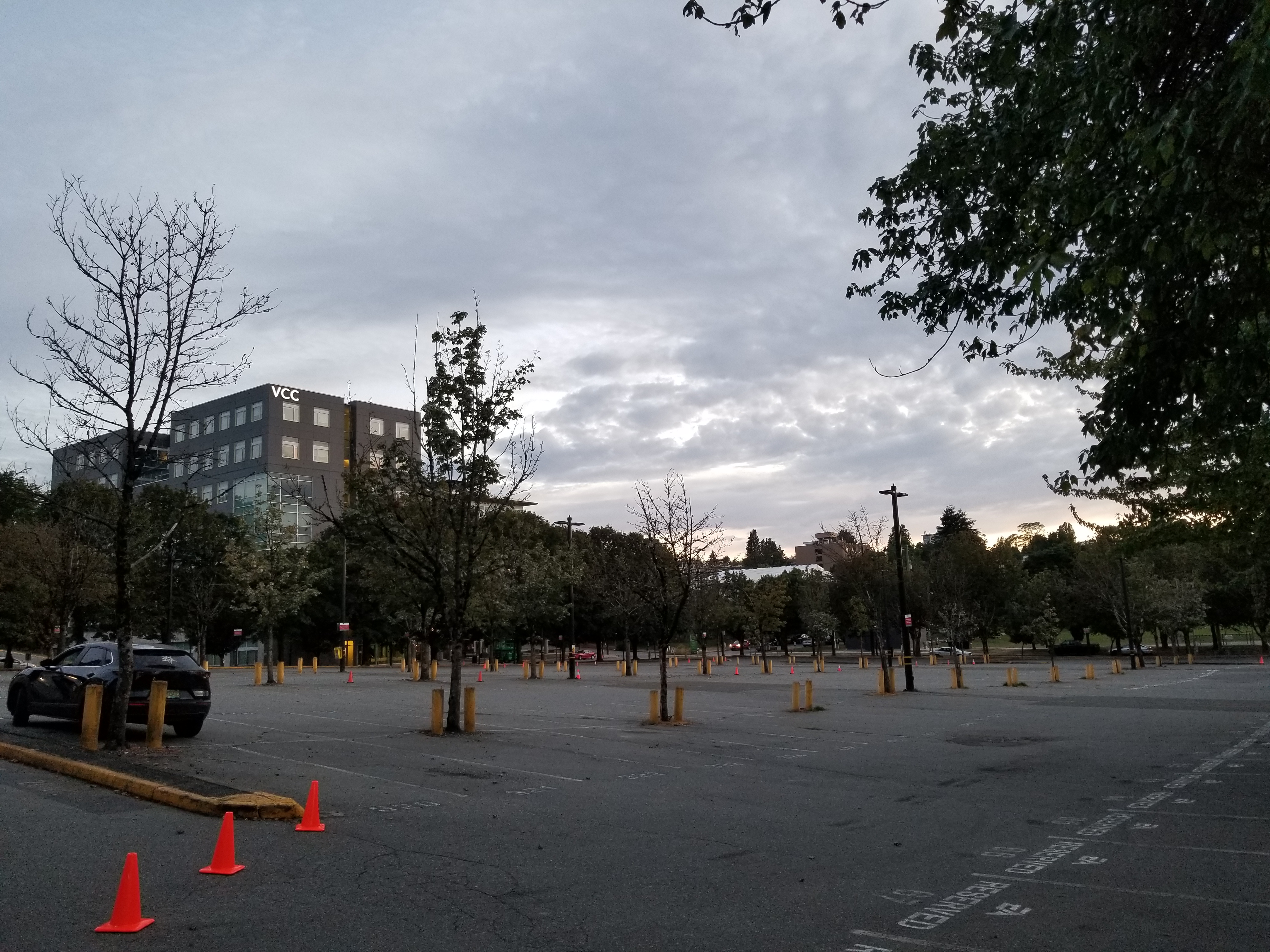
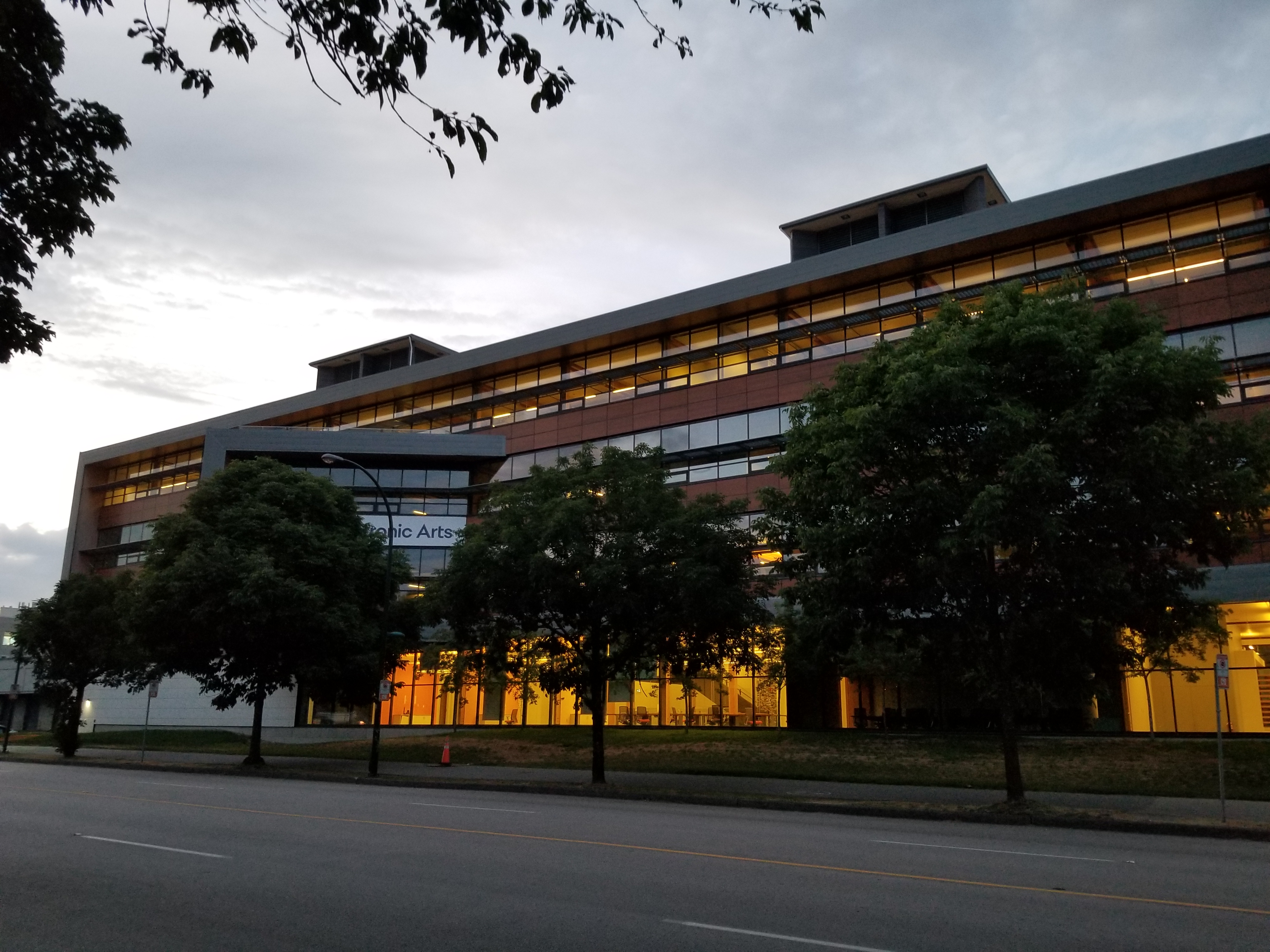
As for the books that I’ve been reading, I can say that I finally finished reading Ivan T. Sanderson’s ‘Abominable Snowmen: Legend Come to Life’. I think that I bought this book out of curiosity on Google Books about two years ago. I remember that time quite well. I think that it was autumn. In the evening, I was sitting at a cafe (Waves Coffee) in Downtown Vancouver for a little while, and I was browsing and thinking about which books to buy on Google Books. For some reason, books about bigfoot caught my attention. At that same time, I also bought ‘Bigfoot’ by Rupert Matthews and ‘Bigfoot!: The True Story of Apes in America’ by Loren Coleman. But ‘Abominable Snowmen’ is the only one that I have finished reading so far. This happened a few months ago. Sometimes, when this book interested me, I read several pages at a time. Other times, when it got less interesting, I read a few pages at a time. The book is, overall, interesting because Sanderson wrote not only about the so-called bigfoot but also about human evolution and geography. Because of this book, I found out about the aquatic ape hypothesis, for example. Sanderson wrote the book as if he really believed that bigfoot exists. I don’t believe that bigfoot exists, but the book still makes for interesting reading. Since ‘Abominable Snowmen’ can be easily purchased, there’s a good chance that the establishment supports such books either as a distraction or as propaganda. Even if this is the case, ‘Abominable Snowmen’ is still worth reading because it contains plenty of interesting information. In order to learn more about the aquatic ape hypothesis, I downloaded ‘The Descent of Woman’ and ‘The Aquatic Ape’ by Elaine Morgan. Another book that I finished reading is ‘Agriculture in World History’ by Mark Tauger. I found out about this book because I read Grover Furr’s book ‘Blood Lies’ a few years ago. I have recently begun reading another one of Furr’s books, which is ‘Stalin: Waiting for … the Truth!’. Initially, I was reluctant to read Tauger’s book because I thought that it would be a boring read. But I was wrong. Tauger’s book isn’t that thick, and it gives a straightforward account of what happened in the world from the beginning of agriculture to modern times. It’s easy to read and to understand. I learned a lot from it. For example, I finally found out who Emiliano Zapata and Pancho Villa were because I haven’t read about them before. I also found out about the An Lushan Rebellion, which took place when the Tang Empire existed in China. The Tang Empire was the first military (post-expansion) empire of Chinese Civilization. I knew about the Tang dynasty before reading Tauger’s book, but I didn’t know about this rebellion. This rebellion claimed the lives of about 30 million people, or about half of the population of China at that time. Tauger’s book isn’t exactly easy to obtain because it’s not promoted by the establishment, but it can be found and purchased online. A thick book that I finished reading one or two years ago is Carroll Quigley’s ‘Weapons Systems and Political Stability: A History’. I promised to review it, but I haven’t done so yet. It’s the last book by Quigley that I had to read. I finished reading all of his other books before I began reading ‘Weapons Systems and Political Stability’, and, like all of his other books, it’s filled with good information. Here’s an excerpt from the book that I found to be interesting: “The average Roman was unimaginative and uncritical, rather dull, unlikely to see that there was any way to deal with problems other than by war and violence, ready to obey his leaders and accept their justifications of their policies with few questions, and prepared to go on accepting and believing all kinds of contradictory, obsolete, and nonsensical ideas, customs, and institutions.” In ‘Weapons Systems and Political Stability’, Quigley wrote in detail about Sinic Civilization, Islamic Civilization, Russian Civilization, Byzantine Civilization (which existed for only about one thousand years), and Classical Civilization. This is something that he did not do in ‘Tragedy and Hope: A History of the World in Our Time’, which is mostly about what happened in the world from 1850 to 1950. I have to mention that Quigley was a conservative. In order to get his books published in the USA, he was very critical of the Soviet Union and even dishonest. But I find his approach to examining history and to making sense of history to be practical. This is why I use it. With his approach, I can logically explain what happened and I can even predict what will happen in general.