Kiki’s Delivery Service is known by many as a Miyazaki classic, but few have read the 1985 novel by Eiko Kadono on which the film is based. Now, a new English translation by Emily Balistrieri is making Kiki’s story available to a whole new generation of readers. The story is by now well-known: 13-year-old Kiki has just come of age as a witch, meaning it’s time for her to leave home and find a community of her own to serve. Along with her black cat companion, Jiji, Kiki moves to the seaside village of Koriko, where she has to make a life for herself using just her ability to fly on a broomstick. She soon hits upon the idea of starting a delivery business – magical adventures ensue.
Kiki’s Delivery Service is refreshingly light and breezy in an era where many middle-grade fantasies have become elaborate operations. There’s certainly nothing wrong with that (and, indeed, some readers more used to that type of fare may find the minimal worldbuilding in Kiki a bit disappointing), but there is definitely something to be said for the gentleness of this book in a year that has seen surprisingly little of it. While the protagonist is 13, the reading level of this story is probably more appropriate for younger readers and would also make a great read-aloud, even for those who aren’t reading on their own quite yet.
Fans of the movie will find that the tone of the novel is definitely of a piece with its cinematic sibling. Each chapter features a quirky new challenge for Kiki (like rescuing musical instruments from an express train in time for a spring concert, or fixing the town clock just in time for the town’s traditional New Year’s run), which she solves with a little ingenuity, luck, and positivity.
If anything, the movie raises the stakes of Kadono’s story, which otherwise proceeds episodically throughout Kiki’s first year away from home. There is more emphasis on her relationship with her mother, also a witch, in the novel, though it was a little bemusing to read about such a young woman chafing under her mother’s influence (and the level of the book makes her seem even younger). All in all, I found the novel to be a fun, quick read that young readers looking for a little enchantment will devour.
So you’ve heard about Advance WARS and still not quite sure what to think? Before you even get to the review I say BUY IT!
WARS.
The name alone gives one the feeling of epic battles and huge armies throwing themselves at their foe. For Nintendo’s Intelligent Systems, this is a long running and highly innovative strategy series, which has graced nearly every Nintendo console in existence. From its early and humble beginnings on the Famicom, to the epic Super Famicom and N64 WARS… this is one of the many serials of games that should have made it to American shores, but was sadly never localized. NOA has stepped up to the bat and finally released the fifth game stateside for the GameBoy Advance. And what a game it is. As a long time RPG/SRPG fan I can honestly tell you that this is what the strategy genre is all about. It takes quite a bit to get me extremely excited about a game, but as I seem to repeat often: Intelligent Systems has yet to disappoint.
When you first boot up the game, you are treated to a flashy animé-esque intro finally revealing the title screen. Very slick. Next, you’re asked to input a name. After you’ve done so, CO (Commanding Officer) Nell will ask if you’ve ever played the game. If you aren’t familiar with the series, then I’d suggest you go through the Field Training with her. She’ll explain the basics of combat through fourteen different beginner missions to get you familiar with the units and how Rankings work.
Here’s a small overview:
Each Unit has 10 HP
As they lose HP, offense and defense become weaker
You can recover 2 HP per turn while stationed in an allied city
Some units (such as Tanks) are more effective against other units (such as Infantry)
Only Infantry and Mech units are able to secure and capture neutral/enemy cities/bases/factories/etc.
Keep in mind this is only scratching the surface of the game’s most simplistic mechanics. It’s not like I can spend 1500 words trying to explain the intricacies of Infantry tactics or ramble on about how to effectively use Md Tanks.
Then you’re taken into “Campaign” mode. The essential plot is how a certain Blue Moon CO, Olaf, had seized parts of Orange Star’s land and how you’re deployed as a “Special Advisor” into reclaiming the territory. This is where you meet your first CO: Andy. He’s a tech whiz and is able to fix just about anything. Each CO (including your enemies) have a unique set of skills along with a special power they are able to unleash in battle. For instance, Andy has good all-around skills without a single real specialty. His “Hyper Repair” power will heal units 2 HP and give them extra offense and defense until the end of that turn. Meanwhile, CO Max is best at the offensive, his heavy Tanks (and anything mechanical) packing an extra heavy punch at the enemy. To make this even more of an overkill, his power “Max Force” gives even more power to his units. However, his glaring weakness is his complete lack of indirect combat skills. His Artillery and Rocket units are weaker than normal and don’t even get that big of a range! Players really need to keep in mind the pros and cons of certain COs when playing a map. Some areas are clearly more suited to one type of Commander than another.
Campaign mode, however, is quite possibly the smallest area of the game (barring Field Training). After each completed map you are awarded a certain amount of “Advance Coins”, depending on how high of a rank you were awarded in the previous battle. These can be used in the “Battle Map” shop on the main screen. Here you can buy maps to use in the “Vs Mode”, “War Room” and “Link Mode” areas along with unlock COs and other secrets. The “War Room” is a series of maps (most of which must be purchased) that helps hone your tactical skills. Make no mistake, these areas can be tough, even with the ideal CO. This is the only other mode that awards you Advance Coins. Also, you can gain higher ranks through this area. The greatest “addition” in my opinion, is the “Design Maps” option. Thank you Intelligent Systems! Here you can create and save entirely customized maps. Have an idea for the nastiest four-way brawls? This is your home! In fact, with the Link Cable you’re able to trade your maps with friends.
This brings me to multiplayer. Unfortunately, I don’t have many people near me so I was only able to test it via CPU opponents. However, that said: it is extremely addictive. You choose up to four COs, choose your Map and can set a variety of options including “Fog of War”, how you’re going to win (Capture HQ, kill all units, capture a certain amount of bases, etc.,) and various other conditions. Players take turns fighting and setting up. It can get a bit tiring waiting for your turn when there’s four players, but I’m sure with actual people to play with, trash-talking will take an all new meaning.
Graphically and aurally this game is rich and quite spectacular. It’s a sin to use anything less than a good set of headphones with this game! Myself, I tend to jack my AGB into my uber|337 PC speakers to enjoy the games great tracks. Each CO has a unique theme song that plays during his turn. The best way to describe the style is a hard industrial beat, and it goes very well with the military trappings of the game. Even the “Map Design” and Save music is great! In fact the Map Design track reminds me of Earthbound’s quirky jazz-like ramblings. This is a good thing. NOA should take my hints and release an OST for this game. I oftentimes find myself humming along with one of the CO’s themes even when I’m nowhere near the game. Even the sound effects are top-notch. Tanks grumble along and explosions sound quite realistic. The graphics might be considered “simple” by some but I heartily disagree. Every unit is completely unique and has its own battle animations. In fact, each army has a different design for the same units. So while your Orange Star Tanks might look one way, the Green Earth’s will look entirely unique. No cheap palette-swapping techniques here. The presentation is extremely slick, like something you’d get out of an animé movie. Your COs have a variety of expressions, and their portraits are located at the top of the screen during battle animations. For instance when you destroy an enemy unit with Andy, he’ll start laughing and hold up his hand in the “V” sign. If his unit is wiped out he’ll blink and cringe. In fact, the COs will even have different expressions depending on the odds of the battle. If the CO’s unit is weakened, he will be concerned and apprehensive, while the opposing CO will smirk in confidence.
Menus are simple but stylish & easily read. Overall this game has the flash to match its personality. There’s charm and yet a “seriousness” to the game that I can’t quite pinpoint. This definitely isn’t a child’s game: it can be quite hard. In fact, unless you’re familiar with the genre and the series it can get almost impossible at times. I’ve been getting A and S ranks for the duration of the game (no small feat I’ll tell you,) but I know other staffers have had problems at times and even readers who frequent our chat get stuck. That’s the biggest “flaw” with this game. Intelligent Systems has created the one of the best strategy games of all time, but it is clearly aimed at hardcore fans. Since US gamers hadn’t even heard of the series before NOA began localization, it brings a bit of a problem. That said, buy this game before I hunt you down and beat you. It really is that good. Once you’re into the game, strategies get easier to think up and there’s nothing stopping you from restarting a map if things go really awry.
Intelligent Systems has never disappointed me with their games. While here at PGC we try and avoid calling games “TEH BEST TIHNG EVAR”, this is quite possibly the title that truly deserves it. The game is insanely deep, has almost unlimited replay value and has over 114 single player maps alone! IS has packed so much into this game it is positively frightening. As you plow deeper and deeper into the game you’re continually surprised at the insight that the designers had in creating this masterpiece.
So I’ll reiterate: Buy this game. Don’t even bother renting.
Now NOA, get the courage and localize Fire Emblem VI, and completely wow your fans again!
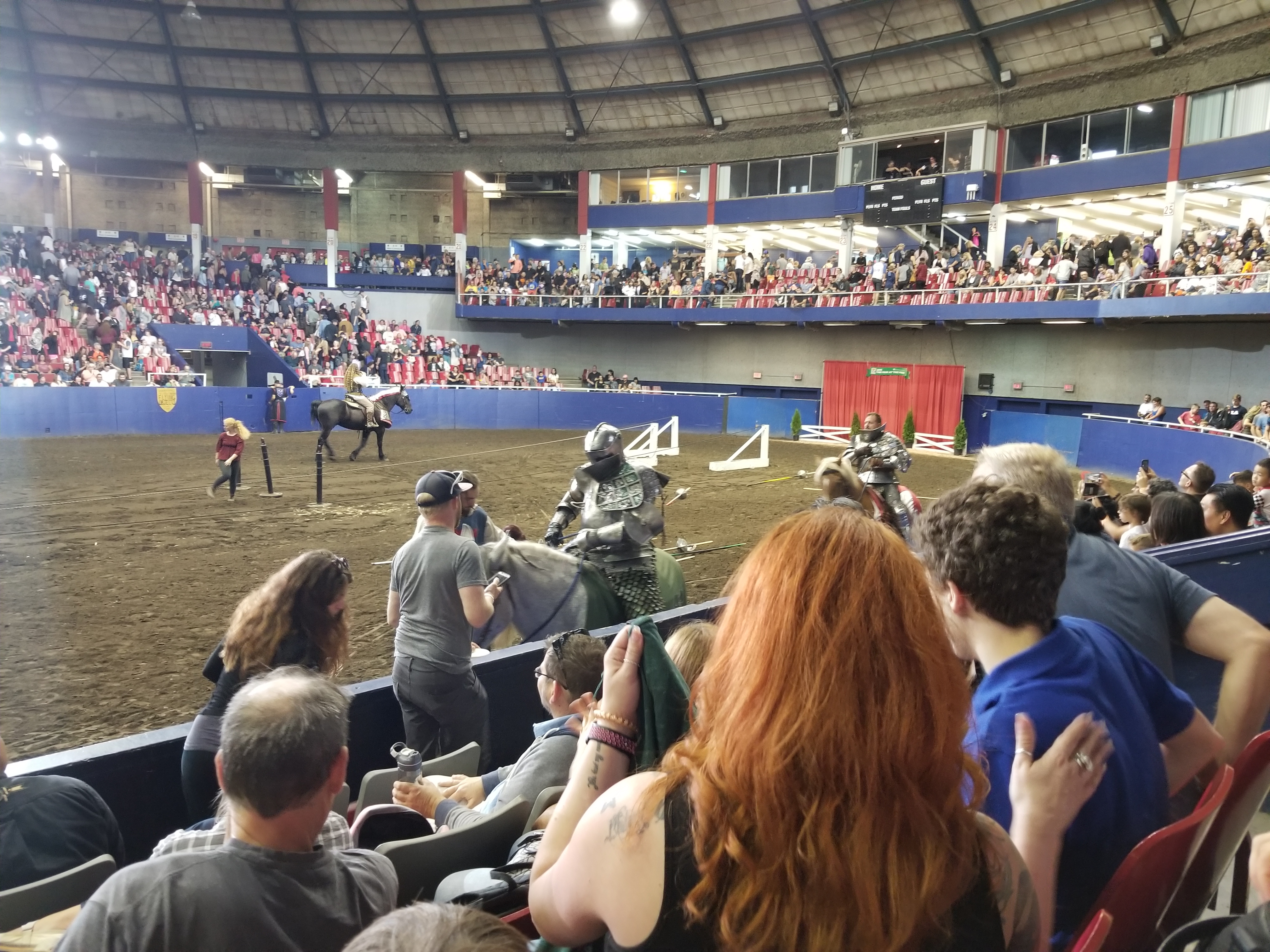
The Pacific National Exhibition (PNE) is a nonprofit organization that operates an annual 15-day summer fair, a seasonal amusement park, and indoor arenas in Vancouver, British Columbia, Canada. The PNE fair is held at Hastings Park, beginning in mid-to-late August and ending in early September, usually Labour Day.
The organization was established in 1907 as the Vancouver Exhibition Association, and organized its first fair at Hastings Park in 1910. The organization was renamed to the Pacific National Exhibition in 1946. During the mid-20th century, a number of facilities were built on the PNE grounds, including Pacific Coliseum and the PNE Agrodome. In 1993, the amusement park adjacent to the PNE, Playland, became a division of the PNE.
The Vancouver Exhibition Association (VEA), the predecessor to the Pacific National Exhibition organization was first formed in 1907; although the association was not incorporated until 18 June 1908. The VEA had petitioned Vancouver City Council to host a fair at Hastings Park; although faced early opposition from the city council and the local jockey club that used the park for horse races. However, the city council eventually conceded to the VEA’s request and granted the association a 5-year lease to host a fair at Hastings Park in 1909.
The VEA held its first fair at Hastings Park in August 1910. It was opened by then Canadian Prime Minister Sir Wilfrid Laurier as the Vancouver Exhibition. The biggest attractions of the two-week fair are its numerous shops, stalls, performances, a nightly fireworks show, and the exhibition’s Prize Home. From its beginnings, the exhibition was used as a showcase for the region’s agriculture and economy.
In the initial years of the Second World War, the fairgrounds saw an increased military presence. However, the exhibition itself was not cancelled until 1942, after the Canadian declaration of war against Japan was issued. From 1942 to 1946 the exhibition and fair was closed, and like the Canadian National Exhibition in Toronto, served as a military training facility for the duration of World War II. During this time, the exhibition barns that were used to house livestock, were used as processing centres for interned Japanese Canadians from all over British Columbia. The interned Japanese Canadians were later shipped away to other internment camps throughout British Columbia, and Alberta. The Momiji (Japanese word for Maple) Gardens on the PNE’s grounds serves as a memorial for the event. The barns used for the internment of Japanese Canadians are still used to house livestock during the annual fair, and serve as storage area to house some of the PNE’s property the rest of the year.
On 7 February 1946, the Vancouver Exhibition Association changed its name to its current moniker, the Pacific National Exhibition; and later reopened the fair to the public under that name in 1947. The organization was formally reincorporated as the Pacific National Exhibition in 1955.
The highest attendance at the fair was recorded in 1986, with 1.1 million guests visiting the PNE, most likely due to Expo 86 that was occurring at the time. In 1993, the amusement park adjacent to the PNE, Playland, became a division of the PNE organization.
During 1997-1998, the PNE grounds was transformed with the demolition of a number of buildings including the Food Building, Showmart and the Poultry Building. This gave way to the Sanctuary, a parkland setting with a pond. The pond restored part of a stream that once flowed in the park out to the Burrard Inlet. The city restored a large portion of the park. Many old fair buildings have been demolished and replaced by a more natural character. Although land was purchased in Surrey that was to become the fair’s new home, the PNE has since transferred ownership from the province to the City of Vancouver and will remain at Hastings Park. The PNE is a registered charity.
Two attractions at the PNE were named as heritage sites by the City of Vancouver in August 2013. The Pacific Coliseum and the Wooden Roller Coaster were added to the list.
In 2020, the fair went on hiatus due to the COVID-19 pandemic, alongside other agricultural and county fairs across Canada, including the Calgary Stampede, the Canadian National Exhibition, and K-Days.
In the early hours of February 20, 2022, a major fire broke out on PNE grounds, where multiple vehicles, tools and equipment, and buildings were destroyed as a result.
The PNE grounds contains several buildings and exhibition halls. The PNE Forum is a 4,200 square metres (45,000 sq ft) exhibition facility that is used for large displays and trade shows. Rollerland is a 1,840 square metres (19,800 sq ft) exhibition, banquet hall and venue for the Terminal City Roller Derby.
Two buildings on the PNE grounds are indoor arenas. The Pacific Coliseum is multi-purpose arena that holds 15,713 permanent seats, with provisions for 2,000 temporary seats for concerts and certain sports. The PNE Agrodome is a smaller indoor arena with 3,000 permanent seats, with provisions to expand up to 5,000 seats. Entertainment facilities includes the Garden Auditorium, a building that features a built-in stage and dance hall. The PNE grounds also feature amphitheatre with bench-style seating for 4,500 visitors.
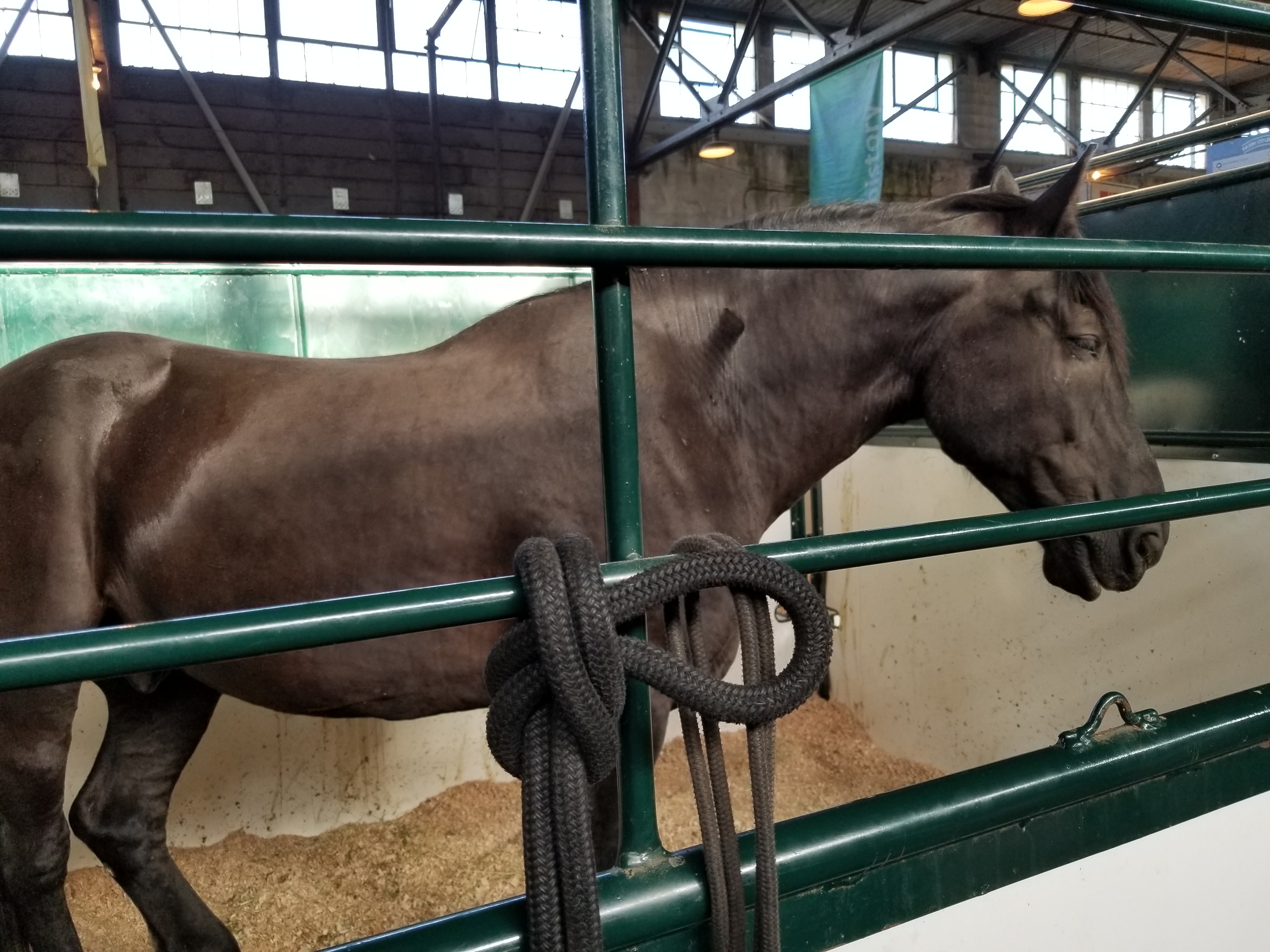
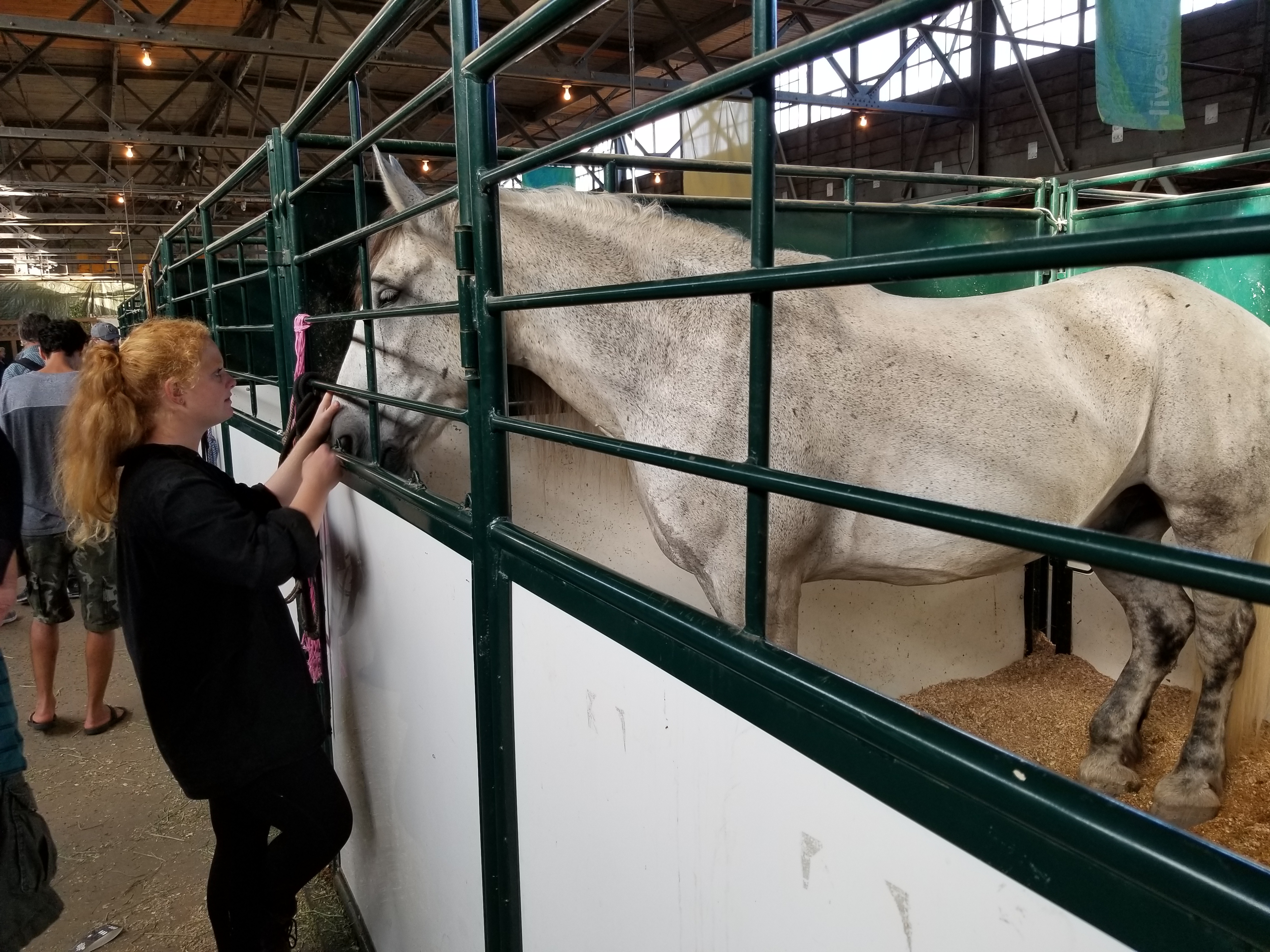
Other buildings on the PNE grounds includes the Livestock Barns, a large multi-use facility, and the organization’s administrative offices.
Hitting on female lifeguards is as American as apple pie, fireworks and workplace shootings.
No one had more game with lifeguards than Michael “Squints” Palledorous. Now you’ve got game with this awesome “Squints” tank top from American AF.
It’s made from lightweight performance material and printed right in the good ol’ USA.
This unisex tank is also available in a tee shirt when you’ve had too much sun, if you’re going out to a place that requires sleeves, or if your ‘Merican Eagle tee is in the wash.
According to January 2018 research by Oxfam, the richest one percent of people worldwide “bagged 82 percent” of the wealth created in 2017, while the poorest half of humanity “got nothing.” Since the 1980s, inequality has been growing everywhere on Earth, except in Western Europe. The rich own more and more, while the working class and middle class own less and less. This process is especially pronounced in Russia. Meduza breaks down these trends into graphs and takes a closer look at how Russia became a world leader in social inequality.
When it comes to the most common inequality indicators (comparisons of earnings by different socio-economic strata), Russia doesn’t really stand out in the world, and its imbalances are still below the levels in places like the Persian Gulf and Africa, as well as the United States. Income inequality mainly captures the differences in salaries paid to the rich and the poor. There is another measurement of inequality, however, where Russia’s situation is dramatically worse: the distribution of property in Russia is more unequal than in any major economy in North America, Europe, or Asia, according to the World Inequality Database (which does not index countries in the Middle East, Africa, or Latin America). Since 1997, millionaires and billionaires have owned a greater share of the national wealth in Russia than they have in the United States.
After the USSR’s collapse, Russia caught up to and overtook the West on social inequality
Inequality in Russia nosedived following the Bolshevik Revolution. Despite the privileges enjoyed by the party’s nomenklatura, the USSR’s top one percent earned just four percent of the national income. After the fall of the Soviet Union, inequality spiked rapidly. This process only accelerated in 2001 with the introduction of a flat 13-percent income tax (before this, wealthier Russians were subject to higher taxes, though they often evaded these obligations).
Over the past decade, income inequality has fallen in Russia. Moscow State University Professor Natalia Zubarevich attributes this shift to the redistribution of “oil rents”: the state extracts the lion’s share of oil companies’ revenues, which ballooned thanks to high prices worldwide, and then allocates this money to social spending on salaries for doctors, teachers, and others.
In terms of income inequality, Russia is now similar to the United States, but both countries are far more unequal than a place like France, which like the rest of Western Europe makes a concerted effort to distribute earnings more evenly. Since the end of Communism, Russian income stratification has outpaced every other former socialist economy, including China.
Wealthy and middle-class people are earning more than they did in the USSR, and the poor are earning less
According to the authors of “From Soviets to Oligarchs: Inequality and Property in Russia, 1905–2016,” which appeared last year in The Journal of Economic Inequality, average per-adult national income in Russia grew 41 percent in the quarter-century after the Soviet Union’s collapse. “However, the different income groups have enjoyed widely different growth experiences,” the researchers conclude. The top 10-percent earners enjoyed “very large growth rates” (171 percent), the middle 40-percent saw “positive but relatively modest growth” (15 percent), and the bottom 50-percent earners benefited from “very small or negative growth” (-20 percent).
While monetary inequality was generally low throughout the Soviet period, the scholars observed “interesting medium-term variations,” identifying a large inequality decline in the Revolutionary stage (1905–1925) and a “relative enlargement of income hierarchies” during the Stalinist period (1925–1956), before the 1956–1980 period gave way to “approximately constant” income distribution and “relatively balanced” growth across all groups. Income inequality peaked in 2008, when the top one percent earned a quarter of the national income. Then the worldwide financial crisis knocked them down a peg.
Russia’s billionaires grabbed most of the wealth created by the USSR, and they own most of what’s been produced since
When the USSR collapsed, more than 80 percent of the national net wealth belonged to either the state or “collectives” (ranging from collective farms to cooperatives). After 1992, public ownership started plummeting. Russia’s mass privatization in the 1990s affected both state enterprises (which is still widely unpopular today) and housing. Agricultural land remained in collective hands, and shares in common land were issued to collective farmers who were nevertheless unable to manage this property fully. To this day, housing is the main basis of wealth for both Russia’s middle and working classes.
Since the early 2000s, the national net wealth owned by Russia’s rich and super rich has skyrocketed. The first post-Soviet millionaires gained control over a significant part of the country’s industrial property back in the mid-1990s, during the initial privatization, but their share of the net wealth didn’t peak until 2008. Since then, the one hundred billionaires ranked by Forbes control 6–10 of Russia’s net wealth (depending on financial markets and the shifting value of Russian enterprises). About 65 percent of Russia’s net wealth belongs to the top 10-percent earners (according to the World Inequality Database, this includes, for example, most of the people who own apartments in Moscow — people who own property worth more than 3.72 million rubles, or $56,185). The poorest half of the population owns less than five percent of the country’s net wealth.
In other words, Russian wealth stratification is the worst of any of the major economies analyzed in the World Inequality Database. Things are not improving, either: the share of Russia’s national wealth owned by the middle class has dwindled over the past decade, as white collar workers have struggled against a weakened ruble and the repercussions of the 2008 financial crisis.
Russia’s millionaires and billionaires have moved most of their wealth abroad. According to “From Soviets to Oligarchs,” offshore wealth is about three times larger than Russia’s official net foreign reserves (about 75 percent of national income versus around 25 percent). Rich Russians have as much financial wealth stashed outside the country as the entire Russian population has inside Russia itself. The explosion of private wealth in Russia, moreover, has come “almost exclusively at the expense of public wealth,” insofar as the sum of private and public wealth has scarcely increased relative to national income (from 400 percent in 1990 to 450 percent in 2015).
There are ways to fight inequality, but you can only go so far
Economists who study rising inequality have a whole laundry list of its negative consequences: from deteriorating public health, higher crime rates, and declining social mobility to reduced access to quality education. When it comes to promoting equality while sustaining economic growth and technological progress, however, things are a bit trickier. There is research suggesting a relationship between rapid technological advances and rising inequality. In the United States, where socio-economic inequality has been rising steadily since the 1980s, there are several competing explanations for this phenomenon. Some experts say inheritance is to blame for the narrow concentration of wealth in the U.S., while others point out that almost none of the very richest Americans in the 1980s (including their descendants) are among the country’s wealthiest citizens today. The richest people in the United States owe their fortunes to technological innovations — a pattern economist Sherwin Rosen called “the economics of superstars.” Most of the benefits of this economic growth go to these exceptional individuals (and their children), who spend their earnings on charities, over-consumption, and failed investments.
Unsurprisingly, the authors of last year’s World Inequality Report warn that “no single scientific truth exists about the ideal level of inequality, let alone the most socially desirable mix of policies and institutions to achieve this level.” The only indisputable fact is the growing wealth disparity worldwide. Whatever the disagreements about economics and ideal societies, however, there’s little to embrace about inequality in Russia, where most of the wealth produced domestically is hoarded and invested abroad.
Fighting inequality in Russia today is especially difficult. The best way to become richer is to be rich already, and the only means of reigning in these disparities have been special taxes on “crooked privatizations,” high inheritance taxes, different forms of nationalization, and so on.
Combating income inequality, on the other hand, is simpler: the first step would be progressive income taxes. In addition to its existing flat income tax, Russia currently taxes mining and drilling operations, which is how the state seizes some of the super-profits earned by billionaires. But this isn’t enough. Over the next several years, the Russian government plans to spend trillions of rubles on several massive construction projects. The money needed for these colossal undertakings will come from ordinary taxpayers, and the few citizens whose wealth and income have skyrocketed over the past three decades are contributing the same 13 percent as everyone else.