




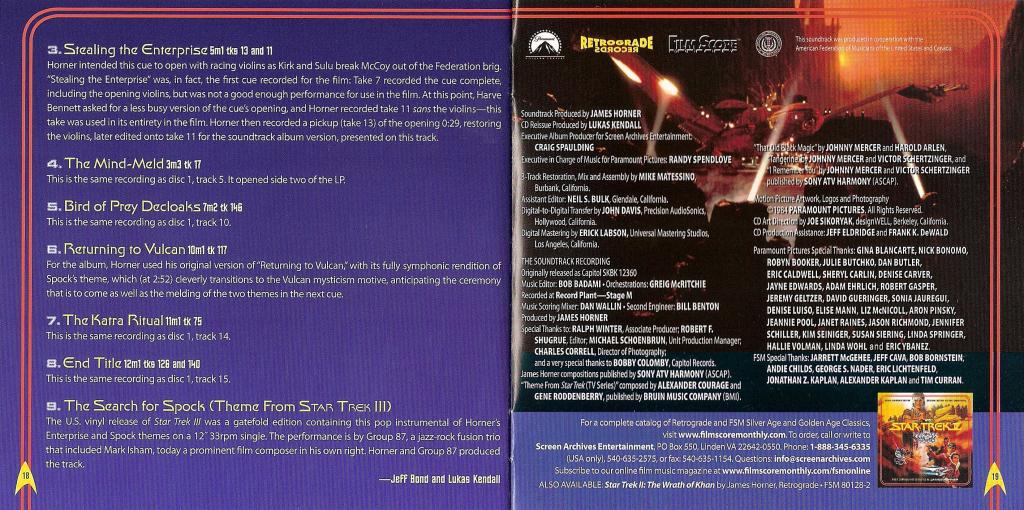
https://www.filmscoremonthly.com/cds/detail.cfm/CDID/454/Star-Trek-III-The-Search-for-Spock/
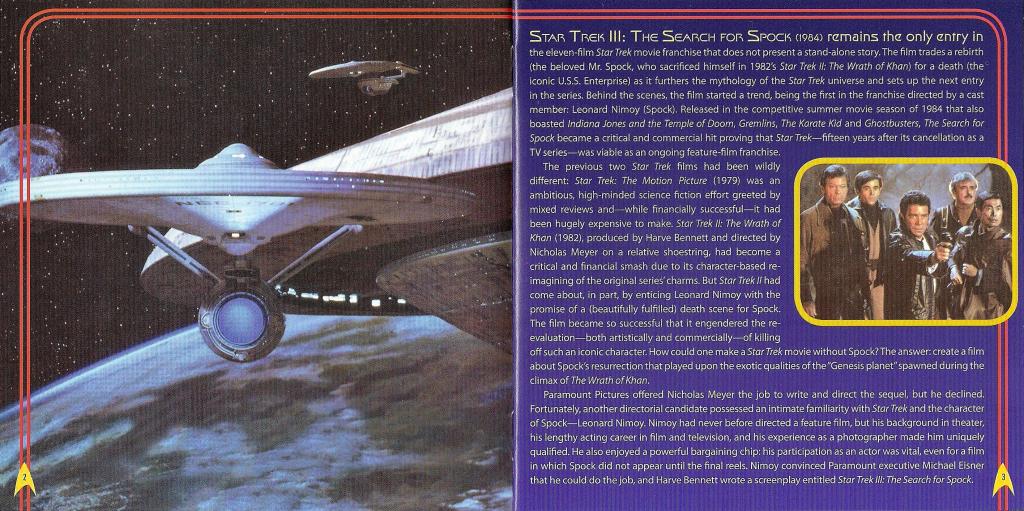
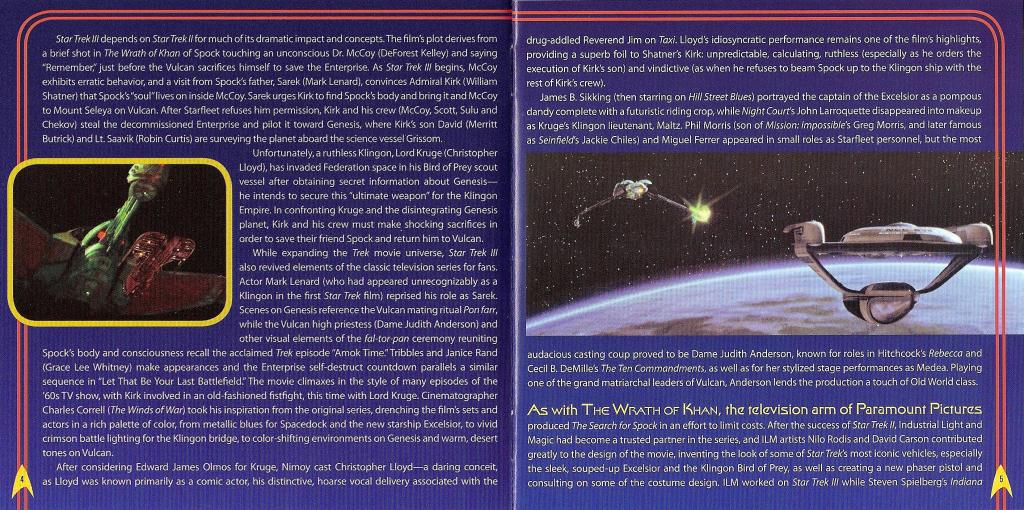
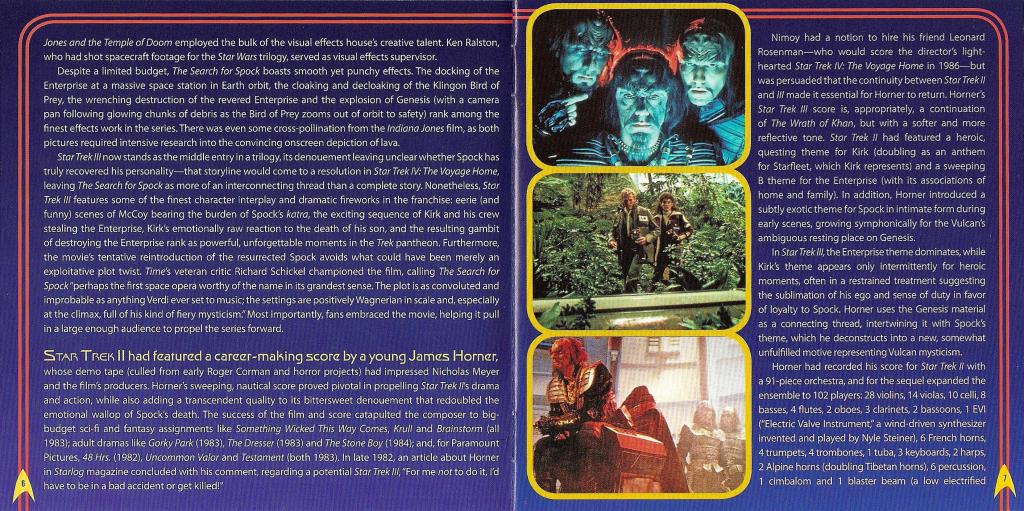
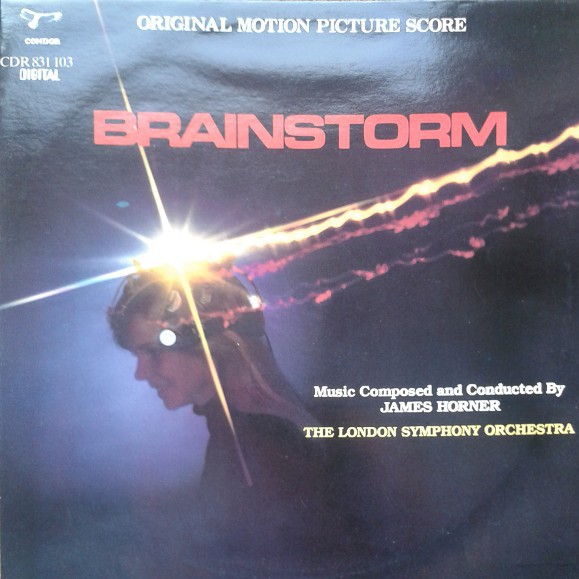
When FSM released the long-awaited expanded edition of James Horner’s Star Trek II: The Wrath of Khan (1982) in 2009, it didn’t take a Vulcan scientist to assume that the score’s companion piece, Star Trek III: The Search for Spock (1984), might also see the light of day. FSM delivers—thanks to the good graces of Paramount Pictures and Capitol Records.
James Horner’s Star Trek III continues his superlative work for the Final Frontier, with emotional developments of the B-theme (the “Enterprise theme”) and Spock’s theme from the earlier film, as well as exotic atmospheres for the all-important Vulcan mysticism that drives the story. The film’s villains, the Klingons, receive a new theme with exciting barbaric instrumentation. From the grand “space opera” setpieces (“Stealing the Enterprise,” “Bird of Prey Decloaks”) to intimate, spiritual moments (“The Mind-Meld,” “Returning to Vulcan”), Horner’s Star Trek III is one of the finest scores in the Star Trek canon.
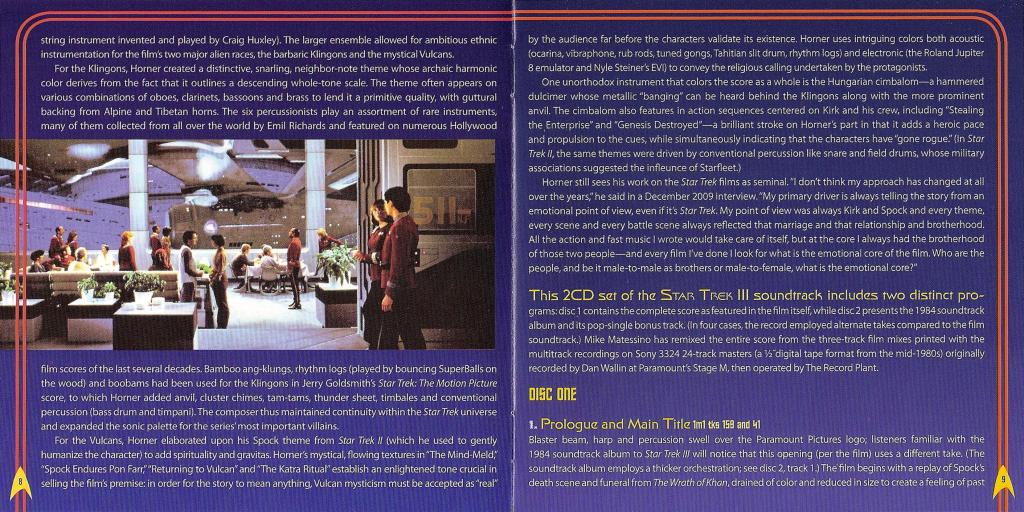
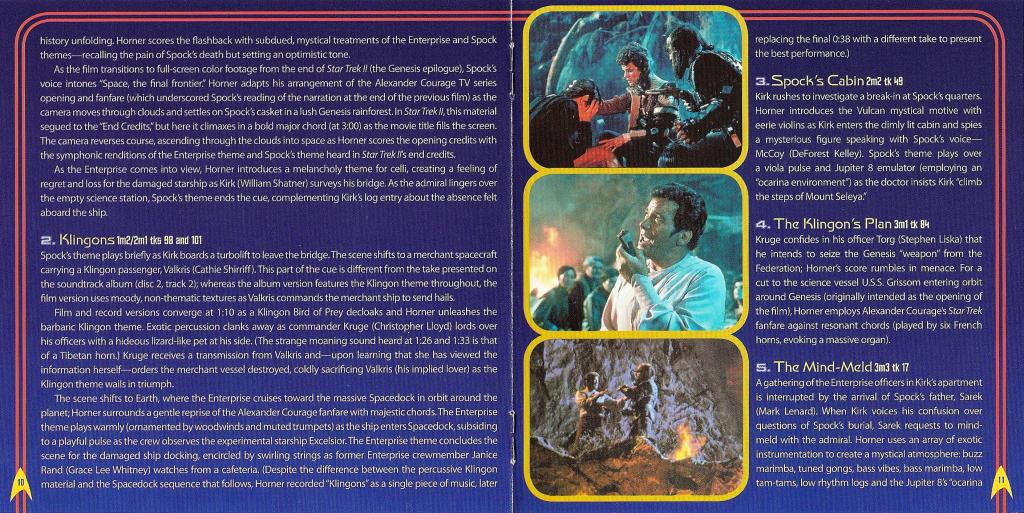
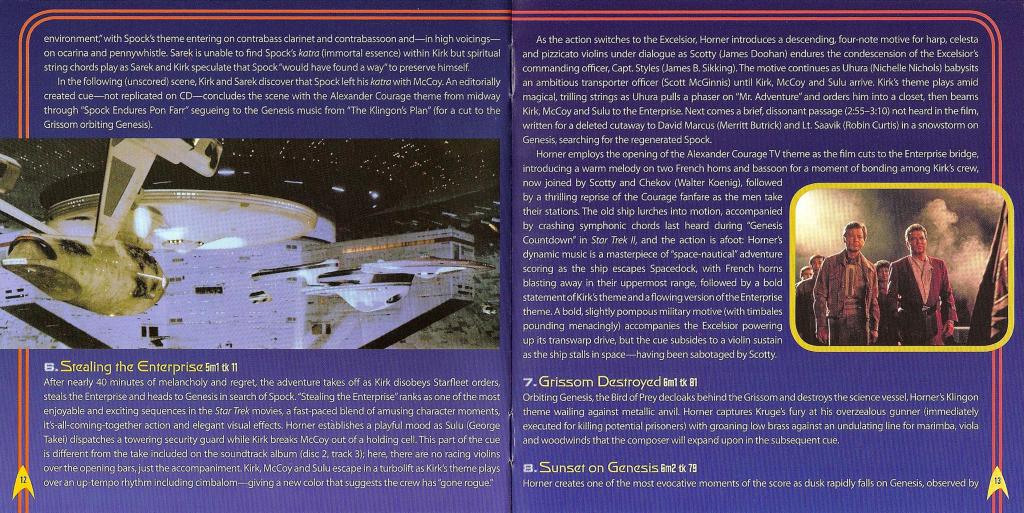
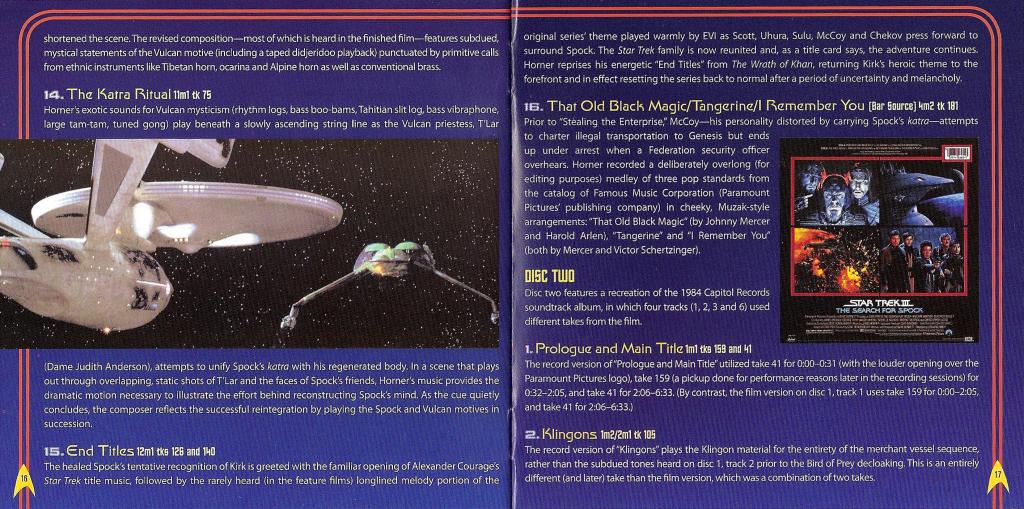
The Star Trek III soundtrack has been available before but only in a 43-minute LP sequence. FSM’s 2CD set features two programs, both newly mastered from recording engineer Dan Wallin’s first-generation digital film mixes: Disc one features the complete score as intended for the film itself, including such long-desired cues as “Grissom Destroyed,” “A Fighting Chance to Live” (featuring the Enterprise’s self-destruct countdown and immolation in Genesis’s atmosphere) and “Genesis Destroyed.” In addition, previously unreleased film versions of cues such as “Klingons” and “Stealing the Enterprise” make their premiere, with differences that are subtle but noticeable to devoted fans. Disc two features a recreation (in better sound quality) of the familiar LP sequence—complete with Group 87’s pop version of “The Search for Spock.”
The 20-page booklet features liner notes by Jeff Bond and Lukas Kendall and colorful art direction by Joe Sikoryak. Climb the steps of Mount Seleya today!





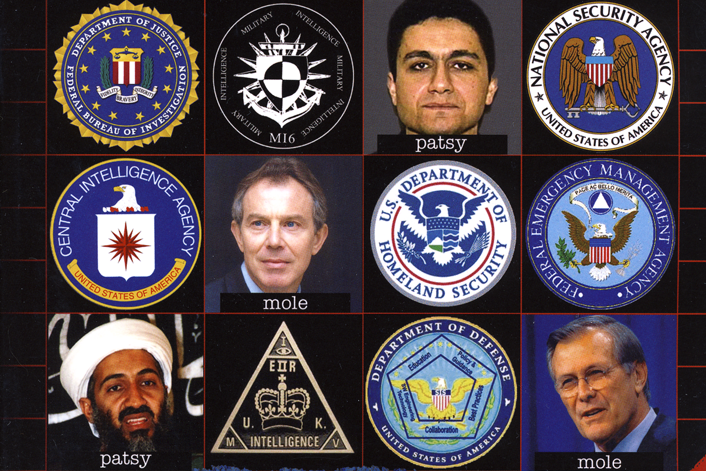
A reader sent me a link to a YouTube video of Webster Tarpley being interviewed on Russia Today (RT) television on December 29 about the false-flag “attempted terror” attack that occurred on Christmas Day on Delta’s Northwest Airlines Flight 253 from Amsterdam’s Schiphol Airport to Detroit. The video is interesting because it shows how Tarpley lies to protect Israel and the Mossad by putting the blame for the attempted bombing on the U.S. Central Intelligence Agency (CIA), which is currently headed by Leon E. Panetta, a man I have met on several occasions when he was my Congressman for the Monterey Bay area of California.
Webster Tarpley spews his usual disinformation when he says that Al Qaida in Yemen is “a creation wholly of the U.S. intelligence agencies.” Who exactly is Tarpley protecting with these lies and who is he really serving?
I happen to know something about Webster Tarpley, having been part of the same four-man panel during Jimmy Walter’s 9-11 Truth Tour in Europe in the summer of 2005. During the tour Tarpley put the blame for 9-11 on a nebulous group that he never actually identified but one would infer was tied to NATO and the CIA. Tarpley, like all the other panelists on the tour, never mentioned any Israeli or Zionist role in 9-11. My speech, on the other hand, focused on the real evidence that 9-11 was an Israeli false-flag terror atrocity designed to start the “War on Terror” and change the face of America. Finally, in Rome, in the presence of journalist Maurizio Blondet and others, I asked Mr. Tarpley why he insisted on blaming nebulous U.S. entities, without providing any evidence, while avoiding the real evidence of Israeli/Mossad involvement in the terror attacks of 9-11?
In the RT video about Al Qaida in Yemen, Mr. Tarpley provides the same faulty logic and avoids any mention of Israeli intelligence, which has carried out large-scale operations in Yemen since 1949.
Here are the relevant quotes from Tarpley on RT television:
“Al Qaida, of course, is functioning, as always, as the CIA Arab-Islamic legion.” (Note the use of affirmative phrases to bolster his lie.)
“Al Qaida in the Arab Peninsula is a creation wholly of the U.S. intelligence agencies.”
[The Christmas bomber Abdul Mutallab] is a “protected patsy”, according to Tarpley, “an asset controlled by U.S. intelligence.”
Webster Tarpley and his wife, the former Leah J. Peltier, live in the Washington, D.C. area. Leah is 17 years younger than Webster and reportedly a high school drop-out who only obtained a college degree in 2009. She has been with Tarpley since his days with the Lyndon LaRouche movement in the early 1990s. Her lack of real estate expertise or education notwithstanding, Leah is the Executive Vice President of Operations at the Washington D.C. office for the privately-owned Cresa Partners LLC, where she has worked only since 2007.
Leah Tarpley works under Gene S. Sachs, a “managing principal” and member of the board of directors of the Boston-based company. Leah is not the only Tarpley working for Mr. Sachs. Chloe Tarpley is also listed as an administrator in his firm. Chloe, who has only worked for Cresa Partners since May of 2008, is Webster Tarpley’s daughter. Her biological father is Joseph Peltier, who said that her mother was a high school drop-out who got involved with Tarpley through the Larouche movement.
It is interesting to note that the Tarpley women work for the preferred agent of one of the world’s largest defense contractors. Mr. Sachs’ biggest client is BAE Systems North America. Sachs has completed more than 275 assignments for BAE in twenty states of the United States in the past five years. BAE Systems is the world’s third largest defense contractor and Britain’s leading aerospace/defense company.
In the company’s own words:
BAE Systems Inc. is the U.S. subsidiary of BAE Systems plc, an international company engaged in the development, delivery and support of advanced defense and aerospace systems in the air, on land, at sea and in space. Headquartered in Rockville, Maryland, BAE Systems, Inc. employs some 45,000 employees in the US, UK, Sweden, Israel and South Africa generating annual sales in excess of $10 billion. BAE Systems Inc. consists of three operating groups that provide support and service solutions for current and future defense, intelligence, and civilian systems; design, develop and manufacture a wide range of electronic systems and subsystems for both military and commercial applications; and design, develop, produce, and provide service support of armored combat vehicles, artillery systems and intelligent munitions.
Sachs has been the preferred real estate provider for BAE Systems NA since 2000 and manages some 18.5 million square feet of property for the sprawling British defense contractor. He is also the Treasurer of CresaPartners in Washington, according to Hoover’s, so with two members of the Tarpley family working in his office, we can see that Mr. Sachs has a significant influence over the income flow for the Tarpley household.
If Mr. Tarpley has any solid evidence that Al Qaida in Yemen is, in fact, “a creation wholly of U.S. intelligence agencies” he should bring this information to the attention of the U.S. government and Leon E. Panetta, the Director of the CIA. Mr. Tarpley should explain who controls Al Qaida in Yemen, which he says is “functioning, as always, as the CIA Arab-Islamic legion.” Pray tell Mr. Tarpley, which part of the CIA is running Al Qaida in Yemen? Is it under the direction of Mr. Panetta or is it a rogue outfit of the agency?
Mr. Tarpley should be asked if the CIA was running Al Qaida in Yemen when the USS Cole was bombed in 2000, an attack that killed 17 sailors and wounded 39 others. Perhaps Mr. Tarpley can explain the logic of why the CIA would attack a U.S. Navy ship in Yemen.
Tarpley mentions that the Christmas bomber Abdul Mutallab flew through Amsterdam but he doesn’t mention the conspicuous fact that security for both Schiphol Airport and Delta Airlines is provided by the Mossad-run company, International Consultants on Targeted Security — the same company that provided passenger screening services at the crucial airports on 9-11.
So who is Webster Tarpley really serving with his disinformation?
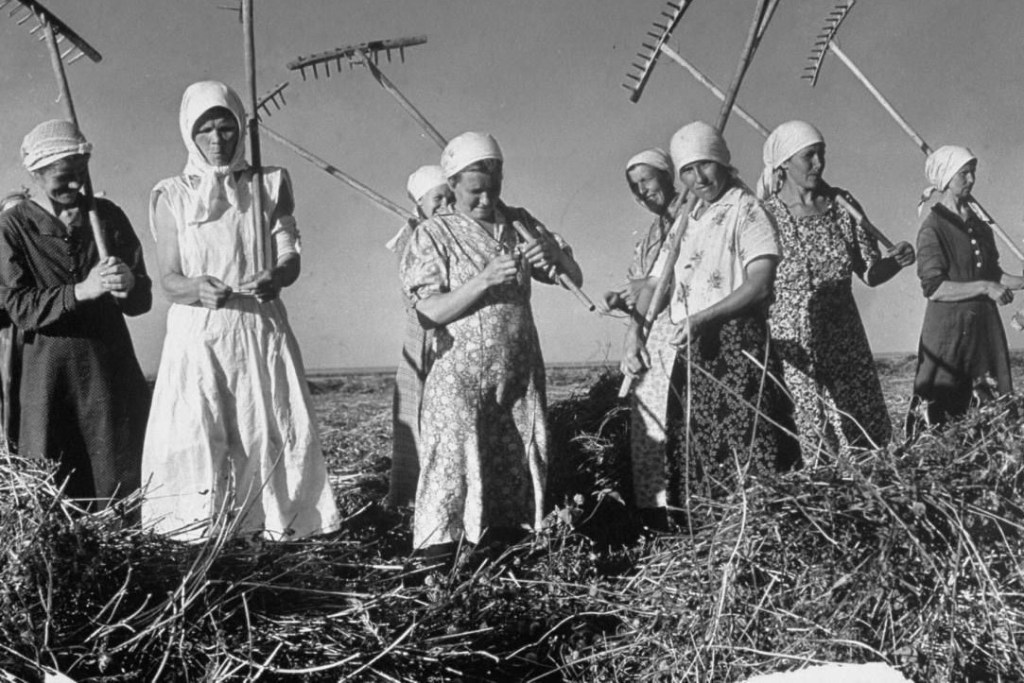
(Author’s note: In this article I rely heavily on the evidence cited in the research of Mark Tauger of West Virginia University. Tauger has spent his professional life studying Russian and Soviet famines and agriculture. He is a world authority on these subjects, and is cordially disliked by Ukrainian nationalists and anticommunists generally because his research explodes their falsehoods. )
The Ukrainian nationalist film “Bitter Harvest” propagates lies invented by Ukrainian nationalists. In his review Louis Proyect propagates these lies.
Proyect cites Jeff Coplon’s 1988 Village Voice article “In Search of a Soviet Holocaust: A 55-Year-Old Famine Feeds the Right.” In it Coplon shows that the leading “mainstream” anticommunist Western experts on Soviet history rejected any notion of a deliberate famine aimed at Ukrainians. They still reject it. Proyect fails to mention this fact.
There was a very serious famine in the USSR, including (but not limited to) the Ukrainian SSR, in 1932-33. But there has never been any evidence of a “Holodomor” or “deliberate famine,” and there is none today.
The “Holodomor” fiction was invented in by Ukrainian Nazi collaborators who found havens in Western Europe, Canada, and the USA after the war. An early account is Yurij Chumatskij, Why Is One Holocaust Worth More Than Others? published in Australia in 1986 by “Veterans of the Ukrainian Insurgent Army” this work is an extended attack on “Jews” for being too pro-communist.
Proyect’s review perpetuates the following falsehoods about the Soviet collectivization of agriculture and the famine of 1932-33:
None of these claims are true. None are supported by evidence. They are simply asserted by Ukrainian nationalist sources for the purpose of ideological justification of their alliance with the Nazis and participation in the Jewish Holocaust, the genocide of Ukrainian Poles (the Volhynian massacres of 1943-44) and the murder of Jews, communists, and many Ukrainian peasants after the war.
Their ultimate purpose is to equate communism with Nazism (communism is outlawed in today’s “democratic Ukraine”); the USSR with Nazi Germany; and Stalin with Hitler.
Collectivization of Agriculture – The Reality
Russia and Ukraine had suffered serious famines every few years for more than a millennium. A famine accompanied the 1917 revolution, growing more serious in 1918-1920. Another serious famine, misnamed the “Volga famine,” struck from 1920-21. There were famines in 1924 and again in 1928-29, this last especially severe in the Ukrainian SSR. All these famines had environmental causes. The medieval strip-farming method of peasant agriculture made efficient agriculture impossible and famines inevitable.
Soviet leaders, Stalin among them, decided that the only solution was to reorganize agriculture on the basis of large factory-type farms like some in the American Midwest, which were deliberately adopted as models. When sovkhozy or “Soviet farms” appeared to work well the Soviet leadership made the decision to collectivize agriculture.
Contrary to anticommunist propaganda, most peasants accepted collectivization. Resistance was modest; acts of outright rebellion rare. By 1932 Soviet agriculture, including in the Ukrainian SSR, was largely collectivized.
In 1932 Soviet agriculture was hit with a combination of environmental catastrophes: drought in some areas; too much rain in others; attacks of rust and smut (fungal diseases); and infestations of insects and mice. Weeding was neglected as peasants grew weaker, further reducing production.
The reaction of the Soviet government changed as the scope of the crop failure became clearer during the Fall and Winter of 1932. Believing at first that mismanagement and sabotage were leading causes of a poor harvest, the government removed many Party and collective farm leaders (there is no evidence that any were “executed” like Mykola in the film.) In early February 1933 the Soviet government began to provide massive grain aid to famine areas.
The Soviet government also organized raids on peasant farms to confiscate excess grain in order to feed the cities, which did not produce their own food. Also, to curb profiteering; in a famine grain could be resold for inflated prices. Under famine conditions a free market in grain could not be permitted unless the poor were to be left to starve, as had been the practice under the Tsars.
The Soviet government organized political departments (politotdely) to help peasants in agricultural work. Tauger concludes: “The fact that the 1933 harvest was so much larger than those of 1931-1932 means that the politotdely around the country similarly helped farms work better.” (Modernization, 100)
The good harvest of 1933 was brought in by a considerably smaller population, since many had died during the famine, others were sick or weakened, and still others had fled to other regions or to the cities. This reflects the fact that the famine was caused not by collectivization, government interference, or peasant resistance but by environmental causes no longer present in 1933.
Collectivization of agriculture was a true reform, a breakthrough in revolutionizing Soviet agriculture. There were still years of poor harvests — the climate of the USSR did not change. But, thanks to collectivization, there was only one more devastating famine in the USSR, that of 1946-1947. The most recent student of this famine, Stephen Wheatcroft, concludes that this famine was caused by environmental conditions and by the disruptions of the war.
Proyect’s False Claims
Proyect uncritically repeats the self-serving Ukrainian fascist version of history without qualification.
Some Ukrainian nationalists cite figures of 7-10 million, in order to equal or surpass the six million of the Jewish Holocaust (cf. Chumatskij’s title “Why Is One Holocaust Worth More Than Others?”). The term “Holodomor” itself (“holod” = “hunger”, “mor” from Polish “mord” = “murder,” Ukrainian “morduvati” = “to murder) was deliberately coined to sound similar to “Holocaust.”
The latest scholarly study of famine deaths is 2.6 million (Jacques Vallin, France Meslé, Serguei Adamets, and Serhii Pirozhkov, “A New Estimate of Ukrainian Population Losses during the Crises of the 1930s and 1940s,” Population Studies 56, 3 (2002): 249–64).
But — to put it brutally — you can’t make an omelette without breaking eggs, and the Bolshevist leaders are just as indifferent to the casualties that may be involved in their drive toward socialization as any General during the World War who ordered a costly attack in order to show his superiors that he and his division possessed the proper soldierly spirit. In fact, the Bolsheviki are more indifferent because they are animated by fanatical conviction. (The New York Times March 31, 1933)
Evidently Proyect simply copied this canard from some Ukrainian nationalist source. Garbage In, Garbage Out.
A Triumph of Socialism
The Soviet collectivization of agriculture is one of the greatest feats of social reform of the 20th century, if not the greatest of all, ranking with the “Green Revolution,” “miracle rice,” and the water-control undertakings in China and the USA. If Nobel Prizes were awarded for communist achievements, Soviet collectivization would be a top contender.
The historical truth about the Soviet Union is unpalatable not only to Nazi collaborators but to anticommunists of all stripes. Many who consider themselves to be on the Left, such as Social-Democrats and Trotskyists, repeat the lies of the overt fascists and the openly pro-capitalist writers. Objective scholars of Soviet history like Tauger, determined to tell the truth even when that truth is unpopular, are far too rare and often drowned out by the chorus of anticommunist falsifiers.
Sources: Mark Tauger’s research, especially “Modernization in Soviet Agriculture” (2006); “Stalin, Soviet Agriculture, and Collectivization” (2006); and “Soviet Peasants and Collectivization, 1930-39: Resistance and Adaptation.” (2005), all available on the Internet. More of Tauger’s articles are available at this page: https://www.newcoldwar.org/archive-of-writings-of-professor-mark-tauger-on-the-famine-scourges-of-the-early-years-of-the-soviet-union/
See also Chapter I of my book Blood Lies; The Evidence that Every Accusation against Joseph Stalin and the Soviet Union in Timothy Snyder’s Bloodlands Is False (New York: Red Star Press, 2013), at http://msuweb.montclair.edu/~furrg/research/furr_bloodliesch1.pdf
On the 1946-47 famine see Stephen G. Wheatcroft, “The Soviet Famine of 1946–1947, the Weather and Human Agency in Historical Perspective.” Europe-Asia Studies, 64:6, 987-1005.
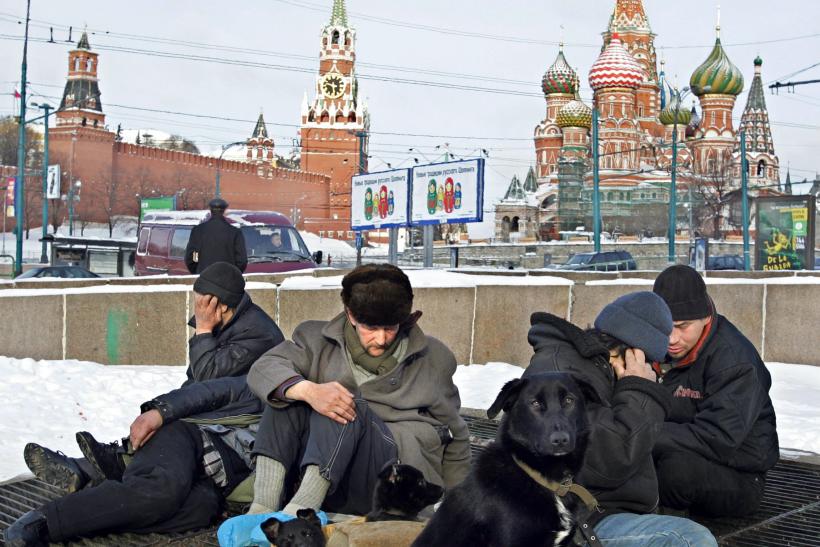
Since the beginning of the year, protests have been under way, primarily by pensioners, against the transformation of social benefits into substantially smaller cash payments. (See: “Russia: wave of protests against welfare cuts,” 27 January, 2005; and “Russia: Putin lays siege to social benefits,” 21 September, 2004.)
Government propaganda has sought to attribute the spread of protests to problems in the implementation of the new laws on social security benefits, while insisting the laws themselves are necessary and inevitable. However, protests by pensioners are only the tip of the iceberg. The underlying cause of growing discontent is the enormous degree of social inequality that has resulted from the introduction of capitalism in the former Soviet Union.
In his New Year speech, President Vladimir Putin maintained that the social situation of most Russians had improved over the previous year. Just a few days later, however, the outbreak of protests indicated what broad sections of the population thought about this question.
Even a cursory examination of the social situation in modern Russia reveals a deeply divided society. An array of statistics documents the reality of two different worlds that hardly come into contact with one another. One—the world of wealth and luxury—is inhabited by an insignificant minority. The other—the world of social decline and an arduous struggle for life’s necessities—is inhabited by millions upon millions.
Figures showing the distribution of wealth reveal the glaring nature of this social polarisation. According to government data, the incomes of the very richest members of Russian society are 15 times those of the poorest—one of the highest levels of social inequality to be found among the world’s leading countries. In Moscow, this difference is 53-fold.
Below the poverty line
According to figures published by the World Bank at the end of last year, 20 percent of the Russian population lives below the poverty line, which is defined as a monthly income of 1,000 roubles (less than 30 euros, or $38).
The great majority of Russian families are teetering on the edge of poverty. The World Bank has calculated that an average decrease in income of 10 percent would produce a 50 percent rise in the poverty rate. The majority of the poor in Russia are to be found among working families headed by adults with average technical professional training, and in families with children.
Most of the poor workers are employed in the public sector, including teachers, physicians and low-ranking civil servants. The occupations with the lowest incomes—including those employed in the health services, such as nurses and medics—are of great social importance. The poor living conditions of those employed in these sectors contribute to a decline in the structures upon which a functioning society is based.
The well-off receive greater privileges and benefits than the poor or the near-poor. The World Bank writes that medium-level social allowances (with the exception of those for children) paid to the relatively rich exceed those received by poorer social layers.
Russia’s National Statistics Office officially classifies a total of 31 million people (22 percent of the population) as poor. Other surveys, however, place the poverty rate at 40 percent or higher.
The All-Russian Centre for Living Standards published the following figures for the varying degrees of poverty:
At the end of 2003, average monthly income was calculated at 2,121 roubles (60 euros/$77 a month), with those who are employed receiving 2,300 roubles (65 euros/$83) and pensioners receiving 1,600 roubles (45 euros/$58). Those whose income falls below these levels are defined as poor. A second category, those who are badly off, includes families where per-capita income lies between 2,121 and 4,400 roubles (60-126 euros/$77-$161). A significant section of the population can be found in these two categories.
The Centre for Living Standards regards the “middle layers” as households with a per-capita monthly income of between 4,400 roubles and 15,000 roubles (126-430 euros/$161-$550). By Western standards, this level of income would represent poverty.
Pensioners and young people constitute the poorest sections of Russian society. The Social Opinions Fund has found that practically no young people (just 1 percent) are saving for their old age. Two thirds of young people who were asked said they could not afford to buy anything. Young people living in the countryside or in small cities are at greatest risk of being poor. In contrast to Western countries, where poverty is often concentrated in the large cities, the poor are more frequently found in Russia’s villages and towns.
Families with children are exposed to the constant danger of poverty, particularly those with two, three or more children.
Children from families with low incomes have substantially decreased chances of going on to gain an apprenticeship after graduating high school. Only 15 percent of children from poor families go to the more specialised technical colleges and universities. A low level of education is an important factor in the persistence of poverty.
The poor are more frequently ill or succumb to alcohol. The incidence of tuberculosis in Russia is 10 times higher than in Europe.
Scientists have calculated that since the beginning of the 1990s, some 8 million Russians have died prematurely. The mortality rate has risen one-and-a-half times over the same period. In 2003, it reached a high point at 16.4 deaths per 1,000 inhabitants.
The average Russian man can presently expect to live only to 58. That means married women, on average, are widowed for 15 years. This is due both to women’s greater life expectancy and to the younger age at which women marry.
Despite the adversities of everyday life in the Soviet Union, for most people the social situation was substantially better than that which exists in contemporary Russia. Today, the minimum wage covers only 27 percent of what is needed to sustain an adult of working age; the child benefit covers just 3 percent of necessary expenditure for a child; and the minimum pension covers only 46 percent of the minimum expenditure of a pensioner.
In the Soviet Union, the minimum wage amounted to one-and-a-half times the minimum required consumption. Russia’s minimum wage would have to be trebled to cover the minimum level of consumption.
A serious struggle against poverty is impossible without a real reform of the educational system and health service. Both would have to be made accessible to broad layers of the population. However, the tendency is in the opposite direction.
For increasing numbers of Russians, it is becoming clear that further capitalist “reforms” will not improve their situation.
The wealthy end of the spectrum
Then there is the other Russia. It finds its personification in figures like Roman Abramovich, governor of the remote region of Chukotka (just across the Bering Strait from Alaska) and owner of a controlling interest in the Russian oil giant Sibneft. He is considered the richest man in Britain, where he now resides. Two years ago, he acquired the English soccer club Chelsea for an astronomical sum.
Russia is ranked third in the world for the number of billionaires, and thirteenth for having the largest enterprises.
Taken as a whole, the fortunes of Russia’s billionaires amount to nearly half as much as the total value of the largest Russian enterprises. By comparison, in the US, this sum amounts to 6 percent.
The greatest part of shareholdings in the largest Russian enterprises can be found in the hands of this tiny social layer. According to the World Bank, in 2003, the 23 largest business groups account for 57 percent of all of Russia’s industrial production.
Forbes magazine has calculated that, measured against the economic output of the country ($458 billion), there are more billionaires in Russia (36) than anywhere else in the world. The total assets of these 36 richest Russians amounts to $110 billion—24 percent of the country’s economic output.
Most of the Russian billionaires and multimillionaires control raw materials and their associated industries. According to Forbes, this applies to 66 of the 100 richest Russians. The 34 others have gained their wealth from new business fields—above all, telecommunications, construction, food production and retail trade.
The incomes of the top managers are also incomparably greater than those of the ordinary citizen or pensioner. Gaseta.ru cites data showing they receive annually between $1 million and $3 million.
The president of Lukoil gets $1.5 million. If the business achieves certain goals, he enjoys a bonus of $2.2 million. The vice president gets $800,000 annually, with up to $1.1 million in bonuses. The picture was the same at Yukos, until it was liquidated by the state.
In large-scale enterprises like the United Mechanical Engineering Works and the Tyumen oil company, basic executive salaries amount to $500,000 and more. Oleg Deripaska, the boss of the Basis Element aluminium producer, paid taxes of $294 million in 2001 on his income in the Siberian Republic of Khakassia. His pay constituted 10 percent of the total income of the republic.
The “new Russians,” as they are sometimes called, often live abroad, where they can be found in the most expensive hotels, clubs and restaurants. They possess racehorses, yachts and mansions. Practically every billionaire has his own yacht and airplane. They particularly enjoy buying expensive antiques and jewelery, as well as purchasing real estate in the most expensive areas of Europe’s capitals. A special attraction for them is London.
Russians constitute a third of all foreign investors on the London property market. Over the past 10 years, the number of British visas given to Russians has increased eightfold. Of 250,000 Russians living in London, 700 are multimillionaires.
New Year celebrations are the high point of profligate consumption for the Russian nouveaux riches. The International Herald Tribune reported recently that some 20,000 Russians “wallowed in luxury, ate, drank and went shopping” in the elite boutiques of the ski resort of Courchevel, which lies in a snow-covered corner of the French Alps. In this spa resort can be found four-star hotels like Les Grandes Alpes, where a room costs between 550 and 1,250 euros ($704 and $1,600) per night. In the hotel restaurant, one can drink wines for a mere 1,750 euros ($2,239) a bottle. A new suite opened in the hotel Byblos des Neiges recently that measures 220 square metres and costs 6,500 euros ($8,318) a night.
The International Herald Tribune writes that Russian ski teachers are being employed to cope with the wave of Russian tourists in Courchevel, where Russian advertisements can be seen everywhere. “This is wonderful business for us,” explained the owner of one local four-star hotel.
This is the reality behind the invocations of “national unity” proclaimed by the Putin government. It is no wonder that ordinary Russians increasingly demonstrate their discontent and protest against the worsening of their situation. These protests will inevitably continue and intensify under conditions in which the government lacks any solution for Russia’s mounting social problems.

