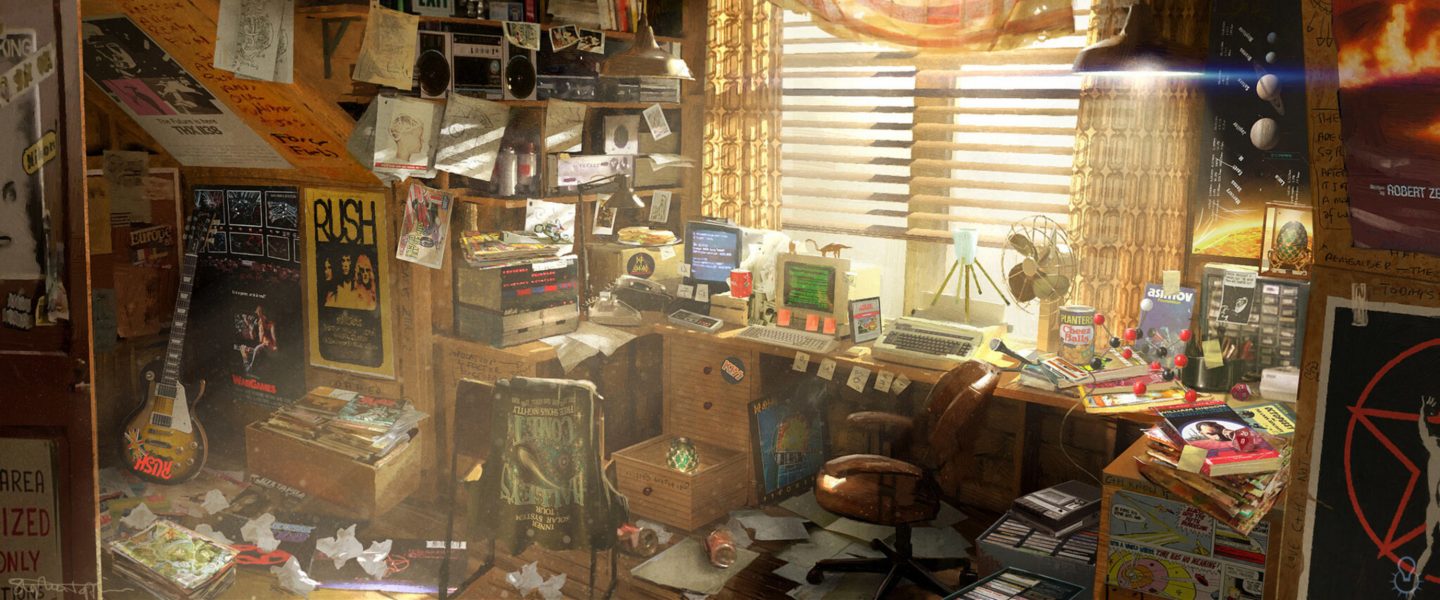
Poltergeist II The Other Side remains one of Jerry Goldsmith’s best scores of the 80’s and the fact that this could have easily been a re-hash of the Oscar nominated first score makes this score even more impressive. Goldsmith found a new identity to his score and the film by way of the Indian mystic Taylor, introducing his elegant shaman theme for synths over the opening credits (The Power). The lengthy opening affords the composer a chance to build his theme adding layer after layer with a final presentation of solo trumpet. From here Goldsmith introduces the ominous Kane theme, utilising the character’s evil Preacher incarnation and turning the theme into a distorted hymn, finally adding voices for the tortured sound of lost souls.
Things
remains a major highlight and opens with an ominous variation on the
original Carol Anne theme, before revealing a gorgeous rendition for
synths, strings, harp and woodwinds. This is further expanded in the
sublime Late Call with its mystical presentation of Carol Anne’s
lullaby, again for synths but ably supported by warm strings. The Mall
signals the ominous arrival of Kane into the lives of the Freelings as
Carol Anne’s theme is turned into a frantic suspense cue. They’re Back
is a major turning point for the score developing from chilling
‘Omenesque’ chorus, minus original lyrics, into a thoroughbred action
cue with snare drums and crisp brass.
Butterflies is a short but
hypnotic rendition of the Taylor theme and provides a rest bite before
the onslaught of evil kicks in. The Visitor is a new cue providing more
of Kane’s eerie accompaniment, but develops some intriguing latter
elements of chanting and stabbing string figures. Wild Braces opens
misleadingly with Carol Anne’s theme before all hell brakes loose with
distorted voices, beeping synths and more orchestral action and chorus.
Leave
Us Alone and The Smoke are low key developments of both Kane’s and
Taylor’s theme. The latter cue develops the Kane theme to a crescendo
with more chorus as his hideous past is relived before the ceremonial
Taylor theme returns to dominate and close. The Worm sequence opens as a
propulsive suspense cue, with strings and electronics providing the
chanting, before things settle to a chilling and dissonant variation of
the Kane theme as Stephen is possessed by a vomit monster. As the
creature is rejected and Stephen wins the battle Goldsmith unleashes a
maelstrom of snarling brass and thundering percussion for a wild finale.
Back to Cuesta Verde introduces the final act with Goldsmith whipping
the orchestra into a frenzy with a pulse pounding action piece for a
fight with a chainsaw, before melancholy sets in as Carol Anne’s theme
becomes ominously distant.
Reaching Out signals the final battle
between good and evil as the family enters the nether world to destroy
evil and retrieve Carol Anne. Goldsmith’s lengthy cue is a tug of war
between three themes as the family try to pull her back, with
Goldsmith’s celestial scoring repeatedly thrown between darkness and
light. Taylor’s theme is now trumpeted with brass, while electronics now
take on their true role as evil. Momentarily, with Carol Anne lost,
Goldsmith provides a heartbreaking moment with a tragic new variant on
her theme, before she is returned to the light signalling a triumphant
restatement. Taylor’s mystical theme makes one final appearance to close
the film and introduces the credits with Carol Anne’s touching lullaby
for chorus (Carol Anne’s Theme).
This is the fifth incarnation of Poltergeist II! Now featuring the complete score from analogue and digital mixes, the remaining short missing cues, alternates, cues minus choir and the unused finale music with and without choir.
1. Birth Of An Empire 2. World Conquerors 3. Tartar Crusaders 4. Last Khan Of Khans
This series covers the life and accomplishments of Genghis Khan and examines the art, culture, science, and technology of Mongol civilization. Genghis Khan left not only a highly trained army, but the beginning of an imperial administrative framework, a system of taxation, a communications network—all of which were built upon and expanded by his successors. The series was filmed on location in Mongolia and also features battle re-enactments shot at historical locations throughout Europe and Asia. 4-part series, 50 minutes each.
This program explores Europes initial response to the Mongol onslaught, which was to presume it some form of divine retribution sent to punish a sinful world. In 1243, Pope Innocent IV sent forth a series of emissaries to glean the will of the Mongol lords and persuade them to consider Christianity. Unexpectedly, the papal envoy discovered a government of ambassadors and emissaries that actively encouraged religious tolerance, resulting in the widespread flourish of Christianity.
I wish I could tell you this was an April Fools joke. I really do.
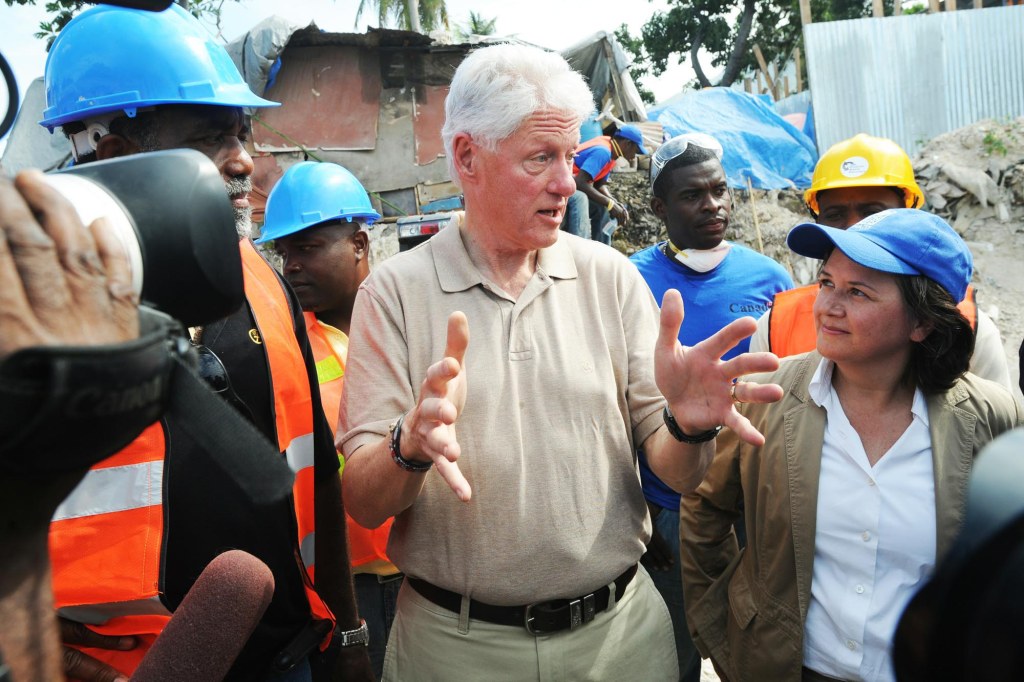
About a month ago Bill Clinton sat in congress and admitted that he played a vital part in the willful destruction of the agricultural base of Haiti in order to “relieve them of the burden of producing their own food so they could leap right into the industrial revolution“. Not only does he try to pass off their neoliberalization scheme as a “mistake” but he admits it was really only good for ”some of my farmers (subsidized rice farmers) in Arkansas“.
Well, not only was it good for “his farmers” from his home state who just happened to be political donors as well, but it was also very good for another interest he had back in the day; the company that created a Board of Directors chair for his wife when he became Governor of Arkansas.
You see, the “leap into the industrial revolution” Bill Clinton was talking about was the predicted migration to the urban centers that the population of the rural farming areas had to make. This “blight flight” produced a vast number of dislocated migrant workers living in shanty towns who would work for next to nothing in all the sweatshops that Bill Clinton helped set up.
And of course who benefited from that? Walmart. Bill Clinton’s good old friends, the Forbes 500 top ten billionaire Walton Family.
“Since 1981, until about a year or so ago we started rethinking it, we thought that we rich countries that produce a lot of food should sell it to poor countries and relieve them of the burden of producing their own food so that, thank goodness, they can leap right into the industrial era. It has not worked. It may have been good for some of my farmers in Arkansas but it has not worked. It was a mistake. It was a mistake that I was a party to, I am not pointing the finger at anybody, I did that. I have to live everyday with the consequences of the lost capacity to produce their rice crop in Haiti to feed those people.” Bill Clinton, March 2010
Clinton’s mia culpa is clearly too little too late, especially considering the fact that he has been appointed, by his Secretary of State wife no less, to become the defacto emperor of Haiti.
In short, what Bill Clinton is saying is he purposefully and willfully destroyed the economy and the standard of living for millions of Haitians, so naturally of course, we should hand over to him complete control of all the money donated and raised for the rebuilding of that same nation. A $10 billion dollar fund will be handed over to one of the chief architects of the neoliberalization of Haiti …and no one bats an eye.
What Bill Clinton actually did was just an extension of the neoliberal scheme started by Reagan and Bush 41. The idea was to collapse the agricultural base of targeted nations by opening up their markets to corporate produced agribusiness food products that were subsidized by the US taxpayers.
This allowed these businesses, “my farmers” as Clinton refers to them, to get in and sell cheap products that would undermine rice prices in Haiti to the point where local farmers could not afford to compete. Top that with forcing the Haitian government to pass laws requiring local farmers to buy seed and fertilizer from our companies at inflated rates, and you have a recipe for deliberately wiping out the entire indigenous agricultural base.
Once that income source was cleared out, the rural communities that surrounded the agricultural industry of Haiti would soon be forced to relocate into the urban centers in order to simply survive. And those people moved right into Bill Clinton’s other neoliberal trap in Haiti, the sweatshop garment industry.
Forced to live like peasants and work like dogs for slave wages, the people of Haiti suffered for decades as a direct result of Bill Clinton’s and George H. W. Bush’s neoliberalization of a nation. The people suffered horrible lives for decades while the friends of Bill Clinton got rich selling those shirts and sneakers at Walmart. Of course those products being flooded into America ultimately undermined our textile industry and the strength of their realted unions and thus the viral infection of neoliberalization spread.
In a more recent interview, also covered on Democracy NOW!, Clinton again talks about the “mistake” they made back then, only this time he leaves out the “my farmers” part. But he does go a bit further in explaining the deeper destruction his neoliberal policies caused the people of Haiti. Policies that were basically enacted at gunpoint. Keep in mind the notion that the same process is happening here as you read his comments.
“We really believed for 20 years that if you moved agricultural production there (I suppose hes talking about “his” farmers in his home state again) and then facilitated its introduction into poorer places (forced open markets) you would free those places to get aid (impoverish the nation so the IMF and World Bank could come in) to skip agricultural development and go straight into an industrial era (garment factory sweatshops) and it’s failed everywhere its been tried… and it also undermines a lot the culture, the fabric of life, the sense of self-determination…. we genuinely thought we were helping Haiti…” Bill Clinton, late March 2010
As he delivered that last little part, the part where he says they thought they were helping the people of Haiti, you can see a little smirk on his face. He actually breaks out in a little smile as he says it.
Instead of flowing directly to the Haitian government, the aid will be managed by a proposed Interim Haiti Recovery Commission co-chaired by former President Bill Clinton and Haitian Prime Minister Jean-Max Bellerive. Democracy NOW!
It’s not hard to understand the real nature of what the Bill Clinton led program actually has in store for Haiti as that the signs are already there for all to see.
Last week Clinton and George (wipe my hands off) Bush traveled down to Haiti to strong-arm the puppet president there to pass a law which would allow the new neoliberal Clinton regime to take any land they saw fit from whomever they wanted for the reconstruction process. Its kind of an eminent domain law which the donors at this weeks conference wanted as an assurance prior to investing their “donations”. It basically allows for any corporation that Clinton is shilling for to take any land they want in order to basically do anything they want with, as long as it is going to turn a profit.
“of course this entire conference is the culmination of the final takeover of Haiti by the US… its pretty much a US run show. The World Bank is going to be deciding who gets the money.”
Clinton has apparently turned over a new leaf, even though he is still surrounded by the same financial advisors he had with him back in the days when they were “mistakenly” destroying the “fabric of life” of the Haitian people and others in Africa and so on. This new leaf seems to be to reintroduce agricultural business back into Haiti. I wonder if “his farmers”, the massive agribusiness companies, will be looking to move down to Haiti to set up corporate farms down there. The soil should be choice at this point considering it hasn’t been farmed for decades. Should get pretty good crop yields per acre wouldn’t you say? And with all that cheap labor waiting for “aid” down there, profits should be through the roof.
Only in a country this fucked up could a story like this one just slip under the radar of the main stream media.
When you have a political dynasty (one of two) so entrenched in our corrupt system that the secretary of state can anoint her own husband to manage $10 billion in reconstruction aid for a country that he has admittedly decimated, on purpose, for decades… and that story gets nearly zero coverage, and what little coverage it does get is actually positive, its beyond ridiculous. Just beyond ridiculous.
No wonder Clinton was practically laughing when he talked about thinking he was helping the people of Haiti. He was laughing at us. We are the April Fools joke here. and that ain’t no joke.
The mausoleum of Oljaytu was constructed in 1302–12 in the city of
Soltaniyeh, the capital of the Ilkhanid dynasty, which was founded by
the Mongols. Situated in the province of Zanjan, Soltaniyeh is one of
the outstanding examples of the achievements of Persian architecture and
a key monument in the development of its Islamic architecture. The
octagonal building is crowned with a 50 m tall dome covered in
turquoise-blue faience and surrounded by eight slender minarets. It is
the earliest existing example of the double-shelled dome in Iran. The
mausoleum’s interior decoration is also outstanding and scholars such as
A.U. Pope have described the building as ‘anticipating the Taj Mahal’.
Brief Synthesis
In north-western Iran’s city of Soltaniyeh, which was briefly the capital of Persia’s Ilkhanid dynasty (a branch of the Mongol dynasty) during the 14th century, stands the Mausoleum of Oljaytu, its stunning dome covered with turquoise-blue faience tiles. Constructed in 1302-12, the tomb of the eighth Ilkhanid ruler is the main feature remaining from the ancient city; today, it dominates a rural settlement surrounded by the fertile pasture of Soltaniyeh. The Mausoleum of Oljaytu is recognized as the architectural masterpiece of its period and an outstanding achievement in the development of Persian architecture, particularly in its innovative double-shelled dome and interior decoration.
The Mausoleum of Oljaytu is an essential link and key monument in the development of Islamic architecture in central and western Asia. Here, the Ilkhanids further developed ideas that had been advanced during the classical Seljuk phase (11th to early 13th centuries), during which the arts of Iran gained distinction in the Islamic world, thereby setting the stage for the Timurid period (late 14th to 15th centuries), one of the most brilliant periods in Islamic art. Particularly relevant are the mausoleum dome’s double-shell structure (an inside shell and an outside shell), and the materials and themes used in its interior decoration. The very large 50-m-high dome is the earliest extant example of its type, and became an important reference for the later development of the Islamic dome. Similarly, the extremely rich interior of the mausoleum, which includes glazed tiles, brickwork, marquetry or designs in inlaid materials, stucco, and frescoes, illustrates an important movement towards more elaborate materials and themes. The Mausoleum of Oljaytu thus speaks eloquently to the Ilkhanid period, which was characterised by innovations in structural engineering, spatial proportions, architectural forms, and decorative patterns and techniques.
Excavations carried out in the 790-ha Mausoleum of Oljaytu property have revealed additional vestiges of the old city, and a large part of this property has retained its archaeological character. As the ancient capital of the Ilkhanid dynasty, Soltaniyeh represents an exceptional testimony to the history of the 13th and 14th centuries in Iran.
Criterion (ii): The Mausoleum of Oljaytu forms an essential link in the development of the Islamic architecture in central and western Asia, from the classical Seljuk phase into the Timurid period. This is particularly relevant to the double-shell structure and the elaborate use of materials and themes in the decoration.
Criterion (iii): Soltaniyeh, as the ancient capital of the Ilkhanid dynasty, represents an exceptional testimony to the history of 13th and 14th centuries.
Criterion (iv): The Mausoleum of Oljaytu represents an outstanding achievement in the development of Persian architecture, particularly in the Ilkhanid period, characterised by its innovative engineering structure, spatial proportions, architectural forms, and the decorative patterns and techniques.
Integrity
Within the boundaries of the property are located all the elements and components necessary to express the Outstanding Universal Value of the property, most importantly the Mausoleum of Oljaytu. The exterior decorations of the mausoleum have suffered severe decline, which has affected its integrity. Nevertheless, the internal decorations have remained intact to a large degree. Urban development around the property represents a potential threat, though such development is slow.
Authenticity
The historical monument of the Mausoleum of Oljaytu at Soltaniyeh is authentic in terms of its form and design, materials and substance, and location and setting. Restoration work has carefully respected the authenticity of the monument, utilizing traditional technology and materials in harmony with the ensemble.
Protection and management requirements
Soltaniyeh is state owned, and protected as a national monument on the basis of the Iranian Law on the Conservation of National Monuments (1982) and the Law on City Properties (1982). Parts of the buffer zone are in private ownership. The principal management authority of the property is the Iranian Cultural Heritage, Handicraft and Tourism Organization (which is administered and funded by the Government of Iran) through its local office in Zanjan. There is a management plan with short-term (1-year), mid-term (3-year), and long-term (5-year) objectives related to equipment, research, restoration and conservation, and development of tourism at Soltaniyeh. Financial resources for the property are provided through national budgets.
Sustaining the Outstanding Universal Value of the property over time will require continuing to respect scientific standards and to properly safeguard the monument when undertaking conservation and restoration projects; controlling the effects of urban development around the property by devising and executing appropriate management strategies in this regard; and directing studies of the Mausoleum of Oljaytu (including, among others, studies of the decorations, reinforcement projects, and scientifically justified tourist attraction programs) toward specific, detailed outcomes that maintain and/or enhance the Outstanding Universal Value, integrity, and authenticity of the property.