
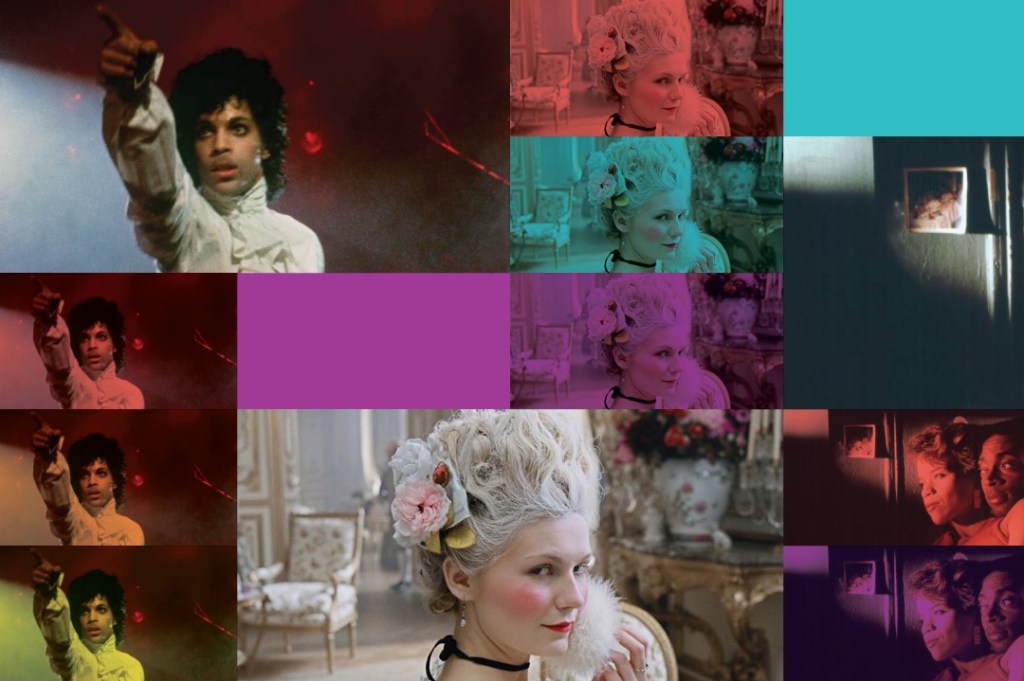
From Black Panther to Clueless, Dazed and Confused to Purple Rain, the music that has defined modern filmmaking.
With the Oscars coming up this Sunday, Pitchfork is celebrating with our first Music & Movies week.
What would the movies be without music? Imagine Do the Right Thing without Radio Raheem’s blaring boombox. Or Pulp Fiction without Dick Dale’s cataclysmic surf-rock guitar. Or Super Fly without Curtis Mayfield’s haunted croon. It’s impossible to do. Throughout film history, songs have added glory to struggle, majesty to landscapes, depth to heroes and villains alike. When sound and vision meet, transcendence ensues.
In looking at the greatest movie music of all time, Pitchfork is publishing two separate lists this week: best soundtracks and best original scores. Today, we discuss soundtracks, which we’re defining as collections of songs that have been used in films. These are usually multi-artist compilation albums, and almost always include songs with vocals and lyrics. Stay tuned for the best original scores list later in the week. (We’re excluding musicals from both lists, as they feel like a different category entirely.)
Though directors are often given sole credit for a movie’s soundtrack, many people help bring music to the big screen. Among them, music supervisors are an essential and undersung part of process. These are the people who find songs and secure their usage in films, which means they likely played a huge role in shaping your music taste today. So to kick things off, let’s talk to one of cinema’s most accomplished music supervisors.
Over the last 30 years, Karyn Rachtman has brought her taste and business savvy to some of the most iconic soundtracks of all time: Clueless, Pulp Fiction, Reality Bites, Romeo + Juliet, Moulin Rouge!, and Boogie Nights, just to name a few. Rachtman, who now runs her own music supervision firm, Mind Your Music, and lives in New Zealand, called Pitchfork to talk about career hangups, convincing musicians to participate in scandalous scenes, and one unforgettable dream meeting.
Pitchfork: When you’re not actively working on a movie, do you look for songs to put on the back burner for future soundtracks?
Karyn Rachtman: Back in the day, I was a hoarder. I could go into Tower Records with an expense account. If I liked the artwork, if somebody told me about the band, if it was from a different country, I would always pick up whatever cassette was on the shelf. Now, I’m really appreciating the daily mixes on Spotify, even though I always prided myself on being that person who digs through crates. When people just send me general submissions, I usually listen to the more obscure stuff. I figure I’ll hear all the pop stuff anyway, but I’m not really into pop, and I don’t think people are hiring me on projects because I’m going to bring them a pop song.
Is being a music supervisor way more business-focused than people assume?
It’s a creative business, but it’s business. I’m like the casting director for music. Like, tell me what you’re looking for, I’m going to get it for you. In the case of Quentin Tarantino, I got to put in my two cents on Reservoir Dogs and Pulp Fiction. He knew every song he wanted but he was told he couldn’t have them, like Stealers Wheel’s “Stuck in the Middle With You” for Reservoir Dogs. I didn’t even have the job and I was on the phone begging and pleading Stealers Wheel members Joe Egan and Gerry Rafferty to let us use it. One of them was religious and didn’t like the idea of using their song to a scene where somebody’s ear gets cut off. And I had to be like, “By the way, I don’t have any money.”
Paul Thomas Anderson came to me because he wanted to make sure his vision for Boogie Nights was delivered and that he got the songs he wanted. It was very hard to get people to commit their songs in a movie about porn. It’s a lot of strategy and planning. How are you going to get these people involved? Most of the time, it all comes down to how good your film is—and in my early career, I worked with great directors.
When you’re reaching out to musicians and labels, do you always have to describe the scene?
Absolutely—and sometimes, you play it down. Like for Reservoir Dogs’s ear-cutting scene, I would hype up the movie, then if it’s anything that might turn off the publisher or the record company or the artist, you explain the best you can. Sometimes, you selectively leave things out.
Which soundtracks were you most heavily involved in?
I was very involved in Clueless but it was very much [writer/director] Amy Heckerling. Reality Bites was very much a combination of Ben Stiller, me, and the producer. Ethan Hawke brought in a demo tape of Lisa Loeb on Reality Bites and it went to No. 1. Have you heard the soundtrack for The SpongeBob SquarePants Movie?
I know Avril Lavigne is on it.
Oh, she’s the worst part. That was sad. Flaming Lips, Wilco, and Ween are on it, and I got this kooky band from Japan on this great fucking soundtrack. No offense to Avril darling Lavigne, but I was so bummed when the studio made us go with that when we had this incredible quirky record. I had to appease the corporate. Like in Reality Bites, you know when they’re sitting in the car and they’re singing “Baby, I Love Your Way” by Peter Frampton? It’s such a cute scene, but then the record company chose a reggae cover of it. It’s so lame. I’m recalling these memories of being angry.
What’s the business of soundtracks like now, in the age of streaming?
It’s really interesting. I took a big break from doing soundtracks and I’m back in it now. Around 2000 I started to notice people weren’t buying records. I think for a while there was a lull where soundtracks weren’t as hot or sexy but now, the music industry’s coming back. The resurgence of vinyl helps. There are some great TV soundtracks now, like “Russian Doll,” which uses Harry Nilsson’s “Gotta Get Up” many times. Harry Nilsson means everything to me. One day when I was really depressed, I remember saying to myself, “It’s OK, Karyn, one day you’re going to meet Harry Nilsson.” Then I was doing Reservoir Dogs and Quentin didn’t have an end title song. I suggested using “Coconut” by Harry Nilsson, and Quentin said OK. I had to show Harry the film, so I got to meet Harry Nilsson. That was a pivotal moment in my life.
Judgment Night (1993)
Judgment Night is a forgettable film about a drug-related murder, but its soundtrack maintains a deserved infamy thanks to its peculiar but effective pairing of rappers and rock groups. The real-life mashups of Sonic Youth and Cypress Hill, Biohazard and Onyx, Slayer and Ice-T were seedy, gruff, and electrifying upon release—but mostly, the overall effect was abrasively odd, heavy with middle-school anarchist lyrics like, “Chaos, chaos, chaos, chaos/Don’t give a fuck!” The soundtrack is like a time capsule from an alternate universe, and you can credit (and blame) it, in part, for rap-rock. –Matthew Schnipper
High Fidelity (2000)
To this day, High Fidelity remains Bruce Springsteen’s only acting credit in a film. Sitting at the bedside of Rob Gordon—the film’s record-collecting hero, played with mopey, proto-Seth Cohen narcissism by John Cusack—a muscled ’90s Bruce rips uncharacteristically bluesy riffs on his guitar and gives questionable advice about getting back in touch with your exes. “They’d feel good, maybe,” drawls the Boss. “But you’d feel better.” Here is the ultimate fantasy of music fandom: the artists you love speaking directly to you, about your problems, at the expense of everyone else in the world. High Fidelity’s soundtrack was tasked with summarizing this mindset in a tidy 15 tracks, and its curation was apparently one of the most difficult tasks in bringing Nick Hornby’s 1995 book to the screen. The 2000 film succeeds by blending old-school favorites (the Kinks, Elvis Costello, the Velvet Underground) with some of the previous decade’s most promising newcomers (Smog, Stereolab, Royal Trux). With no new music written specifically for the film (other than Jack Black’s in-character rendition of “Let’s Get It On”) it reintroduced the idea of the soundtrack as a lovingly crafted mixtape, a trend that extended toward Garden State and beyond. –Sam Sodomsky
The Shining (1980)
More than a decade after 2001: A Space Odyssey, director Stanley Kubrick reused a controversial trick. Once again, he scrapped almost all of the score that had been written for his new film, The Shining—this time by synth innovator Wendy Carlos, who had been essential to A Clockwork Orange, and producer/vocalist Rachel Elkind—and used only snatches of their work. In the final cut, their sepulchral electronics are only heard in the early scene where the Torrance family navigates the steep roads to their fateful hotel. Still, it is the defining piece of the film, its familiar lumbering rhythm and simple melody haunted by an unease you can never quite identify. In it, Carlos establishes the essence of the creeping dread that dominates the Overlook Hotel. (The rest of Carlos’ unused score is absolutely worth seeking out, in part to reimagine the ways it might have changed The Shining and in part because it’s terrifying.) For the rest of his film, Kubrick opted for the oversized melodrama of modern Eastern European classical music, with the strains of Krzysztof Penderecki’s shrieking strings and György Ligeti’s orchestral lurches hinting at premonitions and fears left unspoken. Ligeti’s creeping “Lontano” poisons moments that should be playful or even innocent; Béla Bartók’s “Music for Strings, Percussion and Celesta” gives little Danny’s tricycle romps the terror of a sweaty nightmare. But The Shining, to an extent, is about haunted spaces, so Kubrick uses period pieces—most famously, Ray Noble and his Orchestra’s drifting ballroom ballad “Midnight, the Stars, and You”—to pull ghosts into an unraveling present. These pieces become essential props, as symbolic as Jack’s typewriter and as alarming as rivers of blood rushing out of elevators, shaping a latticework of horror that feels as eternal as whatever lurks in Room 237. –Grayson Haver Currin
Waiting to Exhale (1995)
The Waiting to Exhale soundtrack, with its signature soul snares and weightless melodies, is still an essential self-care listen. On it, producer-songwriter Babyface assembled an Avengers team of the most powerful and graceful women in R&B, relaying the film’s themes of female empowerment, individuality, and kinship. It became one of the 15 highest-selling soundtracks of all time, going seven times platinum, and includes a laundry list of moody ’90s hits. The invincible Whitney Houston sounds supremely comfortable paired with Babyface’s soothing drums on “Exhale,” Chaka Khan’s smoky rendition of “My Funny Valentine” shines over the woozy R&B snap-filled melody, and Brandy’s funky “Sittin’ Up in My Room” serves as a youthful dance anthem. The soundtrack is an uplifting and joyful ode to black women’s power and love, especially for themselves. –Alphonse Pierre
The Wicker Man (1973)
The Wicker Man is never what you expect it to be. Like its hero, a Scottish police sergeant trying to find a missing girl in a pagan community, the New York musician Paul Giovanni was a stranger to the old Celtic folkways he was hired to investigate for Robin Hardy’s haunting horror film. His outsider’s ear for both the then-booming British folk scene and its ancient antecedents made the music he composed the ideal mirror for such a twisted journey. The opening song is a tightly harmonized adaptation of Scottish poet Robert Burns’ “The Highland Widow’s Lament,” nearly abrasive in its mournful mountain-air beauty. Sex is a frequent topic for the film and music, rendered in forms both profane (the absolutely filthy drinking song “The Landlord’s Daughter”) and sacred (“Willow’s Song,” the set’s dirty-minded but gorgeous standout). Rousing community singalongs and sparse hymns of ritual sacrifice weave conflicting narratives of their own. It’s a soundtrack that casts strange shadows and remains ungraspable, like a tongue of flame. –Sean T. Collins
Black Panther (2018)
Before this soundtrack, Kendrick Lamar’s vision of Africa was vague. He endorsed a “Zulu love” and wanted to be adored like Nelson Mandela, but these gestures used Africa as a hazy proxy of blackness. The Black Panther soundtrack gives such ideas more life and dimension, rooting them in the voices and sounds of a fuller African diaspora. Linking artists from Canada, California, South Africa, and the United Kingdom, Kendrick renders blackness as global and multifaceted. It’s funny that this expansion occurs through a historically corny comic book character now owned by Disney, but that odd backdrop isn’t taken for granted. Superhero comics traffic in wish fulfillment, and imagination is in abundance here. SOB X RBE perform as rowdy anti-heroes; Future villainously celebrates his sexual conquests with giggly scats; Zacari and Babes Wodumo resolve conflict through sensual dance. The soundtrack falls flat when the ideas are too basic, but the record generally rises to the occasion, positioning Kendrick and the many worlds he links as parts of a brilliant whole. Wakanda is a zany idea, and in Kendrick and co.’s hands, it almost feels real. –Stephen Kearse
Gummo (1997)
Harmony Korine burst on the film scene in the mid-’90s like a problematic Robert Bresson, obsessed with cinematic voyeurism and heavy metal. The art-house prodigy supposedly cast his debut film in less than an hour “out of, like, Burger Kings and slaughterhouses,” which gives Gummo a very Cassavetes-covered-in-rats feel, and its soundtrack further carved out a niche for Korine’s sublime, nihilistic worldview. Speed riffs and morbid howls from ’90s black, death, and stoner metal cut into the film’s unsettling vérité scenes, but his use of pop music stands out even more. A snippet of Madonna’s “Like a Prayer” blasts as a gawky young boy tapes a bundle of utensils together and “lifts weights” in his basement. The movie ends in the pouring rain while the entirety of Roy Orbison’s “Crying” plays, as a mute boy wearing bunny ears gets kissed in a pool and then holds up a dead cat as a prize for the audience. The song swells magnificently, creating dirtbag art at its finest. –Jeremy D. Larson
American Graffiti (1973)
American Graffiti is a hall-of-mirrors of nostalgia, and music guides the experience. George Lucas’ film unfolds over one long night at the end of summer 1962, as high school kids cruise around the streets of Modesto, California, with the radio on, thinking about their futures. The hits they hear—by Buddy Holly, the Beach Boys, Frankie Lymon & the Teenagers, and Chuck Berry—are presented by Wolfman Jack, the legendary disc jockey hosting the show they’re all glued to. These songs mostly date from the mid-to-late ’50s, so by ’62, for the characters in the film, they already carry the ache of time gone by. This longing is echoed and amplified by Lucas, who is looking back on this transitional moment a decade later, when he and his generation of Baby Boomers were about to turn 30. American Graffiti’s soundtrack itself has a yearning eloquence: The two-LP set consists of the songs featured in the film in the order they appear, and it retains Wolfman’s intros and hepcat patter. So it’s not just a collection of songs used or a sampler of timeless hits from the era—it was also a way to relive the experience at home in the pre-VCR era, an audio prompt encouraging your mind to dream the pictures. –Mark Richardson
Singles (1992)
When one of the most famous songs in “Portlandia” refers to the “dream of the ’90s” being alive in the Pacific Northwest, they’re singing about the dream of Singles. In 1992, Seattle’s grunge scene met an American economic boom, and the earnestness of the era translated into a soundtrack with an edifice of deepness but a heart full of jangle. Surprisingly, among tracks from Pearl Jam, Alice in Chains, and Soundgarden, it’s “Dyslexic Heart” by the Replacements’ Paul Westerberg that stands up as the most memorable—his “na na na” refrain is probably the one that’s been stuck in your head for the past 27 years, and deservedly so. –Matthew Schnipper
Midnight Cowboy (1969)
Midnight Cowboy’s soundtrack melds original material and pre-existing songs with seamless grace. Much like the film’s two central characters—Jon Voight’s wannabe sex worker cowboy and Dustin Hoffman’s sickly con artist—they are opposite forces that create an unlikely harmony. Crucially, Harry Nilsson’s “Everybody’s Talkin’,” a cover of Fred Neil’s country folk ballad, bookends the film. In the beginning, the melodic jangle of the guitars captures the optimism and naïveté of a cowboy leaving the South for the big city. Yet the lyrics of escapism and new pastures—“I’m going where the sun keeps shining/Through the pouring rain”—also reflects the character’s final journey as he leaves the city. Likewise, John Barry’s main theme is embedded in the film; its mournful, fragile solo harmonica underscores the pair’s loneliness and detachment as they navigate an unforgiving city. Subtle yet sweeping strings float behind, a far cry from Barry’s bold, striking stringwork in “The James Bond Theme”—instead they appear here as a ghostly presence. During the Warhol party scene, the psychedelic rock of Elephants Memory (who later became John Lennon and Yoko Ono’s backing band) adds another dimension to a soundtrack that is as eclectic as it is singular. –Daniel Dylan Wray
Brown Sugar (2002)
The Brown Sugar soundtrack is perfect because every time a song plays in the film, it connects directly with Taye Diggs’ outfit. Early on, when we’re meeting his character, Dre—a high-powered A&R man for the definitely-a-scam Millennium Records, wearing his best get-money suit—Mos Def’s “Breakdown” blares imperially. Then, as Diggs begins to realize he’s in love with his childhood friend, Sidney, and pulls out his skintight turtleneck to prepare for some deep thoughts, the soundtrack offers up Erykah Badu and Common’s duet “Love of My Life.” Finally, when Dre wins the love of Sidney, wearing a white sweater fit for a Macy’s ad, in kicks Mos Def’s heartfelt, Kanye West-produced jam “Brown Sugar.” The whole soundtrack is spiritually—and sartorially—aligned with the best of what early-2000s R&B and hip-hop had to offer. –Alphonse Pierre
The Last Days of Disco (1998)
The nightclub at the heart of Whit Stillman’s film, set in the early ’80s, is a hotbed of drama: girl-on-girl pettiness, sexual psychodramas, and fraudulent schemes. And most of the characters are self-centered, privileged white yuppies. But somehow New York’s most insufferable people still make the city feel intoxicating, especially when their carousing is soundtracked with so many hits. When the film opens with Carol Douglas’ euphoric pop song “Doctor’s Orders,” it is so healing that we momentarily forget how this club—and the entire community it represents—is already doomed. Dancefloor anthems from Chic, Diana Ross, and Sister Sledge drop back-to-back, with all the urgency of a DJ trying to preserve their dying scene for one last night. Though the film was made nearly 20 years after disco’s heyday, its energy feels both of a time and timeless. Even as it stages disco’s funeral, the film captures that feeling of hearing “Good Times” at the club while shyly sipping on a vodka tonic, pushing off daylight for a little longer. –Kristen Yoonsoo Kim
Performance (1970)
In Donald Cammell and Nicolas Roeg’s Performance, Mick Jagger serves as a cultural readymade, preloaded with associations as the singer of the 1960s’ most dangerous and Dionysian rock band. Fittingly, the soundtrack resembles a parallel-world Rolling Stones album. Producer Jack Nitzsche, an architect of Phil Spector’s Wall of Sound, had also played keyboards on four of the Stones’ peak-period LPs. Singer Merry Clayton, the show-stealing elemental force on “Gimme Shelter,” dominates here with her unique brand of psychedelic, psychotic gospel: jousting with Bernie Krause’s sinister Moog on the title track, humming and moaning with hair-raising intensity on the climactic “Turner’s Murder.” Randy Newman’s rasp and Ry Cooder’s slide guitar align fully with the Stones’ sound circa “Honky Tonk Women.” Nitzsche’s own compositions are somewhat slight by comparison, but he does offer a supremely late-’60s decadence title in “Rolls Royce and Acid.” There’s also a terrific turn from Jagger himself on “Memo From Turner,” in which he fuses his own insolent white-blues persona with the psyche of an East London gangster. Roeg would try the pop-star gambit once more with Bowie on The Man Who Fell to Earth, but while that film vies with Performance for Greatest Rock Movie Ever, the film’s soundtrack pales next to its Jagger-infused predecessor. –Simon Reynolds
Eternal Sunshine of the Spotless Mind (2004)
Perennial L.A. cult figure Jon Brion’s Eternal Sunshine of the Spotless Mind score, rich in filigree, has all the hallmarks of his own music and his more pointillist collaborations with Fiona Apple, though the brief cues often pull up agonizingly short of fully realizing that promise. But the bruised heartache that left his solo album on the major-label shelf for years was the perfect match for a film that crystallized the impossibility of a perfect love, exploding into its ultimate form with Beck’s devastating cover of the Korgis’ “Everybody’s Got to Learn Sometime.” Even the most invested follower of Brion’s work would’ve been surprised by his trajectory after this soundtrack, which elevated him from a fêted figure within a tight local scene to a go-to collaborator for Kanye West and Spoon. –Laura Snapes
Marie Antoinette (2006)
Being a teenager sucks, especially when your excessive partying manages to piss off an entire nation. That’s the gist of Sofia Coppola’s courtiers-and-Converses film Marie Antoinette, a pop-art explosion that attempts to view Antoinette’s fraught time on the French throne through the lens of her rushed adolescence. The film’s expertly curated soundtrack channels that teenage essence more effectively than the film itself; alongside selected harpischord sonatas and understated piano, the dystopian majesty of Siouxsie and the Banshees’ “Hong Kong Garden” reigns, an extended string-laden intro adding to the pomp and circumstance. The Cure and the Strokes are present and accounted for, while the Radio Dept.’s gorgeously hazy indie pop perfectly complements the natural-light approach of cinematographer Lance Acord. Although the soundtrack’s intentional anachronisms fueled the “pop video” criticisms the film initially faced, its embrace of teenage alienation and abandon feels universal. –Larry Fitzmaurice
Withnail and I (1987)
Following two struggling actors with an unquenchable thirst for drinks and drugs, Withnail and I is a British cult favorite that captures the last gasp of London’s swinging ’60s and the hangover after. Music is used sparsely and wisely in the film; the acerbic, caustic, and cripplingly funny dialogue often needs little assistance. When it is employed, it’s brilliant: King Curtis’ live cover of Procol Harum’s “A Whiter Shade of Pale” clogs the screen as densely as the cigarette smoke that fills our antiheroes’ apartment, amping up the claustrophobia as the camera pans across a tableau of domestic misery and filth. Jimi Hendrix screeches from the speakers as the pair leaves London, booze firmly in hand; once they’re in the countryside, the original music of David Dundas and Rick Wentworth conjures a more pastoral and melancholic tone. The clash between potent rock and more plaintive acoustic folk captures the main characters’ duality: Withnail (Richard E. Grant) is all pomp and exuberance, with “I” (Paul McGann) as his sensitive foil. “Withnail’s Theme,” by Dundas and Wentworth, has a fairground quality, woozy and disorienting, mimicking the young wastrel’s constant drunkenness. The entire soundtrack has a similarly intoxicating effect. –Daniel Dylan Wray
Kill Bill Vol. 1 & 2 (2003)
Quentin Tarantino is a self-proclaimed vinyl nerd, a collector who often conceptualizes scenes by sorting through his stacks for the perfect sound. His Kill Bill films are breathless acts of pastiche, splicing together interpretations of Blaxploitation, spaghetti Western, martial arts, and even anime into Uma Thurman’s pursuit of vengeance. Likewise, the dual soundtracks serve as sort of auditory hyperlinks, musical keys to Tarantino’s catacomb of references. Both volumes swing wildly, from Luis Bacalov’s somber Old West mix of strings and harmonica to the irrepressible thrust of Isaac Hayes’ “Run Fay Run,” from the pan flute vibes of Gheorghe Zamfir to the funk-rock bombast of Japanese guitarist Tomoyasu Hotei. Bits of dialogue and incidental music from RZA weave these fragments together, turning the sets into personal listening sessions of Tarantino’s cherished finds. Nearly two decades on, the results feel prescient of our current curator culture, in which you’re allowed an intimate peek into a sharp mind. –Grayson Haver Currin
Clueless (1995)
If in the summer of 1995, while driving your Jeep to the mall to pick up some knee socks from Contempo Casuals, you tuned into your local modern rock radio station, there was a 90 percent chance you’d hear an artist from the Clueless soundtrack. Spanning meat-and-potatoes alt-rock (Counting Crows, Cracker), ska (the Mighty Mighty Bosstones), Britpop (Supergrass, the Lightning Seeds), pop-punk (the Muffs, the Smoking Popes), and even, in Cher Horowitz’s words, “maudlin” “cry-baby” music (Radiohead! As if!), these 14 tracks embodied the wild, anything-goes, post-Nirvana era when tiny bands suddenly found themselves with major label deals and huge Hollywood film syncs. This collection of songs doesn’t make much sense, but somehow works together perfectly when cocooned inside the delightfully absurd world of the film—just like one of Cher’s outfits. –Amy Phillips
I’m Not There (2007)
I’m Not There isn’t really a Bob Dylan biopic; it’s more of a kaleidoscopic array of freewheelin’ riffs on a legend. In Todd Haynes’ film, Dylan is played by several different actors, including Richard Gere, Heath Ledger, Christian Bale, and (most memorably) an astoundingly convincing Cate Blanchett, who inhabits the singer’s amphetamine-fueled mid-’60s era with ease. Fittingly, I’m Not There’s expansive soundtrack gives a wide range of artists free reign to reimagine Dylan classics and deep cuts. Sonic Youth expertly navigate the enigmatic twists and turns of the title track. Cat Power’s Chan Marshall savors every syllable on a rollicking “Stuck Inside of Mobile With the Memphis Blues Again.” Willie Nelson and Calexico team up for a haunted rendition of “Señor (Tales of Yankee Power)” that might even surpass Dylan’s original. Sure, the less said about Jack Johnson’s milquetoast reading of “Mama You’ve Been on My Mind/A Fraction of Last Thoughts on Woody Guthrie,” the better—but overall, I’m Not There is a stellar companion to an ambitious film. –Tyler Wilcox
Dazed and Confused (1993)
Set in the hazy purgatory of the last day of middle and high school, Dazed and Confused put smoky, untenable moments of teenage ennui on celluloid. And even if your own awkward adolescence didn’t include cruising around a still-weird Austin in the mid-’70s, the film’s soundtrack lets you ride shotgun in a Chevy Chevelle with the 8-track deck on full blast. Forgoing classic rock fodder—meaning no appearance of Led Zeppelin’s own “Dazed and Confused”—director Richard Linklater instead highlights the era’s glut of butt-rock, to thrilling results. The soaring, gleeful choruses of Alice Cooper’s “School’s Out” and the Runaways’ “Cherry Bomb” are pheromonal joys, and the soundtrack finds stoned profundity in the grunts of Ted Nugent and Rick Derringer. It even transforms Foghat’s “Slow Ride” into something approaching a mantra. –Andy Beta
The Graduate (1967)
While filming The Graduate, director Mike Nichols received a copy of Simon & Garfunkel’s 1966 record Parsley, Sage, Rosemary and Thyme, and heard what he needed to bring his lost-soul characters to life. Nichols’ request was met by skepticism from the folk duo (Paul Simon called the source novel “bad Salinger”) but, in the end, he used two songs from Parsley and two from Sounds of Silence—plus a new one from the pair, “Mrs. Robinson.” Simon & Garfunkel’s music deepened the alienation felt by the film’s protagonist (Dustin Hoffman) and seemingly everyone else in the film, too. “The Sounds of Silence” is especially emblematic, used on multiple occasions to channel generational anxiety and uncertain futures, while “Mrs. Robinson” serves as a blithe little ode that has more to do with mourning great men than chasing its alluring title character. Although Simon & Garfunkel are often given full credit for the soundtrack off the back of that hit, contributions from composer Dave Grusin also provide atmospheric embellishments. Together, they made The Graduate one of the first films to be defined largely by its music, and one of the earliest examples of a director curating pre-existing radio-friendly pop for a film. –Quinn Moreland
Frances Ha (2012)
In Frances Ha, Greta Gerwig and Noah Baumbach’s monochrome dramedy, Gerwig’s title character dances across New York streets to David Bowie’s “Modern Love.” The scene is an homage to Leo Carax’s 1986 drama Mauvais Sang, in which its protagonist stumbles through the dark streets of Paris to the song. But while the original scene is brooding and intense, Frances Ha’s take is lighthearted and goofy, capturing the film’s frank portrayal of directionless 20-somethings in New York. Echoing the French New Wave tribute of its cinematography, Frances Ha sets its gleeful millennial moments to works by the venerable French composers Georges Delerue and Antoine Duhamel. And when Frances finally takes a weekend trip to Paris, she wanders around aimlessly to Hot Chocolate’s goopy ’70s funk hit “Every 1’s a Winner.” The film’s eclectic soundtrack mirrors the disparity between Frances’ current life and her goals: The American pop captures her hardscrabble ambition, while the cinematic French fare is the effortless stylishness she aspires to. –Michelle Kim
Above the Rim (1994)
A fatal basketball game. A retired basketball player who missed his shot. A young and gifted hothead who needs guidance. Above the Rim is a very by-the-numbers sports movie, but it’s focused, never losing sight of its main goal: conveying the glory of basketball. It’s charming, then, that the soundtrack doesn’t care about basketball at all. Released by Death Row Records during the label’s heyday, the soundtrack is a nonstop parade of brash G-funk, horny R&B, and breezy new jack swing. Its blissed-out grooves and hip-rocking arrangements are so removed from the anxious melodrama of the film, it’s kind of cheeky. The way Death Row stacked the record with an all-star lineup of its own talent—Dr. Dre, Lady of Rage, Tha Dogg Pound, Nate Dogg, Snoop—can give the soundtrack a transactional feel, but the movie slyly benefits from the optics. As West Coast artists blare from the speakers of the main antagonist’s New York club, home, and vehicles, you know that he is playing—and winning—a very different game from the players on the court. The soundtrack highlights that distance, and if you’re seeking respite from the silliness of the movie, it treats you very well. –Stephen Kearse
Good Will Hunting (1997)
Ben Affleck once described the original script of Good Will Hunting as having “a very Beverly Hills Cop, Midnight Run sensibility, where the kids from Boston were giving the NSA the slip all the time.” Thank God that died on the vine; a hotshot spy flick (powered by… math?) would have no room for Robin Williams to give the most compassionate performance of his career, nor any for Elliott Smith to lend his own heartsick genius to its soundtrack. Alongside a wintry score by Danny Elfman, Smith contributed several lovely tracks from his album Either/Or and also wrote an original one: “Miss Misery,” a husky, farsighted waltz that casts bittersweet echoes down an empty highway, subtly echoing the film while adding new, universal dimensions of yearning. It almost won an Academy Award, but the prize was irrelevant; in its pristine, snowglobe capturing of a too-sensitive soul begging the world’s pardon, “Miss Misery” was Smith’s own perfect equation. –Stacey Anderson
A Hard Day’s Night (1964)
A Hard Day’s Night is one of the fastest-selling albums of all time and one of the strongest cases for bands to star in their own flicks. Its inclusion on this list is almost unfair; this was a film created solely to house some of the best songs by one of the best bands in the world. Richard Lester’s slapstick comedy never names the quartet by their name, but it does capture the rabid Beatlemania that followed them across continents: After all, in the opening scene—set to the blissful title track—the band is barely able to board their train to London after being bombarded by fans. The Fab Four keep getting into mischief in this classic get-the-band-to-the-gig flick, with wide-ranging gags mimicking silent film and French New Wave, all soundtracked by jangly Lennon and McCartney jams like “I Should Have Known Better” and “All My Loving.” And then we’re blessed with the promised concert—because why hide the fact that although these boys were charming, it’s really the music that makes this movie. –Kristen Yoonsoo Kim
The Crow (1994)
The only things certain in life are death, taxes, and ’90s movie soundtracks peppered with brooding cover songs. The Crow was a prototype of the latter, filled with exceptional reinterpretations that would become the urtext of anti-authoritarian mall goths: Rollins Band pound out Suicide’s “Ghostrider,” Pantera rip up Poison Idea’s “The Badge,” Rage Against the Machine reclaim Zack de la Rocha’s former hardcore-punk band Inside Out, and we’re treated to maybe the only good Joy Division cover ever in Nine Inch Nails’ heart-racing “Dead Souls.” Think of this as the evil cousin of the Singles soundtrack, the underbelly of ’90s music, the sound of electronic-industrial noise-rock. Though The Crow is now more of a slice of gothic lore than a memorable movie due to the accidental on-set death of its star, Brandon Lee, its grungy, gloomy cultural relevance owes a great deal to its music. –Jeremy D. Larson
McCabe & Mrs. Miller (1971)
Leonard Cohen is sometimes described as the invisible narrator of McCabe & Mrs. Miller, Robert Altman’s radically reinvented Western. But given that his lyrics are even more oblique than the storyline, Cohen doesn’t elucidate the action so much as glaze it with a layer of symbolism and parable, lending a mythic gravity to the travails of these flawed and ornery characters. Only three Cohen songs appear, all from the first side of Songs of Leonard Cohen, his 1968 debut—a record Altman played so often that he replaced the worn-out vinyl repeatedly. They recur throughout the film, weaving in and out of the action, staining it with rich tones of tenderness, regret, gratitude, and separation that cannot be bridged. Cohen’s songs also work as aural markers for the main characters. “The Stranger Song,” first heard over the credits, is McCabe; the restless surge of its tremolo acoustic chords suggests a man doomed to drift, uncertain behind his bravado, his existential foundations shaky. “Sisters of Mercy,” despite its title nodding to a Catholic organization of nuns, is about a different kind of succor: It accompanies the arrival of prostitutes, with the psychedelic band Kaleidoscope adding tinkly, turn-of-century textures in its expanded movie version. “Winter Lady” is Mrs. Miller’s theme but also the heartsick voice of McCabe’s thwarted longing for her. Although lines like “I’m just a station on your way/I know I’m not your lover” speak what the characters cannot articulate, Cohen’s songs work as complementary texture; his music sounds just like the misty-memory look that cinematographer Vilmos Zsigmond achieved by “flash”-treating the film negative. Cohen becomes an inseparable element of the film, as unexpected and thrillingly innovative as the rest of Altman’s vision. –Simon Reynolds
Pretty in Pink (1986)
Across John Hughes’ filmography, it’s clear how much he believes music is essential to the teenage experience—and he best captured the angst of those years with his gloriously moody soundtrack to Pretty in Pink. Throughout, screenwriter Hughes and director Howard Deutch cleverly chose tracks by British post-punk rockers—including Echo & the Bunnymen, Psychedelic Furs, and Orchestral Manoeuvres in the Dark—to crib their doom-and-gloom attitudes for his characters; in one scene, Morrissey becomes a stand-in for poor Duckie’s internal monologue, amplifying the boy’s unrequited love for his friend Andie as he mopes around to the Smiths’ “Please, Please, Please Let Me Get What I Want.” Pretty in Pink’s key musical moments don’t just arrive with the film’s emotional highs; pop and new wave is also subtly interwoven into everyday moments. Suzanne Vega’s “Left of Center” murmurs from the radio as Andie and Duckie are studying, and INXS buzz through record store speakers as Andie tries to play it cool around her crush. By anthologizing the decade’s coolest alternative tracks, and drawing a clear line from them to the heroic problems of youth, Pretty in Pink’s soundtrack has become an ’80s hipster time capsule, with the ability to spark nostalgia in anyone, no matter when they grew up. –Michelle Kim
GoodFellas (1990)
There are three paths a found-music soundtrack can take. Path one is the Tarantino approach: Dredge up beloved obscurities and use them as seasoning, effectively assigning them your own meaning. Path two is the “Stranger Things” option: Take famous songs with pre-existing cultural and emotional weight so heavy, they snap the celluloid and do the hard work for you. And then there’s path three: the Marty Method. Here, you draw from the whole range of rock-era popular music, from Tony Bennett’s olive-oil smooth “Rags to Riches” to Sid Vicious’s camp Sinatra cover “My Way.” You use smash hits burned into every Boomer’s brain, from Bobby Darin’s “Beyond the Sea” to goddamn “Layla.” But, and this is key, you’re Martin Scorsese. You have an unrivaled understanding of how sound and vision can be combined in additive fashion while leaving the strength of each component intact. So you use these songs in such unexpected ways (Donovan’s Aquarian anthem “Atlantis” for a vicious beating), or in such unprecedented contexts (the Crystals’ breathless “Then He Kissed Me” as our ticket to the Copacabana, in the most famous tracking shot in film history), that the music shapes the tone of the film without overwhelming it, and vice versa. Thanks to GoodFellas, “Layla” is the sound of unrequited love and mobster corpses in meat trucks, now and forever. –Sean T. Collins
The Life Aquatic With Steve Zissou (2004)
Wes Anderson specializes in confection. The filmmaker’s worlds are perfectly curated and parallel to our own, where meticulously detailed sets, effects, and wardrobe create deceptively sweet unrealities. His use of music is also pristine: In The Life Aquatic With Steve Zissou, Anderson channels the drama of David Bowie to tell the story of a burnt-out marine biologist and the characters who inhabit his ship, the Belafonte. The Life Aquatic’s soundtrack includes songs by Joan Baez and the Zombies, and a score from DEVO’s Mark Mothersbaugh, but its heart and soul come from Bowie’s songs, as channeled by Brazilian musician Seu Jorge. Jorge, who plays Belafonte crewman Pelé dos Santos, acts as a one-man Greek chorus in the film, moving it along with his wistful acoustic guitar and calming baritone. The result is a recontextualization of the late rock genius that is quietly powerful. Jorge’s Portuguese cover of “Starman” is folksy where the song was once melodramatic, while his rendition of “Rebel Rebel” adds a shot of cool to the original’s sugary undertones. Similarly, “Five Years,” “Rock N’ Roll Suicide,” and “Life On Mars?” maintain their urgency, even as Jorge softens their edges, for an overall effect that feels like the faint shadow of sadness on a bright summer day. Before he died, Bowie himself celebrated Jorge’s covers, saying he’d imbued the songs with “a new level of beauty.” The film is lucky to have them. –Timmhotep Aku
O Brother, Where Art Thou? (2000)
O Brother, Where Art Thou? is a work of subversive American mythology, a hero’s hapless journey through the Depression-era South in search of love, companionship, and the promise of meager loot. Based very loosely on The Odyssey, the Coen Brothers’ film shapes a saga from national perils (like recalcitrant racism) and promises (like the thrill of still-wild spaces), building a fable from the vaporous allure of the American Dream. The Coens needed the music to match the saga, so they reached back to the rural sounds of the South, black and white, and recaptured this essence with mostly modern voices. T-Bone Burnett outfitted a Nashville studio with antediluvian recording technology, like vintage microphones arranged in specific decades-old patterns, and used it to capture a murderers’ row of bluegrass, blues, and country stars in perfect form—first Emmylou Harris, Gillian Welch, and Alison Krauss lilting through a wicked lullaby, then septuagenarian bluegrass legend Ralph Stanley staring down death without blinking. A stunning commercial success, the O Brother soundtrack launched a new folk renaissance, in part because its deep roots offered a soothing sense of national connection in the dawning era of post-9/11 anxiety. Like the film, these songs collectively map a land of great trouble and hope, documenting the highs and lows of a very ordinary epic—people of constant sorrow, beset by violent cases of moaning blues and beaten by wicked authority figures, looking for a little pleasure now and the promise of eternity later. –Grayson Haver Currin
This Is Spinal Tap (1984)
“The invention of languages is the foundation,” wrote literature professor and Lord of the Rings demiurge J.R.R. Tolkien to his publisher in 1955. “The ‘stories’ were made rather to provide a world for the languages than the reverse.” Bilbo, Frodo, Gollum, Gandalf, the Ring: They all exist so the good professor would have people to speak with in Elvish. Given their blacklight-poster pretentiousness, David St. Hubbins, Nigel Tufnel, and Derek Smalls—the members of the imaginary, past-their-prime English heavy-metal band Spin̈al Tap—are no doubt Lord of the Rings devotees. But the real-life actor-musicians Michael McKean, Christopher Guest, and Harry Shearer, plus their co-writer and director Rob Reiner, are more in tune with Tolkien’s chicken-and-egg sensibility than their rock ‘n’ roll creations ever could be. In tracks like the dunderheaded epic “Stonehenge,” the redudantly-titled groupie paean “Tonight I’m Gonna Rock You Tonight,” and the low-end-driven (in every sense) ass anthem “Big Bottom,” they created mockumentary pastiches of arena metal so fully formed, they feel able to support an entire world on their spandex-clad shoulders. From Middle-earth to “Hello, Cleveland,” the song remains the same. –Sean T. Collins
Love Jones (1997)
Love Jones remains Theodore Witcher’s sole directing credit, despite being a high point of late-’90s African-American cinema (and remaining in heavy rotation on BET come Valentine’s Day). Its silken, seductive soundtrack also has its own firm place in the pantheon: A deft blend of lovers’ hip-hop, honeyed R&B, and smoldering jazz, it effortlessly segues from Minnie Riperton and Wyclef Jean to John Coltrane and Duke Ellington. At a time when most movie soundtracks paired two new songs with a heap of filler, every selection here adds to the consummate whole, from the unquenchable desire of Groove Theory’s “Never Enough” to the spare caresses of Cassandra Wilson’s “You Move Me.” Unhurried yet assured, each musical moment from Love Jones feels—as Lauryn Hill purrs at one point—like “fingertips on the small of my back.” –Andy Beta
The Sheltering Sky (1990)
The Sheltering Sky, Paul Bowles’ 1949 novel, offers a sweeping metaphor for the human condition, pinning its protagonists against the vastness of the Sahara Desert and beneath the unforgiving, all-seeing heavens: together yet hopelessly alone, unreachable by others and unknowable even to themselves. Whatever the failures in Bernardo Bertolucci’s accompanying film—its exoticism, its melodrama—it’s beautiful to look at, and Ryuichi Sakamoto’s score fits it perfectly. The wistful main theme, perpetually twisting and rising like a dust devil, is appropriately tragic, even a little indulgent, though other passages can be atonal, jarring, and as prickly as its characters (especially John Malkovich’s Port). The rest of the soundtrack rounds out the film’s world with songs from the Algerian raï singer Chaba Zahouania, traditional music from Tunisia and Burundi, and jazz period pieces from American vibraphonist Lionel Hampton and French singer Charles Trenet. The latter’s contribution, “Je Chante,” is a jaunty 1955 romp with a perennial cheer that stands starkly at odds with the bleakness of the film, and it’s precisely that incongruity that makes the soundtrack so engaging. –Philip Sherburne
Boogie Nights (1997)
Despite its shag carpets, disco-dancing montages, and abundance of gold chains on chest hair, there’s nothing kitschy about Boogie Nights. Director Paul Thomas Anderson is thoroughly empathetic in his treatment of the film’s striving, struggling San Fernando Valley misfits as they navigate the turbulent adult film industry of the late-’70s and ’80s. The film’s despair is pure and uncut, and its soundtrack is just as fantastically on-the-nose. Eric Burdon and War’s tiki-bar-tastic “Spill the Wine” pairs perfectly with a pool party, and the vocal eruptions that dot the Chakachas’ “Jungle Fever”—a song so erotically tinged that the BBC once banned it—are apropos in a film in which the characters’ livelihoods are dedicated to the art of the climax. The biggest curveball arrives in the form of Night Ranger’s “Sister Christian,” a coming-of-age hair-rock anthem recast to add tension to a drug deal gone terribly, explosively wrong. Like the rest of Boogie Nights’ groovy, neon-lit soundtrack, it’s not ironic in the slightest, instead fitting with the ease and comfort of a pair of exquisitely tailored bell-bottoms. –Larry Fitzmaurice
20th Century Women (2016)
Mike Mills’ 20th Century Women follows single mother Dorothea, her teenage son Jamie, and their makeshift family as they struggle to find their place in a rapidly changing world. Set in Santa Barbara in 1979, amid the booming West Coast punk scene, music is the medium through which these characters find connection and meaning. A needle drop on the Raincoats’ debut single, “Fairytale in the Supermarket,” leads to a discussion on what happens when one’s passions are greater than their ability; the band’s raw musical freedom also spurs Dorothea to consider her own insecurities. Abbie, an artsy young boarder, tries to impart wisdom on Jamie, bringing him to clubs and making him mixtapes of feminist punk and glam rock. Dorothea, whose preferred oldies like Louis Armstrong and Benny Goodman also sprinkle the soundtrack, attempts to understand her son by listening to Black Flag and Talking Heads: “What is he saying?” she asks of the former before genuinely enjoying the latter. As 20th Century Women proves, a soundtrack can be as crucial as dialogue in creating a movie’s core relationships. –Quinn Moreland
Apocalypse Now (1979)
Gatefold sleeves, according to earlier generations’ wisdom, were perfect for rolling joints on. All but the most stalwart stoners might have thought twice, though, before skinning up to the double-LP soundtrack to Francis Ford Coppola’s Apocalypse Now. From the very start—which is, ironically, the Doors’ “The End,” overlaid with the ominous throb of helicopter rotors—the 96-minute album takes a journey as dark as that of Martin Sheen’s Captain Benjamin L. Willard, who ventures deep into the Vietnamese jungle for an ill-fated showdown with Marlon Brando’s Colonel Kurtz. Unlike conventional soundtrack albums, this one mostly foregoes actual musical selections, save a few exceptions (the Doors, Wagner’s fittingly apocalyptic “The Ride of the Valkyries”). Instead, it follows the film’s narrative with a meandering mix of dialogue scraps, jungle noises, and firefights. The results are a bleakly hallucinogenic document of the ’70s. –Philip Sherburne
Friday (1995)
In the ’90s, South Central Los Angeles was a cultural hotbed, setting trends in both fashion and music. With their script for Friday, Ice Cube and DJ Pooh made an adventure out of a mundane day in the neighborhood, bringing their community’s style and attitude to the big screen. Fittingly, the film’s soundtrack is a time capsule of essential gangsta rap, G-funk, and soul. Dr. Dre’s “Keep Their Heads Ringin’” incorporates the signature synths and speaker-rattling drum kicks crucial to the city’s music. Ice Cube’s own “Friday” stands in as the tough-talking credo of his characters, Craig and Smokey, as they try only to survive. The soundtrack doesn’t limit itself to L.A., though, grabbing Houston’s Scarface for “Friday Night,” an outsider’s perspective about the overwhelming amount of women he encounters in the L.A. streets. The final touch is wrangling an original cut from the Isley Brothers, “Tryin’ to See Another Day,” about just living another 24 hours—or, even better, to the “daaaaamn” weekend. –Alphonse Pierre
Velvet Goldmine (1998)
Velvet Goldmine helped itself to such generous plates of David Bowie’s life story, it’s surprising director Todd Haynes didn’t name his hero’s band the Scorpions From Jupiter. Goldmine’s glam-rock preener Brian Slade—a volatile, god-mode hedonist played by Jonathan Rhys-Meyers—has a hell of a time in late-’70s Britain, scandalizing its press and delighting its teens with his bisexual bed-hopping, superheroic drug consumption, and glittery stage spectacles. Slade’s trysts with the Iggy Pop avatar Curt Wild, played by Ewan McGregor, are the film’s highlights—not least because, two years after Trainspotting, McGregor still had yet to embrace the concept of pants. Bowie was no fan of this celluloid fan-fic—he barred his songs from appearing in the film—but Velvet Goldmine fared just fine with a squad of his friends and admirers. Shiny original dance tracks from Pulp and Shudder to Think crib the Major Tom era, with familiar Brian Eno and Lou Reed cuts lending deeper pathos. Perhaps not surprisingly for a film of such naked adoration, the soundtrack shines brightest in its covers: Placebo take a mighty, sneering spin through T-Rex’s “20th Century Boy,” and a mysterious, formidable glam outfit called Venus in Furs cover Roxy Music’s “2HB,” “Ladytron,” and “Bitter-sweet.” Who were these guys? Just Suede’s Bernard Butler and Radiohead’s Jonny Greenwood on guitar—plus one Thom Yorke, doing the best Bryan Ferry imitation in the universe. –Stacey Anderson
Repo Man (1984)
Absolutely nothing about Repo Man makes sense—not its magnificently strange, sci-fi, absurdist plot, which blends aliens with punk rock, televangelists with UFO scientists, one-off gags with dry political commentary. And certainly not its unusual journey from utter failure (it was pulled from theaters just a week after its release) to word-of-mouth cult classic. The vehicle of its rescue? A punk soundtrack, one that captured the explosive West Coast hardcore scene at its peak. A movie saved from commercial oblivion by Black Flag and Fear: That was a new one. And then, as the album sales pushed past 50,000, Universal reassessed its peculiar little property and re-released the film in theaters. Now Repo Man lives on in the loving mouths of those who quote it endlessly (“I blame society”; “It happens sometimes. People just explode. Natural causes”) and also in its soundtrack’s smart-dumb slam-dancing classics—Suicidal Tendencies’ “Institutionalized”; Black Flag’s “TV Party”; Fear’s “Let’s Have a War”—that saved it from the brink. –Jayson Greene
Pulp Fiction (1994)
The musical universe of Pulp Fiction is as freewheeling and culturally omnivorous as its screenplay: Here is a quintessential ’90s film in which a ’70s disco icon dances the twist in a ’50s-themed burger joint. Quentin Tarantino approached the score of his film the way skillful rap producers approach sampling, digging up and recontextualizing lost gems from the vinyl era, finding a certain crazed intensity in ’60s surf-rock tunes. (In fact, the soundtrack’s commercial success briefly reinvigorated surf music’s prominence in America.) Pulp Fiction’s iconic music cues include Urge Overkill’s cover of “Girl, You’ll Be a Woman Soon” during Mia’s heroin overdose and the Revels’ “Comanche,” with the dash of comic energy it brings to the sadistic pawnshop sequence. Where a lesser filmmaker might have chosen more obvious accompaniment to the Jack Rabbit Slim’s dance-off, Tarantino plays it understated and surreal with Chuck Berry’s 1964 hit “You Never Can Tell.” Like the best compilation soundtracks, Pulp Fiction introduced contemporary audiences to musical gems from the past; before file-sharing and streaming collapsed such barriers, this soundtrack got Gen-X teenagers listening to Dusty Springfield and Ricky Nelson. –Zach Schonfeld
Help! (1965)
After the effortless naturalism of A Hard Day’s Night, which mined the Beatles’ charm for low-key yuks and translated the energy of Beatlemania into an extended series of chase scenes, the following year’s high-budget Help! swung in the opposite direction: farcical, forced, and at times offensive in its treatment of an Eastern cult. But the music was another matter. The songs on Help! made subtle but important steps past 1964’s Beatles for Sale and A Hard Day’s Night: tugging at the dimensions of their sound; playing with echo, overdubbing, and stereo separation; and infusing everything with a faint but distinctly modern psychedelic sheen. (Perhaps it’s no surprise that the band spent the entire film shoot in a permanent pot haze.) The American release of the album swapped out the UK version’s seven non-soundtrack songs for instrumentals featured in the film, but it’s the UK release that has become the canonical one, anchored by “Yesterday,” one of the quartet’s most enduring singles. For all intents and purposes, Help! is a soundtrack in name only, but it’s still a fascinating snapshot of the Beatles at a crucial moment in their evolution. –Philip Sherburne
Rushmore (1998)
For Wes Anderson, whose formative teenage years coincided with the dawn of MTV, sound and vision are inextricably linked. The writer-director has often employed a music-first approach to filmmaking—finding a song that sets off his synapses and then imagining a scene to it. But he’s not simply typing away to Top 40 hits. Working with his longtime music supervisor Randall Poster, Anderson peppers his offbeat movies with whimsical deep cuts and personal favorites that warm up his deadpan characters. It’s a strategy that has helped him become one of the defining auteurs of his generation, and it never worked better than on his 1998 breakthrough, Rushmore. On the surface, Rushmore is a coming-of-age story filled with nerds, bullies, crushes, and handjob jokes. What separates it from movies like American Pie, which came out the following year, is its straight-faced affect, subtle longing, and acute attention to detail: Yes, Rushmore’s main love story involves a 15-year-old shamelessly pining for a schoolteacher, but the boy is haunted by his mother’s passing, and the older woman is still grieving for her dead husband. Similarly, at a glance, the soundtrack seems commonplace, with tracks by classic rock heavies John Lennon and the Kinks, but the song selections are unexpected and deeply felt. Instead of just carpet-bombing a rebellious scene with “My Generation,” Anderson syncs one of the film’s several memorable montages with a portion of the Who’s proggy, multipart epic “A Quick One, While He’s Away.” The addition of obscure British Invasion groups like the Creation and Unit 4 + 2 make his exactitude that much more apparent. Rushmore is a love letter to lost youth, and its soundtrack plays like a well-worn mixtape from a discerning childhood friend. –Ryan Dombal
Lost in Translation (2003)
When Bill Murray sings a terribly off-key, blundering rendition of Roxy Music’s “More Than This” at karaoke, it is enough to move the listener to tears—and not just because Bryan Ferry’s sweet melody is incorruptible. It’s also due to the auteurist ear Sofia Coppola brings to Lost in Translation, her ability to capture the story’s aching undertones through music. If what’s on the page is Murray drunkenly warbling a glam-rock ballad, the subtext is in the bittersweet song itself, and Scarlett Johansson’s desiring gaze upon him, so penetrating that you can feel it even when she’s out of focus. While Lost in Translation features upbeat, debaucherous moments like Peaches’ “Fuck the Pain Away” and Phoenix’s “Too Young,” the film is remembered for the swirling shoegaze sounds of My Bloody Valentine and Air, accompaniments that turn Tokyo’s glaring neon surroundings into hazy, soft memories, even in the present. Since her 1999 debut, The Virgin Suicides, Coppola has used needle drops to express certain feelings that cannot be articulated, and here, the Jesus and Mary Chain’s reverb-cloaked “Just Like Honey” acts as the ideal romantic declaration in that famously indecipherable final scene. Coppola understands, and cosigns, something powerful in this moment: Sometimes, nothing we can say lives up to the perfect song. –Kristen Yoonsoo Kim
Do the Right Thing (1989)
Public Enemy’s “Fight the Power” blasts from Radio Raheem’s boombox a whopping 15 times throughout Do the Right Thing. Written for the film, the song is so thoroughly enmeshed in its sweat-drenched fabric that Motown Records could’ve gotten away with looping it for 80 minutes on the soundtrack. But sweltering Brooklyn summers contain multitudes, and Do the Right Thing’s album mirrors the agony and ecstasy streaked across Spike Lee’s masterpiece. Accompanying a montage of Bed-Stuy locals attempting to beat the heatwave that hovers hazily around them, the British reggae group Steel Pulse’s languid “Can’t Stand It” mirrors the humidity; the elastic strains of new jack swing pioneers Teddy Riley and Guy’s “My Fantasy” snap faintly as Do the Right Thing’s aspiring community organizer, Buggin’ Out, schemes to boycott Sal’s Pizzeria. Alongside a gorgeous jazz score conducted and composed by Bill Lee, Spike’s father, the radiant ballads and punchy summer jams on Do the Right Thing’s soundtrack are perfect evocations of city life in the summertime. –Larry Fitzmaurice
2001: A Space Odyssey (1968)
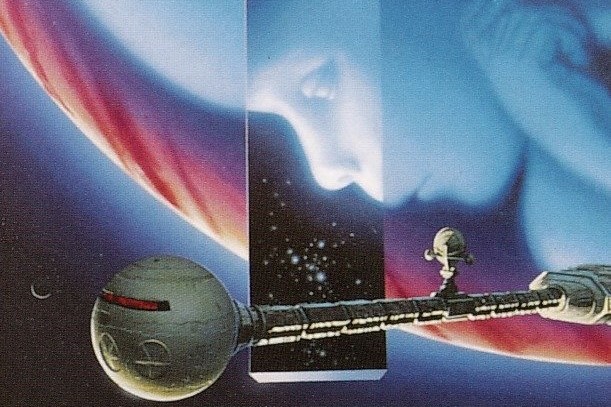
By the mid-’60s, Stanley Kubrick had risen into the upper echelon of filmmakers, thanks to the provocations of that decade’s Spartacus, Dr. Strangelove, and Lolita. For 2001: A Space Odyssey, he parlayed that cachet into a technologically audacious epic that required construction of an artificial gravity chamber and two years’ toiling over special effects. Still, MGM initially balked at one demand: a soundtrack cobbled together from the classical canon, rather than an original score that would boost marketing efforts and the bottom line. At first, Kubrick conceded. But then, after watching early footage of his film while blaring the likes of Mahler, he scrapped Alex North’s recorded score at the eleventh hour for the music he’d heard in his head. From the early, thundering repetition of Richard Strauss’ “Also Sprach Zarathustra” and the outer-space waltz of Johann Strauss’ “The Blue Danube” to the existential choral nightmare that is György Ligeti’s “Lux Aeterna,” these songs are now indelibly bound to Kubrick’s scenes of creation and destruction, god and hell, violence and love, as if they were written for the film. The soundtrack is a monument to the importance of artistic vision over executive expectation, a monolith to insisting on an idea when you know it’s right. –Grayson Haver Currin
The Harder They Come (1972)
Director Perry Henzell’s cult classic The Harder They Come isn’t necessarily a tour de force of storytelling or acting, but it will forever be an important film for what it did for Jamaica and the country’s greatest cultural export: reggae. Starring Jamaican music legend Jimmy Cliff, the film introduced international audiences to the lives and music of the people of the island nation. Its title song, recorded by Cliff for the film, encapsulates the beauty, struggle, and defiance of his character, Ivanhoe “Ivan” Martin, a poor country boy with dreams of stardom. Almost as soon as his dream is realized, it becomes a nightmare, as Ivan goes from a celebrity to an outlaw and, finally, a folk hero. The soundtrack features songs from some of reggae’s premier artists of the time, including Desmond Dekker, the Melodians, and Toots & the Maytals (whose “Do the Reggay” helped coin the genre’s name). Still, Cliff remains the anchor of the album: While songs like Dekker’s “Shanty Town” capture the hardships of Jamaica’s poor, Cliff’s “You Can Get It If You Really Want” adds a glimmer of hope and motivation. Immediately, the world fell under reggae’s spell. –Timmhotep Aku
Trainspotting (1996)
Trainspotting and its soundtrack mirrored the effects of its narcotic subject matter: a brief high followed by self-annihilating consequences. Danny Boyle’s cheeky addicts inspired an appalling wave of Britflicks peopled by the likes of Guy Ritchie and Vinnie Jones, and the soundtrack’s then-inspired clash of indie and club tracks curdled into an ensuing wave of beery laddiness that still rules certain parts of British culture. And yet this long shadow can’t dim the adrenaline of watching Boyle’s depiction of heroin addiction meet soundtrack compiler Tristram Penna’s song selections: Renton’s sprinting feet pummeling life back into Iggy Pop’s 19-year-old “Lust for Life”; Brian Eno’s “Deep Blue Day” transforming a dive down the worst toilet in the world into a transcendental reverie. David Bowie declined to lend his music—as did Oasis, who, wonderfully, thought the film was literally about train enthusiasts—but Trainspotting benefitted from being turned down by major stars. For Brits, Penna’s resourceful delve beyond the A-list mythologized an era approaching imminent decline, and overseas listeners got a crash course in Anglophile cool. Despite its cultural baggage, the Trainspotting soundtrack endures because—unlike others of the era—it’s ecstatic, not angsty, and captures a generation’s brief flash of blind optimism despite all evidence to the contrary. –Laura Snapes
Purple Rain (1984)
In 1983, with two big pop hits to his name—“1999” and “Little Red Corvette”—Prince decided he had to star in a movie from a major studio, with his name above the title. This, he declared, was the only possible way forward. The mere mortals in his orbit, including his manager Bob Cavallo, shrugged and attempted to do his bidding. The result was one of the 10 highest-grossing films of 1984, and watching it still feels like stumbling into Prince’s weird dream as it unfolds. It is, in many ways, a cruel and trashy movie, full of stiff acting and rank misogyny: Women are literally tossed in dumpsters for one-off gags, and even as our sensitive, vulnerable, too-good-for-this world hero, Prince still slaps his girlfriend. He has a profoundly Other presence throughout the film; he wanders through scenes like a genie half-bemused at his own powers. I conjured all of these humans into existence, he seems to be thinking. Now let’s see what I can make them do. What really can be said about a film with “The Beautiful Ones,” “When Doves Cry,” and “Purple Rain” in it? If the surrounding 90 minutes had just been Prince dry-cleaning his scarves, the film would still be a masterpiece by default. Purple Rain is Prince in his prime, at his peak, at his most audacious. It is Prince at his most sensual, his most open and pleading. It is, then, by logical extension, some of the most powerful popular music of the last century, and some of the best we will ever get. That it came alongside a silly, campy picture to enjoy is just a bonus. –Jayson Greene
Super Fly (1972)
When small-time drug dealer Fat Freddie dies in Super Fly, the plot, like the car that strikes him, keeps moving. No one mourns him or inquires about his absence, and his wife, whom he loves dearly, never shows up again. The generous view is that the budget was low and all death is a senseless tragedy; a more realistic outlook is that the Super Fly screenplay is a silly mess. Luckily, in “Freddie’s Dead,” Curtis Mayfield gives Freddie the send-off he deserves. In Mayfield’s hands, Freddie’s death becomes a soulful rumination on the misery that drives the drug trade: the exploitation, the loss, the pain. “Everybody’s used him/Ripped him off and abused him,” Mayfield pleads. These kinds of insights don’t make it into the script, but the soundtrack overflows with them. Mayfield wrote and recorded the Super Fly soundtrack working from the screenplay and dailies from the film set, and his music is not just a companion; it’s composition as world-building. From the narrow life of Youngblood Priest, a jaded cocaine dealer seeking to exit the game after one last score, Mayfield unfolds multitudes. A few years into his solo career, he was shifting from high-minded soul into rooted funk, and Super Fly catches him in this farsighted nexus; here, he widens the film’s story into a vista of broken relationships, with a portrait of Priest that is as dignified as it is dangerous. On “Pusherman,” wah-wah licks and a bright bassline keep the tone buoyant, as Mayfield catalogs the many voids drugs can fill. “I’m your mama/I’m your daddy/I’m that nigga in the alley,” Mayfield boasts. There’s a deep pride in the smoothness of the pusher’s sell, and Mayfield doesn’t downplay it: “Pusherman” drifts from his lips like smoke on a movie screen, sexy and glamorous. With Super Fly, Mayfield sought to challenge the script without undermining it, and that tension colors the entire soundtrack. “Freddie’s Dead” is funky and haunting even as it scolds the world that killed Freddie. With gusts of brass, the title track celebrates Priest while also condemning him, seeing the struggle within his hustle—how he is “tryin’ to get over,” as Mayfield coos. Mayfield was both a moralist and an empath; channeling his own experience with drug use, he captures the sweet and the bitter. As he lauds sobriety over the pillowy brass and strings of “No Thing on Me (Cocaine Song),” regret seeps through his bliss. “It’s a terrible thing inside/When your natural high has died,” he sings knowingly. Priest doesn’t at all embody Mayfield’s perfect melding of style with substance—and neither did Fat Freddie, for that matter—but this striking disconnect is largely what makes the Super Fly soundtrack so enduring. In its richness and gravitas and groove, the record imparts what the movie can only sketch. Through Mayfield’s brimming imagination, one-dimensional pulp roles became vessels of guile and verve. It’s an essential listen, and also an act of quiet subversion: a public screening of the unrealized film Mayfield saw in his head. –Stephen Kearse