
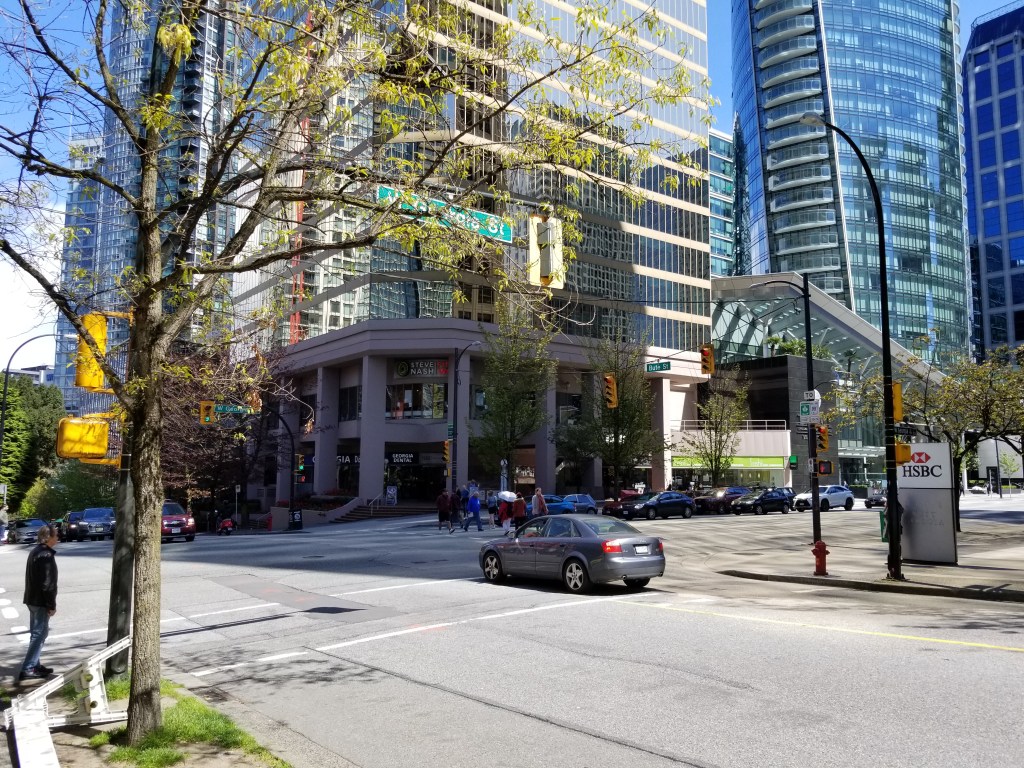
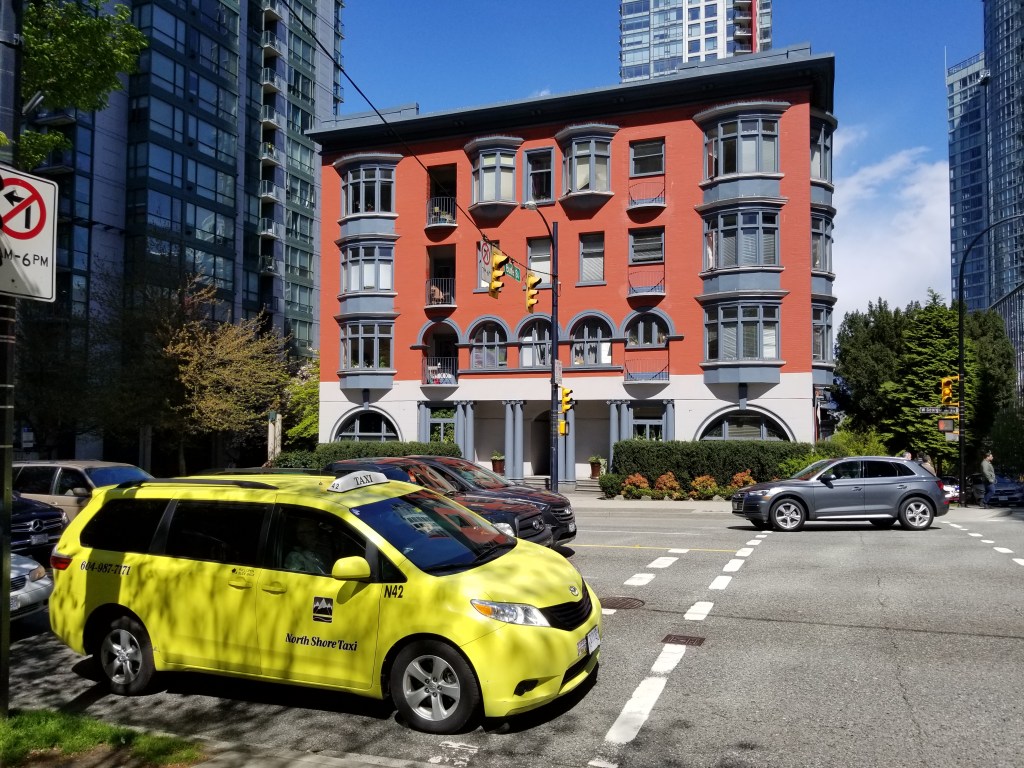
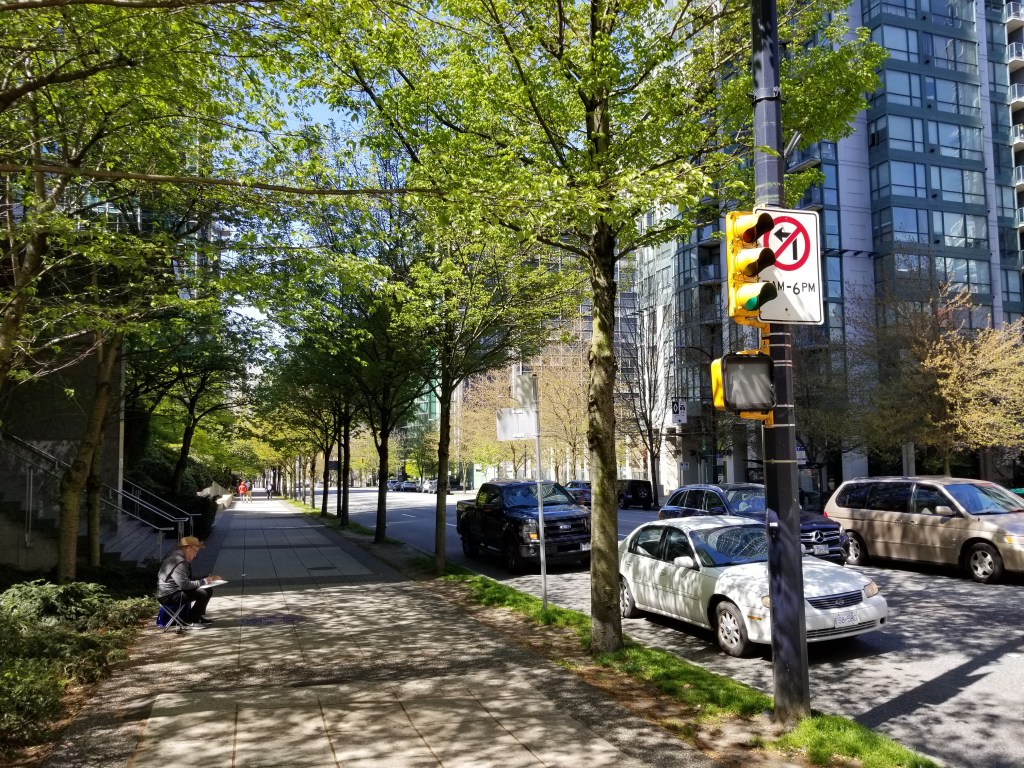
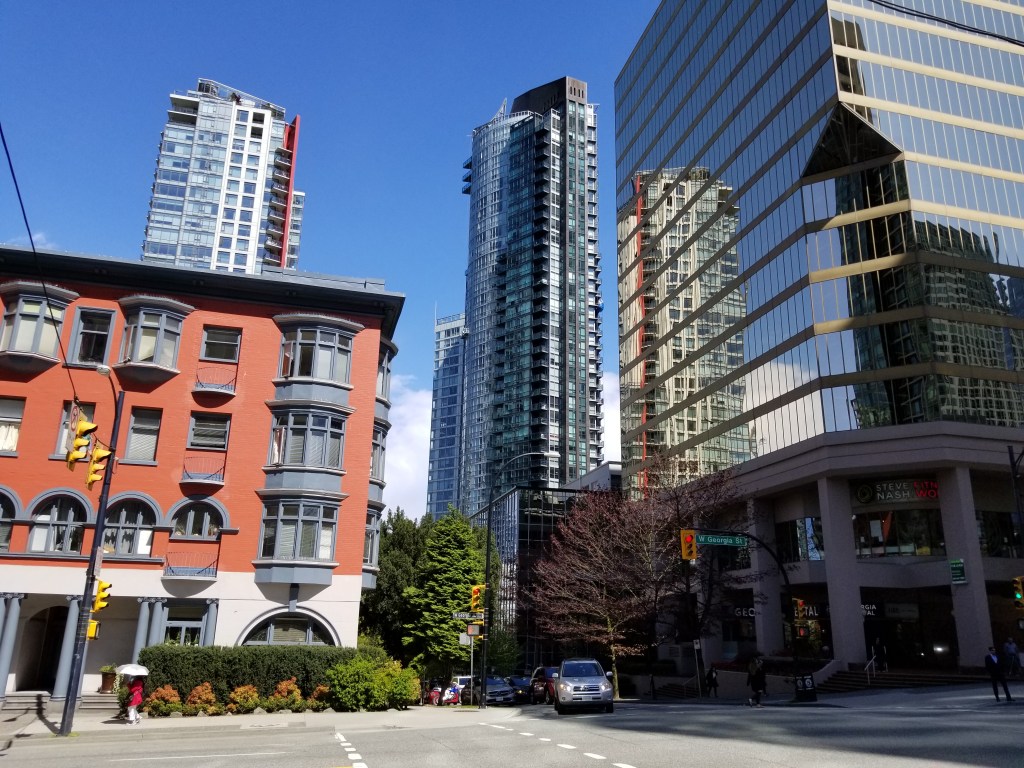
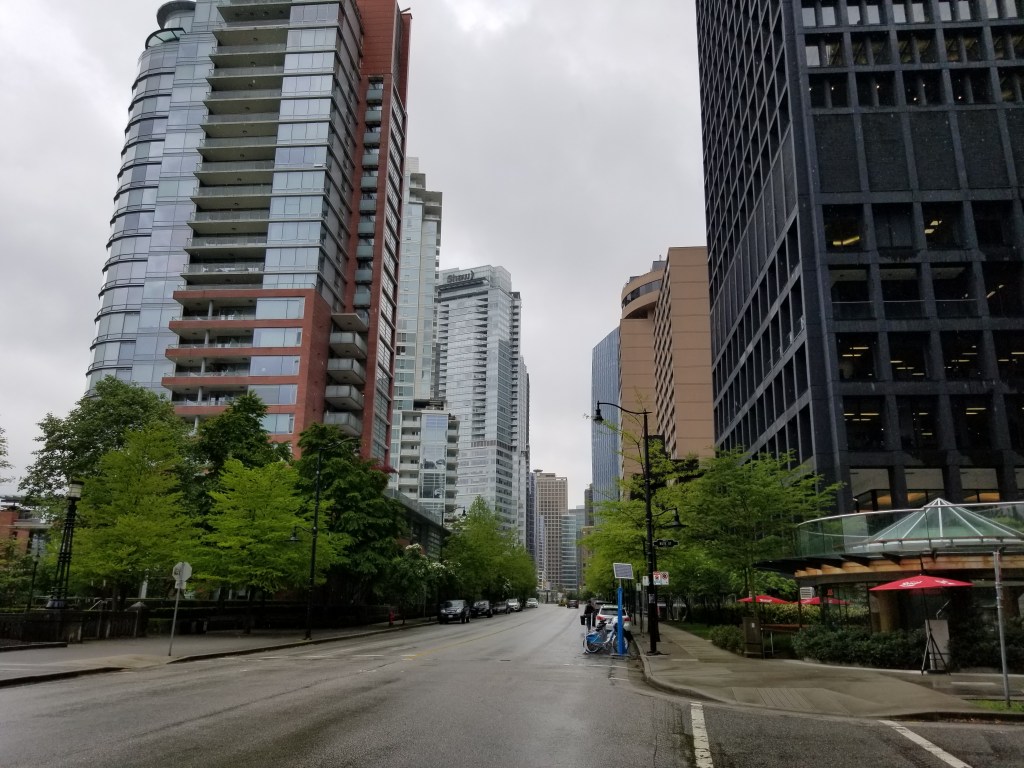
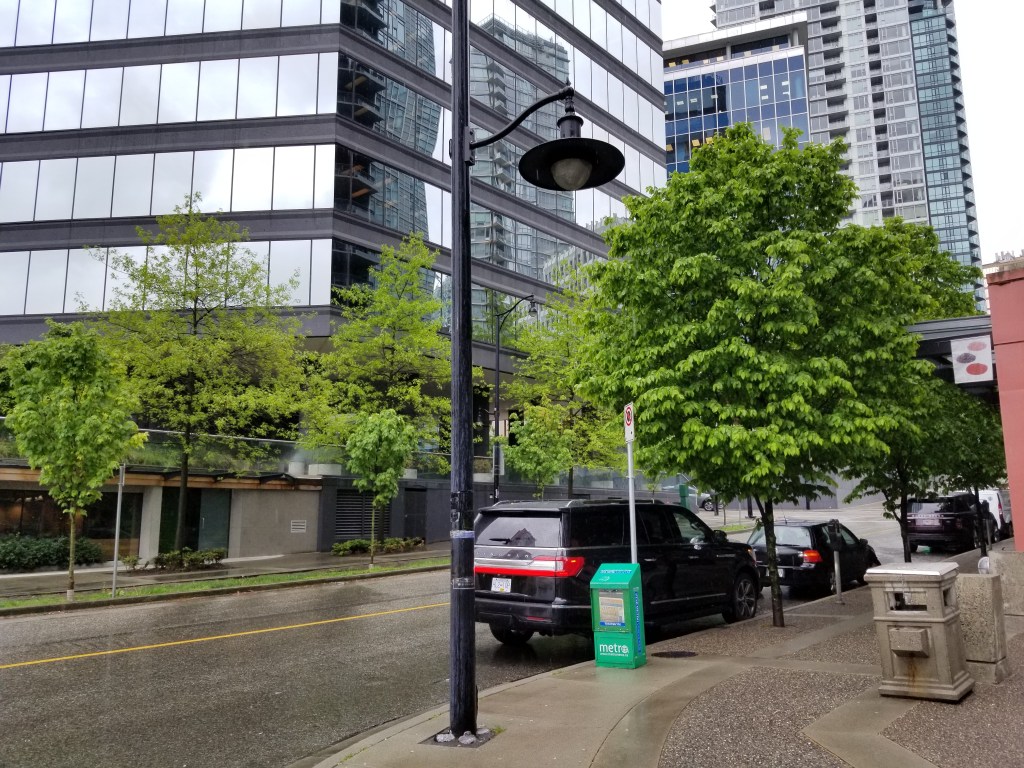
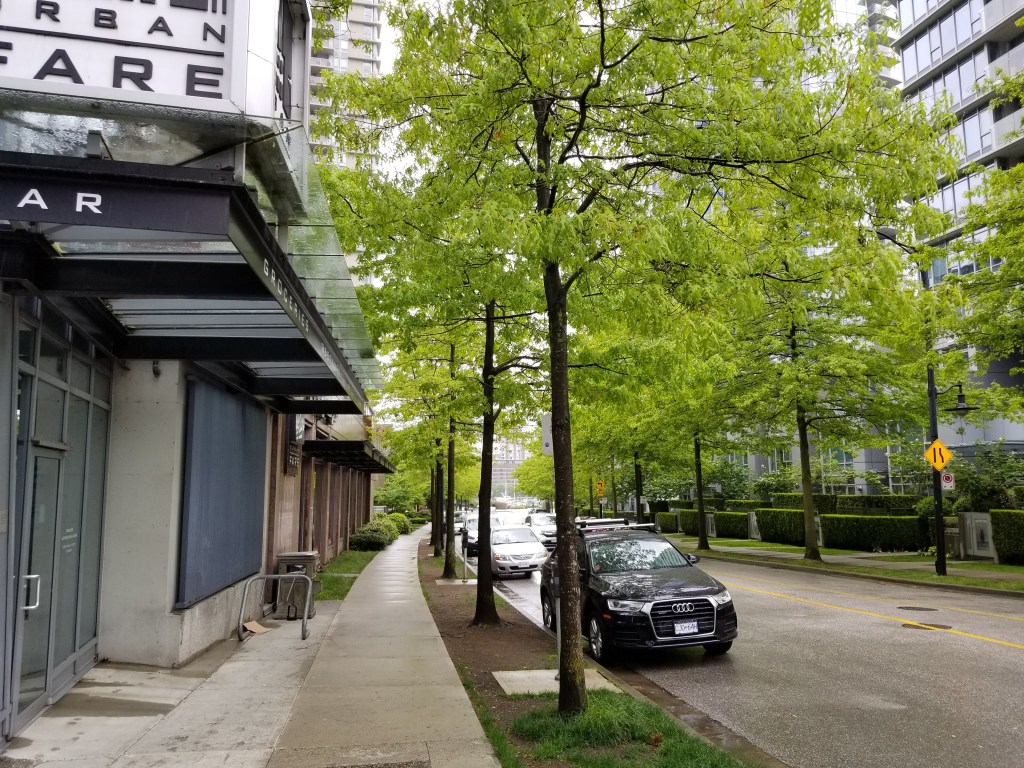
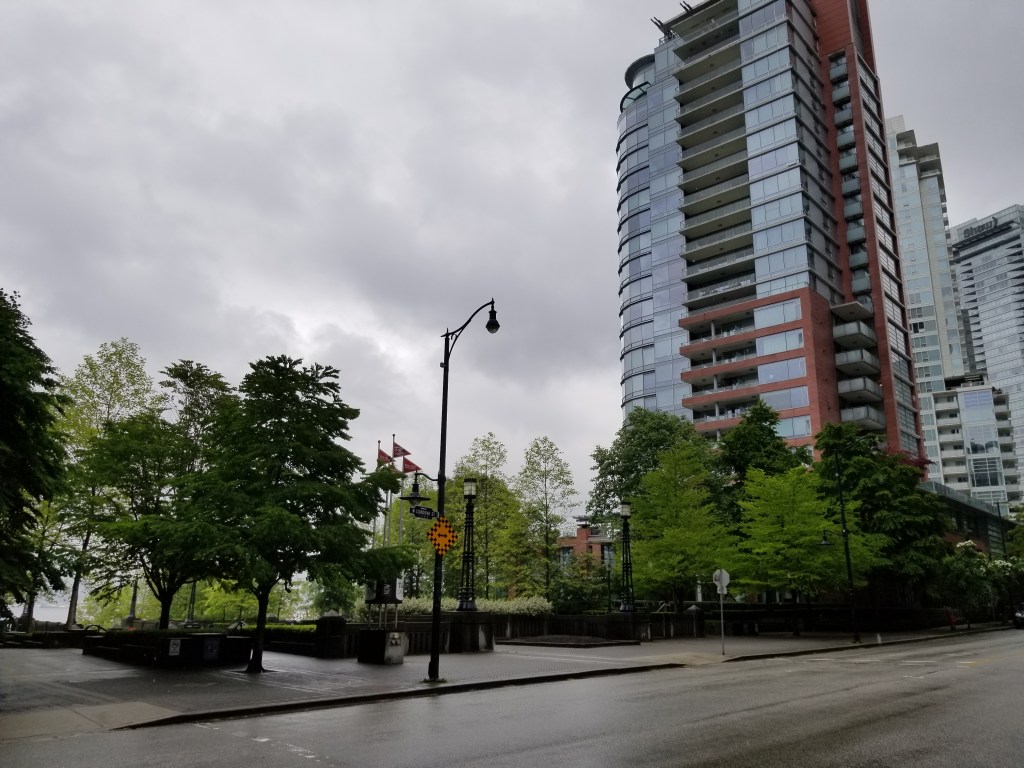
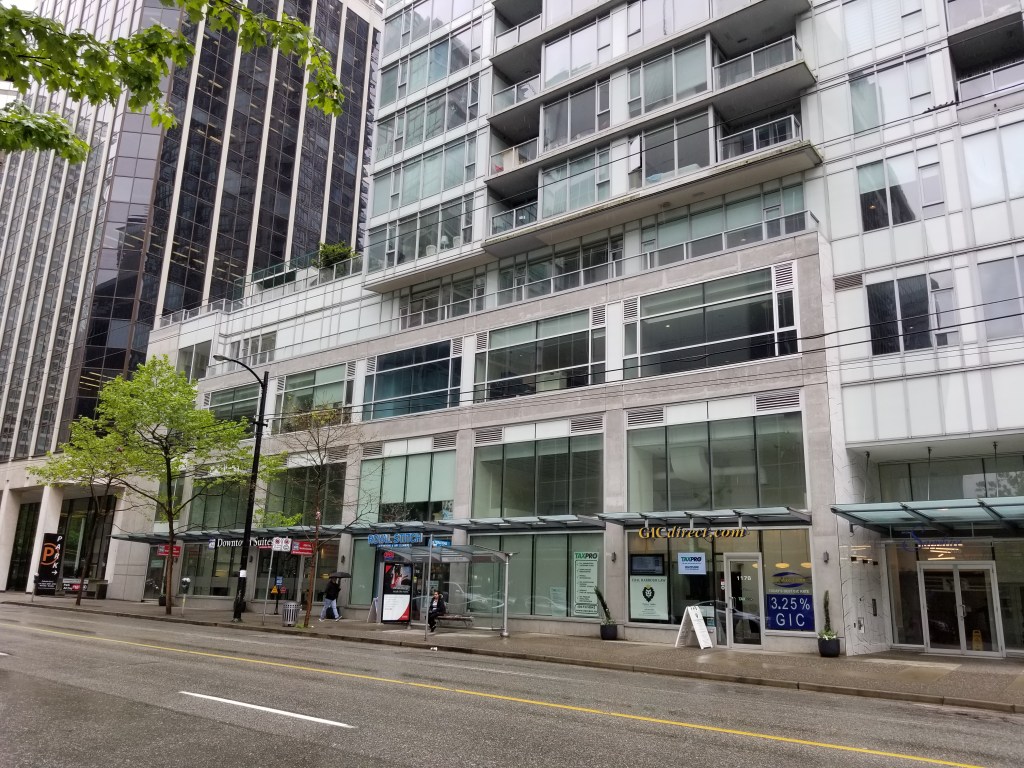
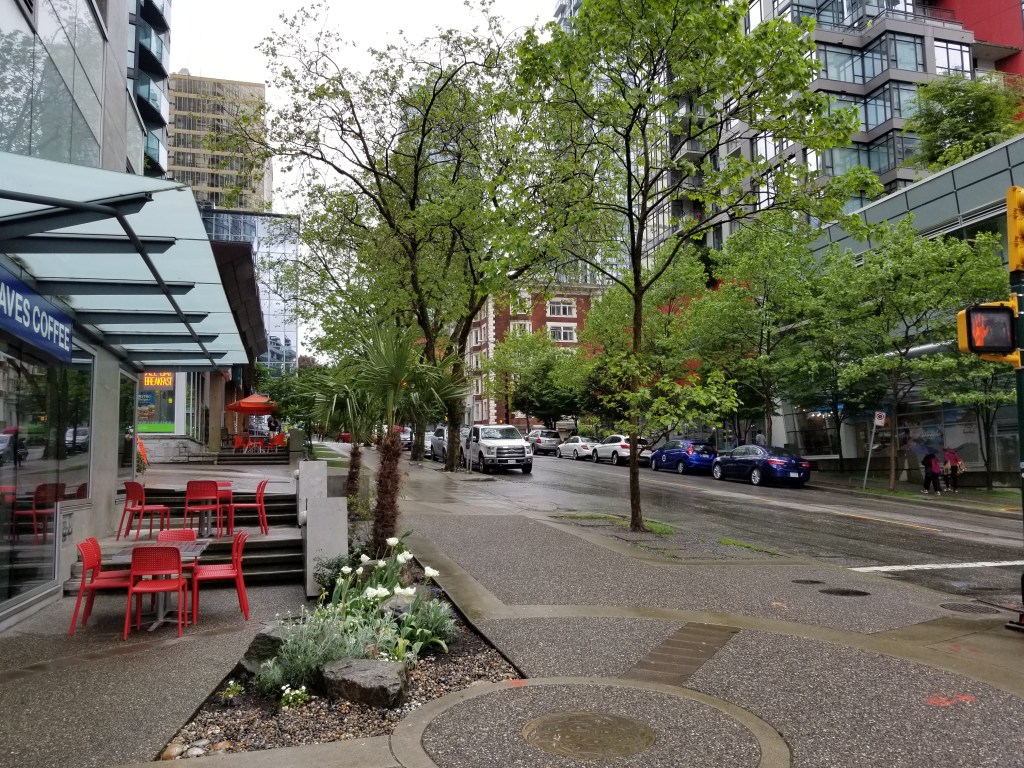
Bute Street is a roughly 1.5-kilometre north-south corridor cutting across the Downtown Vancouver peninsula, running shore-to-shore from Coal Harbour in the north through the West End to the waterfront in the south. Unlike the busier vehicle arteries nearby, Bute Street is defined by its pedestrian-friendly character, a mix of modern towers and late-19th-century Victorian heritage homes, and a chain of public plazas and green spaces that the City of Vancouver is gradually connecting into the Bute Greenway for walking, cycling, and rolling.
Harbour Green Park anchors the northern waterfront end of the street in Coal Harbour, offering an open green space between the downtown office edge and the marina. It features wide harbour and mountain views, with seaplanes regularly taking off and landing nearby. It offers broad lawns, strolling paths along the seawall, and a seasonal splash pad. It serves as the northern gateway for the planned Bute Greenway route.
Bute-Robson Plaza sits at the lively intersection with Robson Street and is the newest permanent public space along the corridor. Originally introduced as a temporary pop-up space in 2017, its $10-million permanent car-free redesign officially opened in December 2025. It takes advantage of the street’s natural slope with terraced built-in seating, overhead shade structures, rain gardens, and upgraded street lighting. It separates a dedicated bike path from pedestrian gathering areas, paired with widened sidewalks and improved crossings along Robson Street. It permanently closes this block of Bute Street to general vehicle traffic (while keeping access for emergency vehicles and nearby parkades), marking the first major built milestone of the Bute Greenway.
Nelson Park sits further south in the residential core of the West End, providing a quieter neighbourhood break along the corridor. It includes shaded walking paths, a fenced off-leash dog park, a children’s playground, a community garden, and a small water feature. It is surrounded by some of the West End’s oldest surviving late-1890s Victorian heritage houses, giving this section of Bute Street a distinct historic feel. Reviewers highlight its calm, tree-lined atmosphere and spring cherry blossoms.
Jim Deva Plaza marks the vibrant heart of Davie Village where Bute Street meets Davie Street. It was completed in 2016 and named in honour of prominent local LGBTQ2S+ activist and bookstore co-founder Jim Deva. It was designed as a car-free public gathering space right beside the rainbow crosswalks, hosting casual seating, community events, and local celebrations.
Sunset Beach Park forms the southern terminus of Bute Street, completing the shore-to-shore connection across the downtown peninsula. It’s known for its wide sandy beach, grassy slopes, and unobstructed evening sunset views over the water. Reviewers often note that it feels calmer and more laid-back than busier nearby beaches, with direct access to the waterfront seawall path.
The street gets its name via the coastal inlet charted by Captain George Vancouver to honour John Stuart, 3rd Earl of Bute, who served as Prime Minister of Great Britain in the 1760s. Originally subdivided in the late 1880s as an early residential neighbourhood, much of Bute Street transitioned into mid- and high-rise apartments during the mid-20th century while retaining pockets of heritage homes. In the 1970s, local residents successfully opposed plans to widen the street into a major vehicle thoroughfare; by 1980, it already carried the heaviest north-south foot traffic in the area, setting the stage for today’s pedestrian plazas and ongoing greenway upgrades.

