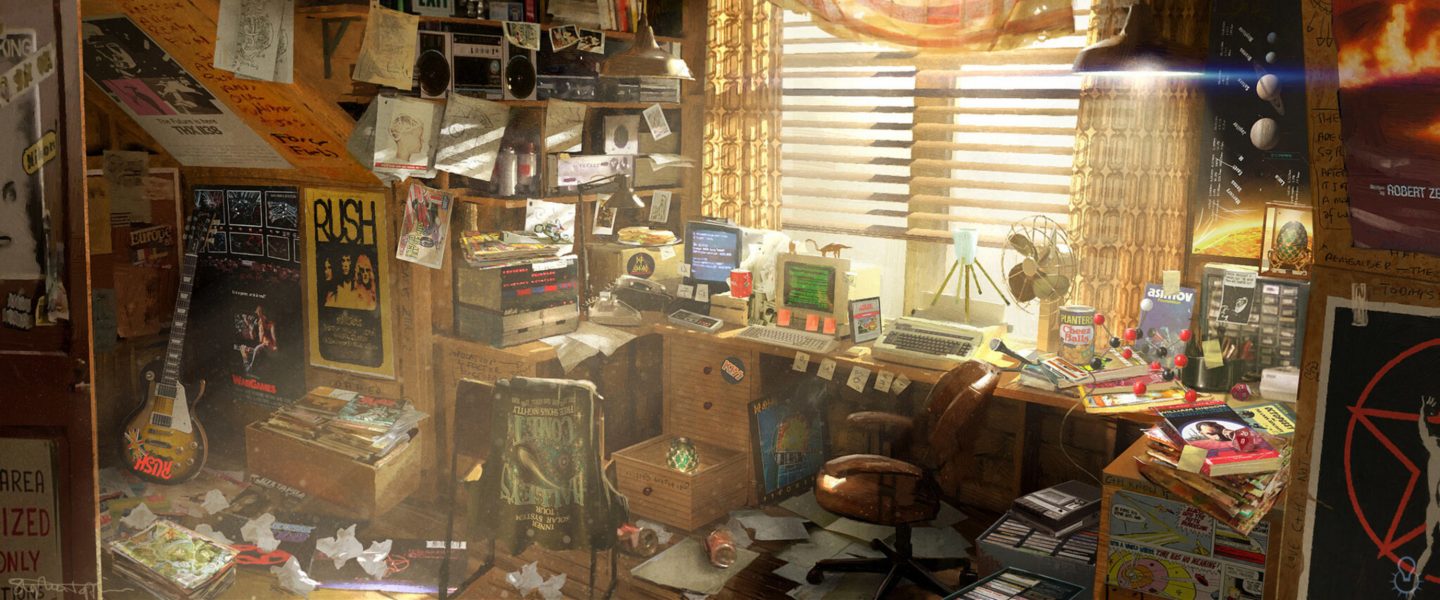

Since I promised to review Stranger Things, this is what I will be doing in this post. I have therefore briefly and reluctantly returned to the internet, the realm of the internet dwellers, of dumb content, of cancel culture, and of propaganda. Well, this is what the internet has become because it wasn’t always like this. One of the reasons why the internet is now like this is because nowadays every jackass, wacko, and sicko has easy access to it because of easy-to-get smartphones and laptops. There was a time, a few decades ago, before money began to play a big part on the internet, when nerds created informative content and webpages for free on the internet. But, nowadays, with the domination of the internet by normies, what you get to see is people making videos in which they humiliate themselves in order to earn some money. Because Stranger Things was advertised by the media and by some critics on its release, I watched it when it came out in 2016. I also watched the second season in 2017 because the show is admittedly entertaining, for the most part. The show has been praised by professional film critics throughout its run from 2016 to 2025, but this didn’t compel me to continue watching it because professional film critics can’t really be trusted because of their deceptions and their politically-driven opinions. For example, Laika’s latest film, Wildwood, was highly praised by critics, but it turned out to be the stop motion animation studio’s least interesting film. While the film is fine overall, it has few highs and is mostly flat. Matt Duffer and Ross Duffer, the creators of Stranger Things, did try to shake things up to some extent in every new season. For example, they introduced a new character in season two of the show, Max Mayfield, who became one of the main characters from then on. Such things kept the show interesting, but I wasn’t compelled to continue watching it after season two. While the show and Netflix continued to gain popularity going into the 2020s, my interests remained elsewhere and I didn’t develop an obsession with Stranger Things. Well, I don’t really have an obsession with anything. For example, I began to watch Dallas (1978-1991), which is one of the classics of American television, and I’m still enjoying watching this series because it has many episodes. I have also been slowly watching Knots Landing (1979-1993), which is a spin-off of Dallas. Another example is that I watched Beast Wars: Transformers (1996-1999) a few years ago, and this great animated show is another example of a show done right. But, since I spent time on watching two seasons of Stranger Things, I knew that I’d have to finish watching it someday. This wasn’t easy to do, however, because this series has 42 episodes, many of which are longer than one hour. Although I began to watch Stranger Things out of curiosity, and this remained the case until I finished watching it, I wasn’t really disappointed by it. I think that the show is most interesting when a few of the main characters are shown doing something. One example is when Eleven and Max spend some time together in season three. When all of the main characters, or most of them, are together doing something, the show is considerably less interesting. When it comes to the Upside Down and the creatures that come from it, I think that what happens is mostly uninteresting because we’ve seen such things done before and better in films such as A Nightmare On Elm Street (1984), Altered States (1980), and The Thing (1982). Things do get better in season four, with the introduction of Henry Creel and the return of Dr. Martin Brenner, but everything else becomes less interesting. I suppose that what happens to Max Mayfield is somewhat interesting, but the less said about Jim Hopper’s prison time the better because it’s so dull and boring. While the show can be summed up as fine or passable in my opinion because its lows are almost as numerous as its highs, it still became a kind of cultural phenomenon and it’s a flagship series for Netflix. It can appeal to children and to adults, and I suppose that this explains its popularity. Just about everyone except me watched its seasons on release. The younger members of the cast (the children that then became teenagers) developed followings and gained many fans. This isn’t surprising because the acting in the show is mostly good, and the children (then teenagers) got plenty of screen time. Among the adults in the main cast, David Harbour is the standout for me, though Jim Hopper’s prison camp experiences were boring to watch. Fortunately, in season five, he was back in the good old USA and killing some Americans, after escaping and killing some Russians in season four. I found Tom Wlaschiha’s performance as Dmitri Antonov in season four to be a standout too. I especially like Hopper’s conversation with Eleven at the end of the show, when he tells her that she has been through so much, that sacrificing herself isn’t what should be done, and that she deserves happiness. When it comes to the 1980s nostalgia aspect of the show, I think that the results are mixed. The show does feature the best-looking 7-Eleven store that I’ve ever seen, in season three. I’ve never seen a 7-Eleven that looks that neat and tidy. So, this depiction of a store is one of the few bits of glamor in an otherwise glamor-less depiction of the 1980s. What you get to see, such as houses and cars, is fine, but not much stands out. What I know about films or shows from the 1980s is that when they depicted some earlier time, such as the 1950s, they did it with some glamor, flair, and realism. But, nowadays, if a film is set in the past, the past isn’t depicted in any interesting, glamorous, or realistic way. That is, the actors don’t act like they’re in a different time. They act like they act nowadays. And little or nothing stands out when it comes to buildings and other material things. In the future, it may really be difficult for a show or a film to depict the 1980s because modernist architecture buildings, especially brutalist architecture buildings, are being demolished at an alarming rate nowadays, partly because of political reasons. The devotees of neoliberalism nowadays really don’t like modernist architecture. Apparently, film grain was added over the footage to create the aged effect for Stranger Things, but I found the look of the show and its cinematography to be mostly not very appealing, though I must admit that it does have a certain look that makes it stand out from other modern shows. In comparison to other modern shows that attempt to depict the past, Stranger Things can still be called excellent because the Duffer brothers at least tried to craft their 1980s setting (Hawkins, Indiana) with some love and care. I think that it would have been better for me to write a review of a show that I enjoyed watching more than Stranger Things, such as Beast Wars: Transformers or Miami Vice (1984-1990), which is a show that I still have to finish watching because I stopped watching it when I was attending college. Of course, if you want to get a feel for the 1980s, you don’t have to watch Stranger Things. You can just watch a show from the 1980s, like Miami Vice or Magnum P.I. (1980-1988), which are mostly exciting and have popping soundtracks. But, since just about everyone except me got to see Stranger Things on release and since the show got more praise than it deserves from critics and from consumers, partly because there was no other show like it when it was released, I felt that I had to finish watching it and offer my opinion. Some facts about the show’s popularity were compiled by About Netflix: “Across 5 seasons, 42 episodes, and over 2,500 minutes, Stranger Things built a world audiences kept coming back to. Seasons 1-4 have garnered more than 1.2B views to date, the most views for any Netflix show. In just four weeks, Season 5 Vol. 1 has already reached 102.6M views globally and all five seasons still remain in the Top 10 this week. Fans have obsessed over countless iconic moments across all seasons, but two were the most popular with members: The most rewatched scenes in all of Stranger Things are: 1) Season 4: When Nancy falls into a trance/possession by Vecna (S4E7, 1:15:00) 2) Season 3: When Dustin and Suzie sing “Never Ending Story” duet (S3E8, 35:40). As a result of the show’s massive popularity, each season has pierced the culture, creating new trends and even bringing back some from decades past. Music is a supporting character in the series and it’s how many audiences first discovered, or rediscovered, sounds from the ‘80s. That’s been on full display with the release of Season 5, Vol. 1, which drew several classics from years past back into the zeitgeist not only around the world, but also with Gen Z. According to Spotify, Diana Ross’ “Upside Down” (1980) saw a 1,250% increase in global Gen Z streams; Tiffany’s “I Think We’re Alone Now” (1987) experienced an increase of 880% in global Gen Z streams; “Mr. Sandman” by The Chordettes (1954) had a spike of 625% in global streams; while ABBA’s “Fernando” (1976) saw a surge of 335% in global streams and 645% across Gen Z specifically. In fact, Spotify reports that 205,000 Stranger Things-themed playlists have been created globally since Season 1. Last season, Max Mayfield’s favorite song, “Running Up That Hill” (1985) by Kate Bush, entered the Billboard Hot 100 for the first time in its 38-year history. Additionally, Metallica’s “Master of Puppets” (1986) climbed into the UK Top 10 for the first time and drove 17.5M downloads of “Master of Puppets” in one week after it was featured in Season 4. It’s not just music. Between the debuts of Season 1 in 2016 and Season 4 in 2022, the Dungeons & Dragons universe, which is a favorite of Eddie Munson and the Hellfire Club, saw a meteoric growth of 673%. Behind the scenes, thousands helped bring the world of Hawkins (and the Upside Down) to life. Over the course of five seasons, Stranger Things created over 8K production-related jobs across the United States and has contributed more than $1.4B to the US GDP. In Georgia, where all five seasons of the series were primarily filmed, the series generated over $650M to the state’s GDP and was home to over 2K vendors that contributed to the series. California had the second-highest state-level contribution, with over $500M to the state’s GDP.” I know that I haven’t yet given my opinion about Phase Five of the Marvel Cinematic Universe. The reason for this is that I haven’t yet seen all of the content of this phase. What I can say is that Phase Five is the most uneven and disappointing phase so far. This doesn’t mean that it’s bad, but it is worse than the preceding four phases. Since I have seen all of the films from Phase Five, I can comment on them. The phase began in 2023 with Ant-Man And The Wasp: Quantumania, which is, in my opinion, the worst MCU film so far. The only good thing in it is the performance of Jonathan Majors, and I like the score by Christophe Beck too. I was surprised when Kevin Feige announced that Kang the Conqueror will be the big bad of the MCU for the coming several years, just like Thanos was the big bad in the first three phases. I thought that this is odd because this plan can easily get derailed if Majors does something or if something happens to Majors. And something did happen, rather quickly. The arrest and trial of Majors got blown out of proportion and got plenty of press coverage. This didn’t really interest me, but the departure of Majors from the MCU totally derailed the plans for Phase Five and Phase Six. Because of this setback and because some MCU films began to become really disappointing, my interest in the MCU mostly disappeared. It appeared for the first time during Phase Four because I realized that Marvel Studios is the only company that has been consistently making good blockbusters for more than a decade. Before Phase Four, I had almost no interest in the MCU, although I got to see all of the films in theaters. But Phase Four is the phase where serious cracks began to appear, after some big changes at Marvel Studios. Kevin Feige, for example, got a different job, and he hasn’t been able to find a good producer to replace himself. The studio’s staff and creators were obviously stretched too thin because they now had to make miniseries for Disney+ in addition to films. This and the decision to give directors more freedom resulted in the studio’s first passable or disappointing films. While I still like Phase Four, and the phase was still a big financial success, I must say that its films and series eventually led nowhere because of the setbacks in Phase Five and because some of them weren’t big successes at the box office. While Phase Four has one disappointing film (Thor: Love And Thunder), Phase Five has three disappointing films (Ant-Man And The Wasp: Quantumania, The Marvels, Captain America: Brave New World). I don’t really like anything in The Marvels (2023) except perhaps the performances of the three female leads. It’s not really a bad film because nothing in it is particularly bad. It’s simply lame and mediocre. Brave New World (2025) is of about the same quality, with disappointing action scenes and an unoriginal, predictable plot. However, Anthony Mackie, as the lead, provided a good performance. One can tell that he was really trying to be charismatic and to make his scenes as good as possible. The performance of Harrison Ford is uneven, with some good parts and some bad parts. Deadpool & Wolverine (2024) is obviously a good film, and it became the only big hit of Phase Five, grossing almost $1.4 billion at the box office. It is, in my opinion, the best Deadpool film yet, thanks to the direction of Shawn Levy, who directed some of the best episodes of Stranger Things. The film’s Chris Evans cameo is one of the highlights for me, and his intro is the funniest part of the film. Although the film deserves its praises, I have to say that it’s far from my favorite MCU film. I’ve never really liked the Deadpool films much, partly because of their contents and partly because Deadpool doesn’t really appeal to me as a character. I consider Thunderbolts (2025), like Guardians Of The Galaxy Vol. 3 (2023), to be the film that is closest to the spirit and the quality of the films from the first three phases of the MCU. There’s nothing odd or over-the-top about it, it’s well made, and it’s entertaining. This probably has a lot to do with the fact that Kevin Feige was the film’s only producer. Therefore, I think that Thunderbolts is my favorite film from Phase Five. I do want to see all of the series that Phase Five has to offer, but seeing the latest MCU miniseries hasn’t been a priority for me. I’m not really expecting anything when it comes to the upcoming Avengers: Doomsday. Since Anthony Russo and Joe Russo directed it, I must say that there’s a good chance that it will be very good, but I’ve never been a fan of seeing many superheroes duking it out at the same time. Therefore, I’m not eager to see this film at all. If it turns out to be a very good film, I will certainly be glad, however. Avengers: Endgame (2019) is admittedly one of the best MCU films, but I still don’t like it much because there are too many superheroes in it. The only thing that really appeals to me in it is the performance of Josh Brolin as Thanos. And, of course, I still don’t really like fat Thor and the film’s silly humor. Seeing Spider-Man: Brand New Day in a theater was a pleasant surprise for me because it turned out to be much better than I thought it would be. Since I had no interest whatsoever in the film before its release, I didn’t even know that Sadie Sink has a part in it until I watched it.

